At the UN, Mohawk leader calls for UNDRIP watchdogs to ensure standards are met
Worldwide, Indigenous leaders say colonial governments aren’t meeting human rights criteria outlined in the declaration — Kenneth Deer says independent oversight is needed
This story is published through the Indigenous News Alliance.
In 2007, the United Nations General Assembly adopted the UN Declaration on the Rights of Indigenous Peoples, or UNDRIP, a sweeping resolution that enshrined international standards for Indigenous land, language, health, and more.
“Canada” and the “United States” were among a handful of countries that initially opposed UNDRIP and later adopted it. But in the years since, Indigenous people around the world say their countries are not living up to the framework.
Indigenous people are being killed for protecting their territories, criminalized for practicing their culture, and seeing their lands stripped of resources without consent.
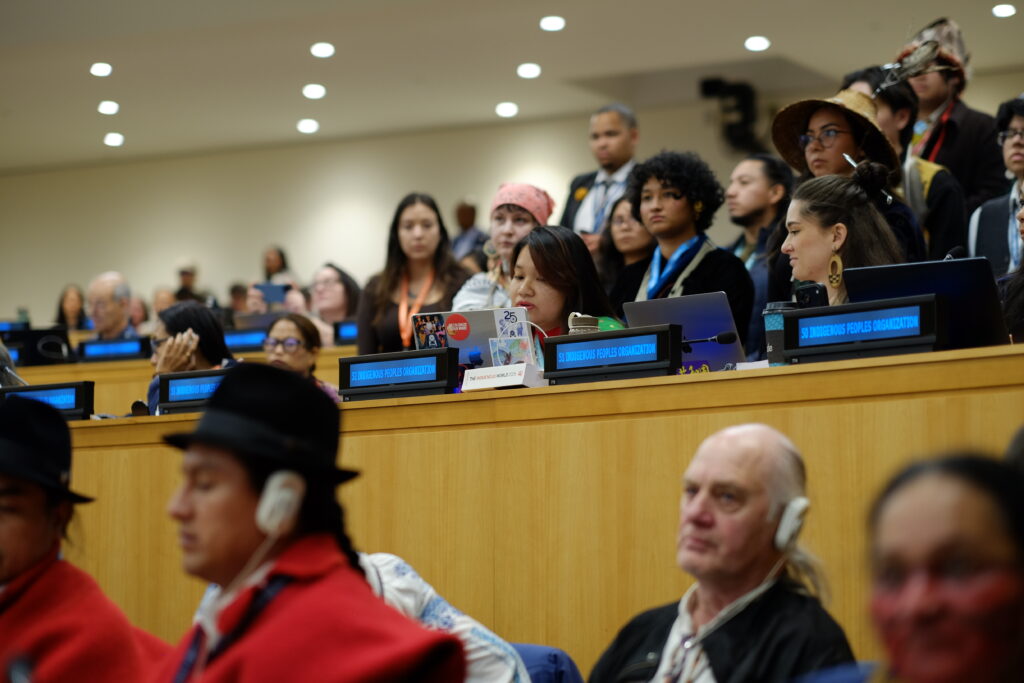
As the first week of the world’s largest gathering of Indigenous Peoples wrapped, advocates called for countries to live up to international human rights standards like UNDRIP.
The UN Permanent Forum on Indigenous Issues, or UNPFII, has been underway in “New York City” since April 20 and is set to run until May 1.

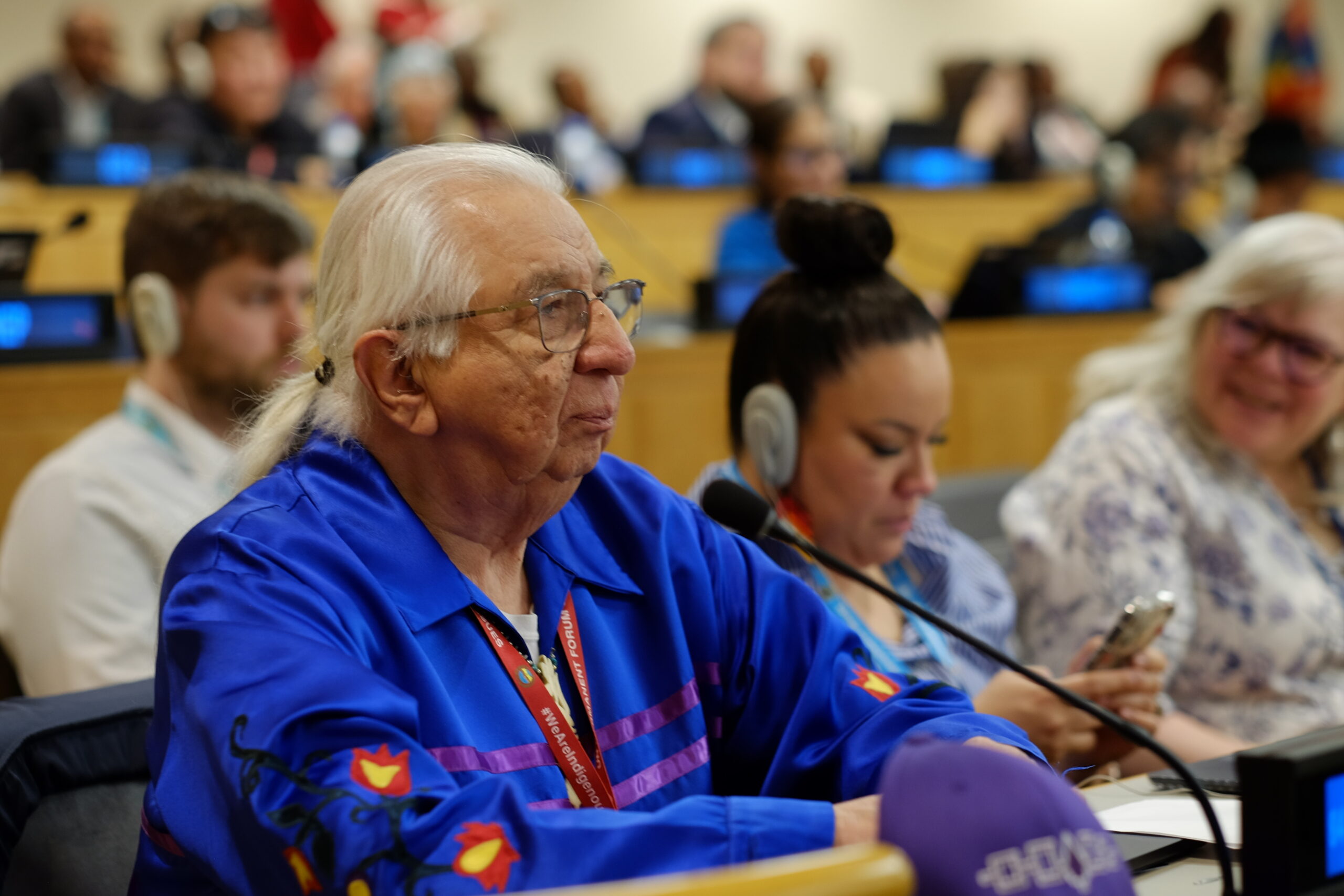
At the UN, Kenneth Deer, member of the Mohawk Nation of Kahnawà:ke, delivered a joint statement on behalf of the Canadian Coalition for the Human Rights of Indigenous Peoples. He called for states to establish independent monitoring systems to “ensure the full and effective implementation” of UNDRIP.
“You need to have a group of independent, Indigenous individuals who will have access to how the government is implementing the declaration,” he said in an interview.
“They should be able to study what they’re doing and make an evaluation whether they’re being effective or not, and then whether there’s failures. They need to highlight those failures to the government, and that’s how you get effective implementation.”
Deer acknowledged how complicated that process could be, which he said highlights the need for a monitoring body.
“To implement the declaration, they need a watchdog,” he said. “They need somebody over them to make sure they’re carrying out their responsibilities.”
‘Frozen in time’
Ryan Fleming from Attawapiskat First Nation in northern “Ontario” spoke on the lack of implementation from “Canada” when it comes to UNDRIP and upholding treaty rights.
In 2021, “Canada” passed a law that committed to aligning all government policies with UNDRIP, but Fleming and others said there’s still a long way to go for those rights to actually be upheld.
He described his community as “frozen in time,” a symptom of the poverty he says is created by “Canada.”
In 2019, Attawapiskat Chief — then councillor — Sylvia Koostachin-Metatawabin and former chief Theresa Spence endured a 15 day hunger strike to secure change from provincial and federal governments to reenact a dormant task force to address the urgency of water quality in the community and other issues affecting the members.
“Until Canada addresses those structural conditions, then you can’t properly move forward with UNDRIP,” Fleming said.
With legislation enacted, such as Bill C-5, which allows projects to be “advanced through an accelerated process” there is apprehension on the free, prior and informed consent promised through UNDRIP.
“With their Bill C-5 and Bill 5 in Ontario — both fast track legislation — that has essentially poured gasoline on implementation processes,” Fleming said.
In an emailed statement, Jennifer Cooper, spokesperson for Crown-Indigenous Relations and Northern Affairs Canada, responded to concerns about Indigenous rights and highlighted the Crown’s efforts, which include an Indigenous advisory council and increased funding.
“As we implement the Building Canada Act and advance nation-building projects, we will honour our commitments under the United Nations Declaration on the Rights of Indigenous Peoples Act, Duty to Consult, and Modern Treaties and Self-Government Agreements,” Cooper said.
“We have made real progress together, but we know there are still barriers that slow things down. We’re improving how we work internally and bringing greater clarity to the process. We continue to develop rights-based agreements together with our partners in the true spirit of reconciliation, shared prosperity and partnership.”
The province of “British Columbia,” which enacted legislation to enforce UNDRIP in 2019, has recently been under fire for seeking to suspend or amend parts of that law, after a court ruling found the province inconsistent with its own rules.
The province has since backtracked, saying it would collaborate with First Nations leaders on a path forward.
“The Inherent pre-existing rights of First Nations are part of, and are protected by, international human rights law,” said Assembly of First Nations National Chief Cindy Woodhouse Nepinak in a statement.
“[UNDRIP] affirms First Nations rights as human rights. Neither Canada nor British Columbia can extinguish, amend or suspend First Nations’ human rights and remain a respected member of the international community.”
While discussions at international gatherings such as the UNPFII centre on the implementation of previous years’ recommendations, Fleming noted how the discussions and reports don’t always mean action is being taken to follow UNDRIP.
“In practice, you don’t see that coming to fruition,” he said. “We don’t need a new treaty. We don’t need a new agreement. We just need [Canada] to implement the original agreement. We need to honour that and then we can move forward.”
Struggles echo worldwide
Meanwhile, Indigenous leaders from around the world are facing their own issues when it comes to their governments meeting the human rights standards outlined in UNDRIP — from health, to culture, languages, land rights and more.
In Ecuador, Indigenous Peoples are struggling with health challenges as leaders said resource extraction without enough oversight has led to contaminated water sources, malnutrition and displacement of communities.
Ercilia Castañeda is Kichwa and the vice president of the Confederation of Indigenous Nationalities of Ecuador, which represents 15 nationalities and 18 Indigenous Peoples.
At the UN, Castañeda called on Ecuador and international bodies like the UNPFII to strengthen legal human rights frameworks.
“In Ecuador, Free, Prior and Informed Consultation is guaranteed in the Constitution, and judicial decisions have increasingly affirmed that the Free, Prior and Informed Consent of Indigenous Peoples must be guaranteed in decisions affecting their territories and collective rights,” she said.
“However, implementation remains weak and ineffective in practice. One clear example is the Suroriente and Surandina oil rounds, which continue to advance without effectively guaranteeing these rights.”
Castañeda hoped that speaking at the UN could apply pressure on Ecuador and asked the Permanent Forum to recommend Ecuador guarantee Indigenous health and rights.
“We cannot speak of health while there is tear gas in our communities, while 60 per cent of the water sources in the Amazon are contaminated, while 40 per cent of our children live with chronic malnutrition, while around 10,000 people have been murdered in 2025,” Castañeda said in Spanish while addressing the Permanent Forum.
“We cannot speak of human rights while the fabric of community life is being ripped apart.”
Issues around physical health also extend to cultural and spiritual health suffering for many nations, the forum heard.
Moses Goods, a Kanaka Maoli actor, spoke on behalf of the Nation of Hawai’i and highlighted “the right to remain who we are.” He explained how Indigenous languages serve as memory, identity and medicine — and are a protected right under UNDRIP.
In an interview, Goods described the loss of language as a method of Hawaiian decline.
“Language is a link to our culture. It’s a link to who we are as a people and our identity, which is linked to health. When you take those things away, the health of the people start to decline,” he said.
“It was intentionally taken away from us as Indigenous people, as Indigenous Hawaiians, so that we would decline. And it worked to a degree, until now.”
Today, culture continues to be weakened including with the disruption of access to lands, such as the wildfires that have caused displacement in Lahaina.
Goods noted how coming together as Indigenous Peoples in places such as the UNPFII allows for stories to be shared and therefore strengthened.
“We keep telling our stories, we keep telling the truth over and over again to each other, and we strengthen each other. And with those numbers, we can make something happen,” he said.
Self determination as a key factor
In the forum’s first week, Indigenous leaders repeatedly highlighted the need for direct funding to support UNDRIP implementation.
In a presentation on the UN Trust Fund for Indigenous Peoples, Aluki Kotierk, who is Inuk and the chair of the permanent forum, explained that the fund “contributes directly to facilitating the implementation of the United Nations Declaration on the Rights of Indigenous Peoples.”
But Kotierk also said support from member states for the fund is minimal. Kotierk noted that there are only three states who contribute annually to the fund.
New systems, including a policy marker system by the United Nations Development Programme (UNDP) are set to help track that funds reach Indigenous Peoples directly.
While the exact process is currently unknown, the hope is that funds for climate and development will reach the Indigenous Peoples without getting delayed through state intermediaries. Requests for comment from UNDP did not receive a response by publication time.
As Indigenous leaders from around the world demanded change on international and domestic levels, Kenneth Deer said that UNDRIP implementation should be a collaborative process.
“The relationship is about coexistence. It’s not about domination of Canada over Indigenous people,” he said .“What we need to offer is solutions, not just come to the UN and complain about Canada, but come to the United Nations with solutions.”
Author
We live in a media ecosystem that thrives on misinformation. Big Tech and AI companies are consuming the work of real human beings and Canadian news has been banned on Facebook and Instagram.
And yet, I have hope for journalism because of the work we’re doing at IndigiNews.
At IndigiNews, we embody tâpwêwin — the Cree value of integrity and responsibility in truth-telling. We are committed to our independent, Indigenous-led newsroom rooted in community, accountability, and relationality. We believe storytelling is a sacred fire that connects our pasts, presents, and futures through the storytellers in our Storytelling Lodge. IndigiNews creates space for Indigenous journalists, storytellers, Knowledge Keepers, and communities to gather, learn, and share stories that matter.
As a registered charity, we are building a fire that allows our work not just to ignite but to thrive. Rather than relying on advertising or corporate acquisition, IndigiNews is sustained by people like you who believe Indigenous stories are important for the future of our communities.
Your support is making a real difference.
Our community of supporters, our Firekeepers, make it possible to grow our newsroom, publish award-winning journalism, train emerging Indigenous journalists through initiatives like the ReFocus Photojournalism Fellowship, and publish trustworthy stories that serve our communities across the country. Every story we publish helps fill in gaps left by mainstream media and ensures Indigenous perspectives are represented with care, accuracy and respect.
But there is still more work to do.
As the media landscape becomes more and more uncertain, community support is as necessary and essential as it’s ever been. Every new Firekeeper helps protect the independence of our newsroom and strengthens journalism that is accountable to our many and varied communities over corporations.
That’s why we’re inviting you to become a Firekeeper.
Firekeepers tend to and protect the sacred fire. Your monthly contributions directly support IndigiNews’s Storytelling Lodge, helps sustain our independent, Indigenous-led newsroom, and ensures future generations of Indigenous storytellers have the resources they need to do the work.
As a registered Canadian charity, all eligible donations receive a charitable tax receipt.
If you believe Indigenous stories matter, if you value independent journalism, and if you want to help build a strong future for Indigenous media, we invite you to join our circle of Firekeepers today.
Together, we can keep the fire burning.
— Eden Fineday, Publisher, IndigiNews
Support us nowLatest Stories
-

Olympic bobsledder Eden Wilson aims to ‘help open doors’ for aspiring Indigenous athletes
Recently inducted into the North American Indigenous Athletics Hall of Fame, the ‘Calgary’-based Métis athlete is working to break barriers for the next generation
-
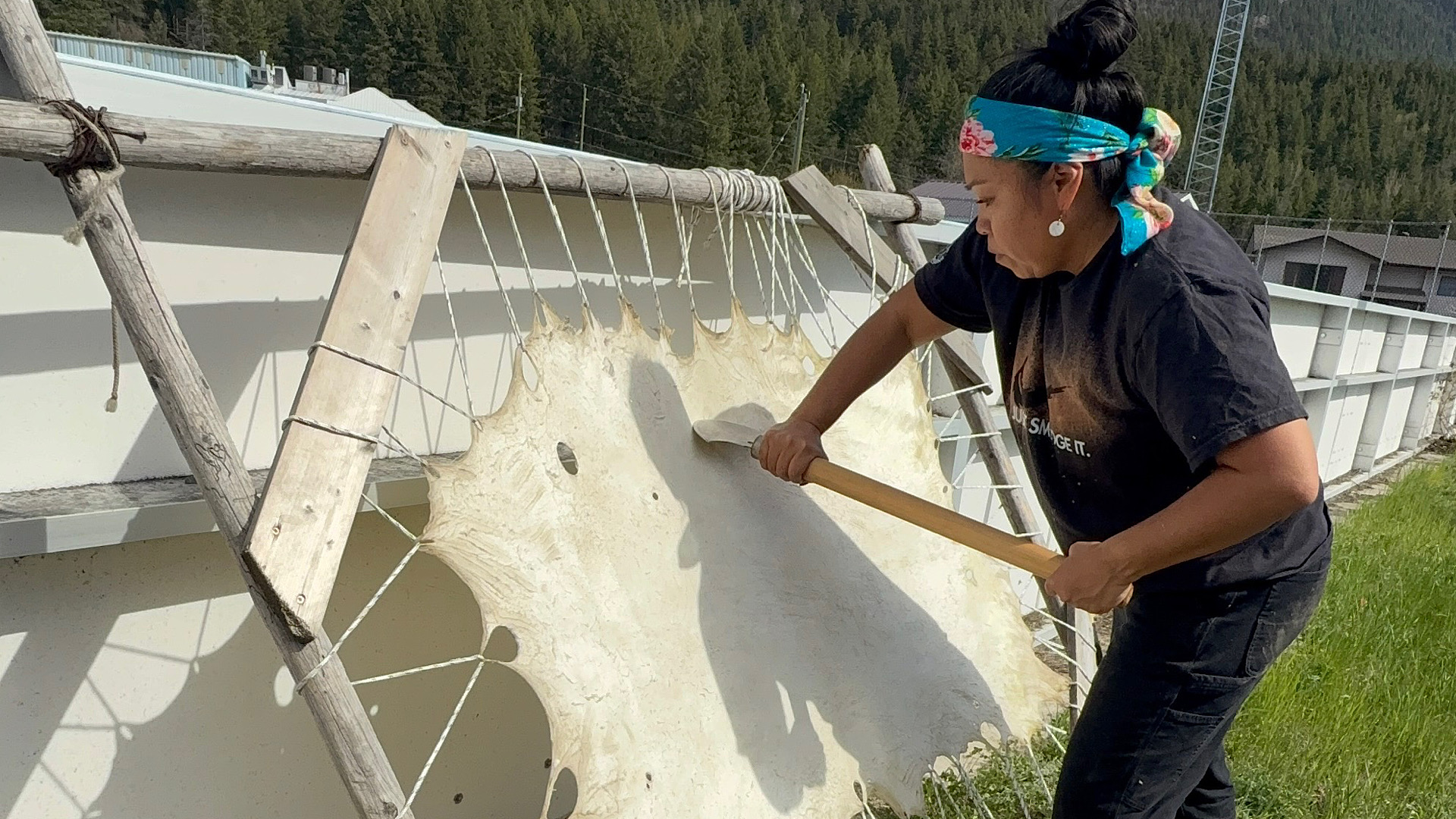
In Simpcw First Nation, Secwe̓pemc women are revitalizing hide tanning
Working with animal pelts is a lengthy, labour-intensive process — but teachers in the ‘B.C.’ community are ensuring the tradition is passed on