Dressed in red, Stz’uminus community members honour MMIWG2S
“We’re on a healing journey,” says Chief Roxanne Harris
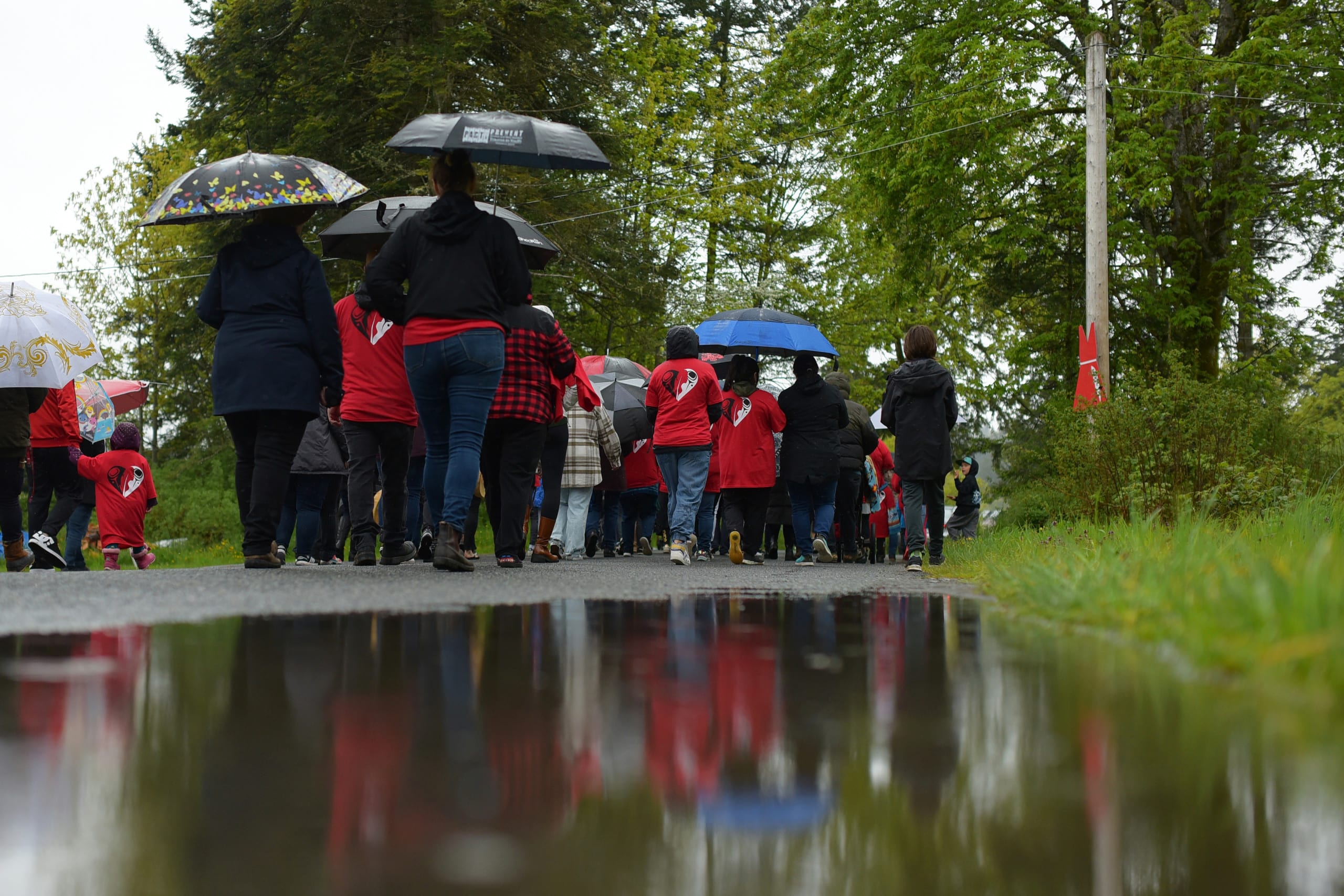
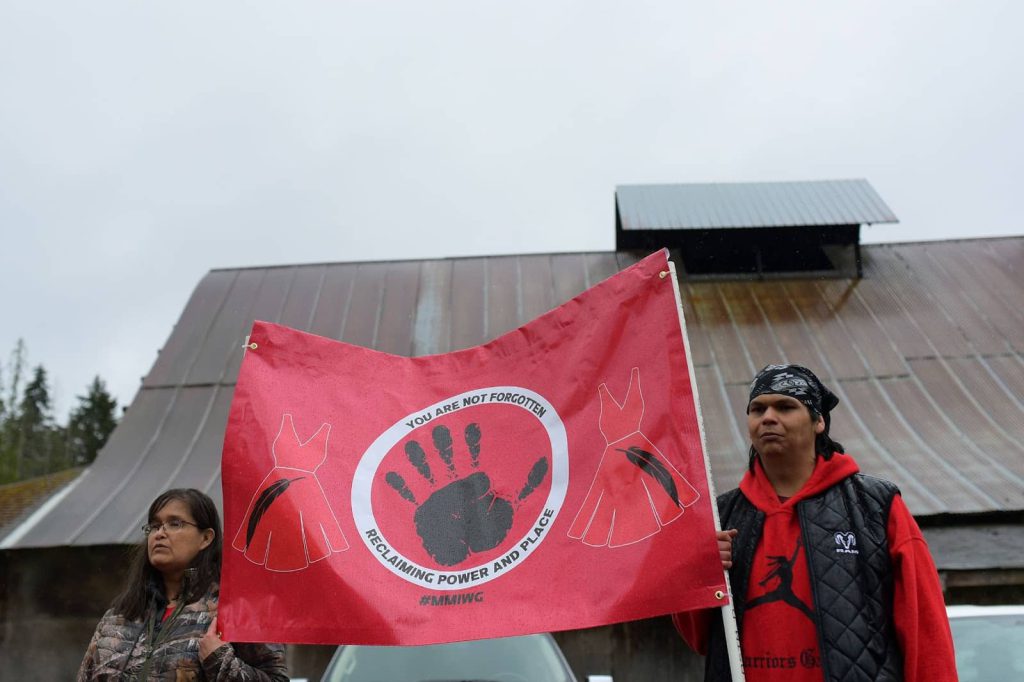
A crowd of people walk slowly past a cutout of a red dress, pinned to a telephone pole. They gather in the pouring rain, unified by their intention to raise awareness about Missing and Murdered Indigenous Women, Girls and Two Spirit (MMIWG2S), their kin who never made it home.
Starting at Deer Point Road, about 60 members of the Stz’uminus community walked through their community Thursday (May 5) which marked National Day of Awareness for Missing and Murdered Indigenous Women and Girls across what is colonially known as Canada. Together, they hope to end violence against Indigenous Women, Girls, and 2SLGBTQQIA+ People.
According to a report by the Assembly of First Nations, Indigenous women make up 16 per cent of all female homicide victims, and 11 per cent of missing women, even though Indigenous people make up just 4.3 per cent of the population of Canada.
As well, they state, Indigenous women and girls are five times more likely to experience violence than any other population in Canada.
According to the MMIWG2SLGBTQQIA+ National Action Plan, many things including colonial systems, and ongoing homophobia and transphobia, heteronormativity, and heteropatriarchy have infiltrated most Indigenous cultures and communities, leaving Two-Spirit and Indigequeer People increasingly vulnerable to multiple forms of violence.
What’s more, an Ontario study of gender-diverse and Two-Spirit Indigenous people, quoted in the National Inquiry Into Missing and Murdered Indigenous Women and Girls, found that 73 per cent had experienced some form of violence due to transphobia, and 43 per cent experienced physical and/or sexual violence.
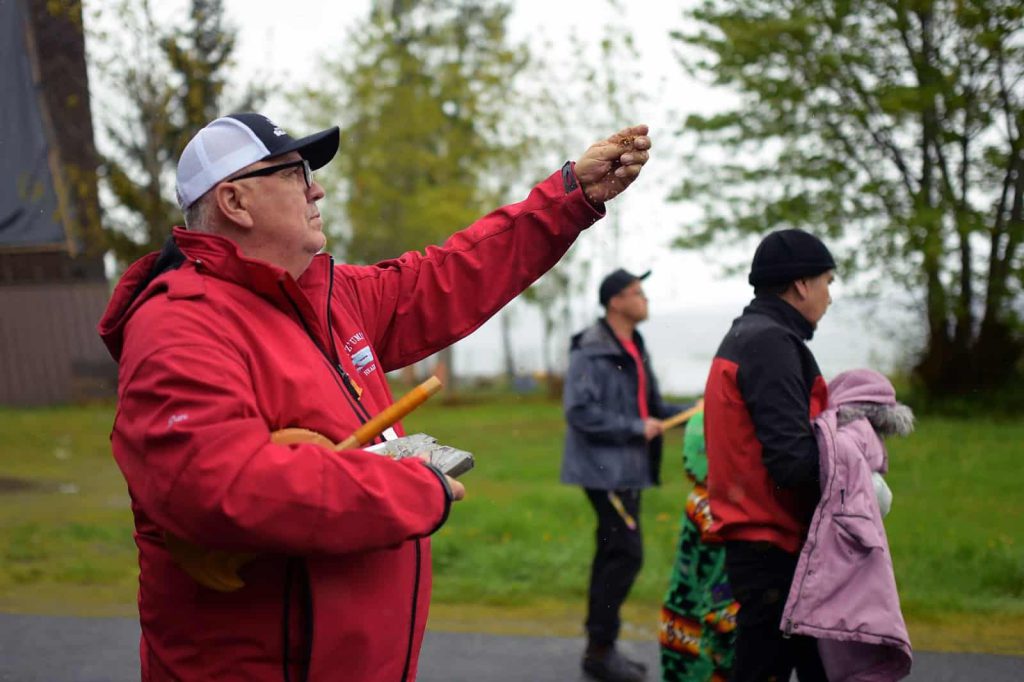
At Deer Point Road, an Elder offered a blessing to begin the event, followed by Chief Roxanne Harris, and then the group continued their journey down the rainy road, along the water’s edge.

Behind the crowd of people dressed in red was the ocean, Kulleet Bay. Shrouded in mist, the surface of the water was broken by relentless raindrops. Standing on the beach, watching, were herons. Overhead, seagulls and eagles soared.
What started as a quiet and sombre walk ended with loud singing, drumming and shouts of support. The sound of the ocean next to the roadway was eventually drowned out by the sound of drums and song. The voices of Youth singing washed over the group, and were echoed by cheers. They ventured south along Kulleet Bay Road, ending at the Big House.
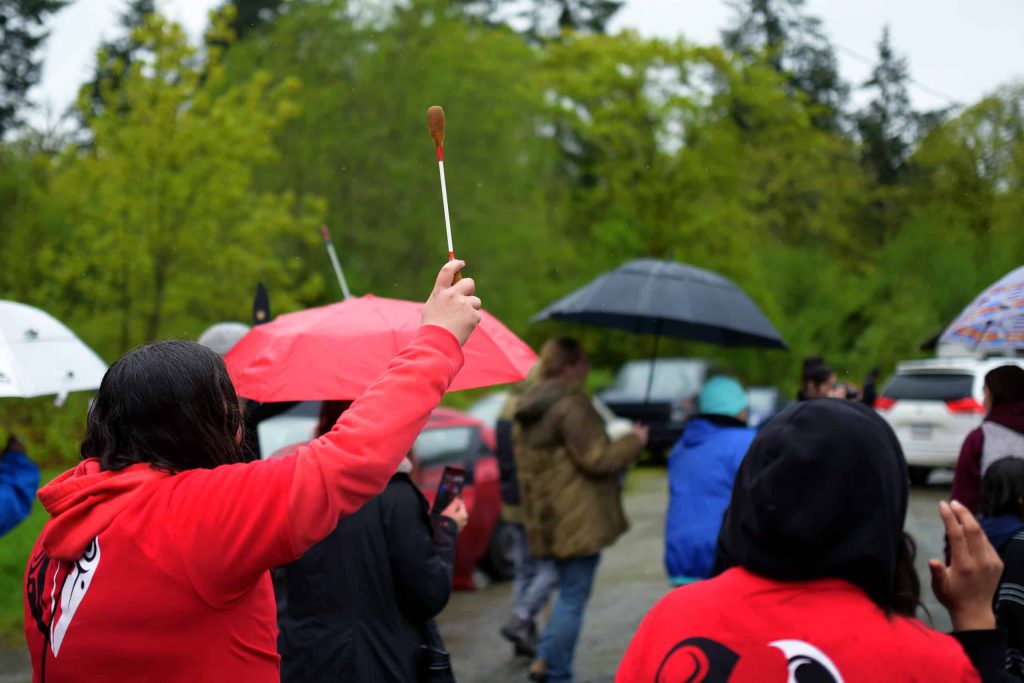
Some sang, some grieved openly, others held each other, and some shared good memories and laughed. Some simply listened as they walked.
Inside the Big House, lunch was served, where the Elders and children ate first. While people feasted together, members of the community stood up to speak, thanking everyone for coming out to support them in honouring the women and girls in their community who never came home.
Many chose to sing and uplift the group, but everyone fell silent when an Elder chose to share a personal song dedicated to missing and murdered Indigenous women and girls.
Community members spoke to the crowd about the need for this kind of support to last more than a day; but rather every day of the year. Others spoke of their hope that one day things will change, and the need to gather because of these tragedies would diminish.
As people started to leave, Chief Harris stepped aside and spoke about the time of healing that their community is currently in.
“It was really heartwarming to see everyone gather today from far and wide, not just from Stz’uminus but from other nations and territories. All races were here today. We open our doors here in Stz’uminus, and we’re all-inclusive.”
“And what it means to us: we’re on a healing journey, it helps us if we can do […] this healing path together, and move together as one.”
Editor’s Note: This story has been updated from a previous version to correct the beginning location of the walk.
Cultural Editor’s Note: Philip McLachlan is an accomplice storyteller with IndigiNews and practices trauma-informed storytelling. The image in this story of Daniel Elliot offering tobacco in prayer was shared with Daniel’s consent.
Author
We live in a media ecosystem that thrives on misinformation. Big Tech and AI companies are consuming the work of real human beings and Canadian news has been banned on Facebook and Instagram.

And yet, I have hope for journalism because of the work we’re doing at IndigiNews.
At IndigiNews, we embody tâpwêwin — the Cree value of integrity and responsibility in truth-telling. We are committed to our independent, Indigenous-led newsroom rooted in community, accountability, and relationality. We believe storytelling is a sacred fire that connects our pasts, presents, and futures through the storytellers in our Storytelling Lodge. IndigiNews creates space for Indigenous journalists, storytellers, Knowledge Keepers, and communities to gather, learn, and share stories that matter.
As a registered charity, we are building a fire that allows our work not just to ignite but to thrive. Rather than relying on advertising or corporate acquisition, IndigiNews is sustained by people like you who believe Indigenous stories are important for the future of our communities.
Your support is making a real difference.
Our community of supporters, our Firekeepers, make it possible to grow our newsroom, publish award-winning journalism, train emerging Indigenous journalists through initiatives like the ReFocus Photojournalism Fellowship, and publish trustworthy stories that serve our communities across the country. Every story we publish helps fill in gaps left by mainstream media and ensures Indigenous perspectives are represented with care, accuracy and respect.
But there is still more work to do.
As the media landscape becomes more and more uncertain, community support is as necessary and essential as it’s ever been. Every new Firekeeper helps protect the independence of our newsroom and strengthens journalism that is accountable to our many and varied communities over corporations.
That’s why we’re inviting you to become a Firekeeper.
Firekeepers tend to and protect the sacred fire. Your monthly contributions directly support IndigiNews’s Storytelling Lodge, helps sustain our independent, Indigenous-led newsroom, and ensures future generations of Indigenous storytellers have the resources they need to do the work.
As a registered Canadian charity, all eligible donations receive a charitable tax receipt.
If you believe Indigenous stories matter, if you value independent journalism, and if you want to help build a strong future for Indigenous media, we invite you to join our circle of Firekeepers today.
Together, we can keep the fire burning.
— Eden Fineday, Publisher, IndigiNews
Support us nowLatest Stories
-
Beloved on the powwow circuit, young boy’s connection to the drum inspires
Now four, Waseskwan Redcrow was dancing ‘before he could even fully walk’ — his family says participating in powwows has brought them joy and belonging
-
Indigenous leaders give the UN a roadmap for protecting their peoples
Amidst prayers and vows of solidarity, UN Expert Mechanism on the Rights of Indigenous Peoples ends annual meetings with demands for ‘action we’re not seeing globally’