səlilwətaɬ exhibition uplifts beauty and strength of boys and men with long hair
‘The Boys Who Braid Their Hair’ was created to educate and empower following a high-profile incident where an Indigenous boy’s long hair was cut in a ‘Saskatchewan’ daycare

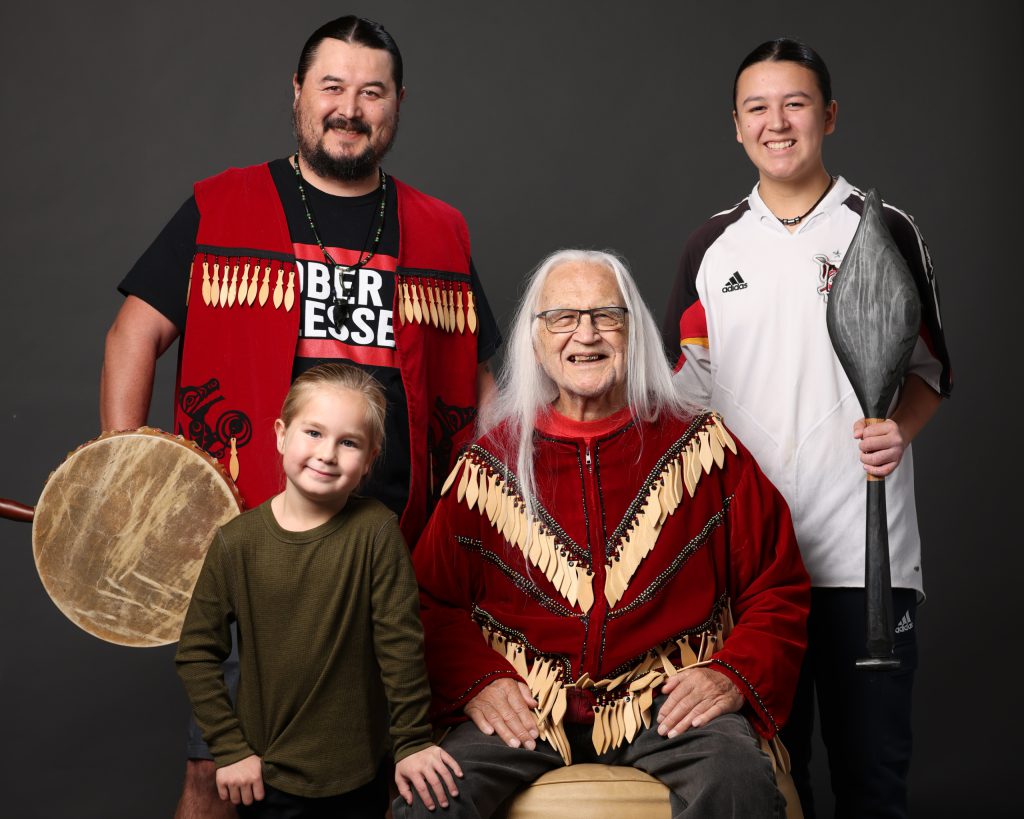
Andrea Aleck grew up living with her grandfather, chief Dan George, who wore his hair long past his shoulders. It was always normal to see men and boys with long hair.
So while watching the news in 2022, Aleck was “quite alarmed” when she saw a report about a Saskatoon daycare that was closed after a Métis child’s hair was allegedly cut by an adult who worked there.
Long hair and braids hold a strong cultural and spiritual significance for many Indigenous people, and hair is often only chopped off during times of mourning.
The child’s mother alleged that the daycare operator justified the violent act to her, stating “she didn’t like long hair on boys and that Indigenous children shouldn’t have long hair,” according to Global News. The daycare’s license was cancelled by the Saskatchewan Ministry of Education.
“That was shocking to me that in this day and age, these things are still happening to our Indigenous children,” said Aleck.
As director of health and wellness for the səlilwətaɬ (Tsleil-Waututh) Nation, Aleck was moved to consider the experiences of boys in her local school district, and wondered how she could share with them the teachings she received growing up.
“That’s when I came up with the idea to create this campaign for our young boys and men in our community.”
Aleck’s campaign, “The Boys Who Braid Their Hair,” started life as a two-day exhibition at the Polygon Gallery in early April, before touring to the Nature House at Maplewood Flats, where it is now on view.
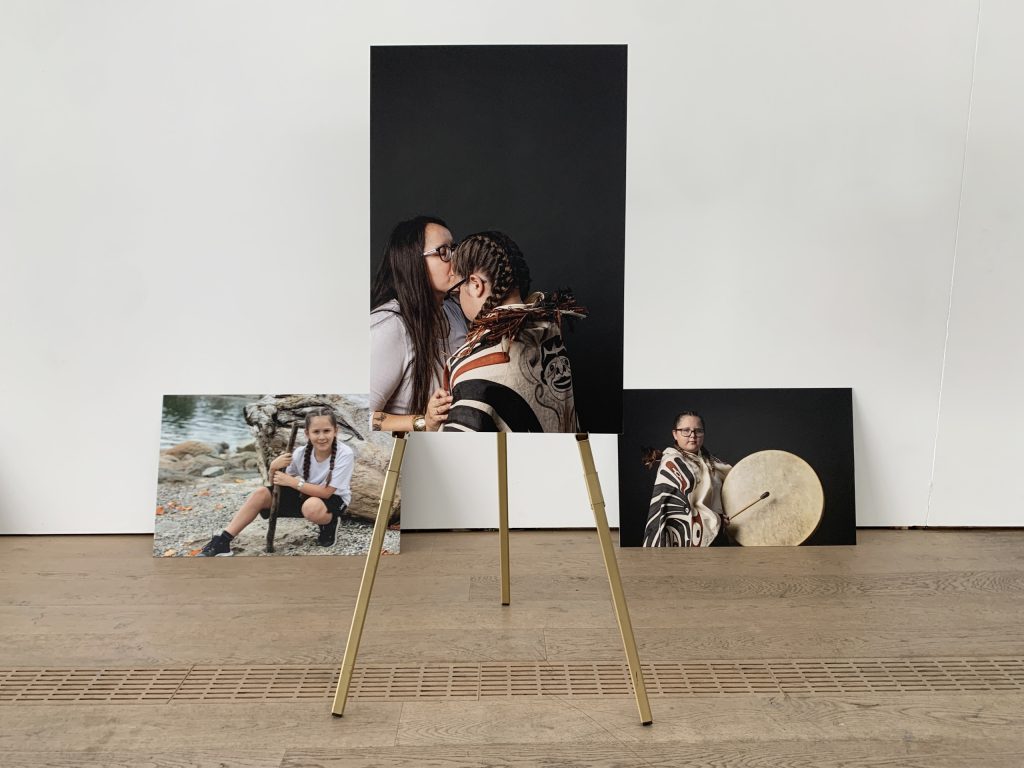
The intention, said Aleck, is to uplift and to share snəw ̓eyəɬ (teachings). “To be able to foster a sense of pride and belonging, and a connection not only to our land and people, but also our heritage.”
Crucially, both the Polygon Gallery and Natures House are located on the shores of səlilwət (the Burrard Inlet) — the heart of səlilwətaɬ territory.
“As səlilwətaɬ, we are ‘People of the Inlet’ and our connection to water is so deep and profound our creation stories come from the mother inlet,” said Aleck.
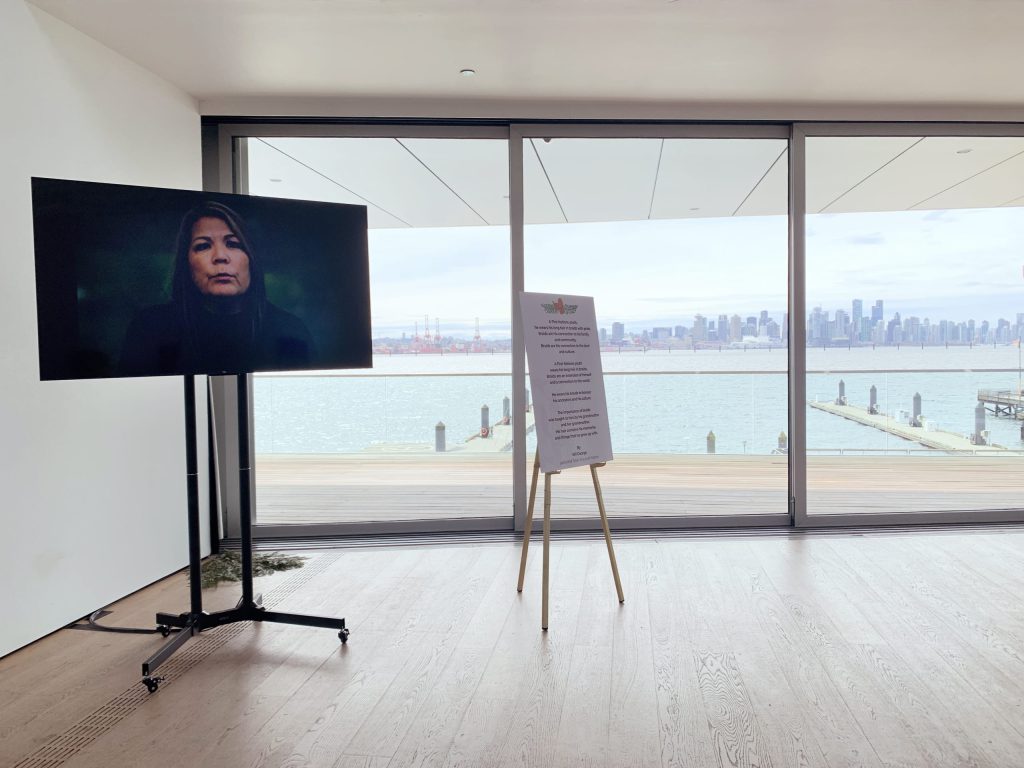
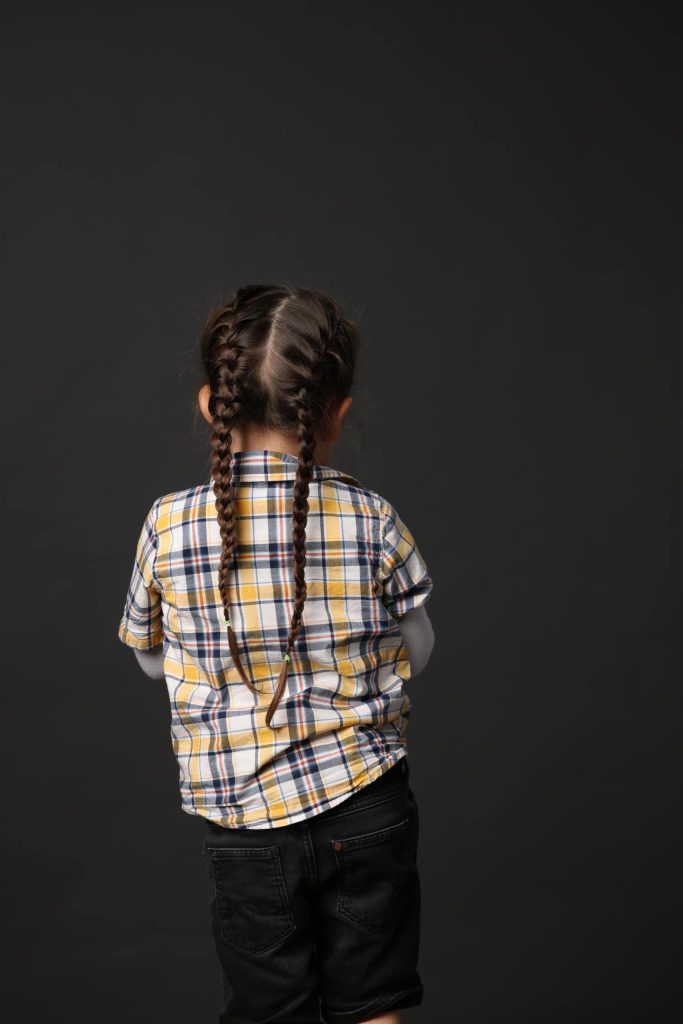
With sweeping views of the ancient highway where səlilwətaɬ peoples have paddled since time immemorial, the Polygon exhibition displayed around two-dozen photographs by Nancy Bleck and Derek Stevens of səlilwətaɬ boys, men and Elders proudly wearing their long hair and braids in a series of family-style portraits.
Accompanying the photographs is a short documentary featuring interviews from Elders, men and Youth, and footage from the day of braiding and photography.
“The longer my hair grew, the more comfortable I became in my own skin,” said one Youth in the documentary.
Cedar bows lay in each of the four corners of the exhibition space, “to protect the spirit of the work, the spirit of the images, and to also ground and bless the space,” said Aleck.
Aleck said she was inspired by basketball star Michael Linklater’s “Boys with Braids,” an international movement that celebrates Indigenous boys and their hair. Linklater, who is nehiyaw (Cree) from Piyesiw-Awasis (Thunderchild First Nation) was bullied at school for his braids. But in 2014, he used his fame in sports to raise awareness and educate the public about the cultural significance of long hair for Indigenous boys and men.
“Individuals don’t really understand the teachings around touching somebody’s hair without permission,” said Aleck. “You’re interrupting the sacredness and their spirituality and the connection of that hair for that individual.”

Aleck also hopes the project helps to bridge the generational gap between young children and Elders. “Our Elders have the ability to share the teachings behind our hair, and what a blessing and a gift it is to be in this space and time where we have the right to choose to grow our own hair.”
Aleck recounted how painful it was to see the news about the child’s hair being cut in daycare and be reminded of the children whose hair was forcibly cut short at residential “schools.”
“It’s like reclaiming the strength that was taken from our grandparents,” said another Youth in the documentary.
səlilwətaɬ has invited schools within the “North Vancouver” district to the exhibition at Nature House. It’s Aleck’s hope that this will begin a conversation and offer an opportunity for səlilwətaɬ to visit those “North Vancouver” schools, and others, for further education.
“We want to share in a really kind and gentle way the respect that we have for ourselves, but also what’s really important is cultivating safe spaces within the school system for our children, and making sure that they’re culturally safe.”
In preparation for this, səlilwətaɬ is developing an educational toolkit that includes a poster campaign.
Aleck says each poster will carry a cultural teaching. “For example, one poster will say ‘My hair is sacred, it holds my medicine.’”
“I think when we start framing the importance of hair and the connection to Creator and spirituality and who we are, then people will really identify that this is something that is sacred and to be respected.”
“The Boys Who Braid Their Hair” is on view to the public free of charge at The Nature House at Maplewood Flats every Tuesday, Thursday, Saturday and Sunday, from 11 a.m. to 3 p.m. until May 19.
Author
We live in a media ecosystem that thrives on misinformation. Big Tech and AI companies are consuming the work of real human beings and Canadian news has been banned on Facebook and Instagram.
And yet, I have hope for journalism because of the work we’re doing at IndigiNews.
At IndigiNews, we embody tâpwêwin — the Cree value of integrity and responsibility in truth-telling. We are committed to our independent, Indigenous-led newsroom rooted in community, accountability, and relationality. We believe storytelling is a sacred fire that connects our pasts, presents, and futures through the storytellers in our Storytelling Lodge. IndigiNews creates space for Indigenous journalists, storytellers, Knowledge Keepers, and communities to gather, learn, and share stories that matter.
As a registered charity, we are building a fire that allows our work not just to ignite but to thrive. Rather than relying on advertising or corporate acquisition, IndigiNews is sustained by people like you who believe Indigenous stories are important for the future of our communities.
Your support is making a real difference.
Our community of supporters, our Firekeepers, make it possible to grow our newsroom, publish award-winning journalism, train emerging Indigenous journalists through initiatives like the ReFocus Photojournalism Fellowship, and publish trustworthy stories that serve our communities across the country. Every story we publish helps fill in gaps left by mainstream media and ensures Indigenous perspectives are represented with care, accuracy and respect.
But there is still more work to do.
As the media landscape becomes more and more uncertain, community support is as necessary and essential as it’s ever been. Every new Firekeeper helps protect the independence of our newsroom and strengthens journalism that is accountable to our many and varied communities over corporations.
That’s why we’re inviting you to become a Firekeeper.
Firekeepers tend to and protect the sacred fire. Your monthly contributions directly support IndigiNews’s Storytelling Lodge, helps sustain our independent, Indigenous-led newsroom, and ensures future generations of Indigenous storytellers have the resources they need to do the work.
As a registered Canadian charity, all eligible donations receive a charitable tax receipt.
If you believe Indigenous stories matter, if you value independent journalism, and if you want to help build a strong future for Indigenous media, we invite you to join our circle of Firekeepers today.
Together, we can keep the fire burning.
— Eden Fineday, Publisher, IndigiNews
Support us nowLatest Stories
-
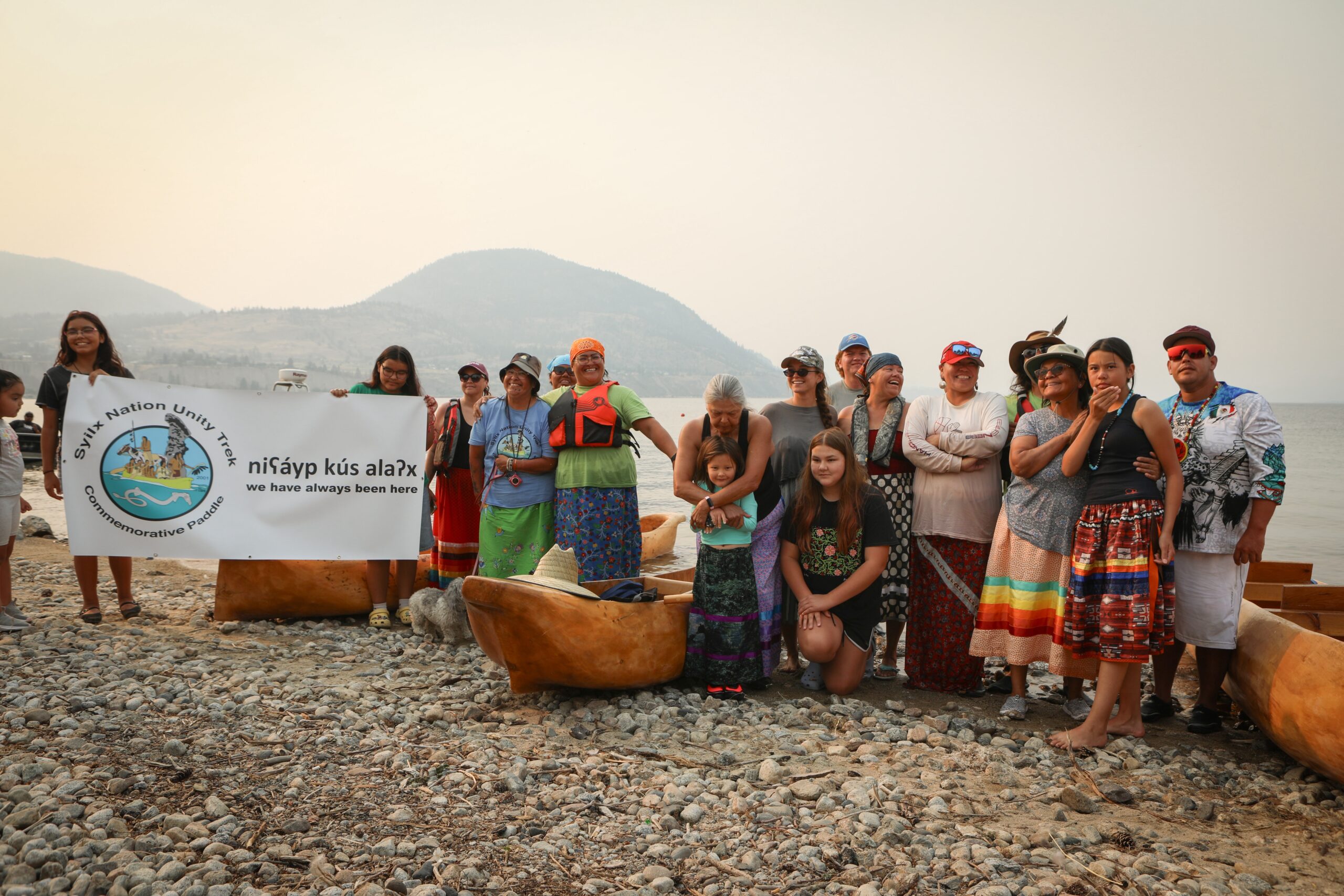
Travelling in dugout canoes, syilx Okanagan paddlers complete weeklong Unity Trek
‘Unity is connecting the people to each other, and connecting ourselves to the land,’ said one participant about the commemorative journey that wrapped up on Aug. 1
-
In the Okanagan desert, snakes offer lessons on protecting a fragile ecosystem
For two decades, researchers at the Nk’Mip Desert Cultural Centre have tracked snakes across syilx homelands — while helping people appreciate the often-feared creatures