syilx leaders, allies envision watershed stewardship for the next 250 years
From drought planning to salmon restoration, syilx leaders say water management must be guided by long-term ecological relationships, not short-term political cycles
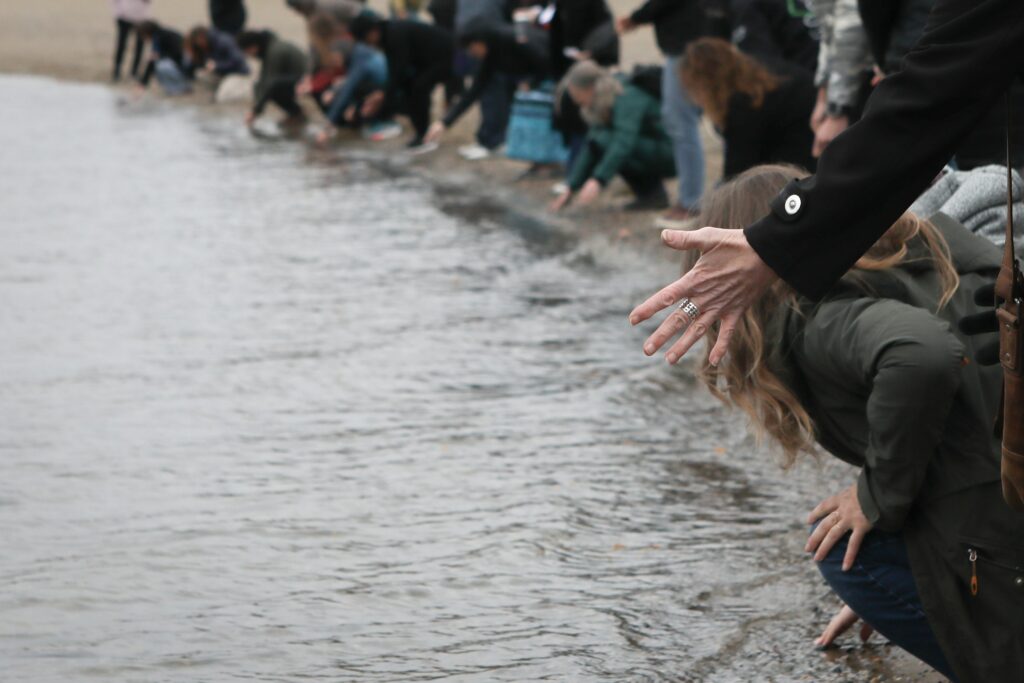
This story is third in a series examining how syilx leaders are responding to worsening watershed conditions through Indigenous-led governance, collaborative stewardship, and long-term ecological planning across the Okanagan and Similkameen regions. Read stories one and two.
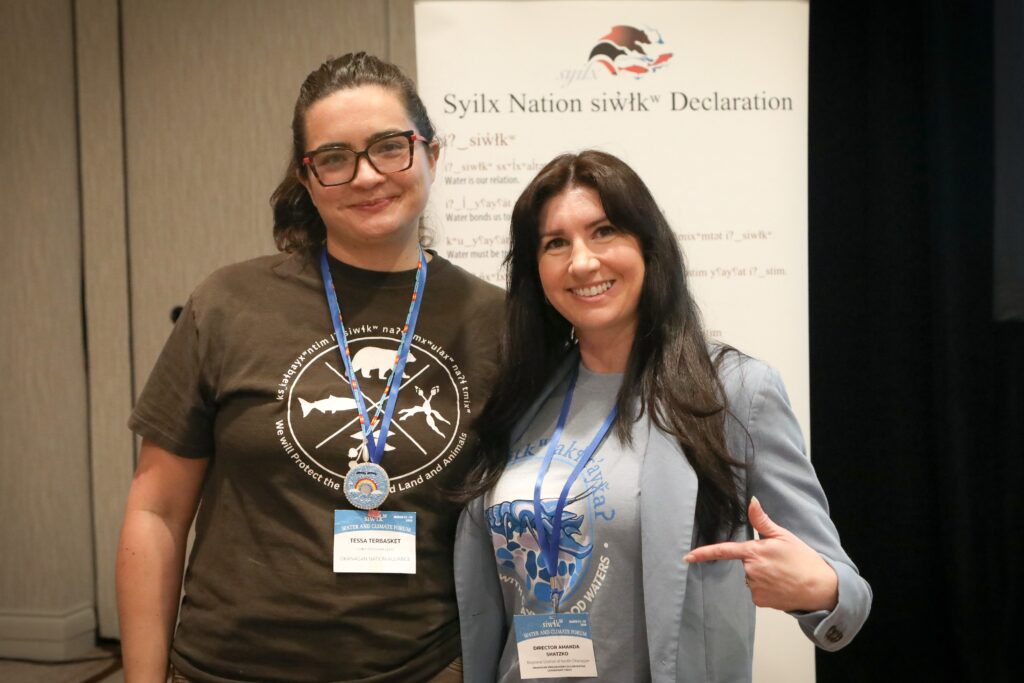
For qʷəqʷim̓cxn Tessa Terbasket, the foundation of effective regional water management begins with the syilx Nation’s knowledge, laws and responsibilities for water.
In the Okanagan Valley in “B.C.’s” southern Interior, her people have long recognized siwɬkʷ — water in the n̓syilxcn̓ language — as a sacred entity and a relative that connects all life.
“We all have to come together, as all peoples, to protect and restore water,” she told IndigiNews.
“I do this for my son, and his future kids and grandkids.”
qʷəqʷim̓cxn is the water program lead for the Okanagan Nation Alliance (ONA), which stated in its 2014 Water Declaration that “any use of water should be an act of reverence and a commitment to our responsibilities.”
The document also emphasizes that “water must be treated with reverence and respect,” and people’s “relationship with water is not taken lightly.”
“We are responsible,” it declared, “to ensure that our relation can continue to maintain the health and resiliency of our land and animals.”
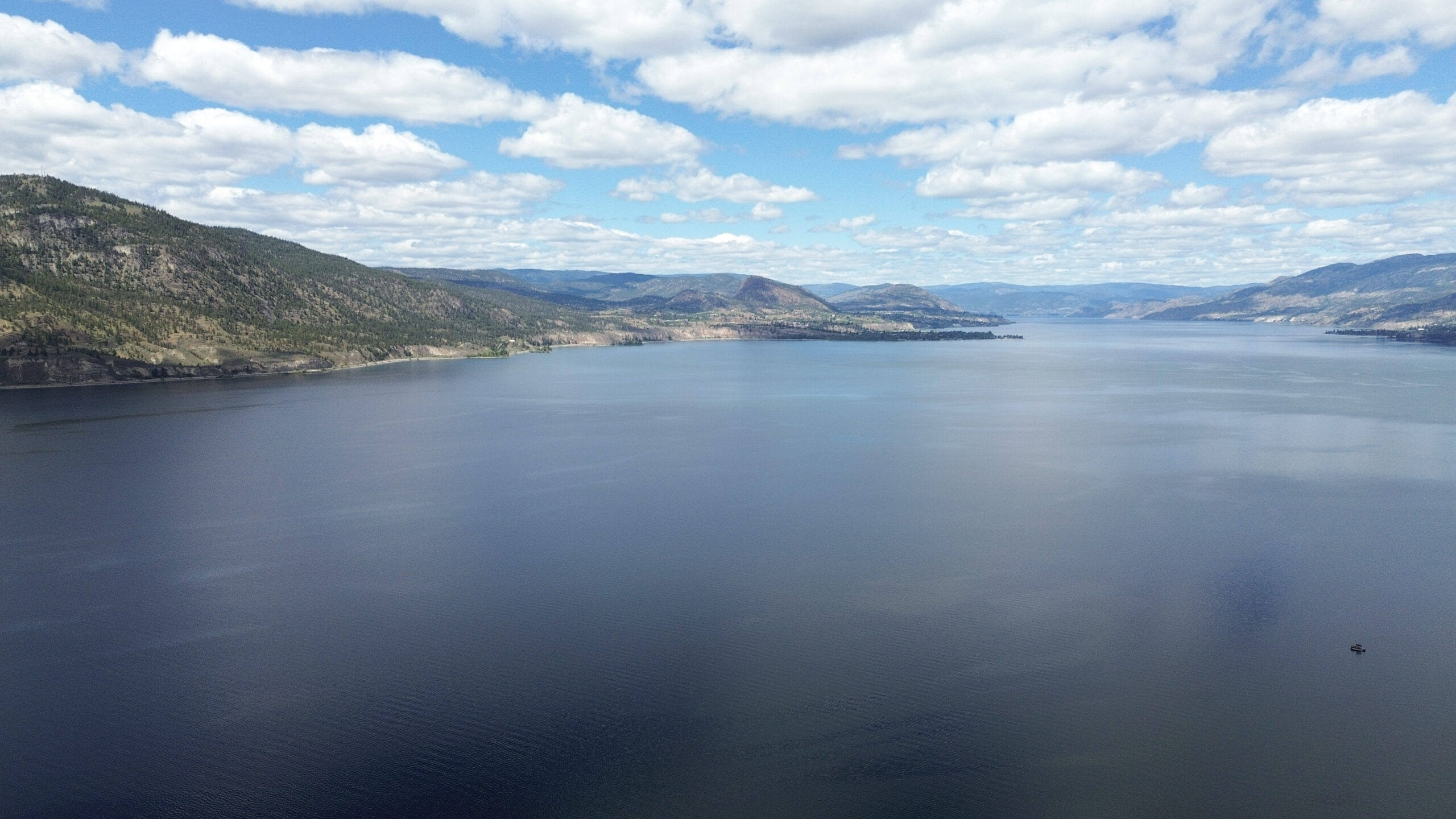
Last month, syilx leaders at the ONA declared an emergency across six of its major watersheds, in response to worsening droughts, declining fish populations, and growing threats to long-term water security throughout their territories.
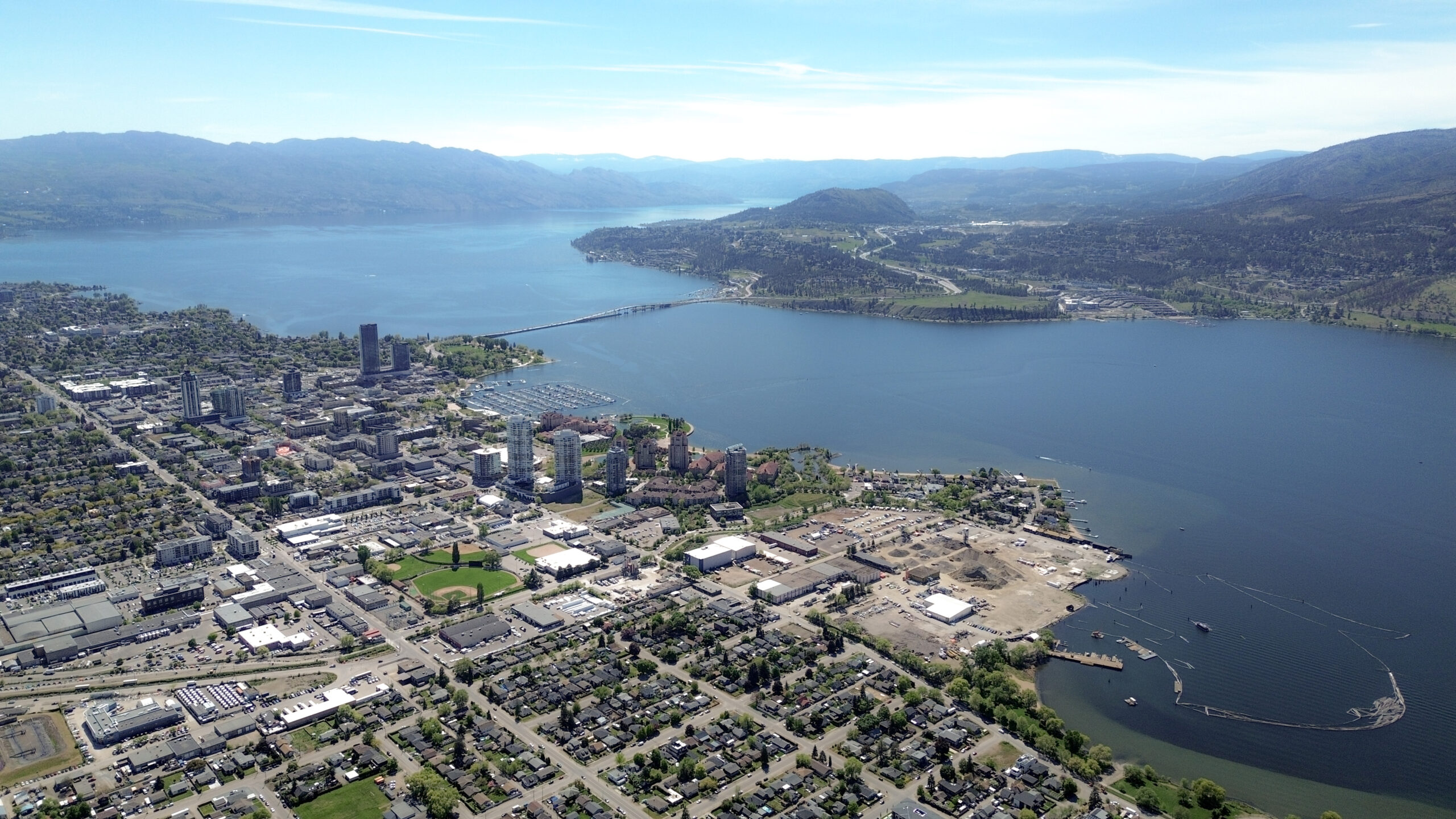
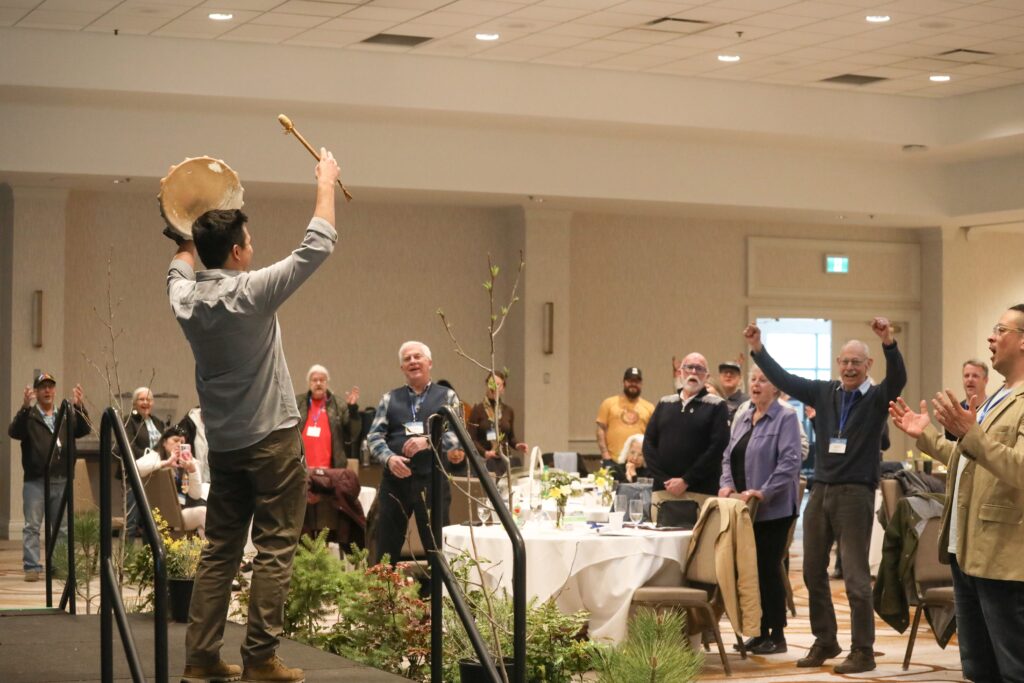
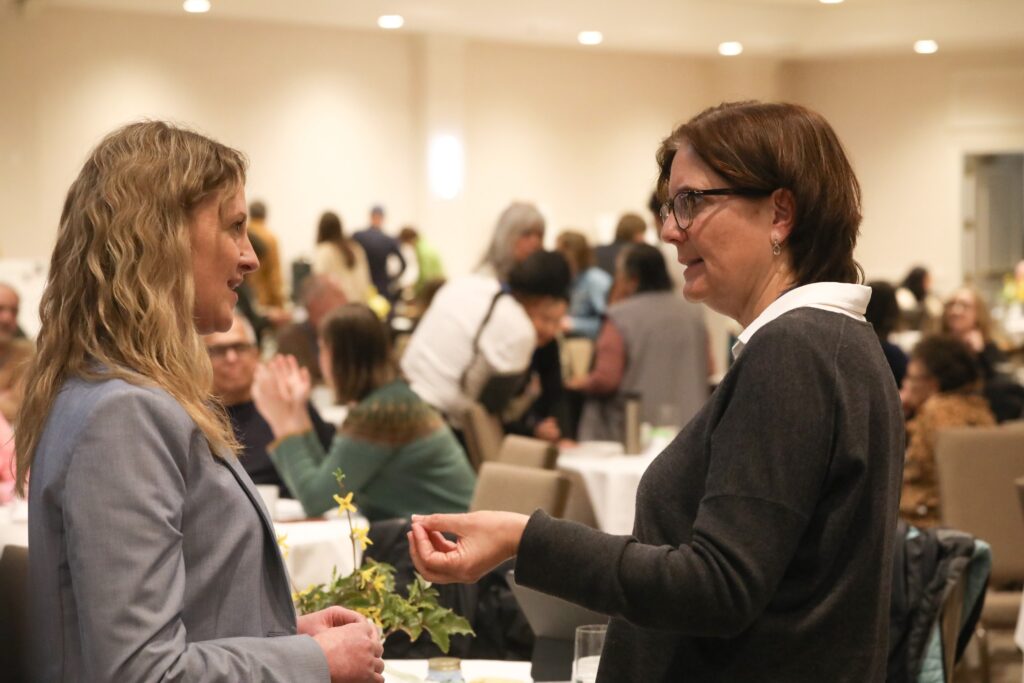
Together with qʷəqʷim̓cxn’s team, they held a two-day Water and Climate Forum in kiʔláwnaʔ (Kelowna) in March. The event drew more than 320 participants — from regional elected leaders to international water researchers and local knowledge keepers.
‘We have to do it collectively’
qʷəqʷim̓cxn is also one of the main architects behind the Okanagan-Similkameen Collaborative Leadership Table (CLT).
The syilx-led initiative brings together more than a dozen Indigenous and non-Indigenous elected leaders around the restoration and protection of regional waterways.
The water forum comes during a time where regional Indigenous and non-Indigenous governments have recognized a worsening crisis facing local waterways.

Across jurisdictions, ecosystem degradation, collapsing aquatic species populations, and climate change’s impacts — including threats to water quality, worsening droughts, and warming waters — have raised the urgency of protecting local watersheds.
In response, the CLT pledged last year to develop a plan that restores and protects waterways across the two watersheds for the next seven generations.
“If we’re going to stop doing the status quo on how we manage water, how we make decisions for water, and for how we use water as peoples, we have to do it collectively,” said qʷəqʷim̓cxn.
“It doesn’t need to be fear-based — this is about relationships, this is why we’re doing it.”
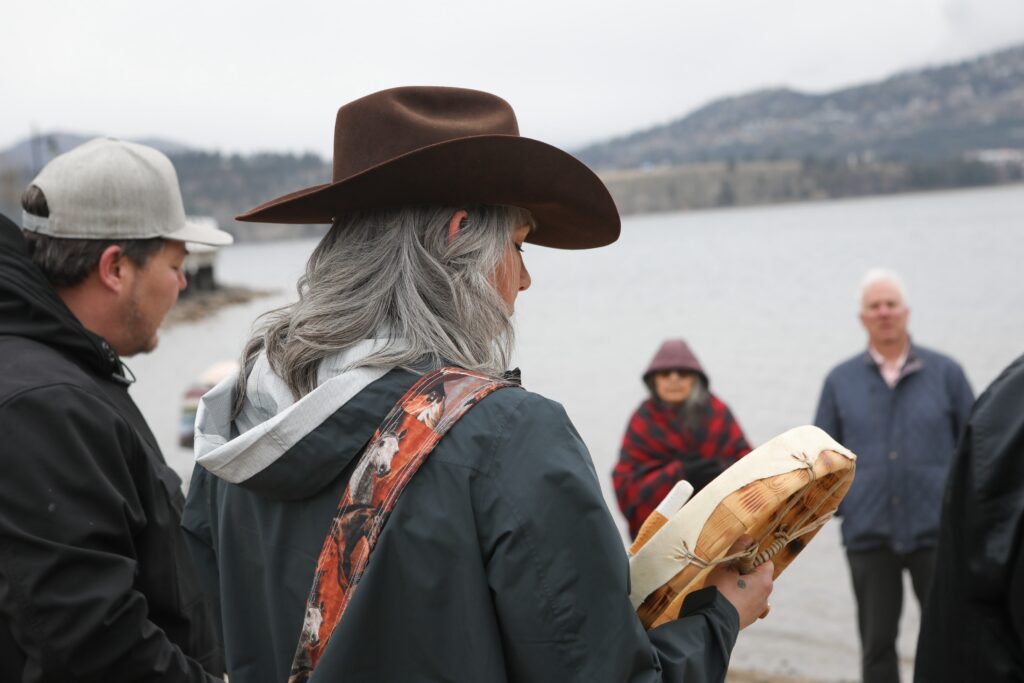
In addition to technical discussions about water flows and restoration projects, the spring gathering was also a chance for CLT leadership to boost public awareness of their campaign, and to strengthen their relationships with each other.
Experts advised those attending the forum to explore new relationships — with the environment and with one another — as they map out their vision to collectively manage regional water for the next 250 years.
“I think this will really have inspired people and the CLT leaders,” qʷəqʷim̓cxn said after the event. “I think there’s lots of great ideas.”
Gwen Bridge, a consultant from Saddle Lake Cree Nation in “Alberta,” encouraged leaders to be creative in their partnership, so new governance structures can emerge.
“When we come together in this place of understanding, we don’t try to look for things that are the same,” Bridge said in her keynote speech.
“We try to create something new based on that understanding.”
Being proactive for water — rooted in syilx law
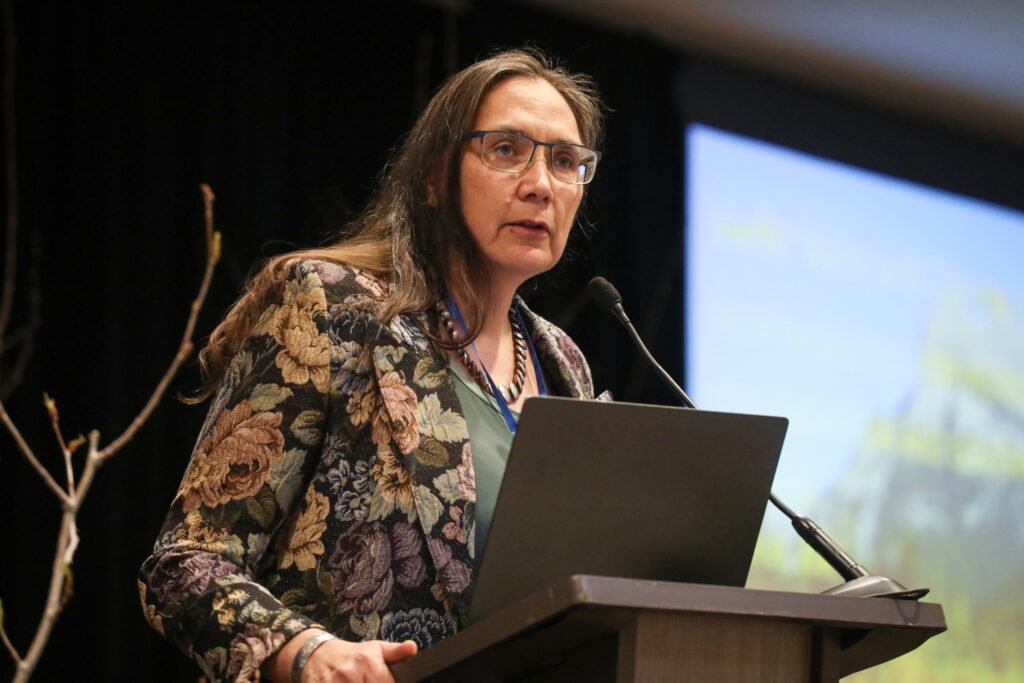
qʷəqʷim̓cxn, a member of Lower Similkameen Indian Band, said the leadership table is not simply about long-term planning.
It will only succeed, she said, if syilx ways guide the CLT’s approach. But that requires both “learning” and “unlearning” about Indigenous title and rights.
“It’s syilx title and rights and responsibilities to water, it’s our siwɬkʷ laws,” she explained. “The responsibilities [and] practicing the ceremonies — that is the only way that we’re going to move forward to be able to protect and restore the water.”
If the watersheds aren’t healthy, then “we aren’t healthy,” qʷəqʷim̓cxn said.
“That’s actually a syilx law,” she said.
“Those laws … are going to lead us forward to be more proactive in our actions for water.”
The leadership table is not intended to undermine local governments or replace existing jurisdictions, she insisted.
“It’s about coming together collectively,” she said, “neighbour-to-neighbour, shoulder-to-shoulder, to work on water.”
She sees efforts to restore and protect watersheds as inseparable from reconciliation.
“When we come together as peoples — as neighbours — and we figure out how we’re going to work together and take that action for water … that is reconciliation,” she said.
‘Indigenous and municipal governments find a way’
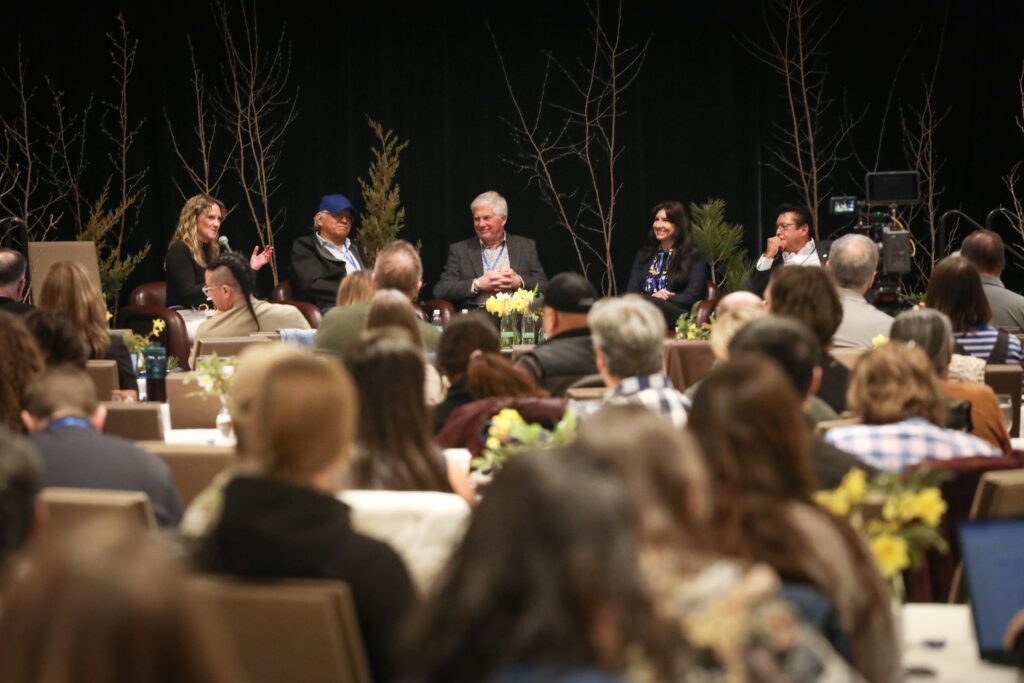
The inspiration behind the CLT originally came from the prairies.
It’s modeled on a national project of the Manitoba-based Centre for Indigenous Environmental Resources, which promotes “reconciliation that is rooted in their decades of experience working with Indigenous communities and municipalities advancing shared governance.”
The organization’s Collaborative Leadership Initiative (CLI), in particular, “helps Indigenous and municipal governments find a way to form relationships and work together on issues of common concern.”
Similar initiatives have been implemented across the country, including Manitoba. In 2019, elected leaders from 11 Indigenous governments and 16 municipalities in the Prairie province met for the first time in 154 years to address environmental issues facing Lake Winnipeg.
Together, they signed a memorandum of understanding committing them to work together on “the complex challenges of protecting Manitoba’s land, water, and air.”
Similarly, the work emerging through the Okanagan-Similkameen CLT is grounded in a different understanding of governance itself, qʷəqʷim̓cxn said — an understanding rooted in long-term relationships, shared responsibilities, and the health of the watershed as a whole, from headwaters to salmon-bearing streams.
Rather than reacting only when there are water crises, the initiative asks governments and communities to view water as transcending generations and jurisdictions.
That approach, she said, requires moving beyond fragmented strategies around water management, and toward collective stewardship rooted in responsibilities to future generations.
“We need to stop being so reactive to water,” she explained, listing droughts, wildfires and floods that are increasingly affecting the watershed.
“We need to think more proactively,” she noted. “And not be in those emergency situation moments.”
Learning to live with drought
The forum also brought together water management experts from outside the region.
They included Spanish geographer Nuria Hernández-Mora, who studies drought management and water governance.
She told forum attendees a more proactive approach is needed to mitigate worsening drought conditions.
“Droughts must be treated as a natural recurring phenomenon, not an exception — more and more so in the climate change scenarios,” said Hernández-Mora.
“The best way to improve resilience is to increase strategy, increase scarcities, decrease over-allocation, and improve the status and the health of the ecosystems.”
She encouraged leaders in the region to learn to co-exist with drought — instead of only taking action when water emergencies strike.
Importantly, leaders need to engage continuously to build trust and relationships across regional governments, “to tackle the problems that are coming our way,” she said.
“It is those relationships that actually allow you to make bold moves, and trust that the others are going to go along with you.”
That includes building trusting relationships “with people with whom you did not talk before,” she added.
“We need to rely on each other to take bold moves to face the challenges that come.”

The ONA invited Hernández-Mora after noting similarities between the Okanagan Valley and parts of Spain, where European governments have spent decades adapting to water scarcity. They achieved that thanks to collaborative planning and drought-management frameworks.
qʷəqʷim̓cxn noted that both Spain and syilx territories have “water allocation issues,” including “similar water usages, like agriculture, industry and mining.”
“But they have updated their drought management plan,” she learned.
“There’s the European Union’s Water Framework Directive. Moving forward with collective policies to do the very thing that I was just talking about — to be more proactive for water.”
Laws of relationships
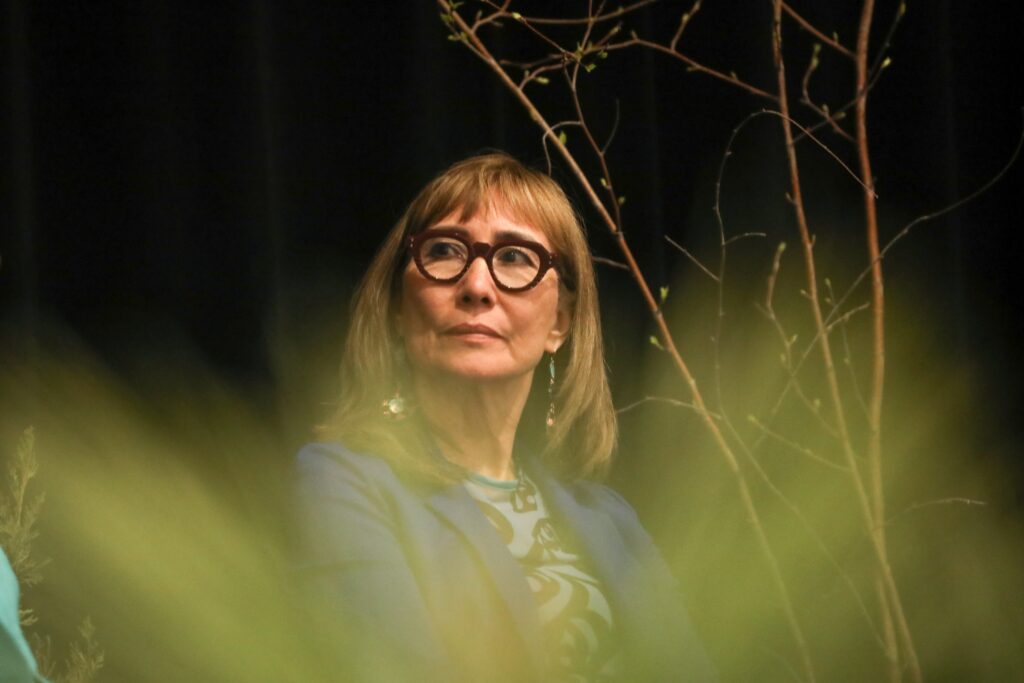
Haida environmental lawyer Terri-Lynn Williams-Davidson was another of the forum’s keynote speakers. She shared the history of the Council of the Haida Nation’s collaborative governance agreements with the provincial and federal governments.
After serving as general counsel for her nation’s landmark Aboriginal title case and for reconciliation negotiations, she described decades of bargaining, litigation and relationship-building that followed efforts to protect Athlii Gwaii (Lyell Island) from logging in the 1980s.
That high-profile conflict was “a galvanizing moment,” she recounted, which ultimately led to an agreement between “Canada” and the Council of the Haida Nation in 1993 — a historic pact to collaboratively manage Gwaii Haanas, now designated as the Gwaii Haanas National Park Reserve and Haida Heritage Site.

READ MORE: Haida Nation is ‘Giving Back Names’
“That was really an incredible moment for the Haida Nation in standing up for our land [and] standing up for the supernatural beings,” Williams-Davidson recalled.
“Realizing that these loggers are actually part of the community of Haida Gwaii, we need to start working together.”
Since then, her nation has worked for decades to “blanket the entire land base in collaborative management,” she said, through a mix of litigation and negotiations between her nation and the federal and provincial governments.
“That really was the genesis of the start of the Haida Nation’s efforts towards reconciliation,” she explained. “The solution had to be found in us working together.”
The Supreme Court of Canada’s pivotal 2004 ruling in Haida Nation vs. British Columbia established the “government’s duty to consult with Aboriginal peoples and accommodate their interests … part of a process of fair dealing and reconciliation.”
The decision emphasized that “addressing the Aboriginal concerns may require taking steps to avoid irreparable harm or to minimize the effects of infringement.”
As Williams-Davidson recounted, the province claimed it needed to log trees in Haida-designated protected areas to “keep the logging communities alive on these islands.”
But, she said, the Council of the Haida Nation replied, “That’s not possible.”
At the time, the seeds of collaboration were being planted thanks to a project bringing communities together through an Islands Community Stability Initiative. Community members arrived at a consensus on “how the forests would be logged on Haida Gwaii.”
One of the municipalities most affected by the proposed logging was the Village of Port Clements.
The village eventually intervened at the Supreme Court of Canada to support the Haida Nation’s rights, and was first to sign a protocol agreement with the nation’s leaders to “work together in designing a future that will support a healthy environment and create a sustainable islands economy … for the well-being of the land, waters and people of Haida Gwaii.”
As Williams-Davidson tells it, Port Clements’ elected leaders told the Supreme Court they had “more faith that the Haida Nation will take care of our local interests than the province.”

She said her nation’s historic achievements might “seem impossible” to others, one key takeaway was “the need to work together” — grounded in Indigenous rights.
“What we’ve been able to do is to protect Haida Gwaii,” she said.
“It’s all about the potential. Laws of relationships are all about potential.”
The Haida lawyer’s insights at the water forum “provided a clear path forward in what we need to do here,” said qʷəqʷim̓cxn in an interview.
“They realized that they have to work with their neighbouring communities,” she told IndigiNews.
“It’s all about relationship building.”
What the salmon tell us
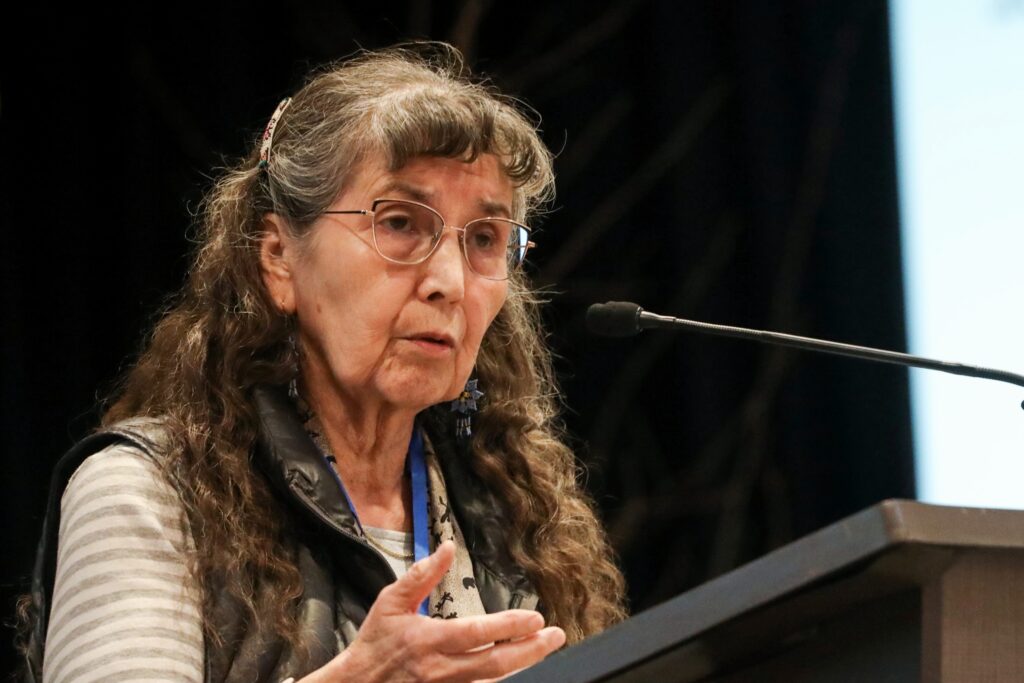
lax̌lax̌tkʷ Jeannette Armstrong — a syilx knowledge keeper, professor and poet from Penticton Indian Band — offered the event’s opening speech.
She spoke about the long history of collaborations between syilx and both neighbouring Indigenous nations and colonial governments.
For generations, she said, her people and adjacent Salish-speaking nations — such as the Secwépemc and Nlakaʼpamux peoples — got along with each other through a number of agreed-upon laws that were enforced; peace was achieved through sustainability.
The responsibilities for those waterways, she explained, were collectively maintained by hereditary chiefs, salmon chiefs, village chiefs, and other leaders.
“They all agreed with each other on how that was to be done, and how those resources were to be sustained,” she said, “so that there was always plenty and it would always be bountiful.
“We were united in terms of the sustainability of our resources and the peaceful work that needed to be done to maintain it — and to give it its best chance.”

If communities disagreed on something, “they sorted it out,” lax̌lax̌tkʷ added. “They made new agreements, new protocols, new laws to be able to get along with each other.”
Respecting boundaries between communities was “maintained peacefully,” she said, “and was enforced through their protocols and through their laws.”
As a language revitalization expert, lax̌lax̌tkʷ pointed to the syilx process of En’owkinwixw — a collective decision-making model. The last syllable of that n̓syilxcn̓ word, she explained, “means that we inform each other in the best way that we can before decisions are made.”
“If we’re informed all at the same level and all in the same way, and we have a common purpose, we’ll come up with the best solutions possible,” she said.
She told forum participants about the river systems that once carried salmon through rocky canyons, valley-bottom wetlands, and interconnected waterways stretching from Kettle Falls to Spence’s Bridge — those waterways linked nations across what is now southern “B.C.” and “Washington.”
“Tribal peoples from the different groups came together and shared in that abundance,” she said.
“But they also renewed their protocols, renewed their laws, renewed their peaceful exchange of goods, and also intermarried with each other.”
Through those efforts, “there wasn’t a struggle over who owned what,” she explained, “when across the border were your relatives — that’s still the way that it is.”
Given that history, lax̌lax̌tkʷ said her people have long understood collaboration as essential to survival.
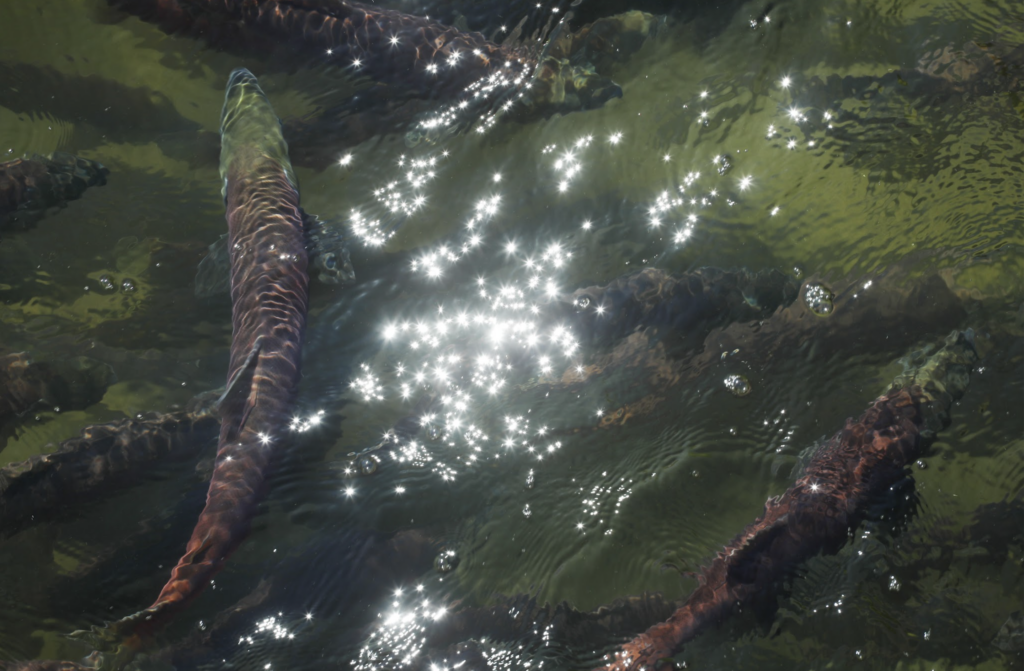
“Otherwise, our people would’ve not been able to bring the sockeye and chinook home to our communities, and move them up to where they need to be for our people,” she said.

Today, many of those same waterways flow through depleted ecosystems across increasingly dry valley terrain shaped by drought, wildfire and warming temperatures.
Given such conditions, lax̌lax̌tkʷ said watershed stewardship has to extend beyond lakes and river systems into “the highest reaches of our headwaters.”
“The whole restoration of watersheds, wetlands, creeks, tributaries, streams and rivers — no matter how small a restoration is — is important and needs to be supported, rather than criticized,” she said.
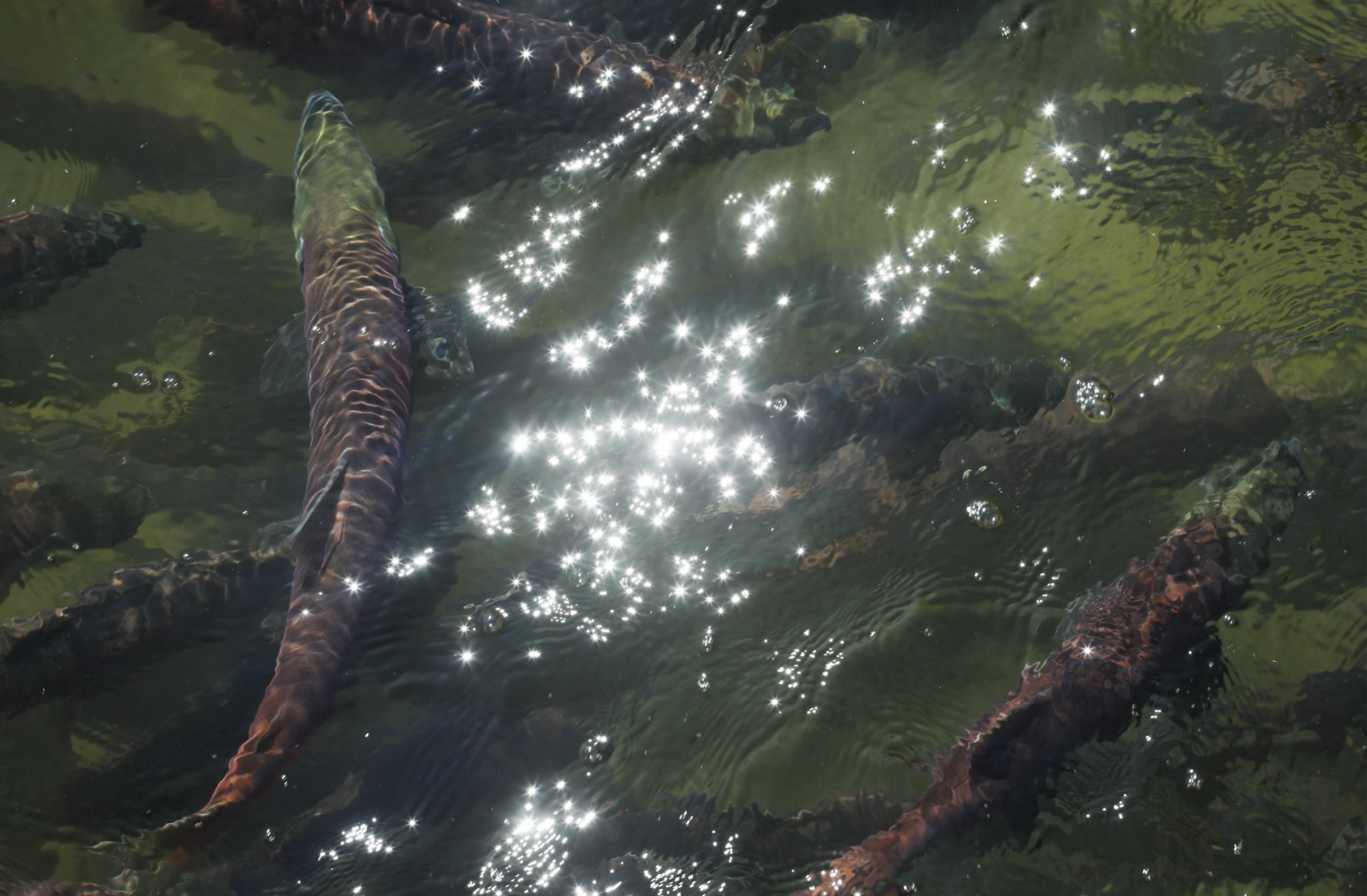
Ultimately, lax̌lax̌tkʷ said the success of such efforts will be measured by the return and health of salmon populations.
“When we restore the fullness of underwater systems,” she said, “they can survive, they can live, and they can be there.”
“It’s what’s in our prayers and ceremonies,” she noted.
“I ask each of us to act together in all the places that we have a little bit of control over.”
Also vital, she concluded, is that protecting and preserving waters for future generations must be a spiritual endeavour, too.
“It has to be that.”
Author
We live in a media ecosystem that thrives on misinformation. Big Tech and AI companies are consuming the work of real human beings and Canadian news has been banned on Facebook and Instagram.
And yet, I have hope for journalism because of the work we’re doing at IndigiNews.
At IndigiNews, we embody tâpwêwin — the Cree value of integrity and responsibility in truth-telling. We are committed to our independent, Indigenous-led newsroom rooted in community, accountability, and relationality. We believe storytelling is a sacred fire that connects our pasts, presents, and futures through the storytellers in our Storytelling Lodge. IndigiNews creates space for Indigenous journalists, storytellers, Knowledge Keepers, and communities to gather, learn, and share stories that matter.
As a registered charity, we are building a fire that allows our work not just to ignite but to thrive. Rather than relying on advertising or corporate acquisition, IndigiNews is sustained by people like you who believe Indigenous stories are important for the future of our communities.
Your support is making a real difference.
Our community of supporters, our Firekeepers, make it possible to grow our newsroom, publish award-winning journalism, train emerging Indigenous journalists through initiatives like the ReFocus Photojournalism Fellowship, and publish trustworthy stories that serve our communities across the country. Every story we publish helps fill in gaps left by mainstream media and ensures Indigenous perspectives are represented with care, accuracy and respect.
But there is still more work to do.
As the media landscape becomes more and more uncertain, community support is as necessary and essential as it’s ever been. Every new Firekeeper helps protect the independence of our newsroom and strengthens journalism that is accountable to our many and varied communities over corporations.
That’s why we’re inviting you to become a Firekeeper.
Firekeepers tend to and protect the sacred fire. Your monthly contributions directly support IndigiNews’s Storytelling Lodge, helps sustain our independent, Indigenous-led newsroom, and ensures future generations of Indigenous storytellers have the resources they need to do the work.
As a registered Canadian charity, all eligible donations receive a charitable tax receipt.
If you believe Indigenous stories matter, if you value independent journalism, and if you want to help build a strong future for Indigenous media, we invite you to join our circle of Firekeepers today.
Together, we can keep the fire burning.
— Eden Fineday, Publisher, IndigiNews
Support us nowLatest Stories
-
Indigenous people demand more say at the UN, as new crises hit their homelands
Indigenous nations live ‘on the frontlines’ of climate, conflict and new tech. But their voices remain sidelined in the global halls of power.
-
Through their lenses: Showcasing the work of our 2026 ReFocus fellows
Get to know our photojournalism training cohort through a series of portraits shot during a week in Kjipuktuk (Halifax)