syilx leader calls drought forecast ‘worrisome for the months to come’
Snow-pack levels this month are well below normal in the Okanagan Valley, impacting fish, reservoirs, and wildfire conditions
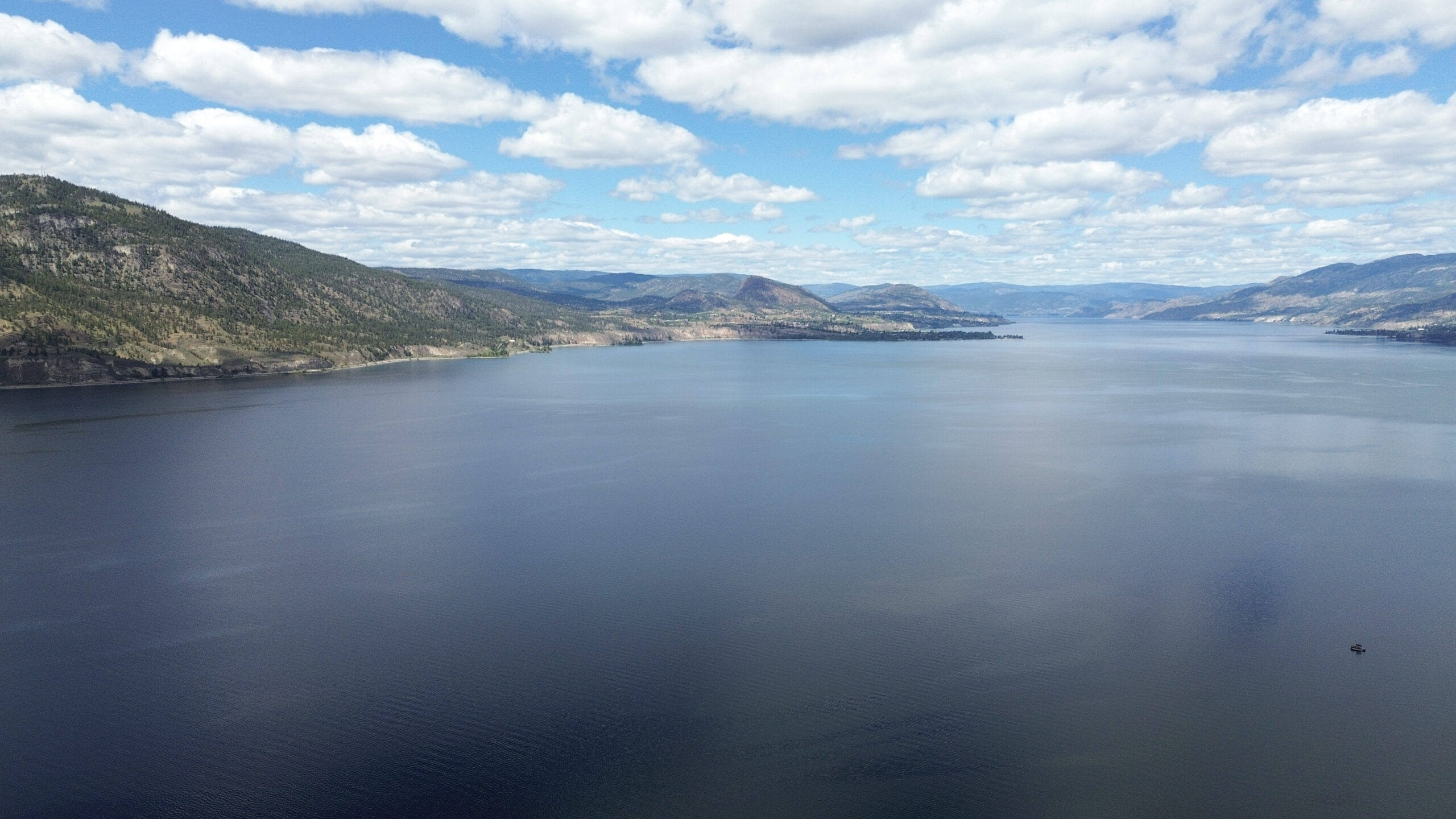
A syilx leader says he is praying for the salmon and hoping for rain as the Okanagan Valley braces for another consecutive summer of drought.
Local governments are being forced to adapt to longer and more frequent droughts, fuelled by climate change. But as water becomes less and less available, Westbank First Nation (WFN) councillor c̓ris Jordan Coble says more regional collaboration is urgently needed, and any water-conservation strategy needs every stakeholder at the table.
“It’s not looking good. I asked for prayers for the salmon, prayers for the rains, because that’s all we have now,” he said.
“There’s not enough snow to melt to fill up our creeks and rivers.”
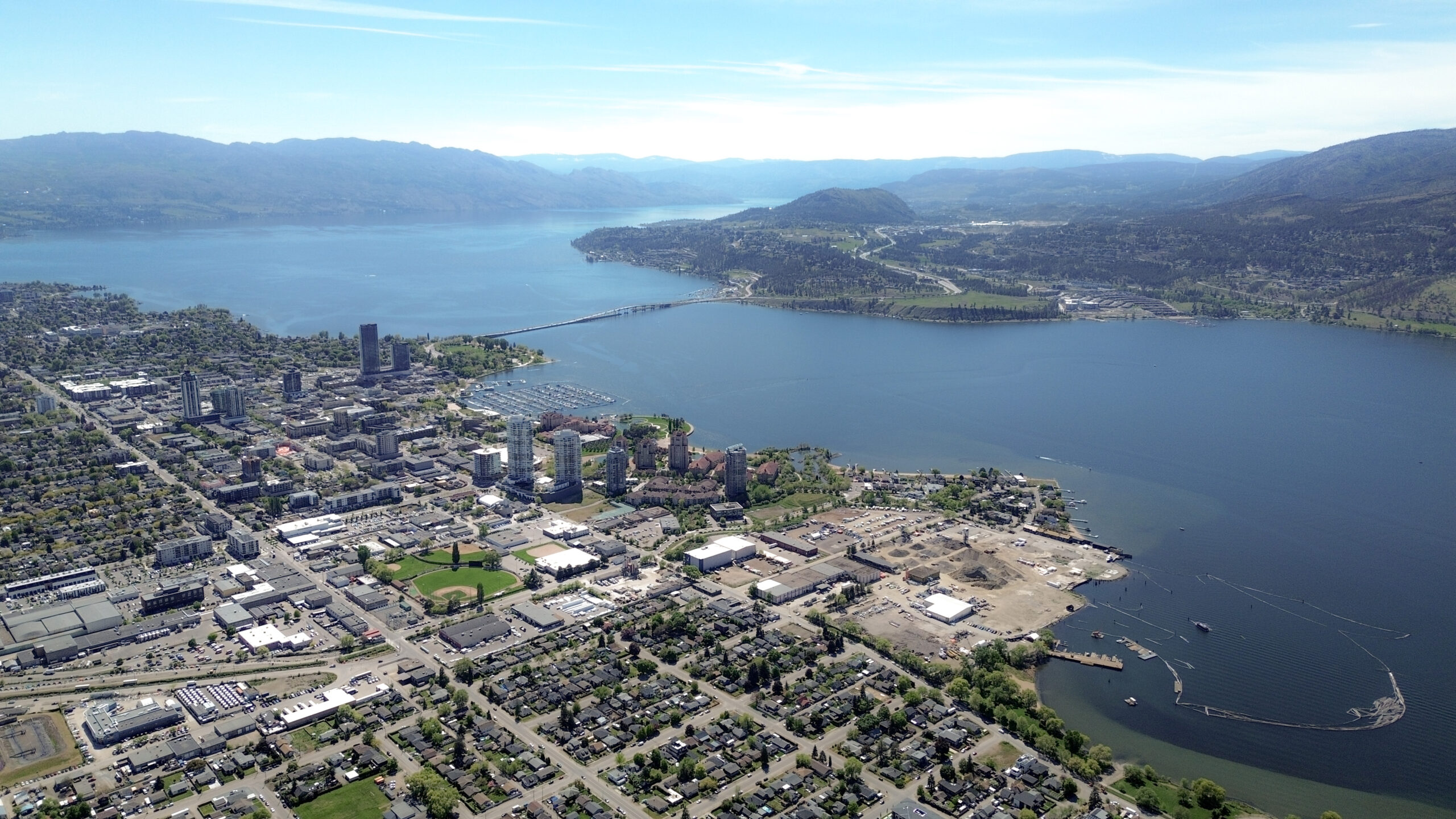
During an Okanagan Basin Water Board (OBWB) regional water report webinar on Friday, the body’s water stewardship director Nelson Jatel explained that the Okanagan Basin is “going through a fourth year of drought conditions.”
The basin is home to around 380,000 people.
The forecast comes after the Okanagan’s snowpack level plummeted over the winter. The level, which refers to the depth of liquid water held in mountain snow, dropped from 90 per cent of the normal amount in January, to just 67 per cent of that a month later, according to the province.
As of this month, however, mountain snow-pack is now just 31 per cent of the normal for this time of year. That is due to “several dry years, a below-average snowpack that is melting early, and very limited spring rainfall,” an OBWB spokesperson told IndigiNews in an email.
For comparison, last May’s snowpack level was recorded at 67 per cent of normal.
“Low snowpack threatens our lakes, rivers, and reservoirs,” the spokesperson added.
“Reduced streamflows and warming water temperatures put fish at risk, while early snowmelt also heightens the potential for an active wildfire season.”
Coble described the numbers as “alarming” and “extremely heartbreaking.”
“You can look up into the mountains, you can go for drives, you can see that the snow is already gone,” he told IndigiNews.
He said he’s received videos from WFN members transporting rainbow trout by hand into Mission Creek — after finding the fish stuck in dried up creeks and tributaries, struggling to swim up to the main waterway during their spawning season.
“Seeing the videos of the trout literally running out of the energy to sustain themselves is heartbreaking. It just makes you feel helpless and hopeless,” said Coble.
“It’s tough. It’s sad. And it’s worrisome for the months to come, because it’s not even summer yet.”
‘The new normal’
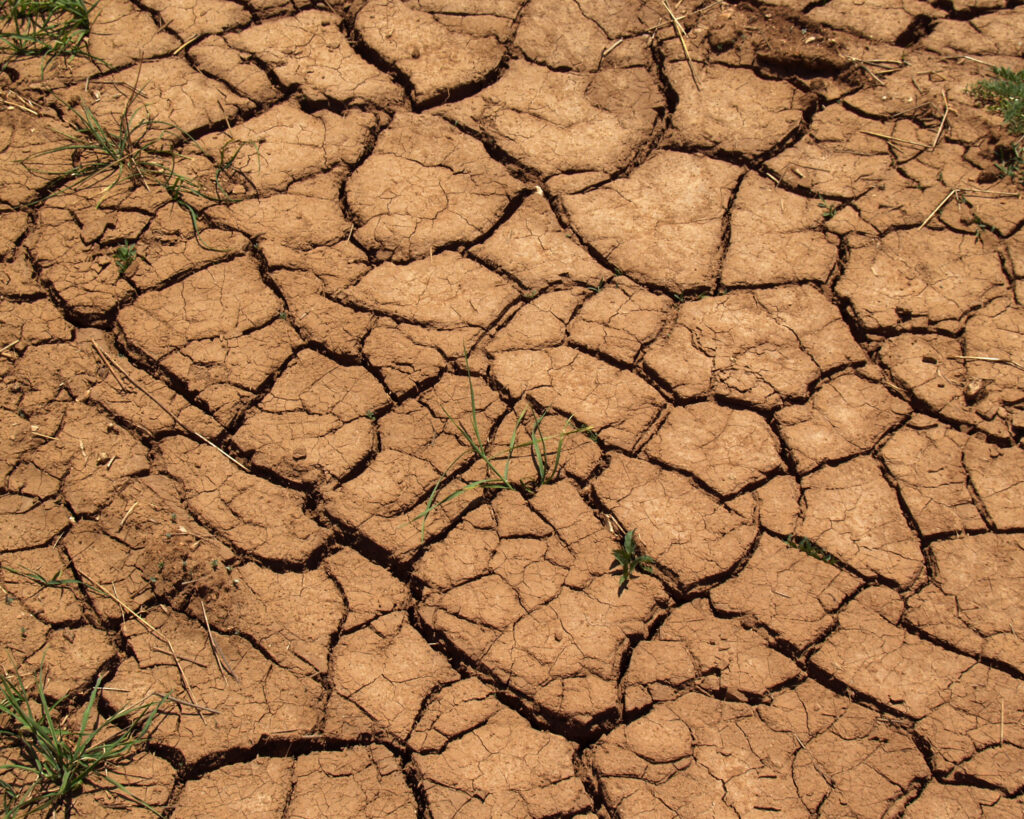
Historically, droughts occur naturally in the region. But Jatel said that climate change is causing rain and snow to melt earlier and faster every year.
“Consecutive years of drought are no longer the exception — they are becoming the new normal,” OBWB said.
As Jatel explained, it doesn’t help that low precipitation trends in recent years have left the region “in a dry period.”
“We have been for several years,” he said.
“This May, we are in one of the lowest cumulative precipitation years ever seen on record.”
Combined with the lack of precipitation, “more extreme heat days” are also driving freshet — which are water flows that are caused by melting snow and ice in the spring — to melt faster.
Not only have the last 30 years seen June temperatures hotter than ever on record, but “we’ve also seen more extreme heat events occurring in the last 30 years,” he said.
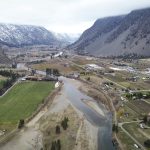
Heading into the warmer months, whatever spring freshet melts from the mountaintops and makes its to the valley bottom is expected to be “well-below normal runoff for the rest of spring and into the summer,” said Natasha Cowie, a hydrologist with the B.C. River Forecast Centre.
“We are facing, unfortunately, high drought vulnerability going forward, due to the extremely low snow-pack and rapid melt,” Cowie said during the OBWB’s webinar.
According to Jatel, Vernon Creek is “in one of the driest positions” ever observed, and Clarke Creek and the Okanagan River are also experiencing very low water flows.
Okanagan Lake is also consistently filling with freshet flows “one to two weeks earlier than normal,” he said.
“This is the trend that we are seeing again this year.”
Potentially a ‘really bad year for salmon’
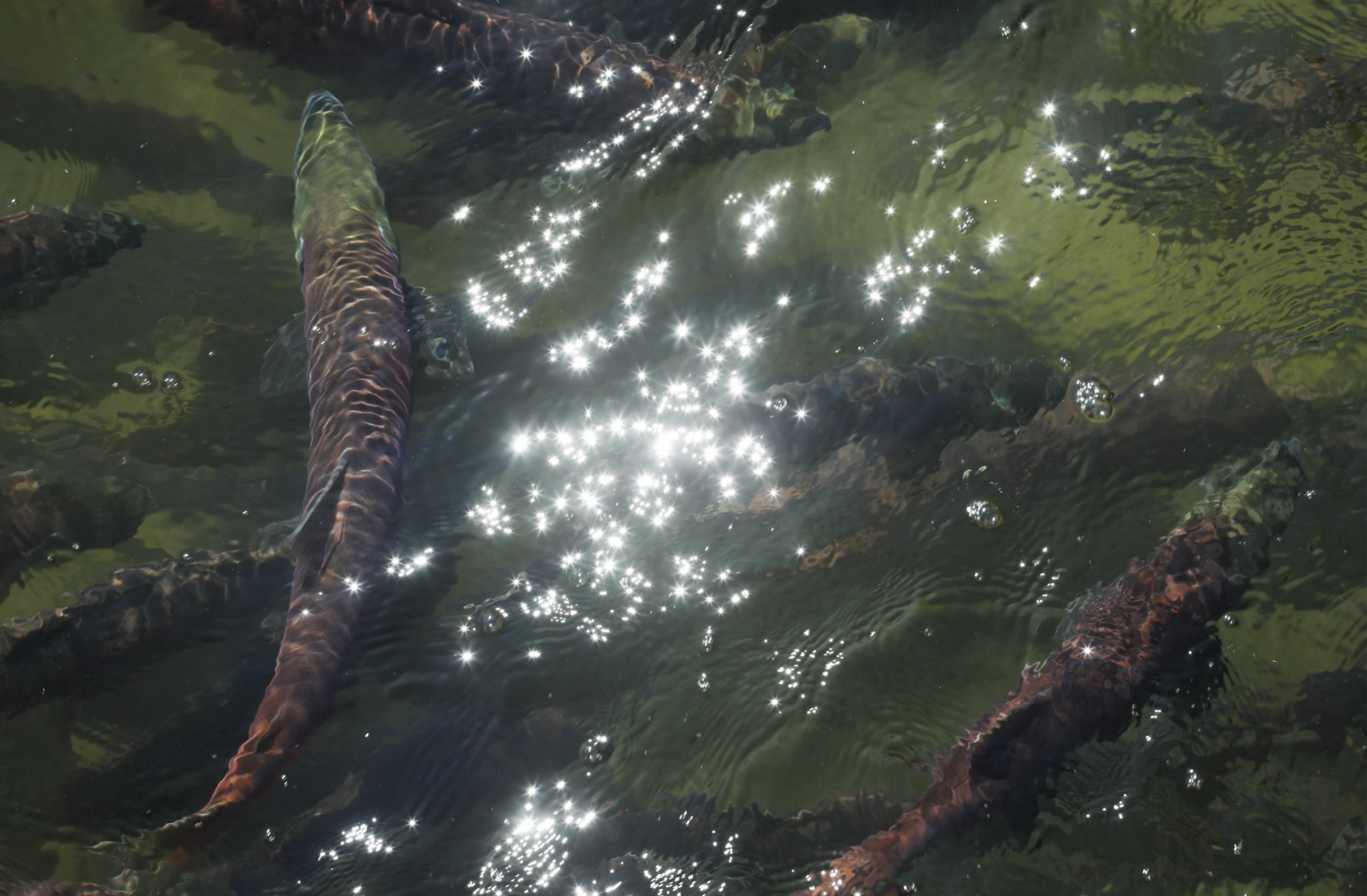
Okanagan snowpacks melting earlier and faster every year has fisheries experts worried about “a really bad year” for adult salmon migrating up the Okanagan River, as they return to spawn in the Okanagan Basin and surrounding Columbia River Basin.
“On the whole, unless we get a whole bunch of rain and it cools down a little, it could unfortunately be a really bad year for salmon,” said Elinor McGrath, fisheries biologist with Okanagan Nation Alliance (ONA).
She added there could be “a lot of mortality” before salmon even reach the Okanagan Basin.
From late May through July, chinook and sockeye salmon begin to migrate from the Pacific Ocean back into the Okanagan Basin and greater Columbia River Basin, using the Okanagan River system.
Freshet from Similkameen Basin, which itself has just 61 per cent of its normal snow-pack levels currently, contributes a great deal of cold water to the Okanagan River as it flows north into Osoyoos Lake.
This helps salmon migrate, as they prefer colder water.
And while the snow-pack was “OK” in the Similkameen this year, “now it’s melting quickly,” McGrath said.
“I’m not sure how much benefit we’re going to get from that,” she said.
It doesn’t help that industrial clearcut logging in snow-pack areas is leaving areas “wide open” in the Similkameen and throughout the Okanagan watershed.
Clearcutting forests leaves less trees to provide shade, not only impacting how much water is retained in a watershed’s snow-pack, but this also contributes to warming waterways, because there aren’t enough trees to cool those waters.
When water gets too warm for fish to migrate through, it’s a natural phenomenon known as a thermal barrier.
“I would anticipate [a] thermal barrier setting up [in the Okanagan River] early again this year, probably,” said McGrath.
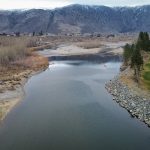
With less cold water flowing from the Similkameen River into the Okanagan River last year, a thermal barrier developed along a stretch of the waterway downstream from Osoyoos Lake. That ultimately impeded salmon species’ ability to migrate upstream.
“That happened in late June, and lasted pretty much all the way to mid September,” McGrath recalled, “which is the longest duration of a thermal barrier that we’ve ever had since we started monitoring it.”
She explained that salmon “just wait there until the water temperatures drop” to around 22 C.
As a result, ONA projected that only 60,000-80,000 sockeye salmon returned last year. The year before that, however, 491,000 sockeye salmon returned.
According to McGrath, water temperatures in Osoyoos Lake have already reached 20 C — pushing up against that thermal barrier threshold. That’s especially worrying this early in the year, she added.
“We really need some colder weather, big time, and some rain,” she said.
“It used to be that we would get one good year and one bad year for weather conditions, snowpack and moisture. Now, it’s just multiple bad years in a row. It’s tricky.”
Coble said that he too is anticipating “a really rough year for salmon recovery,” which he called “truly devastating,” given all the efforts that ONA has put into restoring salmon populations and habitat.

‘Shared responsibilities across jurisdictions’
He said that the challenge for regional leadership now — Indigenous and non-Indigenous — is to balance the amount of water needed for their communities with how much is required for salmon and wildfire prevention.
“I wish I had more optimism at this point,” he said. “What I can always reflect upon is the work that’s been done leading up to this point — as much as we could do with what we have.”
That’s why Coble said it’s now essential that regional leaders come together and pool their resources towards wildfire mitigation work — and working to restore waterways and the habitats they provide.
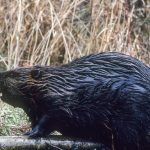
“Any aspect of watershed protection and water retention up in the highlands” will help, “even just beaver habitats,” he said.
“The long-term effects of salmon recovery — of river and ecosystem revitalization and protection — will result in better retention for moisture up in the highlands, where we need the water in the long run throughout the summer,” he explained.
Coble underscored the syilx value of taking care of the land, “in order for the land to take care of us.”
“That’s how it all ties together: protecting the ecosystems for the salmon and the trout today will help with fire protection for the summer months when they get drier,” he said.
“It’s understanding that philosophy of interconnectedness, of shared responsibilities across jurisdictions.”
He said that if leaders can stay focused and collaborative, “we can find long-term solutions.”
The urgency being created by ongoing drought conditions, Coble said, is a reminder of why initiatives like the Okanagan-Similkameen Collaborative Leadership Table (CLT) are so important.
The CLT is a group of syilx and non-syilx elected leaders who have come together to strategize a 250-year water plan — one that protects both water quality and quantity across the watersheds in that centuries-long time frame.
“There’s going to be common solutions and ways to work forward,” he said, even though droughts affect different communities in unique ways.
“We all know where the water flows — whatever’s affecting our water up north, is going to affect us down south.”
A preventative strategy between communities that recognizes the interconnectedness of water and the sharing of resources “is hopefully what we can enact,” he said.
“That’s going to be our best path forward — is together.”
Learning ‘to live with drought’
One international expert told syilx and non-syilx leadership in March that a more proactive approach is needed to mitigate the effects of worsening droughts.
That represents a shift from reacting to dry conditions to a more “pre-emptive risk-planned, risk management approach,” said Spanish geographer Nuria Hernández-Mora, a water management researcher and consultant with more than 25 years of experience in the area.
Hernández-Mora, who has a Master’s degree in sustainable water management and governance at the University of Zaragoza, was one of the keynote speaker at the ONA’s annual siwɬkʷ Water and Climate Forum in March.
She said that the leaders in attendance — many of whom are members of the CLT including Coble — need to “learn to live with drought, not fight against” it.
“Live with them, and manage our resources in a way that limits the negative impacts that climate change is increasing the vulnerability and extremes,” she added.
Managing dry conditions also means learning how to manage water scarcity, which she called “a social construct.”
“Water scarcity is a result of the decisions that we make on how we manage our waters,” she explained. “The drought impacts are shaped by how we manage our waters … under normal conditions.”
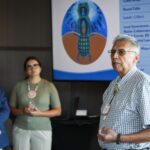
She said the best way to prevent droughts is to manage water better, “when there are no problems.”
“We have to start thinking about how we distribute the costs of the reduction in the applications that we necessarily have to do” under both normal and drought conditions, she added.
“We have to transition from allocating water — who gets what, who needs water, how do we distribute it — to actually start allocating scarcity.”
Although droughts are hard to control, leaders do have influence in reducing how vulnerable and exposed communities are to the impacts of droughts.
But that requires a hard look at how water uses are allocated to meet different sectors’ needs.
“The best way to improve resilience is to increase strategy, increase scarcities, decrease over allocation and improve the status and the health of the ecosystems,” she said.
What makes communities more structurally vulnerable to drought impacts, she said, is a combination of using too much water and deteriorating ecosystems.
“Because the healthier the waters are, the less allocation,” she said. “If we maintain ourselves within or below our limits, then we have more room to work with when the drought comes.
“Droughts must be treated as a natural recurring phenomenon, not an exception — more and more so in the climate change scenarios.”
Author
We live in a media ecosystem that thrives on misinformation. Big Tech and AI companies are consuming the work of real human beings and Canadian news has been banned on Facebook and Instagram.
And yet, I have hope for journalism because of the work we’re doing at IndigiNews.
At IndigiNews, we embody tâpwêwin — the Cree value of integrity and responsibility in truth-telling. We are committed to our independent, Indigenous-led newsroom rooted in community, accountability, and relationality. We believe storytelling is a sacred fire that connects our pasts, presents, and futures through the storytellers in our Storytelling Lodge. IndigiNews creates space for Indigenous journalists, storytellers, Knowledge Keepers, and communities to gather, learn, and share stories that matter.
As a registered charity, we are building a fire that allows our work not just to ignite but to thrive. Rather than relying on advertising or corporate acquisition, IndigiNews is sustained by people like you who believe Indigenous stories are important for the future of our communities.
Your support is making a real difference.
Our community of supporters, our Firekeepers, make it possible to grow our newsroom, publish award-winning journalism, train emerging Indigenous journalists through initiatives like the ReFocus Photojournalism Fellowship, and publish trustworthy stories that serve our communities across the country. Every story we publish helps fill in gaps left by mainstream media and ensures Indigenous perspectives are represented with care, accuracy and respect.
But there is still more work to do.
As the media landscape becomes more and more uncertain, community support is as necessary and essential as it’s ever been. Every new Firekeeper helps protect the independence of our newsroom and strengthens journalism that is accountable to our many and varied communities over corporations.
That’s why we’re inviting you to become a Firekeeper.
Firekeepers tend to and protect the sacred fire. Your monthly contributions directly support IndigiNews’s Storytelling Lodge, helps sustain our independent, Indigenous-led newsroom, and ensures future generations of Indigenous storytellers have the resources they need to do the work.
As a registered Canadian charity, all eligible donations receive a charitable tax receipt.
If you believe Indigenous stories matter, if you value independent journalism, and if you want to help build a strong future for Indigenous media, we invite you to join our circle of Firekeepers today.
Together, we can keep the fire burning.
— Eden Fineday, Publisher, IndigiNews
Support us nowLatest Stories
-
Through their lenses: Showcasing the work of our 2026 ReFocus fellows
Get to know our photojournalism training cohort through a series of portraits shot during a week in Kjipuktuk (Halifax)
-
AI data centers are booming. Indigenous People want help protecting their lands and knowledge
Indigenous leaders warn the UN that the rapid growth of artificial intelligence facilities threatens their rights