‘B.C.’ group declares Similkameen River among province’s most ‘endangered’
Amidst opposition to mine’s expansion and other threats, LSIB continues to speak out in defence of its waterway, nməlqytkʷ
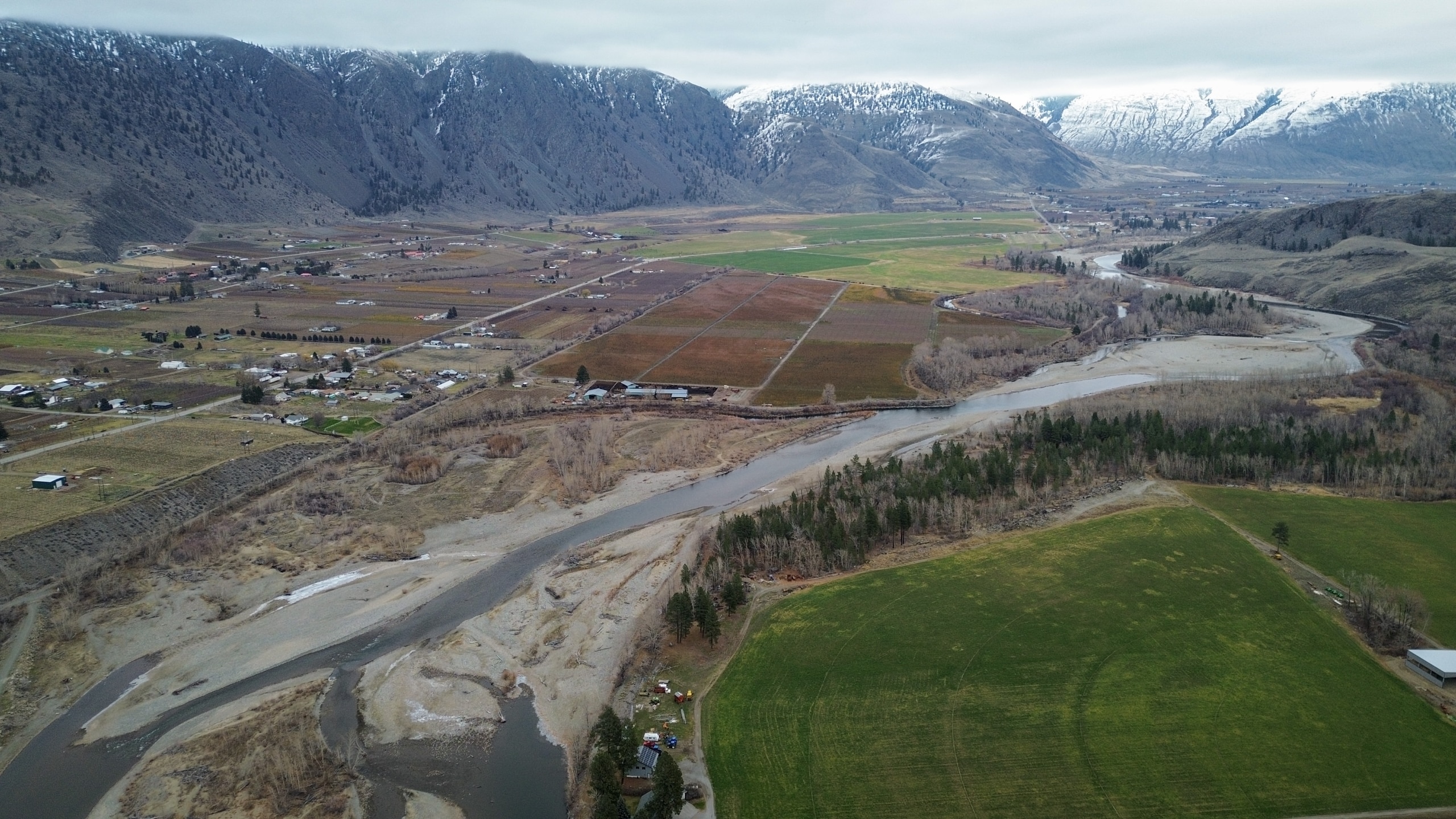
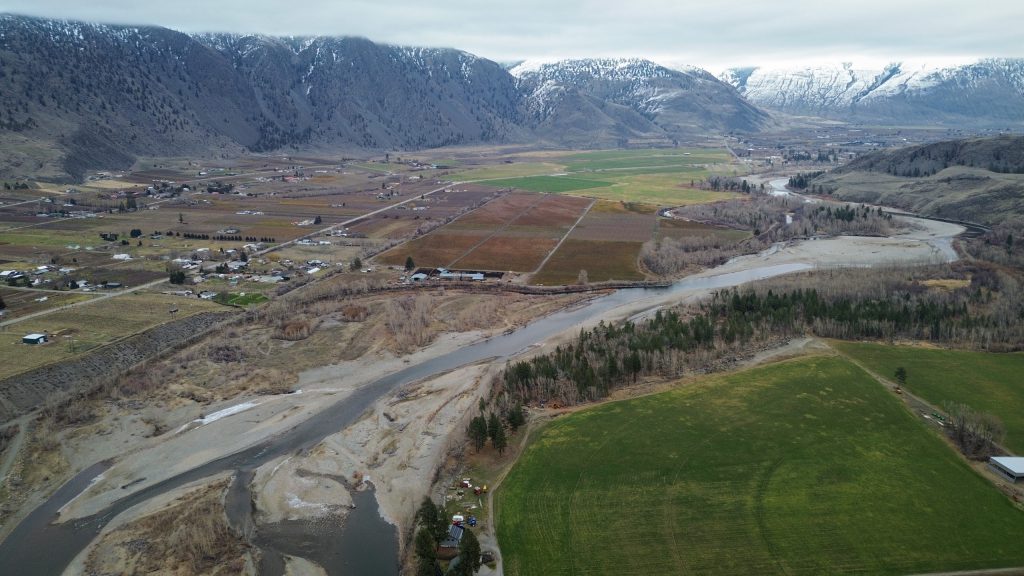
Leaders of the Lower Similkameen Indian Band (LSIB) are again demanding the protection of their community’s river, nməlqytkʷ.
As the First Nation awaits a provincial decision on an open-pit mine expansion near the waterway, also known as the Similkameen River, a province-wide council of outdoor recreationists declared it among the province’s most endangered rivers last month.
The provincial government has yet to decide if it will allow Hudbay Minerals’ controversial Copper Mountain Mine to expand, despite fears about it further polluting nməlqytkʷ.
The band’s leaders said the river’s health is of critical importance to its members, the sməlqmíx (syilx people of the Similkameen Valley).
“Economic benefits only last for so long,” the First Nation’s leaders said in a statement. “Environment health and wellness, or the lack thereof, will be forever.
“The sməlqmíx will continue to be here and must prioritize and strive for a balance — for our future generations, and the future generations of our neighbours.”
The remarks came after an umbrella group of outdoor organizations declared the river among the seven most-endangered waterways in the province last month.
On Jan. 7, the Outdoor Recreation Council of B.C. (ORCBC) — whose members include more than 130 organizations across the province — included the Similkameen River in its annual Endangered Rivers List, citing fears about the open-pit copper, gold and silver mine proposal.
“Indigenous communities and others are concerned the provincial government is rushing to approve an expansion plan at the Copper Mountain Mine south of Princeton,” the charity wrote on its website.
“The proposed expansion would reopen an open pit mine that would extend close to the river and below the riverbed level, while the tailings dam would increase in size.”
The group has been issuing a list of endangered rivers for more than 30 years “to raise awareness about clean water and free-flowing rivers.”
While most of the council’s members are outdoor sports clubs across the province, it also includes several regional districts, municipalities and First Nations.
‘An endangered river’
nməlqytkʷ was not the only river in syilx Nation’s territories to be included in the charity’s list, however.
ORCBC also included the Kettle River, also part of the Okanagan-Similkameen Watershed, as being “of concern.”
“Land use, water consumption and climate change impacts have caused low flows and water quality issues,” the organization stated, “that impact human use and ecology in the watershed.”
The Copper Mountain Mine is located in smǝlqmíx and syilx territories near the town of “Princeton.”
The century-old project is on the territories of LSIB and Upper Similkameen Indian Band (USIB).
As part of Hudbay’s proposed expansion of the mine’s New Ingerbelle Pit, the company wants to build a bridge over the Similkameen River, connecting its Ingerbelle Pit to the rest of its operations.
“The Upper and Lower Similkameen Indian Bands are asking the province for more time,” ORCBC’s Endangered Rivers List website stated, “so that they can fully assess and gauge the risks of the project.”
Hudbay Minerals said protecting the Similkameen River is “one of the top priorities” for the company.
“The New Ingerbelle pit, which is a proposed expansion of the Copper Mountain mine, has been carefully designed to ensure it does not affect the flow or quality of the Similkameen River,” said John Ritter, head of the New Ingerbelle project at Hudbay Minerals, in an email to IndigiNews.
But LSIB said that the Similkameen River “was, and continues to be, an endangered river,” a stance the First Nation has taken long before it was added to ORCBC’s list.
The band said in a statement that the waterway is particularly at risk because of its extremely low water levels in summertime, as well as high water temperatures due to droughts and water shortages.
“The river also experiences multiple weather events each year that destroy fish reproduction and health,” LSIB stated.
“This threatens the entire food chain associated to the river and to the tmixʷ (all living things) who rely on the Similkameen.”
In November, y̓ilmixʷm (Chief) kalʔlùpaɋʹn Keith Crow of LSIB told regional leaders the river “has been black for the last month” due to poor water quality — which an Elder blamed on a combination of mining and local agricultural practices.
“[The Similkameen River] is where our name comes from. It’s who we are,” Crow added. “And we’re failing it.”
‘We have our own process and our own laws’
The mine’s proponents say the proposed expansion will support local jobs and the economy, and will be environmentally sustainable.
Princeton Mayor Spencer Coyne — who is also a USIB member — told Crow and other regional leaders in November that he “wanted to see the health of our river back.” But he later told local media he thinks the New Ingerbelle project would be a “major economic driver.”
“We’re all concerned about our water,” he told Castanet. “But I also feel that the mine has made some course corrections.
“I always tell people I live down the river from it. So it impacts me, and it impacts my kids.”
IndigiNews reached out to Coyne for further comment, but did not receive a response in time for publication.
In December, Upper and Lower Similkameen Indian Bands issued a joint statement warning the province was “accelerating a controversial decision” on the New Ingerbelle project.
The two First Nations alleged the Ministry of Mining and Critical Minerals is “ignoring their input” in an effort to quickly “force a critical mine decision” early this year — a process Crow criticized as rushed and “a slap in the face.”
“We have our own process and our own laws we need to take care of,” Crow said in the statement.
“We don’t think the mine company is the one driving this short timeline — why is B.C.?”
The Ministry of Mining and Critical Minerals hasn’t made a decision yet, and a spokesperson told IndigiNews via email that the New Ingerbelle proposal still requires further consultation with USIB and LSIB.
The spokesperson added the expansion plan, if approved, must “meet or exceed B.C.’s world-class environmental standards.”
“All decisions remain subject to technical review and consultation,” the spokesperson wrote, “ensuring that all provincial agencies are resourcing projects appropriately, collaborating to reduce unnecessary red tape and exploring pathways with First Nations to address issues and roadblocks quickly to reduce permitting timelines.”
For both First Nations who share the waters of nməlqytkʷ, they hope the province will not rush the company’s plans through.
Instead, they want the province to collaborate with them — and choose to “make informed, and hopefully consensus-based” decisions impacting their river.
“With the right commitments, and meaningful effort from BC, our communities could possibly see a joint consensus on New Ingerbelle by April or May,” said Crow.
Author
We live in a media ecosystem that thrives on misinformation. Big Tech and AI companies are consuming the work of real human beings and Canadian news has been banned on Facebook and Instagram.
And yet, I have hope for journalism because of the work we’re doing at IndigiNews.
At IndigiNews, we embody tâpwêwin — the Cree value of integrity and responsibility in truth-telling. We are committed to our independent, Indigenous-led newsroom rooted in community, accountability, and relationality. We believe storytelling is a sacred fire that connects our pasts, presents, and futures through the storytellers in our Storytelling Lodge. IndigiNews creates space for Indigenous journalists, storytellers, Knowledge Keepers, and communities to gather, learn, and share stories that matter.
As a registered charity, we are building a fire that allows our work not just to ignite but to thrive. Rather than relying on advertising or corporate acquisition, IndigiNews is sustained by people like you who believe Indigenous stories are important for the future of our communities.
Your support is making a real difference.
Our community of supporters, our Firekeepers, make it possible to grow our newsroom, publish award-winning journalism, train emerging Indigenous journalists through initiatives like the ReFocus Photojournalism Fellowship, and publish trustworthy stories that serve our communities across the country. Every story we publish helps fill in gaps left by mainstream media and ensures Indigenous perspectives are represented with care, accuracy and respect.
But there is still more work to do.
As the media landscape becomes more and more uncertain, community support is as necessary and essential as it’s ever been. Every new Firekeeper helps protect the independence of our newsroom and strengthens journalism that is accountable to our many and varied communities over corporations.
That’s why we’re inviting you to become a Firekeeper.
Firekeepers tend to and protect the sacred fire. Your monthly contributions directly support IndigiNews’s Storytelling Lodge, helps sustain our independent, Indigenous-led newsroom, and ensures future generations of Indigenous storytellers have the resources they need to do the work.
As a registered Canadian charity, all eligible donations receive a charitable tax receipt.
If you believe Indigenous stories matter, if you value independent journalism, and if you want to help build a strong future for Indigenous media, we invite you to join our circle of Firekeepers today.
Together, we can keep the fire burning.
— Eden Fineday, Publisher, IndigiNews
Support us nowLatest Stories
-
Beloved on the powwow circuit, young boy’s connection to the drum inspires
Now four, Waseskwan Redcrow was dancing ‘before he could even fully walk’ — his family says participating in powwows has brought them joy and belonging
-
Indigenous leaders give the UN a roadmap for protecting their peoples
Amidst prayers and vows of solidarity, UN Expert Mechanism on the Rights of Indigenous Peoples ends annual meetings with demands for ‘action we’re not seeing globally’