Through their lenses: Showcasing the work of our 2026 ReFocus fellows
Get to know our photojournalism training cohort through a series of portraits shot during a week in Kjipuktuk (Halifax)
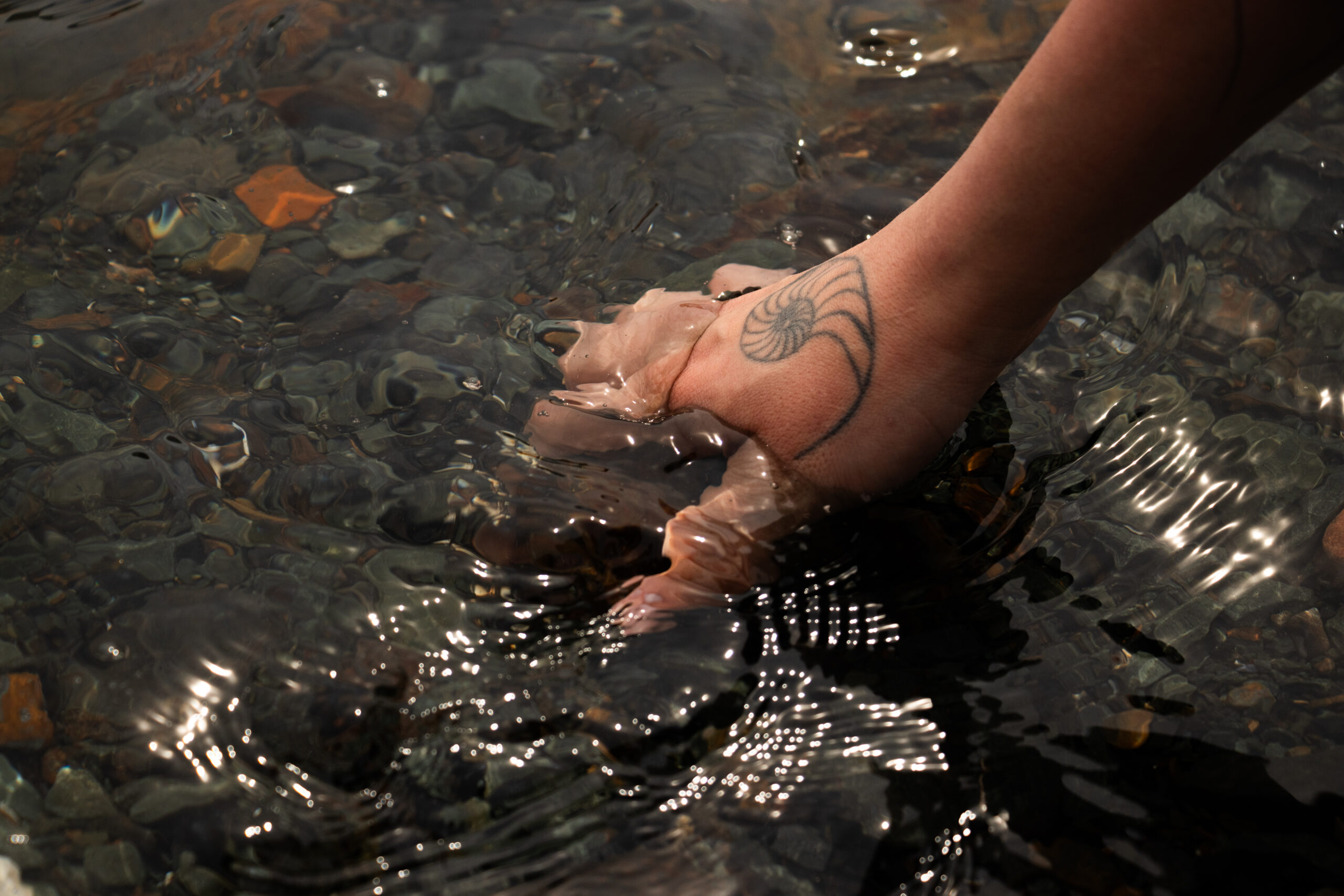
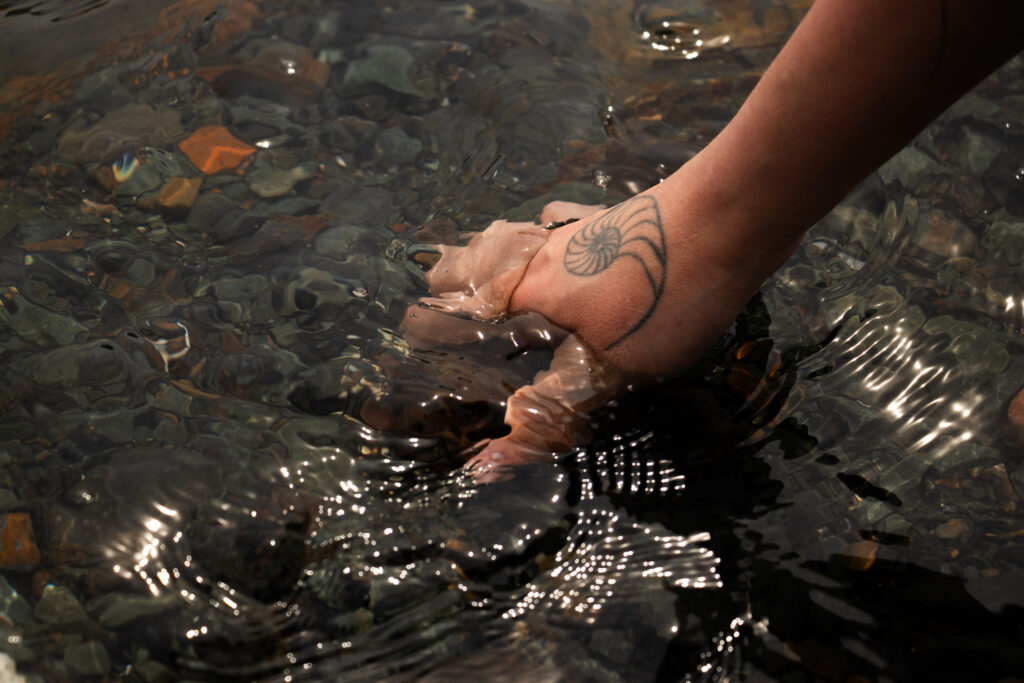
In the spring, IndigiNews hosted a group of eight emerging Indigenous photojournalists for a week-long training program in Kjipuktuk (Halifax).
Between May 18–22, the cohort from our first ReFocus Photojournalism Fellowship spent time learning from industry experts and alongside IndigiNews staff about the craft of photojournalism.
The fellows also worked on an assignment: taking portraits of one another and writing short profiles to accompany them.
The cohort — which included three IndigiNews reporters — captured images of each other as well as staff supporting the program.
They presented their resulting portraits during an emotional ceremony at the end of the week.
We are proud to share excerpts of their profiles and portraits below.
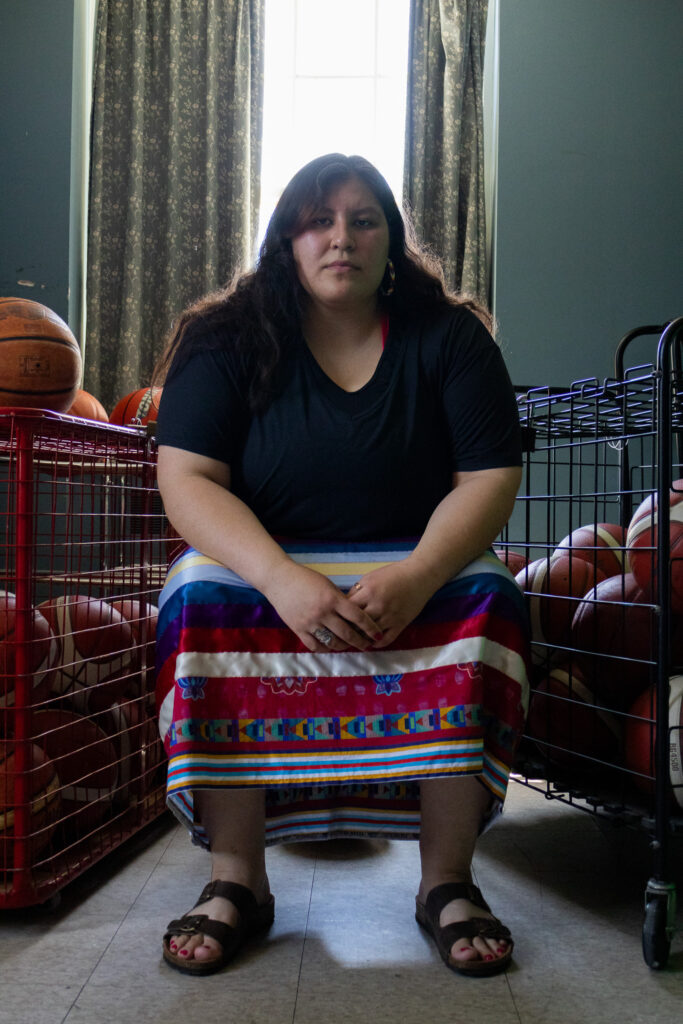
Brittany Boschman, through the lens of Daniel Opasinis
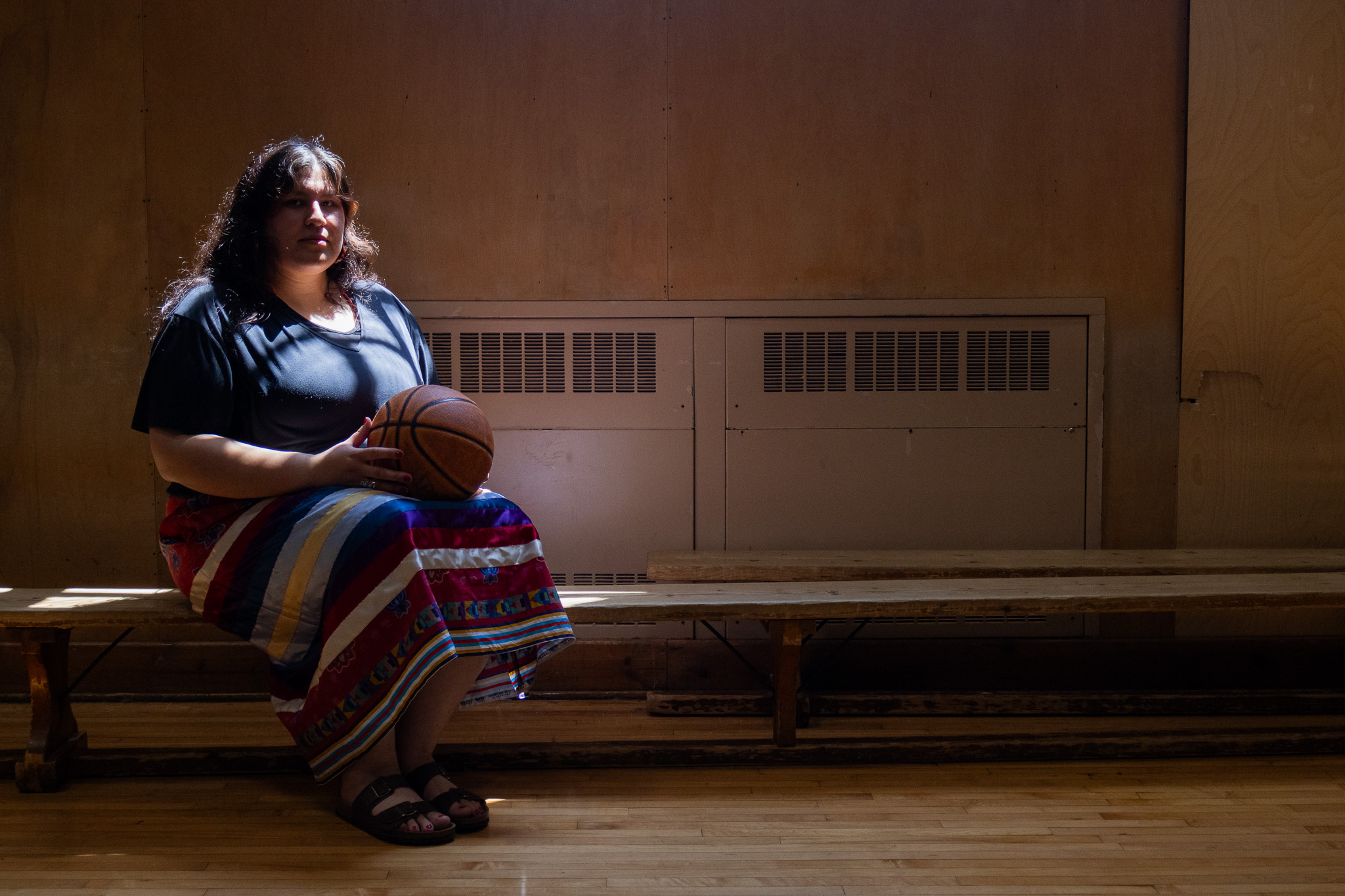
Brittany Boschman sits in her elementary school classroom in “Brandon,” Manitoba.
A clock in the corner of the room ticks, students snicker and all she can do is wait, white knuckling her palms — hoping the teacher doesn’t call her name.
Eventually, the school bell rings and she makes a sprint.
She chases the high-pitched sneaker scuffs and loud rubbery dribbles coming from the school’s basketball court, where she meets her new team for practice.
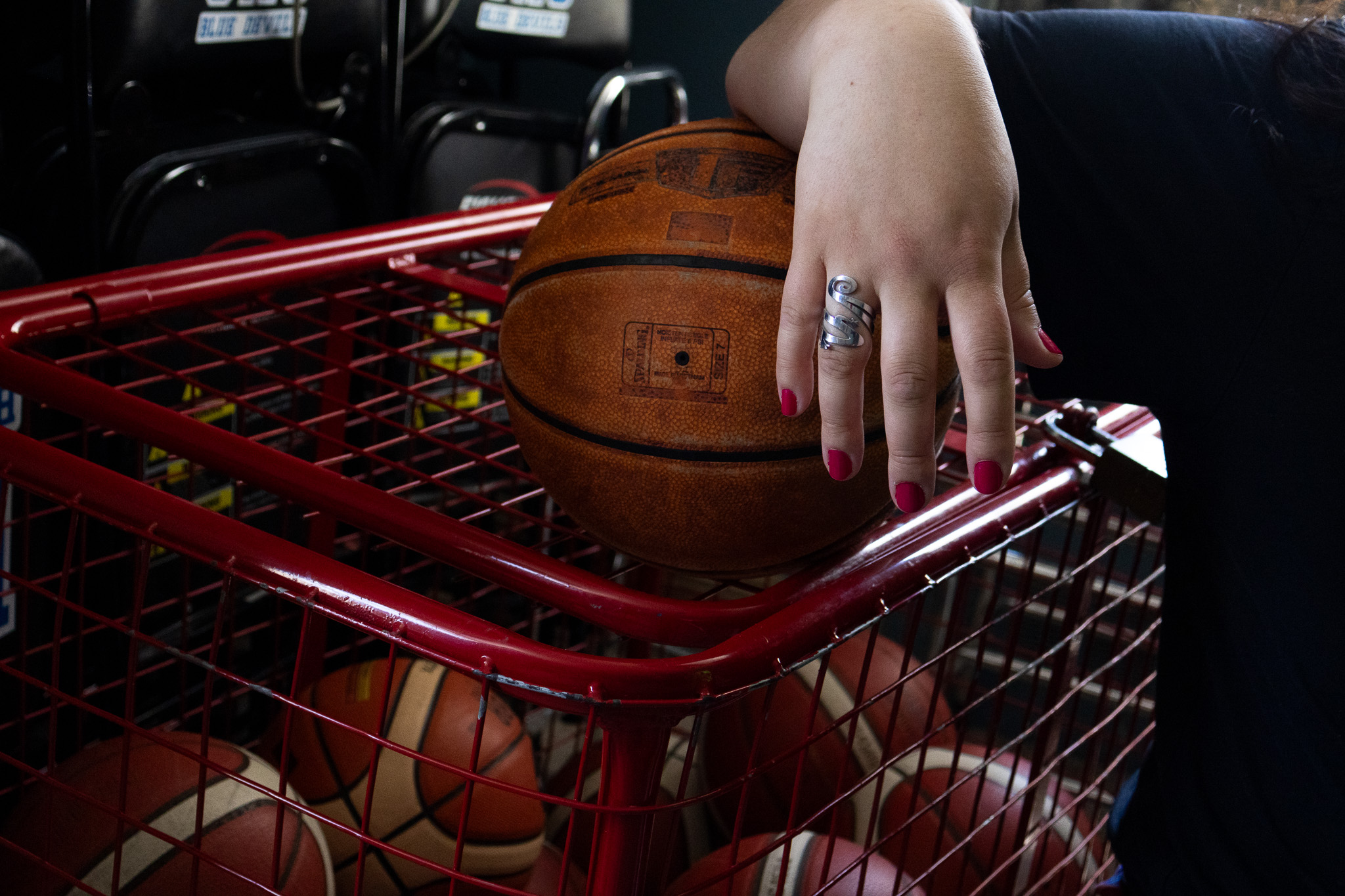
Boschman has always been the new kid at school — frequently moving with her family. Classmates are just a rolling cast of characters in her story.
But on the court, that changes. She loosens her fists, gets unapologetically loud and — most importantly — makes her shots.
“I’m not trying to brag or anything,” she says. “My skills could make up for my awkwardness.”
Boschman is from Pimicikamak Cree Nation, a reporter with IndigiNews, and one of the Refocus photojournalism fellows. She says community support has helped her get to where she is today.
“If you’re scared, just do it anyway,” she says. “You have your community supporting you, and sometimes that’s all you need.”
Daniel Opasinis, through the lens of Brittany Boschman
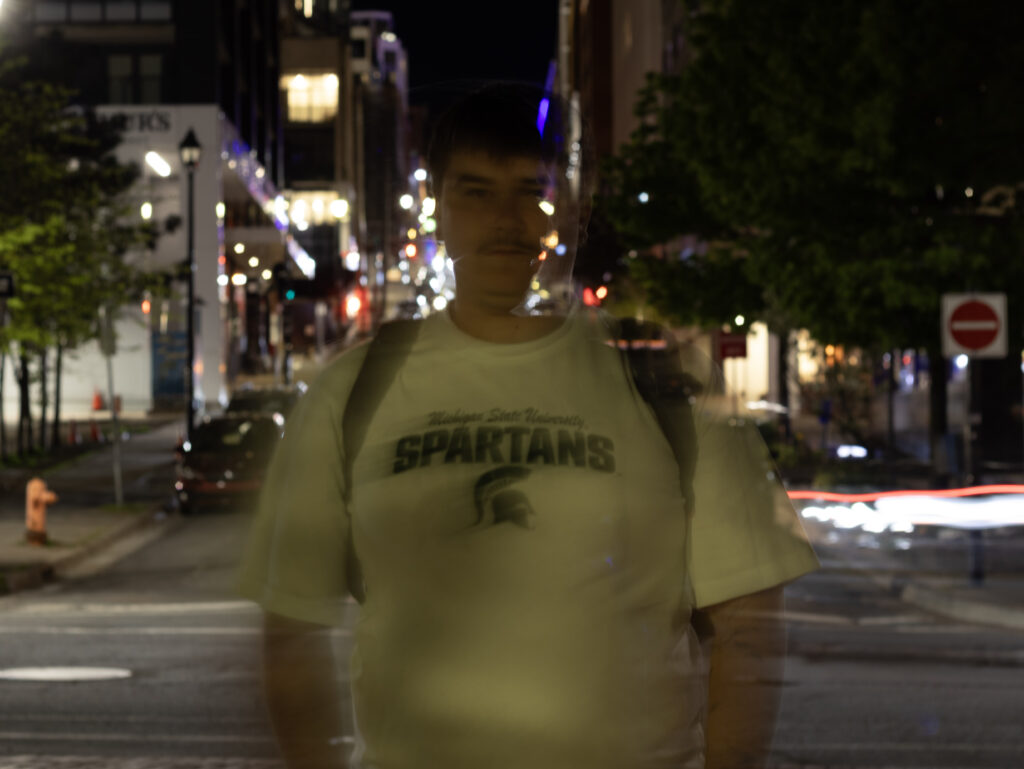
It’s a long weekend, and little Daniel is filled with anticipation as he prepares to visit his grandmother in Campbellcroft, a small, quiet community surrounded by nature.
The lush green fields and the sound of rustling leaves are a stark contrast to the bustling life he knows in the Greater ‘Toronto’ Area.
As he hops down from the truck, the familiar scent of wildflowers fills the air. And for a moment, all worries fade away — even for just a second.
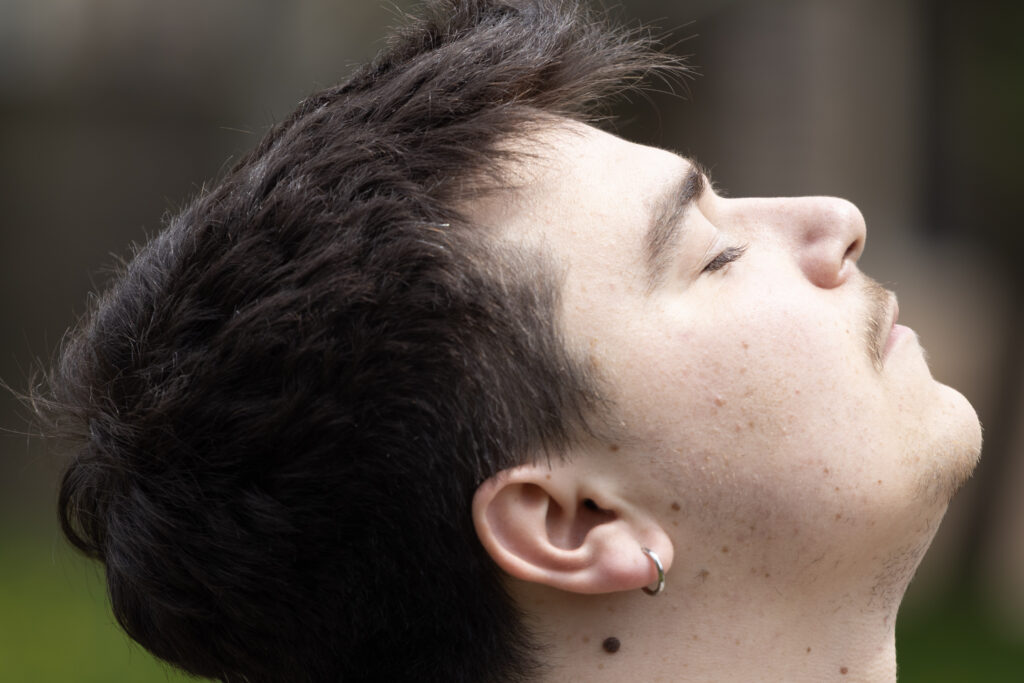
Opasinis, a member of Ugpi’ganjig (Eel River Bar First Nation), has faced more than his share of adversity.
Growing up, his childhood was marked by his parents’ separation, and the tragic loss of his mother when he was four.
Now, as a third-year journalism student at Toronto Metropolitan University (TMU), Opasinis’s voice connects with those who have experienced similar struggles.
In his role as a news editor for The Eyeopener, TMU’s student newspaper, Opasinis has tackled stories that matter — from covering campus protests, to exploring the implications of closing safe consumption sites.
“I want to create a legacy that not only honours my mother but also paves the way for others who share similar experiences,” he says.
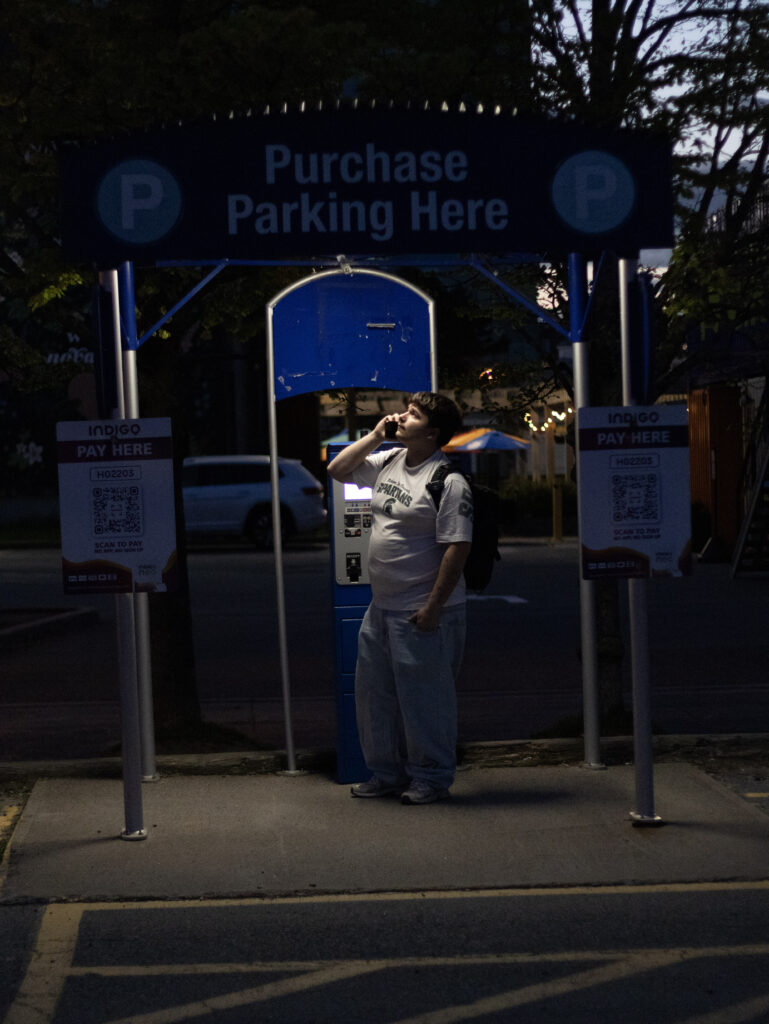
Kayla Lambert-MacDonald, through the lens of Crystal Greene
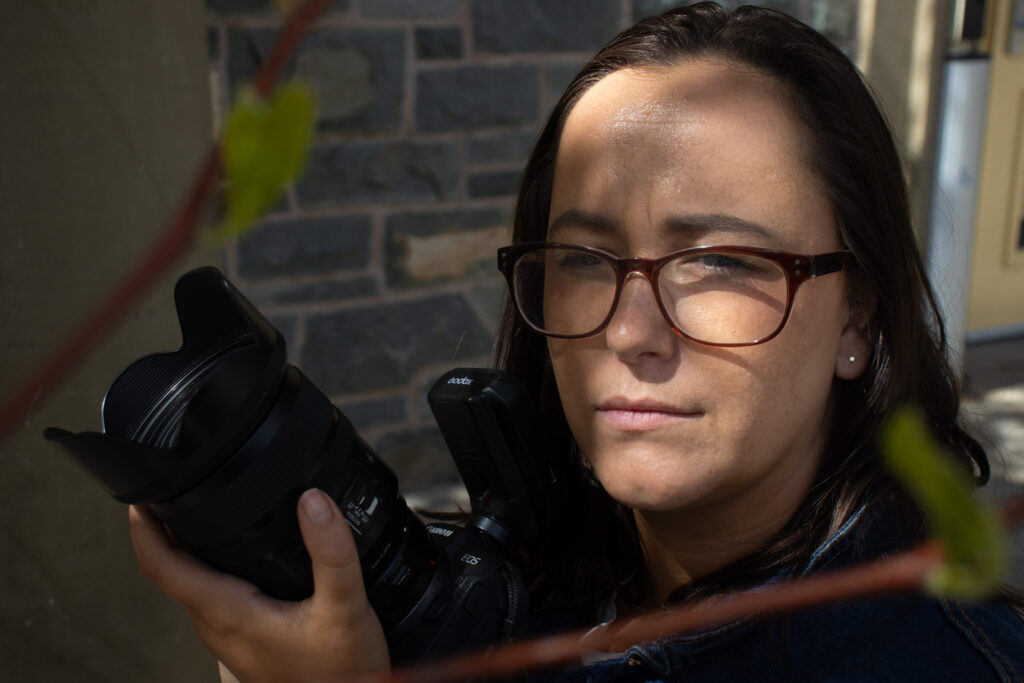
Kayla Lambert-MacDonald is a Mi’kmaw photographer, with strong family ties to Eskasoni, Una’kmak’i (Cape Breton).
She lives in Punamu’kwati’jk (Dartmouth), across the bridge from Kjipuktuk (Halifax).
It’s where she shares a busy household with her military husband, their four children, and many pets.
Her day job is connecting Indigenous Youth to culture, while introducing them to university.
“My job is about being an advocate for Indigenous people,” she says.
The program she created, Muin’jij (“Little Bear,” in the Mi’kmaw language), is where teens and young adults up to age 24 mentor children as young as three.
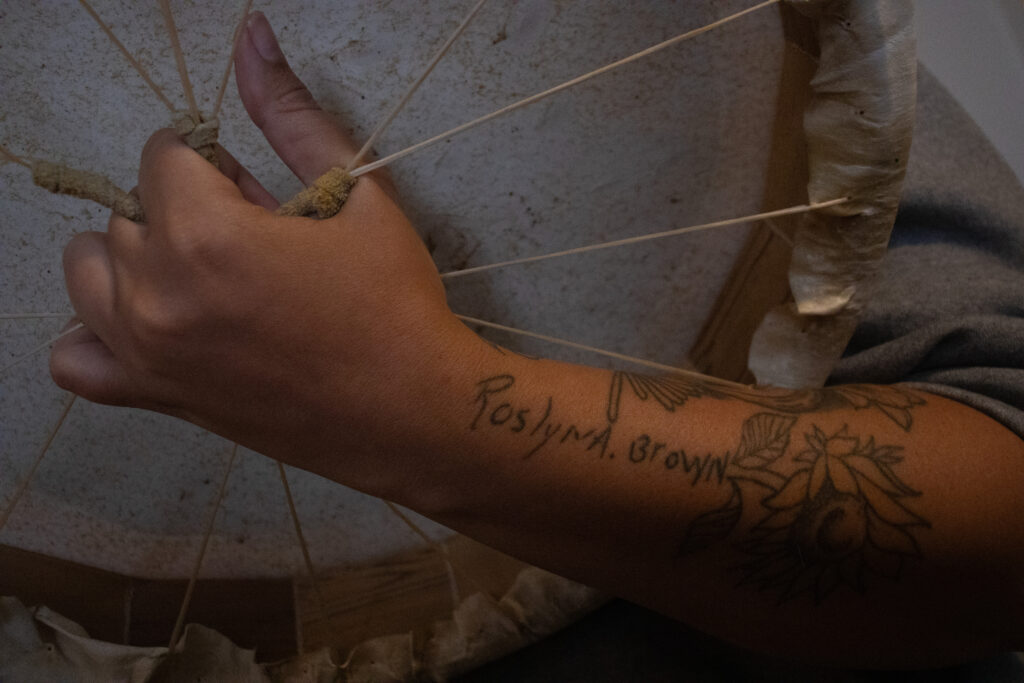
They teach them drumming, language, and help with homework.
Together, her “kids” sit around the drum she carries.
Being a drum-keeper is a responsibility she calls a “really big honour,” as it’s usually Mi’kmaw men who care for the big drum.
Almost three years ago, an infection linked to COVID-19 led to her becoming paralyzed from the waist down. As a wheelchair user, she is determined to keep her purpose in life.
Through her work with young people, she brings in her passion for photography, inspired by family life, and everyday candid moments.
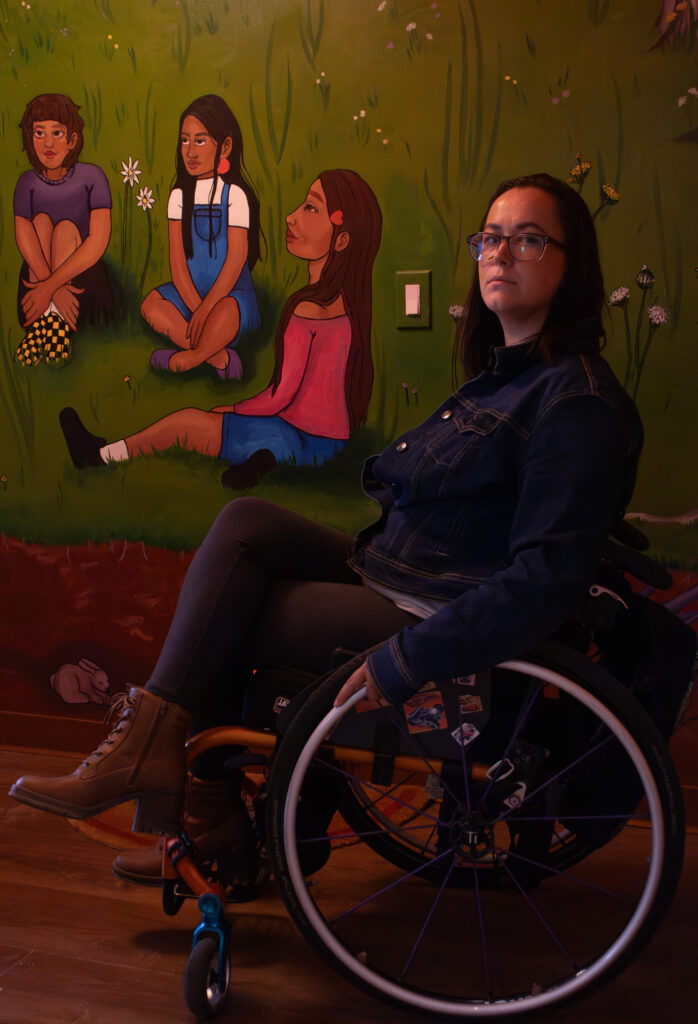
Crystal Greene, through the lens of Kayla Lambert-MacDonald
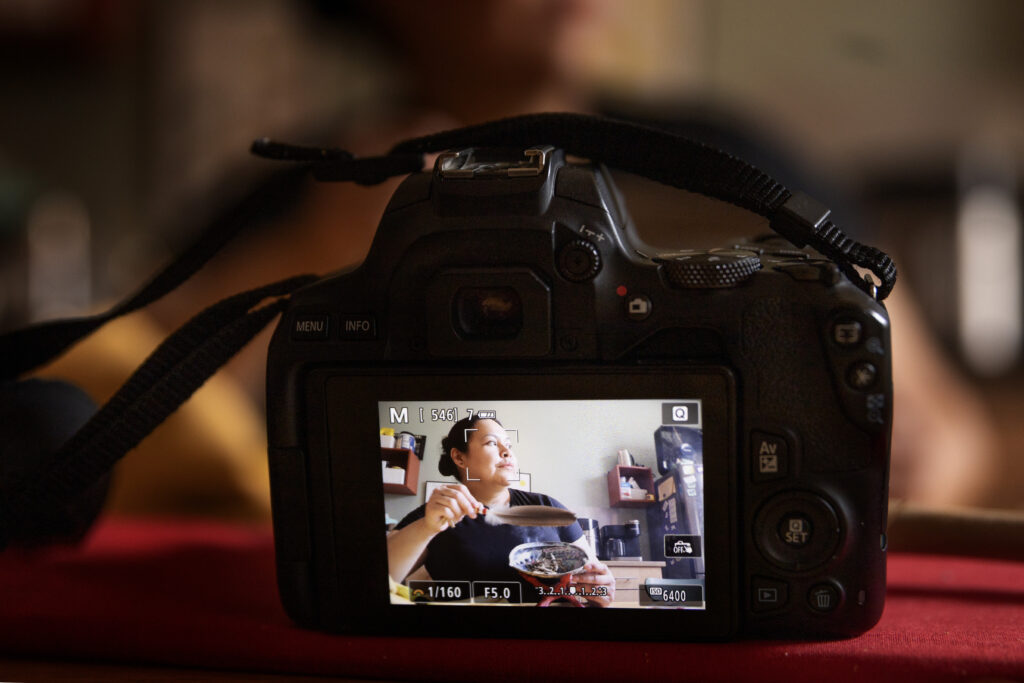
As she sits in the Indigenous student lounge at the University of King’s College, Crystal Greene is stitching a medicine bag.
As she works the needle through the soft hide between her fingers, she reflects on her love for journalism and storytelling.
She attended the journalism program at the university in 2023.
Now, she lives in Winnipeg with her daughter — and is back at King’s for one week for the IndigiNews Refocus Photojournalism Program.
When she first started working in newsrooms, years before starting at King’s, Crystal began to feel that her work as an Indigenous journalist was treated more like a checkbox than a real voice in the newsroom.
“I felt whitewashed, you know,” she says quietly.
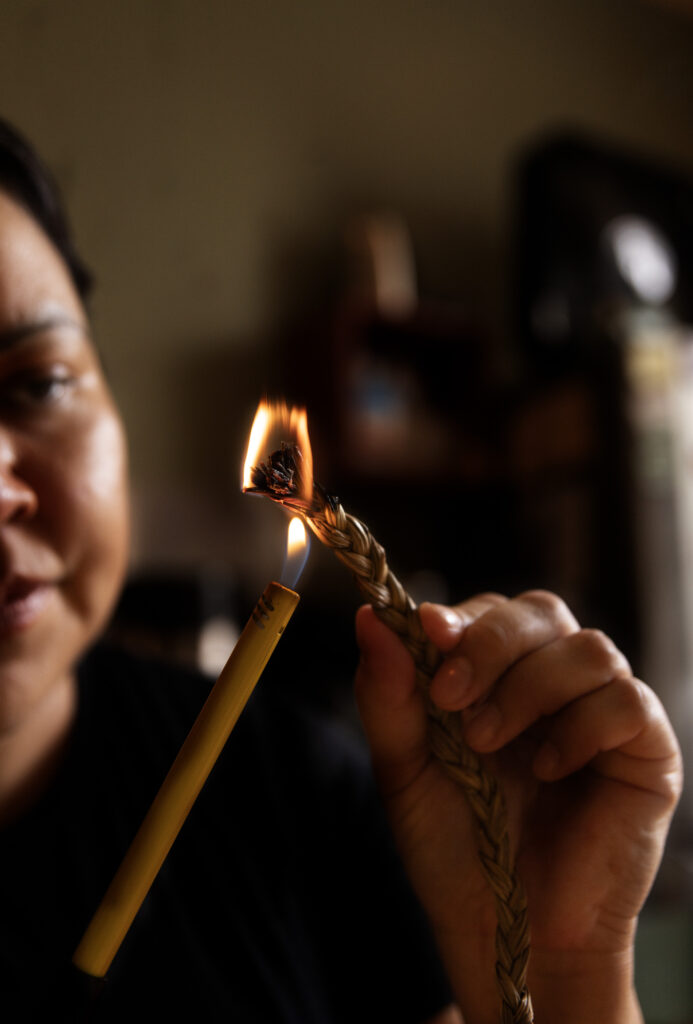
Still, she did not give up on storytelling and decided to reconnect with the work that mattered to her.
She sent her résumé to IndigiNews, and slowly began rebuilding her confidence and connection to journalism.
Sitting around the table with her former Indigenous support worker, Emily, she observes how much healing Crystal has done since the last time they saw each other.
“You never would have spoken about these things before,” she says.
Crystal smiles softly at the comment before looking back down at her stitching. Her return shows how much she has grown, both as a journalist and as a person.
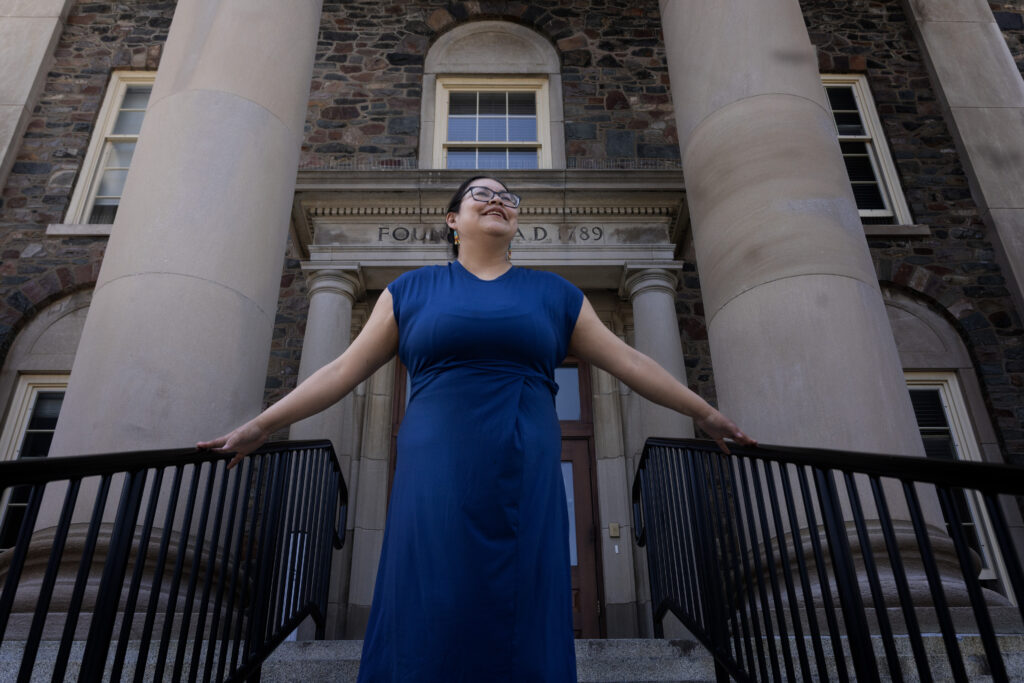
Tamara Joseph, through the lens of Dionne Phillips
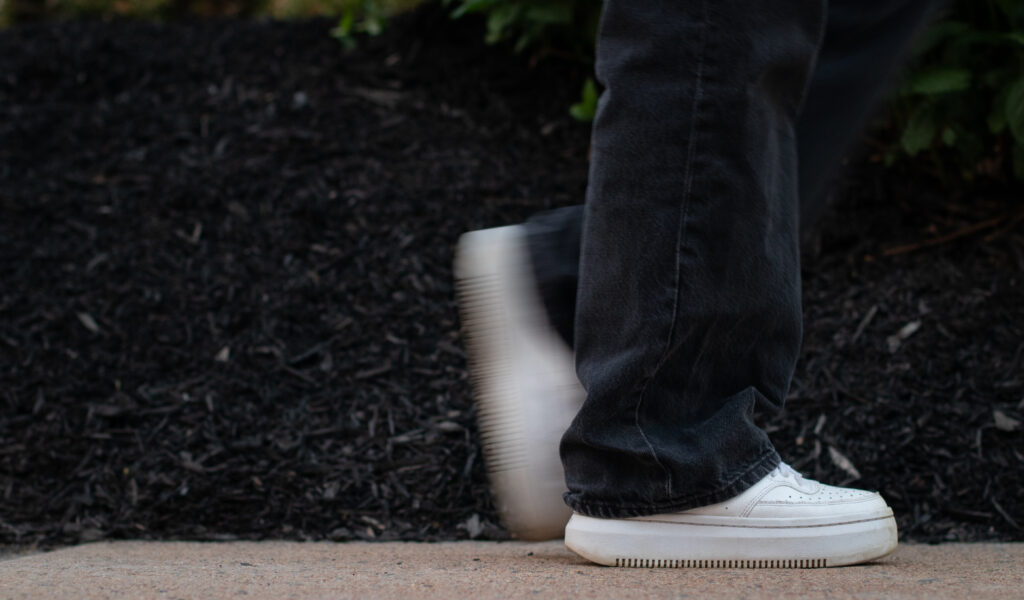
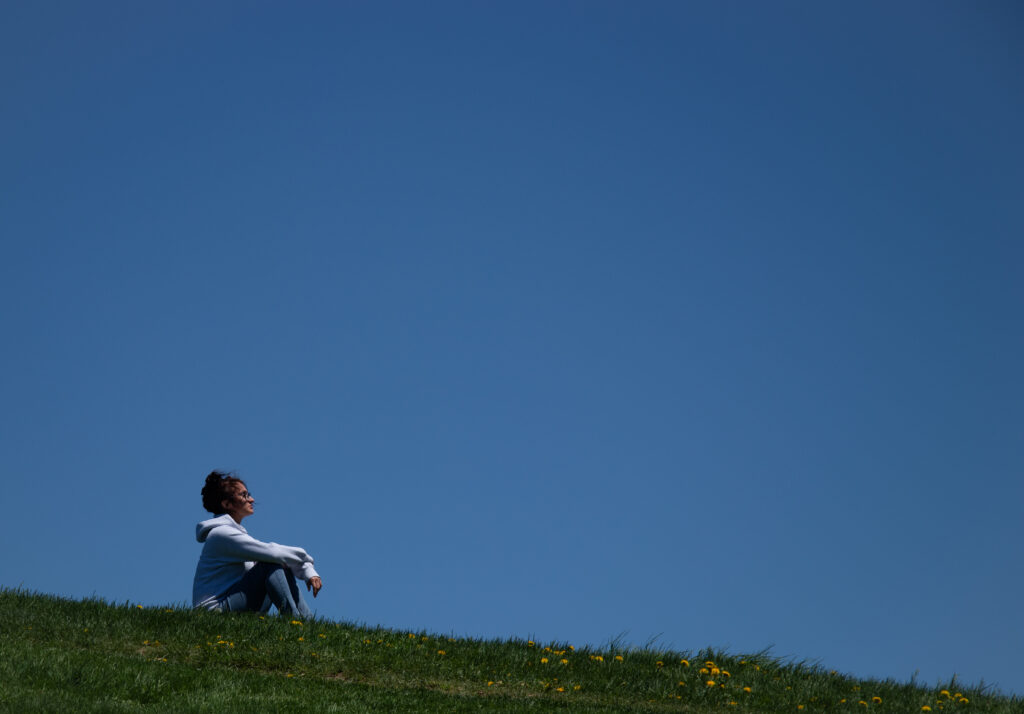
Tamara Joseph, a proud member of Elsipogtog First Nation, is always on the move.
She’s travelled around the world, including to Germany, Costa Rica, and half of the United States. Her favourite destination has been the Maldives, where she was fearless and enjoyed swimming at all hours of the day including the middle of the night — even when her flashlight didn’t allow her to see very deep.
She recently completed her Master’s degree in Marine Management with Dalhousie University, and uses what she learned in her role at Ocean Frontier Institute, where she works as the Indigenous Research Advisor.
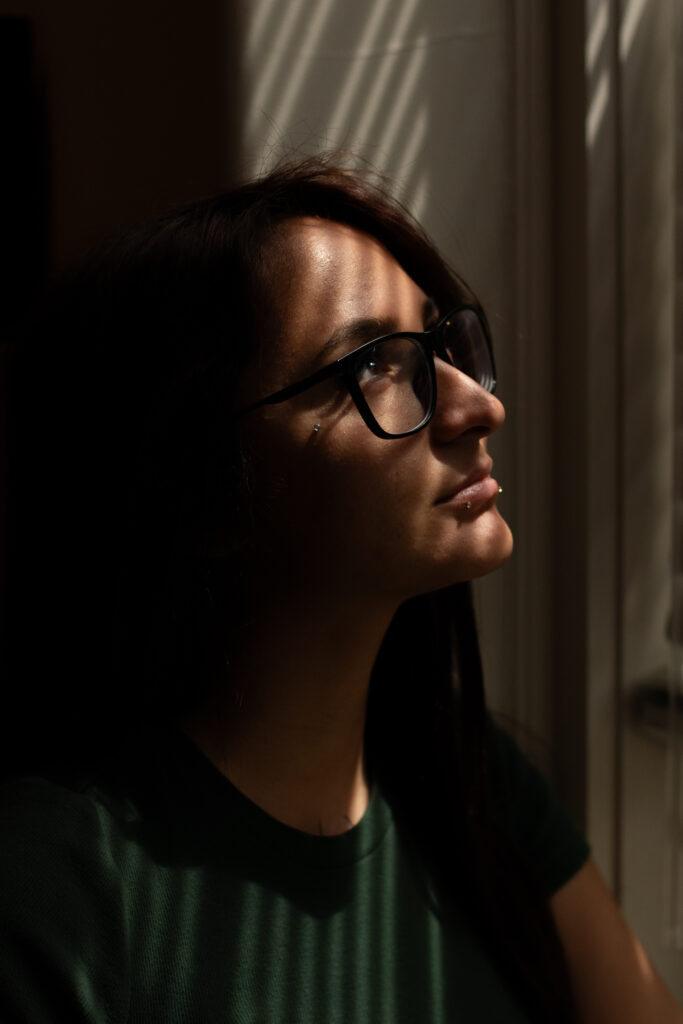
During her time off from marine work, Joseph works as a photographer, taking sports portraits. She finds clients by advertising to the community and utilizing her connections built over the years.
With her quick judgment, Joseph can determine when and where she needs to be to capture the perfect shot of the many players — on the ice or the field — in a variety of sports.
While she works hard in all aspects of her life, the laughter that comes through in the times of relaxation is contagious.
Through her quick wit and jokes, she is able to brighten the mood of those around her.
Dionne Phillips, through the lens of Tamara Joseph
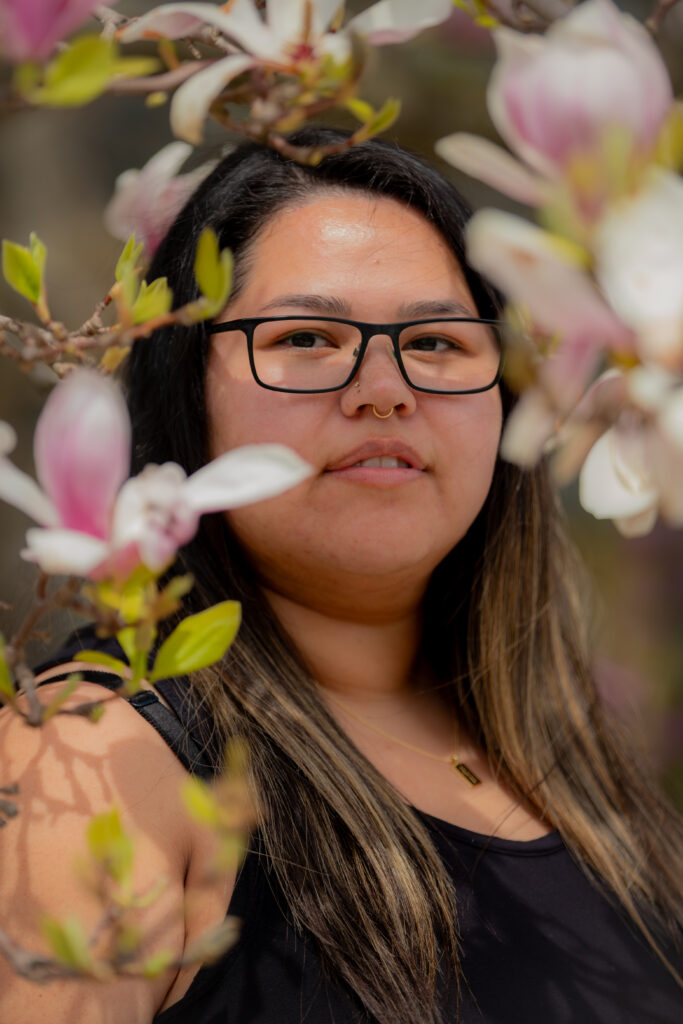
Years ago, while she was at home rewatching episodes of Gilmore Girls, Dionne Phillips discovered an early passion for journalism.
What began as inspiration from a show — and Rory Gilmore’s journey to becoming a journalist — eventually grew into a passion for Indigenous journalism and storytelling.
Now, as a reporter with IndigiNews, Phillips’s identity and strength as a Secwépemc woman is reflected throughout her work.
Dionne focuses on Indigenous storytelling and community-centred journalism, using her voice to share stories that highlight proud moments for Youth and community development.
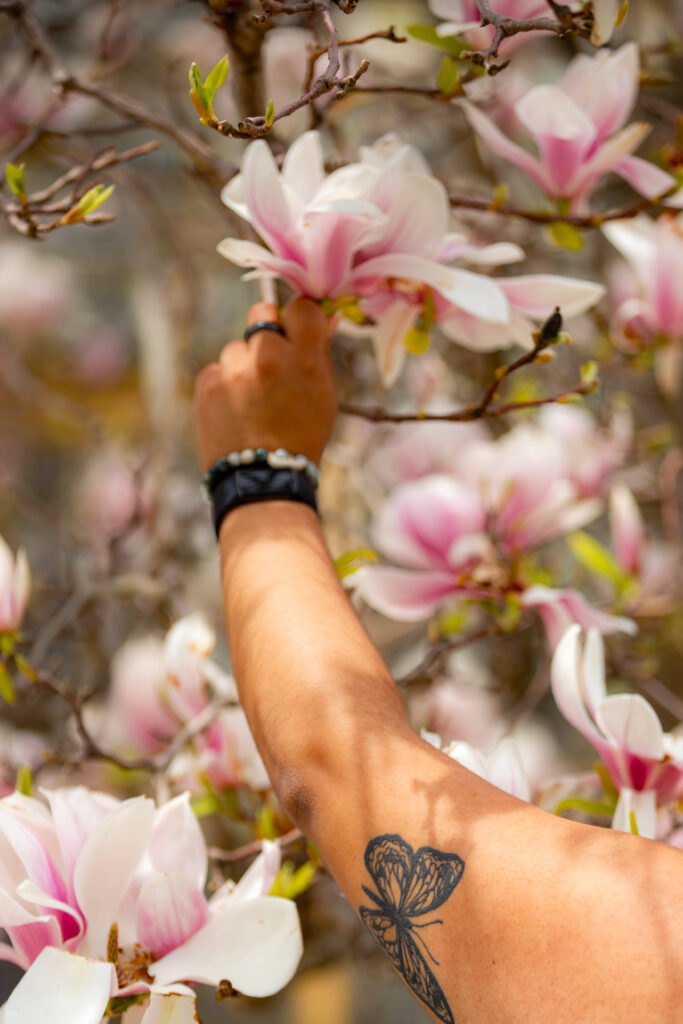
Stories about cultural education programs, food sovereignty, wildfire resilience, Indigenous art, and Youth programs on the land have all been showcased by Phillips.
These stories show how communities continue to grow while maintaining strong cultural connections.
Outside work, Phillips enjoys helping Youth reconnect with their culture and the natural world. She enjoys taking young people from her community camping as a way to encourage grounding, reflection, and connection to nature.
In these safe spaces, Youth can build confidence, reconnect with themselves away from the pressures of everyday life — and Phillips is a role model for those lucky enough to spend time with her.
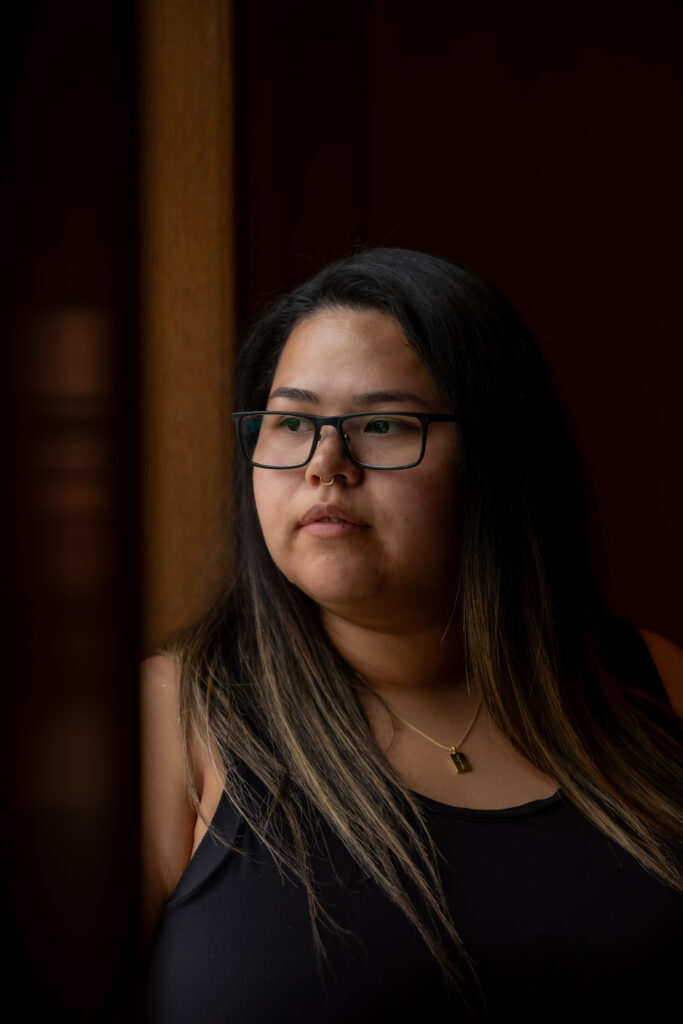
Jaiden Stevens, through the lens of Gavin John
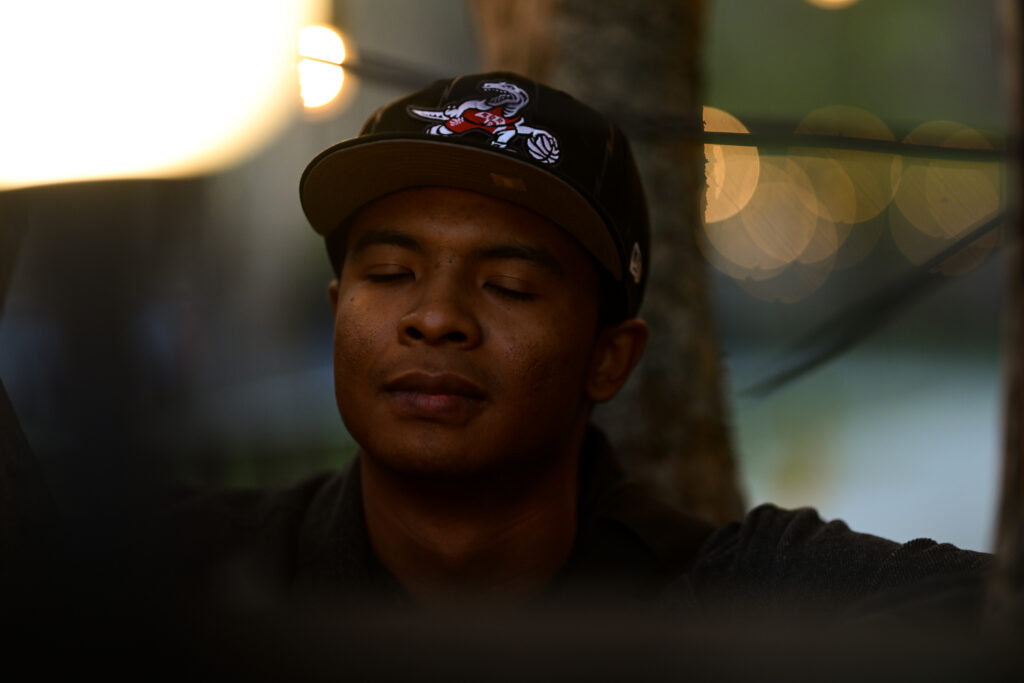
Jaiden Stevens carries himself with a quiet confidence of someone raised by and on the land.
Born in Winnipeg but brought north to Norman Wells when he was just two years old, the geography of the “Northwest Territories” shaped him into the man he is today.
He speaks softly, and carefully, with a reserved calm that mirrors the banks of the Mackenzie River, the forests of Sahtu land, and the watchful gaze of the Richardson Mountains.
But beneath that gentleness is a resilience forged through family and discipline.
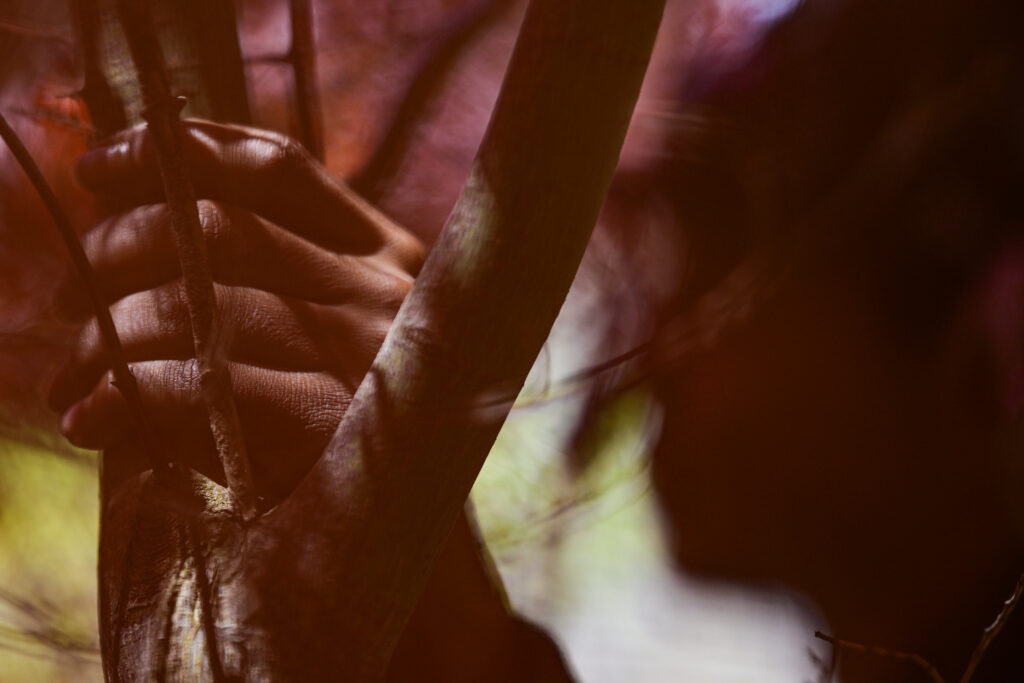
His connection to the North is not abstract, but an inheritance.
His grandmother worked for Imperial Oil during the 1940s and 1950s, tying his family history directly to the industrial transformation of the Mackenzie Valley. Stevens speaks about this connection as kinship, a living relationship threaded through memory, family, and place.
When talking about storytelling, there are flashes of joy in his eyes. His face brightness when describing a yearly Youth canoe trip from Deline to Fort Good Hope, following waterways that have carried generations before them.
These are the stories he wants to tell, young people on the land, learning where they come from, and discovering who they are while moving through it.
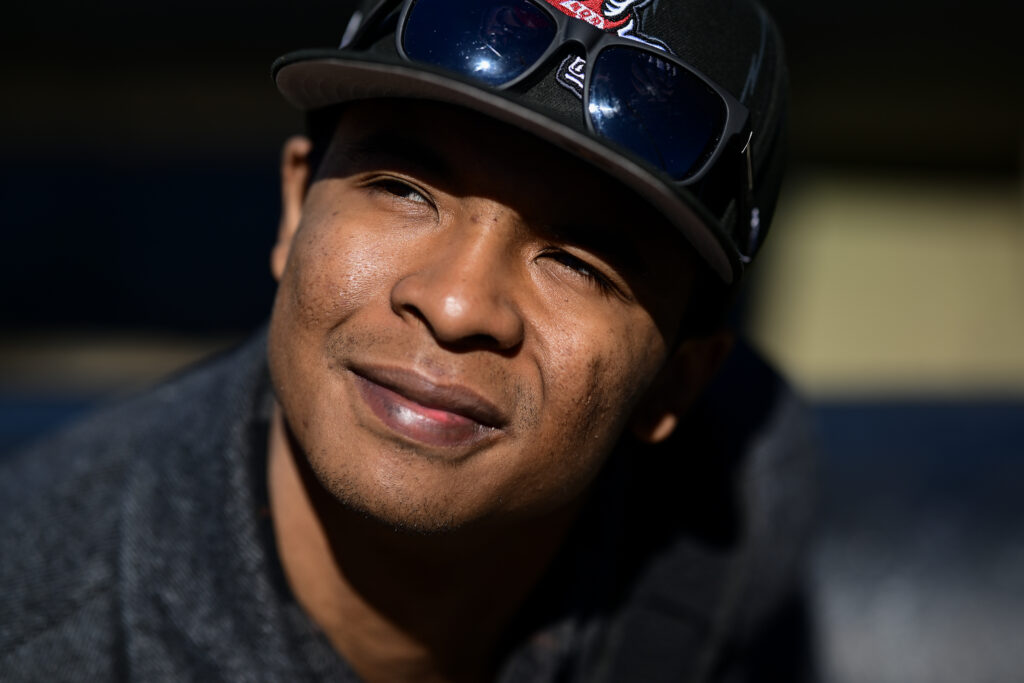
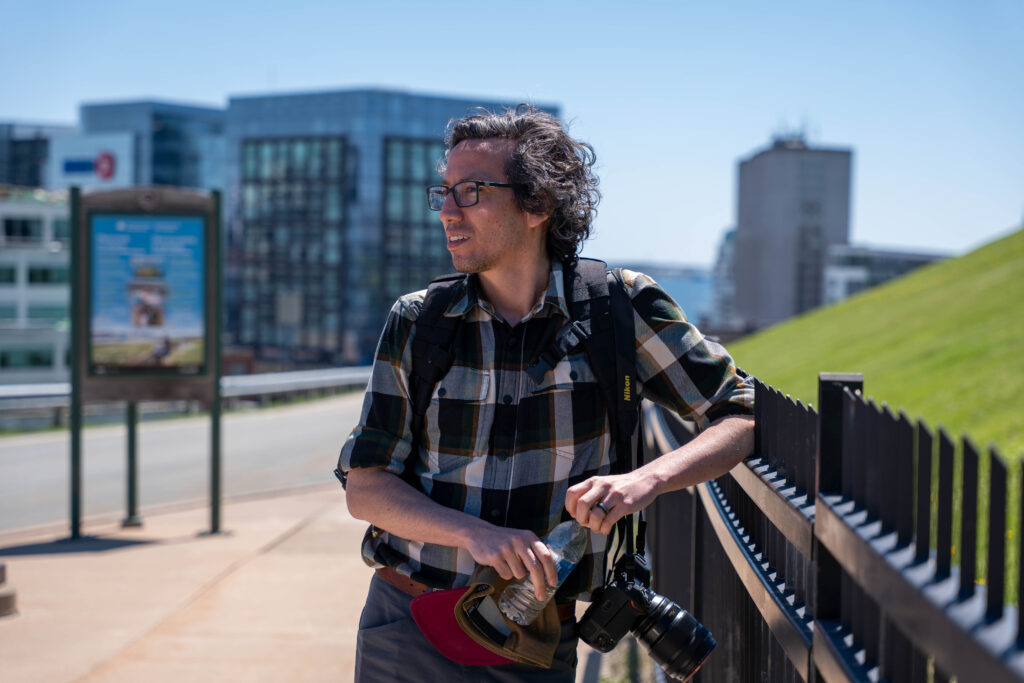
Gavin John, through the lens of Jaiden Stevens
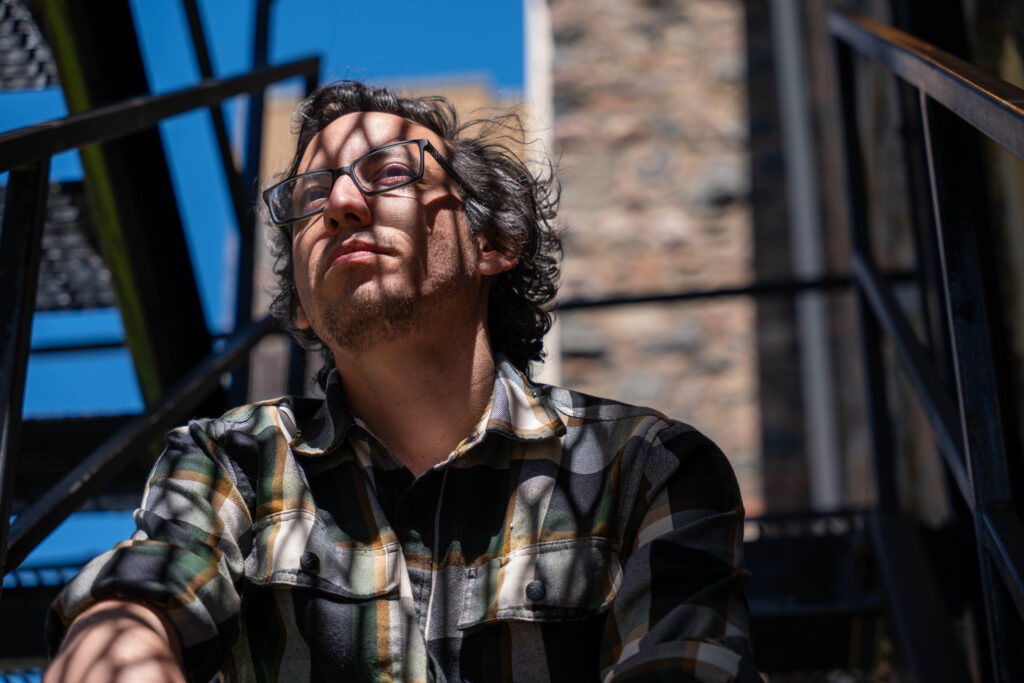
Gavin John moves through the world with an almost childlike curiosity.
From history, to photography, fighter jets, birdwatching, and everything in between — he seems to notice the details most might miss.
As he walks around “Halifax’s” Citadel Hill, an old military fortress from the 1700s which is now full of hired Interpreters, John — the Canadian military fanatic that he is — is like a kid in a candy store.
He pauses many times to read the plaques on the walls, and touches steel bars that he jokes are probably older than Canada. He even peeks his head inside the barrel of an old cannon.
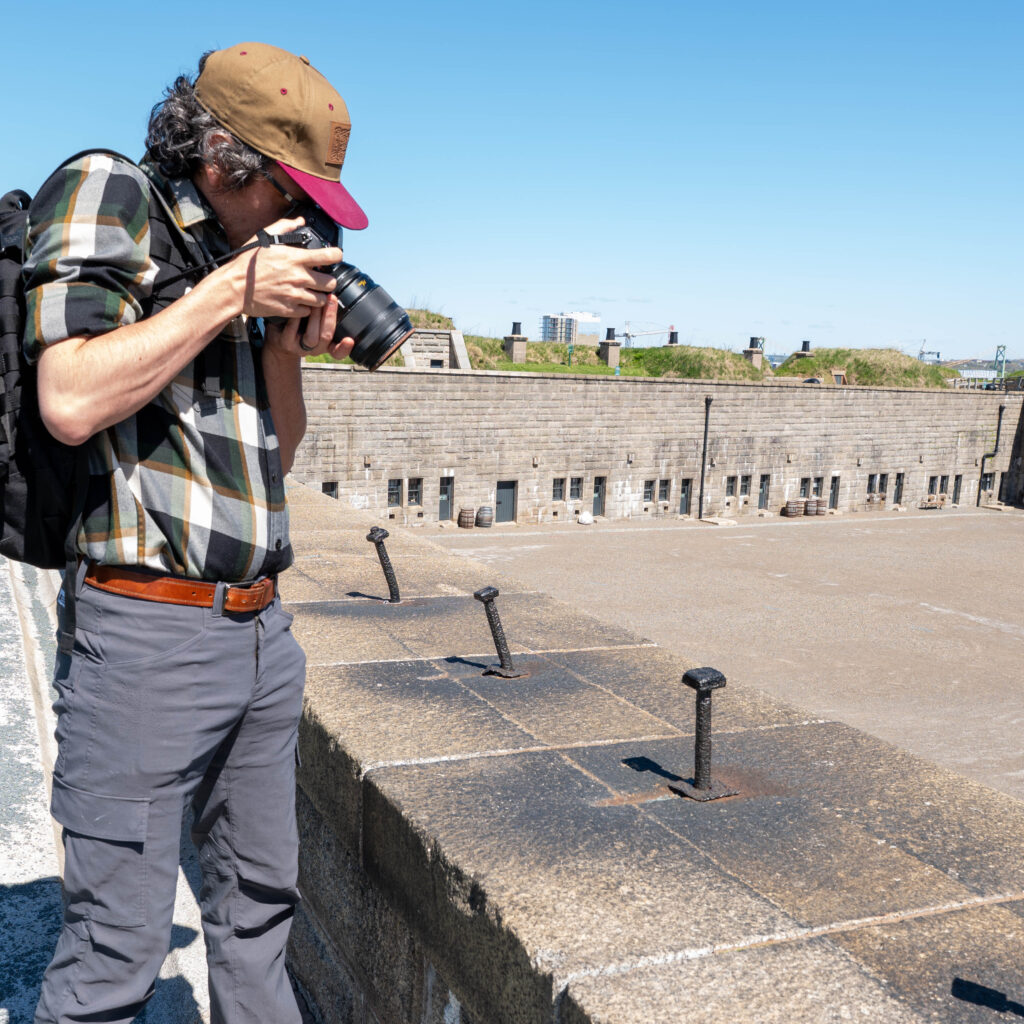
From dispatches to Iraq and now being embedded with military training in the Arctic, the Cree-Metis photojournalist is drawn to photographing the more human side of those stories than the typical images showcasing the violence of war.
Even in the middle of a complex discussion about geopolitics, it doesn’t stop him from cursing at a European Starling that almost tricked him into taking a picture of it.
He’s genuinely passionate and becomes animated when talking about the Canadian Rangers, journalism, or history in a way that people listening can’t help but also getting excited about.
Susy Denny, through the lens of Aaron Hemens
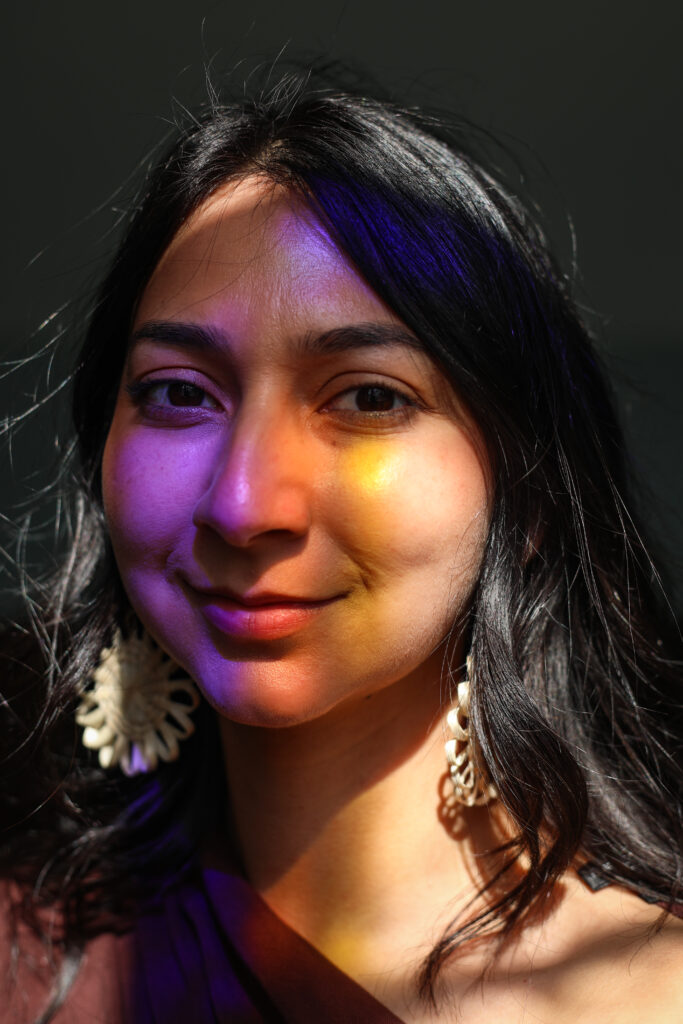
Helping to bridge gaps in language fluency in Mi’kmaw communities is something Susy Denny takes very seriously.
Since September, the first language speaker from Eskasoni First Nation has been working as the Mi’kmaw Language Strategy Coordinator for Mi’kmaw Kina’matnewey.
She grew up speaking Mi’kmaw, with English being her second language. In fact, she said she almost failed the second grade because she struggled with speaking English.
She said she wants to bridge the gaps for those who don’t have the same access to the language and culture that she did.
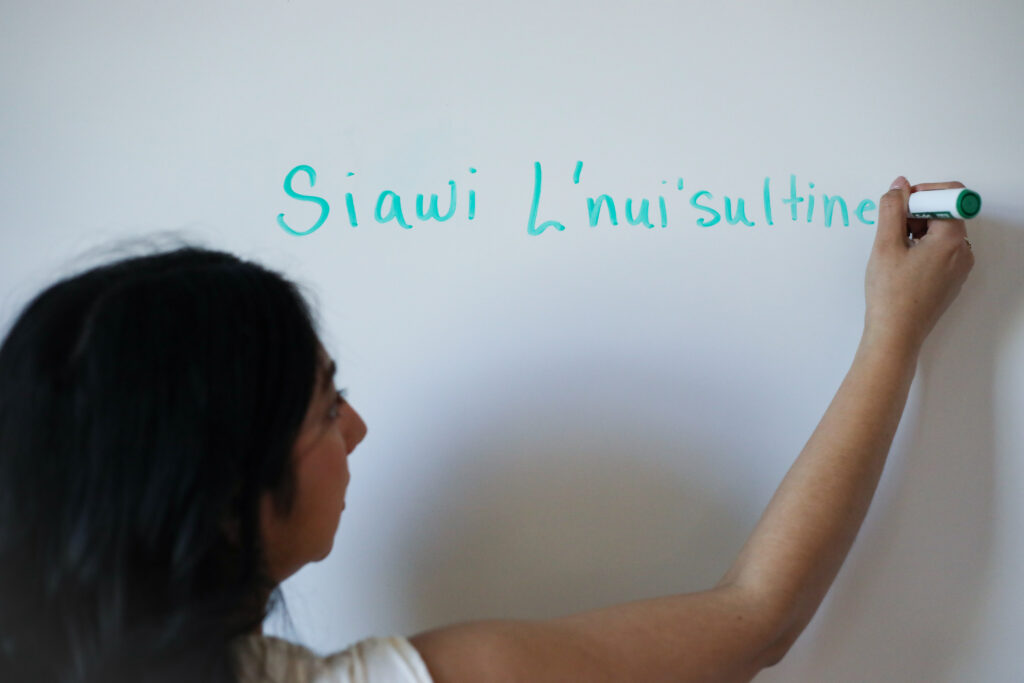
“It’s tough work. It’s a lot of relationship-building,” said Denny.
“We have a large range of language speakers – but they’re also passing away.”
As she grows as a visual storyteller, she wants to start profiling language speakers and knowledge keepers throughout her nation.
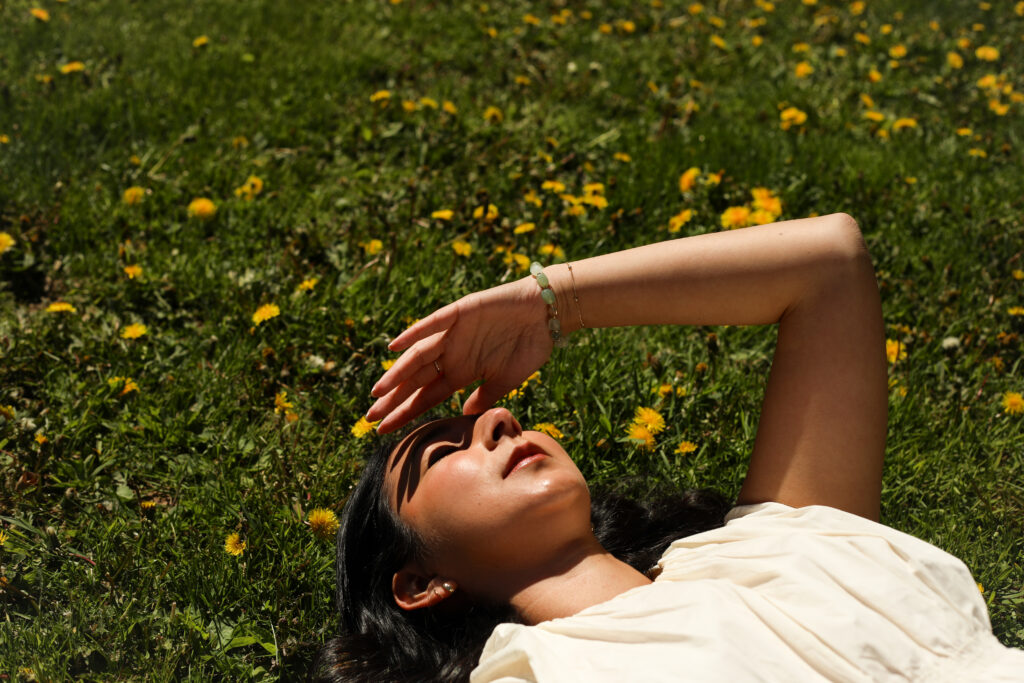
Despite the pressures of her work, she still finds time to travel, play golf and tennis, and lay in beds of her favourite wildflowers.
She makes sure to do this all in style — thanks to the dozens of pairs of shoes and earrings that she owns, which compliment her thrifted outfits.
Aaron Hemens, through the lens of Susy Denny
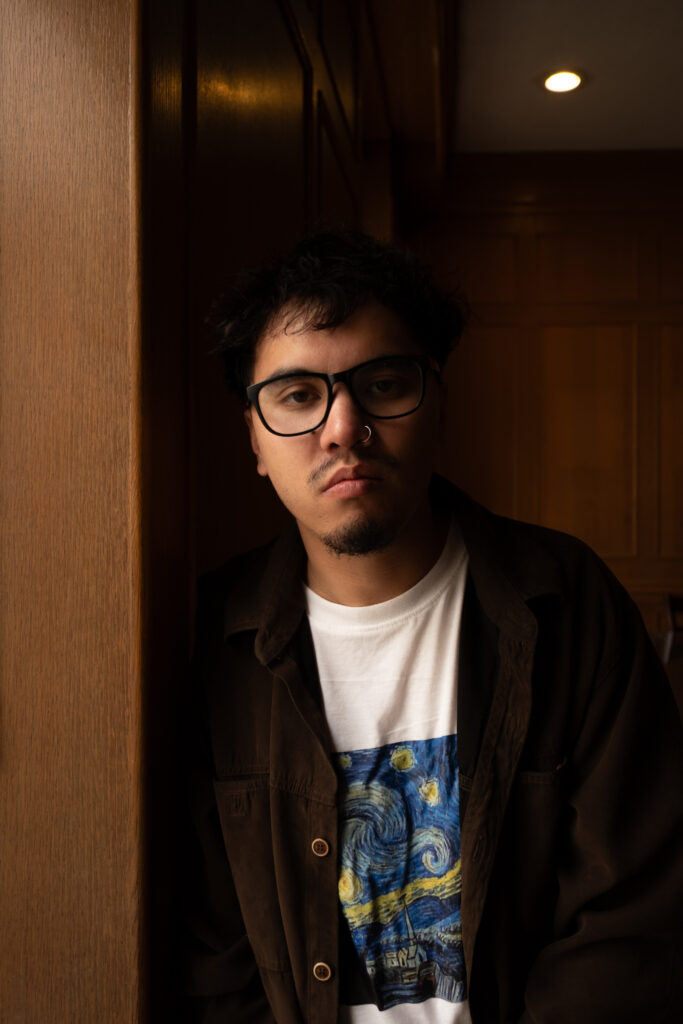
Born in Saudi Arabia but raised in “Ottawa,” Aaron Hemens is of mixed Filipino and European ancestry.
Hemens is a largely self-taught photographer, and holds a Bachelor’s Degree from Carleton University in journalism.
Seeing the impact his work can have on the community — whether uplifting people or holding institutions to account – is the most meaningful thing to him about being a journalist.
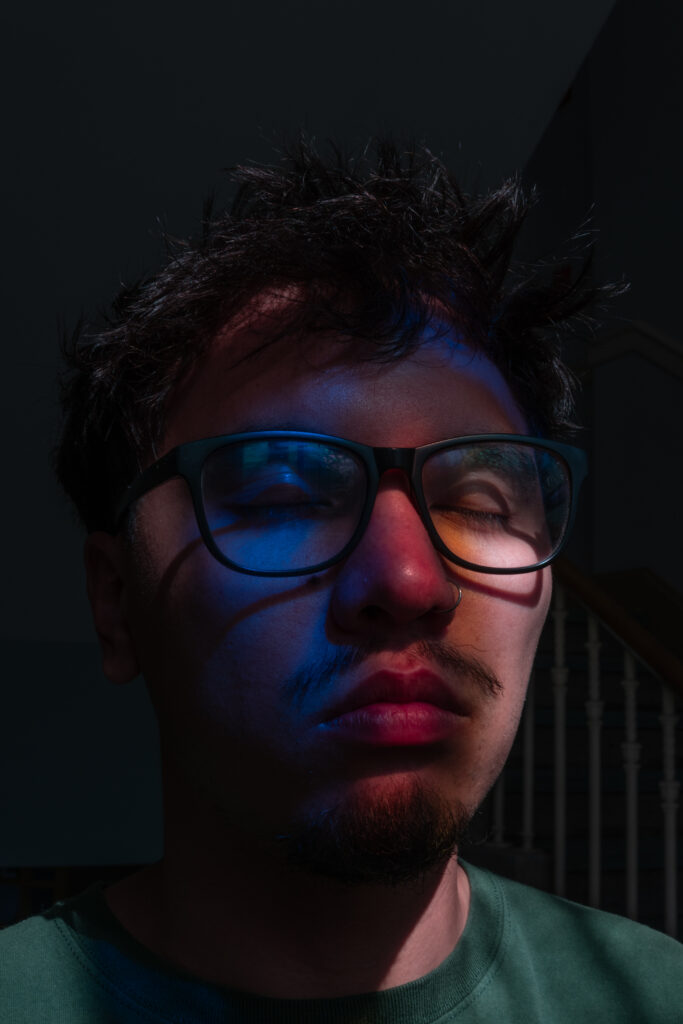
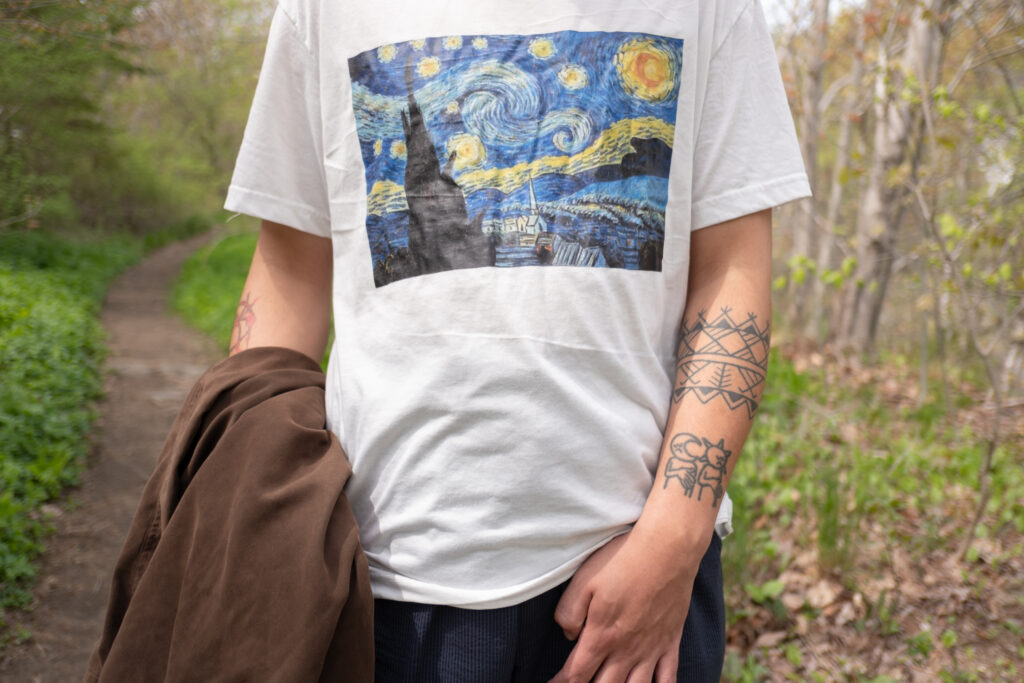
He has been a reporter at IndigiNews since 2022. Living on unceded syilx (Okanagan) territory in snpinktn (Penticton), his work focuses on water, conservation stories, restoration and more.
His first story for IndigiNews was a photo essay about Two Spirit drag queen Ella Lamoureux.
“The picture should speak for itself instead of the picture supporting being a supplement to the writing,” he says.
“It’s art — I think photography is magic in a way.”
Hemens’s humour and approachable demeanor is a show of his witty personality. Outside of work, he has a passion for video games, tattoos, films, and literature.
“I’m kind of a nerd,” he says.
Author
We live in a media ecosystem that thrives on misinformation. Big Tech and AI companies are consuming the work of real human beings and Canadian news has been banned on Facebook and Instagram.
And yet, I have hope for journalism because of the work we’re doing at IndigiNews.
At IndigiNews, we embody tâpwêwin — the Cree value of integrity and responsibility in truth-telling. We are committed to our independent, Indigenous-led newsroom rooted in community, accountability, and relationality. We believe storytelling is a sacred fire that connects our pasts, presents, and futures through the storytellers in our Storytelling Lodge. IndigiNews creates space for Indigenous journalists, storytellers, Knowledge Keepers, and communities to gather, learn, and share stories that matter.
As a registered charity, we are building a fire that allows our work not just to ignite but to thrive. Rather than relying on advertising or corporate acquisition, IndigiNews is sustained by people like you who believe Indigenous stories are important for the future of our communities.
Your support is making a real difference.
Our community of supporters, our Firekeepers, make it possible to grow our newsroom, publish award-winning journalism, train emerging Indigenous journalists through initiatives like the ReFocus Photojournalism Fellowship, and publish trustworthy stories that serve our communities across the country. Every story we publish helps fill in gaps left by mainstream media and ensures Indigenous perspectives are represented with care, accuracy and respect.
But there is still more work to do.
As the media landscape becomes more and more uncertain, community support is as necessary and essential as it’s ever been. Every new Firekeeper helps protect the independence of our newsroom and strengthens journalism that is accountable to our many and varied communities over corporations.
That’s why we’re inviting you to become a Firekeeper.
Firekeepers tend to and protect the sacred fire. Your monthly contributions directly support IndigiNews’s Storytelling Lodge, helps sustain our independent, Indigenous-led newsroom, and ensures future generations of Indigenous storytellers have the resources they need to do the work.
As a registered Canadian charity, all eligible donations receive a charitable tax receipt.
If you believe Indigenous stories matter, if you value independent journalism, and if you want to help build a strong future for Indigenous media, we invite you to join our circle of Firekeepers today.
Together, we can keep the fire burning.
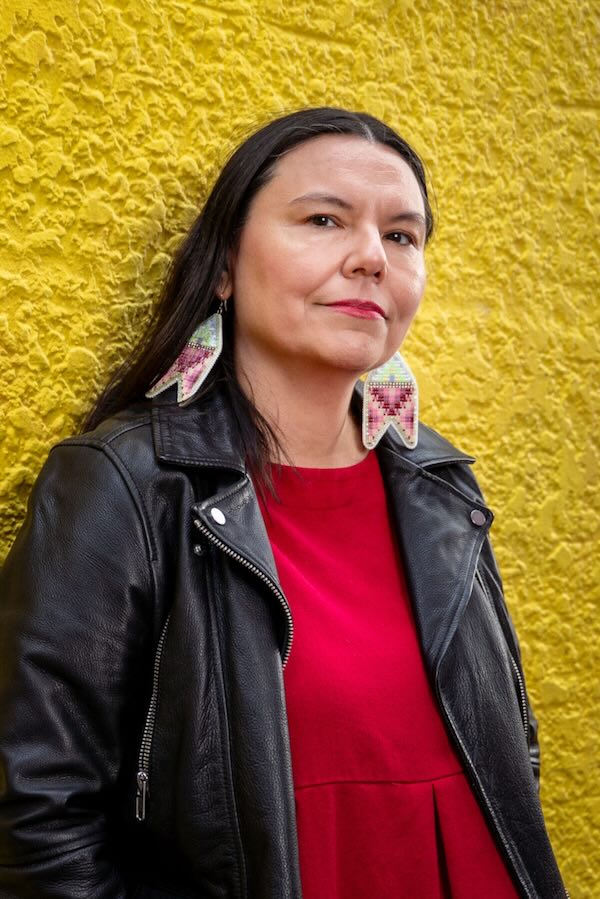
— Eden Fineday, Publisher, IndigiNews
Support us nowLatest Stories
-
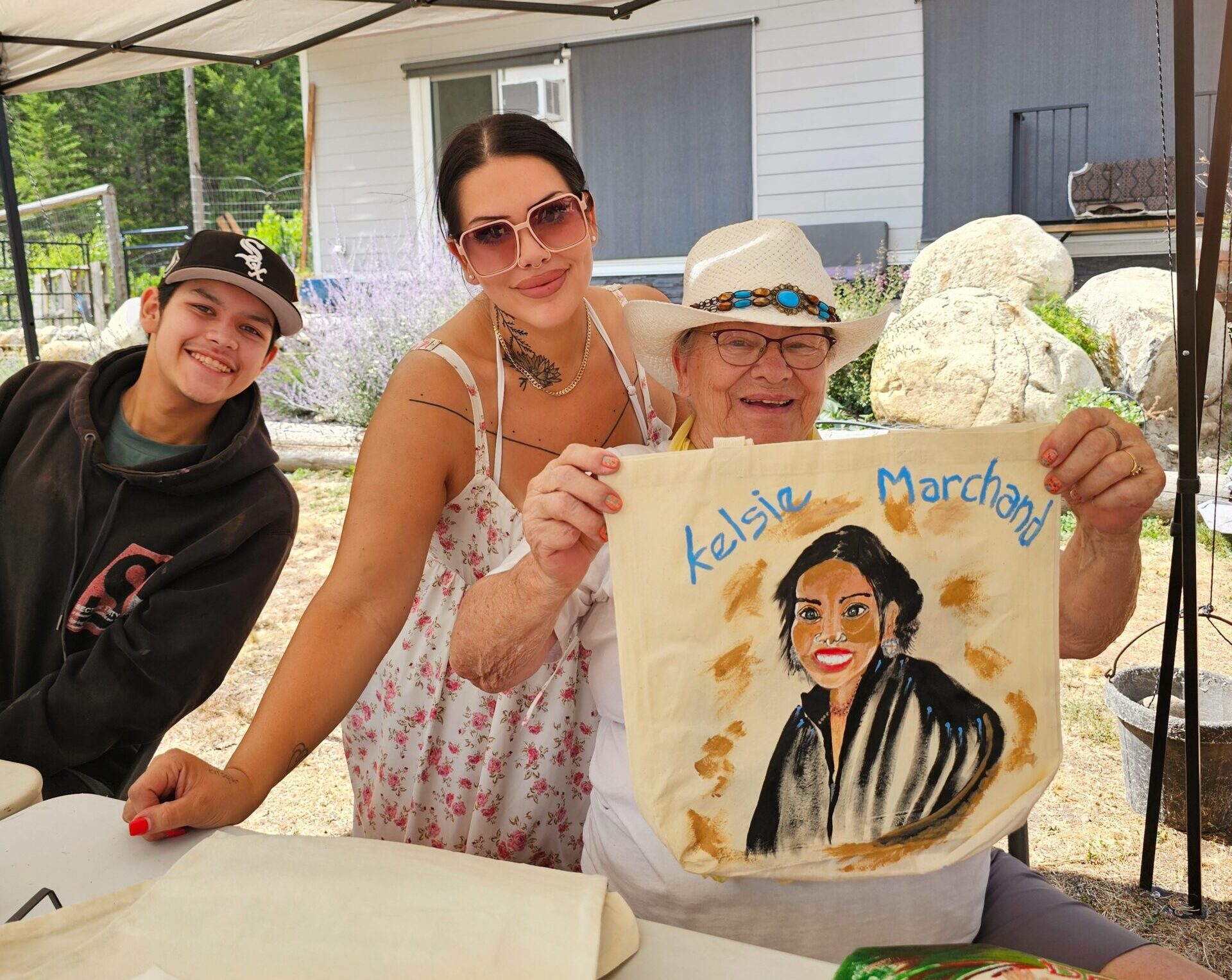
A graduation, a birthday — and an evacuation
As a wildfire burns in OKIB, I’m holding lessons close about grief, love and community — and remembering puti kʷu‿aláʔ (We are still here)
-
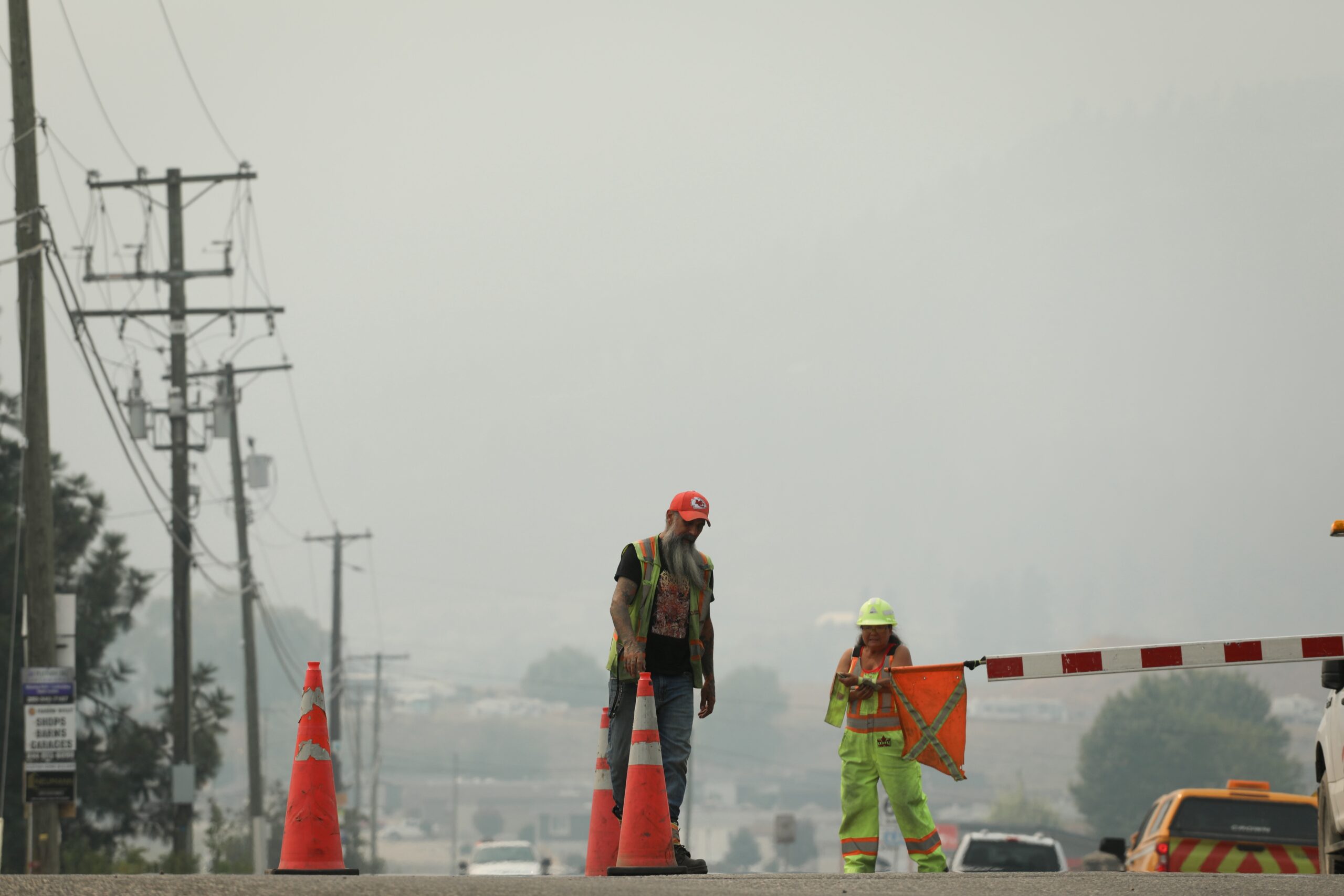
Okanagan Indian Band ‘getting stronger everyday’ amid devastating wildfire
Entire reserve has been evacuated and more than 30 people have lost homes, chief says, as blaze continues to burn as of Thursday