Okanagan Indian Band ‘getting stronger everyday’ amid devastating wildfire
Entire reserve has been evacuated and more than 30 people have lost homes, chief says, as blaze continues to burn as of Thursday
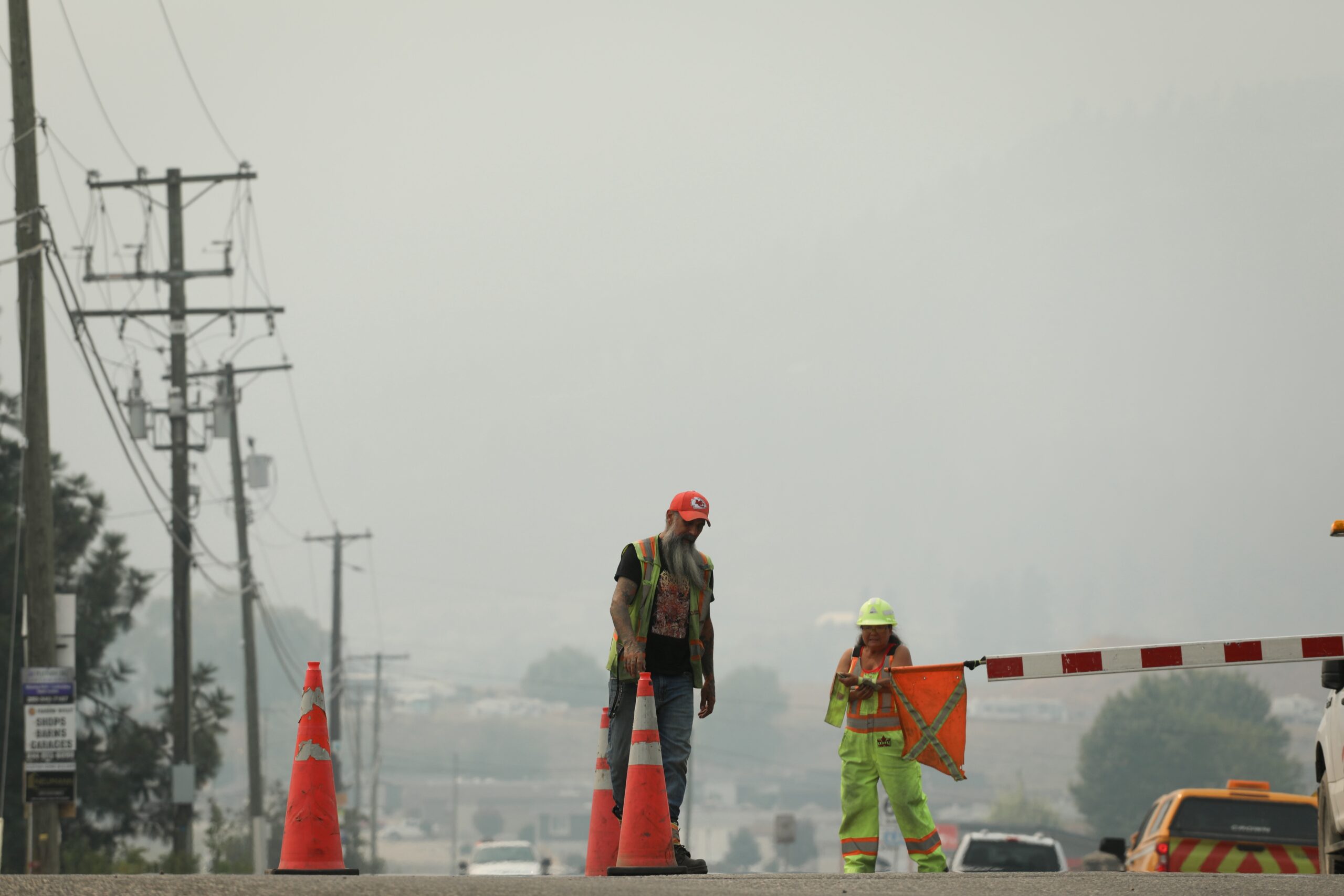
Although a devastating wildfire continues to leave hundreds without access to their homes, Okanagan Indian Band (OKIB)’s chief says his community “is getting stronger everyday.”
“We’re holding up,” naspəpʕásəs Dan Wilson told IndigiNews on Wednesday, almost a week since the Bradley Creek wildfire ignited on reserve lands at nk̓maplqs (the head of Okanagan Lake) on July 31.
“We’re very resilient. We have a long history — we’ve been here for 10,000 years.”
The fire — which Wilson said sparked on range land above the community’s powwow grounds — is currently listed as out of control and is measured at more than 2,800 hectares, according to BC Wildfire Services’ Aug. 6 update.
“It was really a shock how fast this happened,” said Wilson.
The band’s fire department is supporting provincial wildfire crews to combat the fire, he added.
“The wind has been cooperating, but I’m told that is liable to change at any moment,” he said.
“I was told that there may be some more lightning storms coming, so we need everybody’s thoughts and prayers.”
Evacuation orders remain in place for the entire OKIB reserve, which is located near “Vernon” and home to around 1,000 members. There are also evacuation alerts and orders for nearby communities, including the Township of Spallumcheen and Splatsin.
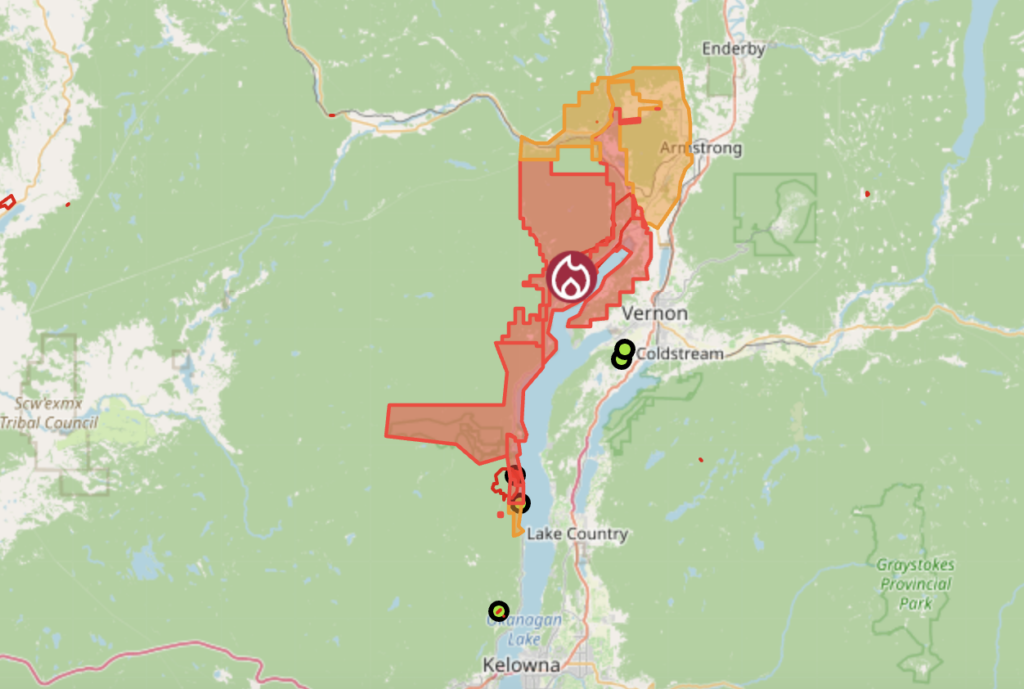
Wilson confirmed that more than 30 band members have lost their homes due to the fire, while around 200 homes and structures belonging to non-band members are also gone.
“But those numbers are liable to change. The fire is still active on the reserve,” he said.
The cause of the fire is under investigation by the RCMP.
Wilson praised firefighters and first responders at the band’s fire department who were first on the scene when the blaze erupted.
“They went above and beyond. I can’t say enough,” he said.
“I’m told that because of their work, they were able to save some of our homes. Otherwise, the damage could’ve been even worse.”
He noted that the band’s fire department – which consists of around 30 trained firefighters – was only equipped with a fire truck designed to tackle structural fires.
“If we had a proper wildland firefighting truck that’s able to access rough terrain … I’m told that if we had that equipment, our first responders would’ve been able to put that fire out immediately,” he said.
This message, he continued, was relayed to Mandy Gull-Masty, the Minister of Indigenous Services Canada.
“We’re all working together at all levels of government,” he said.
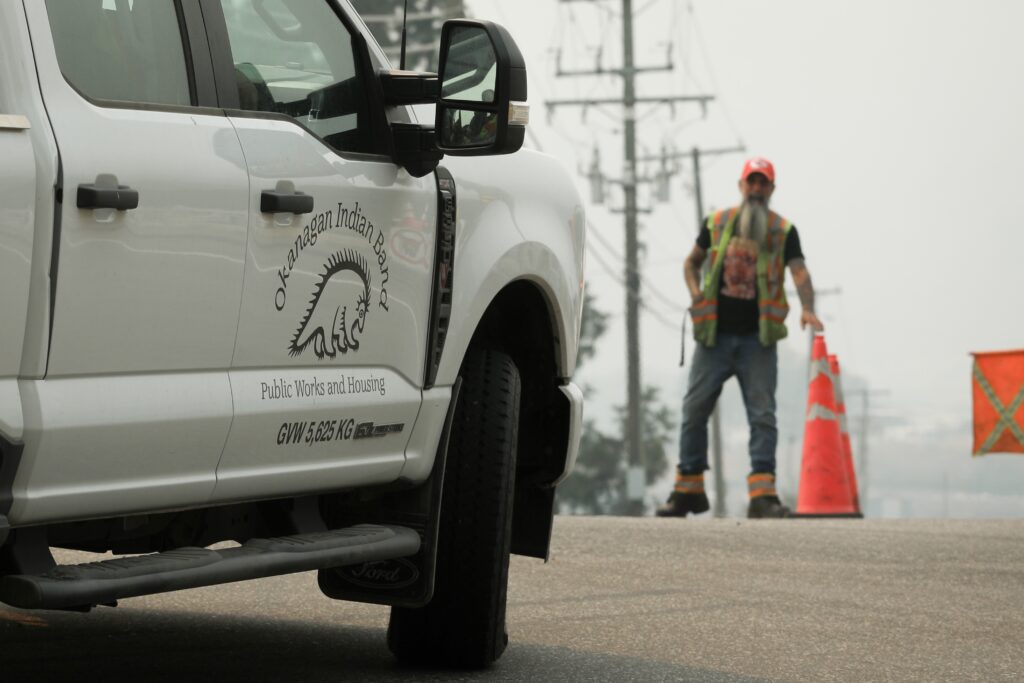
Leadership at OKIB hosted a community update meeting with band members at a hotel in “Vernon” on Tuesday night, a gathering that Wilson described as “very emotional.”
“It really broke my heart to see Elders — the looks on their faces about the loss, things that are irreplaceable — it just broke my heart to see the looks on their faces,” he said.
Following a helicopter tour of the community earlier this week, he said that he “couldn’t recognize my community.”
“Structures that were all my life are no longer there,” he said.
“Our loss is measured in the family histories that have been lost — especially the Elders who have lost their homes. The old pictures, the memorabilia; the Salish baskets.”
He noted that the one bright spot from the helicopter tour was seeing the Komasket powwow arbour grounds — as well as the nearby daycare and Nk̓maplqs Iʔ Snm̓am̓ay̓aʔtn Iʔ K̓l Sqilxʷtət Cultural Immersion School — unscathed by the fire.
“I saw how close the fire came [to the structures],” he said.
“The very first day of the fire, we had four helicopters fighting the fire. Later in the morning, we had two water bombers. And the water bombers saved those structures.”
In 2021, the Whiterock Lake Wildfire destroyed 10 homes belonging to OKIB members, and displaced the community for weeks.
“It took awhile to have those homes replaced. We’re working with all levels of government. But they all tell us that they need data,” he said.
“We won’t be able to provide them with the data they need until we get boots on the ground and physically assess the situation.”
Drought and dry conditions have been an issue all year across the Okanagan.
The province’s latest drought bulletin report from July 30 showed that the Okanagan Basin is experiencing the highest level of drought on their scale, indicating a high chance of dryness and the severity of drought.
The report also shows that water scarcity in the Okanagan Basin was also measured at the province’s highest level of severity.
Environment Canada has also issued air quality warnings across the whole Okanagan Valley due to nearby wildfires. With the health impact level listed as moderate, they ask people to “postpone or reduce strenuous outdoor activities until the warning has ended.”
OKIB is a member community of the syilx Okanagan Nation Alliance, and Wilson said that leadership across the different member communities have reached out to him to show their support.
“Chief Dan Manuel from Upper Nicola Band sent drummers — Bruce Manuel and his sister Trish Manuel — they did some smudging and they did the closing drum song of our meeting last night,” he said.
While OKIB has opened its own emergency reception centre for its members, Penticton Indian Band and Westbank First Nation have both opened their communities up to support evacuees.
Wilson said that he’s also received support from the mayors of Vernon and Lake Country. He spoke with “B.C.” Premier David Eby on Tuesday as well.
Grand Chief Stewart Phillip from the Union of B.C. Indian Chiefs has also reached out to Wilson, as did National Chief Cindy Woodhouse Nepinak of the Assembly of First Nations, who Wilson said is “going to be talking to Prime Minister Carney on our behalf.”
The support from the community at large is “much appreciated,” Wilson said.
“It’s really bolstering our spirits here,” he said.
“We say our prayers. We have a strong faith in kʷuləncútn, the Creator.”
Author
We live in a media ecosystem that thrives on misinformation. Big Tech and AI companies are consuming the work of real human beings and Canadian news has been banned on Facebook and Instagram.
And yet, I have hope for journalism because of the work we’re doing at IndigiNews.
At IndigiNews, we embody tâpwêwin — the Cree value of integrity and responsibility in truth-telling. We are committed to our independent, Indigenous-led newsroom rooted in community, accountability, and relationality. We believe storytelling is a sacred fire that connects our pasts, presents, and futures through the storytellers in our Storytelling Lodge. IndigiNews creates space for Indigenous journalists, storytellers, Knowledge Keepers, and communities to gather, learn, and share stories that matter.
As a registered charity, we are building a fire that allows our work not just to ignite but to thrive. Rather than relying on advertising or corporate acquisition, IndigiNews is sustained by people like you who believe Indigenous stories are important for the future of our communities.
Your support is making a real difference.
Our community of supporters, our Firekeepers, make it possible to grow our newsroom, publish award-winning journalism, train emerging Indigenous journalists through initiatives like the ReFocus Photojournalism Fellowship, and publish trustworthy stories that serve our communities across the country. Every story we publish helps fill in gaps left by mainstream media and ensures Indigenous perspectives are represented with care, accuracy and respect.
But there is still more work to do.
As the media landscape becomes more and more uncertain, community support is as necessary and essential as it’s ever been. Every new Firekeeper helps protect the independence of our newsroom and strengthens journalism that is accountable to our many and varied communities over corporations.
That’s why we’re inviting you to become a Firekeeper.
Firekeepers tend to and protect the sacred fire. Your monthly contributions directly support IndigiNews’s Storytelling Lodge, helps sustain our independent, Indigenous-led newsroom, and ensures future generations of Indigenous storytellers have the resources they need to do the work.
As a registered Canadian charity, all eligible donations receive a charitable tax receipt.
If you believe Indigenous stories matter, if you value independent journalism, and if you want to help build a strong future for Indigenous media, we invite you to join our circle of Firekeepers today.
Together, we can keep the fire burning.
— Eden Fineday, Publisher, IndigiNews
Support us nowLatest Stories
-
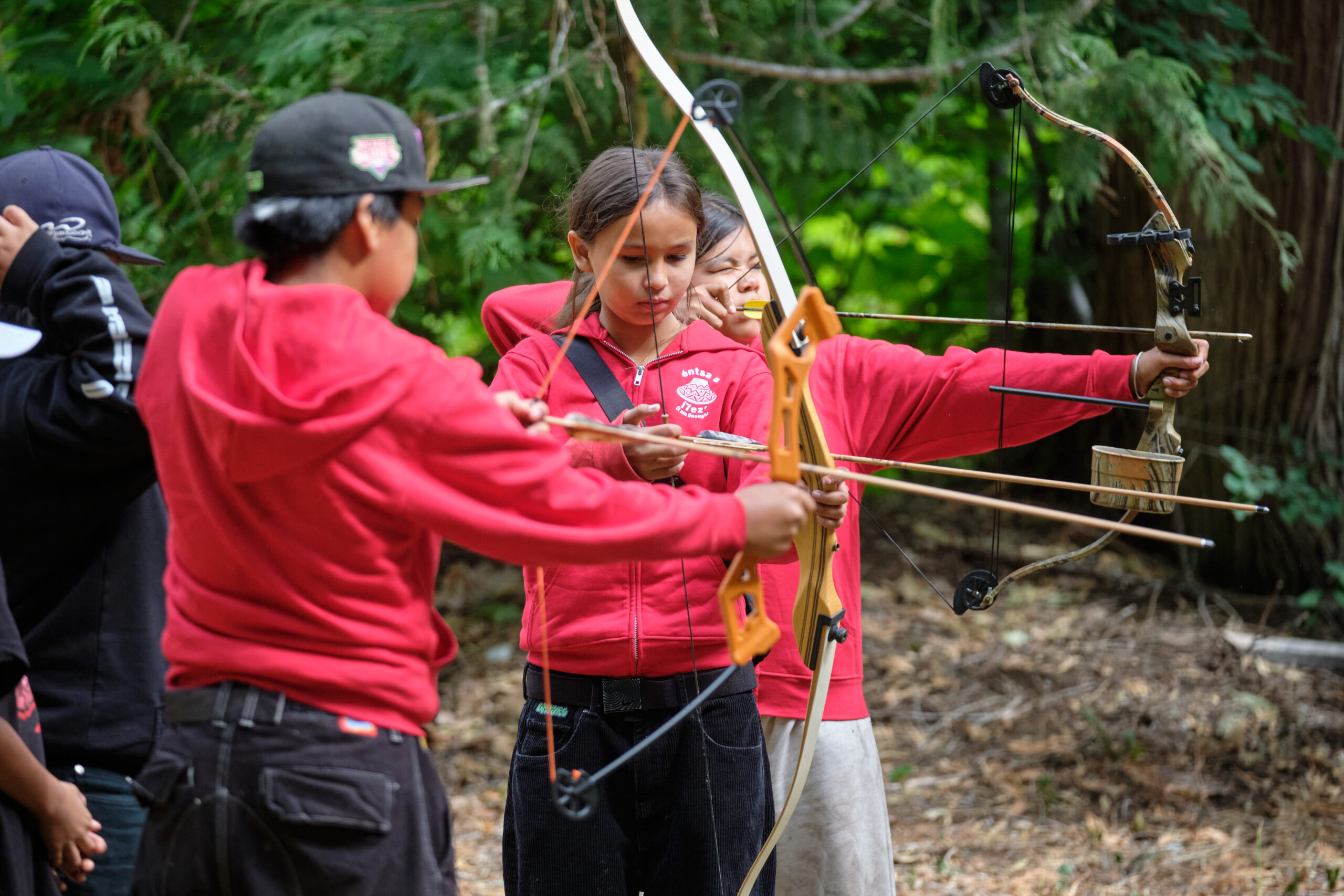
Interior Salish culture camps create ‘a safe haven’ during provincial wildfires
Organizers move ahead with caution, connecting young people with land-based teachings, healing and kinship
-
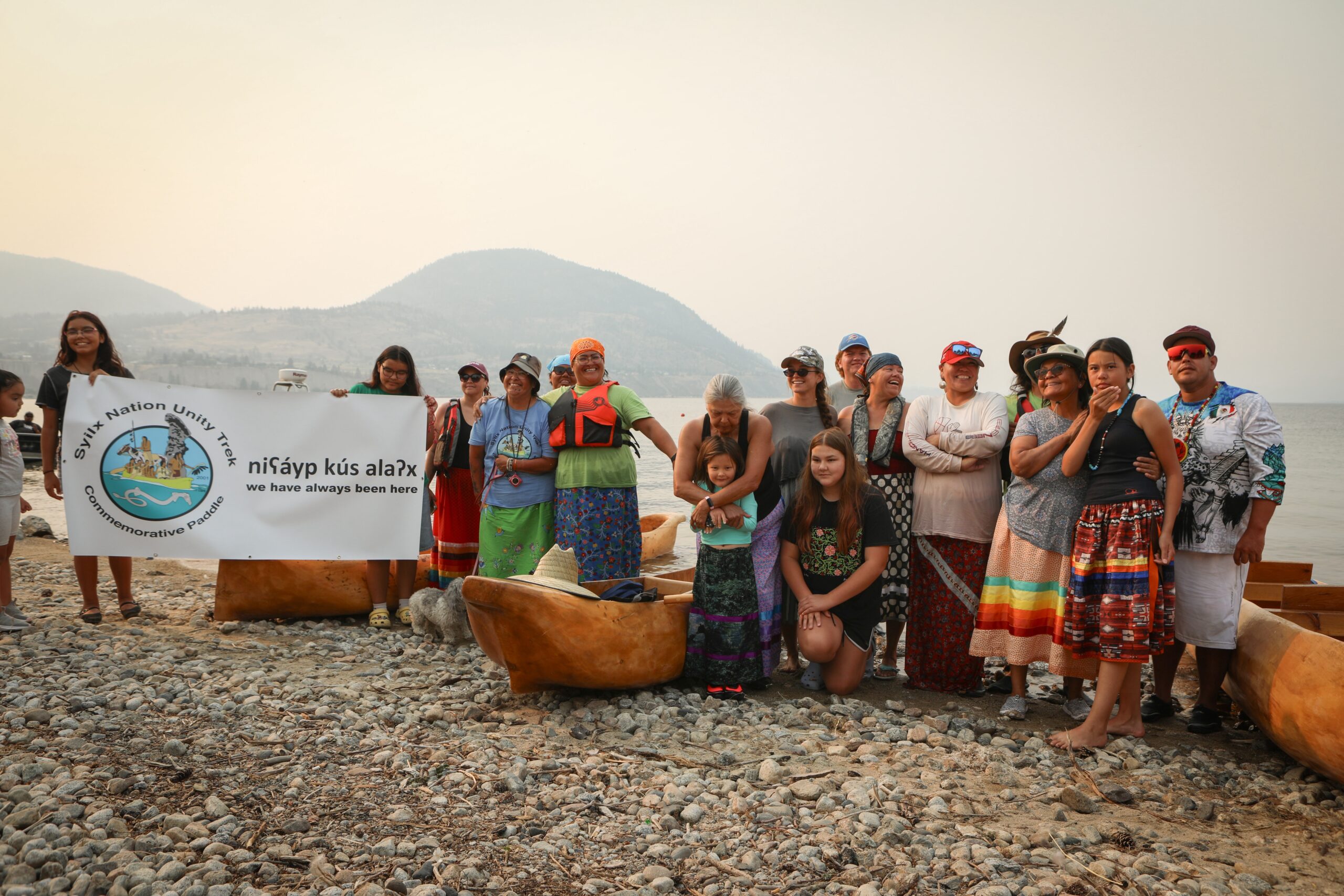
Travelling in dugout canoes, syilx Okanagan paddlers complete weeklong Unity Trek
‘Unity is connecting the people to each other, and connecting ourselves to the land,’ said one participant about the commemorative journey that wrapped up on Aug. 1