Herman Edward keeps canoe journey alive 20 years later
The annual paddle upholds the syilx Peoples’ ancestral and territorial rights to cross the constructed Canada-U.S. border without interference.
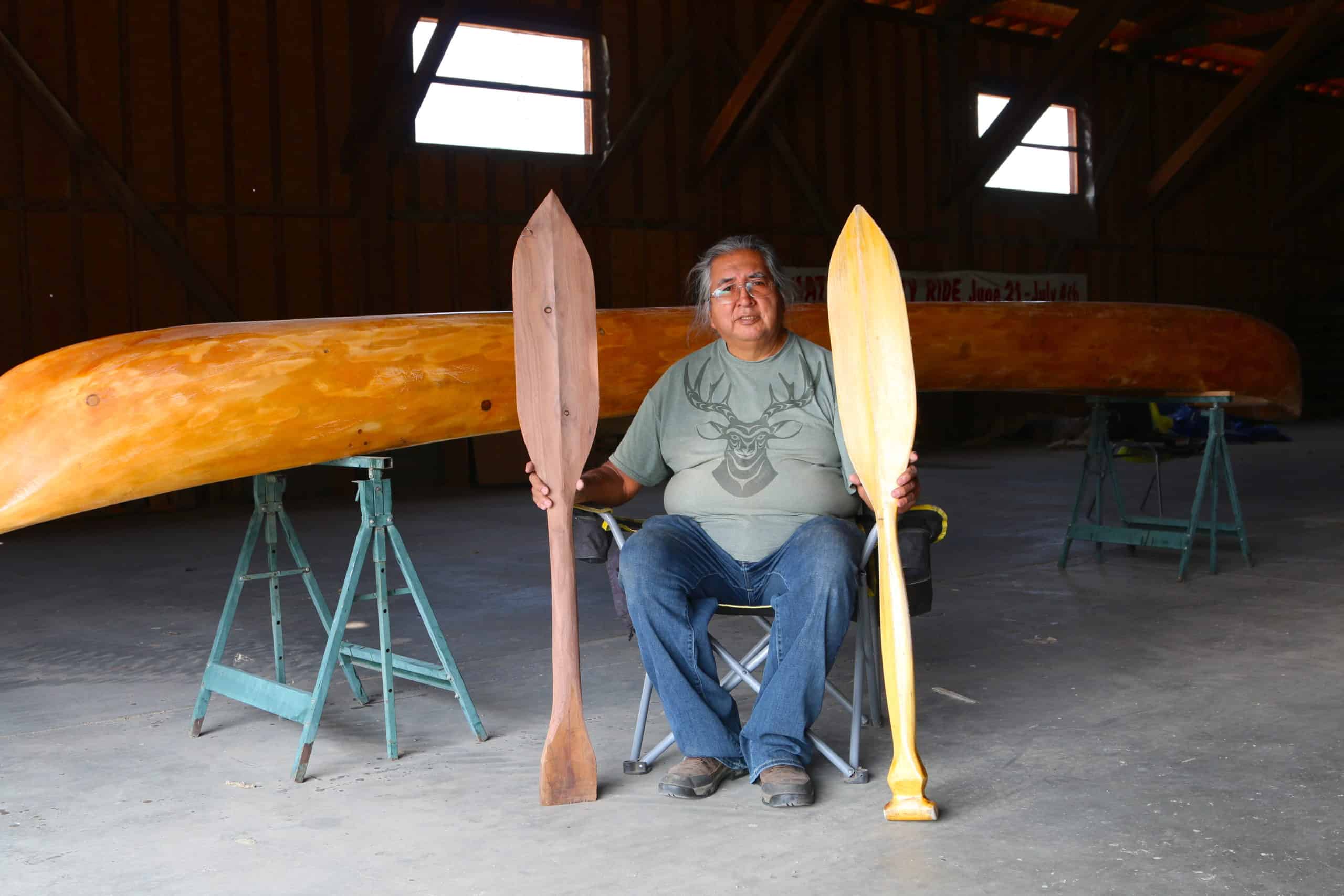
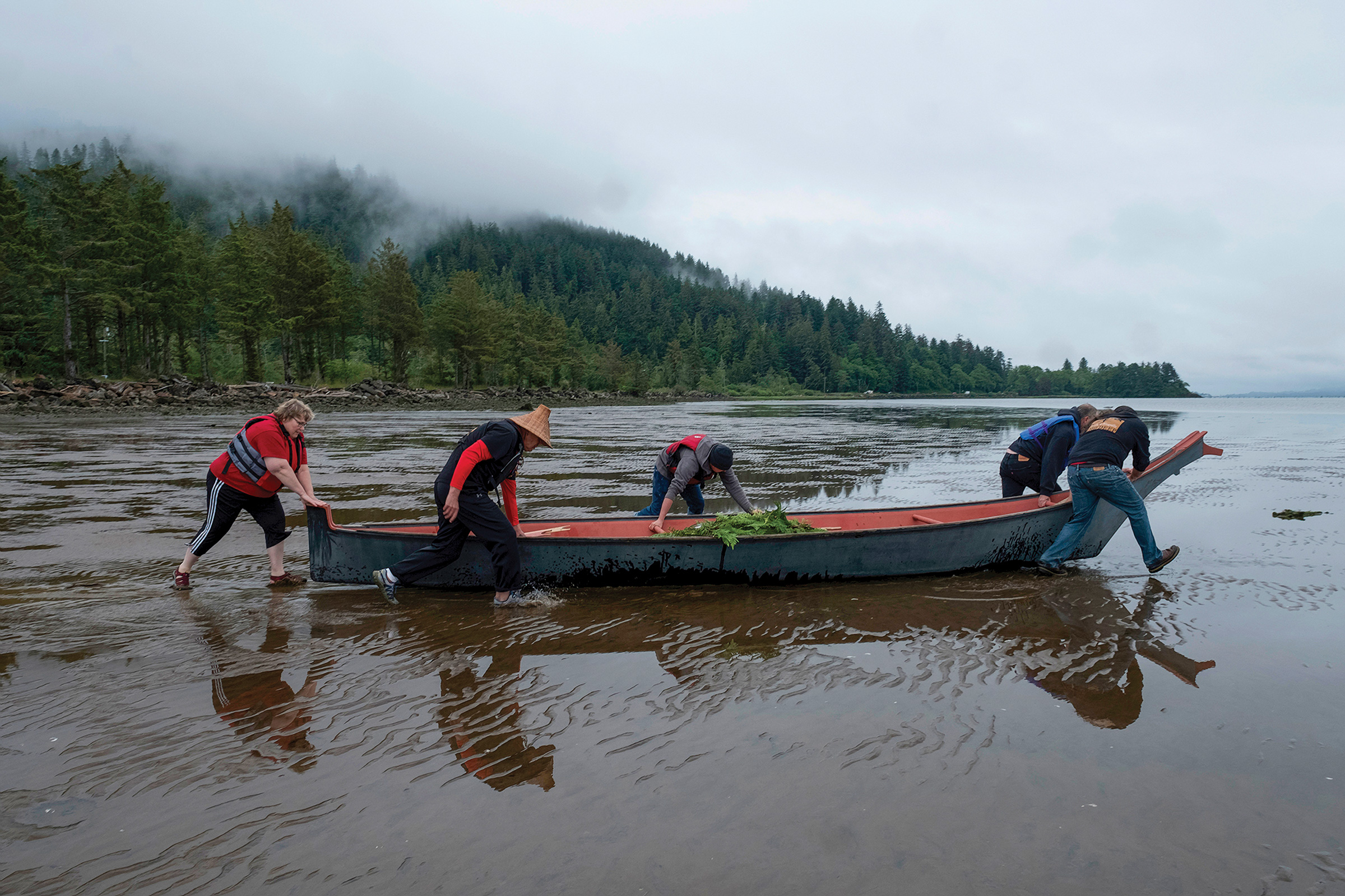
Herman Edward is preparing to paddle his dugout canoe across the constructed border between Canada and the United States for the 20th year in a row.
“I do this every year because I love it and if I don’t do this, this is going to die,” says Edward, who is a member of Lower Similkameen Indian Band.
He co-founded the “Sukʷnaqin Border Crossing Canoe Journey” — also known as the July 4 border-crossing paddle — in 2001, because he wanted to practice his ancestral and territorial rights to cross the border without interference, he tells IndigiNews.
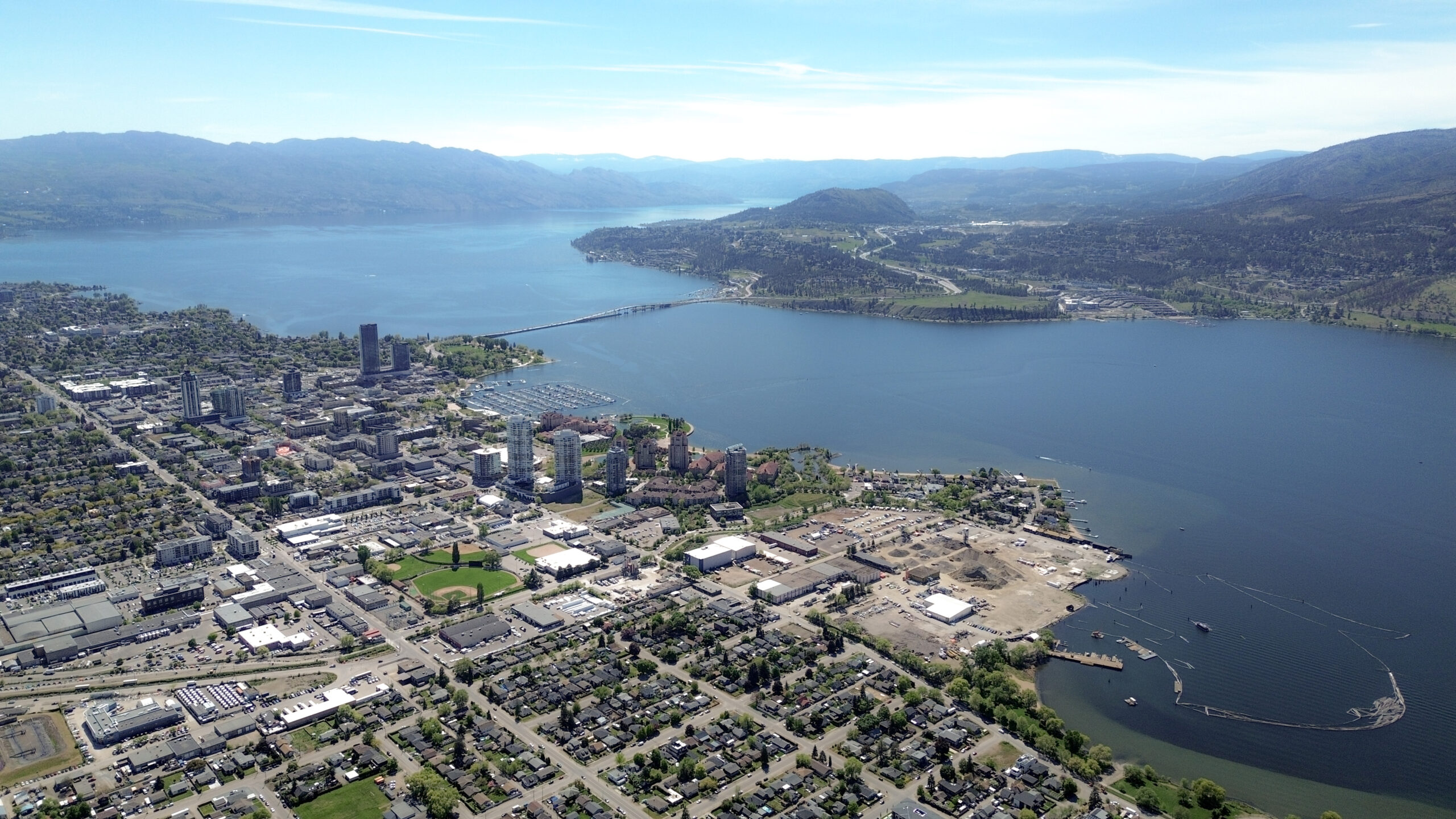
On that first canoe journey, a group of paddlers travelled 311 kilometres through syilx territory from Inkumupulux (the head of the Okanagan Lake in nsyilxcən, the syilx language) in Vernon, B.C. to Brewster, Washington.
Edward recalls the group getting off to a “funny” start during that trip.
“We were flipping the canoe. We didn’t know how to steer. We didn’t know a thing about it, and we were going in circles,” he says.
Since that year, Edward says more than 150 Indigenous paddlers have participated in the annual journey. It usually starts on July 4, but was postponed this year out of respect for the mass grieving taking place in Indigenous communities.
“With the 215 children being found [at the former Kamloops Indian Residential “School”] we postponed it to a later date to honour them,” he says.
This year’s paddle will take place on Aug. 2. The group will spend one day travelling from the Nk’Mip Campground & RV Resort to the shoreline in Orville, Washington in syilx territory.
“Because of COVID, I don’t think we’re going to be landing, but we’re going to go near the shore and come back,” he explains.
‘This was one of our ways of living’
Edward says that Louise Gabriel — a respected elder in the Okanagan Nation — envisioned the border-crossing canoe journey as a way to help and unite people.
“Before this all happened, the bands didn’t really get along and didn’t really know each other,” Edward says. “Now we’re doing language and other things, starting to get to know our other communities.”
Traditionally, the border between Canada and the U.S. didn’t exist for Indigenous people and when constructed, many nations were split, families and communities separated. The syilx/Okanagan Nation’s territory extends from north of Vernon, B.C. down to Colville, Washington in the U.S., according to Edward.
“Our people used to come from all the way down from Head of the Lake to cross the border on canoes and they would have their big trade,” Edward says.
In 1794, representatives from the U.S. and Britain signed the Treaty of Amity, Commerce, and Navigation — the Jay Treaty — which allows Indigenous people to cross the international border and excludes them from paying duty on goods they’re carrying.
Edward wants to exercise his right to cross the water by canoe, instead of just by land, by continuing to cross the border without showing his identity card (ID) every time.
“I want to exercise my right of not having to show my ID when I get to shore,” he says. “It’s like you’re condoning asking permission to land on your own shores.”
‘If I don’t do this, this is going to die’
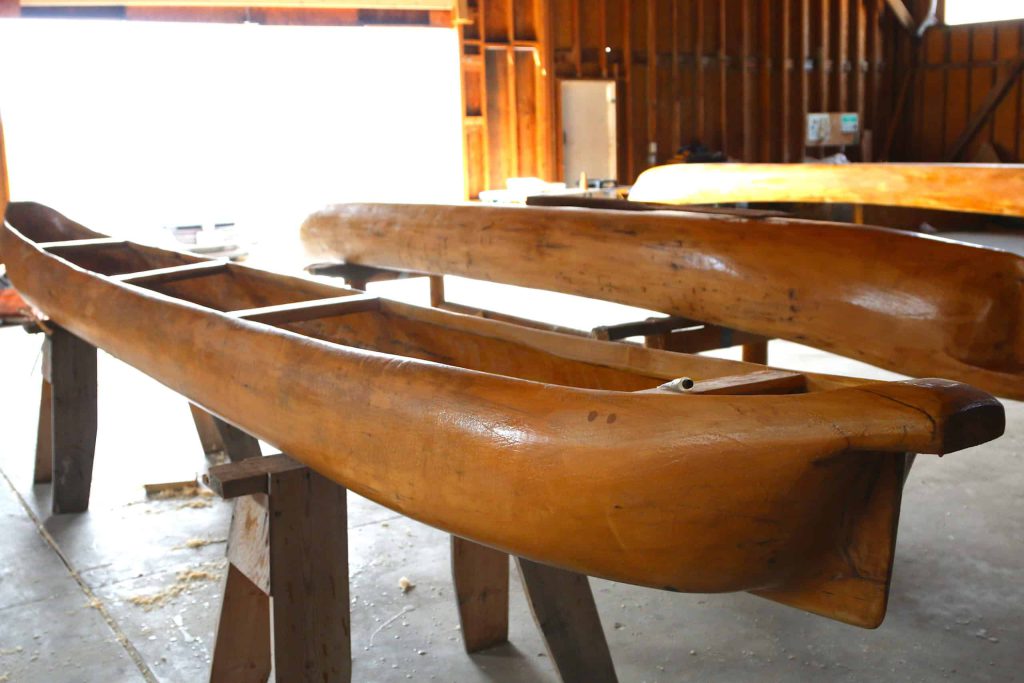
Edward says he began learning how to carve canoes in 2000 with his three mentors: the late Gordon Marchand, the late Richard Louis Sr and Mervin Louis— who all participated in the first border-crossing journey alongside Edward.
“When Gordy taught us how to make a canoe, I didn’t know what I was getting myself into,” he says.
Edward remembers, at the time, not having the financial resources to buy a canoe and feeling shocked to find out he was going to build a canoe for the first time with his mentors.
“I was really determined to learn. I wanted to learn how to make them because I always admired canoes, and I pray on the water,” he says.
“When you pray on the water, you’re praying on something that feeds the land and that’s the syilx way. Without water, we would not exist, nor would the animals or the plants, the shrubs, everything that grows on the land. ”
After 20 years of carving dugout canoes, Edward still doesn’t consider himself a master carver.
“I still consider myself a student. I became a carver after a few years working with them. These guys are my teachers, I learned a lot from them, and I’m still learning,” he says.
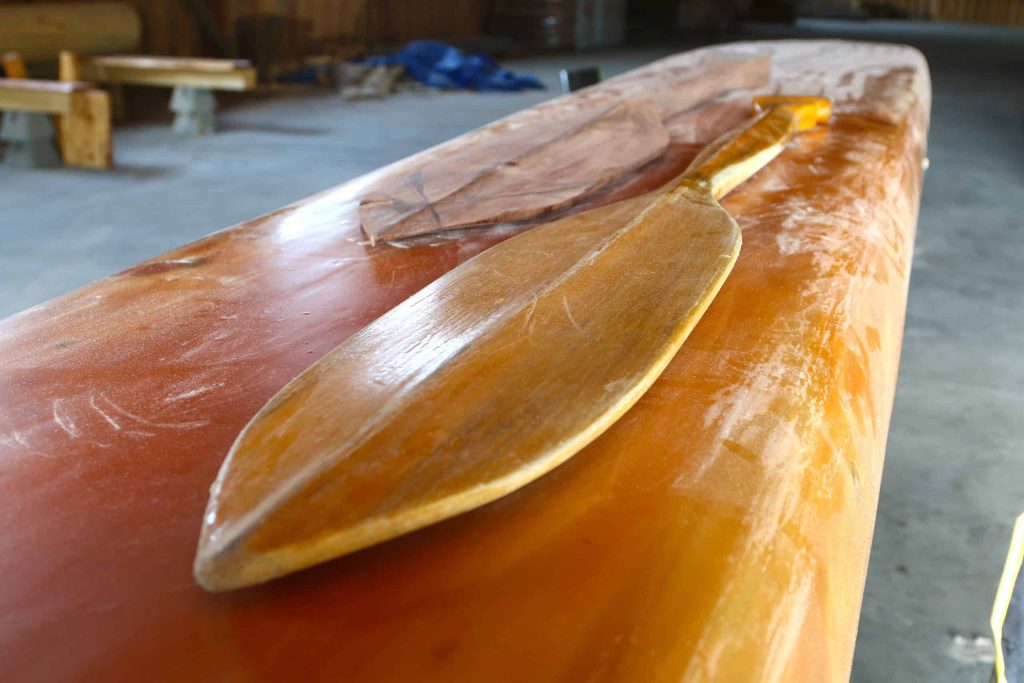
Edward says the process of carving a dugout canoe is part of his healing.
“I’d done a lot of healing through this because I was 16 when my dad passed away and I didn’t know how to be a man — I didn’t know how to be a good man,” he says.
Edward has been maintaining the original build of the dugout canoes in honour of his mentor, and they still use it today because the water is “a sacred place,” he says.
On August 1, Edward, the Okanagan Nation Alliance, the South Okanagan Restorative Justice Program and the Nk’Mip RV & Campground are hosting an event to honour the four main carvers who started the annual canoe journey and who have continued to breathe life into it.
“I’ve been repairing these canoes to keep them afloat,” he says. “If I didn’t care about these canoes, they would have rotted a very long time ago, but I do care for the canoes and I clean them up every year.”
Editor’s note: When this story was first published on July 30, Herman Edward’s name was spelled incorrectly (as Herman Edwards). This mistake was corrected on Aug. 5.
Editor’s note: We don’t use capital letters in nsyilxcən words. This is because, according to nsyilxcən language holders, capitalization insinuates that someone or something holds more importance than another, and this belief does not fall in line with syilx ethics.
Author
We live in a media ecosystem that thrives on misinformation. Big Tech and AI companies are consuming the work of real human beings and Canadian news has been banned on Facebook and Instagram.
And yet, I have hope for journalism because of the work we’re doing at IndigiNews.
At IndigiNews, we embody tâpwêwin — the Cree value of integrity and responsibility in truth-telling. We are committed to our independent, Indigenous-led newsroom rooted in community, accountability, and relationality. We believe storytelling is a sacred fire that connects our pasts, presents, and futures through the storytellers in our Storytelling Lodge. IndigiNews creates space for Indigenous journalists, storytellers, Knowledge Keepers, and communities to gather, learn, and share stories that matter.
As a registered charity, we are building a fire that allows our work not just to ignite but to thrive. Rather than relying on advertising or corporate acquisition, IndigiNews is sustained by people like you who believe Indigenous stories are important for the future of our communities.
Your support is making a real difference.
Our community of supporters, our Firekeepers, make it possible to grow our newsroom, publish award-winning journalism, train emerging Indigenous journalists through initiatives like the ReFocus Photojournalism Fellowship, and publish trustworthy stories that serve our communities across the country. Every story we publish helps fill in gaps left by mainstream media and ensures Indigenous perspectives are represented with care, accuracy and respect.
But there is still more work to do.
As the media landscape becomes more and more uncertain, community support is as necessary and essential as it’s ever been. Every new Firekeeper helps protect the independence of our newsroom and strengthens journalism that is accountable to our many and varied communities over corporations.
That’s why we’re inviting you to become a Firekeeper.
Firekeepers tend to and protect the sacred fire. Your monthly contributions directly support IndigiNews’s Storytelling Lodge, helps sustain our independent, Indigenous-led newsroom, and ensures future generations of Indigenous storytellers have the resources they need to do the work.
As a registered Canadian charity, all eligible donations receive a charitable tax receipt.
If you believe Indigenous stories matter, if you value independent journalism, and if you want to help build a strong future for Indigenous media, we invite you to join our circle of Firekeepers today.
Together, we can keep the fire burning.
— Eden Fineday, Publisher, IndigiNews
Support us nowLatest Stories
-
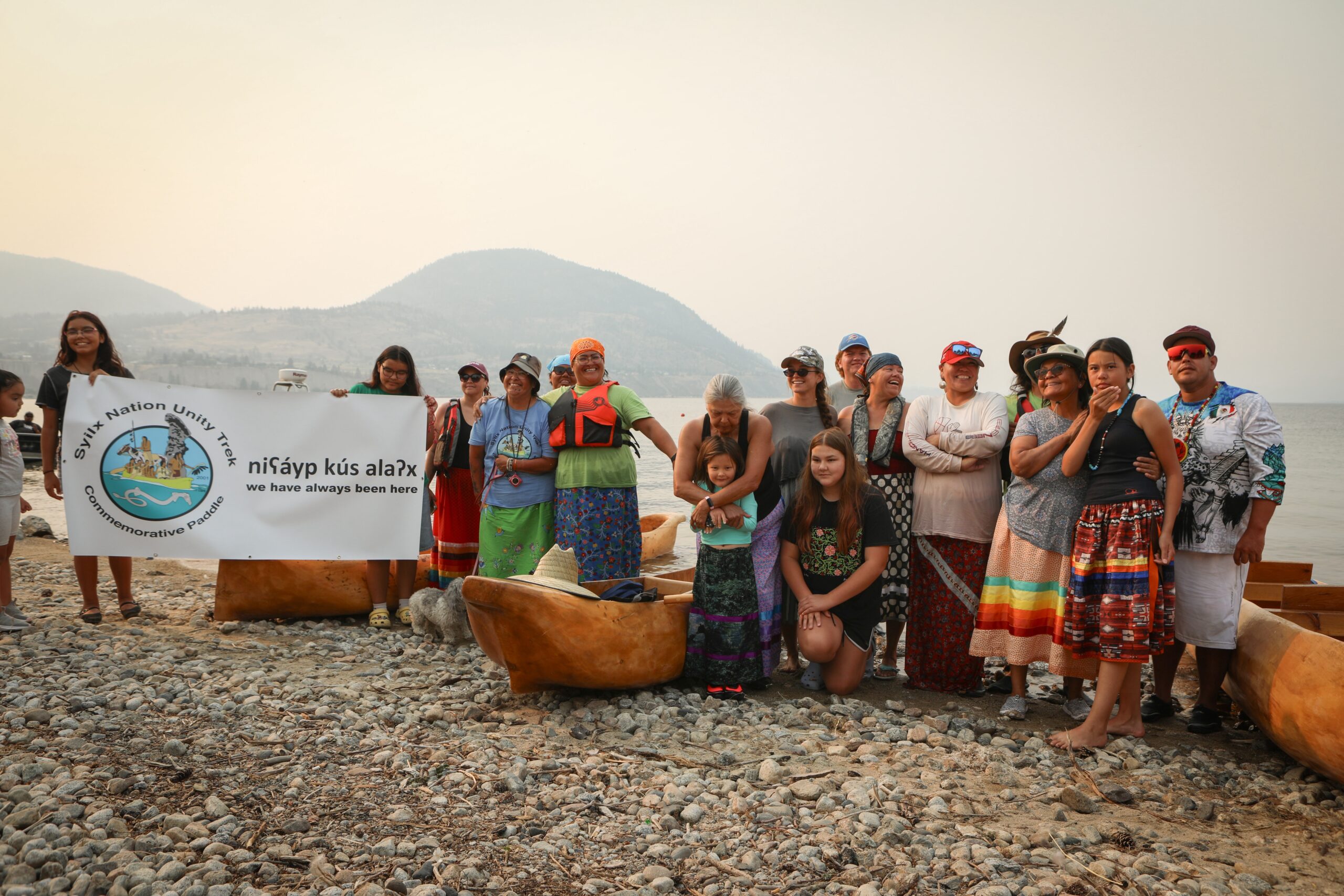
Travelling in dugout canoes, syilx Okanagan paddlers complete weeklong Unity Trek
‘Unity is connecting the people to each other, and connecting ourselves to the land,’ said one participant about the commemorative journey that wrapped up on Aug. 1
-
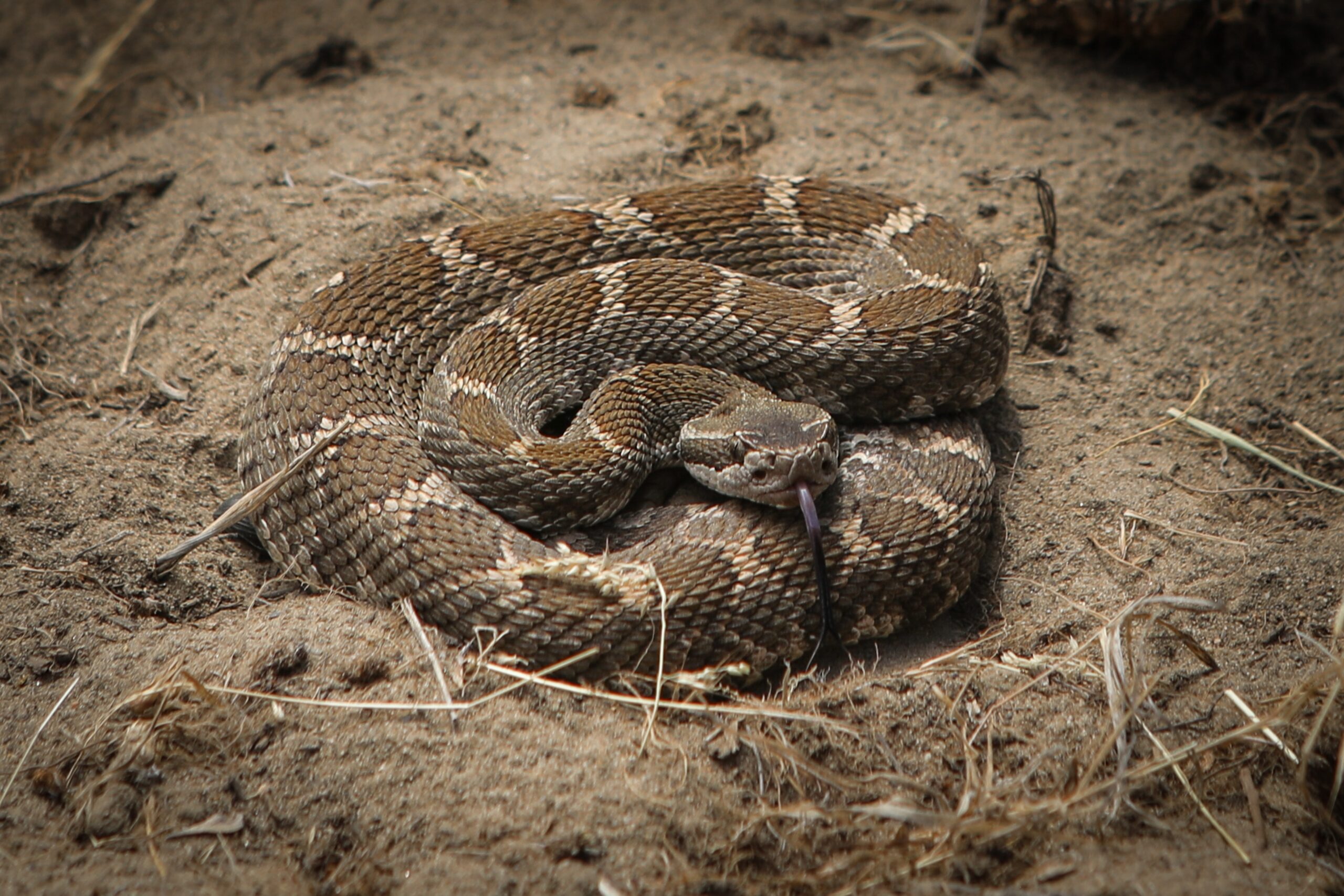
In the Okanagan desert, snakes offer lessons on protecting a fragile ecosystem
For two decades, researchers at the Nk’Mip Desert Cultural Centre have tracked snakes across syilx homelands — while helping people appreciate the often-feared creatures