‘It’s a doctrine for a transfer of knowledge’: Why Syilx People only share these important stories in the winter
Elder Rob Edward says Captikwł teachings, shared in colder months, are key to passing on complex laws and protocols

As snow falls gently on the kekuli — a winter pit-home in the Okanagan — Syilx people gather with their children to share Captikwł stories.
Sometimes animated with big gestures to keep the young ones’ attentions on the morals and values of the story, sharing Captikwł is something people in the Okanagan have always reserved for the winter months.
Elder Rob Edward, a former chief of Lower Similkameen Indian Band, says this time-old practice of sharing Captikwł still continues today, and it’s a lot more than a social exercise.
It’s a complex story system designed to pass on important information.
“It’s a doctrine for a transfer of knowledge for all of our laws and protocols, how we are to be with one another, ceremony, prayer, giving thanks and place names,” he says. “All of that is really important.”
Before COVID-19 hit, families were still gathering in the kekuli in wintertime to listen to these stories, however, now with the pandemic that might need to turn virtual.
Edward says that this important work must continue so that the spirit of the Captikwł is maintained.
“It gives us the knowledge that we need that comes from the beginning of our existence,” he says.
“It’s really important to our people, it helps with our environmental ethic, our business ethic, all of the ethics we need to survive on this land.”
Winter is a key time for storytelling in many Indigenous nations because it’s a time to rest after a year of preparing for the winter through harvesting, hunting and ceremony.
He says some Captikwł stories can take weeks or even months to fully tell which is why that stillness is important.
“If you tell it in the summer then you lose what you are trying to teach in our discipline,” Edward says.
“[Captikwł time] stops when the buttercups come out, and then when the first snows come in at the top of the mountains then you can start telling Captikwł in its entirety.”
During those times of preparation in spring, summer, and fall, Edward says older folks will tell the young ones to “‘stand there and be quiet and listen” and watch ceremonies take place.
When the younger ones observe and witness the ceremony, they relate it back to the stories they heard during the winter, as a form of developing a disciplined mind and memory for those important teachings.
“So it’s always making those connections, and those Captikwł have those connections to each other, they are not siloed,” Edward continues.
“They all have an interconnection to one another. So do our ceremonies, our songs, and all those different things.”
He says Captikwł not only tells Syilx people how to connect with one another, but how to create kin with non-human beings such as plants and animals.
The stories bring to life important places that hold natural laws, and a good storyteller is key to ensuring the information is passed along properly.
“The storytellers are really good,” he says. “They are animated, some of them, some are really serious, and they have really high language in there. They really know how to engage people.”
Edward says that a western, colonial school system means Captikwł — or a Sqilxw (people of the land) way of thinking in general — is generally not taught to children outside of their own kinship systems.
“They say you have to teach this, this, and that, because they don’t want our thinking in there,” he says.
“Our young people, we always push them to be smart in school and say, ‘you gotta be this, you gotta be that, you gotta be this doctor, this lawyer’ or something like that. But what about a storyteller?”
Author
We live in a media ecosystem that thrives on misinformation. Big Tech and AI companies are consuming the work of real human beings and Canadian news has been banned on Facebook and Instagram.
And yet, I have hope for journalism because of the work we’re doing at IndigiNews.
At IndigiNews, we embody tâpwêwin — the Cree value of integrity and responsibility in truth-telling. We are committed to our independent, Indigenous-led newsroom rooted in community, accountability, and relationality. We believe storytelling is a sacred fire that connects our pasts, presents, and futures through the storytellers in our Storytelling Lodge. IndigiNews creates space for Indigenous journalists, storytellers, Knowledge Keepers, and communities to gather, learn, and share stories that matter.
As a registered charity, we are building a fire that allows our work not just to ignite but to thrive. Rather than relying on advertising or corporate acquisition, IndigiNews is sustained by people like you who believe Indigenous stories are important for the future of our communities.
Your support is making a real difference.
Our community of supporters, our Firekeepers, make it possible to grow our newsroom, publish award-winning journalism, train emerging Indigenous journalists through initiatives like the ReFocus Photojournalism Fellowship, and publish trustworthy stories that serve our communities across the country. Every story we publish helps fill in gaps left by mainstream media and ensures Indigenous perspectives are represented with care, accuracy and respect.
But there is still more work to do.
As the media landscape becomes more and more uncertain, community support is as necessary and essential as it’s ever been. Every new Firekeeper helps protect the independence of our newsroom and strengthens journalism that is accountable to our many and varied communities over corporations.
That’s why we’re inviting you to become a Firekeeper.
Firekeepers tend to and protect the sacred fire. Your monthly contributions directly support IndigiNews’s Storytelling Lodge, helps sustain our independent, Indigenous-led newsroom, and ensures future generations of Indigenous storytellers have the resources they need to do the work.
As a registered Canadian charity, all eligible donations receive a charitable tax receipt.
If you believe Indigenous stories matter, if you value independent journalism, and if you want to help build a strong future for Indigenous media, we invite you to join our circle of Firekeepers today.
Together, we can keep the fire burning.
— Eden Fineday, Publisher, IndigiNews
Support us nowLatest Stories
-
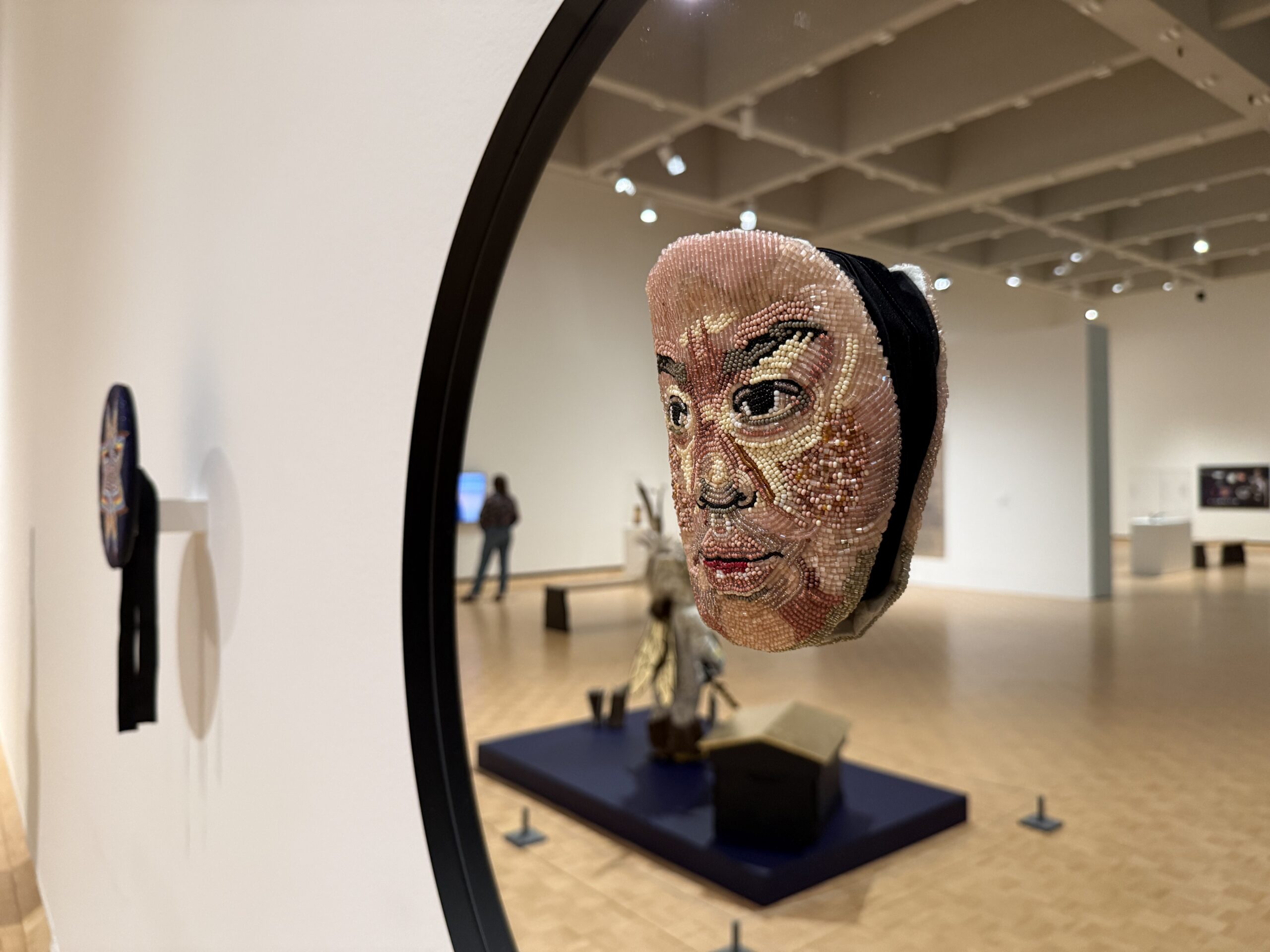
‘Love Medicine’ exhibition celebrates Two Spirit and Indigiqueer artists
Curated by Métis art historian Michelle McGeough, 22 Indigenous 2SLGBTQIA+ artists explore the idea of love as healing, belonging — and resistance — in a Oskana kâ-asastêki (Regina) gallery
-

‘Rhythm crafted for the human voice’: Poet kit-xgwélemc kennedy wins an Indigenous Voices Award
Member of St’uxwtéws Secwépemc Nation recognized in unpublished poetry category — following in his wordsmith mom’s footsteps