Boxing club coaches Indigenous Youth to grow stronger in the ring and in life
‘This is just a place for you to get your anger out, and a place to stay safe,’ says Team Trouble boxing coach Eli Wyse


It’s a Tuesday night, and the sound of shuffling feet can be heard outside Eli Wyse’s office at Force Boxing and Fitness in Snuneymuxw homelands. Every three minutes, a buzzer rings out, signalling the youth to move on to their next exercise, or take a break. The sound of gloves on punching bags creates a rhythmic thudding, offset by the high-pitched snapping of skipping ropes on the gym floor.
Wyse, of Snuneymuxw First Nation, retired from boxing shortly after winning provincial championships in 2018 and never thought he would get back into the sport.
Not long after hanging up his gloves, he was hired by Kw’umut Lelum in 2020 as a Youth outreach worker. However his reputation as a champion fighter followed him into his new career.
Led by head coach Wyse, Team Trouble is a boxing club that he created as a safe space for Indigenous Youth to practice the sport. The club has become a second home for young people from local Coast Salish nations since it began at the end of 2020.
“A couple of them had asked me if I could teach them boxing. So this actually came from the Youth I was working with in the beginning of my career at Kw’umut Lelum,” said Wyse.
Coworkers at Kw’umut Lelum noticed he was spending a lot of his time driving around the greater “Nanaimo” area, picking up youth from all over to teach them boxing.
He said Kw’umut Lelum suggested to him he should just run a class. “I didn’t see that coming. I had no intention of teaching. It’s just what the Youth wanted at the time.”
He was able to find space to rent at Force Boxing and Fitness, where youth ages 12 to around 24 continue to train in the evenings, twice a week.

All egos are left at the door, explained the head coach. Everyone is there to learn, and help each other be better, both in the ring and in life.
“When we call it Team Trouble, it’s because, you know, [on] most of our reserves we struggle, and we all live around trouble,” explained Wyse. “So we’re in the boxing club to stay out of trouble. I’ve got these guys in here 8 p.m. until 10 p.m., we work them hard enough that whatever was pissing them off in that day, by 10-o’clock, they’re done. They can go home, they can get a good night’s rest, they can hit up the [next] day better.”

Emily Simpson, communications administrator at Kw’umut Lelum, has been training with Wyse for a year and a half. Wyse commented on her consistency and work ethic. He has seen her not only work hard for herself, but also lead the way for many of the other youth on Team Trouble.
“They were like man, Emily’s working hard, we’ve got to be working hard too,” said Wyse.
Wyse makes it clear with the youth: they’re not obligated to compete.
“This is just a place for you to get your anger out, and a place to stay safe.”

A black and white photo hangs on the wall in Wyse’s office, showing a group of youth gathered together in the ring for a photo. It’s an old version of Team Trouble. Currently five Youth train with Wyse, but the numbers vary. He explained that some youth have chosen to move on to bigger things.
“And I’m proud of that,” said Wyse.

During training sessions, Wyse leads the Youth in fitness exercises, sparring sessions and footwork training. In the ring, it’s all business: Move your feet more, move with the punches, watch the hands. Wyse holds the pads as Youth move around him. He corrects their form and encourages their successes.
By the time that the cool-down session at the end of the night arrives, everyone’s walls are down, Wyse explained. It’s during stretching that the group catches up and chats about life. Wyse often brings up the topics of discipline and sacrifice, and the rewards of those things.
It’s his goal to use his experiences in life, to better the lives of the Youth around him.
“It’s just awesome to have those stories for those kids, right? To build them into young [adults], and have them face the world.”
Author
We live in a media ecosystem that thrives on misinformation. Big Tech and AI companies are consuming the work of real human beings and Canadian news has been banned on Facebook and Instagram.

And yet, I have hope for journalism because of the work we’re doing at IndigiNews.
At IndigiNews, we embody tâpwêwin — the Cree value of integrity and responsibility in truth-telling. We are committed to our independent, Indigenous-led newsroom rooted in community, accountability, and relationality. We believe storytelling is a sacred fire that connects our pasts, presents, and futures through the storytellers in our Storytelling Lodge. IndigiNews creates space for Indigenous journalists, storytellers, Knowledge Keepers, and communities to gather, learn, and share stories that matter.
As a registered charity, we are building a fire that allows our work not just to ignite but to thrive. Rather than relying on advertising or corporate acquisition, IndigiNews is sustained by people like you who believe Indigenous stories are important for the future of our communities.
Your support is making a real difference.
Our community of supporters, our Firekeepers, make it possible to grow our newsroom, publish award-winning journalism, train emerging Indigenous journalists through initiatives like the ReFocus Photojournalism Fellowship, and publish trustworthy stories that serve our communities across the country. Every story we publish helps fill in gaps left by mainstream media and ensures Indigenous perspectives are represented with care, accuracy and respect.
But there is still more work to do.
As the media landscape becomes more and more uncertain, community support is as necessary and essential as it’s ever been. Every new Firekeeper helps protect the independence of our newsroom and strengthens journalism that is accountable to our many and varied communities over corporations.
That’s why we’re inviting you to become a Firekeeper.
Firekeepers tend to and protect the sacred fire. Your monthly contributions directly support IndigiNews’s Storytelling Lodge, helps sustain our independent, Indigenous-led newsroom, and ensures future generations of Indigenous storytellers have the resources they need to do the work.
As a registered Canadian charity, all eligible donations receive a charitable tax receipt.
If you believe Indigenous stories matter, if you value independent journalism, and if you want to help build a strong future for Indigenous media, we invite you to join our circle of Firekeepers today.
Together, we can keep the fire burning.
— Eden Fineday, Publisher, IndigiNews
Support us nowLatest Stories
-
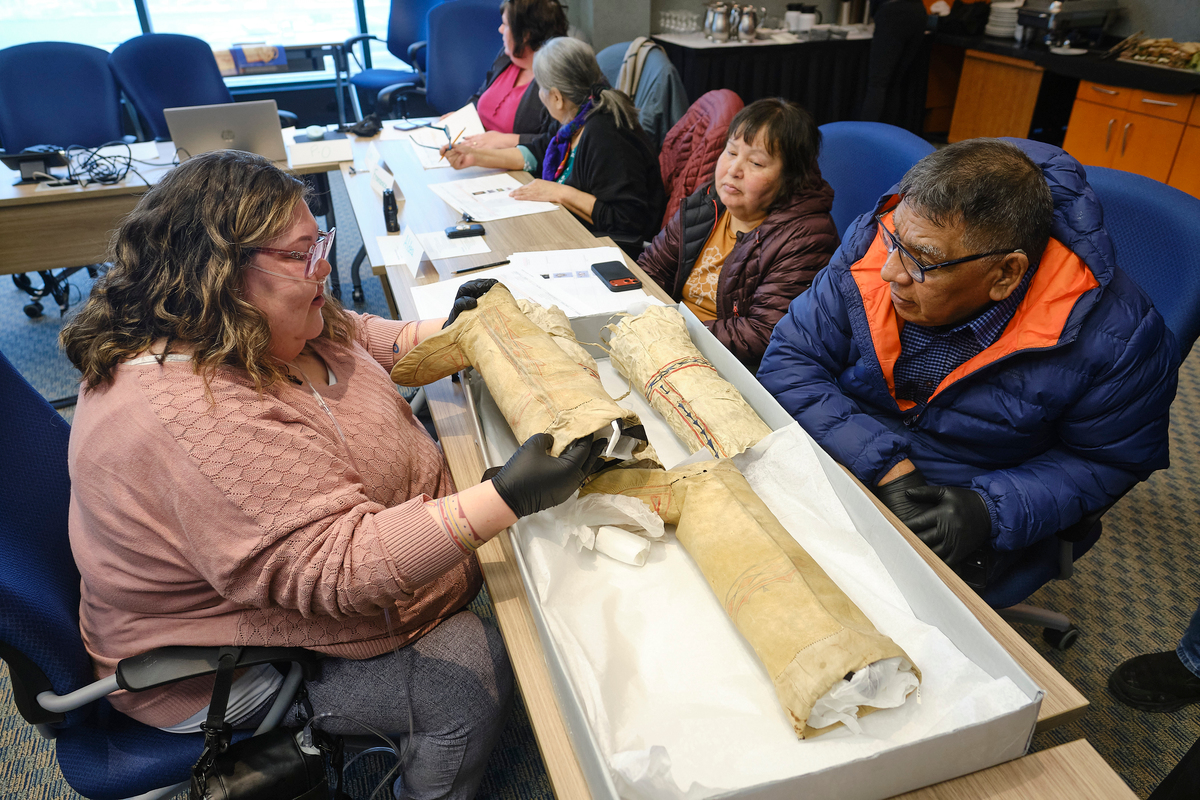
‘Newfoundland’ claims Europeans arrived before the Innu. ‘People don’t disappear,’ counters archeologist
Smithsonian archeologist Stephen Loring’s research is being disputed by the province’s own Archeology Office. He fears the government’s censorship of Innu history is being used ‘to promote a political agenda like land claims’
-

Winnipeg cops unveil ‘reconciliation’ cruiser — but critics are unimpressed
Force says the police car emblazoned with Indigenous art not for enforcement but education. Advocates say the gesture is ‘uncomfortable’ and ‘unsettling’ — especially amidst a drug-use crackdown they say targets Indigenous people