Documentary series explores couple’s journey to decolonize wellness
The six-part YouTube production was inspired by Elders and traditional health practices on syilx homelands
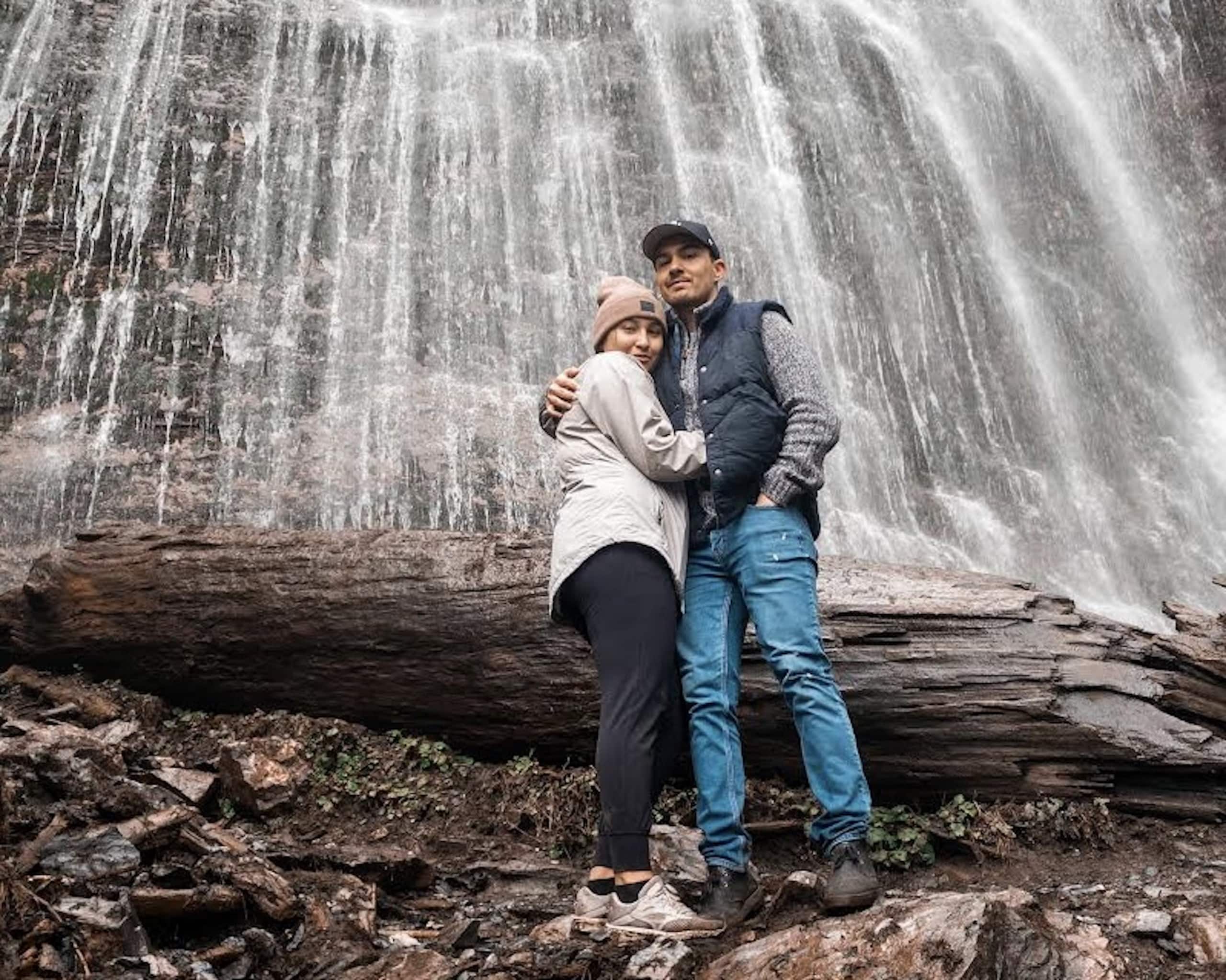
An Indigenous couple on syilx homelands has completed a documentary series that details their wellness journey of decolonizing their lifestyles and embracing cultural ways of being.
Decolonizing Wellness is a six-part video production created by cə̓q̓cq̓am (Thunder) Ryan Oliverius of Okanagan Indian Band (OKIB) and Shayla Raine, a nehiyaw iskwew from Louis Bull Tribe.
Funded through the Telus Storyhive initiative, the series — now available on YouTube — includes interviews with local Indigenous Peoples and documentation of their first-person experiences embarking on a new lifestyle.
“Decolonizing wellness, to me, is reclaiming my identity as an Indigenous person — reclaiming my wellness journey. Reclaiming a lot of things that we’ve lost through colonization,” said Oliverius, who’s a council member for OKIB.
Filmed between March and August 2022, Oliverius said that the project was inspired by his grandmother, a Kamloops Indian Residential School survivor who struggled with type 2 diabetes.
“When I talked to some First Nations knowledge keepers, that type 2 diabetes never existed within our people [before colonization],” he said. “We didn’t have these high sugary diets — we were a well people.”
Similarly, Raine explained how her own grandparents also struggled with type 2 diabetes, and said that she learned while studying in university that it’s a prevalent issue affecting many Indigenous communities.
“I read that it’s because of colonization, through the Indian Act. Relying on Indian Agents to give us rations and give us flour, granulated sugar,” said Raine. “We just got introduced to this sedentary lifestyle and this really processed diet.”
Walking in two worlds
Through research and speaking with knowledge-keepers about the lifestyles of their ancestors, Oliverius and Raine created themes that would eventually guide their wellness journey: taking care of their spirits, while also strengthening relationships with kinship and culture.
Eating healthier, regular exercise and getting better sleep have also been part of the process. They practiced mindfulness, avoiding negative energies and overuse of technology.
“Living in this day and age, it’s nearly impossible to live 100 per cent like my ancestors, to just cut off all electronics, all technology, go live up in the mountains and live off the land,” said Oliverius.
“I feel like I have to have some sort of balance — I have to walk in two worlds. I have to walk in the Western world and walk within my traditional way of being.”
In one episode, the couple documents their experiences of going on a one week “dopamine detox“: no cell phones, no TV, no music or social media. Throughout the endeavour, Oliverius finds himself constantly — and successfully — fighting the urge to check his phone or use other technology. Through this experience, he learns that he has more time in his day to be productive when he isn’t mindlessly scrolling or watching TV.
“I happened to fill my time with trying to learn something new with my hands or read books,” he said. “Go for walks, exercise — when you realize you have a lot of time in the day, then you end up doing stuff that you wouldn’t normally be doing.”
There’s also an episode dedicated to meditating in nature and appreciating time out on the land. Both meditating in nature and undertaking a dopamine detox, he said, have enabled him to be present in the moment and live a more intentional lifestyle.
“I knew that being present was something that I struggled with, so I wanted to try and do these things that would help me become a little more present, “ he said.
Other episodes include a hand drum making story that features Oliverius’s mother. The series also explores the sobriety journey, and the notion of reinforcing culture through movement. Eating healthier, limiting processed food intake and being active outdoors are also areas of focus in the series.
“When you eat things that are from the land,” Raine said, “you become a part of that interconnected system with the land.”
Viewing food as medicine, Oliverius added, was an important part of achieving his goals throughout the wellness journey.
“When you have that mindset that this food is medicine for our bodies, you’re going to start making healthier choices,” he said.
‘It’s not too late’
With season one in the books, Oliverius said that he’s learned to live a more intentional and present lifestyle. Social media is no longer a big part of his life, and he’s less concerned with comparing his life to others.
“‘It’s not too late’ is a big thing that I learned,” he said. “It’s not too late to learn my language. It’s not too late to learn my culture and get back into doing things like the sweat lodge, the ceremonies, stuff like that … It might be slow, but I don’t think it’s ever too late.”
As for the future of the series, the couple plan on following a similar format to experiment with a 60-day challenge where they incorporate aspects of the Medicine Wheel for each of those days: taking care of their physical, mental, spiritual and emotional wellbeing.
They also hope to develop a healthy lifestyle programming for others to follow, as well as a greater Internet presence: a website, more short videos and a dedicated podcast. For now, Oliverius said that he hopes viewers take away a newfound appreciation of trying something new.
“Really take that time to take care of themselves in an intentional way. Just to try something new, maybe learn something new,” he said.
Author
We live in a media ecosystem that thrives on misinformation. Big Tech and AI companies are consuming the work of real human beings and Canadian news has been banned on Facebook and Instagram.
And yet, I have hope for journalism because of the work we’re doing at IndigiNews.
At IndigiNews, we embody tâpwêwin — the Cree value of integrity and responsibility in truth-telling. We are committed to our independent, Indigenous-led newsroom rooted in community, accountability, and relationality. We believe storytelling is a sacred fire that connects our pasts, presents, and futures through the storytellers in our Storytelling Lodge. IndigiNews creates space for Indigenous journalists, storytellers, Knowledge Keepers, and communities to gather, learn, and share stories that matter.
As a registered charity, we are building a fire that allows our work not just to ignite but to thrive. Rather than relying on advertising or corporate acquisition, IndigiNews is sustained by people like you who believe Indigenous stories are important for the future of our communities.
Your support is making a real difference.
Our community of supporters, our Firekeepers, make it possible to grow our newsroom, publish award-winning journalism, train emerging Indigenous journalists through initiatives like the ReFocus Photojournalism Fellowship, and publish trustworthy stories that serve our communities across the country. Every story we publish helps fill in gaps left by mainstream media and ensures Indigenous perspectives are represented with care, accuracy and respect.
But there is still more work to do.
As the media landscape becomes more and more uncertain, community support is as necessary and essential as it’s ever been. Every new Firekeeper helps protect the independence of our newsroom and strengthens journalism that is accountable to our many and varied communities over corporations.
That’s why we’re inviting you to become a Firekeeper.
Firekeepers tend to and protect the sacred fire. Your monthly contributions directly support IndigiNews’s Storytelling Lodge, helps sustain our independent, Indigenous-led newsroom, and ensures future generations of Indigenous storytellers have the resources they need to do the work.
As a registered Canadian charity, all eligible donations receive a charitable tax receipt.
If you believe Indigenous stories matter, if you value independent journalism, and if you want to help build a strong future for Indigenous media, we invite you to join our circle of Firekeepers today.
Together, we can keep the fire burning.
— Eden Fineday, Publisher, IndigiNews
Support us nowLatest Stories
-
‘Love Medicine’ exhibition celebrates Two Spirit and Indigiqueer artists
Curated by Métis art historian Michelle McGeough, 22 Indigenous 2SLGBTQIA+ artists explore the idea of love as healing, belonging — and resistance — in a Oskana kâ-asastêki (Regina) gallery
-
‘Rhythm crafted for the human voice’: Poet kit-xgwélemc kennedy wins an Indigenous Voices Award
Member of St’uxwtéws Secwépemc Nation recognized in unpublished poetry category — following in his wordsmith mom’s footsteps