Happy Family Literacy Day! Here’s what it means for 11 notable Indigenous storytellers
Indigenous artists and authors speak about what Family Literacy Day means for them, their families and communities

Jan. 27 is Family Literacy Day — a day that celebrates adults and children reading together.
The annual awareness initiative started by the non-profit national literacy organization ABC Life Literacy in 1999. The annual event is meant to amplify the importance of families reading and engaging in literacy-related activities.
The initiative encourages Canadian families to spend at least 20 minutes a day participating in a learning activity together.
According to ABC Life Literacy, taking time every day to read or do a learning activity with children is crucial to a child’s development, and improve both the child and the parent’s literacy skills.
Each year, thousands of events and activities are coordinated by literacy providers, schools, libraries and community groups across the country. ABC Life Literacy Canada shares a list of events and reading resources on their website.
‘The medicine of our stories’
IndigiNews spoke with 11 notable Indigenous storytellers — authors, educators, filmmakers, poets, podcast producers, musicians, journalists — about what family literacy means to them. Here’s what they had to say…
“Family Literacy Day means the medicine of our stories continues to ripple through the hearts and minds of children and families,” says award-winning author Monique Grey Smith who is a Cree, Lakota and Scottish author.
Smith is the author of ‘Tilly’, ‘Speaking our Truth’, ‘My Heart Fills with Happiness’, ‘You Hold Me Up’, ‘Lucy and Lola’, ‘Tilly and the Crazy Eights’ and recently released, ‘When We Are Kind.’
“Literacy is an extension of our Dene selves, beginning with our stories, legends and now, way of life,” says Antoine Mountain, Dene artist, columnist and author of ‘From Bear Rock Mountain’.
Christal Doherty, writer, educator, and winner of the 2017 NorthWords Children’s Book Prize for her book ‘How Raven Returned the Sun,’ says literacy has many meanings.
“As an educator, it means the ability to read and write and comprehend in any language. Being Dene, a parent and learner, I believe that language and literacy are connected. It helps us live in two worlds and it connects us to our culture,” Doherty says.
“It allows us to make connections and build relationships. It is essentially a part of who we are.”
“Literacy means new worlds are opening to me every single day,” says Helen Knott, Dane Zaa, Nehiyaw and European author of the popular memoir ‘In My Own Moccasins’. Knott recently raised money towards a single parent writing prize “Because You Can.”
Anishinaabe reporter Lenard Monkman says he learned to love reading from his grandmother.
“Nourishing my love for reading is one of the best gifts that my grandma gave me. I’ve tried to pass that down to my kids,” says Monkman, who’s an associate producer with CBC Indigenous and co-founder of Red Rising Magazine. Monkman often writes about Indigenous resistance.
“Reading introduces us to the world!,” says Lee Maracle, Sto:lo author, instructor at the University of Toronto in the Centre for Indigenous Studies and officer to the Order of Canada for her contributions to Canada’s literary landscape. Maracle was shortlisted for the prestigious 2020 Neustadt International Prize, often referred to as a precursor to the Nobel Prize for Literature.
Reading is time travel
Ryan McMahon, Anishinaabe comedian, founder of ‘Indian & Cowboy’ podcast network and producer of ‘Thunder Bay and ‘Red Man Laughing’ podcasts says reading brings people closer.
“Books and stories and songs and dance unlock worlds of potential, community, and love. Literacy is a gift that all of us should be afforded as it brings us closer to our dreams collectively,” says McMahon.
Richard Van Camp, executive producer of Eden Robinson’s “Monkey Beach’ film says literacy enables time travel. Van Camp is the author of several award winning books, most notably ‘The Lesser Blessed’ about a teenager growing up in a small northern town conflicted by choices of drugs and alcohol.
“Literacy is a divine gift that allows you to travel through time and lives and find the hope you need to get through what you need to. It can welcome you into a life you’ve always wondered about and it can inspire you to find ways to live the way you deserve to,” he says.
“Reading is soul medicine.”
For Leanne Betasamosake Simpson, author of ‘Noopiming: The Cure for White Ladies,’ academic and poet, literacy is restorative.
“Literacy to me means regenerating what was destroyed by colonialism so that everyone in my community throughout their lives has access to our language, our oral traditions, our land based practices and Nishnaabe knowledge and of course Nishnaabe stories,” Betasamosake Simpson says.
Adam Garnet Jones, Indigenous Initiatives lead for Telefilm Canada, Cree/Metis Indigiqueer screenwriter, director, bead-worker and novelist says “literacy is access.”
“I’m lucky that I have always loved to read and write, not only because reading has enriched my understanding of the world, but because I would not have been able to get my foot in the door anywhere, much less succeed, without the ability to read and write well,” Jones says.
Leela Gilday has many accolades in her long music career including best songwriter at the Canadian Aboriginal Music Awards. Upon reflecting on the importance of Family Literacy Day, Gilday says reading can expand your worldview.
“From a young age reading opened up my eyes and heart to the larger world. The gift that it gave to me was to imagine things far outside my realm of experience. It allowed a small kid from a small northern town to feel great empathy and wonder, walk in other’s shoes and to dream big,” Gilday says.
“Literacy helped to make me who I am today.”
Author
We live in a media ecosystem that thrives on misinformation. Big Tech and AI companies are consuming the work of real human beings and Canadian news has been banned on Facebook and Instagram.
And yet, I have hope for journalism because of the work we’re doing at IndigiNews.
At IndigiNews, we embody tâpwêwin — the Cree value of integrity and responsibility in truth-telling. We are committed to our independent, Indigenous-led newsroom rooted in community, accountability, and relationality. We believe storytelling is a sacred fire that connects our pasts, presents, and futures through the storytellers in our Storytelling Lodge. IndigiNews creates space for Indigenous journalists, storytellers, Knowledge Keepers, and communities to gather, learn, and share stories that matter.
As a registered charity, we are building a fire that allows our work not just to ignite but to thrive. Rather than relying on advertising or corporate acquisition, IndigiNews is sustained by people like you who believe Indigenous stories are important for the future of our communities.
Your support is making a real difference.
Our community of supporters, our Firekeepers, make it possible to grow our newsroom, publish award-winning journalism, train emerging Indigenous journalists through initiatives like the ReFocus Photojournalism Fellowship, and publish trustworthy stories that serve our communities across the country. Every story we publish helps fill in gaps left by mainstream media and ensures Indigenous perspectives are represented with care, accuracy and respect.
But there is still more work to do.
As the media landscape becomes more and more uncertain, community support is as necessary and essential as it’s ever been. Every new Firekeeper helps protect the independence of our newsroom and strengthens journalism that is accountable to our many and varied communities over corporations.
That’s why we’re inviting you to become a Firekeeper.
Firekeepers tend to and protect the sacred fire. Your monthly contributions directly support IndigiNews’s Storytelling Lodge, helps sustain our independent, Indigenous-led newsroom, and ensures future generations of Indigenous storytellers have the resources they need to do the work.
As a registered Canadian charity, all eligible donations receive a charitable tax receipt.
If you believe Indigenous stories matter, if you value independent journalism, and if you want to help build a strong future for Indigenous media, we invite you to join our circle of Firekeepers today.
Together, we can keep the fire burning.
— Eden Fineday, Publisher, IndigiNews
Support us nowLatest Stories
-

Olympic bobsledder Eden Wilson aims to ‘help open doors’ for aspiring Indigenous athletes
Recently inducted into the North American Indigenous Athletics Hall of Fame, the ‘Calgary’-based Métis athlete is working to break barriers for the next generation
-
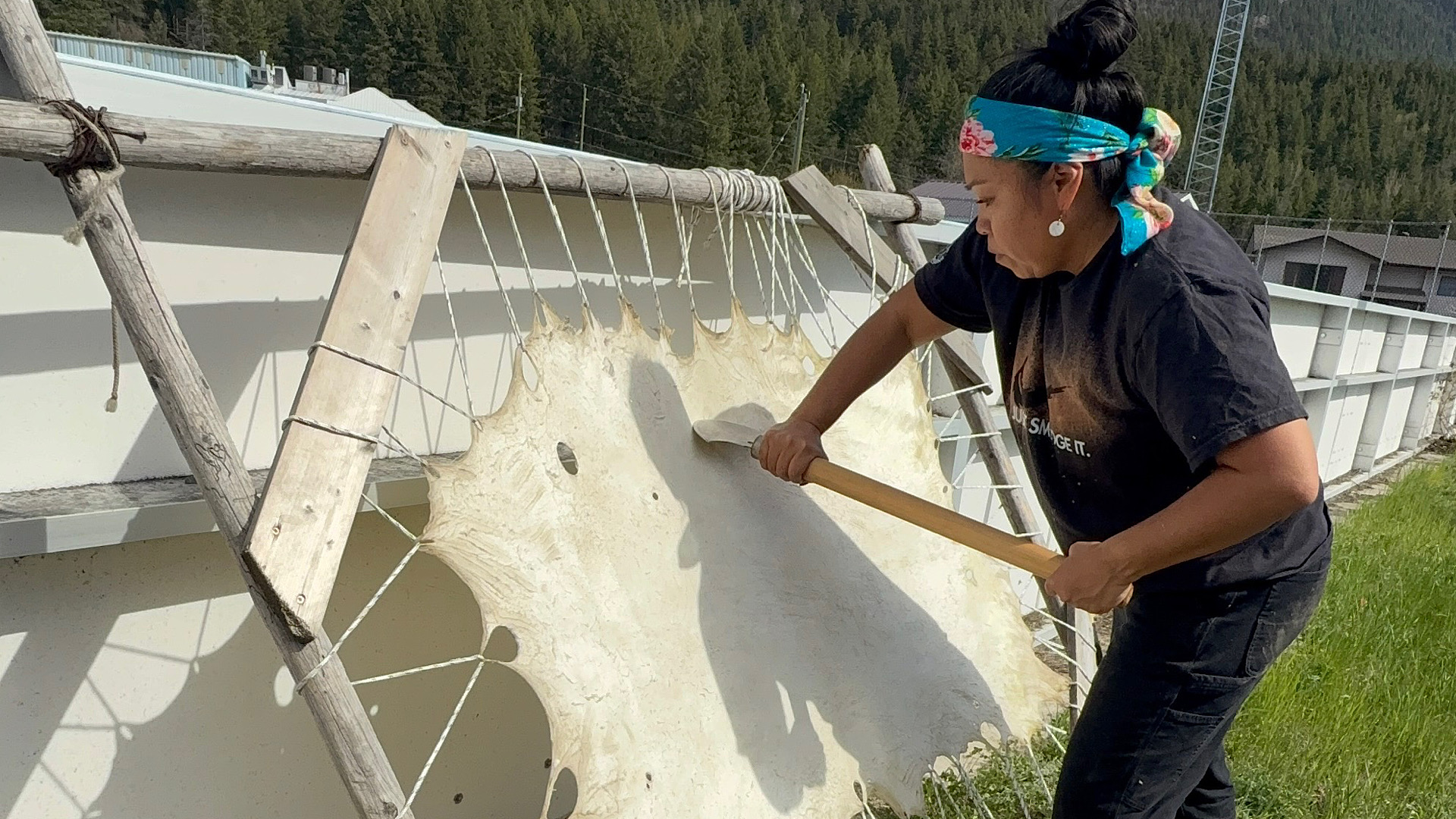
In Simpcw First Nation, Secwe̓pemc women are revitalizing hide tanning
Working with animal pelts is a lengthy, labour-intensive process — but teachers in the ‘B.C.’ community are ensuring the tradition is passed on