New treatment facility at PIB weaves culture and community with healing
‘Seeing the progress in people is beautiful,’ says the manager of the Snx̌astwilxtn Centre Recovery House

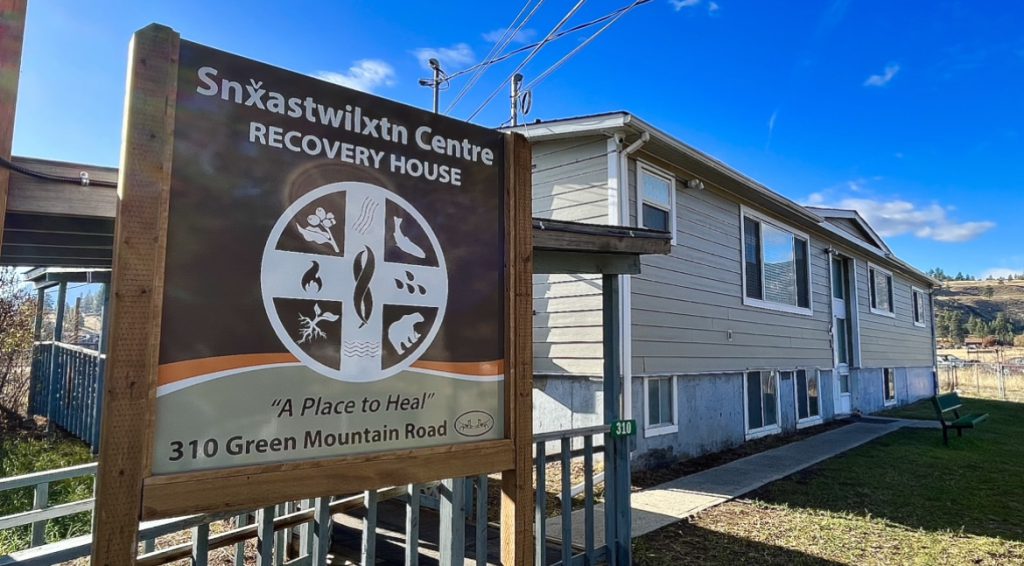
In the nsyilxcən language, snx̌astwilxtn means “a place to heal.”
That’s the mission and purpose behind a new community-centred treatment centre on reserve at Penticton Indian Band (PIB), which opened its doors on Monday.
The Snx̌astwilxtn Centre Recovery House is a space for trauma healing and recovery for community members who may be struggling with drug and alcohol abuse.
In his opening speech, PIB Chief Greg Gabriel said the centre’s grand opening was “a very special occasion.” He spoke about how addiction and the ongoing opioid crisis has affected many Indigenous communities given the disproportionate trauma people are living with.
The central focus of the Snx̌astwilxtn Centre Recovery House is to support community members in their journey towards recovery and improving the lives of individuals who are facing challenges.
The resource is free for PIB members and incorporates syilx Okanagan culture into its treatment programs.
“If it just changes one life, it’s worth it,” said Gabriel.
Built on a vision to heal
Melissa Letendre, the Snx̌astwilxtn Centre Recovery House manager, will be providing teachings and mentorship for the facility with the support of Elders and other team members.
For Letendre, facilitating a program like this is meaningful for her and is deeply rooted in her own background.
“I grew up in a very isolated community in Northern Alberta, so it was easy to get into drugs and drinking alcohol, I grew up around it,” said Letendre, who is a member of the Loon River First Nation.
During her time working in youth treatment centres, she discovered her ability to connect with and support individuals on their journeys towards wellness.
When the opportunity to lead the Snx̌astwilxtn Centre Recovery House emerged, Letendre wasted no time in accepting the responsibility.
She was approached by Jackie McPherson, the health director, who shared the vision of this project, saying, “We have this great idea, and we would like you to be a part of it.”
Letendre felt deeply honored by the invitation and immediately set to work, collaborating with the PIB Mental Health and Substance Use Department, the First Nations Health Authority, Interior Health, and Pathways to develop the program’s curriculum.
This facility will offer three distinct programs aimed at providing essential support for those seeking help: a pretreatment program, a day treatment program, and an aftercare treatment program.
Each will cover various topics from early recovery skills to advanced recovery skills, as well as addressing grief and trauma and incorporating cultural teachings with western philosophies of wellness.
“The incorporation of traditional teaching is the passion behind all of this,” said Letendre.
The program will help to create a strong cultural connection of where PIB members come from and discover who they are.
“Seeing the progress in people is beautiful and it’s a privilege and being with somebody on their journey is a gift, it’s medicine,” she said.
Creating a stronger community
The new facility was designed to provide a safe and accessible space within the community for individuals seeking recovery, enabling them to stay close to home, maintain their employment, and remain connected with their families.
Brenda Baptiste, the Mental Health Substance Use Lead for PIB, emphasized some of the challenges with accessing other residential treatment centres compared to the Snx̌astwilxtn Centre Recovery House.
According to Baptiste, accessing residential treatment centers is extremely challenging, because after someone is sent to treatment, they’re away for nine weeks or more. During that time, they build bonds and safety within a group of people outside their community.
“We found when our people return to the community, they often lack the same level of support and lose the group who was around them in their initial healing progress and they end up relapsing,” said Baptiste, who is also an Osoyoos Indian Band member.
The Snx̌astwilxtn Centre Recovery House not only fills this critical gap in recovery support but also enables individuals to build connections with sober people closer to home.
“This is extremely important because they find their sense of belonging in the community,” said Baptiste.
Author
We live in a media ecosystem that thrives on misinformation. Big Tech and AI companies are consuming the work of real human beings and Canadian news has been banned on Facebook and Instagram.
And yet, I have hope for journalism because of the work we’re doing at IndigiNews.
At IndigiNews, we embody tâpwêwin — the Cree value of integrity and responsibility in truth-telling. We are committed to our independent, Indigenous-led newsroom rooted in community, accountability, and relationality. We believe storytelling is a sacred fire that connects our pasts, presents, and futures through the storytellers in our Storytelling Lodge. IndigiNews creates space for Indigenous journalists, storytellers, Knowledge Keepers, and communities to gather, learn, and share stories that matter.
As a registered charity, we are building a fire that allows our work not just to ignite but to thrive. Rather than relying on advertising or corporate acquisition, IndigiNews is sustained by people like you who believe Indigenous stories are important for the future of our communities.
Your support is making a real difference.
Our community of supporters, our Firekeepers, make it possible to grow our newsroom, publish award-winning journalism, train emerging Indigenous journalists through initiatives like the ReFocus Photojournalism Fellowship, and publish trustworthy stories that serve our communities across the country. Every story we publish helps fill in gaps left by mainstream media and ensures Indigenous perspectives are represented with care, accuracy and respect.
But there is still more work to do.
As the media landscape becomes more and more uncertain, community support is as necessary and essential as it’s ever been. Every new Firekeeper helps protect the independence of our newsroom and strengthens journalism that is accountable to our many and varied communities over corporations.
That’s why we’re inviting you to become a Firekeeper.
Firekeepers tend to and protect the sacred fire. Your monthly contributions directly support IndigiNews’s Storytelling Lodge, helps sustain our independent, Indigenous-led newsroom, and ensures future generations of Indigenous storytellers have the resources they need to do the work.
As a registered Canadian charity, all eligible donations receive a charitable tax receipt.
If you believe Indigenous stories matter, if you value independent journalism, and if you want to help build a strong future for Indigenous media, we invite you to join our circle of Firekeepers today.
Together, we can keep the fire burning.
— Eden Fineday, Publisher, IndigiNews
Support us nowLatest Stories
-
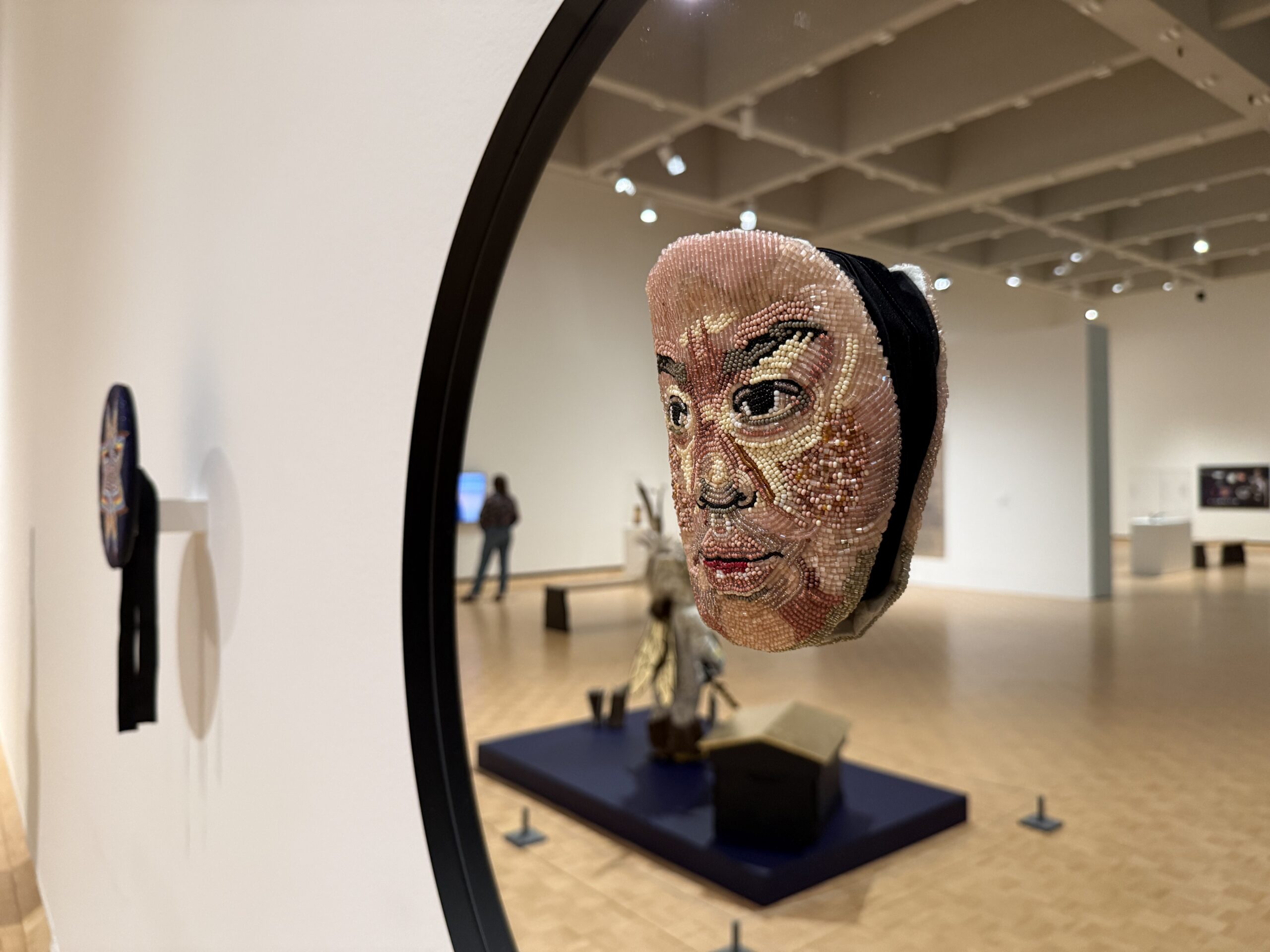
‘Love Medicine’ exhibition celebrates Two Spirit and Indigiqueer artists
Curated by Métis art historian Michelle McGeough, 22 Indigenous 2SLGBTQIA+ artists explore the idea of love as healing, belonging — and resistance — in a Oskana kâ-asastêki (Regina) gallery
-

‘Rhythm crafted for the human voice’: Poet kit-xgwélemc kennedy wins an Indigenous Voices Award
Member of St’uxwtéws Secwépemc Nation recognized in unpublished poetry category — following in his wordsmith mom’s footsteps