‘The day Indigenous people took the country back’
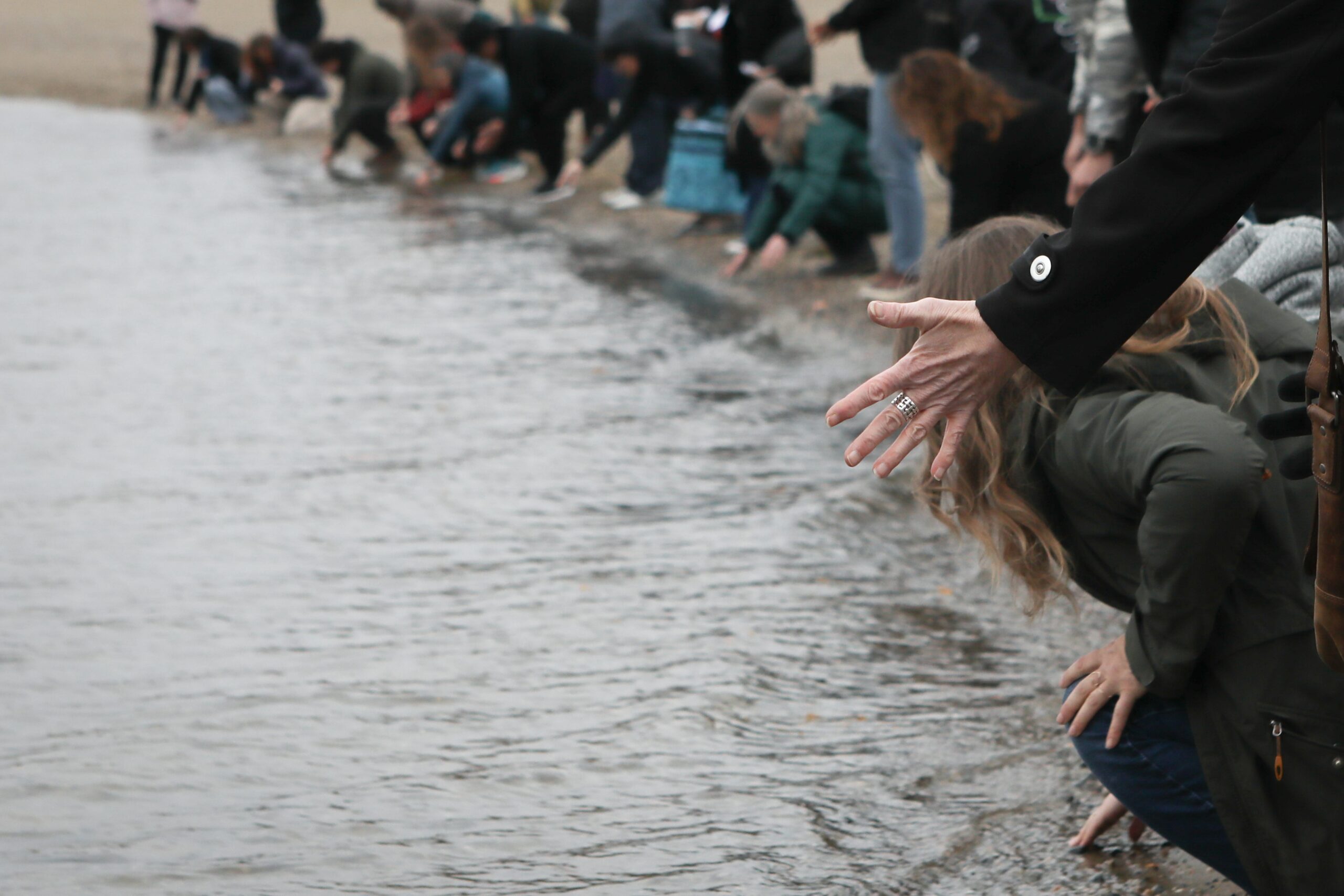
In many places across the country, Canada Day was officially canceled, as events saw hundreds and even thousands gather in support of Indigenous Peoples.

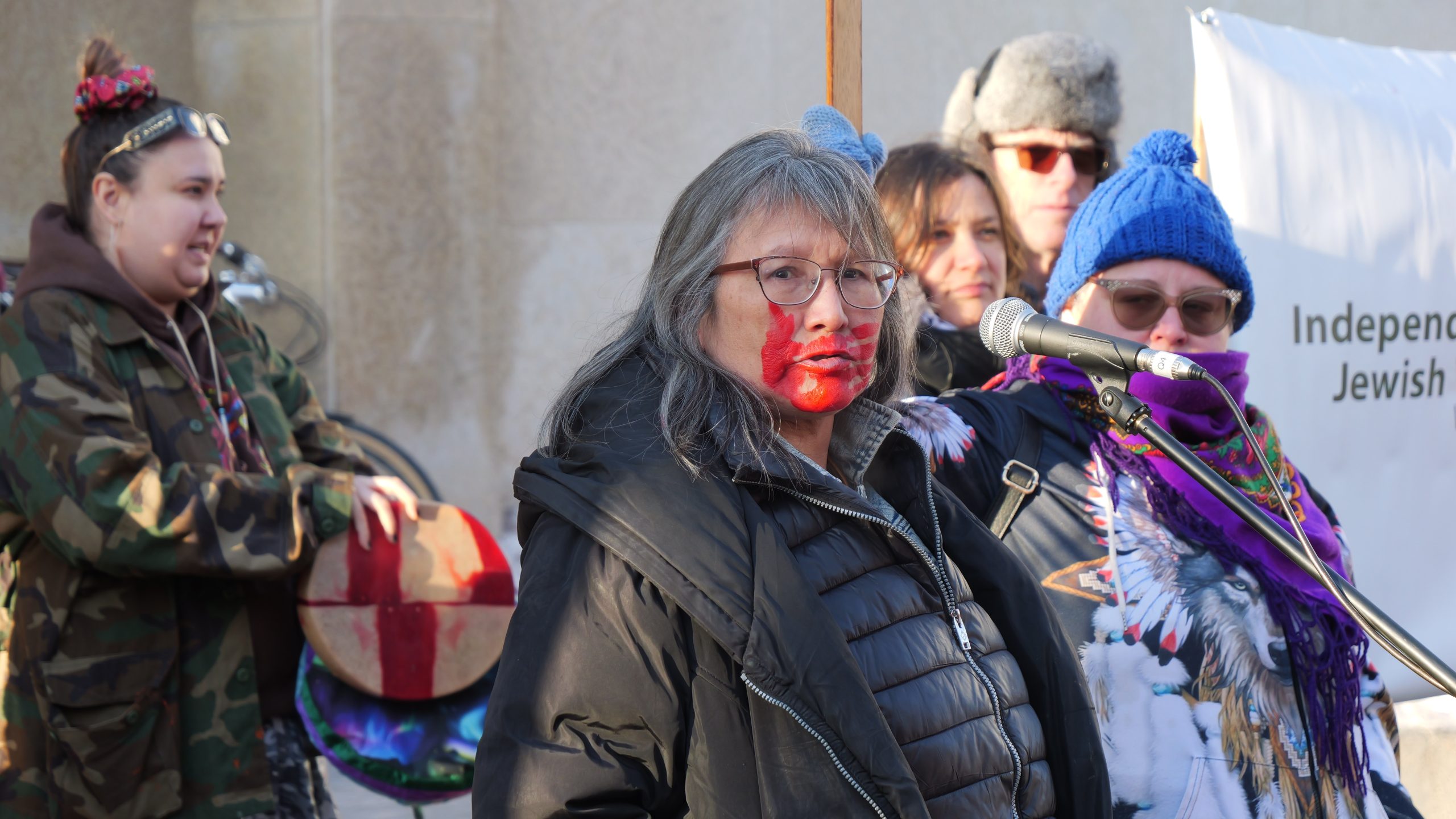
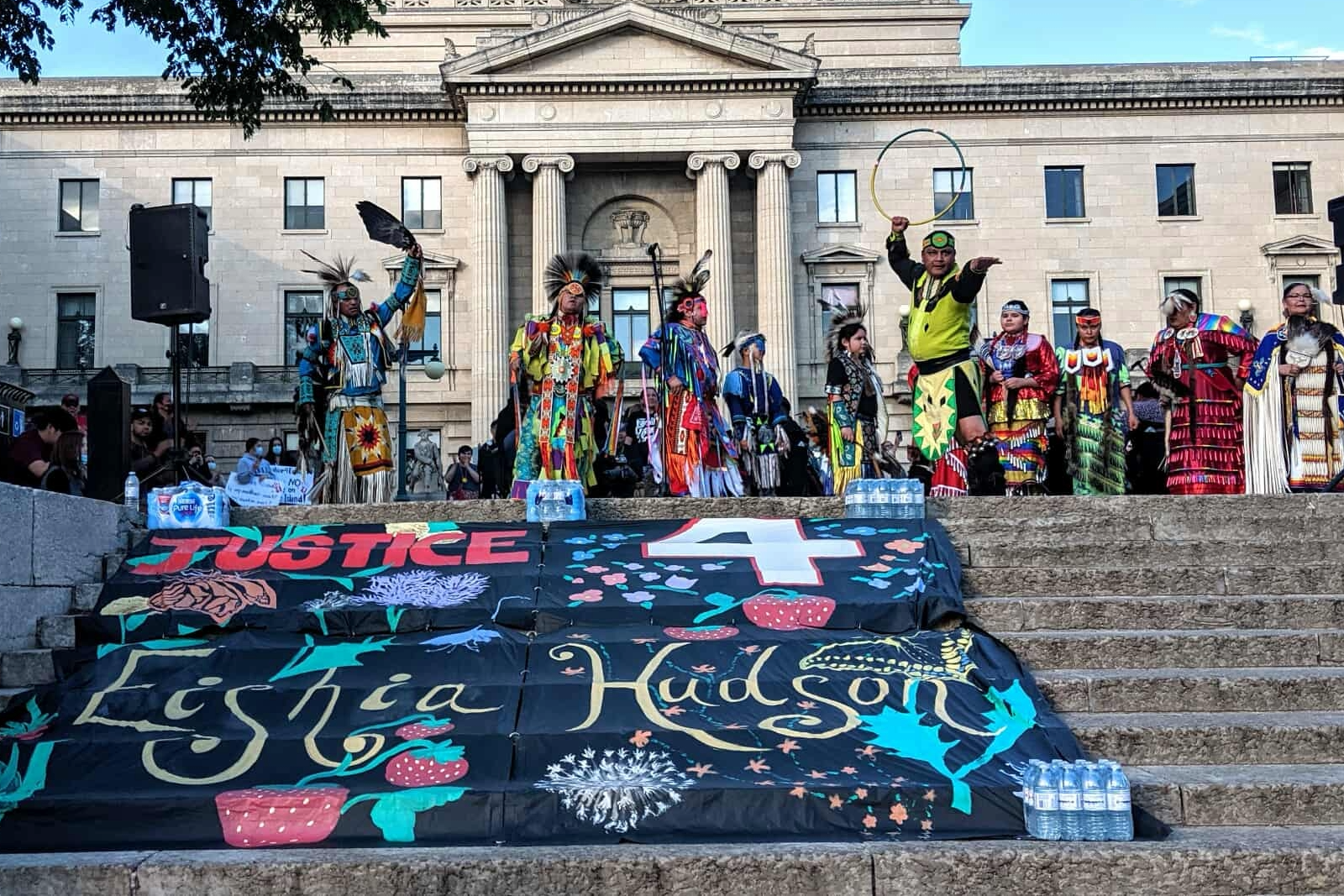
This year, July 1 was charged with new meaning, as rivers of orange flooded streets in major cities — showcasing Indigenous diversity, pride, and strength — in the wake of devastating discoveries in Canada.
Over 80 cities decided to officially get on board with cries for accountability and action, and officially ‘Cancel Canada Day,’ including Victoria, B.C., Penticton, B.C., Salmon Arm, B.C., and La Ronge, Sask. (though not all municipalities obliged).
Indigenous Peoples, joined by allies, friends, relatives and supporters, organized, gathered, spoke, sang, danced, drummed, marched, rallied, held ceremony, conducted work, and as Gitxsan journalist Angela Sterritt tweeted on the day, “took the country back.”
Around ten thousand people showed up in London Ontario, territory of the Chippewa of the Thames, the Oneida of the Thames, and the Muncey Delaware Nation, on July 1, to show their support for Indigenous Peoples.
Here are photos from independent filmmaker and photographer Moses Latigo Opong:


‘We are the original people’
Also on July 1, Sekawnee Baker of the Squamish and Tla’amin Nations says he was given the traditional name Gusdzidsas, which means “always moving forward.” That’s the message he says he hoped to get across yesterday when he addressed the crowd gathered on unceded Coast Salish territories in front of the Vancouver Art Gallery.
“I’m not Canadian. My people, my Ancestors, my family — we are the original people of this land,” the 22-year-old recording artist and music producer told the crowd.
Over the phone to IndigiNews, he says he feels great about taking the stage.
“It was a very spiritual and overwhelming experience,” he says. “I’m doing what the Ancestors want me to do. I feel like I’m walking in their steps and they’re giving me the power to continue.”
There’s just one thing he forgot to say to the crowd, he says.
“I really wanted to encourage everybody, no matter what age you are … surround [yourselves] with some Elders and learn. Learn your language. Learn your traditions. Learn your protocol. Go hunting. Go fishing. Just learn anything because one day we have to pass this down to the next generation.
“If I don’t learn … my kids’ kids are not going to know anything, and that’s part of colonization,” he says. “They want us to forget.”

Honouring Our Children
Two separate events were held at the Victoria legislature building, in Lək̓ʷəŋən (Lekwungen) territory on July 1. The first took place during the day and was organized by Kasalas Sasha Perron, Kwakwa̱ka̱ʼwakw from the Da’naxda’xw First Nation, who ran 216 km to raise funds for survivors of residential “schools.”
Leadership from the island Nations and various communities joined Perron at the wharf and marched beside and behind him and his family, for his last kilometre, meeting at the Victoria legislature for speeches, singing, dancing, stories and celebrations.
Photos by independent photographer Colin Smith:


The second event, ‘Honouring Our Children,’ held from 6-8pm was organized by Tiffany Joseph, who’s W̱SÁNEĆ, Sḵwx̱wú7mesh, and Quw’utsun. Both events were held with permission from leadership of local nations, and opened and closed with speakers from the communities.
“I have been so happy to hear from some of you how full your hearts were. How you cried and smiled and were filled up last night,” writes Joseph on the event Facebook page. “My favourite part was the elders getting up and dancing, I wanted to sing until every elder had the chance to dance! I loved seeing people in the crowd sing.”

After the evening event closed, a group led a march to the statue of British colonizer James Cook. While hundreds surrounded the area, the statue was taken down, tossed into the water, and a red dress, representing the countless Indigenous women who have been murdered or gone missing, was put in its place. Two statues of queens were also taken down in Winnipeg, at Manitoba’s legislature on the same day.
To see footage of events in Vancouver, visit the IndigiNews Facebook page and for more from the events at the Victoria legislature, visit the IndigiNews Instagram page.
If you’re interested in showcasing your photography with IndigiNews, please email admin@indiginews.com
Author
We live in a media ecosystem that thrives on misinformation. Big Tech and AI companies are consuming the work of real human beings and Canadian news has been banned on Facebook and Instagram.
And yet, I have hope for journalism because of the work we’re doing at IndigiNews.
At IndigiNews, we embody tâpwêwin — the Cree value of integrity and responsibility in truth-telling. We are committed to our independent, Indigenous-led newsroom rooted in community, accountability, and relationality. We believe storytelling is a sacred fire that connects our pasts, presents, and futures through the storytellers in our Storytelling Lodge. IndigiNews creates space for Indigenous journalists, storytellers, Knowledge Keepers, and communities to gather, learn, and share stories that matter.
As a registered charity, we are building a fire that allows our work not just to ignite but to thrive. Rather than relying on advertising or corporate acquisition, IndigiNews is sustained by people like you who believe Indigenous stories are important for the future of our communities.
Your support is making a real difference.
Our community of supporters, our Firekeepers, make it possible to grow our newsroom, publish award-winning journalism, train emerging Indigenous journalists through initiatives like the ReFocus Photojournalism Fellowship, and publish trustworthy stories that serve our communities across the country. Every story we publish helps fill in gaps left by mainstream media and ensures Indigenous perspectives are represented with care, accuracy and respect.
But there is still more work to do.
As the media landscape becomes more and more uncertain, community support is as necessary and essential as it’s ever been. Every new Firekeeper helps protect the independence of our newsroom and strengthens journalism that is accountable to our many and varied communities over corporations.
That’s why we’re inviting you to become a Firekeeper.
Firekeepers tend to and protect the sacred fire. Your monthly contributions directly support IndigiNews’s Storytelling Lodge, helps sustain our independent, Indigenous-led newsroom, and ensures future generations of Indigenous storytellers have the resources they need to do the work.
As a registered Canadian charity, all eligible donations receive a charitable tax receipt.
If you believe Indigenous stories matter, if you value independent journalism, and if you want to help build a strong future for Indigenous media, we invite you to join our circle of Firekeepers today.
Together, we can keep the fire burning.
— Eden Fineday, Publisher, IndigiNews
Support us nowLatest Stories
-
‘Newfoundland’ claims Europeans arrived before the Innu. ‘People don’t disappear,’ counters archeologist
Smithsonian archeologist Stephen Loring’s research is being disputed by the province’s own Archeology Office. He fears the government’s censorship of Innu history is being used ‘to promote a political agenda like land claims’
-

Winnipeg cops unveil ‘reconciliation’ cruiser — but critics are unimpressed
Force says the police car emblazoned with Indigenous art not for enforcement but education. Advocates say the gesture is ‘uncomfortable’ and ‘unsettling’ — especially amidst a drug-use crackdown they say targets Indigenous people