In photos: Winnipeg marks Red Dress Day with community support and calls for justice
Annual day to honour and remember MMIWG2S+ draws hundreds of people at two Winnipeg events
Content warning: This story includes details about missing and murdered Indigenous women, girls and Two Spirit people (MMIWG2S+). Please read with care for your spirit.
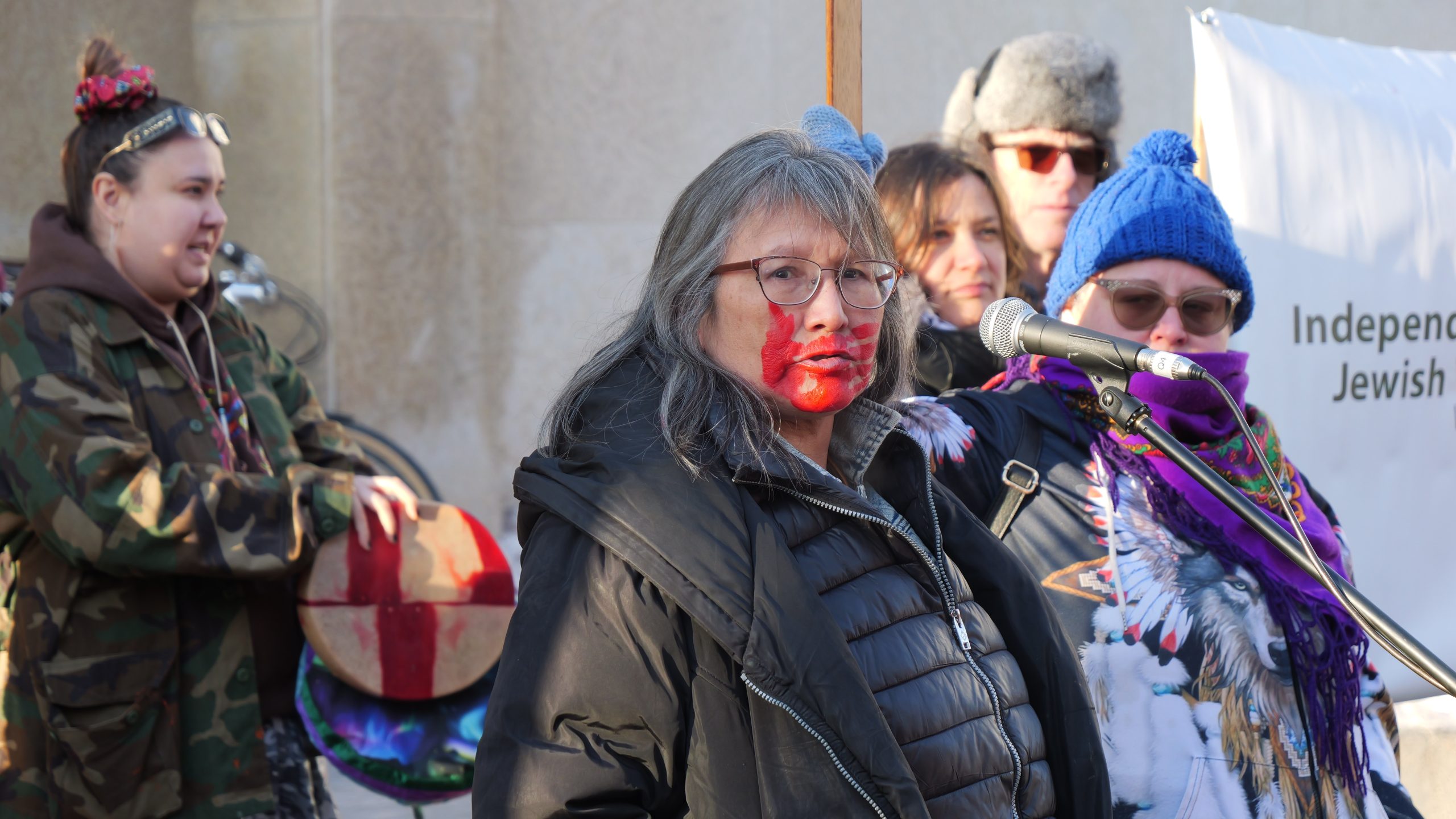
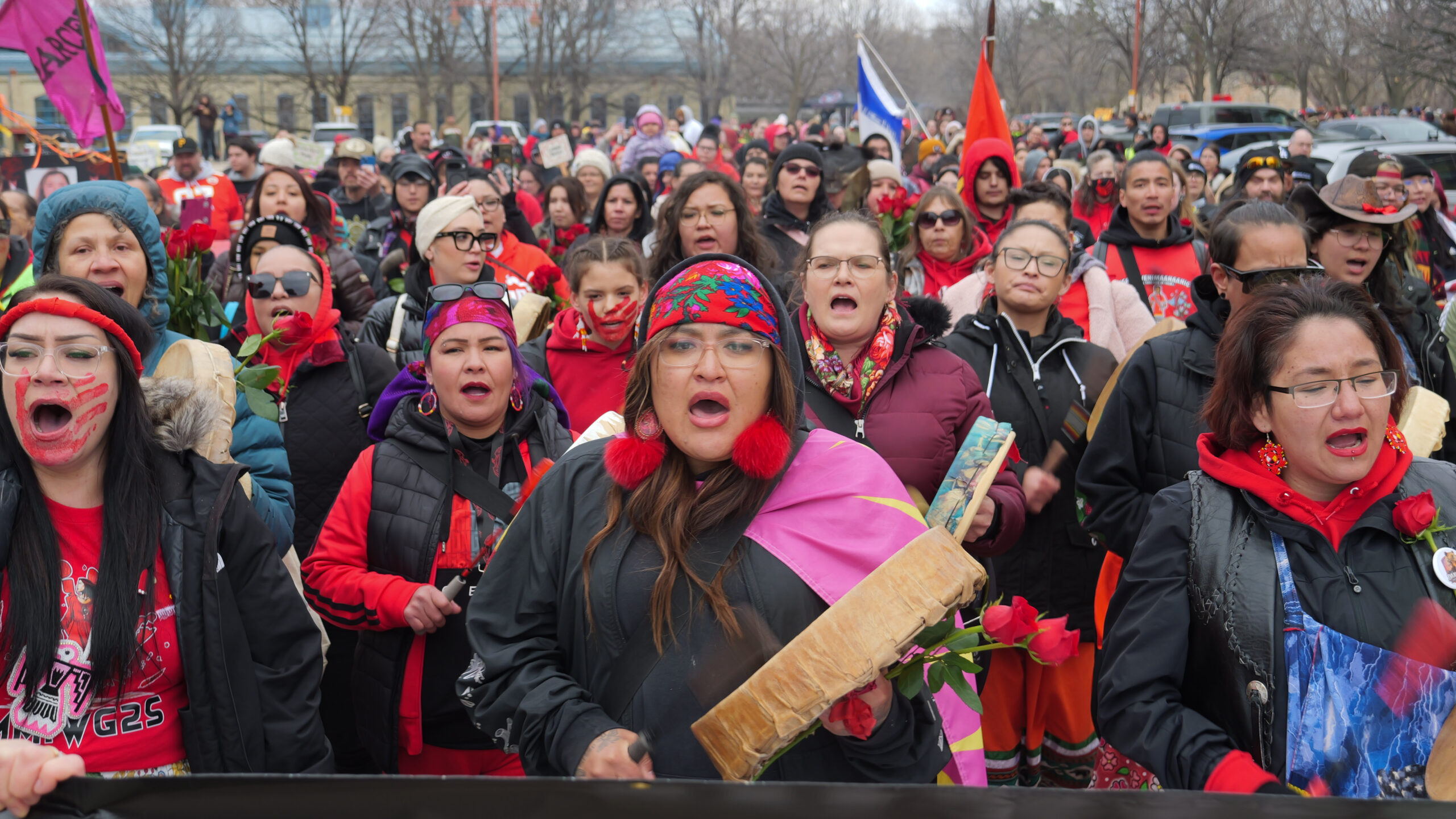
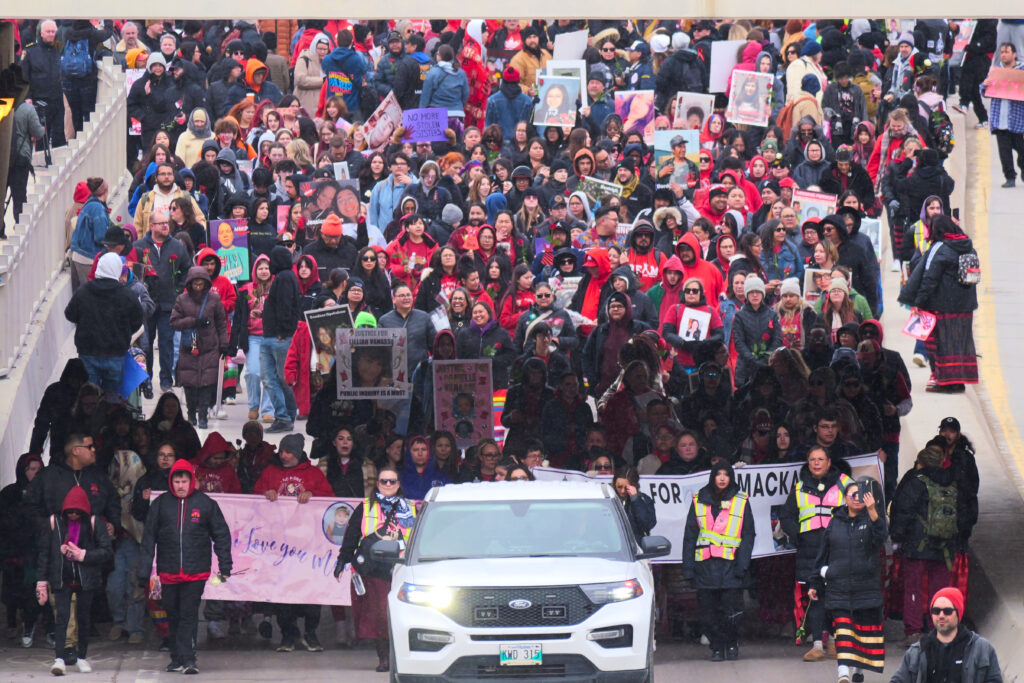
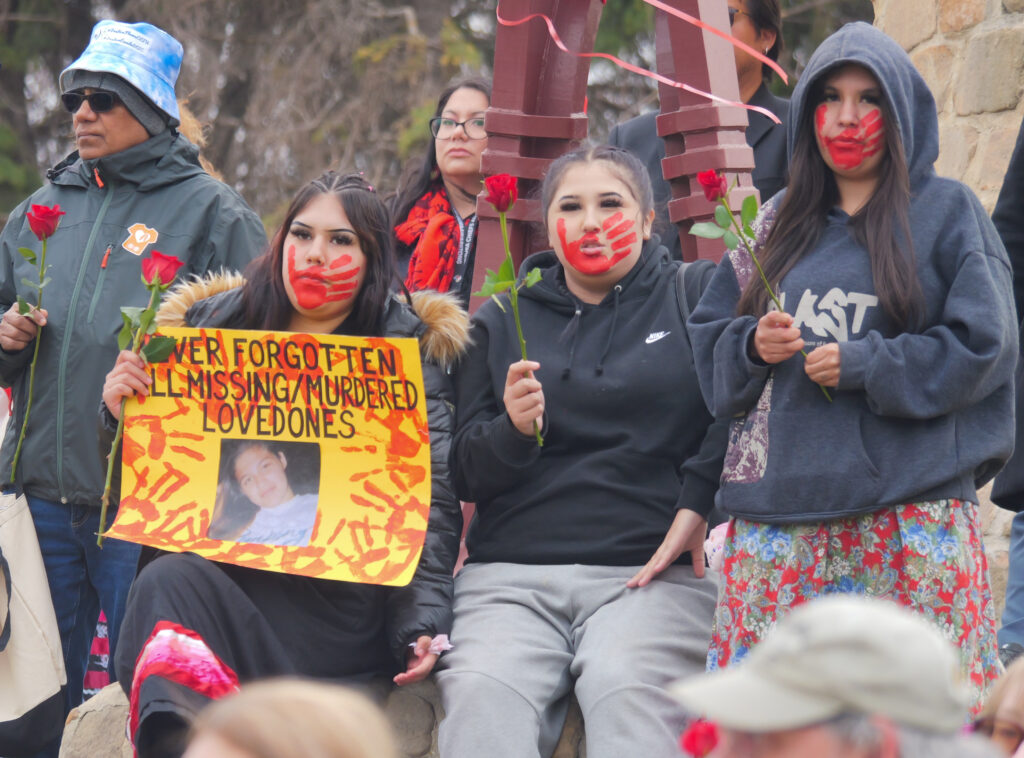
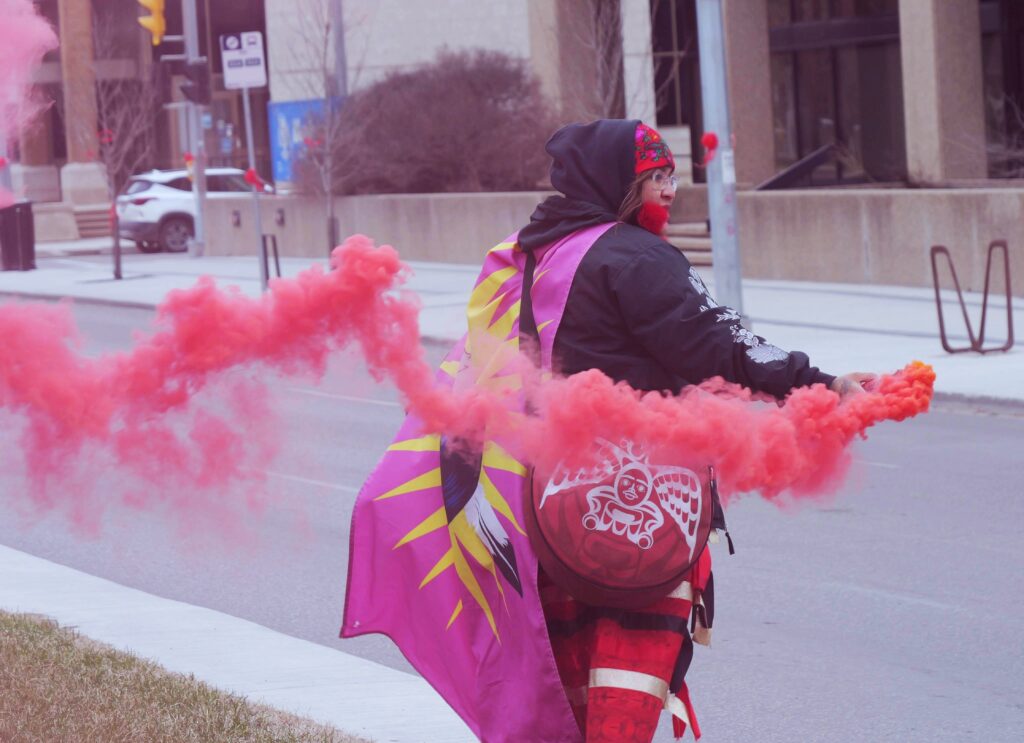
Red Dress Day brought out more than a thousand supporters this week in Winnipeg, with many donning red clothing to honour missing and murdered Indigenous women, girls and Two-Spirit people (MMIWG2S+).
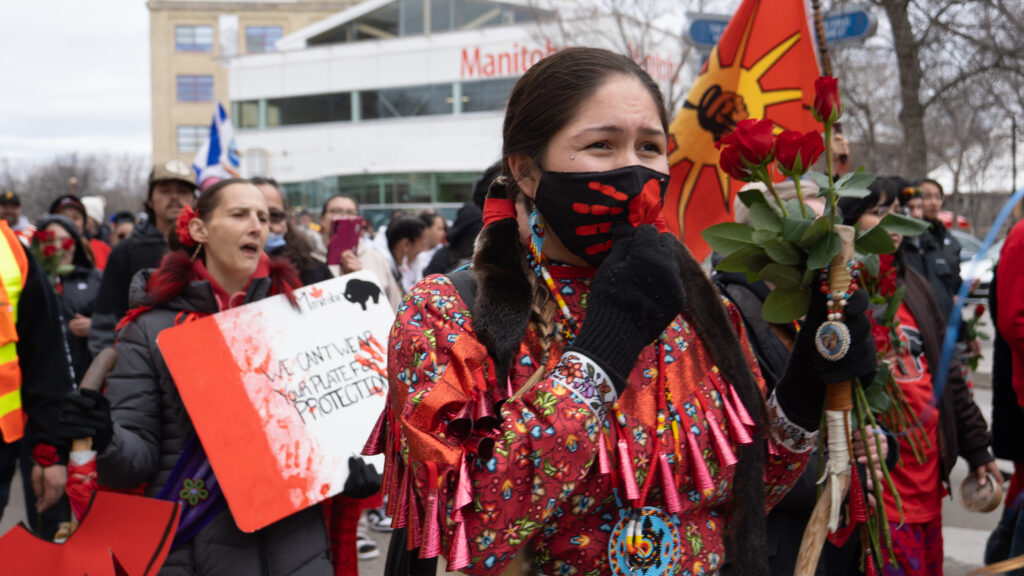
At two separate events held in the city on Tuesday, participants carried placards and banners remembering the names and images of loved ones. Red Dress Day is marked in cities, towns and reserves across Turtle Island every May 5.
The first gathering was held to show solidarity with the family of the late Mackaylah Gerard-Roussin, 20. Her killer was handed a life sentence for first-degree murder that same morning, moments before the march began.
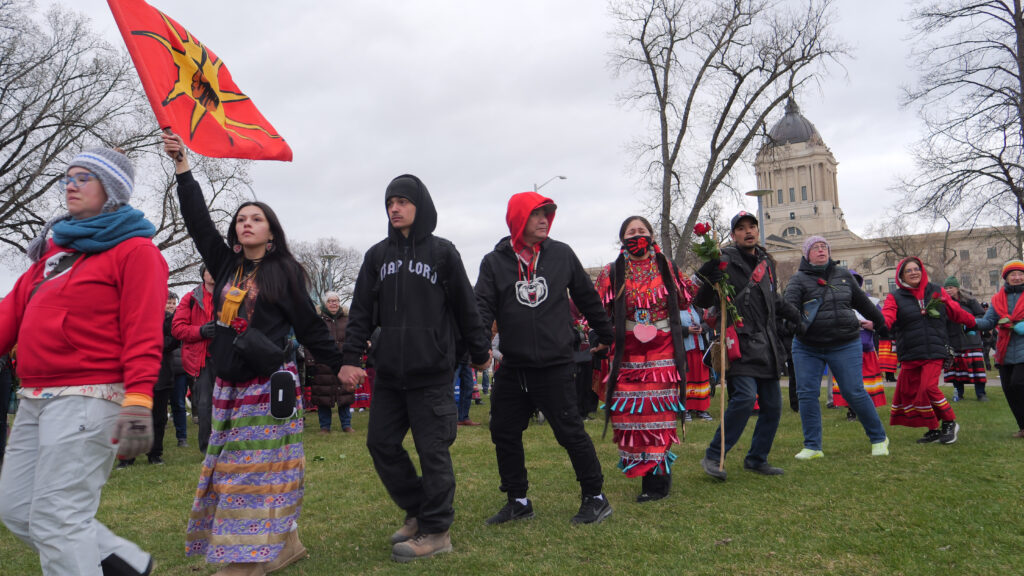
A second march, held later in the day after rush hour, drew an estimated one thousand participants.
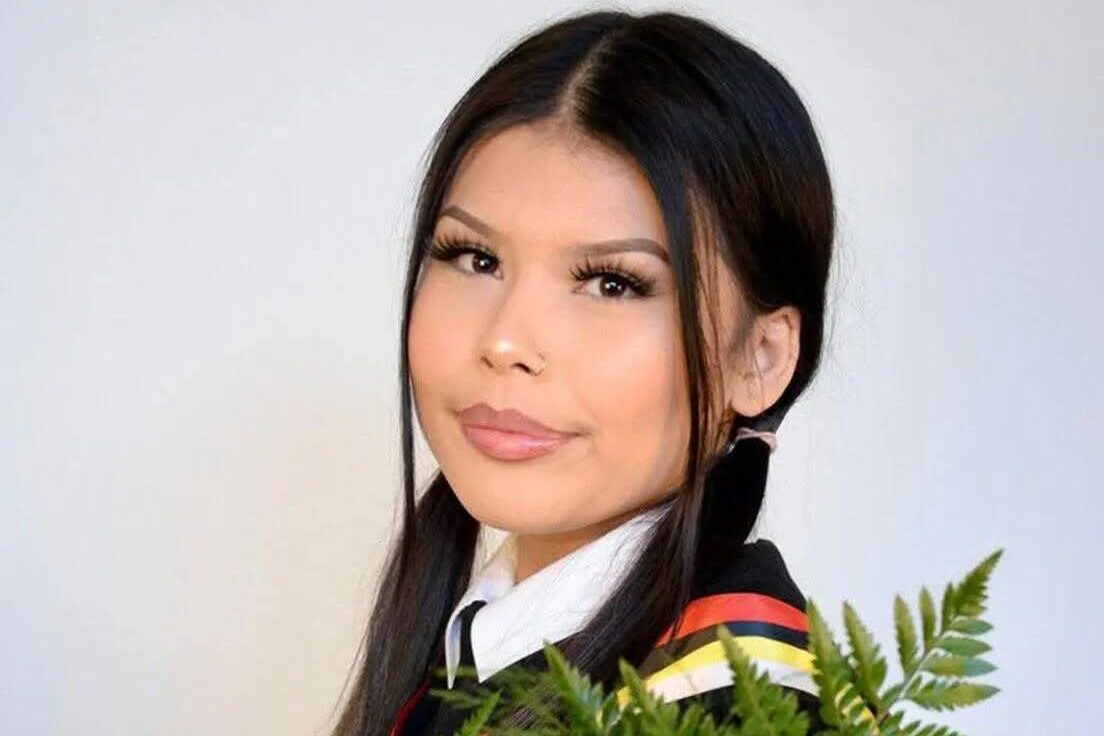
“Mackaylah was a beautiful little lady, she had such great spirits for everyone,” her grandmother, Irene Roussin, told reporters. “Every time she walked into the room, she brought a big smile on her.
“She had life to live for — she had goals to be a psychologist for young children going through difficult times in their lives … That was all taken away.”
Outside the Winnipeg Law Courts, Gerard-Roussin’s family was joined by hundreds of people who held a ceremony, with drumming and a sacred fire.
“We love you Mackaylah!” cheered her loved ones in unison.
Coincidentally, the court scheduled the sentencing hearing for Gerard-Roussin’s killer, 24-year-old Josh Benoit, on the annual awareness day.
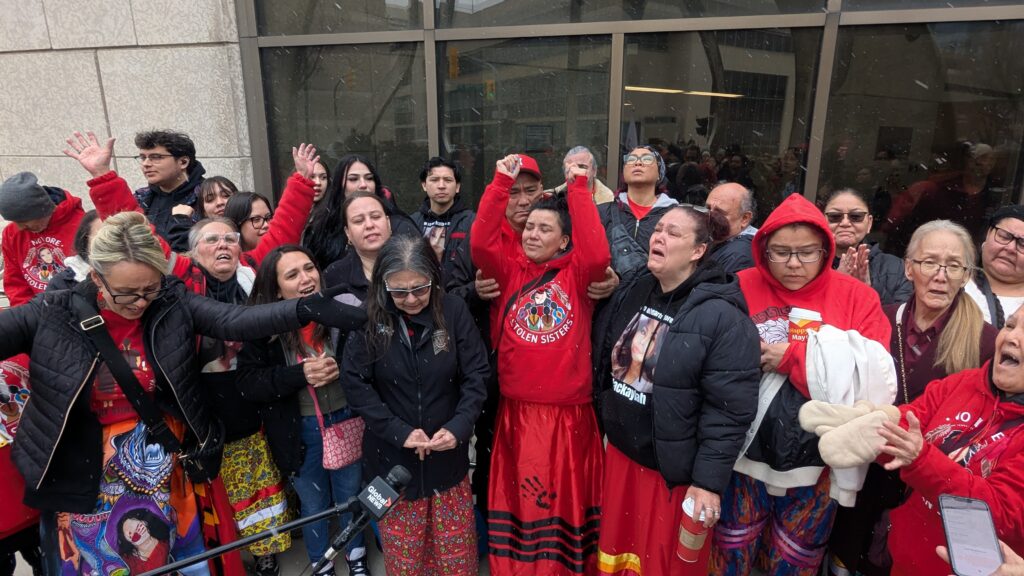
‘Her memory, her name, will always go on and on’
At the first event, Roussin told reporters that she and her family are “so happy that we got what we got” with the court’s life sentence.
Her granddaughter’s body was found in 2022 on an all-terrain vehicle trail southeast of Winnipeg, after she went missing days earlier.
“It broke our hearts to find out what happened to our precious Mackaylah, I do not wish this upon anybody,” Roussin added. “Her memory, her name, will always go on and on.
“Justice has been served now. Somehow, some way, we will ease the pain.”
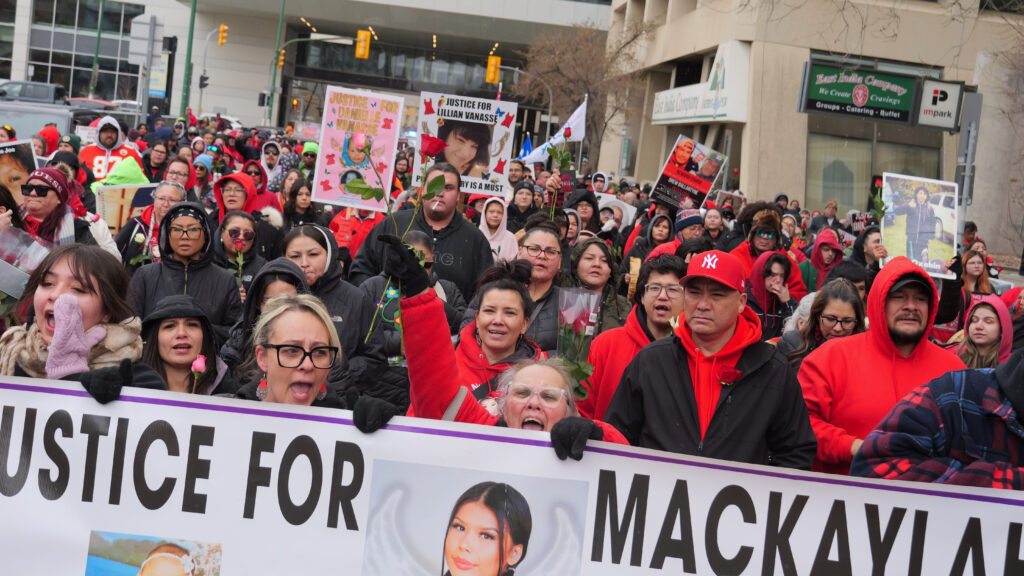
Two large banners bearing Mackaylah’s name and face led a march of about 300 people to the Oodena Celebration Circle, a gathering place where the Red and Assiniboine rivers meet.
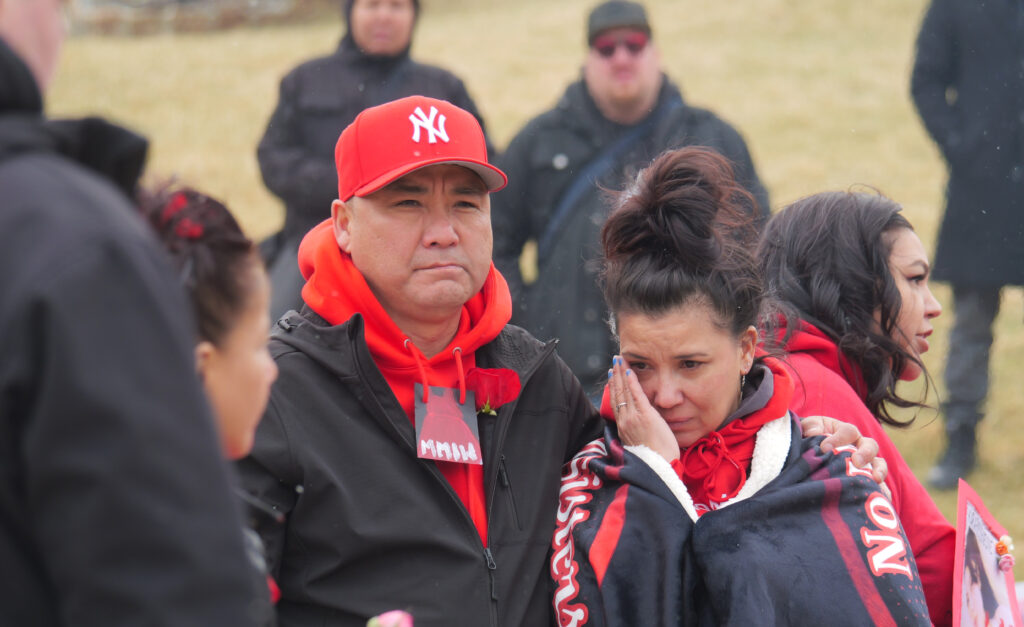
At the end of the march, her father Kirby Gerard addressed the crowd. The crowd shouted their support for him as Gerard-Roussin’s mother, Melissa, stood by his side.
“It’s been a long, long journey just trying to get this verdict,” Gerard said.
“It’s hard losing a daughter; it really humbled me as a man. I’m walking with each step a little more gently, and I’m trying to move in a better way.”
The crowd met the comments with drumming and shouts of, “We love you Kirby!”
‘A movement and symbol’
Red Dress Day began in honour of the late Hanna Harris. The member of the Tsėhéstáno (Northern Cheyenne Tribe) in Montana was murdered in 2013; her birthday was May 5.
Chantel Henderson, a Winnipeg resident from Sagkeeng First Nation with ties to Pinaymootang First Nation, has played an important role in turning May 5 into an annual event.
After moving to “Montreal,” she organized a Red Dress Day event in 2015 as a Concordia University graduate student doing a thesis on MMIWG2S+.
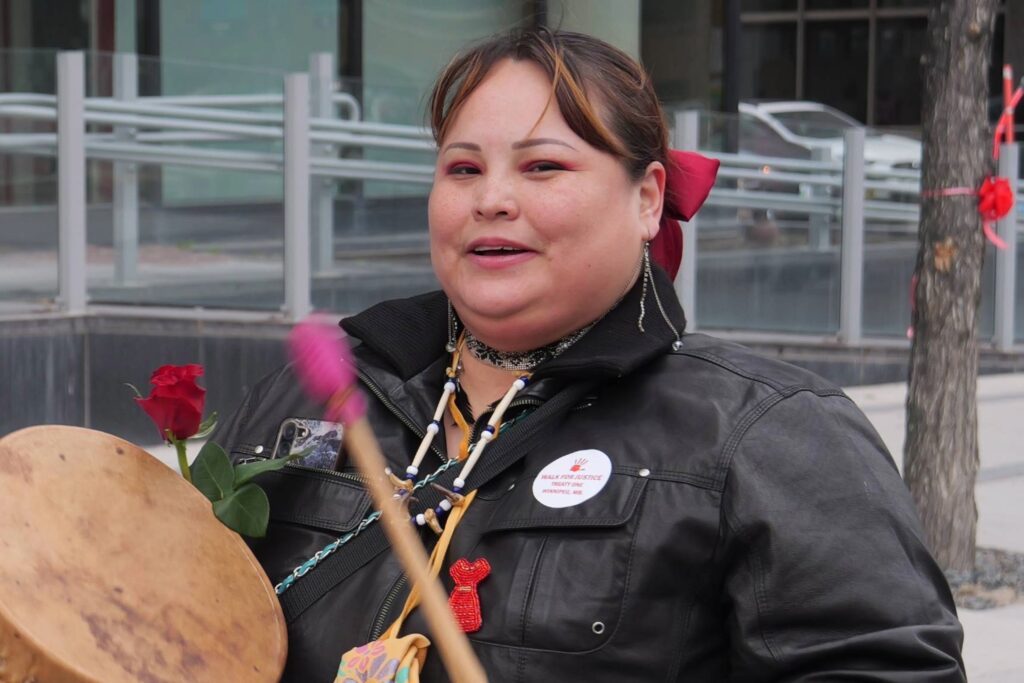
“I felt compelled to highlight this issue through the spotlight of the red dress,” Henderson told IndigiNews.
She said she’d been inspired by artist Jaime Black’s REDdress exhibition.
Henderson’s visibility as an advocate for MMIWG2S+ in “Montreal” led to her giving a keynote speech in Akwesasne in 2017, marking the inaugural Red Dress Day. Since then, events have been held each year on May 5.
“I never thought that in a million years that including the red dress at a march would turn it into a movement and symbol” for MMIWG2S+ people, Henderson said in an interview.
Praying to ‘bring home our daughters’
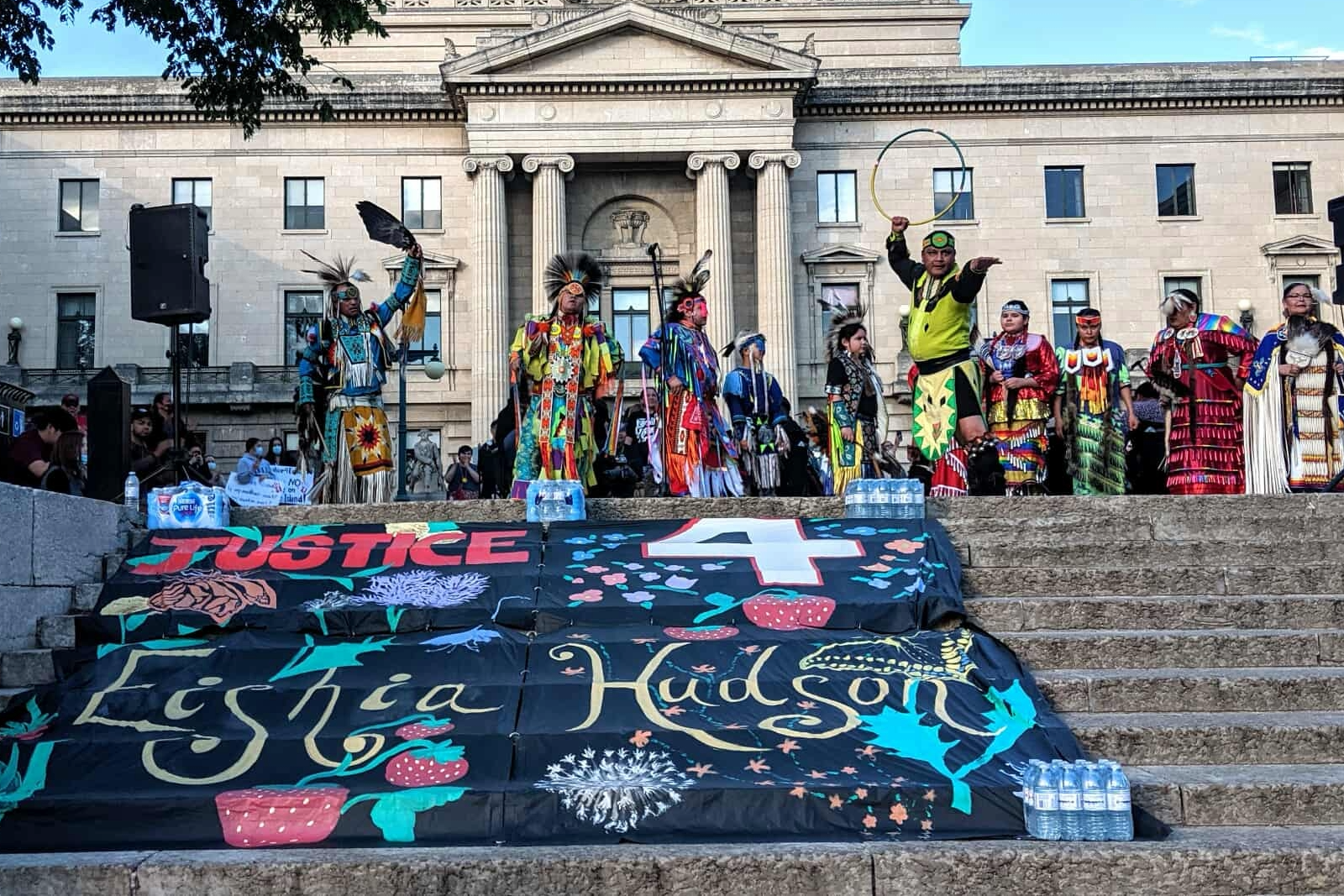
William Hudson, father of 16-year-old Eishia Hudson, who was killed by a Winnipeg police officer six years ago, spoke at Oodena Celebration Circle as well.
Hudson recently sat through an inquest into the Winnipeg Police Service (WPS) shooting death of his daughter after a vehicle chase in 2020.
“The first six weeks, we heard the police take the stand — their lethal force expert, their systemic racism expert — it’s all been one-sided.”
He recalled how the officer who killed his daughter did not immediately make a statement — until five weeks later.
“He stated when he approached the vehicle, he thought he found Eishia to be an Indigenous male, found her to be a threat, that he shot my daughter.”

But he said he was heartened to hear recently from other experts on police use-of-force and systemic racism in law enforcement, who disagreed with the testimony of the police’s inquest witnesses.
“His actions were not justified,” he said of what other experts said. “He didn’t follow police protocol.”
Listening to a second set of witnesses critical of the WPS felt validating, he said.
The parents of another Indigenous woman who was murdered, Ashlee Shingoose, also addressed the Red Dress Day crowd.
Shingoose’s remains have not yet been found, but a search at the Brady Road landfill continues for her.
Melissa Robinson, who oversees MMIWG2S+ issues at the Assembly of Manitoba Chiefs, introduced Shingoose’s family members and recounted that Shingoose’s father, Albert, had visited Camp Morgan near the landfill site.
“He was down here in Winnipeg searching for his daughter,” Robinson recalled.
“For months, he would fly down here and walk the streets trying to locate her.”

Camp Morgan was named after Robinson’s own cousin, Morgan Harris.
A search recovered Harris’s remains in the Prairie Green landfill in 2025, the year after her murderer was sentenced to four concurrent life sentences, with no possibility of parole for 25 years.
Little did the Shingoose family know their own daughter would later be identified as a woman previously known only as Mashkode Bizhiki-Ikwe, or Buffalo Woman.
Before she was identified, the Anishinaabe spirit name had been used to replace the police’s standard name for unidentified victims, “Jane Doe.”
Albert Shingoose said it was an honour to be there and “to unite as one big family.”
And he urged supporters to work to search for other missing young Indigenous women like his daughter and support their families too.
“We have to believe in our prayers, that we will bring home our daughters,” he added.
Robinson encouraged supporters never to forget all MMIWG2S+, including Tanya Nepinak.
“When Ashlee comes home, our direction will then turn to Tanya,” Robinson said.
“Tanya will be coming home also, I promise you all that.”
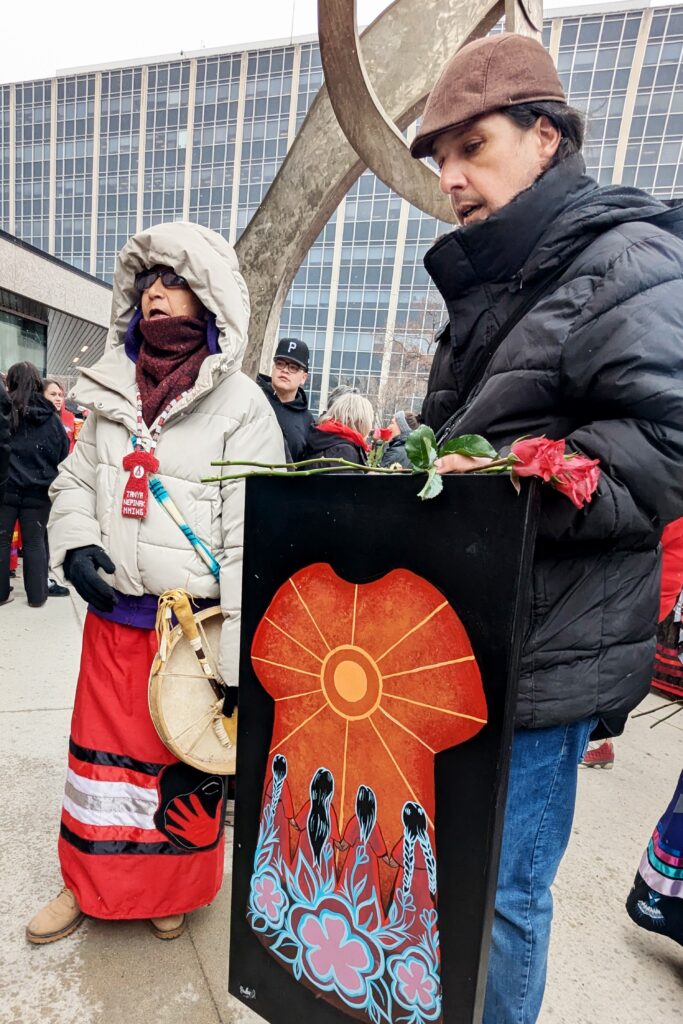
Sue Caribou, Nepinak’s aunt and a tireless advocate, spoke to reporters outside the Law Courts.
“None of our people deserve to be in no garbage,” she pleaded.
“Our loved ones are not trash. I want to bring Tanya home so bad. I haven’t given up since she went missing.“
Advocates say a WPS-led landfill search in 2012 was rushed and lacked adequate funding — so Nepinak’s remains were never recovered.
Nearly 15 years later, Caribou hopes a more thorough search for her body at the Brady Road landfill will bring her home.
The suspect in her killing, Shawn Lamb, faced a second-degree murder charge for Nepinak’s death.
But ultimately that charge was stayed and he was released in 2025, after serving two-thirds of a previous manslaughter sentence for the killings of Carolyn Sinclair and Lorna Blacksmith.
‘I’m surrounded by a lot of beautiful people’
Caribou said she attends every MMIWGS2S+ event she can.
Red Dress Day, in particular, is a particularly “special” day for her every year, she said.
“It’s special to me when I’m surrounded by a lot of beautiful people,” she explained.
“Support each other, because it’s really hard when you don’t have closure for your loved one.”
Another of Tuesday’s participants was Krista Fox, who travelled to Winnipeg from “North Battleford, Sask.,” with the family of Ashley Morin .
The 31-year-old from Ahtahkakoop Cree Nation who reported missing in 2018.
It was Fox’s third trip to walk with Manitoban families of missing and murdered people.
She told IndigiNews she walked in memory of her grandson, who was only 14 when he died in gang violence.
“There were no charges laid,” she said,”so justice was never served for my grandbaby.”
‘Support each other, because it’s really hard when you don’t have closure for your loved one’
— Sue Caribou
After outrage, feds reverse some budget cuts
Sandra DeLaronde, one of the advocates in “Ottawa” last month calling on the federal government to restore funding cut by Prime Minister Mark Carney’s Liberals to several Indigenous organizations, spoke at Tuesday’s larger second march.
DeLaronde’s organization Giganawenimaanaanig — which means “we all take care of them” — spearheaded dozens of community consultations on the design of an MMIWG2S+ public alert system in Manitoba.
If implemented, it would notify the public on their cellphones when an Indigenous woman, girl or gender-diverse person goes missing.
“We were entrusted to deliver a vision of what safety looks like in this province, as a model for the rest of the country,” DeLaronde said.
The alert initiative, she added, would help address the 231 calls for justice issued by the National Inquiry into Missing and Murdered Indigenous Women and Girls.
The inquiry’s final report called for police to standardize their “response times to reports of missing Indigenous persons.”
And it urged “all governments to create specific and long-term funding, available to Indigenous communities and organizations, to create, deliver, and disseminate prevention programs, education, and awareness campaigns designed for Indigenous communities and families related to violence prevention.”
But a pilot project for the Red Dress Alert initiative was thrown into jeopardy when federal funding ended for several national women’s organizations.
“We’ve kept working on what we were given the responsibility to do, she said, “and part of that is developing that complete system.”
After facing criticism from Indigenous leaders, last week the Carney government reversed course.
His office issued a press release on Red Dress Day allocating $300,000 for ongoing work on the alert system so that “when an Indigenous woman, girl, or 2SLGBTQI+ person goes missing … this will help locate individuals faster and bring them home safely.”
And Carney also reinstated $2.6 million he had cut from the National Family and Survivors Circle.
“We are building a Canada where all Indigenous women, girls, and 2SLGBTQI+ people can live openly, freely, and safely,” Carney’s statement said.
DeLaronde said the announcement would help Giganawenimaanaanig to “get to the point of technology” — but warned that the new funding still won’t be enough to “launch” the alert.
She said that when she unveiled the Red Dress Alert final report in 2025, the organization was asked if it could help raise funds for the project.
“Why do we have to have bannock sales for safety for our women and girls?” she asked.
“They’re taking the money out of existing programs for governments to fund a war, but they won’t look after the people in their own country. That is shameful.”
Author
We live in a media ecosystem that thrives on misinformation. Big Tech and AI companies are consuming the work of real human beings and Canadian news has been banned on Facebook and Instagram.
And yet, I have hope for journalism because of the work we’re doing at IndigiNews.
At IndigiNews, we embody tâpwêwin — the Cree value of integrity and responsibility in truth-telling. We are committed to our independent, Indigenous-led newsroom rooted in community, accountability, and relationality. We believe storytelling is a sacred fire that connects our pasts, presents, and futures through the storytellers in our Storytelling Lodge. IndigiNews creates space for Indigenous journalists, storytellers, Knowledge Keepers, and communities to gather, learn, and share stories that matter.
As a registered charity, we are building a fire that allows our work not just to ignite but to thrive. Rather than relying on advertising or corporate acquisition, IndigiNews is sustained by people like you who believe Indigenous stories are important for the future of our communities.
Your support is making a real difference.
Our community of supporters, our Firekeepers, make it possible to grow our newsroom, publish award-winning journalism, train emerging Indigenous journalists through initiatives like the ReFocus Photojournalism Fellowship, and publish trustworthy stories that serve our communities across the country. Every story we publish helps fill in gaps left by mainstream media and ensures Indigenous perspectives are represented with care, accuracy and respect.
But there is still more work to do.
As the media landscape becomes more and more uncertain, community support is as necessary and essential as it’s ever been. Every new Firekeeper helps protect the independence of our newsroom and strengthens journalism that is accountable to our many and varied communities over corporations.
That’s why we’re inviting you to become a Firekeeper.
Firekeepers tend to and protect the sacred fire. Your monthly contributions directly support IndigiNews’s Storytelling Lodge, helps sustain our independent, Indigenous-led newsroom, and ensures future generations of Indigenous storytellers have the resources they need to do the work.
As a registered Canadian charity, all eligible donations receive a charitable tax receipt.
If you believe Indigenous stories matter, if you value independent journalism, and if you want to help build a strong future for Indigenous media, we invite you to join our circle of Firekeepers today.
Together, we can keep the fire burning.
— Eden Fineday, Publisher, IndigiNews
Support us nowLatest Stories
-
Indigenous leaders give the UN a roadmap for protecting their peoples
Amidst prayers and vows of solidarity, UN Expert Mechanism on the Rights of Indigenous Peoples ends annual meetings with demands for ‘action we’re not seeing globally’
-
Indigenous people demand more say at the UN, as new crises hit their homelands
Indigenous nations live ‘on the frontlines’ of climate, conflict and new tech. But their voices remain sidelined in the global halls of power.