‘Love Medicine’ exhibition celebrates Two Spirit and Indigiqueer artists
Curated by Métis art historian Michelle McGeough, 22 Indigenous 2SLGBTQIA+ artists explore the idea of love as healing, belonging — and resistance — in a Oskana kâ-asastêki (Regina) gallery
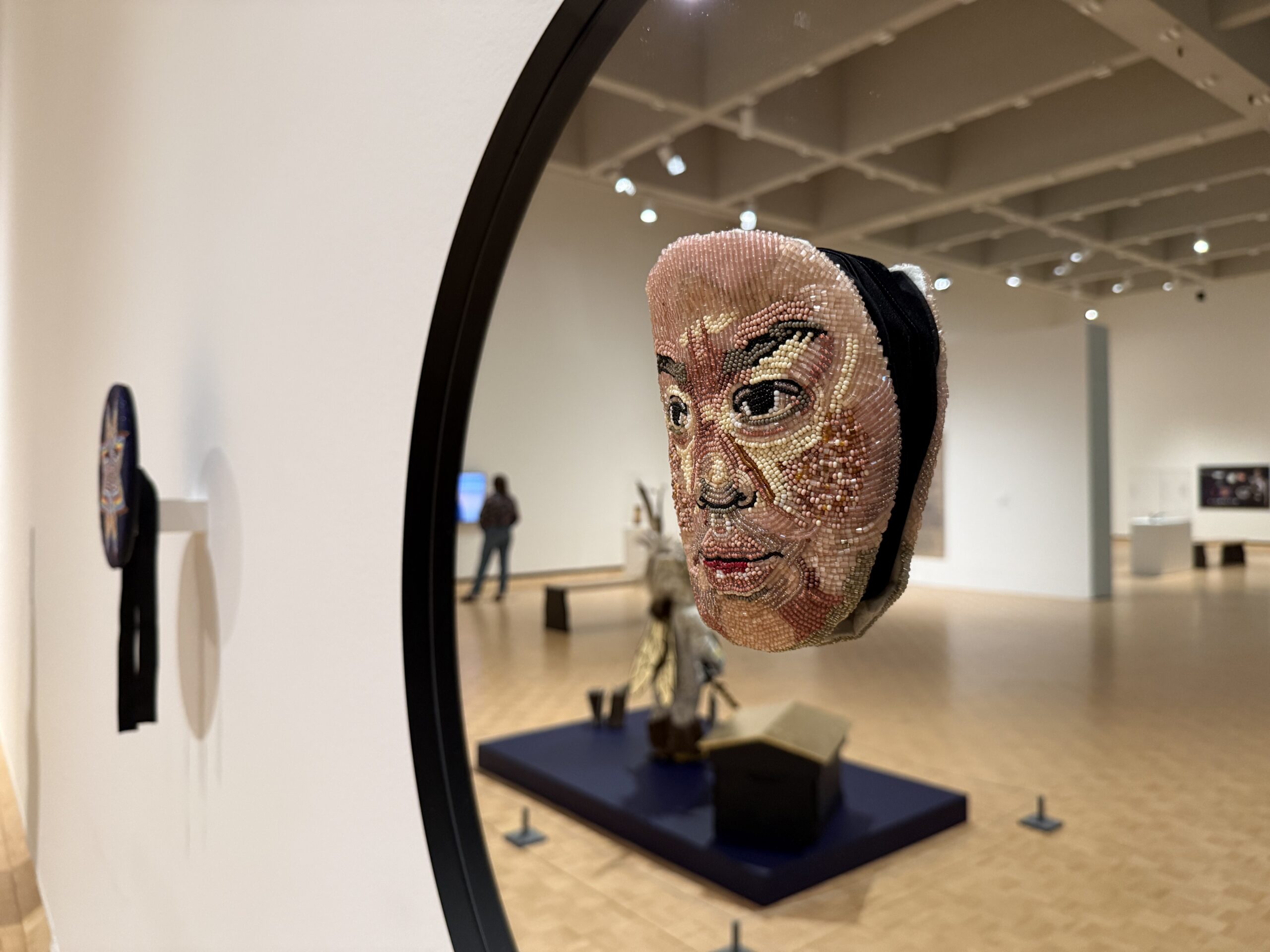
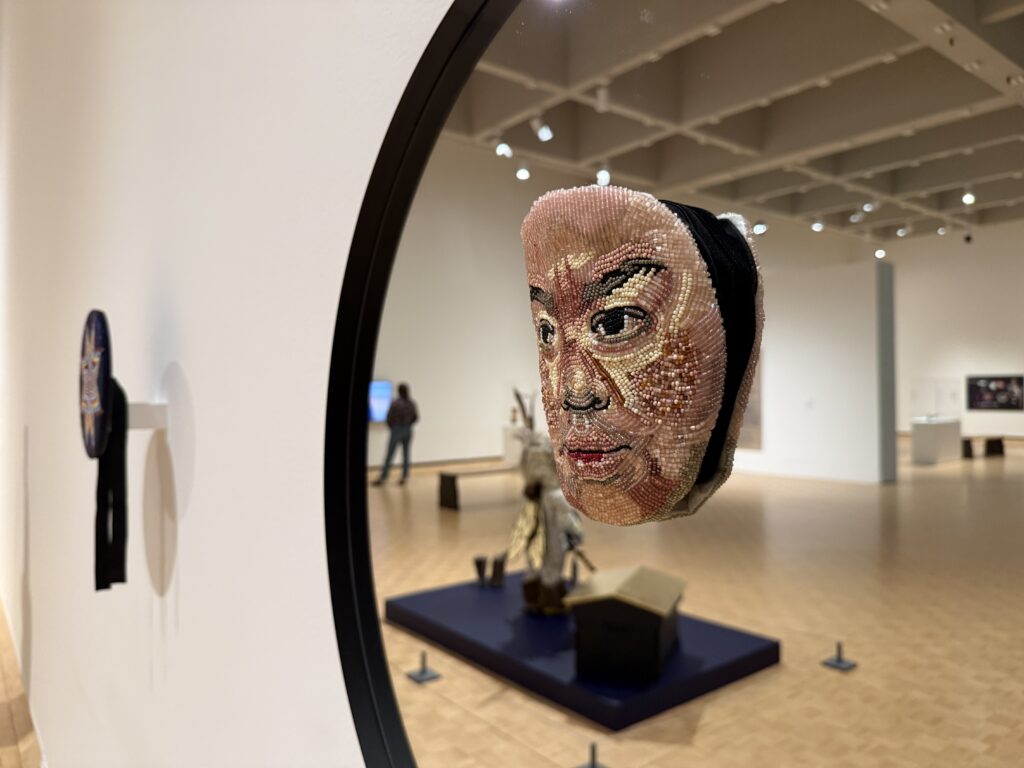
A new exhibition in Oskana kâ-asastêki (Regina) gathers Indigenous 2SLGBTQIA+ artists around a tender and political belief that love, in all its forms, can be medicine.
Love Medicine brings together the work of 22 artists at the MacKenzie Art Gallery. Their collective work asks what love can hold for Two Spirit and Indigiqueer people across generations, communities and forms of making.
The exhibition was curated by Michelle McGeough, a Métis art historian and assistant professor at Concordia University, and opened on June 12. It will be on display until Nov. 1.
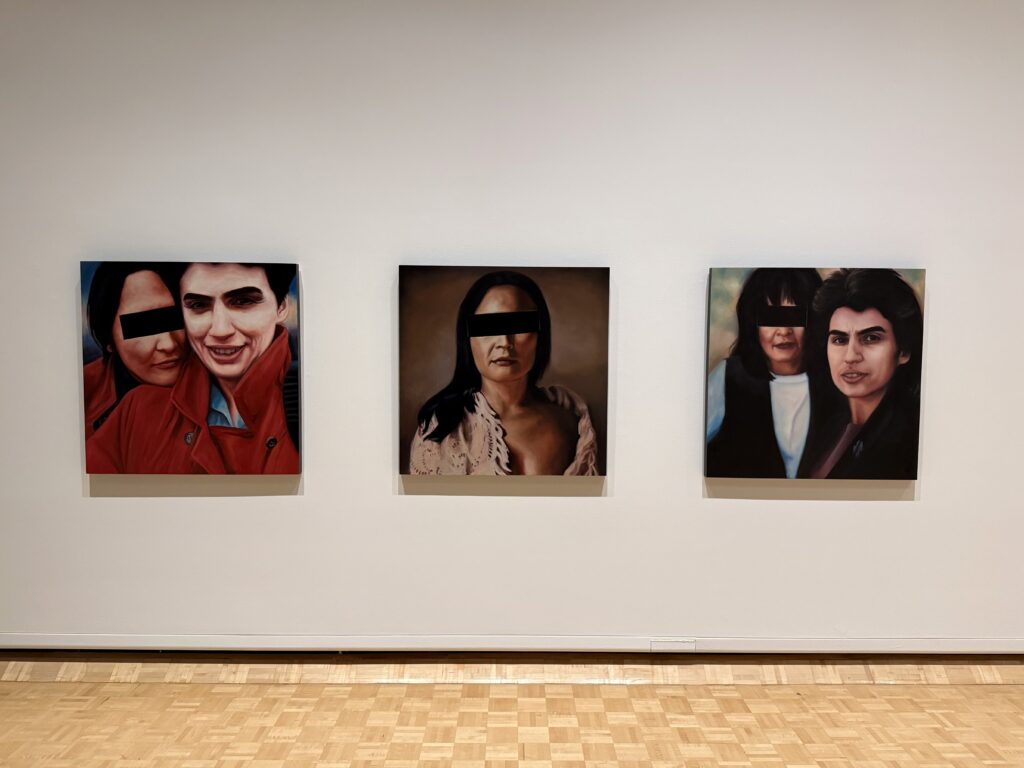
“I wanted to create a space where we could talk about these types of things, and talk about what it means to love,” McGeough tells IndigiNews. “Love is in itself a medicine for us.”
McGeough said she hopes people who visit the exhibition see themselves reflected in the works.
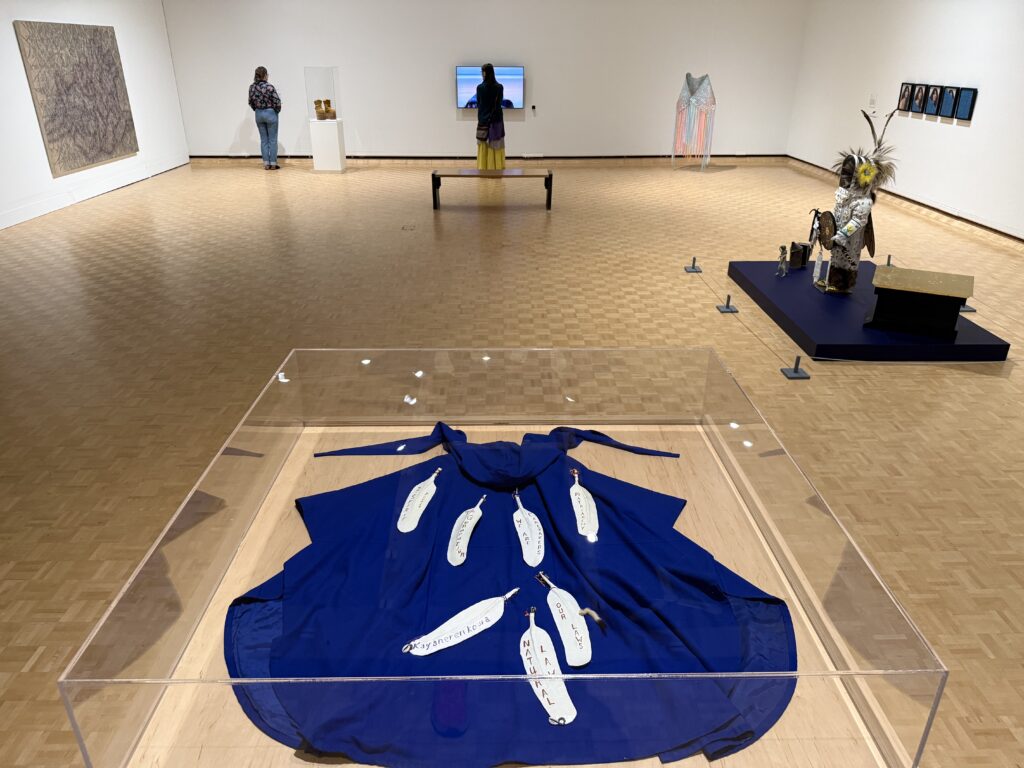
Visitors entering Love Medicine are first pulled left, toward French and Anishinaabe interdisciplinary artist Vanessa Racine’s i love you too.
The 2023 work uses two contemporary wampum belts to encode the phrase “I love you” in the mother tongue of both Racine’s parents.
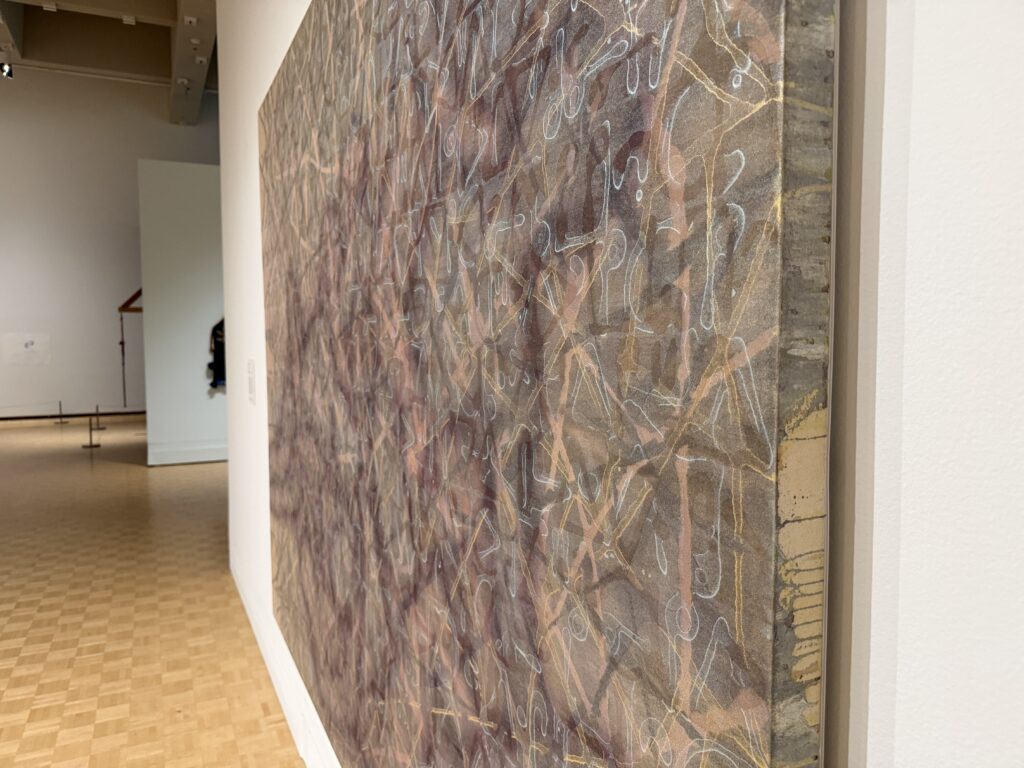
Across the room, iconic Anishinaabe painter Norval Morrisseau’s Androgny rises nearly floor-to-ceiling, its saturated colours commanding attention.
In the centre of the space, Kablusiak’s soapstone works turn intimate objects into questions about bodily autonomy and the shame often placed on sexuality.
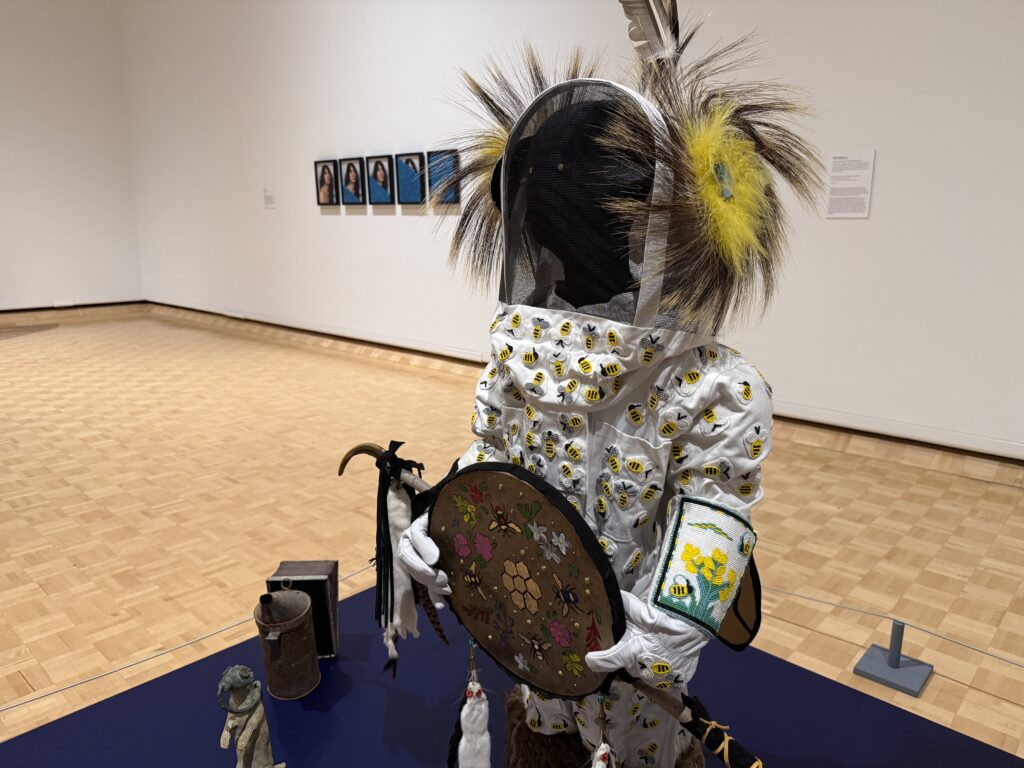
Deeper into the exhibition, Siksika interdisciplinary artist Adrian Stimson’s nookaa naamoi-stotoohsin, Child’s Bumble Bee Outfit, is a piece of child-sized regalia that reminds viewers that Two Spirit people hold important knowledge, and is inspired by the Blackfoot Bumble Bee Society.
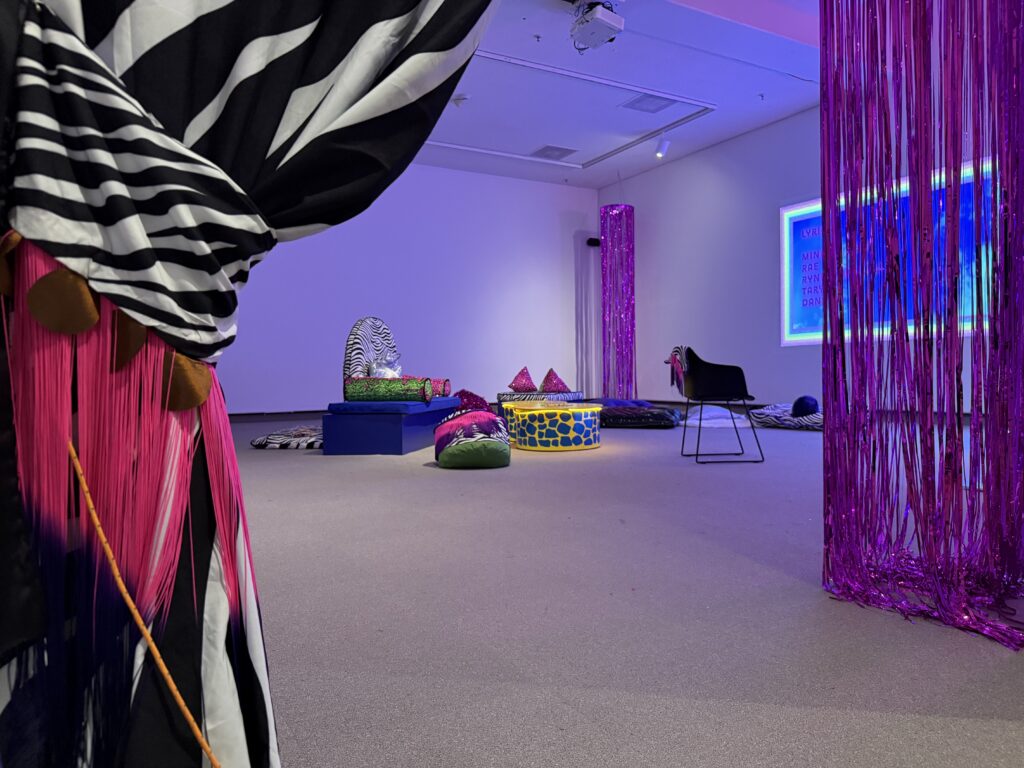
Another room opens into an immersive space by disabled artist moira williams, with feathered boas and bright pink tinsel curtains that invite visitors to touch, play and move through the work.
The sounds of water brings you into the next room, where Skeena Reece’s Touch Me video performance depicts the intimate care shared between Reece and artist Sandra Semchuk.
McGeough said she arranged Love Medicine in a way that was inspired by the movement of tides to guide visitors through the exhibition.
“The ocean really became the kind of grounding force,” McGeough said.
“This kind of ever-flowing ebb, in and out … all these things come and go.”

In 2024, before Love Medicine reached the MacKenzie Art Gallery, a Curatorial Dreaming workshop at the University of Winnipeg — developed by Shelly Butler and Adrienne Huard — brought together experienced and emerging Two Spirit and Indigiqueer curators from across “Canada” to consider what a gallery space could hold for Indigenous queer life.
“I came away from that workshop with a more defined vision of the exhibition,” McGeough said.
But that question extends beyond the walls of a single exhibition.
Colonial institutions helped impose rigid ideas about gender and sexuality, making many Indigenous ways of understanding harder to see in public records and cultural spaces.
The Two-Spirit Archives, established at the University of Winnipeg in 2019, was created as one response to that gap, preserving Two-Spirit and Indigiqueer histories through community-driven archival practice.
Love Medicine responds to these histories of exclusion and violence by asking what changes when Two Spirit and Indigiqueer artists are gathered inside a public gallery on their own terms.
The gallery held an opening celebration on June 11, with a drag performance from Two Spirit Dene performer Chelazon Leroux.
The next evening, curator McGeough sat down at the gallery for a panel talk with guest artists Dayna Danger, Racine and Stimson.
Racine spoke about art as a way back to land and ancestry.

“Through art, we find ways to connect our identities to the land and our ancestors,” Racine said.
“It’s about reclaiming our stories and asserting our presence.”
As the conversation turned toward younger generations, Stimson encouraged Two Spirit and Indigiqueer people to move toward the parts of themselves they may have been taught to hide.
“Don’t be afraid of who you are and celebrate that,” Stimson said.
He also urged young artists to stay curious about the forms their work might take.
“Don’t be afraid to try these things, to understand them, to take them apart,” Stimson said.
John Hampton, the executive director and CEO of the Mackenzie Art Gallery, said in a statement that the exhibition brings “a spirit of care, community and healing” to the gallery.
“Two Spirit communities are one of the most targeted groups in our society today, but they also carry the strongest medicine, serving an essential and honoured role in this territory for time immemorial,” they said.
“I feel like we are in need of a return to that healing power of love and of art, and I thank the artists for that gift.”
Author
We live in a media ecosystem that thrives on misinformation. Big Tech and AI companies are consuming the work of real human beings and Canadian news has been banned on Facebook and Instagram.

And yet, I have hope for journalism because of the work we’re doing at IndigiNews.
At IndigiNews, we embody tâpwêwin — the Cree value of integrity and responsibility in truth-telling. We are committed to our independent, Indigenous-led newsroom rooted in community, accountability, and relationality. We believe storytelling is a sacred fire that connects our pasts, presents, and futures through the storytellers in our Storytelling Lodge. IndigiNews creates space for Indigenous journalists, storytellers, Knowledge Keepers, and communities to gather, learn, and share stories that matter.
As a registered charity, we are building a fire that allows our work not just to ignite but to thrive. Rather than relying on advertising or corporate acquisition, IndigiNews is sustained by people like you who believe Indigenous stories are important for the future of our communities.
Your support is making a real difference.
Our community of supporters, our Firekeepers, make it possible to grow our newsroom, publish award-winning journalism, train emerging Indigenous journalists through initiatives like the ReFocus Photojournalism Fellowship, and publish trustworthy stories that serve our communities across the country. Every story we publish helps fill in gaps left by mainstream media and ensures Indigenous perspectives are represented with care, accuracy and respect.
But there is still more work to do.
As the media landscape becomes more and more uncertain, community support is as necessary and essential as it’s ever been. Every new Firekeeper helps protect the independence of our newsroom and strengthens journalism that is accountable to our many and varied communities over corporations.
That’s why we’re inviting you to become a Firekeeper.
Firekeepers tend to and protect the sacred fire. Your monthly contributions directly support IndigiNews’s Storytelling Lodge, helps sustain our independent, Indigenous-led newsroom, and ensures future generations of Indigenous storytellers have the resources they need to do the work.
As a registered Canadian charity, all eligible donations receive a charitable tax receipt.
If you believe Indigenous stories matter, if you value independent journalism, and if you want to help build a strong future for Indigenous media, we invite you to join our circle of Firekeepers today.
Together, we can keep the fire burning.
— Eden Fineday, Publisher, IndigiNews
Support us nowLatest Stories
-
‘Rhythm crafted for the human voice’: Poet kit-xgwélemc kennedy wins an Indigenous Voices Award
Member of St’uxwtéws Secwépemc Nation recognized in unpublished poetry category — following in his wordsmith mom’s footsteps
-
Low sockeye salmon numbers expected in the Okanagan as waters warm: ONA
syilx Nation members are being asked to ‘take only what they need’ as ‘difficult’ environmental conditions create challenges for the important fish