In the Okanagan desert, snakes offer lessons on protecting a fragile ecosystem
For two decades, researchers at the Nk’Mip Desert Cultural Centre have tracked snakes across syilx homelands — while helping people appreciate the often-feared creatures
The snake was close. Lindsay Whitehead could hear it in the receiver strapped to her chest.
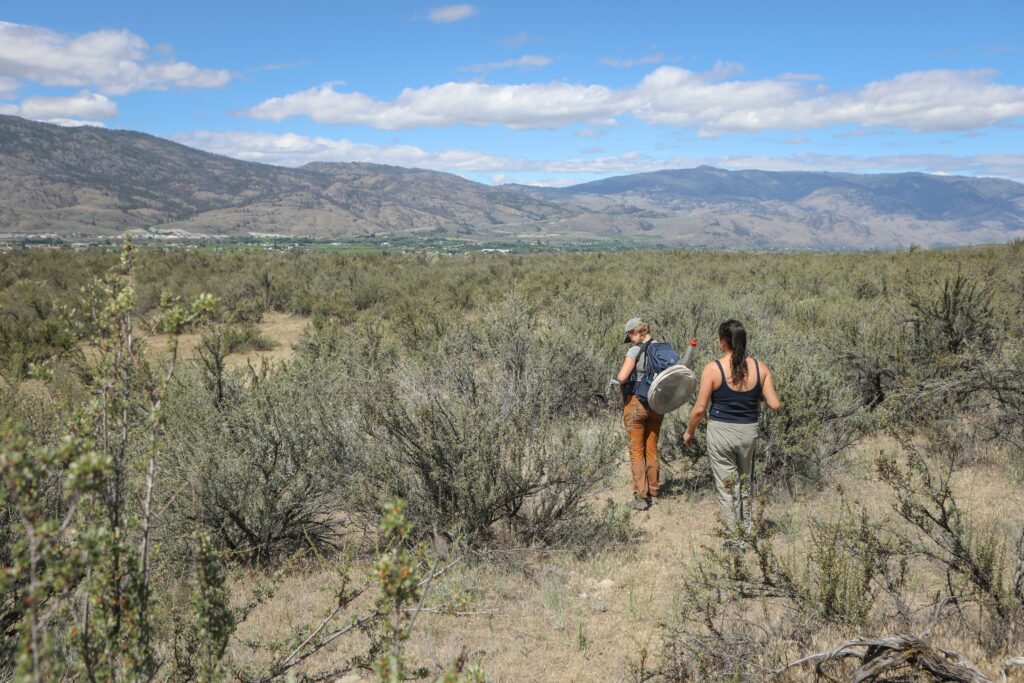
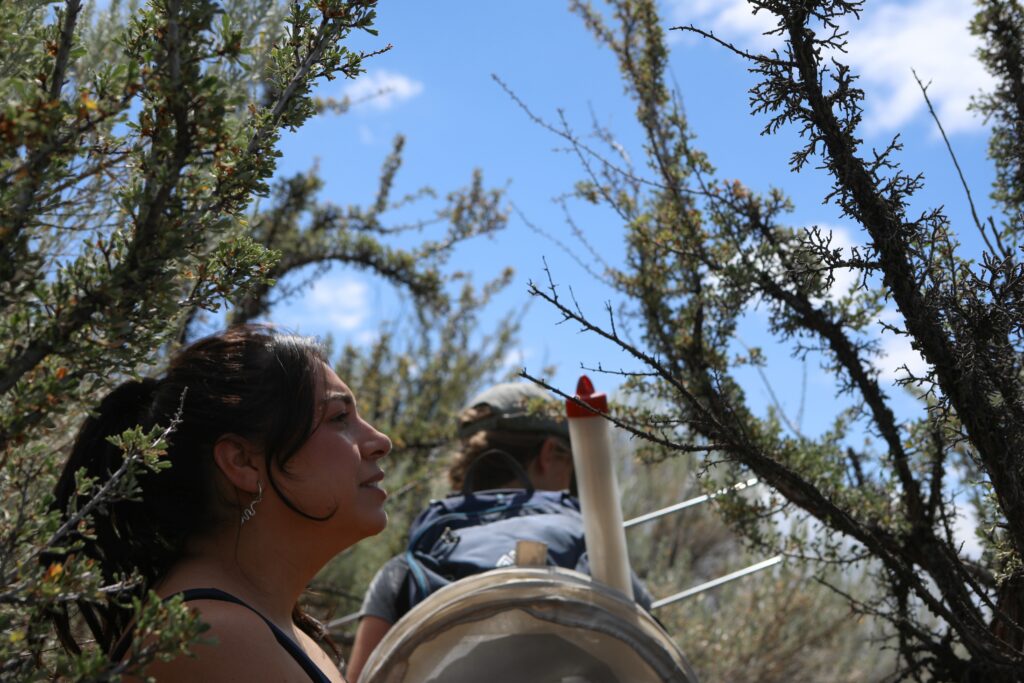
For nearly an hour in the sweltering desert heat on June 30, Whitehead and cnúk Jenna Bower had crossed a sunbaked field above Osoyoos Lake, stepping through sagebrush and rare antelope-brush while Whitehead held a radio antenna over the land.
The receiver’s electronic ping grew louder as they neared the edge of a bluff, then softened whenever they tried another direction.
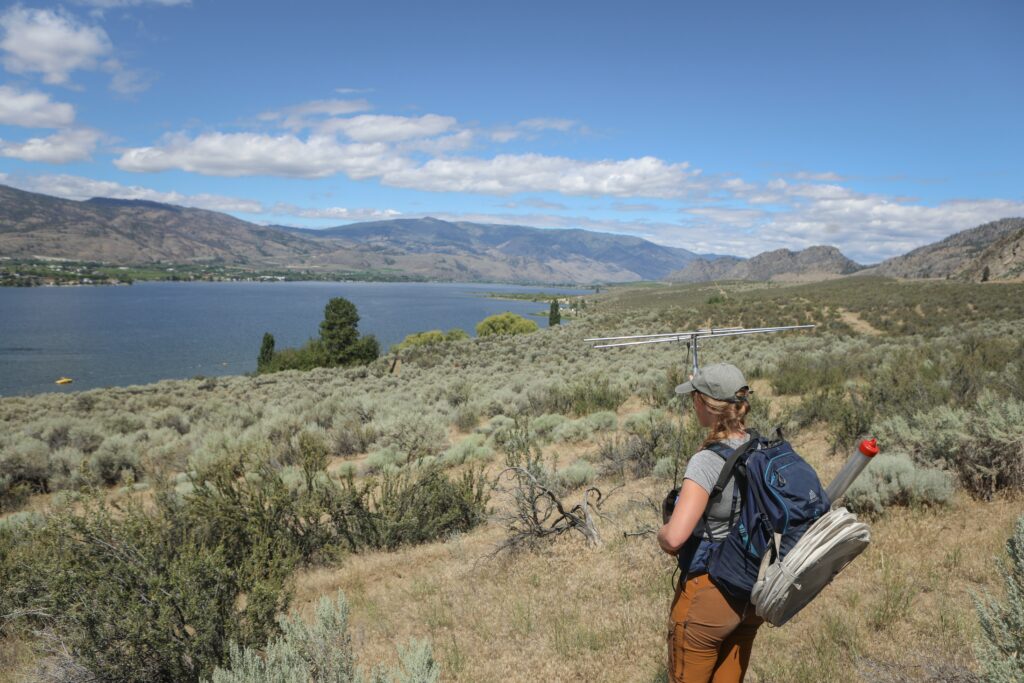
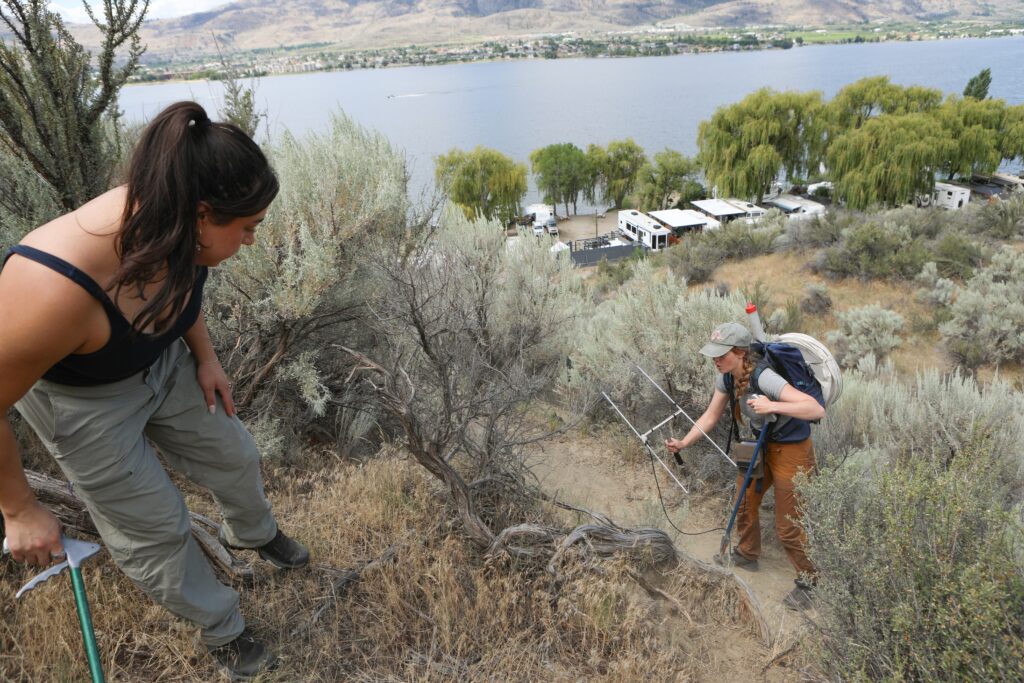
Somewhere beneath them was a Great Basin gophersnake researchers had fitted with a radio transmitter months earlier.
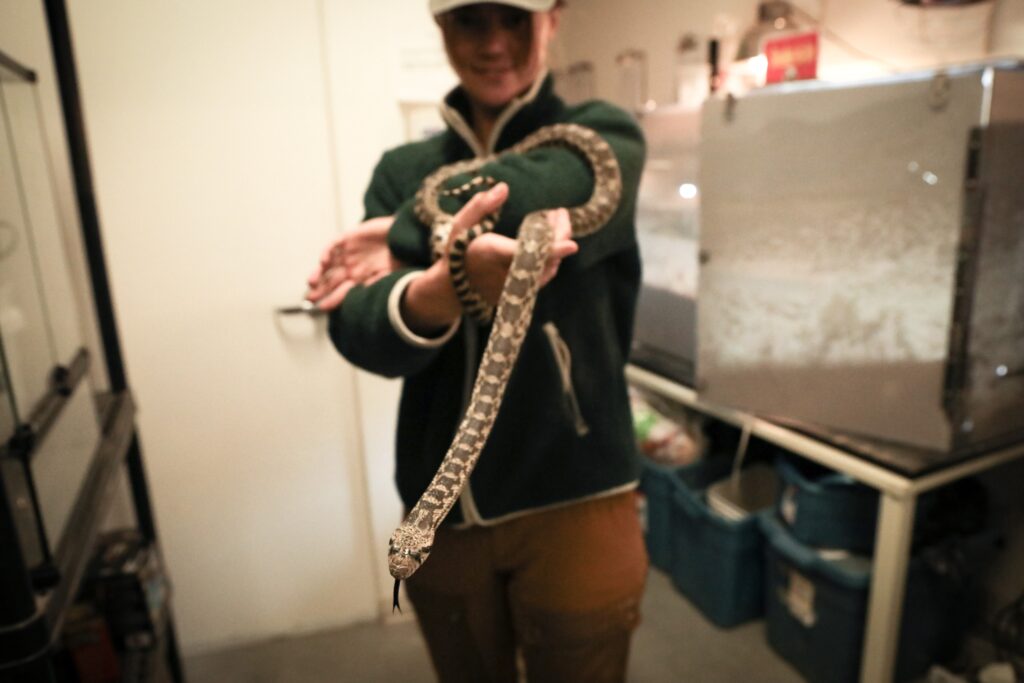
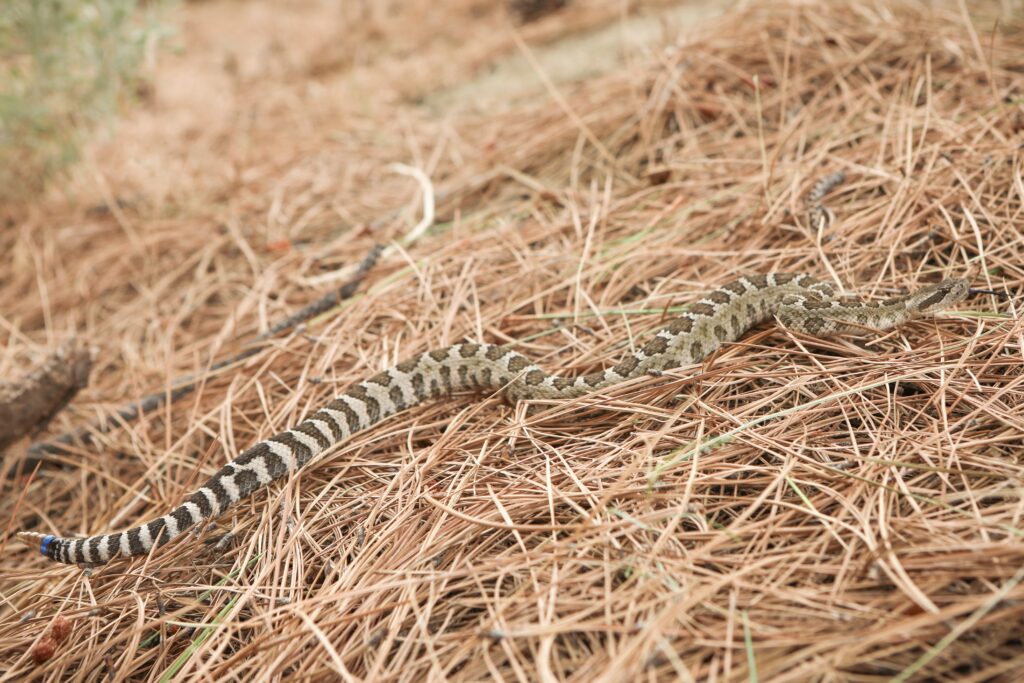
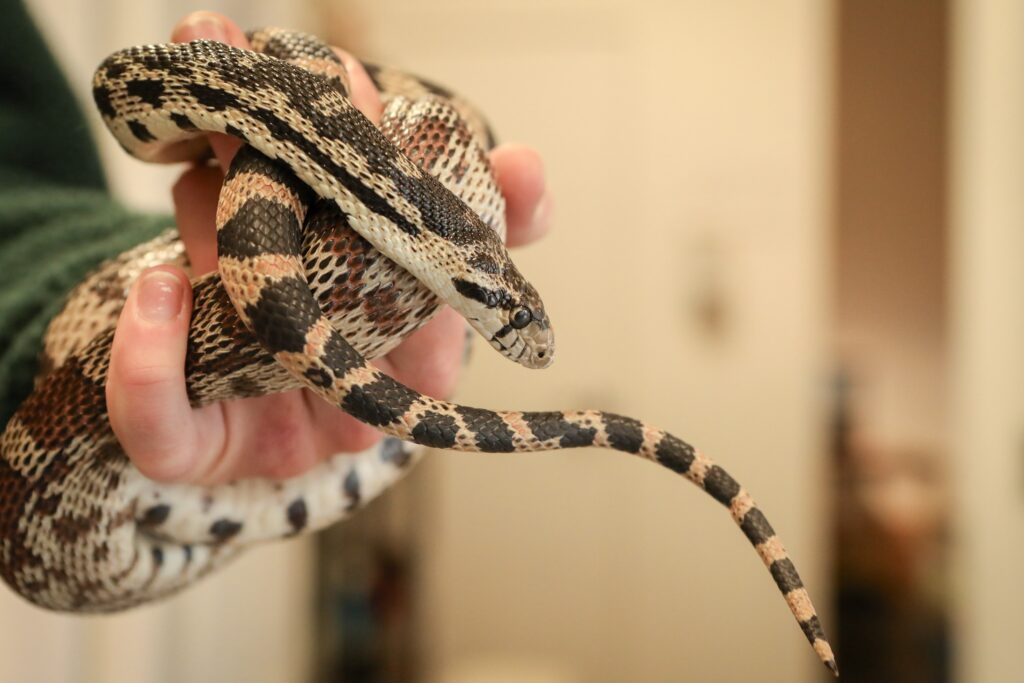
The non-venomous gophersnake can exceed two metres, making it the largest snake native to “B.C.” Its muscular body is cream, yellowish or grey, patterned with dark rectangular blotches that become bands toward its pointed tail. Dark lines cross its bullet-shaped head and run from its eyes toward its jaw.
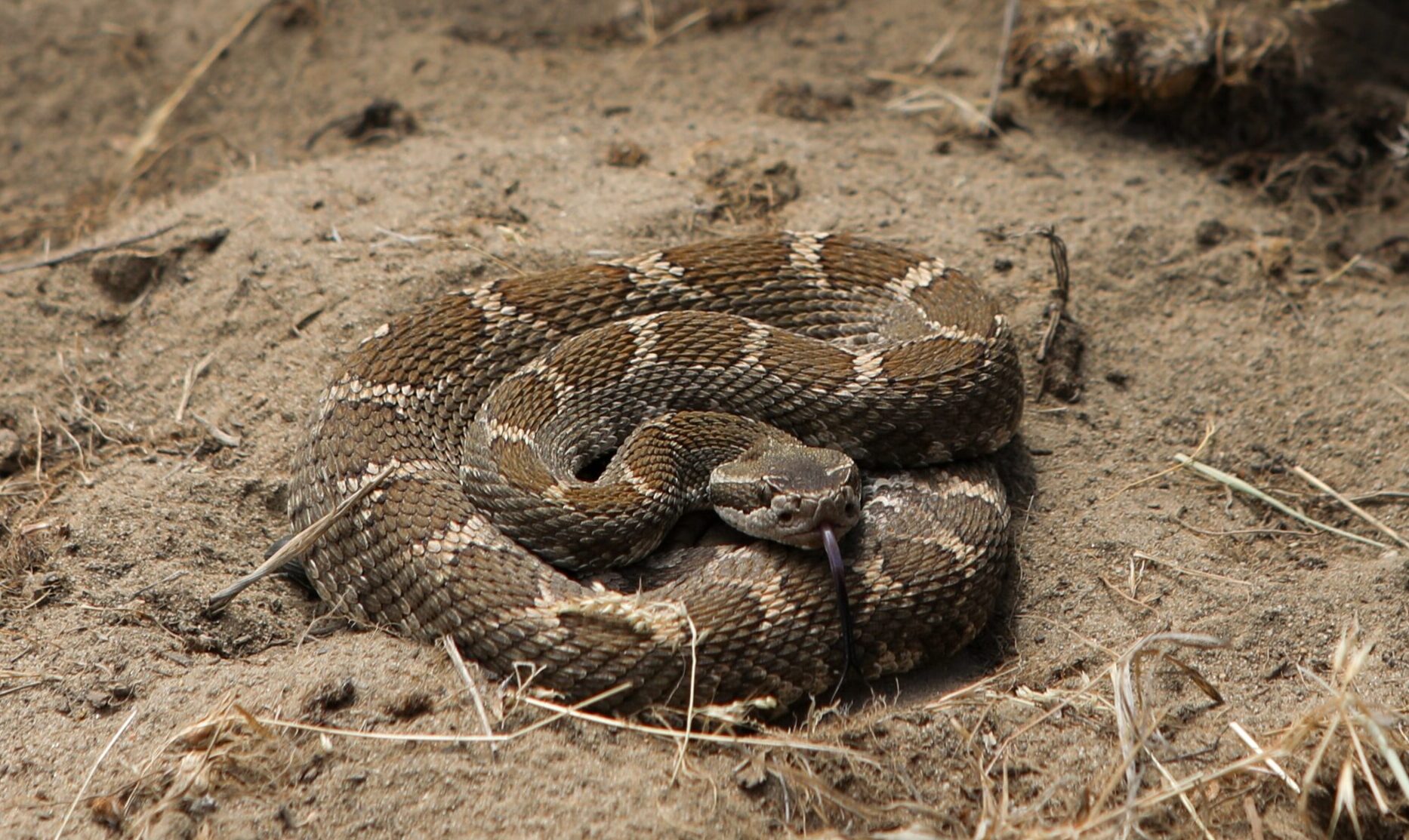
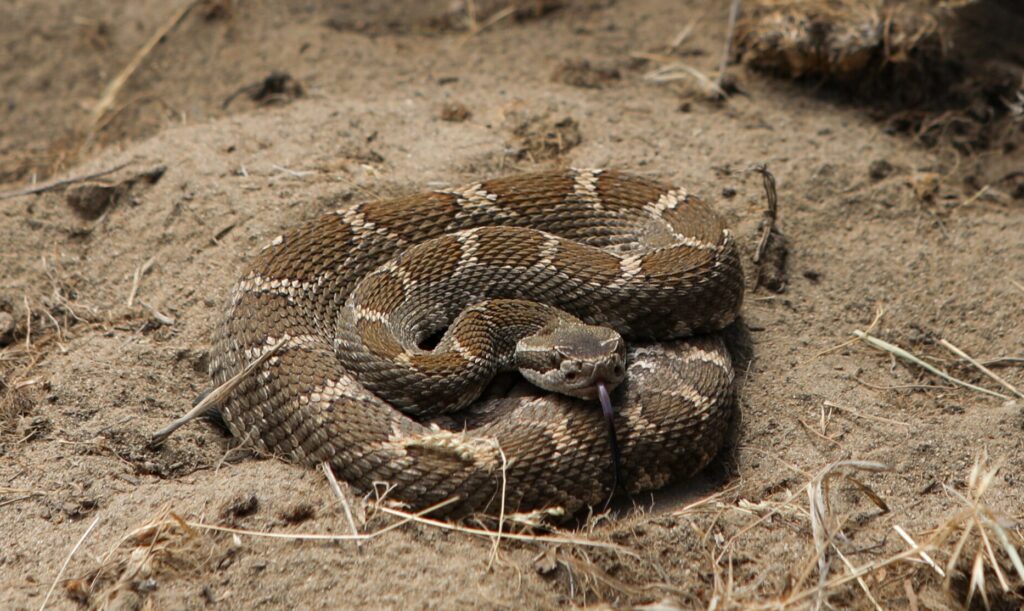
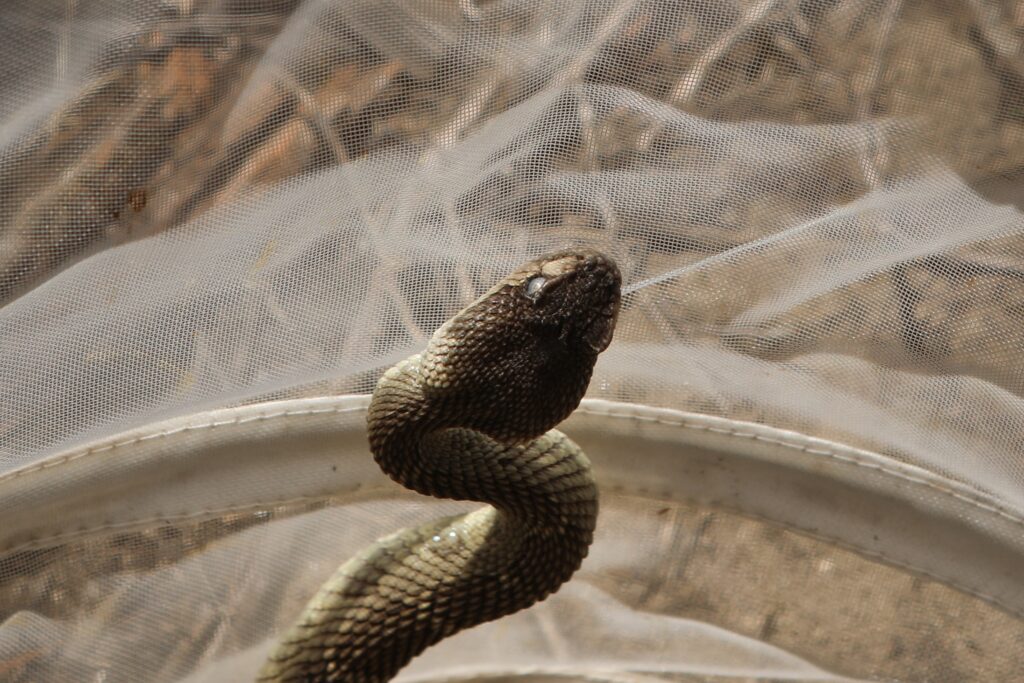
When threatened, a gophersnake may coil, hiss, strike and rapidly vibrate its tail in a rattlesnake-like defensive display. The behaviour can make the harmless snake appear dangerous — and leave it vulnerable to being killed by people who mistake it for the venomous rattlesnake.
“Snakes just get such a bad reputation,” said Bower, executive director of the Nk’Mip Desert Cultural Centre. “But they’re such kind creatures. They’re just defensive.”
At the bluff, the radio signal peaked — but the snake was nowhere in sight.
Whitehead and Bower scanned the vegetation and peered into the space beneath the shrubs, sometimes pushing their way into the dense brush. When the snake didn’t appear, they concluded it had likely taken shelter from the heat inside a burrow abandoned by another animal.
“Essentially, it’s a giant game of hot or cold,” said Whitehead, lead biologist and program co-ordinator for the snake research program at the Nk’Mip Desert Cultural Centre.
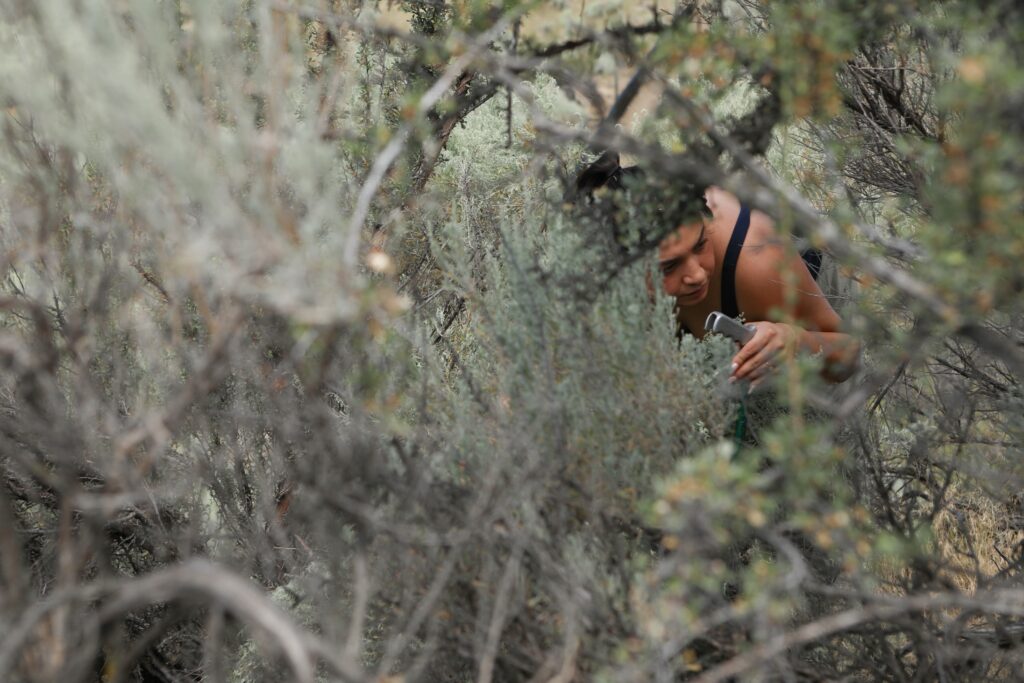
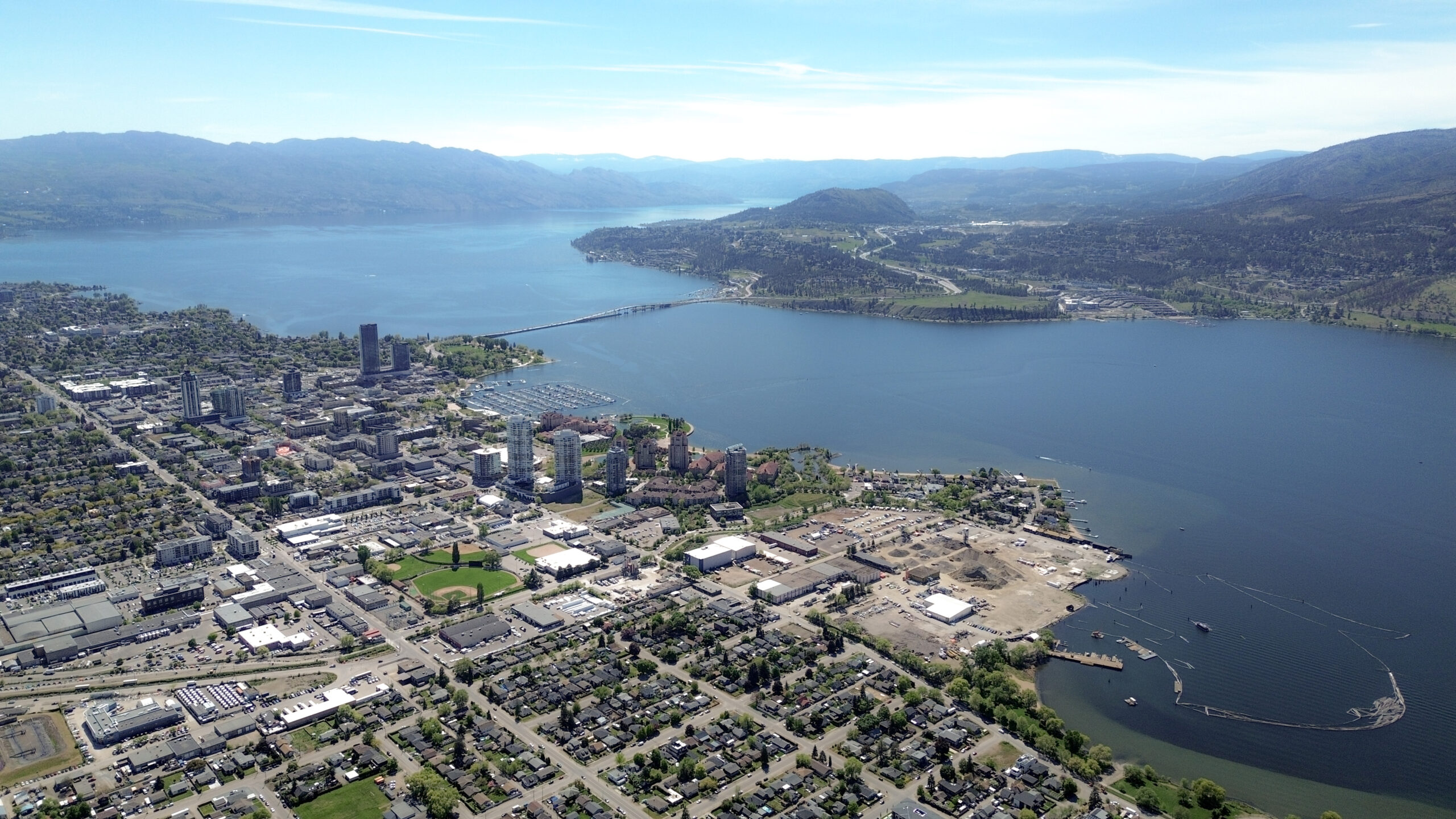
The search was one small part of a broader research effort that has unfolded for more than two decades on the Osoyoos Indian Band reserve in syilx homelands.
The snake research program began in 2002 to help minimize snake encounters as the Nk’Mip Campground developed. It moved into the Nk’Mip Desert Cultural Centre four years later, when the building first opened, and the program is managed by a research team there.
With an initial focus on protecting rattlesnakes, the program has since expanded to include other snake species across the nearly 650 hectares of desert habitat protected by the Osoyoos Indian Band.
The cultural centre’s 450-hectare area where Whitehead and the snake research team conduct much of their fieldwork contains an estimated 1,500 adult snakes, she said.
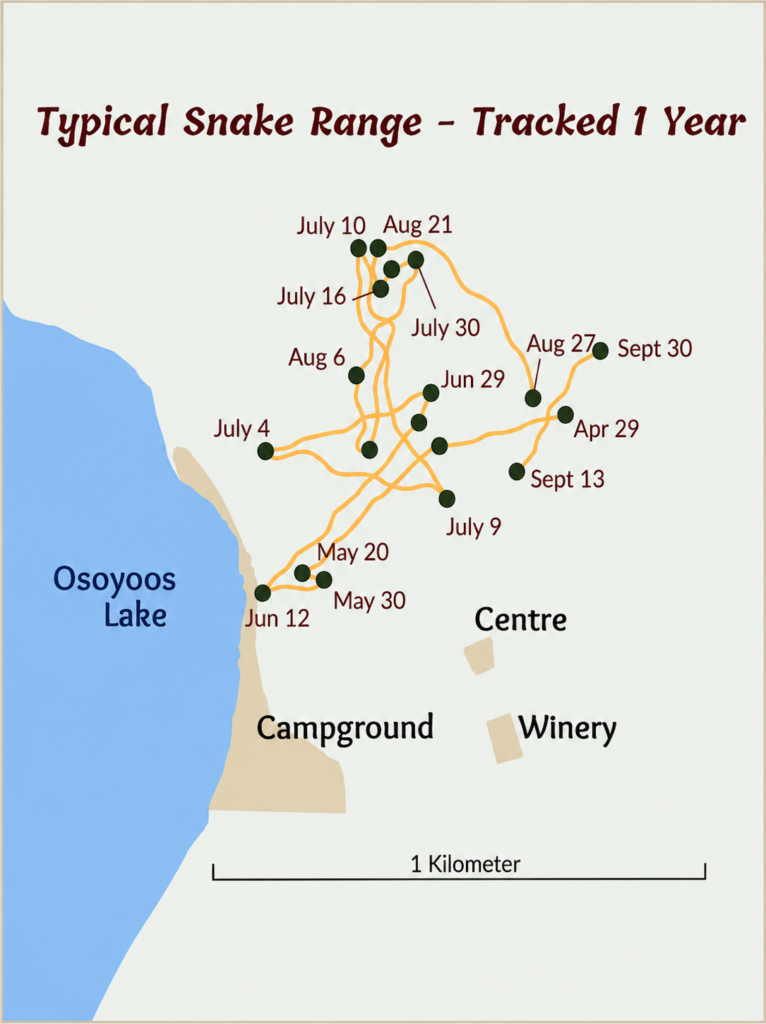
Researchers track the seasonal movements of snakes here, monitor dens and travel corridors, study how roads and development affect them and teach people how to encounter them safely. Since the snake research program began, roughly 3,000 individual snakes have been fitted with permanent identification tags, Whitehead said.
Seven native snake species live in the South Okanagan region where the desert cultural centre is located: the desert nightsnake, western rattlesnake, Great Basin gophersnake, western yellow-bellied racer, northern rubber boa, western terrestrial gartersnake and common gartersnake.
Five are listed under the federal Species at Risk Act. The desert nightsnake is endangered; western rattlesnakes, Great Basin gophersnakes and western yellow-bellied racers are threatened; and northern rubber boas are listed as a species of special concern.
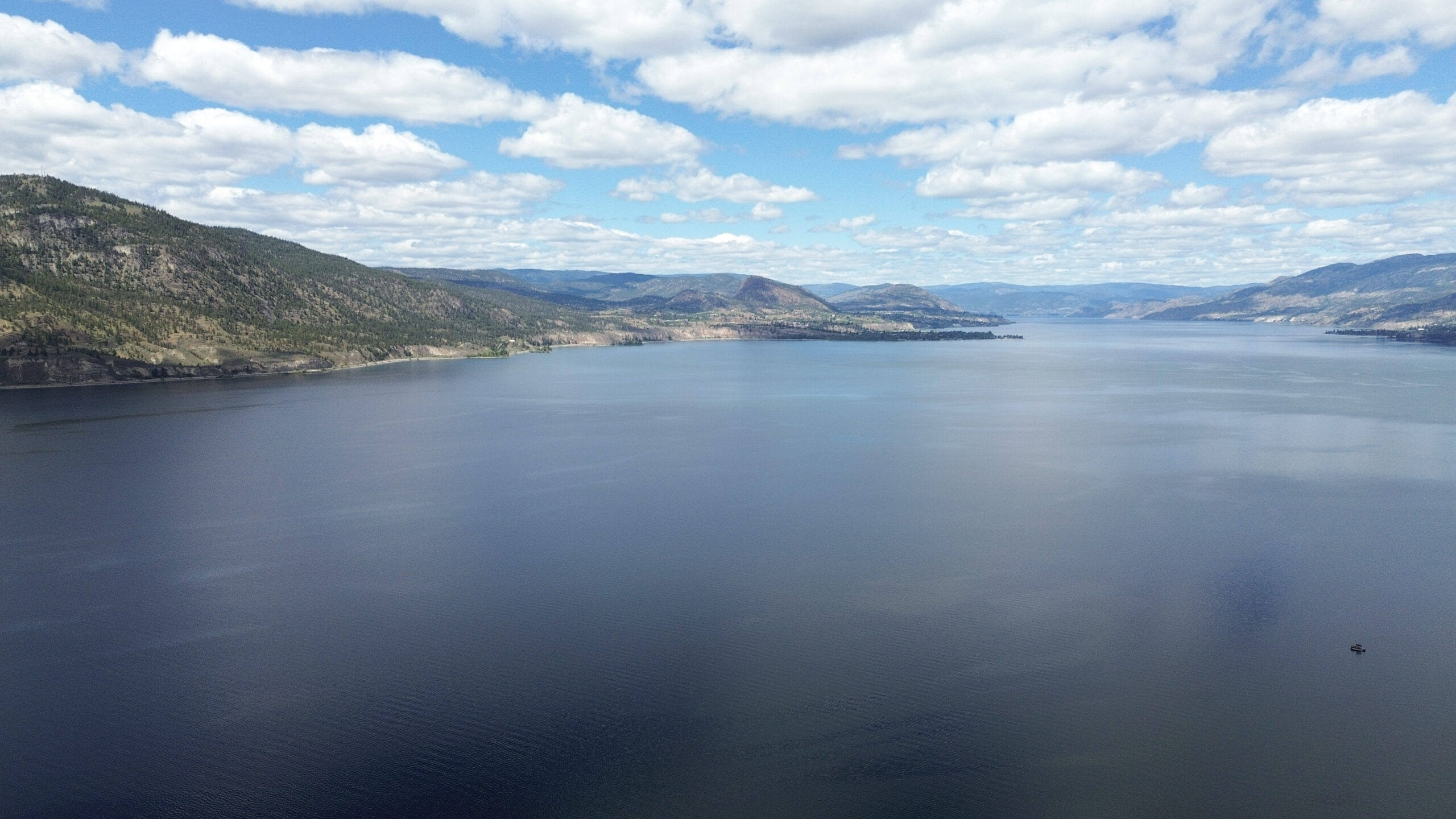
The snakes share the landscape with one of the country’s most imperilled ecosystems. Antelope-brush habitat once extended across much of the South Okanagan. Development, agriculture and roads have reduced it to scattered remnants.
Much of what remains survives on Osoyoos Indian Band lands.
“On the OIB reserve land, it’s an incredibly healthy snake population,” Whitehead said. “Other parts of B.C., not so much.
“Having land like this that’s protected and not developed — it’s just so rare.”
Sacred beings of the land
The research program began as western rattlesnake populations were declining due to habitat loss, road mortality, and deliberate killing.
“Needless killing and habitat loss to expanding towns and intensive agriculture have put this species at risk,” the province said of western rattlesnakes in 1993.
In nsyilxcən, Bower said, rattlesnakes are called x̌aʔx̌aʔúlaʔxʷ, a name she said loosely translates as “sacred being of the land.”
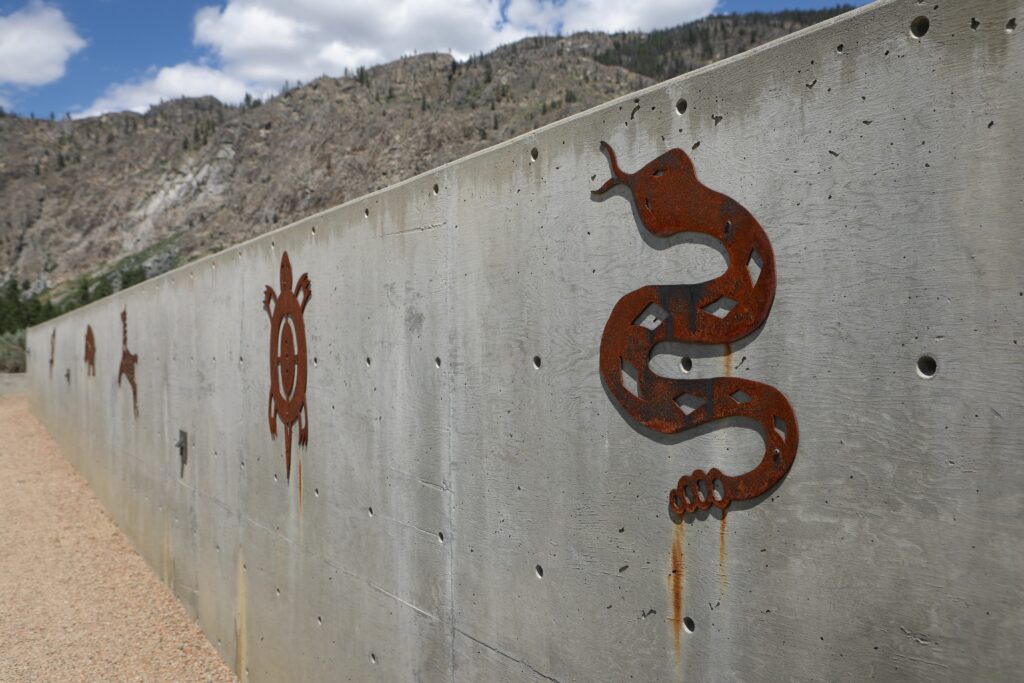
Rattlesnakes also appear in captikwł, which are a collection of oral stories and teachings that convey syilx laws, values, customs and responsibilities.
“Even within our captikwł, they have certain lessons that they teach us,” Bower said. “They’re all why we’re here.
“Just like all of our animal species, they’re all here for a purpose. They all play an important role within the ecosystem.”
Bower described rattlesnakes as important predators that help maintain ecosystem balance by keeping rodent populations at bay.
That relationship was widely disregarded during generations of colonial agricultural and urban expansion.
Bower’s 94-year-old great-grandfather remembered a time when people were paid to kill rattlesnakes, she said.
“When they were starting the vineyards, the orchards, there were rattlesnakes everywhere,” Bower said. “In the 1960s, they were considered a problem, even up until the 1990s.”
“People saw them as nuisances and just dangerous. Anytime a rattlesnake would come into their yard, they would kill it. They didn’t see them as having any benefit at all.”
With their numbers continuing to dwindle by the turn of the 21st century, the original creators of the cultural centre decided to choose a different approach.
“Instead of removing them and destroying their home, killing them and having fear of them, it was, ‘How about we start researching them? Figuring out how we can help them and support them?’” Bower said.
“It’s just nice to know that even way back in 2002, there was still that love and care for snakes.”
The resulting program has spent more than two decades studying the snakes and helping restore their place in public understanding. The centre was built within a living cultural landscape, she added, and its role was never limited to interpreting the past.
The research asks what responsibility to the land might look like in the present.
Following snakes across the desert
The gophersnake Whitehead and Bower were searching for carried both a PIT tag and a radio transmitter.
A PIT tag, short for passive integrated transponder, gives the snake a permanent identification number. Each time researchers encounter and scan it, they can add new measurements, locations and observations to its record.
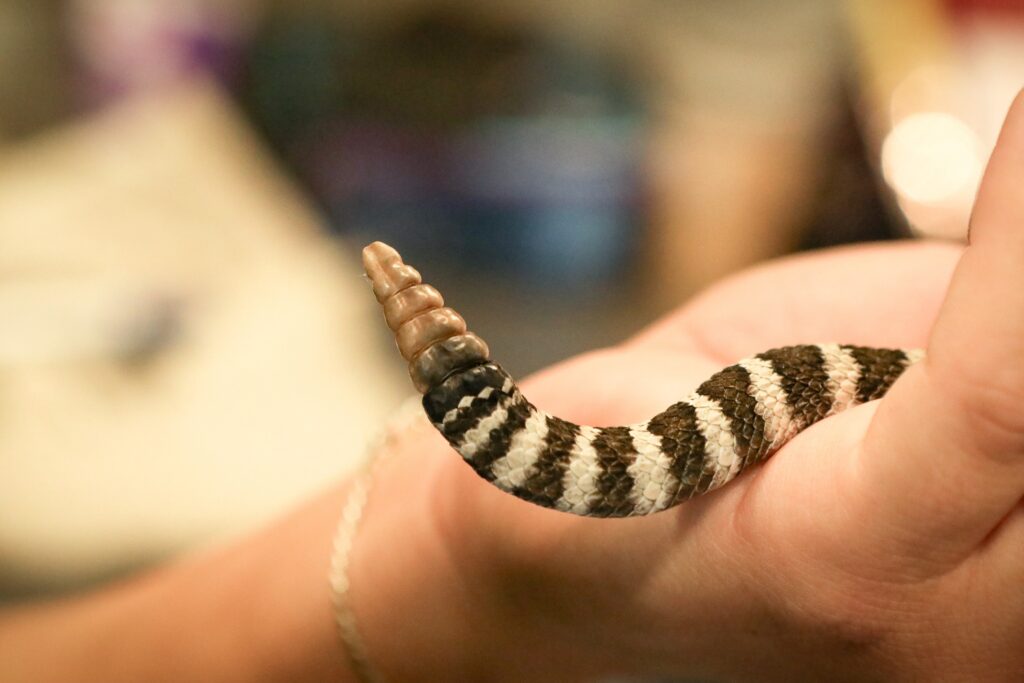
When researchers encounter a snake, they generally process it where they find it. They measure and weigh the animal, record the encounter and return locations, and may collect a blood sample. For rattlesnakes, they also count the segments of the rattle. This work usually takes less than 10 minutes.
“Recording the growth rates of the rattle rings gives us some indication as to how good of a season the snake had, and how much it’s growing,” said Whitehead.
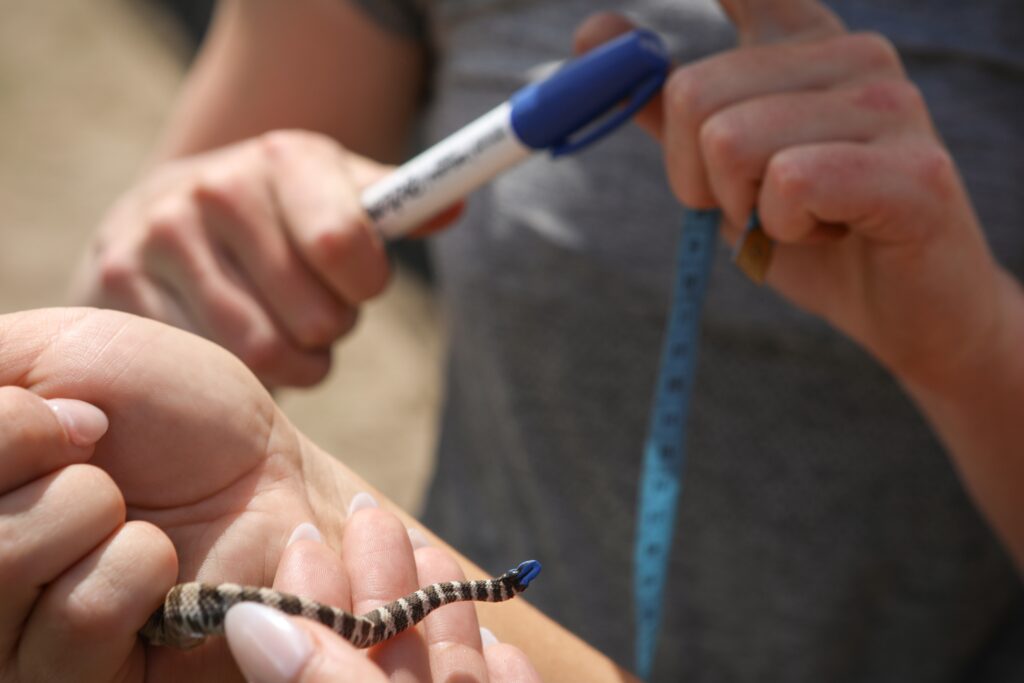
Most of the snakes researchers encounter and process are western rattlesnakes, Whitehead said. Precise population estimates for each species remain unknown, though Bower said the team is working to establish them.
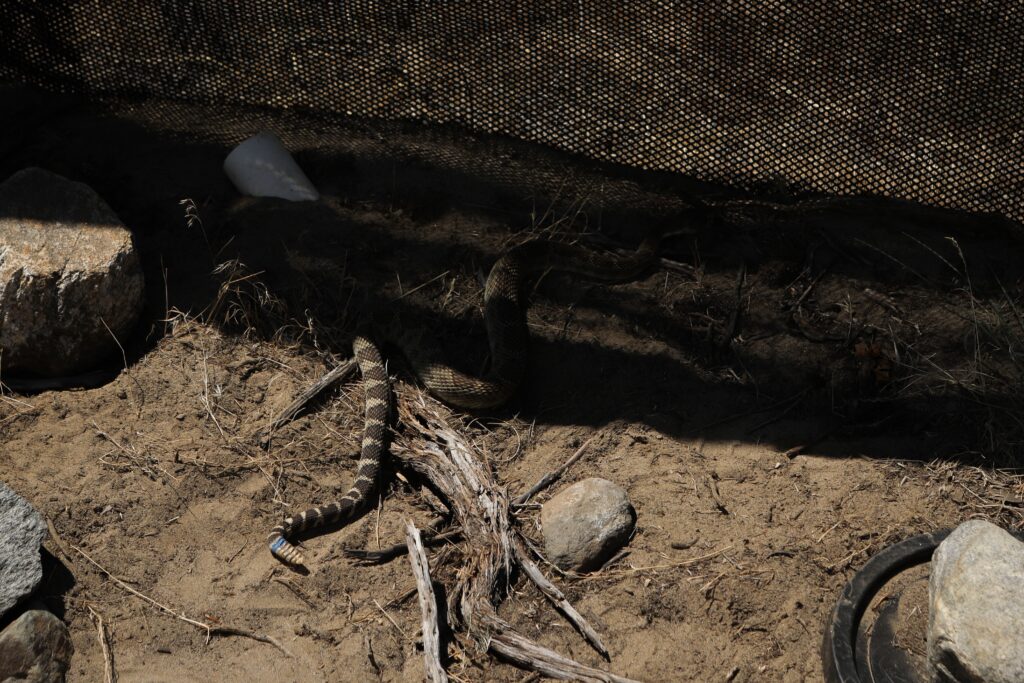
Researchers mark the rattles of previously processed rattlesnakes with a different colour each year, allowing the team to recognize them from a distance. This year’s colour is blue.
Each time a PIT-tagged snake is encountered again, researchers scan its tag and add the new information to its record.
“Every time we come across it, and the PIT tag is scanned, we can see where it’s been moving,” Bower said.
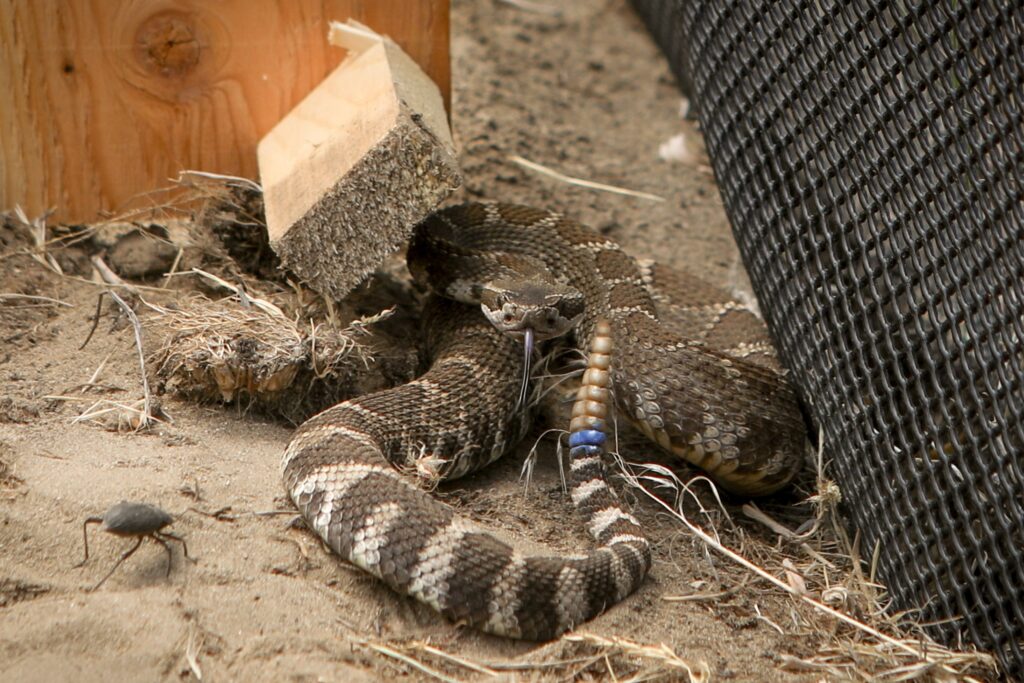
The radio transmitter sends out a radio frequency picked up by Whitehead’s receiver. By walking across the landscape with the antenna raised, researchers can determine the direction of the signal and gradually narrow the search area. Over about a year, the tracking data can help identify den sites, travel routes and the habitats snakes use across the landscape, Whitehead said.
“We try to do as few snakes as possible because it’s intrusive,” Whitehead said. “We don’t want to impact the snake population in any way.”
Bower said many snakes spend the winter in rocky dens above the cultural centre. Several species may share the same den. They typically begin emerging in April and May, travelling downslope to feeding and breeding areas where they remain through the warmer months.
Before the fall migration begins, some species hatch or give birth. The eggs of both Great Basin gophersnakes and yellow-bellied racer snakes generally hatch in August and sometimes into early September, while western rattlesnakes typically give birth to their live young at the end of August.
By September, many of the snakes begin moving back toward their winter dens.
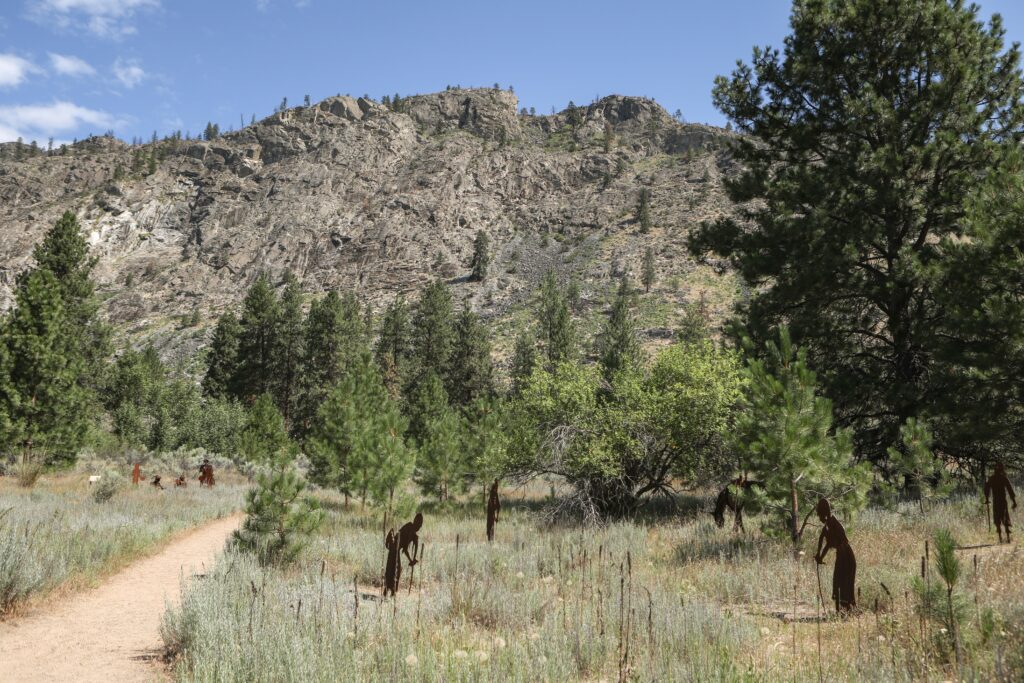
Each species of snake uses different parts of the landscape. Gartersnakes tend to stay near wetlands and riparian areas. Rubber boas are frequently found in forested habitat, while nightsnakes remain close to rocky slopes.
Rattlesnakes and gophersnakes range through the dry grasslands and shrub-steppe surrounding the cultural centre, travelling according to food, temperature and other seasonal needs.
Snakes gather information about that landscape by flicking their forked tongues through the air. The tongue collects chemical particles and carries them to the vomeronasal organ, also known as Jacobson’s organ, which helps the snake detect prey, predators, mates and familiar routes.
“Snakes rely on scent trails to navigate the landscape,” Whitehead said. “If they can’t detect any familiar scents, they’re essentially blind.”
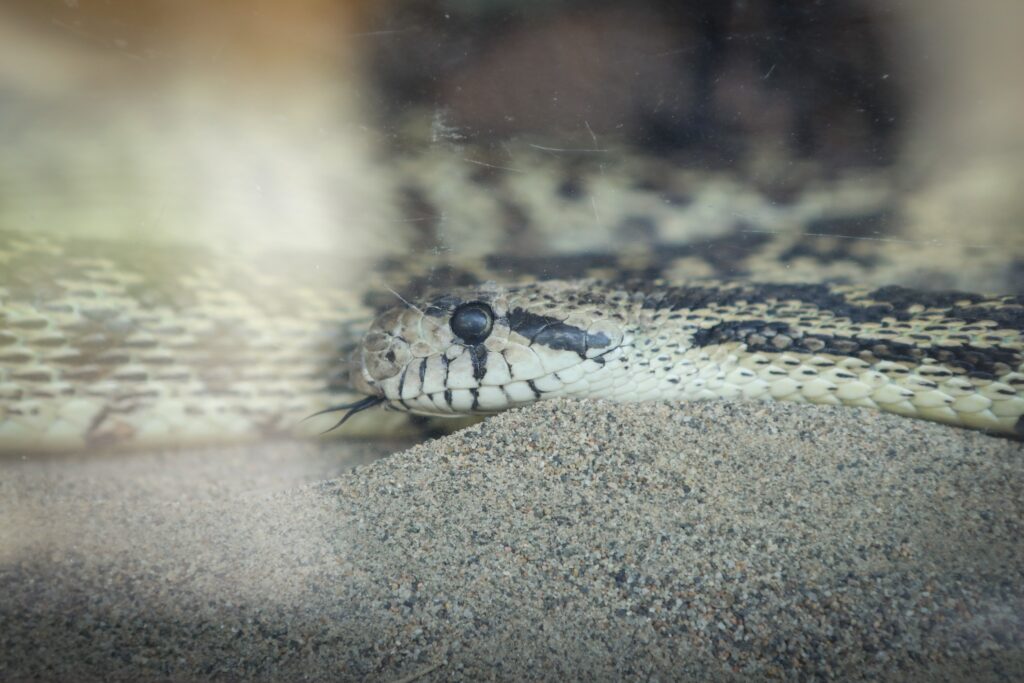
Those movements have become increasingly difficult as habitat is divided by roads, fences, agriculture and urban development.
Near the bluff where Whitehead and Bower searched for the earlier gophersnake, a 1.5-kilometre snake fence separates the conservation area from the Nk’Mip RV Park and Campground below.
The fence is intended to keep snakes away from busy roads and other places where encounters with people could become dangerous. It contains openings that allow snakes to enter and leave at designated points — but still creates a barrier for movement.
“One thing about snake fences is that they disrupt natural movement patterns,” Whitehead said.
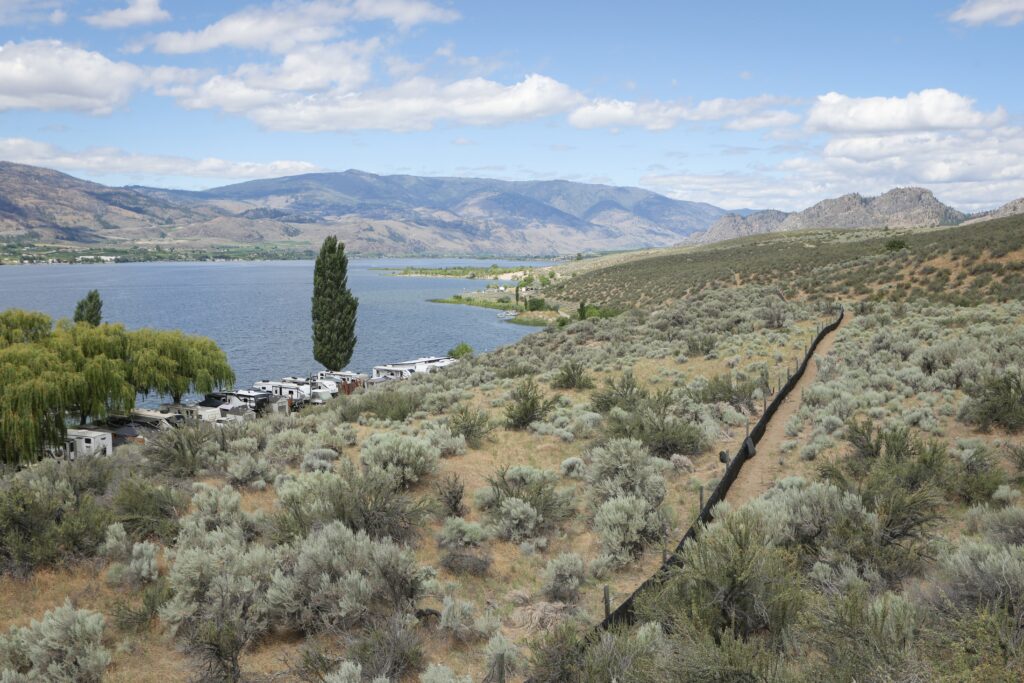
When the fence was recently repaired and reinforced, the research team installed 10 underground shelters along the snake side of the fence line. Known as refugia, the structures contain shaded chambers and tunnels where snakes can escape the heat.
The shelters are intended to offset some of the disturbance caused by the fence and its construction.
“We’ve disrupted the ground here by putting the snake fence in,” Whitehead said. “The sand, the ground, gets quite hot.”
The team is now monitoring how snakes respond to the renovated fence and whether the refugia are helping.
“When you do a big construction project like a snake fence, it does have a lot of impacts on the habitat,” Whitehead said. The goal, she added, is to mitigate those effects and make the structure “as snake-safe as possible.”
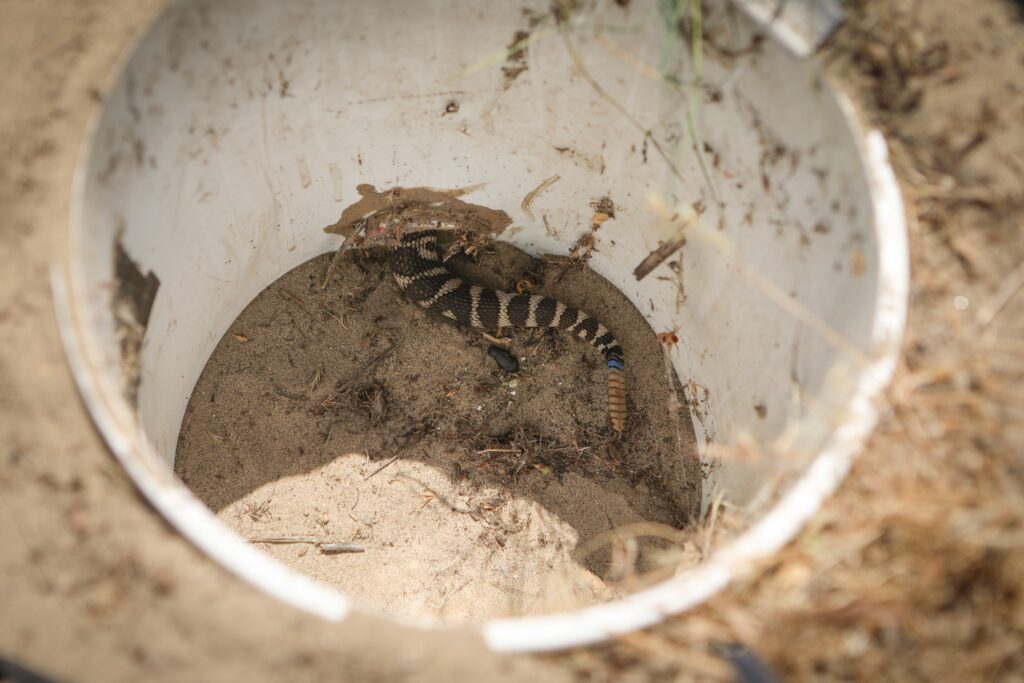
On their way back from the unsuccessful gophersnake search, Whitehead and Bower stopped to inspect several of the new nearby refugia.
Scattered along the trail, they encountered four western rattlesnakes, all hiding in or around the man-made shade.
The animals varied in size and age. Three carried blue markings on their rattles, showing researchers had already processed them that year. The fourth did not.
Whitehead recorded the unmarked snake’s measurements and fitted it with a PIT tag before releasing it.
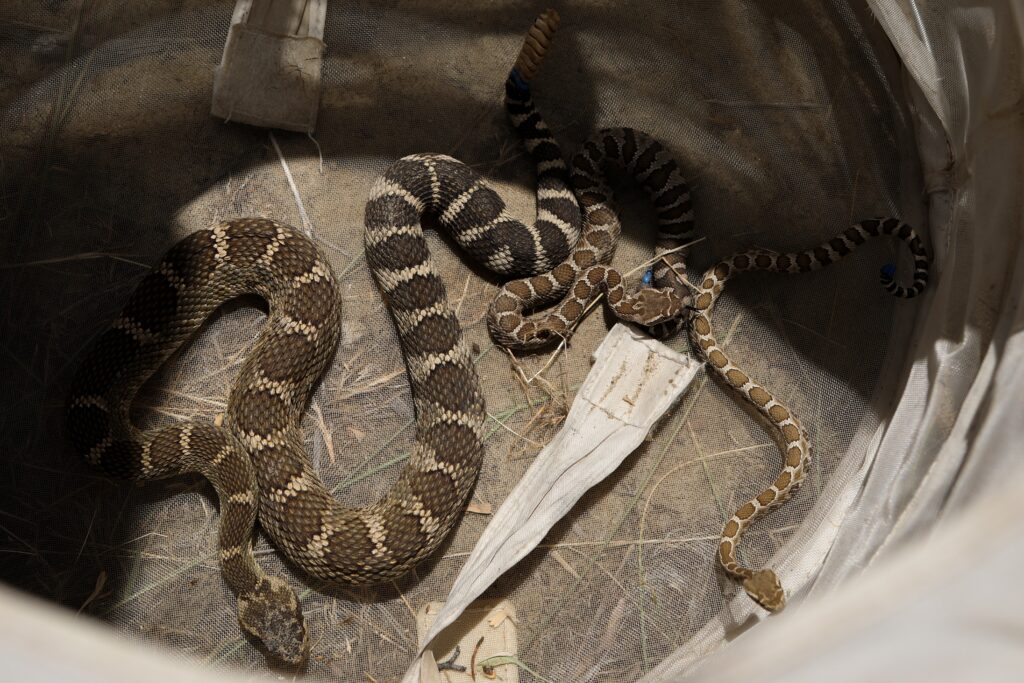
Three of the snakes that were previously tagged had their latest encounter documented and updated — the date, time, their PIT tag and the location of the occurrence.
The fourth one — a new addition to the system, a young rattlesnake — had its information recorded for the first time, marking a new snake in the system. After receiving a PIT tag and having its rattle painted blue, the researchers recorded that snake’s weight, length, rattle, and the location where it was found and released.
Before Bower and Whitehead made their way back to the cultural centre, they returned the snakes to where they found them.
Some were carefully placed in the bush, while others were returned to the refugia where they had been found, slithering into the shade offered by tunnels.
Protecting more than one species
The cultural centre’s conservation area is characterized by remnants of the antelope-brush ecosystem, described by the province as one of the four most endangered ecosystems in “Canada.” It also encompasses rocky slopes, ponderosa pine forest, wetlands and riparian habitat. Each supports different animals and plants, many of which are at risk.
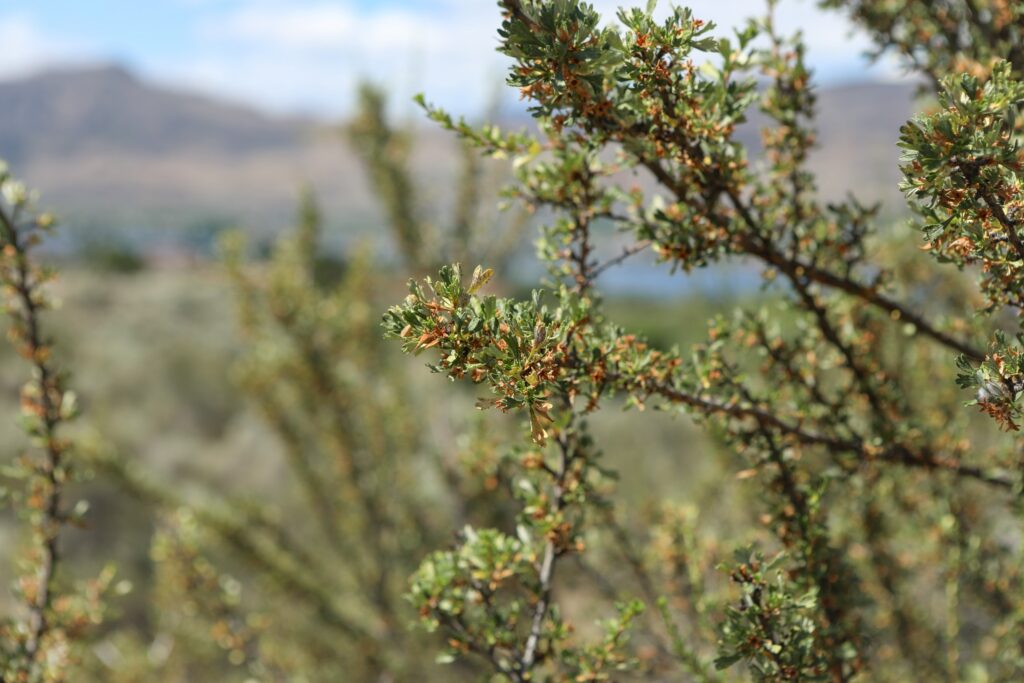
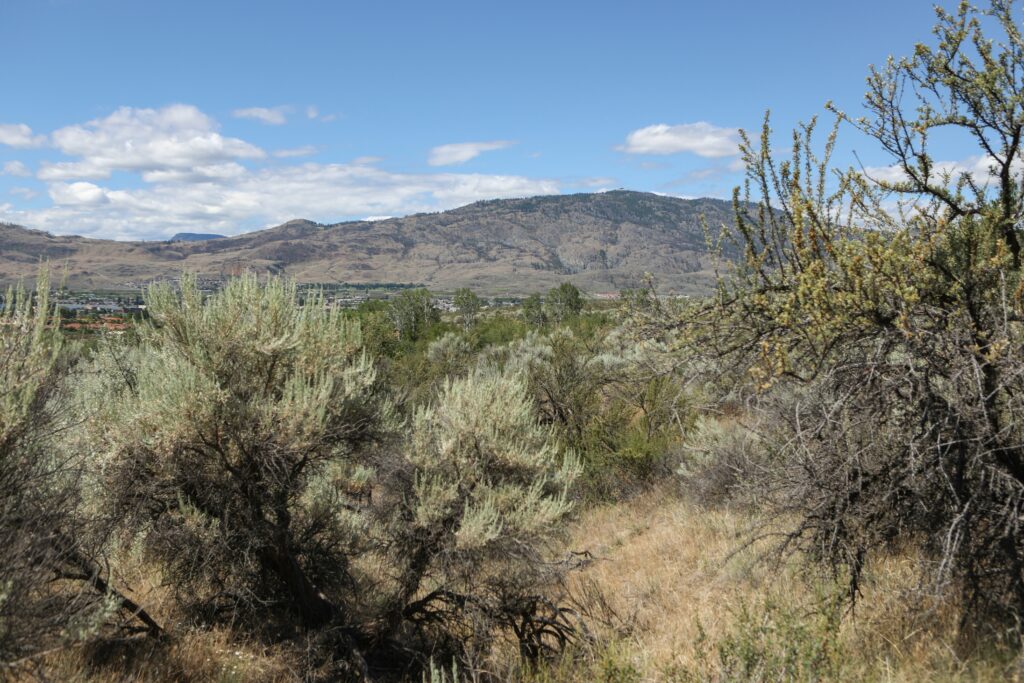
“Ultimately, the aim would be to extend beyond snakes,” Bower said. “(Antelope-brush) are such an endangered ecosystem.
“Even within here, there are so many ecosystems. Riparian ecosystems, then we have our rocky slopes. Our forested area up there. Wetlands. Our wetlands need a lot of help.”
This focus on the entire ecosystem is increasingly important as researchers study how snakes respond to wildfire, development and roads.
Whitehead first joined the program as a master’s student at Thompson Rivers University. She became the sixth graduate student to lead research through the program.
Her graduate work examined how the 2021 Nk’Mip Creek wildfire affected western rattlesnakes in the cultural centre’s conservation area.
Whitehead mapped the fire’s severity and found much of the study area had burned at low to moderate intensity. Researchers observed no clear increase or decline in the snake population after the fire.
“This ecosystem here has evolved to withstand these moderate to low severity fire cycles that are natural for this ecosystem,” she said. “Rattlesnakes have evolved to live in this ecosystem.”
Even with that apparent stability, the snakes used the landscape differently after the fire.
Their home ranges shrank, and their travel distances decreased. Whitehead said the disturbance may have created additional basking areas and increased populations of prey animals such as deer mice, reducing how far the snakes needed to travel for food.
“When we see these moderate to low severity fires, the animals that have evolved to survive in these ecosystems are actually thriving and doing well,” she said.
Their movements also became less direct. Whitehead described the snakes’ paths as “a little all over the place.”
She recorded a sixfold increase in the rate at which rattlesnakes changed dens after the fire. Snakes often return to the same winter dens year after year, using scent trails to find their way.
“The crazy smoke from the wildfire might’ve eradicated some of the scent trails, making it harder for snakes to get where they’re going,” she said.
Those findings show how the effects of a disturbance can emerge through changes in movement and behaviour, even when the overall population remains stable.
A landscape split by roads
Roads remain among the clearest threats facing snakes in the South Okanagan.
“Roadways are the number one killer of our snakes,” Bower said.
For a snake, a road can be both an attraction and a barrier. As ectotherms, snakes rely on outside sources of heat to regulate their body temperature and may be drawn to pavement warmed by the sun. Roads also cut across the routes they follow between winter dens, summer feeding grounds, breeding areas and egg-laying sites.
Once a snake reaches the pavement, its long body may leave it exposed across much of the road. Western rattlesnakes may become even more vulnerable when they respond to an approaching vehicle by freezing or coiling defensively instead of continuing across.
Nearly half of the known western rattlesnake dens in “B.C.” are located within one kilometre of a paved road, according to the federal recovery strategy for the species. About 86 per cent are within two kilometres.
Great Basin gophersnakes face many of the same risks. In one two-year telemetry study in the Okanagan Valley, three of 39 gophersnakes were killed on roads. The federal recovery strategy warns that vehicle mortality may be difficult for populations to withstand when it is added to already high natural mortality.
Roads can continue affecting a population even when a snake makes it safely across. They divide the habitat into smaller pieces, limit movement between neighbouring snake populations and make it more difficult for snakes to find mates. Over time, that isolation can reduce genetic exchange between populations and leave smaller groups less able to recover from wildfire, disease or other losses.
“It also means that they can’t connect with other populations for gene flow,” Whitehead said.
Researchers at the cultural centre are now examining why western yellow-bellied racers appear to lay their eggs in banks beside busy roads.
Female racers typically move away from their usual ranges to find suitable egg-laying sites. The team is investigating whether soft, warm soil along a road bank may provide the conditions they are seeking, even as it places both the females and their young near traffic.
When the eggs hatch in late summer, Whitehead said, many of the young snakes are killed by vehicles.
“There’s a lot of dead snakes on the roads, dead baby racers,” she said. “We’re trying to figure out what habitat they lay their eggs in and quantify that.”
The researchers do not yet know what draws racers to these particular roadside banks or how frequently the snakes return to them.
“What is it about that habitat that is so suitable?” Whitehead said. “And how can we mitigate that?”
The answer could help researchers identify dangerous stretches of road, protect egg-laying habitat away from traffic or design structures that allow snakes to move beneath roads instead of across them.
Federal recovery plans recommend identifying roadkill hot spots and using measures such as directional fencing and wildlife underpasses to reconnect fragmented habitat. The research underway at Nk’Mip could help determine where those interventions are needed and how they can be designed around the ways different snake species move.
“Essentially, just do a check-in,” Whitehead said. “What habitats are these species using? And how do we protect that habitat?”
Research held together by relationships
Like much of the centre’s educational programming, snake research depends on grants, donations, graduate research and volunteer support.
The number of biologists working within the program changes from year to year. The team currently includes a little more than a handful of dedicated researchers, Bower said.
In 2024, when the program entered its field season without confirmed funding, previous researchers and other supporters volunteered to keep the monitoring work going.
“It was really great to see a bunch of people volunteer to continue monitoring and doing different things, just because they care about the program and they care about the work,” Bower said.
“They also see value in it. It’s important.”
Funding from the federal Habitat Stewardship Program also supports monitoring of the renovated snake fence and its effects on local snake populations.
The same relationships extend into the surrounding community.
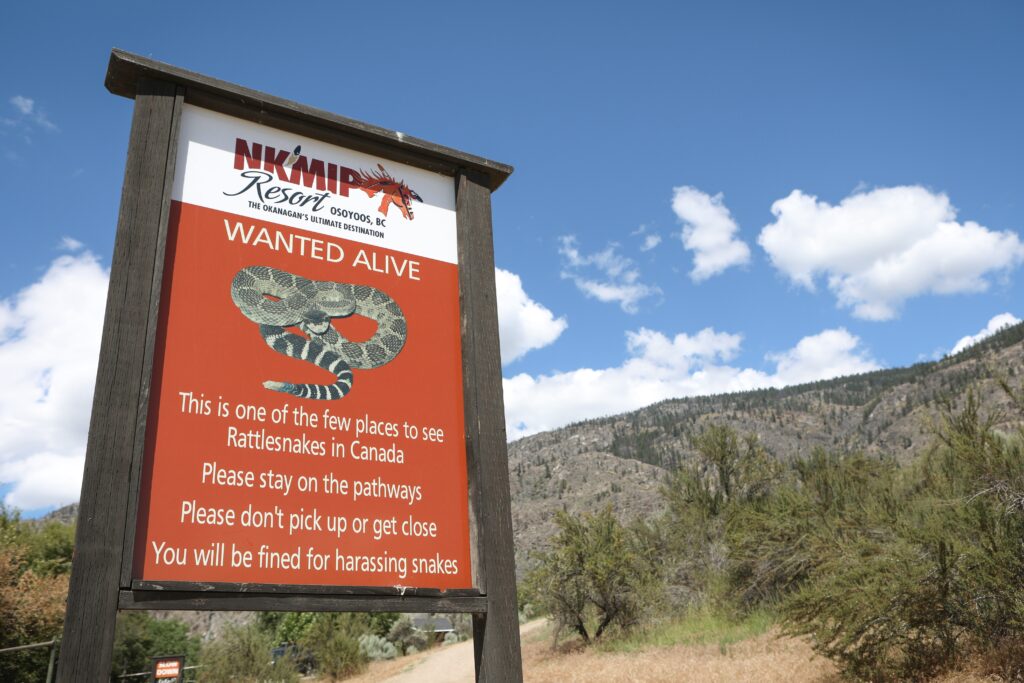
Each year, the cultural centre trains staff at the nearby Nk’Mip Resort in snake identification, safe encounters and management. It also provides workshops for vineyard employees, campground workers and others likely to encounter snakes.
Through its annual Snakes Alive programming, the centre teaches students and families about the region’s seven snake species, their habitats and what to do when they encounter one.
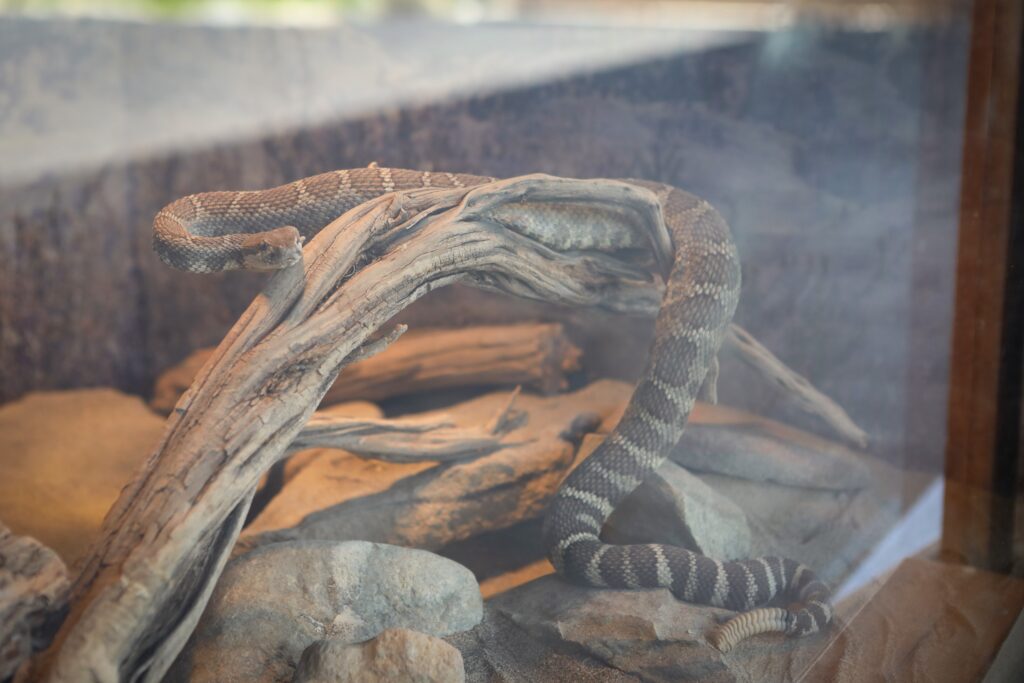
Four snakes live at the centre as part of its interpretive programming.
They include Hula, a western rattlesnake whose name is derived from its nsyilxcən name. There’s also Hoops, a gophersnake whose name draws from iʔ sx̌ʷyups, which comes from the nsyilxcən word for “the bullsnake” – a nickname given to gopher snakes thanks to their ability to “hiss and make sharp, sudden sounds like the snort of a bull,” the province said.
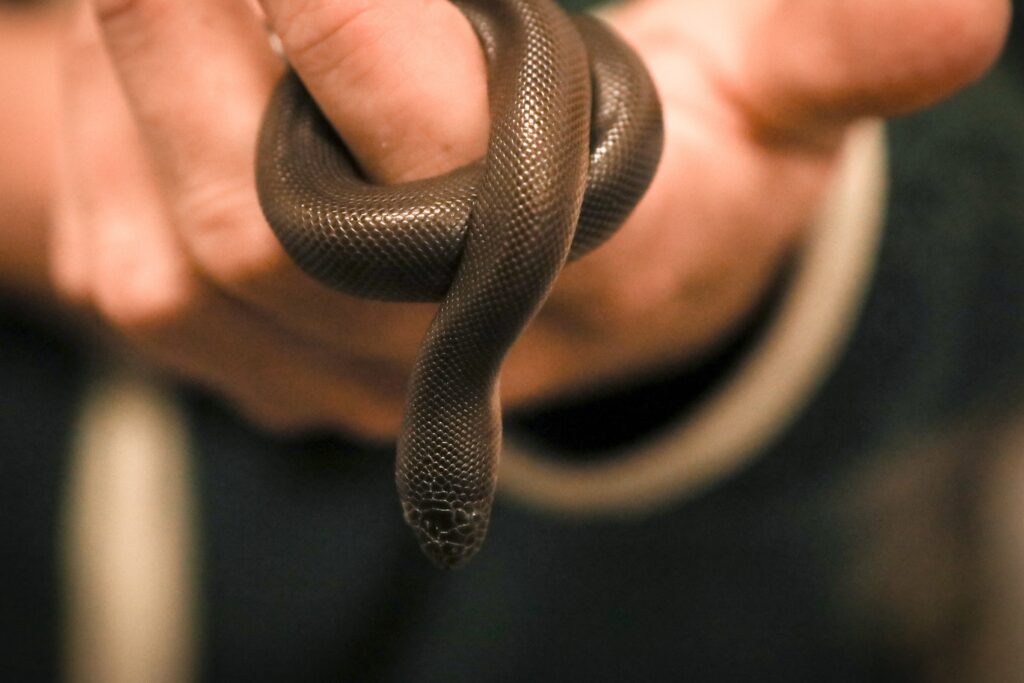
The centre also houses Leila, an extirpated Pacific gopher snake, and Peanut, a rubber boa snake.
While snakes are often the subject of fear, Bower hopes the centre’s work can help people build relationships with the creatures and understand how to live alongside them.
By learning about the animals’ behaviours, habitats and roles within the land, Bower said, community members can begin to replace fear with respect, appreciation and a sense of shared responsibility.
That relationship can change the outcome of an encounter, Bower said.
“They’re actually really nice species,” she said. “If you just know what you’re doing, even just simple snake safety when you’re out hiking can make a world of difference.”
Whitehead watches the local Facebook groups to see how residents speak about snakes. She once regularly joined the discussions to correct misinformation or explain what people had encountered, but she rarely needs to anymore.
“Most of the time, I don’t chime in anymore, because people are educating each other,” she said.
Both Bower and Whitehead said they once feared snakes themselves.
“Actually getting educated about them, and knowing about them, helps with the fear of snakes,” Bower said.
“I was scared of snakes when I first started,” Whitehead added. “So many people I’ve seen come through the centre started off scared of snakes. Now, no more.”
Bower hopes the centre’s research program can eventually include more wildlife, including western painted turtles. “B.C.’s” only native freshwater turtle, the western painted turtle, has an Intermountain–Rocky Mountain population that is federally listed as a species of special concern.
“The goal is to have a fully functioning Nk’Mip wildlife research program that doesn’t only focus on snakes,” she said. “We would love to be able to branch out and help as many species as we can.
“You can try and protect species. But it’s all about protecting an ecosystem.”
Author
We live in a media ecosystem that thrives on misinformation. Big Tech and AI companies are consuming the work of real human beings and Canadian news has been banned on Facebook and Instagram.

And yet, I have hope for journalism because of the work we’re doing at IndigiNews.
At IndigiNews, we embody tâpwêwin — the Cree value of integrity and responsibility in truth-telling. We are committed to our independent, Indigenous-led newsroom rooted in community, accountability, and relationality. We believe storytelling is a sacred fire that connects our pasts, presents, and futures through the storytellers in our Storytelling Lodge. IndigiNews creates space for Indigenous journalists, storytellers, Knowledge Keepers, and communities to gather, learn, and share stories that matter.
As a registered charity, we are building a fire that allows our work not just to ignite but to thrive. Rather than relying on advertising or corporate acquisition, IndigiNews is sustained by people like you who believe Indigenous stories are important for the future of our communities.
Your support is making a real difference.
Our community of supporters, our Firekeepers, make it possible to grow our newsroom, publish award-winning journalism, train emerging Indigenous journalists through initiatives like the ReFocus Photojournalism Fellowship, and publish trustworthy stories that serve our communities across the country. Every story we publish helps fill in gaps left by mainstream media and ensures Indigenous perspectives are represented with care, accuracy and respect.
But there is still more work to do.
As the media landscape becomes more and more uncertain, community support is as necessary and essential as it’s ever been. Every new Firekeeper helps protect the independence of our newsroom and strengthens journalism that is accountable to our many and varied communities over corporations.
That’s why we’re inviting you to become a Firekeeper.
Firekeepers tend to and protect the sacred fire. Your monthly contributions directly support IndigiNews’s Storytelling Lodge, helps sustain our independent, Indigenous-led newsroom, and ensures future generations of Indigenous storytellers have the resources they need to do the work.
As a registered Canadian charity, all eligible donations receive a charitable tax receipt.
If you believe Indigenous stories matter, if you value independent journalism, and if you want to help build a strong future for Indigenous media, we invite you to join our circle of Firekeepers today.
Together, we can keep the fire burning.
— Eden Fineday, Publisher, IndigiNews
Support us nowLatest Stories
-
Beloved on the powwow circuit, young boy’s connection to the drum inspires
Now four, Waseskwan Redcrow was dancing ‘before he could even fully walk’ — his family says participating in powwows has brought them joy and belonging
-

Indigenous leaders give the UN a roadmap for protecting their peoples
Amidst prayers and vows of solidarity, UN Expert Mechanism on the Rights of Indigenous Peoples ends annual meetings with demands for ‘action we’re not seeing globally’