What does sovereignty actually mean in Canada?
IndigiNews heard your questions about what sovereignty means for Indigenous Peoples, and we have answers.

Despite being raided twice last month by the Province of B.C.’s cannabis enforcement agency for operating without a provincial license, Vernon-based Indigenous cannabis dispensary Tupa’s Joint has been seeing a rise in customers.
Cory Brewer, shop owner and Okanagan Nation member, is taking a stance and exercising his rights as a sovereign member of his traditional territory. He and his employees say they will continue to stand behind Tupa’s Joint and the movement it’s creating in order to achieve respect for Indigenous sovereignty.
In our stories reporting on the raids and rise in business, the concept of sovereignty raised a few questions among readers.
Comments included “I agree with the law sorry your [sic] Canadian you have to follow Canadian rules,” and “I do not see how the fact that this man is Indigenous he should have a different set of rules?”
Brewer explained that he’s asserting his sovereign right to operate a business on his territory. But what exactly is sovereignty and why does it matter?
I reached out to Dan Wilson, an Okanagan Indian Band (OKIB) councillor who holds a law degree from the University of British Columbia, to find out.

Wilson not only studied the law, but was also raised by the Elders in his community who always made academics a priority.
“My grandma, she really paved the way in stressing the importance of education,” he says.
The Cambridge Dictionary definition of sovereignty, in terms of governance, is when a political body of people has complete power and rights over itself without interference from another entity or power.
With that in mind, Wilson and I dive into this complex and sometimes controversial topic. I’ve edited our conversation and email correspondence for length and clarity.
What is sovereignty?
Both the Indigenous Peoples and Canada are sovereign nations. This means they are two separate governing bodies living on the same landmass.
I asked Wilson, where is the best place to start when trying to define the concept as a whole?
“I would say to start by reading the Royal Proclamation of 1763. … It took me years to read it and understand – and I have a legal background – in order to be able to break it down,” he says.
“The Royal Proclamation of 1763 is a legal document, whereby the [British] Crown specifically directed its subjects on how to deal with the Indigenous allies of the Crown.”
The Royal Proclamation came to be after the signing of the Treaty of Paris in 1763, through which France surrendered much of its territories in North America. It ended the Seven Years’ War between France, Britain and Spain.
As Britain then became the dominant European power in the continent, King George III issued the Royal Proclamation. It established “a new administrative structure” and “new rules and protocols for future relations with First Nations people,” according to Indigenous and Northern Affairs Canada.
The intent was to halt expansion to the North and to prevent settlers from forming agreements to buy land from the Indigenous Peoples directly. It ruled that these agreements could only be done through the Crown.
“In the Royal Proclamation of 1763, the Crown defined three important things,” says Wilson, who provided a detailed explanation in an email as described below.
- 1. The “Indian” Nations which are associated (allied) with the Crown are not to be “molested” by any subject of the Crown;
- 2. An “Indian” Nation can not be dispossessed of their land and resources without having first given their “public” consent;
- 3. The “Indian” Nations can only treaty with the Crown, and no other colonizing nation.
As it stands today, much of B.C. does not have treaty agreements in place. This means that many nations have “not given our public consent to be dispossessed of our land and resources,” says Wilson.
Here is one version of the many treaty maps available. It’s worth noting, says Wilson, not all treaties were made lawfully or in good faith.
“We are not under any treaty with the Crown, yet we still consider ourselves as an ally of the Crown,” says Wilson.
Does the Royal Proclamation apply today?
The Royal Proclamation is referenced in Section 25 of the Constitution Act, 1982.
It states: “The guarantee in this Charter of certain rights and freedoms shall not be construed as to abrogate or derogate from any aboriginal, treaty or other rights or freedoms that pertain to the Aboriginal Peoples of Canada.”
This means that Canada is not to do away with the agreements established, or evade responsibility to those agreements.
Section 35, as well, recognizes and affirms existing Aboriginal and treaty rights.
Both Section 25 and Section 35 have been supporting elements in the Indigenous Peoples winning landmark supreme court cases, such as the Delgamuukw case and the Tsilhqot’in case.
So are Indigenous Peoples Canadian?
“I would say, we are allies of the Crown, but no. … We never surrendered, there was no formal document, no treaty, where the Crown has a bill of sale,” says Wilson.
This means that unless Indigenous nations have signed treaties through legal means with the Crown then they are not, in fact, Canadian.
Wilson says it’s imperative that people understand what sovereignty means and how it affects all people of Canada.
“We [Indigenous Peoples] are the only ones that have our titles and rights entrenched in the Canadian Constitution. So we can’t lose sight of that, and we can’t lose sight of the Royal Proclamation,” shares Wilson.
Feel free to connect with us at info@indiginews.com if you have any questions or further comments.
Author
We live in a media ecosystem that thrives on misinformation. Big Tech and AI companies are consuming the work of real human beings and Canadian news has been banned on Facebook and Instagram.

And yet, I have hope for journalism because of the work we’re doing at IndigiNews.
At IndigiNews, we embody tâpwêwin — the Cree value of integrity and responsibility in truth-telling. We are committed to our independent, Indigenous-led newsroom rooted in community, accountability, and relationality. We believe storytelling is a sacred fire that connects our pasts, presents, and futures through the storytellers in our Storytelling Lodge. IndigiNews creates space for Indigenous journalists, storytellers, Knowledge Keepers, and communities to gather, learn, and share stories that matter.
As a registered charity, we are building a fire that allows our work not just to ignite but to thrive. Rather than relying on advertising or corporate acquisition, IndigiNews is sustained by people like you who believe Indigenous stories are important for the future of our communities.
Your support is making a real difference.
Our community of supporters, our Firekeepers, make it possible to grow our newsroom, publish award-winning journalism, train emerging Indigenous journalists through initiatives like the ReFocus Photojournalism Fellowship, and publish trustworthy stories that serve our communities across the country. Every story we publish helps fill in gaps left by mainstream media and ensures Indigenous perspectives are represented with care, accuracy and respect.
But there is still more work to do.
As the media landscape becomes more and more uncertain, community support is as necessary and essential as it’s ever been. Every new Firekeeper helps protect the independence of our newsroom and strengthens journalism that is accountable to our many and varied communities over corporations.
That’s why we’re inviting you to become a Firekeeper.
Firekeepers tend to and protect the sacred fire. Your monthly contributions directly support IndigiNews’s Storytelling Lodge, helps sustain our independent, Indigenous-led newsroom, and ensures future generations of Indigenous storytellers have the resources they need to do the work.
As a registered Canadian charity, all eligible donations receive a charitable tax receipt.
If you believe Indigenous stories matter, if you value independent journalism, and if you want to help build a strong future for Indigenous media, we invite you to join our circle of Firekeepers today.
Together, we can keep the fire burning.
— Eden Fineday, Publisher, IndigiNews
Support us nowLatest Stories
-
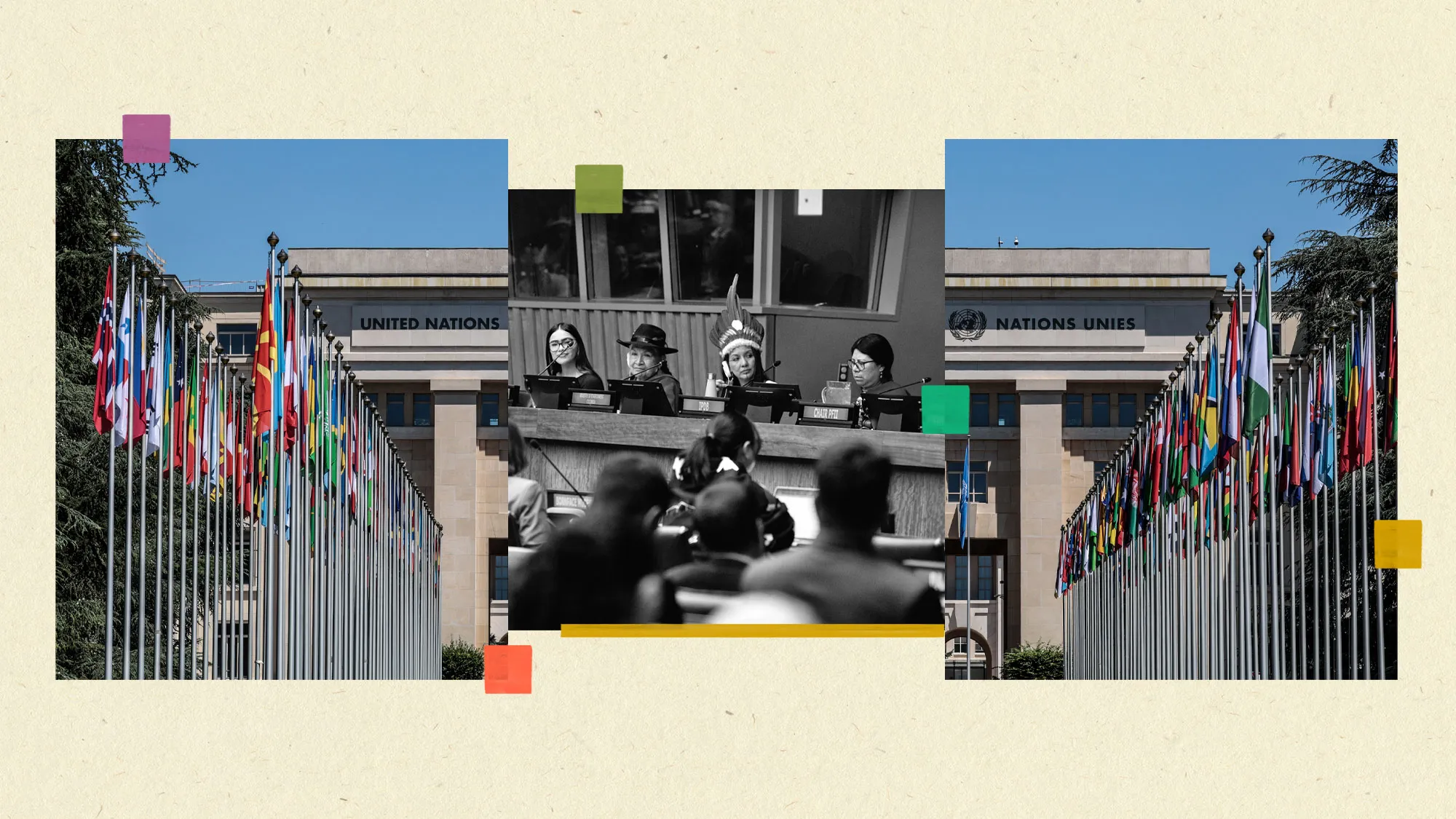
Indigenous leaders confront overlapping crises at UN, as climate and conflict collide
IndigiNews is in Geneva for the UN’s Expert Mechanism on the Rights of Indigenous Peoples, which will focus on violence, disaster relief, artificial intelligence, and more.
-
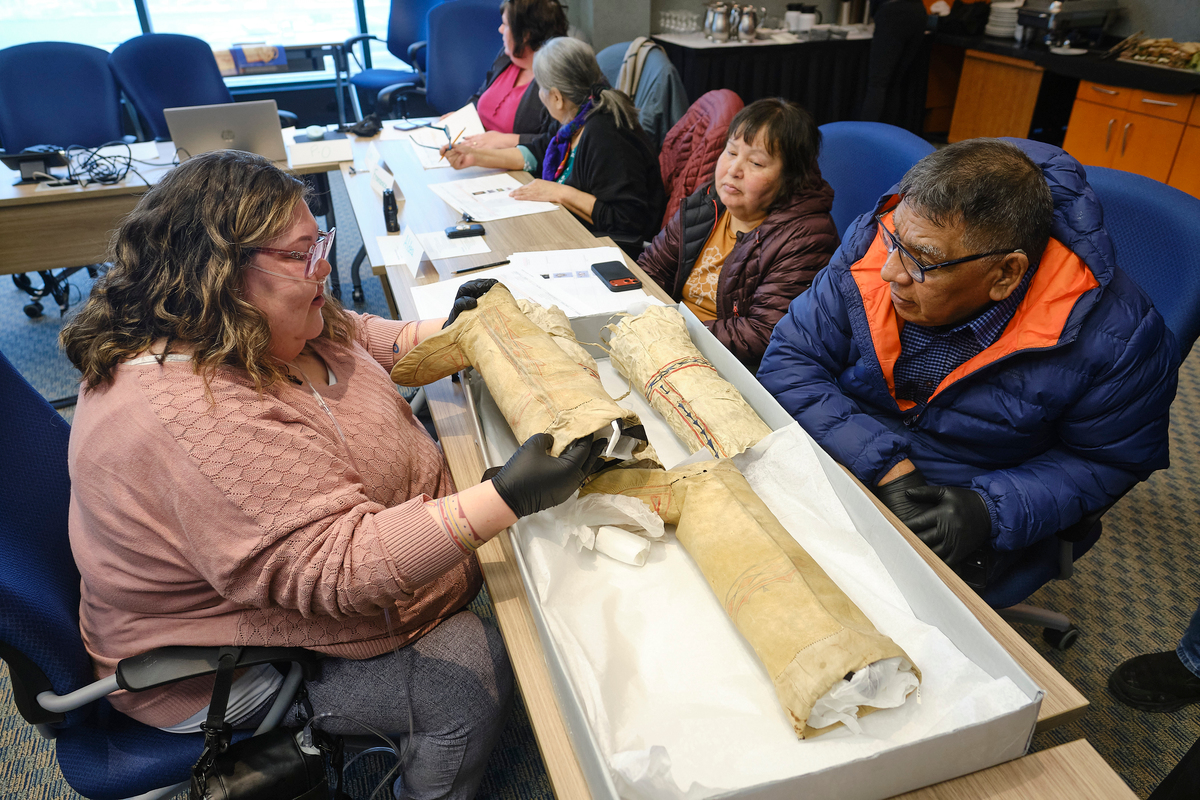
‘Newfoundland’ claims Europeans arrived before the Innu. ‘People don’t disappear,’ counters archeologist
Smithsonian archeologist Stephen Loring’s research is being disputed by the province’s own Archeology Office. He fears the government’s censorship of Innu history is being used ‘to promote a political agenda like land claims’