In ‘loving homage’ to Indigenous resistance, Carrier Wit’at artist creates textile pieces with a punk edge
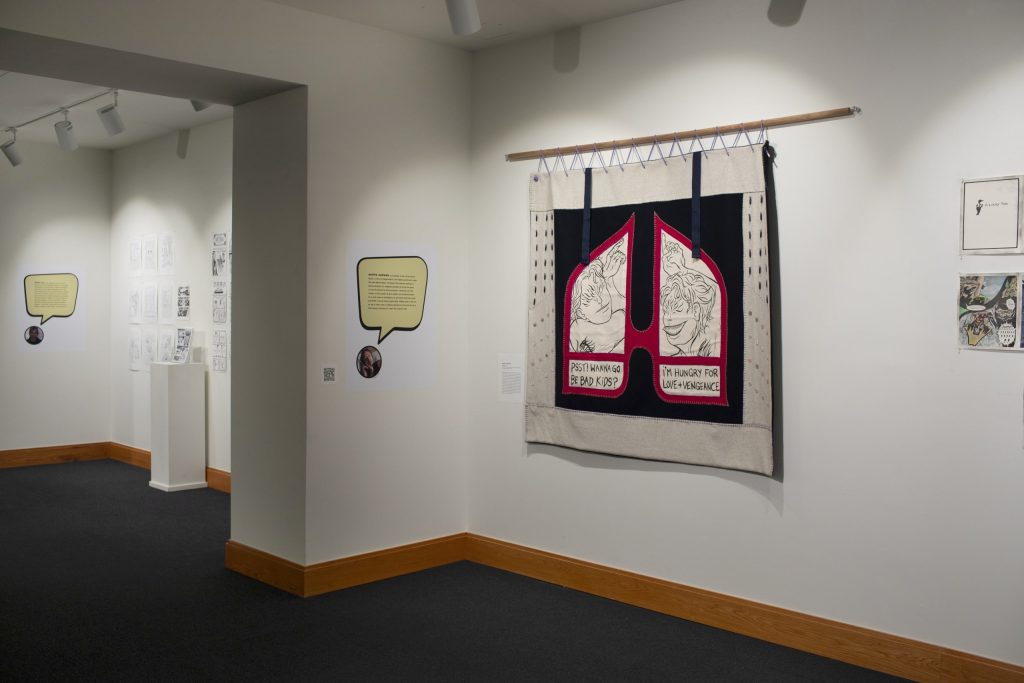
Whess Harman’s blanket titled ‘Bad Kids’ is part of a new exhibition at the Bill Reid Gallery called ‘XIÁM’

This story originally appeared in Megaphone and appears here with permission and light edits.
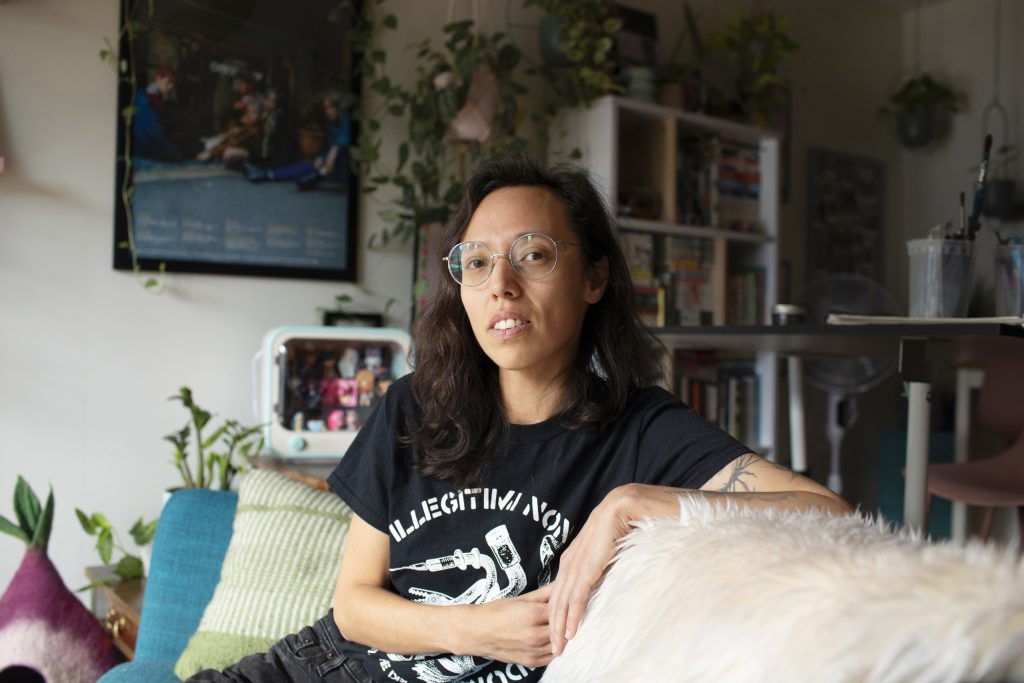
Whess Harman was never a bad kid. The worst thing he could think of was sneaking out to go to the movies.
“Like I snuck out to go see the Lord of the Rings,” he confesses. “So my version of ‘bad kid’ was so nerdy.”
Harman thinks young people are given a bad rep. He remembers being bullied at school, before one day it stopped and he didn’t know why. Ten years later, he found out his cousin, who is barely older than Harman, beat up all the bullies for him. His cousin was the “bad kid,” says Harman. “But I always felt like it was well intended.”
“Bad Kids” is the title of Harman’s new art piece, a blanket, currently on view at the Bill Reid Gallery on xʷməθkʷəy̓əm, Sḵwx̱wú7mesh, and səlilwətaɬ territories. His work is part of XIÁM, a larger exhibition that combines traditional storytelling and comics. XIÁM in the SENĆOŦEN language means “to tell stories, specifically fictional or traditional stories.”
The first-floor exhibition is filled with comic art from five Indigenous artists, Harman (Carrier Wit’at), Jordanna George (T’Sou-ke), Michael Nicoll Yahgulanaas (Haida), Gord Hill (Kwakwaka’wakw), and Cole Pauls (Tahltan). The exhibition is curated by Jordanna George.
While viewers are met with an array of hand drawn and digital comic art interpretations, Harman’s textile installation (melton wool, embroidery thread, canvas, acrylic paint, plastic buttons, bone beads, glass beads, grommets) with his comic art hand-painted inside wing-shaped panels, is the most radical.
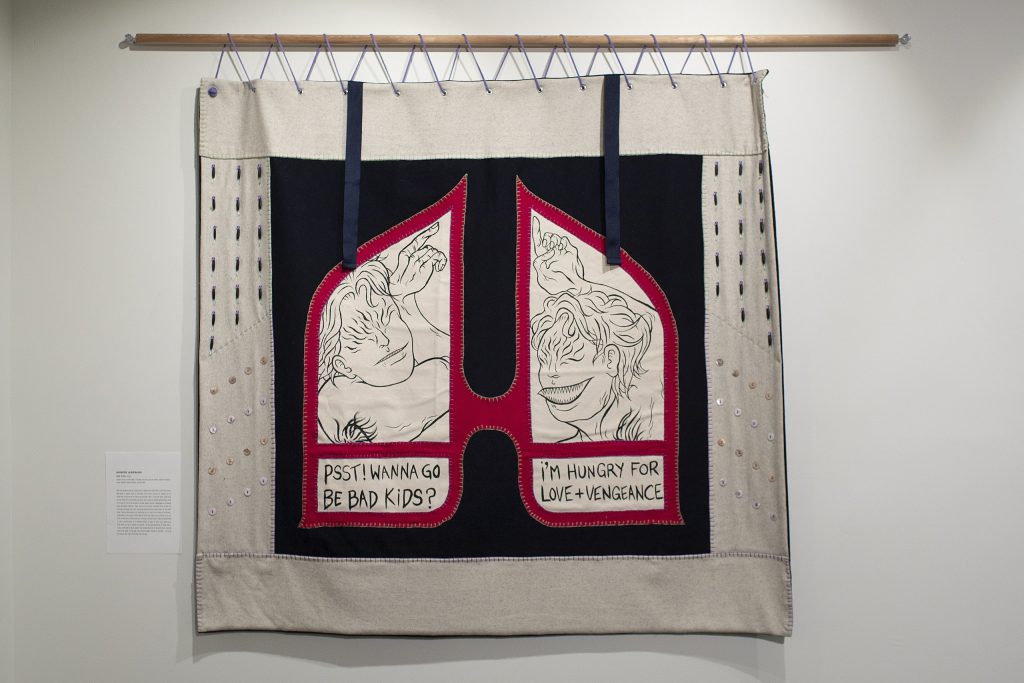
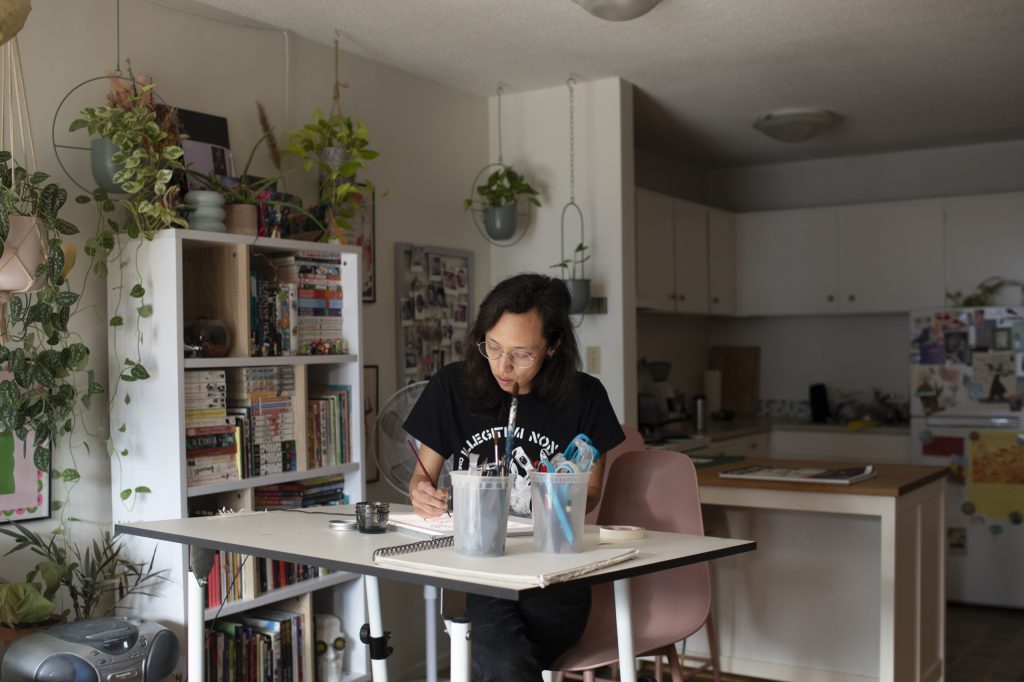
Harman, who is primarily a text-based artist, says he wanted to contribute something that felt tangible. “I couldn’t help putting my curator hat on and thinking about how I could break up the wall.”
Harman is the curator at grunt gallery on East 2nd Avenue. He says it can be hard to switch off the curatorial part of his brain when working as an artist for an exhibition space.
The blanket, with its bold wings and dancing characters, tells you a lot about Harman. He’s ambitious and loves movement. He also loves going to punk shows. “So I always want to capture that feeling as best I can,” he said. “That feeling of being pummeled.”
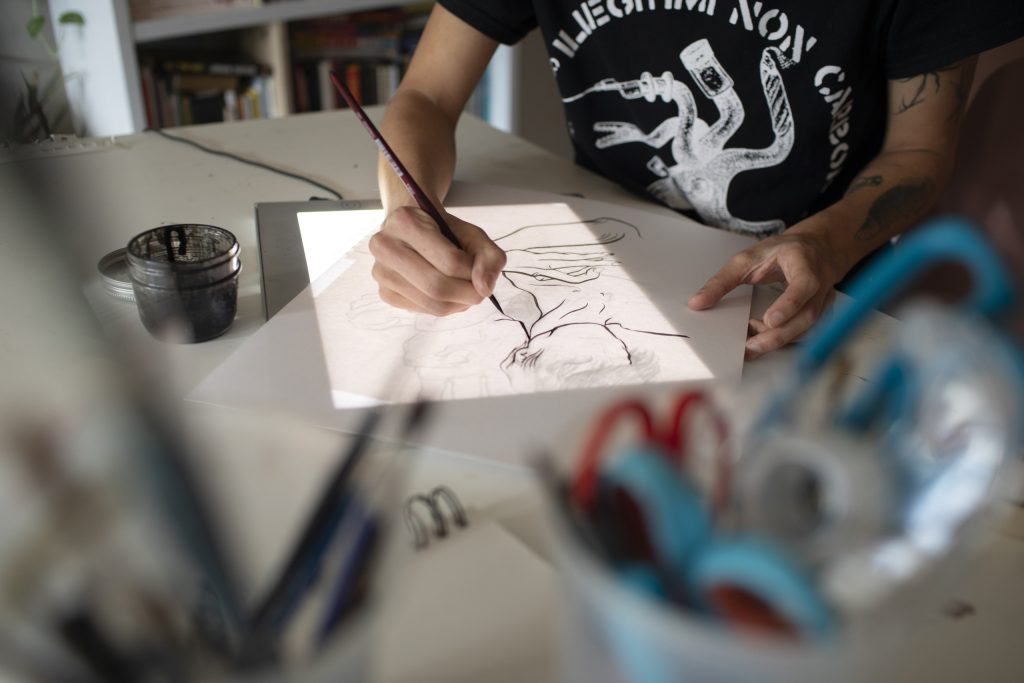
Since Harman’s first blanket project in 2020, he’s become “obsessed” with blankets, he says. Each piece stems from, and has become part of the Potlatch Punk series Harman is known for — a collection of modified thrifted jackets that offer a “loving homage” to acts of resistance against the Potlatch Ban.
While comics have only recently been accepted as a more sophisticated form of art, they have a history of acting as a tool for people on the fringes of society to share news, education, lived experiences, or a laugh.
This is what Harman is sharing with his blanket and other pieces. He says they’re not meant to be regalia, but to communicate a message.
It’s important to Harman that they’re worn. “I want that sense of movement,” he says. “But it’s hard to do that when you don’t have dancers and songs and things to do with that.”
Harman would like to one day have enough blankets and jackets that he can have a ceremony with them and have them danced in. “That’s my ultimate goal,” he says.
Harman, whose home community is Fort Babine, is the only person in his family that lives in the city. “Part of making these blankets is that the blankets feel more like home to me,” he says.
“And the intention is always for them to eventually go home.”
XIÁM is on view at the Bill Reid Gallery until May 19.
Author
We live in a media ecosystem that thrives on misinformation. Big Tech and AI companies are consuming the work of real human beings and Canadian news has been banned on Facebook and Instagram.
And yet, I have hope for journalism because of the work we’re doing at IndigiNews.
At IndigiNews, we embody tâpwêwin — the Cree value of integrity and responsibility in truth-telling. We are committed to our independent, Indigenous-led newsroom rooted in community, accountability, and relationality. We believe storytelling is a sacred fire that connects our pasts, presents, and futures through the storytellers in our Storytelling Lodge. IndigiNews creates space for Indigenous journalists, storytellers, Knowledge Keepers, and communities to gather, learn, and share stories that matter.
As a registered charity, we are building a fire that allows our work not just to ignite but to thrive. Rather than relying on advertising or corporate acquisition, IndigiNews is sustained by people like you who believe Indigenous stories are important for the future of our communities.
Your support is making a real difference.
Our community of supporters, our Firekeepers, make it possible to grow our newsroom, publish award-winning journalism, train emerging Indigenous journalists through initiatives like the ReFocus Photojournalism Fellowship, and publish trustworthy stories that serve our communities across the country. Every story we publish helps fill in gaps left by mainstream media and ensures Indigenous perspectives are represented with care, accuracy and respect.
But there is still more work to do.
As the media landscape becomes more and more uncertain, community support is as necessary and essential as it’s ever been. Every new Firekeeper helps protect the independence of our newsroom and strengthens journalism that is accountable to our many and varied communities over corporations.
That’s why we’re inviting you to become a Firekeeper.
Firekeepers tend to and protect the sacred fire. Your monthly contributions directly support IndigiNews’s Storytelling Lodge, helps sustain our independent, Indigenous-led newsroom, and ensures future generations of Indigenous storytellers have the resources they need to do the work.
As a registered Canadian charity, all eligible donations receive a charitable tax receipt.
If you believe Indigenous stories matter, if you value independent journalism, and if you want to help build a strong future for Indigenous media, we invite you to join our circle of Firekeepers today.
Together, we can keep the fire burning.
— Eden Fineday, Publisher, IndigiNews
Support us nowLatest Stories
-
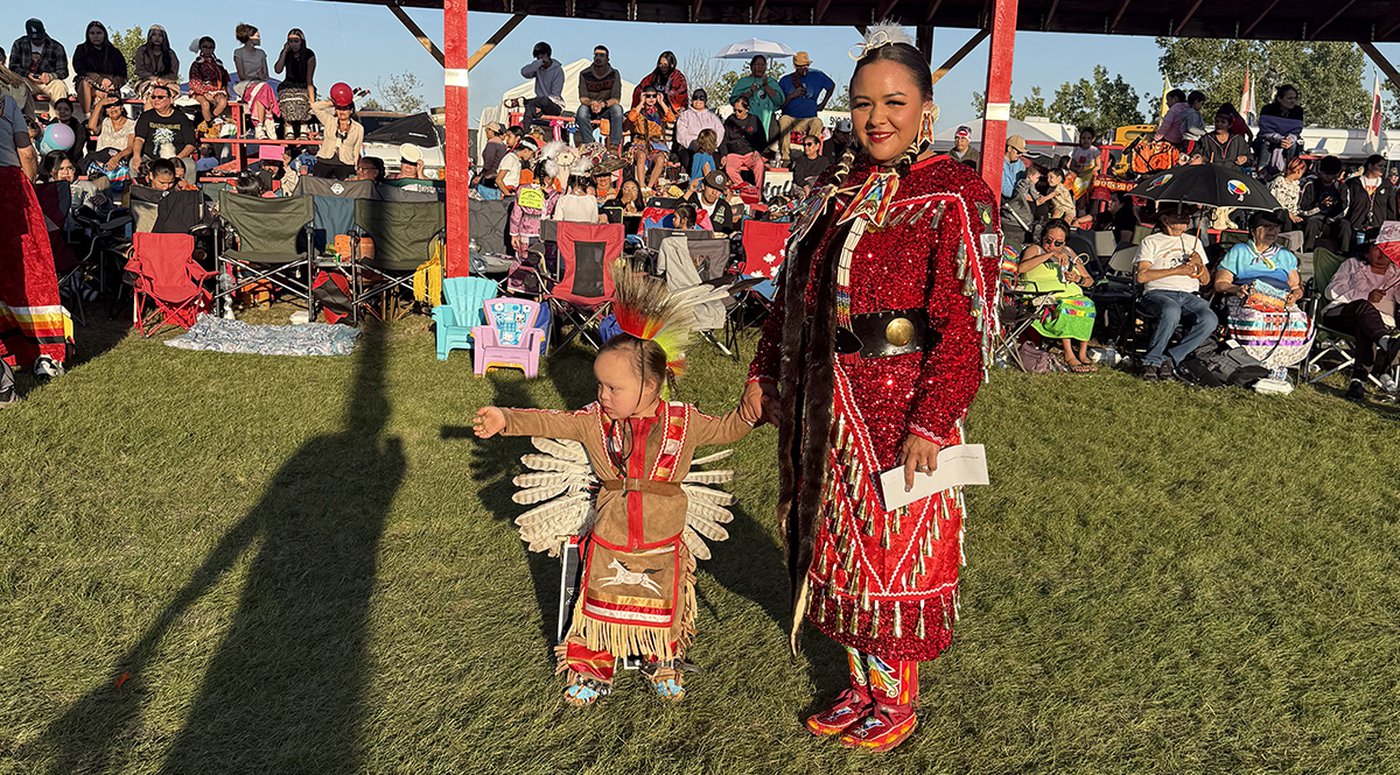
Beloved on the powwow circuit, young boy’s connection to the drum inspires
Now four, Waseskwan Redcrow was dancing ‘before he could even fully walk’ — his family says participating in powwows has brought them joy and belonging
-
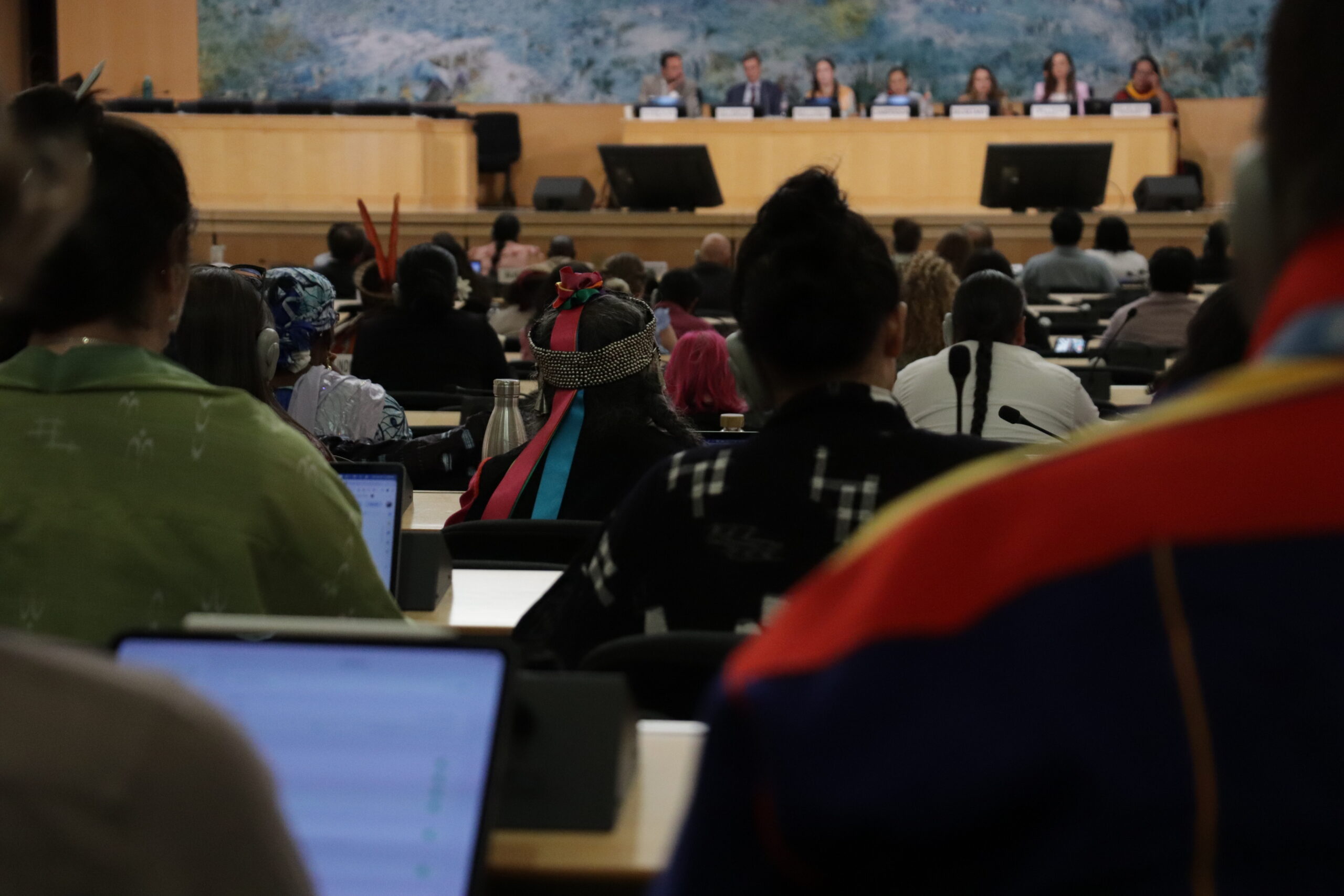
Indigenous leaders give the UN a roadmap for protecting their peoples
Amidst prayers and vows of solidarity, UN Expert Mechanism on the Rights of Indigenous Peoples ends annual meetings with demands for ‘action we’re not seeing globally’