Rueben George walks in the footsteps of his grandfather with new memoir ‘It Stops Here’
The səlilwətaɬ leader and grandson of Chief Dan George reflects on the unfolding impacts of colonization and what it means to embrace spirit
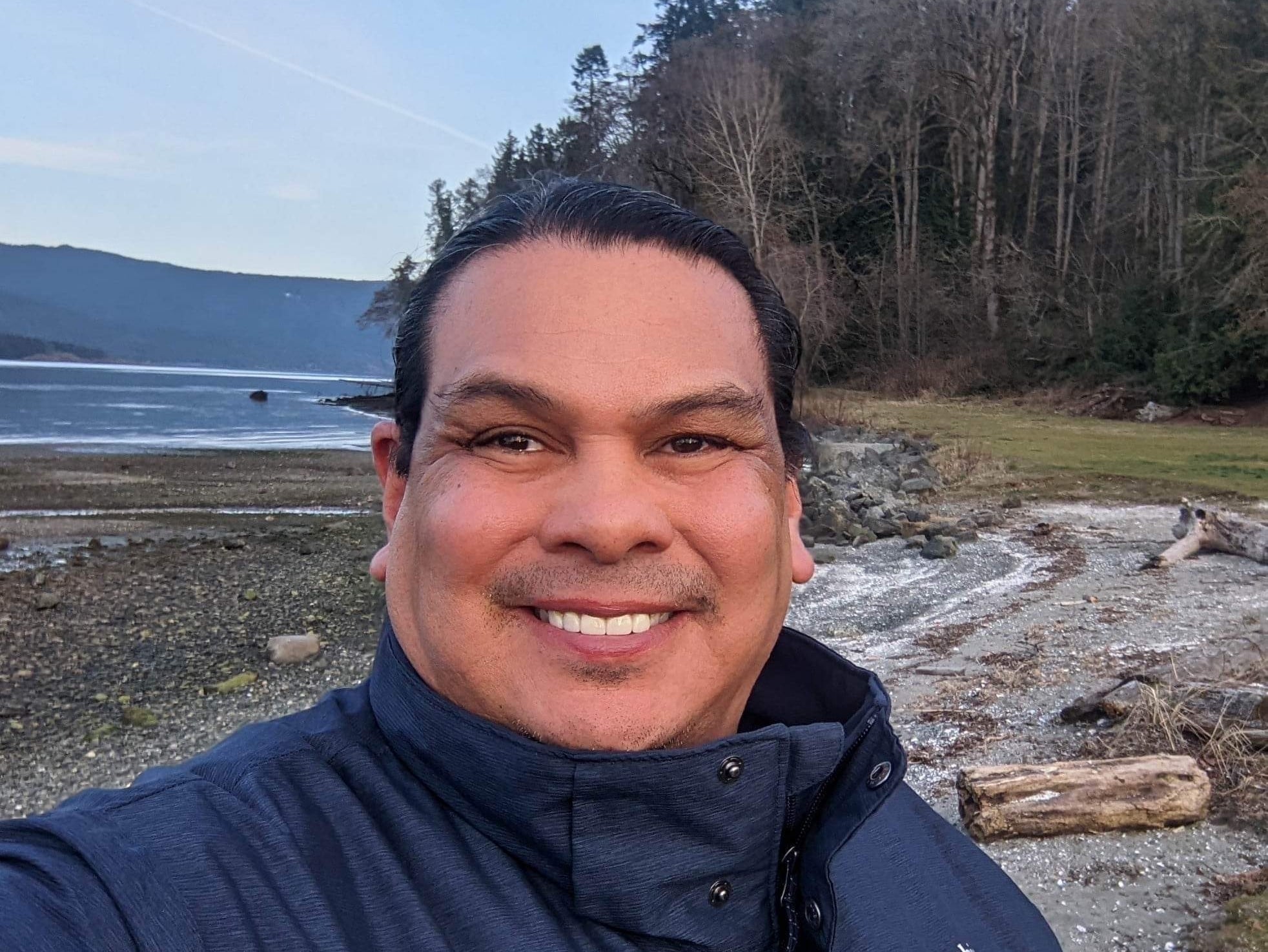
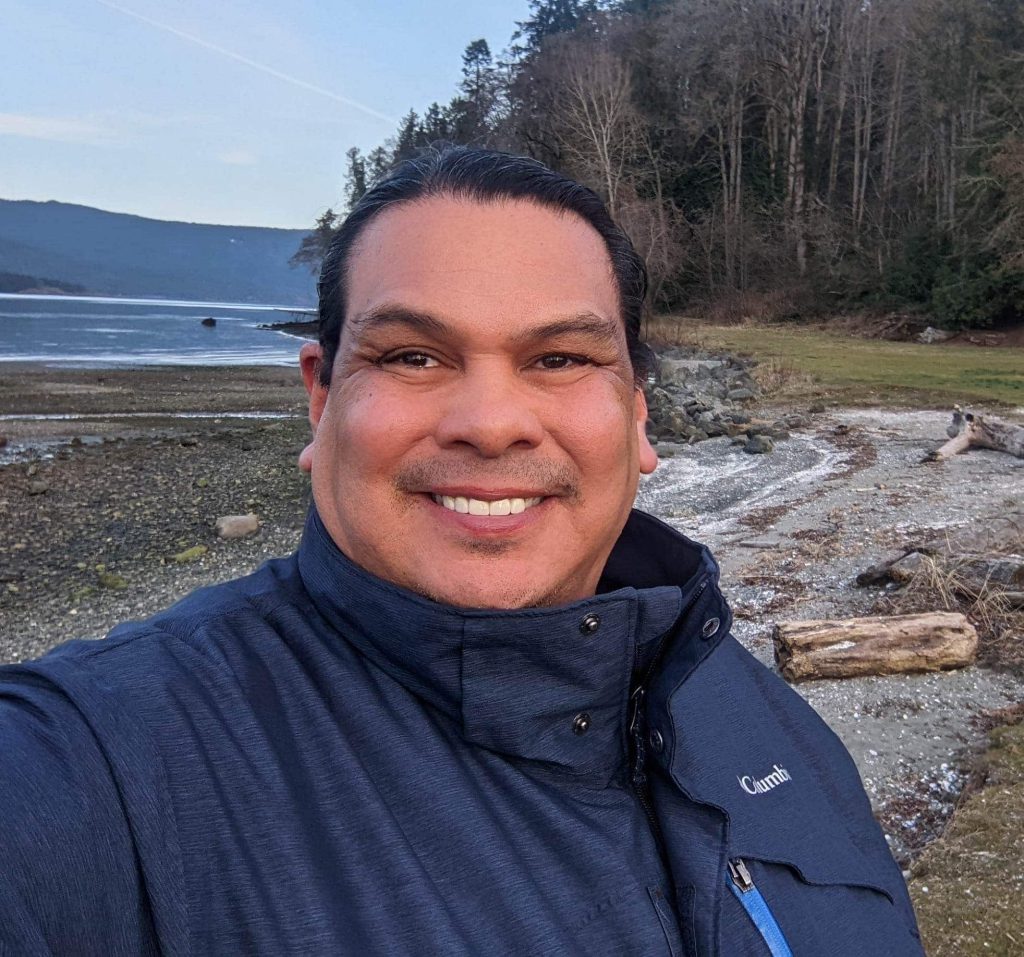
Rueben George spent his younger years living in his own personal prison built of the difficult things he’d seen and experienced as a survivor of colonial violence — but he managed to break free.
The prominent səlilwətaɬ (Tsleil-Waututh) member and the grandson of Academy Award-winning actor and Indigenous icon Chief Dan George is now a leading voice in the grassroots fight against the Trans Mountain pipeline expansion (TMX).
Following in the footsteps of his grandfather by writing a personal memoir, George details his story of healing in his first book, It Stops Here: Standing up for Our Lands, Our Waters and Our People.
“I found freedom in ceremony,” he says in an interview from his home in “North Vancouver,” the central community in səlilwətaɬ’s ancestral territory that takes up a large swath of what’s been briefly known as Metro Vancouver.
“With that freedom came an awakening, and in that awakening, I felt the spirit. That’s what drives us. When we feel spirit, and we realize we have a spirit inside ourselves and our ancestors and that everything else has a spirit, and we learn to love those things, how can we not do something about it?”
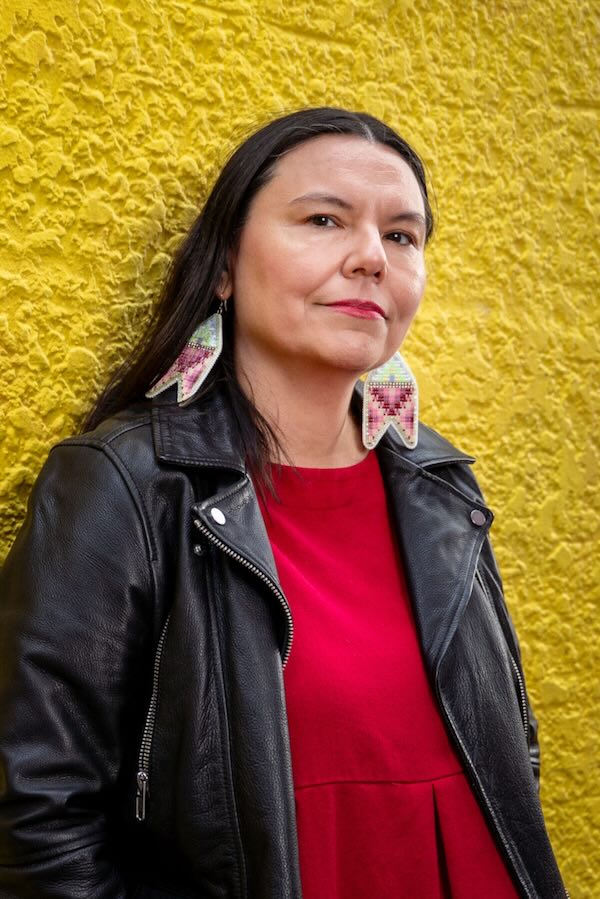
George, 53, explores his journey in It Stops Here, co-authored by his friend, Michael Simpson, an award-winning author who often writes against the settler fantasy of an “empire in extent of resources.”
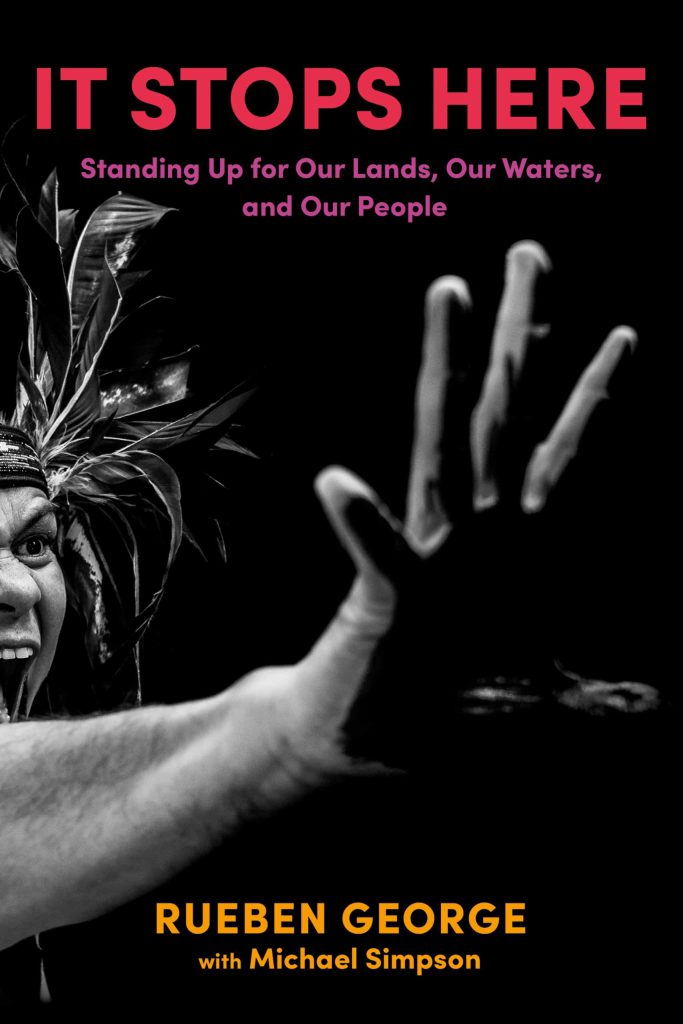
Part memoir, part historical text, part inspiration, in it George addresses the history of colonial “Canada” and the impact of residential schools, as well as his own life.
“I was also a prisoner of all the bad things I did, all the men and women I’d hurt with my addiction and my alcoholism and my trauma. I was a prisoner of my hurt and pain,” George says.
Now, he can tie that suffering back to the decimation of his community from diseases like smallpox (which historically brought the nation’s numbers down from around 10,000 to currently hovering near 600) and his parents and grandparents’ experiences at residential “school,” which created a pain that extended down generations.
The book comes from a series of recorded conversations recounting the early years spent with his grandfather, his troubled teen years and addiction, his healing journey, and finally, his fight against TMX.
George is one of the leading voices against the pipeline project, but it is a family affair. His mother, Ta’ah Amy George, has been at his side at many protests.
George continues the fight and urges policymakers and anyone who will listen to take action against the incessant resource extraction endangering the land. Construction on TMX — now owned by the federal government — is underway and is expected to be in service in early 2024, transporting oil from the prairies to the coast.
“It’s crazy,” George says. “From the beginning, we’ve been saying that it doesn’t make sense, and now it’s even more brutal than we thought.”
In the book, George recounts feeling low about the pipeline fight and picking up his grandfather, Chief Dan George’s own memoir, My Heart Soars. He opened it to a random page and found in front of him a poem his grandfather had written entitled Words to a Grandchild:
As I see beyond the days of now
I see a vision:
I see the faces of my people,
your sons’ sons,
your daughters’ daughters,
laughter fills the air
that is no longer yellow and heavy,
the machines have died,
quietness and beauty
have returned to the land.
The gentle ways of our race
have again put us
in the days of the old.
Chief Dan George wrote those words in 1974.
Reuben George’s call to spiritual arms in his book is wide open.
“It doesn’t matter what they follow. My grandfather would say, if you’re Catholic, Christian, Muslim, or you sweat lodge or longhouse, or whatever you want to follow, just be good at it, and we could have a good moment together,” he says.
“He meant to follow the fundamentals of humanity and spiritual teachings: love, honour, respect, dignity, pride, compassion, understanding, truth, knowledge, wisdom, bravery, courage.”
We see and feel trauma every day with fires and floods and murders and drug overdose deaths, he says.
“We are in trauma all the time, and we normalize all these things. But with those fundamentals of humanity replacing our trauma, we will want to do something to make the world a better place.”
George said he initially felt vulnerable opening up about the difficult times of his life, but he hopes by talking about his own journey, others may open themselves to a more spiritual path.
“I believe our world is in trauma, and one of the things I see often in people is the lack of spirit. That is trauma in itself. We’re physical, we’re spiritual, we’re mental, and we’re emotional beings, and that needs to be balanced. If we had a good, genuine spirit in our lives, I think the world would be a better place,” he shares.
“That’s my hope.”
“It Stops Here” was released on Aug. 29 by Penguin Canada.
Author
We live in a media ecosystem that thrives on misinformation. Big Tech and AI companies are consuming the work of real human beings and Canadian news has been banned on Facebook and Instagram.
And yet, I have hope for journalism because of the work we’re doing at IndigiNews.
At IndigiNews, we embody tâpwêwin — the Cree value of integrity and responsibility in truth-telling. We are committed to our independent, Indigenous-led newsroom rooted in community, accountability, and relationality. We believe storytelling is a sacred fire that connects our pasts, presents, and futures through the storytellers in our Storytelling Lodge. IndigiNews creates space for Indigenous journalists, storytellers, Knowledge Keepers, and communities to gather, learn, and share stories that matter.
As a registered charity, we are building a fire that allows our work not just to ignite but to thrive. Rather than relying on advertising or corporate acquisition, IndigiNews is sustained by people like you who believe Indigenous stories are important for the future of our communities.
Your support is making a real difference.
Our community of supporters, our Firekeepers, make it possible to grow our newsroom, publish award-winning journalism, train emerging Indigenous journalists through initiatives like the ReFocus Photojournalism Fellowship, and publish trustworthy stories that serve our communities across the country. Every story we publish helps fill in gaps left by mainstream media and ensures Indigenous perspectives are represented with care, accuracy and respect.
But there is still more work to do.
As the media landscape becomes more and more uncertain, community support is as necessary and essential as it’s ever been. Every new Firekeeper helps protect the independence of our newsroom and strengthens journalism that is accountable to our many and varied communities over corporations.
That’s why we’re inviting you to become a Firekeeper.
Firekeepers tend to and protect the sacred fire. Your monthly contributions directly support IndigiNews’s Storytelling Lodge, helps sustain our independent, Indigenous-led newsroom, and ensures future generations of Indigenous storytellers have the resources they need to do the work.
As a registered Canadian charity, all eligible donations receive a charitable tax receipt.
If you believe Indigenous stories matter, if you value independent journalism, and if you want to help build a strong future for Indigenous media, we invite you to join our circle of Firekeepers today.
Together, we can keep the fire burning.
— Eden Fineday, Publisher, IndigiNews
Support us nowLatest Stories
-
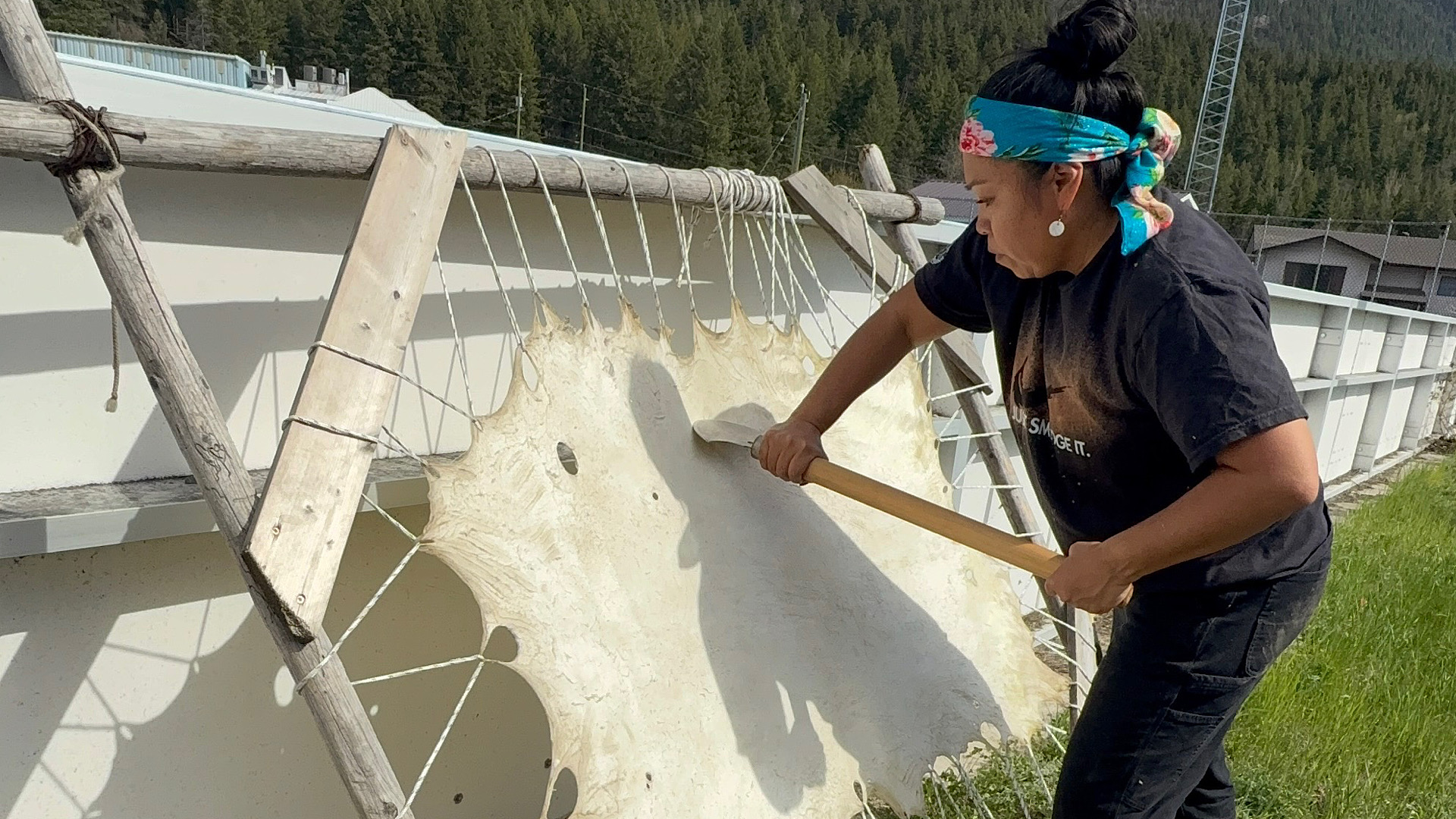
In Simpcw First Nation, Secwe̓pemc women are revitalizing hide tanning
Working with animal pelts is a lengthy, labour-intensive process — but teachers in the ‘B.C.’ community are ensuring the tradition is passed on
-

Tr’ondëk Hwëch’in celebrates as Gavin McKenna picked first in NHL draft
The 18-year-old left winger from the ‘Yukon’ joined the Toronto Maple Leafs roster, saying he wants to inspire other young Indigenous players