Driven by community care, Indigenous women bridge social service gaps on the mid-Island
Jovonne Johnson and Charsanaa Johnny started Risebridge after noticing the need that existed: ‘We support people from all walks of life’

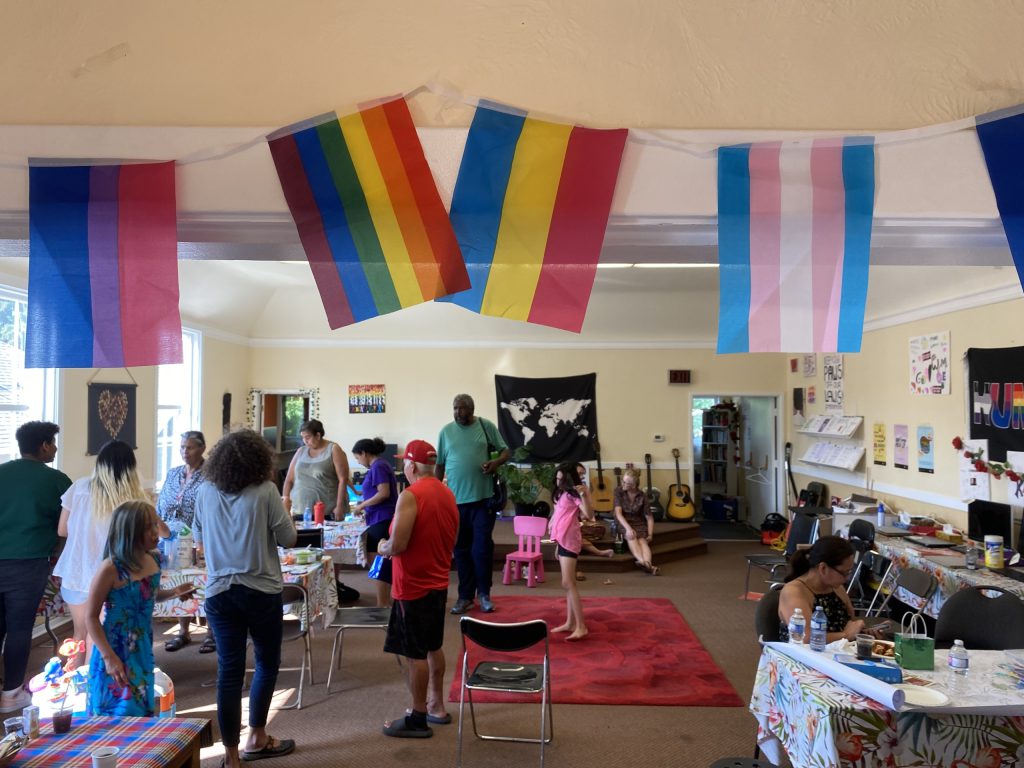
Inside of a little house in the heart of downtown “Nanaimo,” Jovonne Johnson and Charsanaa Johnny are breathless and busy as they prepare to launch a new program for urban Indigenous Youth.
The house serves as a community space for a grassroots project called Risebridge — a non-profit organization committed to offering “trauma-informed and culturally rooted” social services, according to their mission statement.
Risebridge has been operating since 2020, starting with a separation support group in Johnson’s basement suite and expanding from there.
“We support people from all walks of life,” says Johnson. “We’ve supported single mothers with moving, getting what they need for their homes, food support, healthy meal prep.”
Now, through funding through Island Health’s Indigenous Health Initiative Plan (IHIP), they are able to offer a space for Indigenous Youth at the Risebridge community centre.
Building a community space
Johnson and Johnny, who are both Indigenous mothers, have each spent their careers working in the social services space around the mid-Island area.
They came together when they noticed that — although there are various services offered for people from First Nations in the area — there aren’t many for urban Indigenous people who hail from communities elsewhere and BIPOC people generally.
Johnson, the executive director of Risebridge, moved to “Vancouver Island” 16 years ago to study Child and Youth Care and Indigenous Studies at Vancouver Island University.
Johnson says she was simply fed up with a lack of social services, prompting her to craft a post on social media appealing to anyone who felt the same way. She connected with Johnny, and six weeks later, the Risebridge project was born.
“I thought to myself, let’s find people in community that really care about social justice,” says Johnson. Johnson says she grew up in the foster care system as both parents were challenged with mental health and addiction.
“I had no link to my community. I was a mixed race Native kid in the ‘90s, grateful to be connected to Native programs.”
Welcoming Youth to the space
As a mother, Johnson says that she wants to give back to the community she has chosen to raise her three children in, who are all present at a welcoming ceremony earlier in July to kick-off the new Youth program.
For Johnny, she says she believes it’s important to bring ceremony back into building relationships.
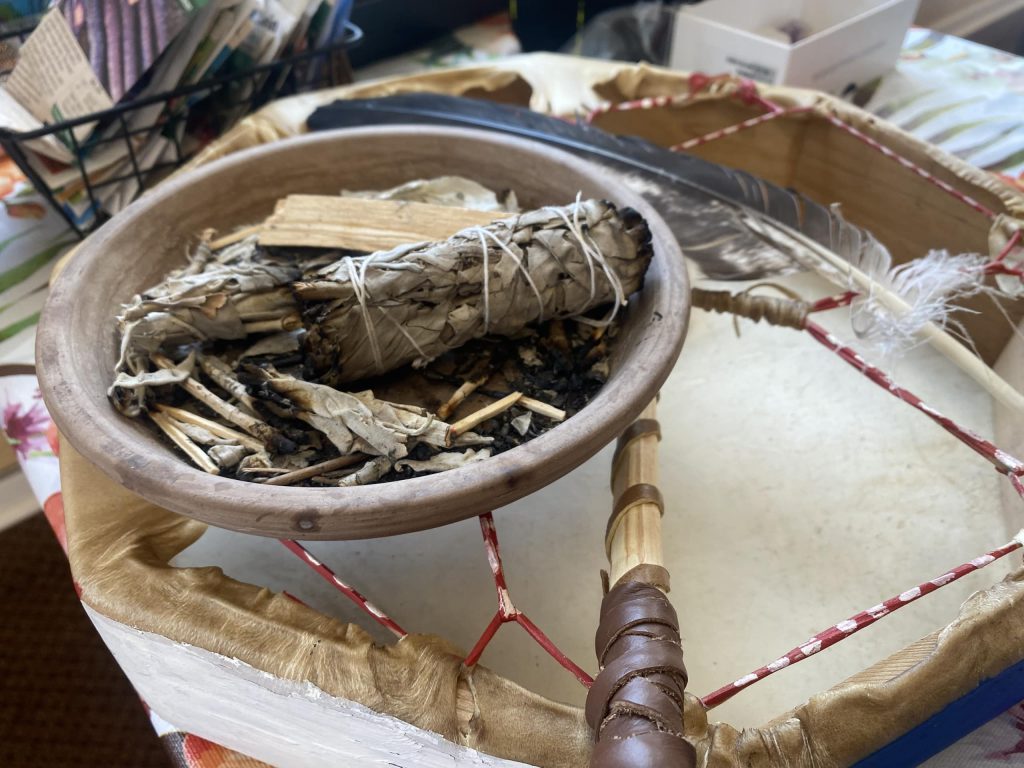
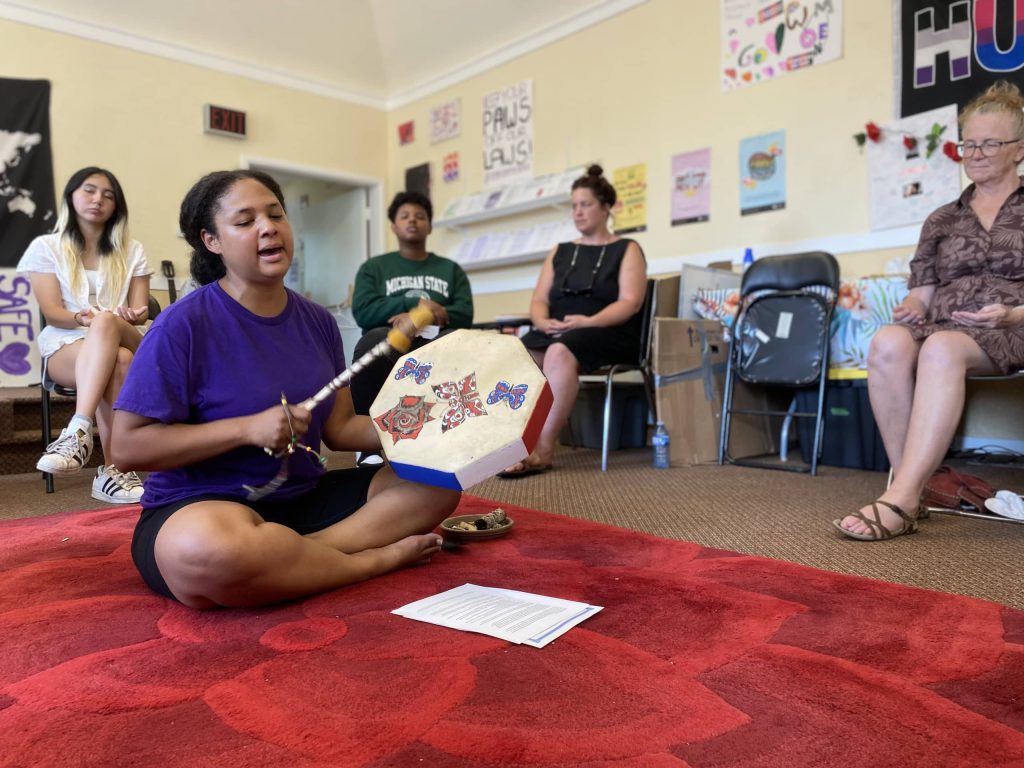
“It doesn’t take thousands of dollars to be inclusive or thoughtful,” begins Johnny, as she welcomes Youth and other community members into the circle. The room is saturated in messages of empowerment as Youth are offered a smudge as Johnson begins to sing.
The walls are covered in affirmations and resources for whoever walks through the front doors, and a table is filled with food and gifts to welcome Youth. There is laughter, connection, and most of all, an overwhelming feeling of safety as children and Youth engage with board games, books, and a colouring station.
“I benefited from programming geared towards youth at risk, ” says Johnny.
“I [also] benefited from summers spent on my reservation going from house to house, visiting family. The work I do today is a direct reflection of the communities that raised me when my parents weren’t able to due to addiction.”
The approach at Risebridge is to offer low-barrier, eight week programs, so they are able to shapeshift to meet the needs of community members. Since launching two years ago, the team has offered 26 different programs, impacting close to 3,000 people in the mid-Island area over the last year alone.
“We want to be accessible to everyone. This includes programming for children and Youth in and from government “care,” support for women experiencing intimate partner violence, and harm reduction services,” says Johnson.
“We are always asking ourselves — what can we do for community right now?”
Johnson says that Risebridge is responsible for initiating Parksville-Qualicum’s first low-barrier shelter program, as well as a warming centre in “Nanaimo.”
“If you can believe it, we had 103 people in here every night, keeping them alive during the winter months,” says Johnson to the circle of Youth and staff.
The Youth program is scheduled to take place on Wednesday evenings between 4:00 to 6:00 p.m. for Indigenous Youth between the ages of 13 and 17. Risebridge also has a calendar of programs and services.
“To know that we’ve reached so many Youth and families, those who are in crisis, are in need, or are just deserving, it brings us back together as a community.”
Author
We live in a media ecosystem that thrives on misinformation. Big Tech and AI companies are consuming the work of real human beings and Canadian news has been banned on Facebook and Instagram.
And yet, I have hope for journalism because of the work we’re doing at IndigiNews.
At IndigiNews, we embody tâpwêwin — the Cree value of integrity and responsibility in truth-telling. We are committed to our independent, Indigenous-led newsroom rooted in community, accountability, and relationality. We believe storytelling is a sacred fire that connects our pasts, presents, and futures through the storytellers in our Storytelling Lodge. IndigiNews creates space for Indigenous journalists, storytellers, Knowledge Keepers, and communities to gather, learn, and share stories that matter.
As a registered charity, we are building a fire that allows our work not just to ignite but to thrive. Rather than relying on advertising or corporate acquisition, IndigiNews is sustained by people like you who believe Indigenous stories are important for the future of our communities.
Your support is making a real difference.
Our community of supporters, our Firekeepers, make it possible to grow our newsroom, publish award-winning journalism, train emerging Indigenous journalists through initiatives like the ReFocus Photojournalism Fellowship, and publish trustworthy stories that serve our communities across the country. Every story we publish helps fill in gaps left by mainstream media and ensures Indigenous perspectives are represented with care, accuracy and respect.
But there is still more work to do.
As the media landscape becomes more and more uncertain, community support is as necessary and essential as it’s ever been. Every new Firekeeper helps protect the independence of our newsroom and strengthens journalism that is accountable to our many and varied communities over corporations.
That’s why we’re inviting you to become a Firekeeper.
Firekeepers tend to and protect the sacred fire. Your monthly contributions directly support IndigiNews’s Storytelling Lodge, helps sustain our independent, Indigenous-led newsroom, and ensures future generations of Indigenous storytellers have the resources they need to do the work.
As a registered Canadian charity, all eligible donations receive a charitable tax receipt.
If you believe Indigenous stories matter, if you value independent journalism, and if you want to help build a strong future for Indigenous media, we invite you to join our circle of Firekeepers today.
Together, we can keep the fire burning.
— Eden Fineday, Publisher, IndigiNews
Support us nowLatest Stories
-
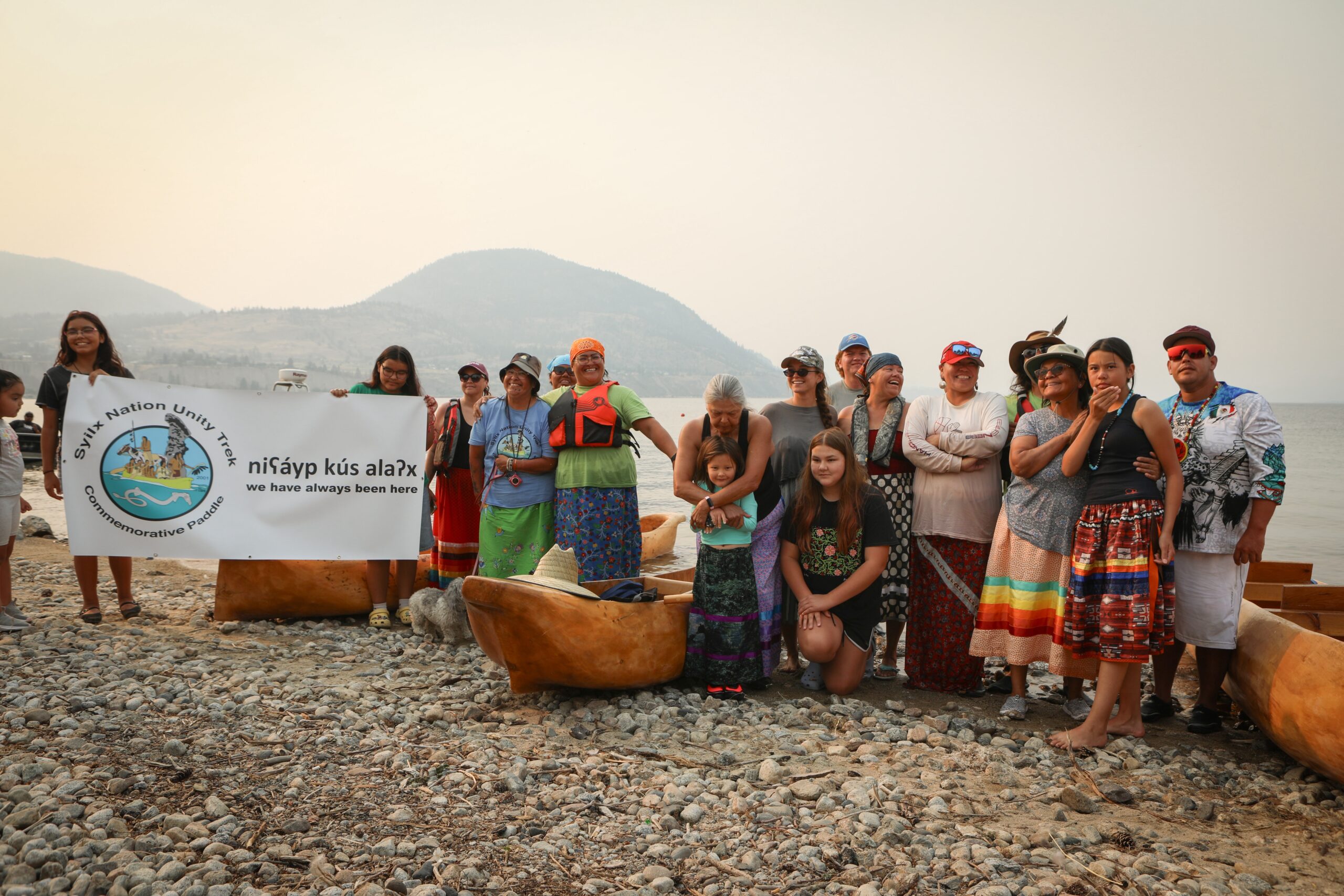
Travelling in dugout canoes, syilx Okanagan paddlers complete weeklong Unity Trek
‘Unity is connecting the people to each other, and connecting ourselves to the land,’ said one participant about the commemorative journey that wrapped up on Aug. 1
-

In the Okanagan desert, snakes offer lessons on protecting a fragile ecosystem
For two decades, researchers at the Nk’Mip Desert Cultural Centre have tracked snakes across syilx homelands — while helping people appreciate the often-feared creatures