In advance of the DTES memorial march, Desirae Cardinal braids women’s hair for strength
‘The three braids are for strength, pride, and love, and being able to carry yourself in that way’


Desirae Cardinal is a powerhouse. She paints murals, styles hair, and speaks at a speed that keeps you alert, despite nearly losing her voice.
It’s why one of her red and black nail extensions snapped, she explains — she “got deep” into the wall-sized mural she’s painting at Sheway.
The facility on “Vancouver’s” Downtown Eastside offers health and social services to pregnant women and mothers who have past or present issues with substance use.
On Tuesday, Cardinal — who is Cree from amiskwaciwâskahikan (Edmonton) — was braiding the residents’ hair in preparation for the Annual Women’s Memorial March.

In the large common room, where Cardinal sets up her hairsprays, gels and ribbons, large circular tables are occupied by mothers and babies socializing, eating and playing. Despite all the activity, it’s a peaceful retreat that feels a world away from the noise of East Hastings.
Not long after Cardinal places a sign-up sheet on her table, women approach to add their names. To help with anonymity, a backdrop was placed behind them, protecting the space and the mothers using it.
For everyone around her, Cardinal is quick-witted and full of laughter. But February is a difficult time of year for urban Indigenous women.

“My heart hurts,” said Cardinal.
Like other women at Sheway, Cardinal is mourning her relatives, and February is a time to remember and honour the lives of missing and murdered women, girls, two-spirit and trans people (MMIWG2S).
“When we braid, it’s the time that we feel most strong within our spirit,” said Cardinal.
“The three braids are for strength, pride, and love, and being able to carry yourself in that way.”

Cardinal began braiding when she was nine-years-old.
“Grandma wasn’t good at braiding.” she told the table.
“If you’re gonna make it lumpy and sore you might as well make it good, grandma!”
When Cardinal taught herself to braid, her grandmother passed the duty down to her and she’s braided ever since.

Cardinal, who is 36, grew up in the child “welfare” system. She’s been living in East Vancouver since the 1990s.
In the early 2000s, Cardinal turned her passion for braiding into a career. By 2008, she earned a degree as a hair-stylist at Vancouver Community College.
“I was top of my class,” she said.

When asked if she had braided elsewhere for the Women’s March, a choir of voices around the room began listing locations they’d seen her braiding. The Union Gospel Mission, the Mothers Centre, the Friendship Centre — the list went on.
“I do this because we’re stronger when we’re together,” said Cardinal.
“I don’t know what I’m gonna be like [for the Memorial March], but seeing these braids over and over again is gonna help.”

Author
We live in a media ecosystem that thrives on misinformation. Big Tech and AI companies are consuming the work of real human beings and Canadian news has been banned on Facebook and Instagram.
And yet, I have hope for journalism because of the work we’re doing at IndigiNews.
At IndigiNews, we embody tâpwêwin — the Cree value of integrity and responsibility in truth-telling. We are committed to our independent, Indigenous-led newsroom rooted in community, accountability, and relationality. We believe storytelling is a sacred fire that connects our pasts, presents, and futures through the storytellers in our Storytelling Lodge. IndigiNews creates space for Indigenous journalists, storytellers, Knowledge Keepers, and communities to gather, learn, and share stories that matter.
As a registered charity, we are building a fire that allows our work not just to ignite but to thrive. Rather than relying on advertising or corporate acquisition, IndigiNews is sustained by people like you who believe Indigenous stories are important for the future of our communities.
Your support is making a real difference.
Our community of supporters, our Firekeepers, make it possible to grow our newsroom, publish award-winning journalism, train emerging Indigenous journalists through initiatives like the ReFocus Photojournalism Fellowship, and publish trustworthy stories that serve our communities across the country. Every story we publish helps fill in gaps left by mainstream media and ensures Indigenous perspectives are represented with care, accuracy and respect.
But there is still more work to do.
As the media landscape becomes more and more uncertain, community support is as necessary and essential as it’s ever been. Every new Firekeeper helps protect the independence of our newsroom and strengthens journalism that is accountable to our many and varied communities over corporations.
That’s why we’re inviting you to become a Firekeeper.
Firekeepers tend to and protect the sacred fire. Your monthly contributions directly support IndigiNews’s Storytelling Lodge, helps sustain our independent, Indigenous-led newsroom, and ensures future generations of Indigenous storytellers have the resources they need to do the work.
As a registered Canadian charity, all eligible donations receive a charitable tax receipt.
If you believe Indigenous stories matter, if you value independent journalism, and if you want to help build a strong future for Indigenous media, we invite you to join our circle of Firekeepers today.
Together, we can keep the fire burning.
— Eden Fineday, Publisher, IndigiNews
Support us nowLatest Stories
-
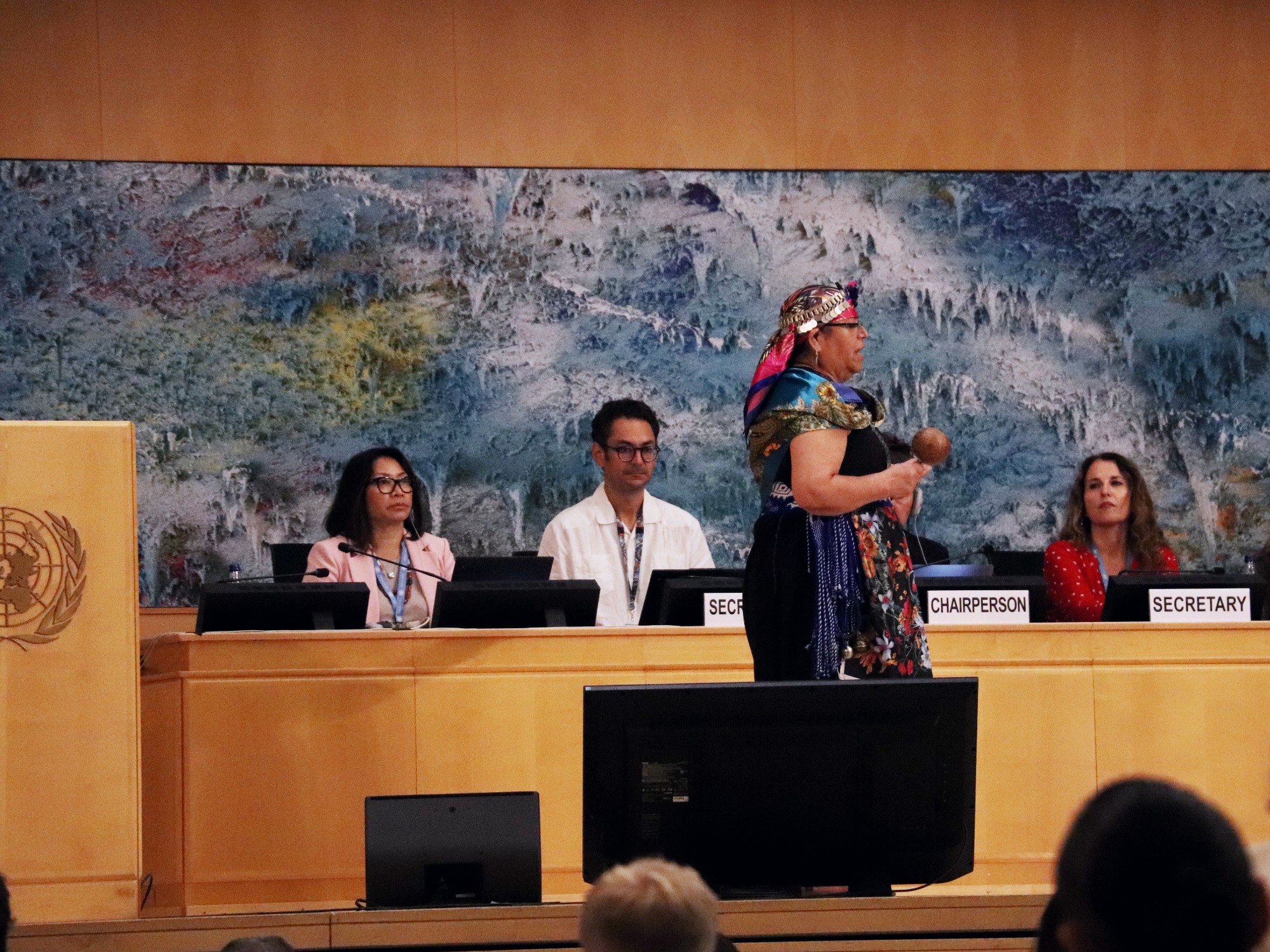
Indigenous people demand more say at the UN, as new crises hit their homelands
Indigenous nations live ‘on the frontlines’ of climate, conflict and new tech. But their voices remain sidelined in the global halls of power.
-
Through their lenses: Showcasing the work of our 2026 ReFocus fellows
Get to know our photojournalism training cohort through a series of portraits shot during a week in Kjipuktuk (Halifax)