In W̱SÁNEĆ territories, Matriarchs raise funds to buy back their unceded lands
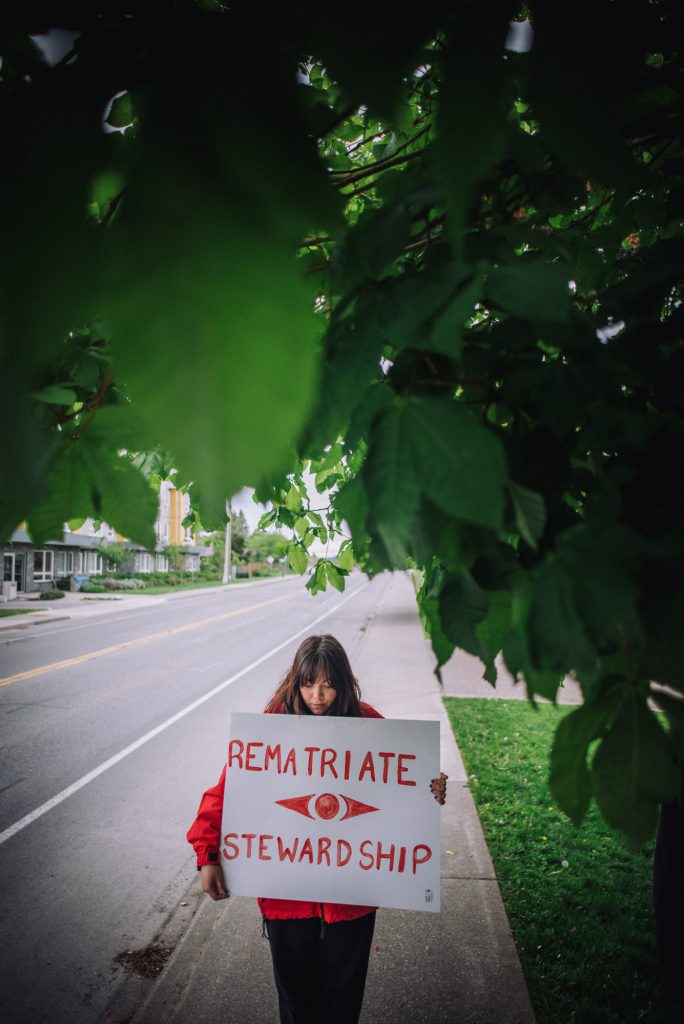
Rematriate Stewardship is looking to make a downpayment on an acreage on southern ‘Vancouver Island’ for safety and stewardship
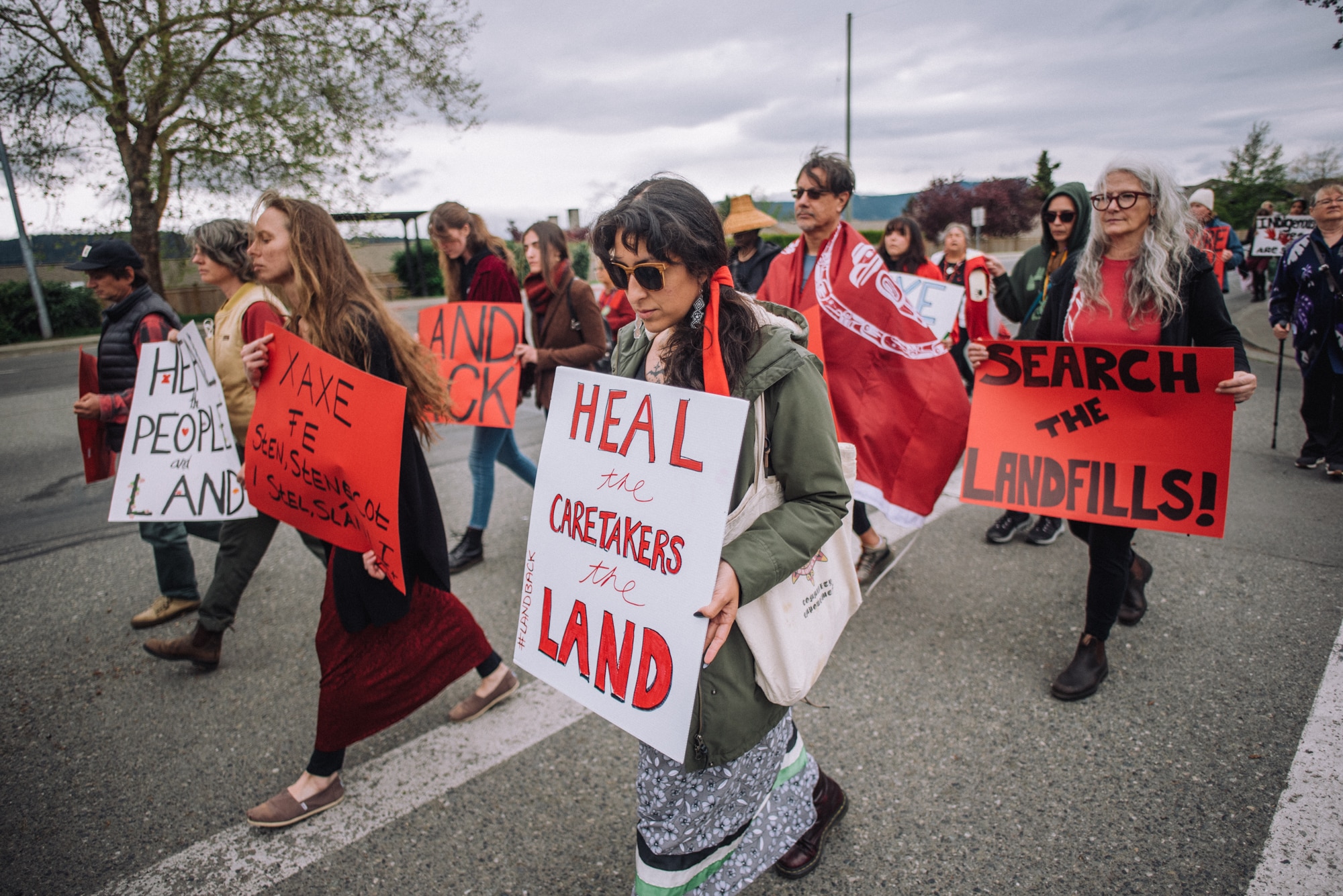
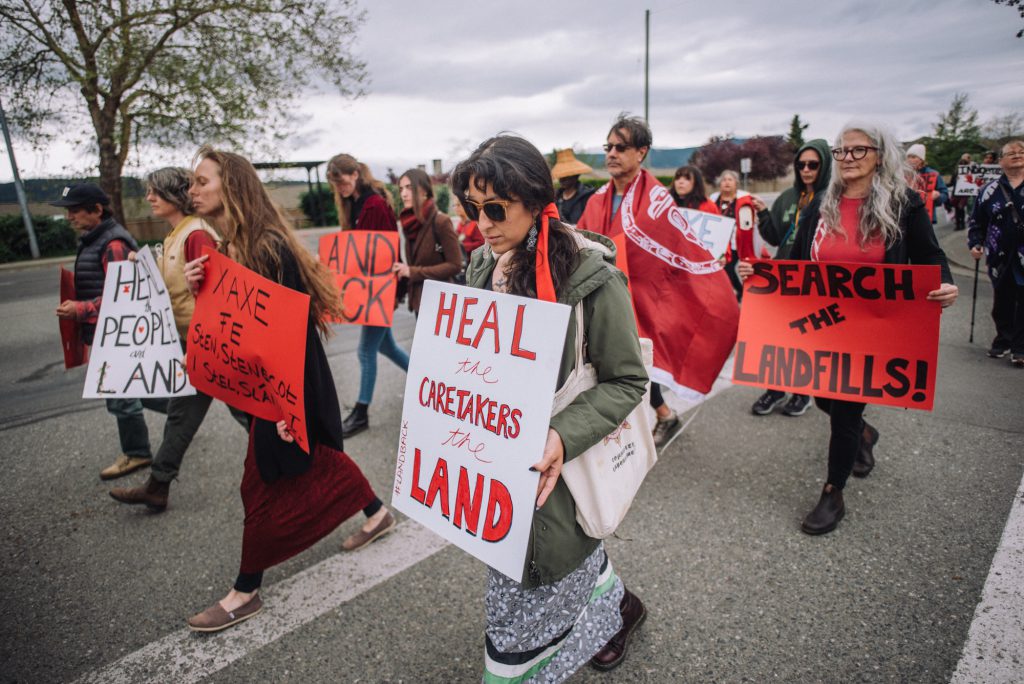
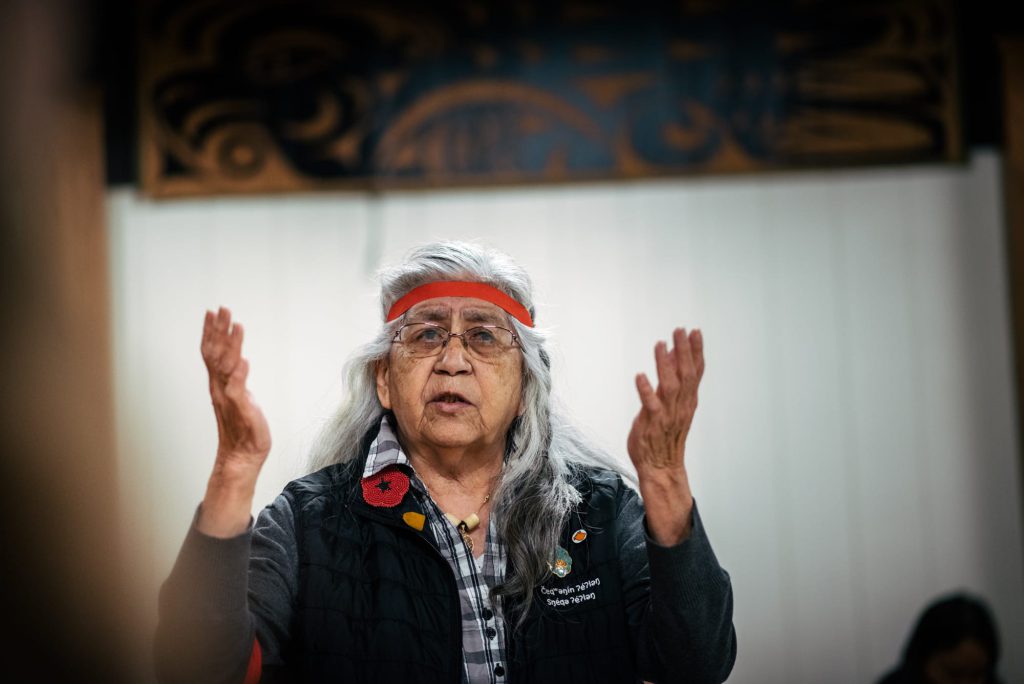
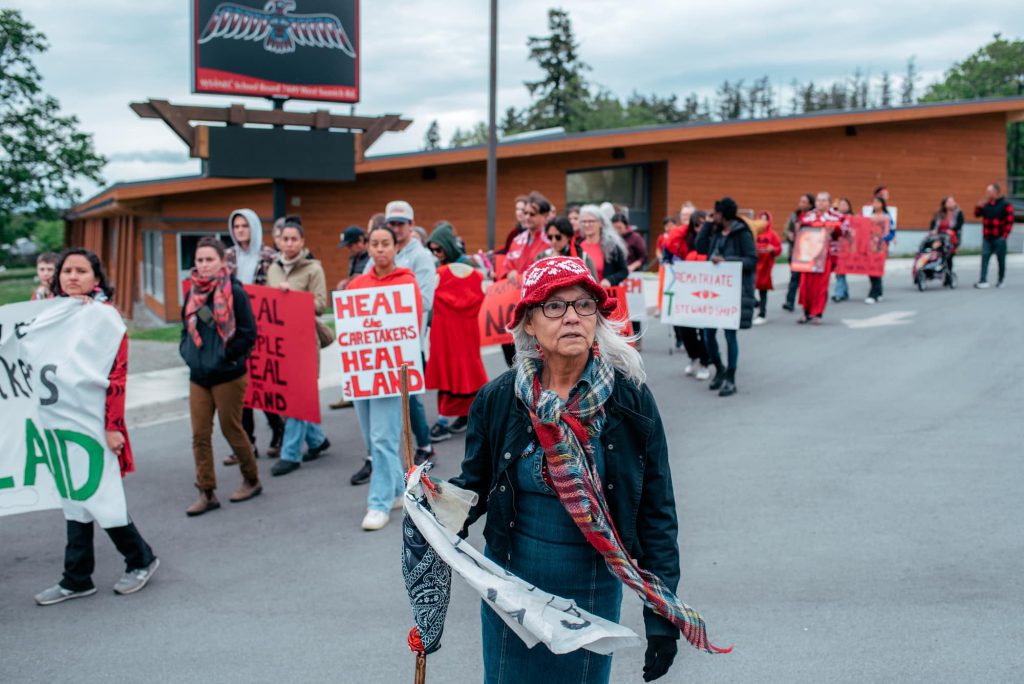
In W̱SÁNEĆ communities and beyond, it’s the women who hold everything together, says Matriarch Tracy Underwood.
“The SENĆOŦEN word for women is SȽÁNI,” she said.
“And if you look it up in our SENĆOŦEN dictionary, you’ll see the second definition of the word is ‘a knitting stitch.’ And that brings a whole new perspective to women’s place in the fabric of society.”
Underwood is the president of the non-profit XAXE TEṈEW̱ Sacred Land Society (XTSLS), which recently launched the Rematriate Stewardship project. The project is meant to bring housing and land to Saltwater Salish women and their families on “Vancouver Island” so they can better steward their unceded homelands.
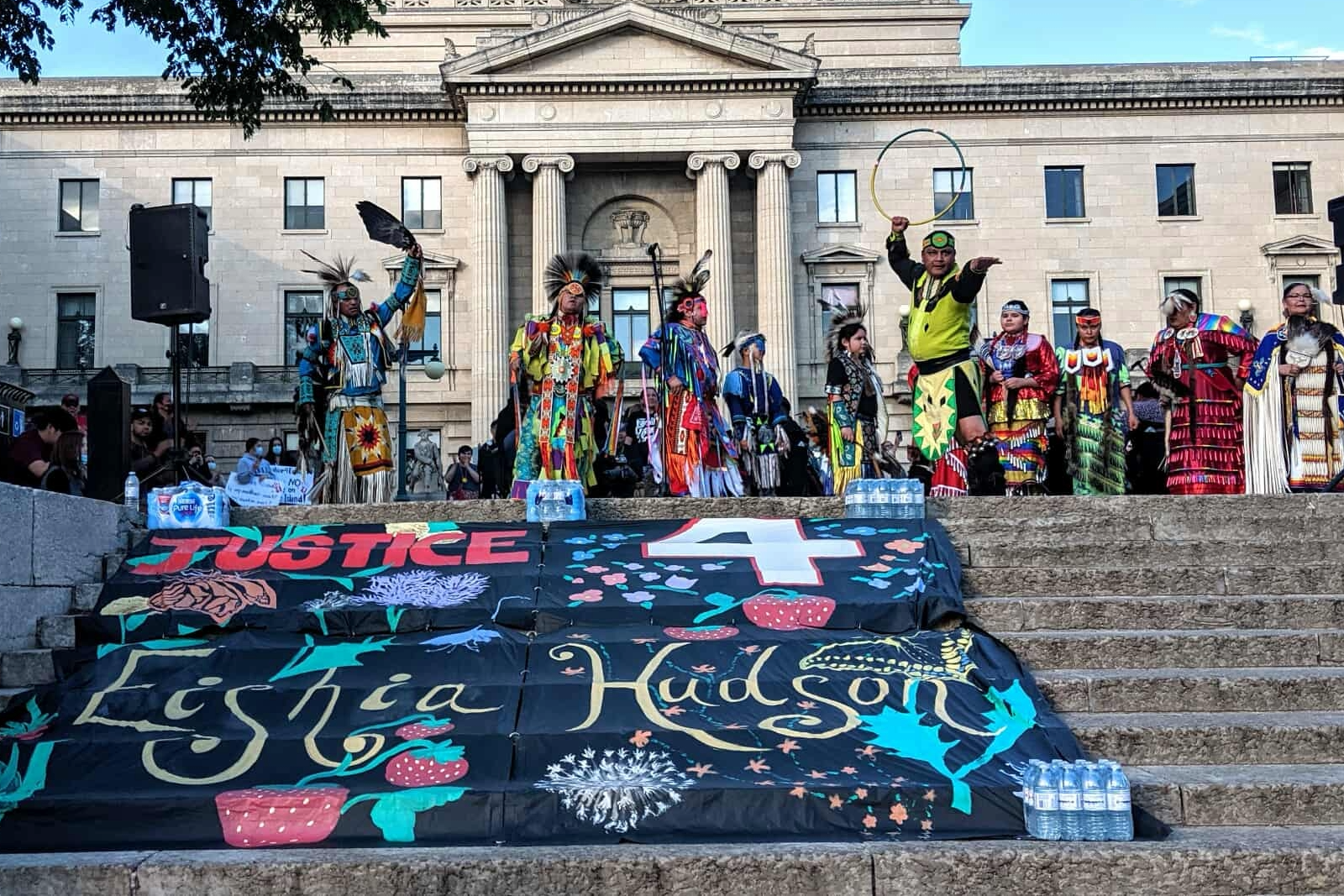
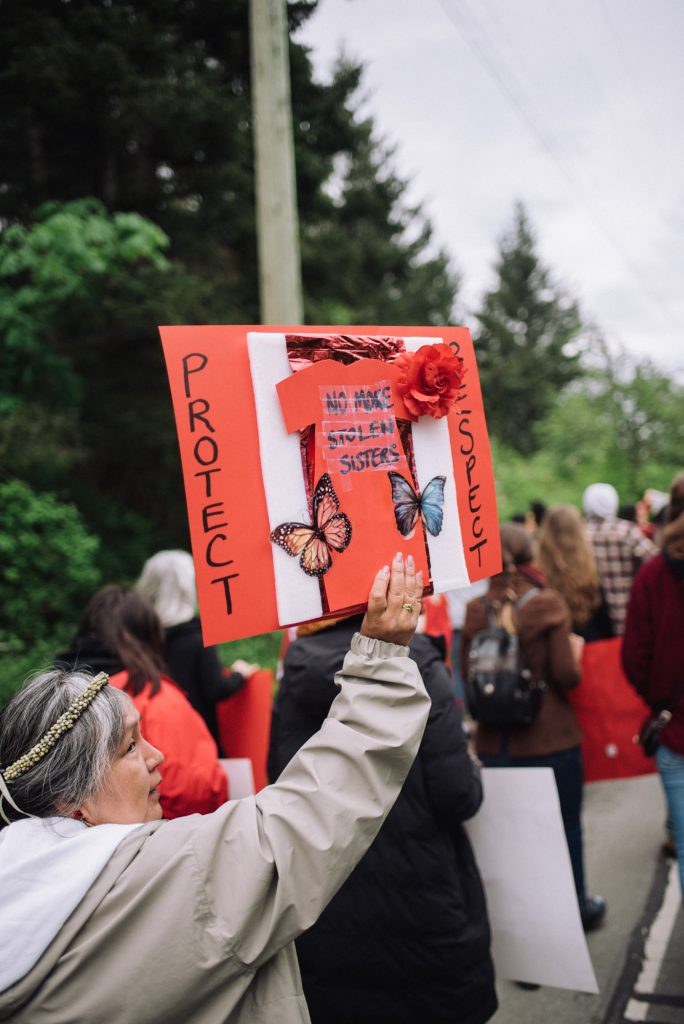
The Rematriate Stewardship project kicked off its first fundraising campaign at ȽÁU, WELṈEW̱ Tribal School in W̱JOȽEȽP (“Tsartlip”) on Red Dress Day earlier this month with the goal of raising $400,000 by August 5.
The group ultimately wants to provide a 20 per cent downpayment on an acreage on southern “Vancouver Island” as a tangible way to restore the sacred relationship between Matriarchs and their lands and their waters. The site itself has not been decided yet but they are currently working with a realtor to secure something once the down payment is in place.
The W̱SÁNEĆ Nation itself has re-established ownership of unceded sites — ȾIKEL and SISȻENEM — in recent years after creating its own land trust. XTSLS is the latest organization working to fund the return of Saltwater Salish lands, which were never given up by their original owners.
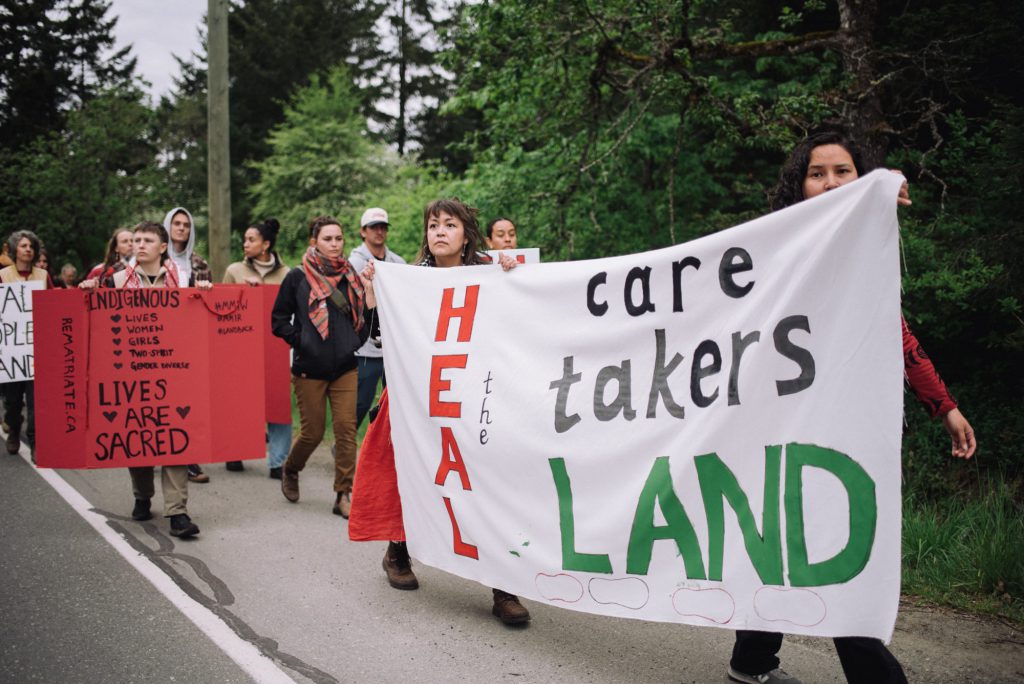
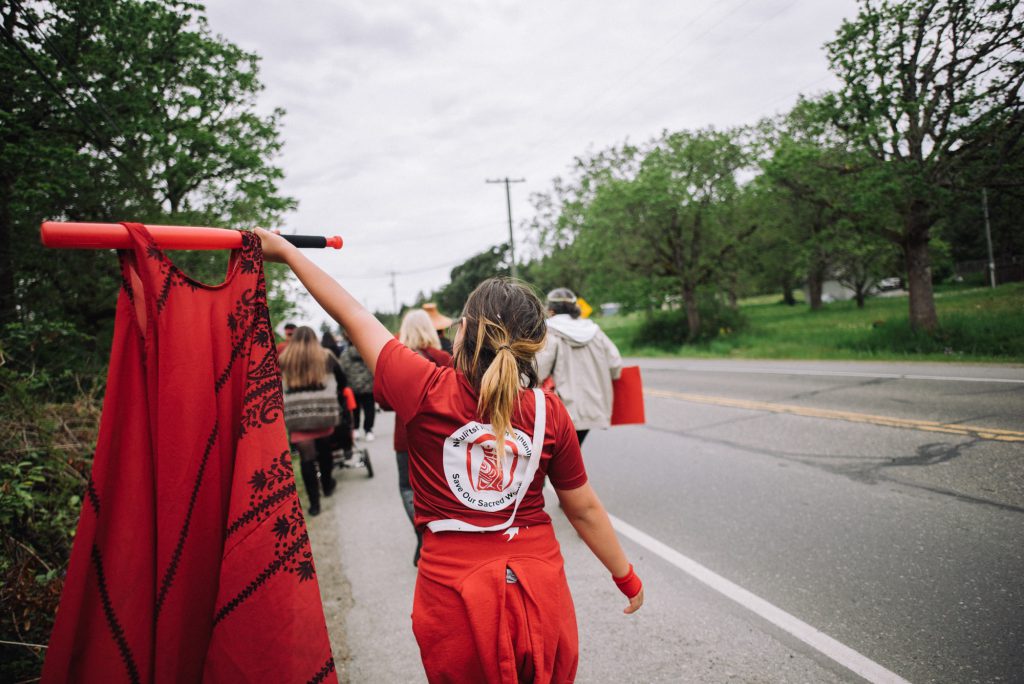
The timing of the fundraiser launch on the same day as Red Dress Day was intentional, said Rematriate Stewardship project lead Tiffany Joseph.
“It was because of the murdered and missing Indigenous women and girls epidemic that I wanted to start doing some work with our people to get land back,” she said.
“Land is critical for us to begin to heal, practice our culture, and access foods and medicines. It’s time everyone understood the impact of missing and murdered Indigenous relatives and worked together to provide safe space for us.”
According to the Assembly of First Nations, 56 per cent of all Indigenous women have suffered from physical assault, while 46 per cent have been sexually assaulted.
The 2019 National Inquiry into MMIWG reported that Indigenous women, girls and 2SLGBTQ+ people “experience disproportionately high rates of poverty and insurmountable barriers to obtaining secure housing, food, education, employment, transportation, and other basic needs,” which decreases their safety and increases the levels of violence they face.
“I constantly say we are in an ongoing genocide that has never stopped,” said Georgina Underwood, who sits on the Board of XTSLS and is a great-grandmother of 14. “The Rematriate Stewardship project ensures women have voices — that women will rise up to speak on their own behalf, and find their identity.”
The national inquiry concluded that the gendered violence “amounts to a race-based genocide of Indigenous Peoples, including First Nations, Inuit and Métis, which especially targets women, girls, and 2SLGBTQQIA+ people.”
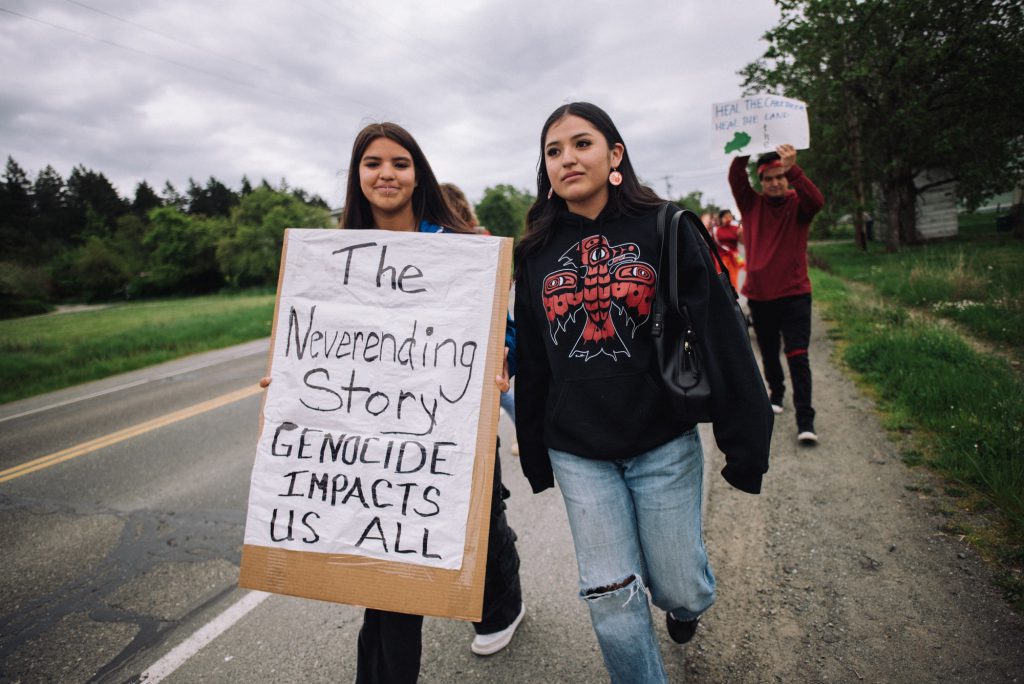
In response, the inquiry laid out a series of actions for all governments to take, emphasizing the need for “safe, permanent, and meaningful access for Indigenous women, girls and Two Spirit/LGBTQ+ people to their cultures and languages in order to restore, reclaim and revitalize cultures and identity.”
The inquiry also emphasized the need for Indigenous women to have safe housing, clean drinking water, and adequate food.
Tracy Underwood said the genocide Indigenous women experience stems from the values of settler society in “Canada,” which have been entrenched through policies such as the Indian Act.
“It’s the way Canada devalues dark-skinned women that is the root of the issue. And that goes back to how the Indian Act disadvantaged us,” she said.
“So to me, empowering our young women to use their voices and know their value is important because it’s preparing them not to be a part of the murdered and missing. And to get there, we need to provide safe places for them.”
“The band council system, the reserve system, they’re all still imposed through the Indian Act,” she added. “And immediately, there are inherent harms and difficulties layered in it.”
The Indian Act, created by the federal government in 1876, has also been a central tool used to deny women the right to inherit their ancestral lands. Under the reserve system, only widows could “possess” land, and even then a widow “could not inherit her husband’s personal property upon his death — everything, including the family house, legally went to his children,” according to Indigenous Foundations.
In 1884, government agents modified the Act slightly to allow men to will their estate to their wives, but Indian agents could still deny Indigenous women this inheritance if they determined them to lack “good moral character.” This rule was in place until 1951.
The national inquiry recognized the violence the Indian Act perpetuates against Indigenous women and called on all governments to “eliminate discriminatory provisions from the Indian Act.”
Georgina Underwood said the Indian Act and other colonial structures “really interfere with families and communities,” and the Rematriate Stewardship project is an important step in helping Saltwater Salish women to push back against those forces, connect with their ancestral inheritance, and uphold their responsibilities to land.
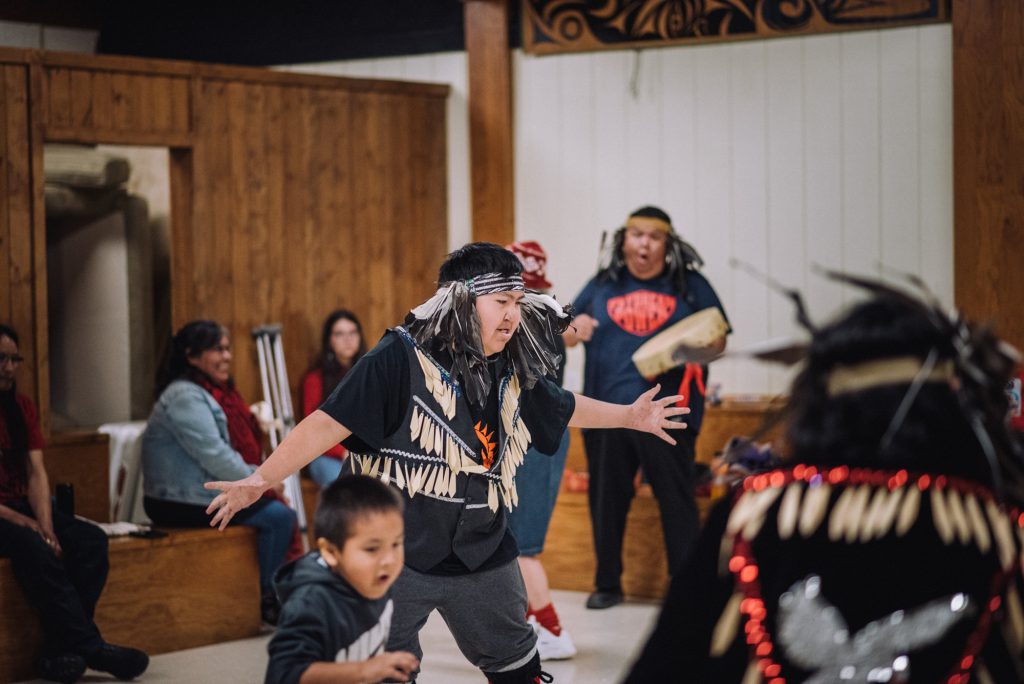
“One of our words in SENĆOŦEN is ĆELÁṈEN, which refers to ancestral inheritance in relation to our territories,” she said.
“ĆELÁṈEN is something that is given to each of the families, passed down by their ancestors, an ancestral heritage that connects them to the land, to the sea, and to their family. And I think that’s what we are a big part of restoring.”
“In my heart, right now as I’m speaking, I see our ancestors in the clouds,” Georgina added. “They’re watching us, waiting for this movement to happen.”
Author
We live in a media ecosystem that thrives on misinformation. Big Tech and AI companies are consuming the work of real human beings and Canadian news has been banned on Facebook and Instagram.
And yet, I have hope for journalism because of the work we’re doing at IndigiNews.
At IndigiNews, we embody tâpwêwin — the Cree value of integrity and responsibility in truth-telling. We are committed to our independent, Indigenous-led newsroom rooted in community, accountability, and relationality. We believe storytelling is a sacred fire that connects our pasts, presents, and futures through the storytellers in our Storytelling Lodge. IndigiNews creates space for Indigenous journalists, storytellers, Knowledge Keepers, and communities to gather, learn, and share stories that matter.
As a registered charity, we are building a fire that allows our work not just to ignite but to thrive. Rather than relying on advertising or corporate acquisition, IndigiNews is sustained by people like you who believe Indigenous stories are important for the future of our communities.
Your support is making a real difference.
Our community of supporters, our Firekeepers, make it possible to grow our newsroom, publish award-winning journalism, train emerging Indigenous journalists through initiatives like the ReFocus Photojournalism Fellowship, and publish trustworthy stories that serve our communities across the country. Every story we publish helps fill in gaps left by mainstream media and ensures Indigenous perspectives are represented with care, accuracy and respect.
But there is still more work to do.
As the media landscape becomes more and more uncertain, community support is as necessary and essential as it’s ever been. Every new Firekeeper helps protect the independence of our newsroom and strengthens journalism that is accountable to our many and varied communities over corporations.
That’s why we’re inviting you to become a Firekeeper.
Firekeepers tend to and protect the sacred fire. Your monthly contributions directly support IndigiNews’s Storytelling Lodge, helps sustain our independent, Indigenous-led newsroom, and ensures future generations of Indigenous storytellers have the resources they need to do the work.
As a registered Canadian charity, all eligible donations receive a charitable tax receipt.
If you believe Indigenous stories matter, if you value independent journalism, and if you want to help build a strong future for Indigenous media, we invite you to join our circle of Firekeepers today.
Together, we can keep the fire burning.
— Eden Fineday, Publisher, IndigiNews
Support us nowLatest Stories
-
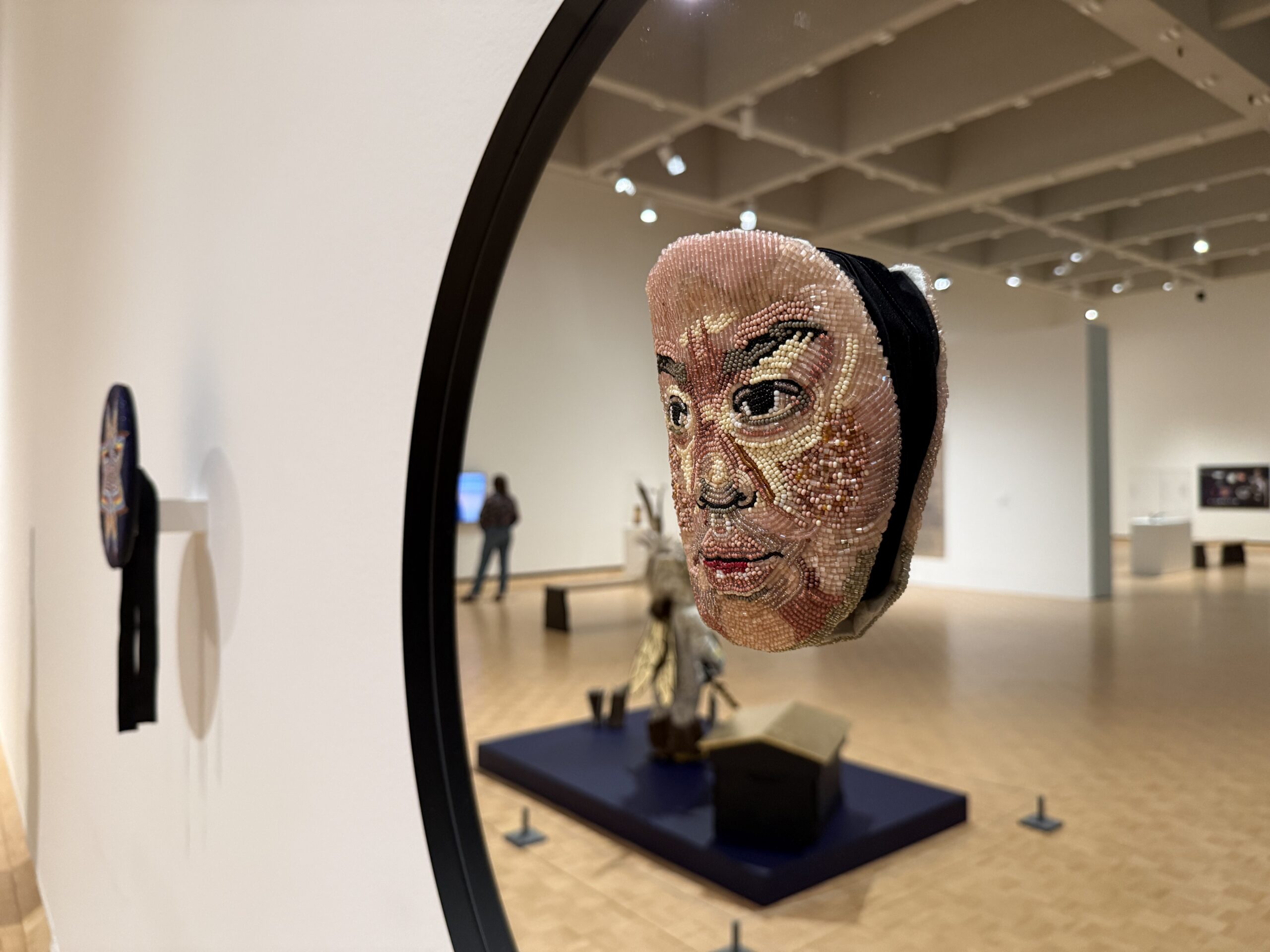
‘Love Medicine’ exhibition celebrates Two Spirit and Indigiqueer artists
Curated by Métis art historian Michelle McGeough, 22 Indigenous 2SLGBTQIA+ artists explore the idea of love as healing, belonging — and resistance — in a Oskana kâ-asastêki (Regina) gallery
-

‘Rhythm crafted for the human voice’: Poet kit-xgwélemc kennedy wins an Indigenous Voices Award
Member of St’uxwtéws Secwépemc Nation recognized in unpublished poetry category — following in his wordsmith mom’s footsteps