A dam destroyed their river — 61 years later, two First Nations fought for justice
A new documentary — ‘Nechako: It Will Be a Big River Again’ — tells the story of the northwestern ‘B.C.’ landscape and the communities taking care of it


This story originally appeared in The Narwhal and is reprinted here with permission and light style edits.
Three Saik’uz environmental monitors walk along a stretch of the Nechako River — though all they see is a stretch of boulders with no water in sight. When the Kennedy Dam was built in northwestern “B.C.” in 1950, 70 per cent of its water was diverted.
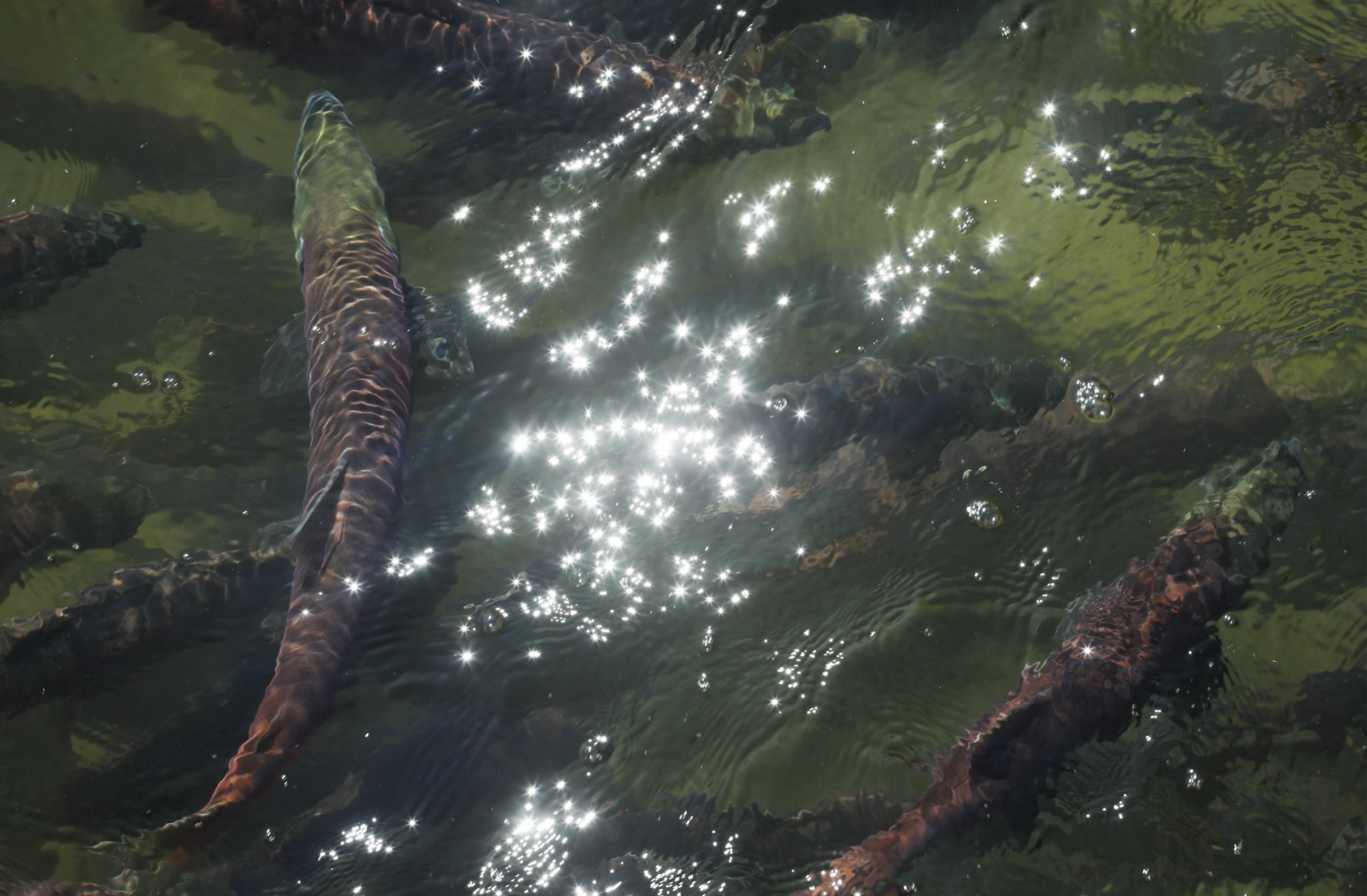
In the 75 years since, the Nechako has seen a dramatic decline in salmon.
“It had to be deep,” James Thomas, one of the monitors, says as he looks down at the rocks.
“We used to go up and down this creek to hunt and fish,” he says. “A lot of us had to change our ways … [The dam] made a big impact.”
The scene unfolds in a new documentary, Nechako: It Will Be a Big River Again.
In it, Stellat’en director Lyana Patrick delves deep into how Saik’uz and Stellat’en First Nations battled mining company Rio Tinto Alcan and “B.C.” in court for more than a decade, seeking justice for damage to the Nechako and to have their constitutional fishing rights recognized.

The Nechako is a tributary of the “Fraser River.” While data for the Nechako is not readily available, according to Watershed Watch, just 26 adult Early Stuart sockeye returned in the Upper Fraser in 2024, compared to 45,000 in 1984. In the Lower Fraser, salmon have been cut off from the vast majority of their former habitat due to dams and other infrastructure.
In the documentary, Patrick depicts the scale of dams and the sometimes unseen — or ignored — costs.
“The pockets of a few shareholders are lined, beautifully lined, at the expense of everything downstream — the animals, the trees, the humans,” she said in an interview.
“That, to me, is what the dam represents — it represents greed.”
The film will premiere in “Vancouver” on May 3 in the DOXA Documentary Film Festival.

Rio Tinto Alcan ‘fought tooth and nail not to let a drop of that water go’
The documentary was made by an entirely Indigenous crew, including Secwépemc cinematographer Sean Stiller. It centres community members and the relationships they have with the land and each other.
The camera and stories capture the scale of the dam, as well as the cumulative impacts of other industries and climate change on the landscape.
“We absolutely wanted to convey the scale and the scope — and I don’t think we’ve even completely captured that,” Patrick said. “I’m not sure how you can.”
The dam flooded about 900 square kilometres of Dakelh and Wet’suwet’en territory in central “B.C.”
It was built to provide power to an aluminum smelter and today is operated by Rio Tinto Alcan, a subsidiary of Rio Tinto.

Kenney Dam Road, which leads to the reservoir, cut through Stellat’en reserve land when it was built, affecting people’s access to hunting grounds and opening up the land to other industries, Patrick said.
Forests were cleared for logging and agriculture while mines and pipelines were expanded, resulting in a degraded ecosystem, she explained — and the resulting extraction and emissions are still contributing to climate change.
In the film, her father and former Stellat’en chief, Archie Patrick, likens cumulative effects to “taking poison.” Take a little bit at a time, it won’t harm you right away — “but in time, it will kill you.”
Archie knows people may wonder why the First Nations brought this case forward decades later and why Indigenous people didn’t “resist” at the time.
The answer can be found in the Indian Act, which prohibited Indigenous people from obtaining legal representation until 1951 — the year after the dam was built.
“We couldn’t hire lawyers,” he says. “We could go to jail.”

The First Nations sought to hold Rio Tinto Alcan accountable for damage to the ecosystem and to demand water be restored to the Nechako. The court battle waged on from 2011 until 2024.
“Alcan has fought tooth and nail not to let a drop of that water go,” Maegan Giltrow, legal counsel for the First Nations, says in the documentary.
Court found province responsible — not Rio Tinto
In 2022, the B.C. Supreme Court recognized the nations’ rights to fish in the Nechako, and that the dam had significantly harmed the river.
But the court decided responsibility lay with the province, agreeing with Rio Tinto’s argument that “B.C.” authorized the company to operate as it did.
The First Nations appealed, but in 2024 another judge agreed Rio Tinto was not responsible.
That was a disappointment for some community members, though the appeal did put a greater duty on the Crown to consult with the nations in regulating the Nechako’s flow and avoiding harm to their fishing rights.
While they didn’t get everything they hoped for, better consultation is important: Patrick argued Indigenous governance will be “the bulwark against the harms that are going to come and the harms that are here already, like drought and wildfire and changing weather patterns — all of these crises that are impacting everybody.”

It was a long and arduous battle that not all First Nations choose to pursue — or are able to.
“Industry has deep pockets to keep us going a long, long time in the courts,” Patrick said.
In a written statement, a Rio Tinto spokesperson said it has been working with the First Nations since 2021 to evaluate the river’s condition and “explore long-term solutions to improve its capacity to support ecological functions, Yinka Dene cultural practices and economic activity.”
“After many decades of conflict, the Saik’uz First Nation and Stellat’en First Nation and Rio Tinto have embarked on a reconciliation journey, together with Nadleh Whut’en First Nation and the Cheslatta Carrier Nation, centred around our common goal of improving the health of the Nechako River,” the spokesperson said in a statement.
It said the company signed an agreement with the nations in January to study two major infrastructure projects that could allow “a more natural flow” in the river.
“While there is a lot of work ahead of us, we remain committed to strengthening our relationship and progressing on this journey together with trust, respect and transparency,” it said.
Director challenged documentary norms
The film focuses on Indigenous sovereignty, and Patrick wanted to embody that in the process of making it, not just the final product, rather than continue the long history of extractive practices that take stories from Indigenous communities.
The film was made by Lantern Films and Experimental Forest Films and co-produced with the National Film Board of Canada. Lantern Films signed benefit agreements with the two First Nations and participants were asked for input on an early version.
The team also compensated participants — which Patrick knows is thorny in the industry.
“Similar to journalism, you don’t pay people to do interviews, right?” she said. “You don’t pay people to be in your documentary.”
But she decided that, for this project, compensation was a “crucial” way to honour people’s knowledge and energy.

Filming took place between 2022 and 2024.
The film is anchored in her point of view and experience and how her relationship with her Stellat’en homelands and waters changed through making it.
She grew up familiar with the devastation of the land — but the documentary process brought her closer to the “beauty of it,” and how devoted people are to stewarding it.
Places that are burned, mined, damaged, are still “loved more than ever,” she said.
“That’s what this court case is about,” she explained. “It’s about having responsibility to those places.
“With climate change, that’s a shared responsibility now.”
Author
We live in a media ecosystem that thrives on misinformation. Big Tech and AI companies are consuming the work of real human beings and Canadian news has been banned on Facebook and Instagram.
And yet, I have hope for journalism because of the work we’re doing at IndigiNews.
At IndigiNews, we embody tâpwêwin — the Cree value of integrity and responsibility in truth-telling. We are committed to our independent, Indigenous-led newsroom rooted in community, accountability, and relationality. We believe storytelling is a sacred fire that connects our pasts, presents, and futures through the storytellers in our Storytelling Lodge. IndigiNews creates space for Indigenous journalists, storytellers, Knowledge Keepers, and communities to gather, learn, and share stories that matter.
As a registered charity, we are building a fire that allows our work not just to ignite but to thrive. Rather than relying on advertising or corporate acquisition, IndigiNews is sustained by people like you who believe Indigenous stories are important for the future of our communities.
Your support is making a real difference.
Our community of supporters, our Firekeepers, make it possible to grow our newsroom, publish award-winning journalism, train emerging Indigenous journalists through initiatives like the ReFocus Photojournalism Fellowship, and publish trustworthy stories that serve our communities across the country. Every story we publish helps fill in gaps left by mainstream media and ensures Indigenous perspectives are represented with care, accuracy and respect.
But there is still more work to do.
As the media landscape becomes more and more uncertain, community support is as necessary and essential as it’s ever been. Every new Firekeeper helps protect the independence of our newsroom and strengthens journalism that is accountable to our many and varied communities over corporations.
That’s why we’re inviting you to become a Firekeeper.
Firekeepers tend to and protect the sacred fire. Your monthly contributions directly support IndigiNews’s Storytelling Lodge, helps sustain our independent, Indigenous-led newsroom, and ensures future generations of Indigenous storytellers have the resources they need to do the work.
As a registered Canadian charity, all eligible donations receive a charitable tax receipt.
If you believe Indigenous stories matter, if you value independent journalism, and if you want to help build a strong future for Indigenous media, we invite you to join our circle of Firekeepers today.
Together, we can keep the fire burning.
— Eden Fineday, Publisher, IndigiNews
Support us nowLatest Stories
-

In the Okanagan desert, snakes offer lessons on protecting a fragile ecosystem
For two decades, researchers at the Nk’Mip Desert Cultural Centre have tracked snakes across syilx homelands — while helping people appreciate the often-feared creatures
-
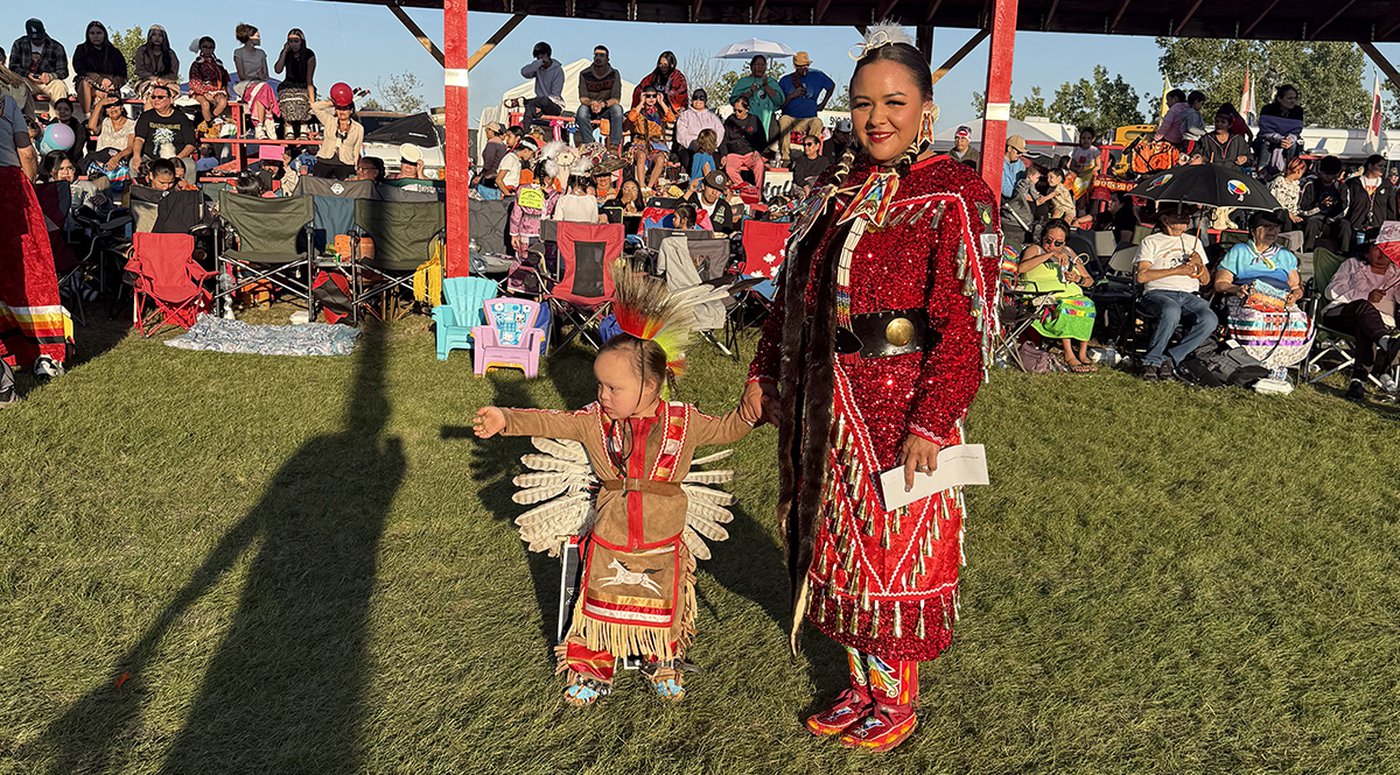
Beloved on the powwow circuit, young boy’s connection to the drum inspires
Now four, Waseskwan Redcrow was dancing ‘before he could even fully walk’ — his family says participating in powwows has brought them joy and belonging