A mistake is a gift: decolonizing journalism includes missteps and teachings
How can journalists improve relationships in the Indigenous communities we report on? Step intentionally into uncomfortable spaces when we make mistakes, and do the work to make things right

This story is a collaboration between IndigiNews and The Narwhal.
The Nisg̱a’a word for respect is kwhlix̱oosa’anskw.
Driving up to Nisg̱a’a territory to bear witness to a ceremony and take part in a feast, I knew there was going to be a lot of media at the events and I was concerned I might see some extractive or disrespectful behaviour. As a non-Indigenous journalist who lives near Nisg̱a’a lands, I am committed to decolonizing my journalism and know how easy it is to make a mistake.
I was worried there would be a lack of kwhlix̱oosa’anskw.
I’d spoken to Sigidimnak Nox̱s Ts’aawit (Amy Parent) a couple of weeks prior and she asked me to keep an eye out and gently step in if I saw any examples of that happening. But in the end, it was me.
Luu-giis n̓iiy̓, xts’iwaalhl wiliy̓is. I made a mistake, a bad mistake.
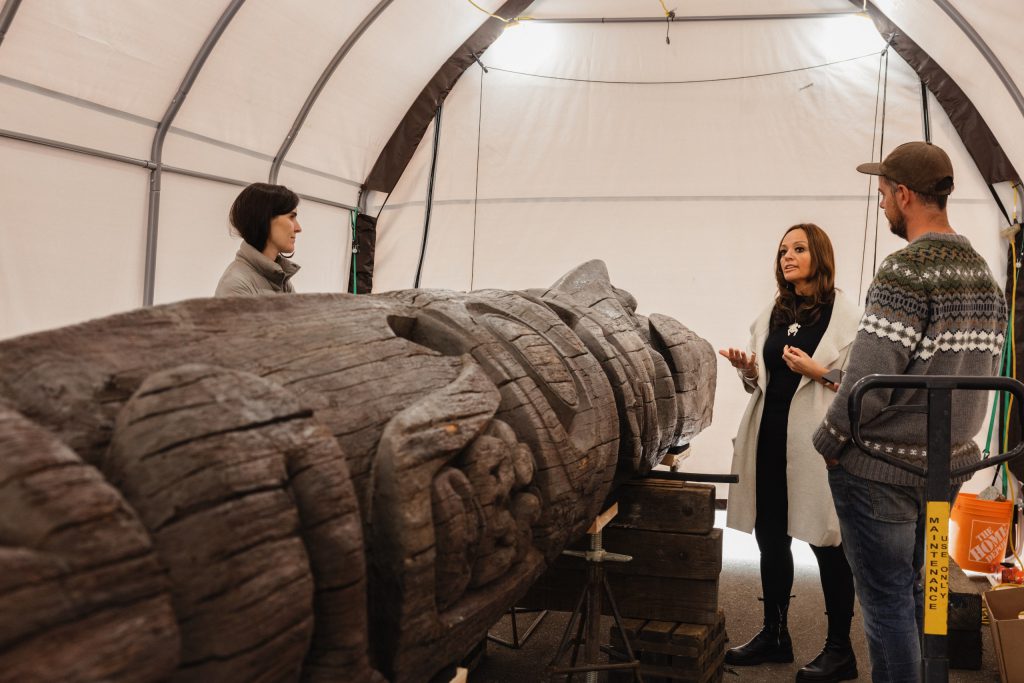
On Sept. 30, the day after the ceremony and feast, photographer Marty Clemens and I were taken inside a temporary structure in the village of Lax̱g̱altsʼap to see the Wilps Ni’isjoohl pst’aan (totem pole) — an ancestor that had been brought back to Nisg̱a’a lands nearly a century after it was stolen from the village of Ank’idaa. Protocol specifies no one but family members of Wilps (House) Ni’isjoohl is allowed to touch the ancestor.
Standing next to the pts’aan, her hand resting gently on it, Nox̱s Ts’aawit answered a few questions and told me about the crests carved into the pole. Marty did his best to take photos in the confined space.
She was talking about clashing worldviews, settler-colonial impacts and the importance of people being willing to express vulnerability when I heard the sound of a ladder clattering behind me. I later learned that Marty had been standing on a small step ladder to get an overhead angle of the pole when it suddenly gave way under him. Instinctively, he stopped his fall by bracing himself on the pole. We were a team and I feel responsibility for what happened.
Moments later, everything was done — interview over, cameras away, everyone out. But for Nox̱s Ts’aawit, Sim’oogit (Chief) Ni’isjoohl and family members, it was not over. Protocol had been breached. Ceremony had to be held to cleanse the pole before it could be raised.
I often tell my kids mistakes are gifts; what comes after a mistake is made, the learning experience, is what matters most. Working at The Narwhal, we are deeply committed to decolonizing our work, minds and hearts, and this mistake is teaching us that it’s a journey, a process. Journeys are rarely linear and often they include moments of stumbling, faltering, making mistakes. We are still learning.
Reporting in Indigenous communities — especially for non-Indigenous journalists — comes with great responsibility and requires a lot of care. For too long, media has been entrenched in colonial ideas and historically has been used as a tool or weapon that privileges settler-colonial ways of thinking over Indigenous ways of being. Starting to address that imbalance means you need to learn about the people whose land you’re on: protocol, ceremony, expectations. You need to be mindful of who you are and where you’re coming from, and continually question what you might be consciously or unconsciously carrying with you. You need to be patient. And, most of all, you need to be respectful.
As Anishinaabe educator Duncan McCue noted in Decolonizing Journalism, building relationships with the Indigenous communities we report on can be complex and messy.
“There will be missteps and miscommunication,” he wrote. “But it’s all about building trust. Over time, the benefits will be apparent.”
As we drove away from Nisg̱a’a territory that afternoon, Marty expressed his deep regret and admitted he didn’t know what to do. We’ve since reached out to Nox̱s Ts’aawit to apologize and ask for guidance. We’re waiting to find out the protocol for our next steps. Whatever it takes, we want to make things right — and using this as a teachable moment is part of that process. Nox̱s Ts’aawit said she wants others to learn from this and asked me to share what happened in a public way, to help us all collectively take a step forward.
What happened was avoidable. I’m left thinking that sometimes it’s best to walk away without getting the beautiful photo or that perfect interview moment. Be patient and accept that building trust takes time. And when mistakes are made — and they are inevitable — sit in the hard and uncomfortable space of apology. Do what’s needed; ask if you don’t know.
The ancestor was cleansed and blessed and, on Oct. 3, it was successfully raised inside Hli G̱oothl Wilp-Adoḵshl Nisg̱a’a (Heart of Nisg̱a’a House Crests, also known as the Nisg̱a’a Museum) where it now stands in soil gathered from Ank’idaa.
To Sim’oogit Ni’isjoohl, Sigidimnak Nox̱s Ts’aawit, and members of Wilps Ni’isjoohl, t’ooyaḵsiy̓ n̓isim̓ n̓isim̓ (thank you) and gwilks-at’itkws n̓iiy̓ loon (we apologize to you).
Author
We live in a media ecosystem that thrives on misinformation. Big Tech and AI companies are consuming the work of real human beings and Canadian news has been banned on Facebook and Instagram.
And yet, I have hope for journalism because of the work we’re doing at IndigiNews.
At IndigiNews, we embody tâpwêwin — the Cree value of integrity and responsibility in truth-telling. We are committed to our independent, Indigenous-led newsroom rooted in community, accountability, and relationality. We believe storytelling is a sacred fire that connects our pasts, presents, and futures through the storytellers in our Storytelling Lodge. IndigiNews creates space for Indigenous journalists, storytellers, Knowledge Keepers, and communities to gather, learn, and share stories that matter.
As a registered charity, we are building a fire that allows our work not just to ignite but to thrive. Rather than relying on advertising or corporate acquisition, IndigiNews is sustained by people like you who believe Indigenous stories are important for the future of our communities.
Your support is making a real difference.
Our community of supporters, our Firekeepers, make it possible to grow our newsroom, publish award-winning journalism, train emerging Indigenous journalists through initiatives like the ReFocus Photojournalism Fellowship, and publish trustworthy stories that serve our communities across the country. Every story we publish helps fill in gaps left by mainstream media and ensures Indigenous perspectives are represented with care, accuracy and respect.
But there is still more work to do.
As the media landscape becomes more and more uncertain, community support is as necessary and essential as it’s ever been. Every new Firekeeper helps protect the independence of our newsroom and strengthens journalism that is accountable to our many and varied communities over corporations.
That’s why we’re inviting you to become a Firekeeper.
Firekeepers tend to and protect the sacred fire. Your monthly contributions directly support IndigiNews’s Storytelling Lodge, helps sustain our independent, Indigenous-led newsroom, and ensures future generations of Indigenous storytellers have the resources they need to do the work.
As a registered Canadian charity, all eligible donations receive a charitable tax receipt.
If you believe Indigenous stories matter, if you value independent journalism, and if you want to help build a strong future for Indigenous media, we invite you to join our circle of Firekeepers today.
Together, we can keep the fire burning.
— Eden Fineday, Publisher, IndigiNews
Support us nowLatest Stories
-
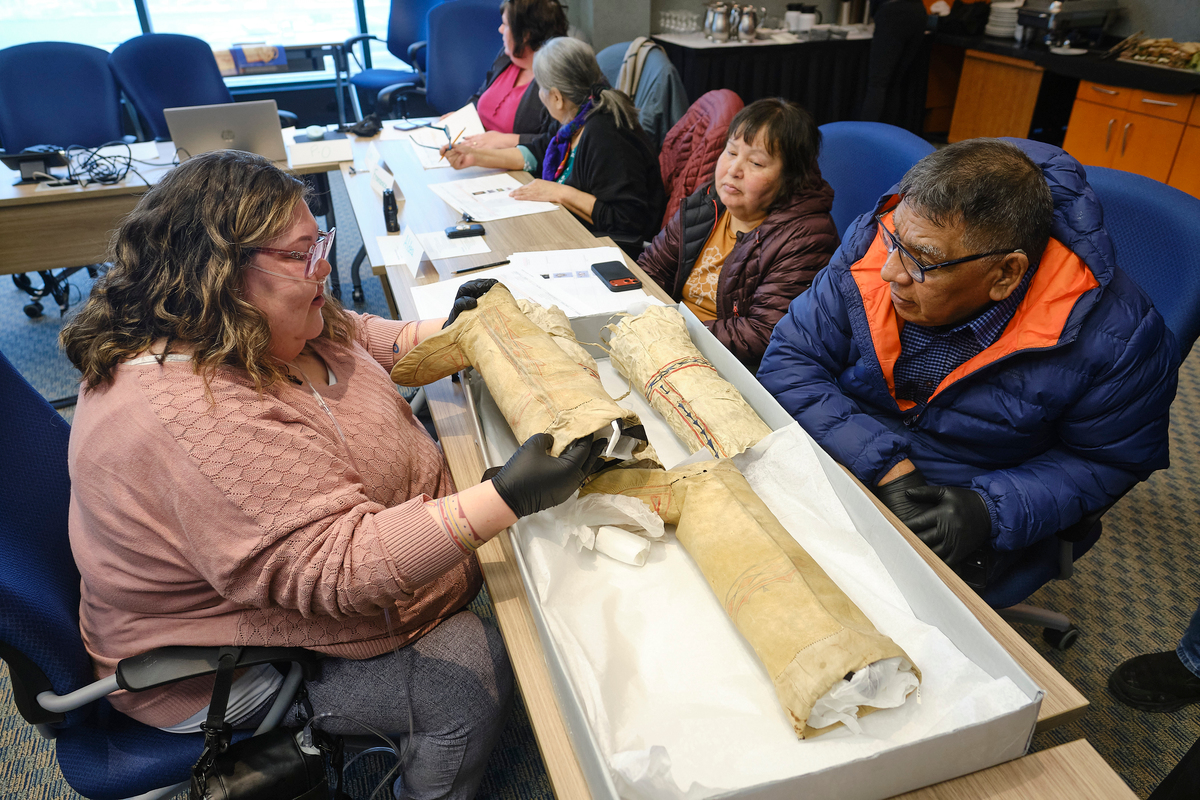
‘Newfoundland’ claims Europeans arrived before the Innu. ‘People don’t disappear,’ counters archeologist
Smithsonian archeologist Stephen Loring’s research is being disputed by the province’s own Archeology Office. He fears the government’s censorship of Innu history is being used ‘to promote a political agenda like land claims’
-
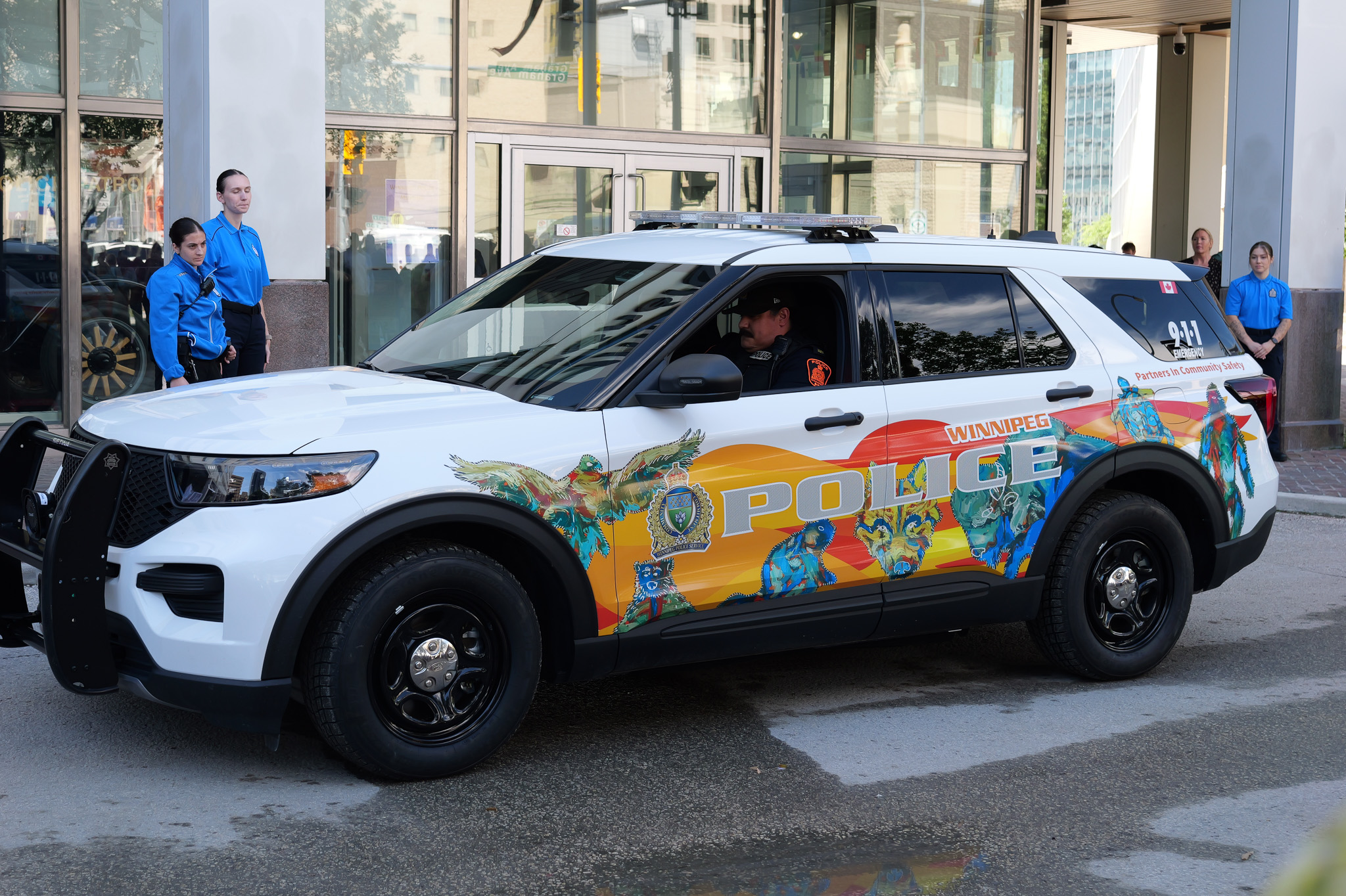
Winnipeg cops unveil ‘reconciliation’ cruiser — but critics are unimpressed
Force says the police car emblazoned with Indigenous art not for enforcement but education. Advocates say the gesture is ‘uncomfortable’ and ‘unsettling’ — especially amidst a drug-use crackdown they say targets Indigenous people