Honouring my ancestor’s remains — at a Smithsonian warehouse
The remains of Little Poplar, a Plains Cree man who was killed in 1886, should be returned to his people in ‘Montana,’ writes IndigiNews publisher Eden Fineday

This story originally appeared in the Washington Post here and is reprinted with permission and minor style edits.
Before the Smithsonian employee leaves me alone with my relative’s skull, she flicks a switch on the wall and the ventilation system begins to whir. She has lit a charcoal for me and pulled down the blinds in the small ceremony room. She closes the door behind her, and I am alone with my ancestor. I’m nervous. I’ve never done this before.
I have come from “Canada” to this Smithsonian storage facility with my medicines, my intentions and my songs. I am here to honour my relative. His cranium has been wheeled into the room on a cart, covered respectfully with a white cloth.
This facility is somewhere in “Maryland.” I was brought here on a shuttle bus that leaves from in front of the Museum of Natural History in “D.C.” every hour.
“Can I burn sweetgrass?” I had asked before I came.
“Of course,” had been the answer.
I place one of my plant medicines on the hot charcoal, and the sweet-smelling smoke begins washing over me, cleansing me, preparing me to receive ancestral visitors from the spirit world. I take out my rattle and I begin to sing, inviting into the room spirits from various dimensions who are my helpers. I call them in with a sacred song that my dad has given me explicit permission to use.
I’ve been told that, once upon a time, ceremonies like this — with sacred songs and spirit helpers — were commonplace. That there were camps of our people who were in touch with the spiritual dimension. They sang to bring forth their spirit helpers, who would guide them along their life’s journey. These ceremonies were never meant to be exclusive, although they are today, in practice. They are my birthright — and the birthright of all Cree people.
Through song, I beseech the grandmothers and grandfathers to take pity on me, for I am but a pitiful human. Then it’s time to pull back the white cloth covering my relative and acknowledge why I came. The sight of his skull is shocking. The barbarism that led to it being on this trolley in this quiet warehouse on this windy March day in 2024 is beyond my comprehension.
But I’m not here to think about that. I sing for him. I pray for him.
His name was kah-mîtosis, or Little Poplar. In 1886, he was shot and killed in or near Fort Assinniboine, a former military post in “Montana.” To understand what he was doing there, you have to understand a little about how the Plains of “Canada” and the “United States” were settled — cleared of Indians so that Whites could take over the land.
The Plains Cree once had everything we could ever want or need, and almost all of it — food, shelter, clothing, tools, recreation — was provided by the bison. European settlers understood that to “civilize” the Plains, the Indians needed to go. Because we were wholly dependent on bison for sustenance, they launched a campaign to decimate the bison population, and it was successful. An estimated 30 million to 60 million bison were killed by settlers. By the 1890s, only a few hundred were left.
For us and all Plains Indians — more than two dozen nations including the Arapaho, the Lakota and the Crow — the effect was catastrophic. Hundreds of thousands of people starved. The loss of the bison was the beginning of the end of my people’s traditional way of life. Without our main food source, our bargaining power was greatly reduced, and survival became predicated on accepting treaties from the governments of “Canada” and the “United States.”
We did not give up our way of life without a fight. Many uprisings took place in the late 1800s, attempts to stop the newcomers from taking over the Plains. My relative, Little Poplar, took part in the resistance. He was a prominent warrior in Big Bear’s band of Plains Cree, as the letter that was sent with his skull to the Smithsonian attests. This was one of the largest Cree groups on the Plains, and the last in “Canada” to accept English rule.
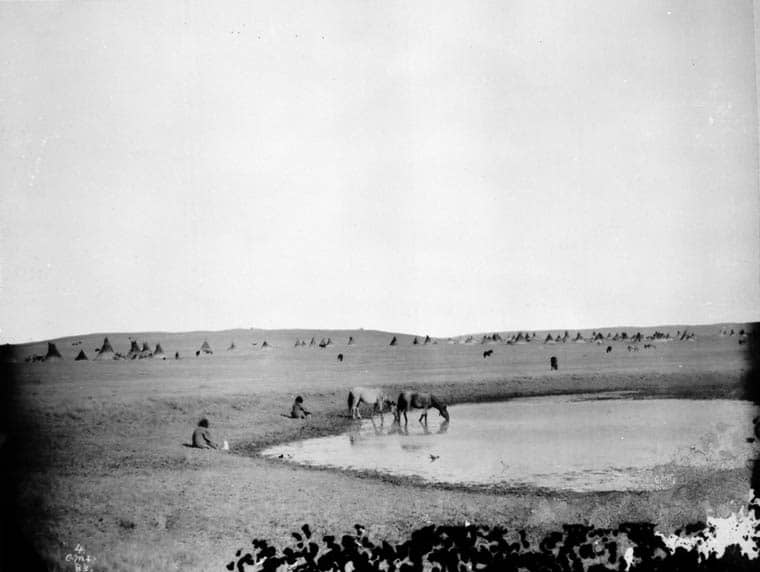
In 1885, after the band was implicated in a skirmish that left nine settlers dead at Frog Lake, “Saskatchewan,” Big Bear was arrested and imprisoned, and Little Poplar became a wanted man with a $2,000 bounty on his head. To evade the local authorities, he fled south into “Montana.”
“You know,” my dad told me, “if you go through North-West Mounted Police records of 1884, you will find mention of Little Poplar being seen or spotted in different parts of the country, and they think that he’s heading to the northwest to take part in the rebellion and, you know, that he was a guy that they had to watch.”
But Little Poplar died the way he lived: free on the prairies and plains, like his forebears. He never lived on a “Canadian” reserve or an “American” reservation.
After his death, Little Poplar’s remains were dug up and sent to the Smithsonian, then transferred to the Army Medical Museum and finally sent back to the Smithsonian sometime in the 1890s. In the process, his identifying information became separated from his remains.
More than a century later, in 2018, a graduate student in “Saskatchewan” who had come to know another branch of the family in Maskwacis, “Alberta,” emailed the Smithsonian to ask about Little Poplar’s skull. Her question prompted a review of the archives, and the misfiled information was discovered and corrected.
I’ve learned that there are three known branches of Little Poplar’s descendants: the people in Maskwacis, my family from the Sweetgrass reserve in “Saskatchewan” and another group living on Rocky Boy’s Reservation in “Montana,” about 22 miles from the old Fort Assinniboine. When I reached out to the Smithsonian, I was excited to learn that the community of Chippewa-Cree on Rocky Boy’s had been in touch with them to repatriate Little Poplar’s remains.
Apparently, they know the site of Little Poplar’s original grave. He probably never set foot on Sweetgrass, but he died on land that became part of the Rocky Boy’s Reservation. It makes sense to me that his remains should be returned to his original grave.
The man who took Little Poplar’s bones and “donated” them to the Smithsonian was Charles E. Woodruff, an Army surgeon at Fort Assinniboine. His letter to the assistant curator of the anthropology department in the U.S. National Museum (later the National Museum of Natural History) begins: “My Dear Hough: I send you by express for the Smithsonian an Indian skull and I think you have none like it, and it may be of value to your section. It is the skull of ‘Little Poplar’ a Cree sub-chief from Canada.”
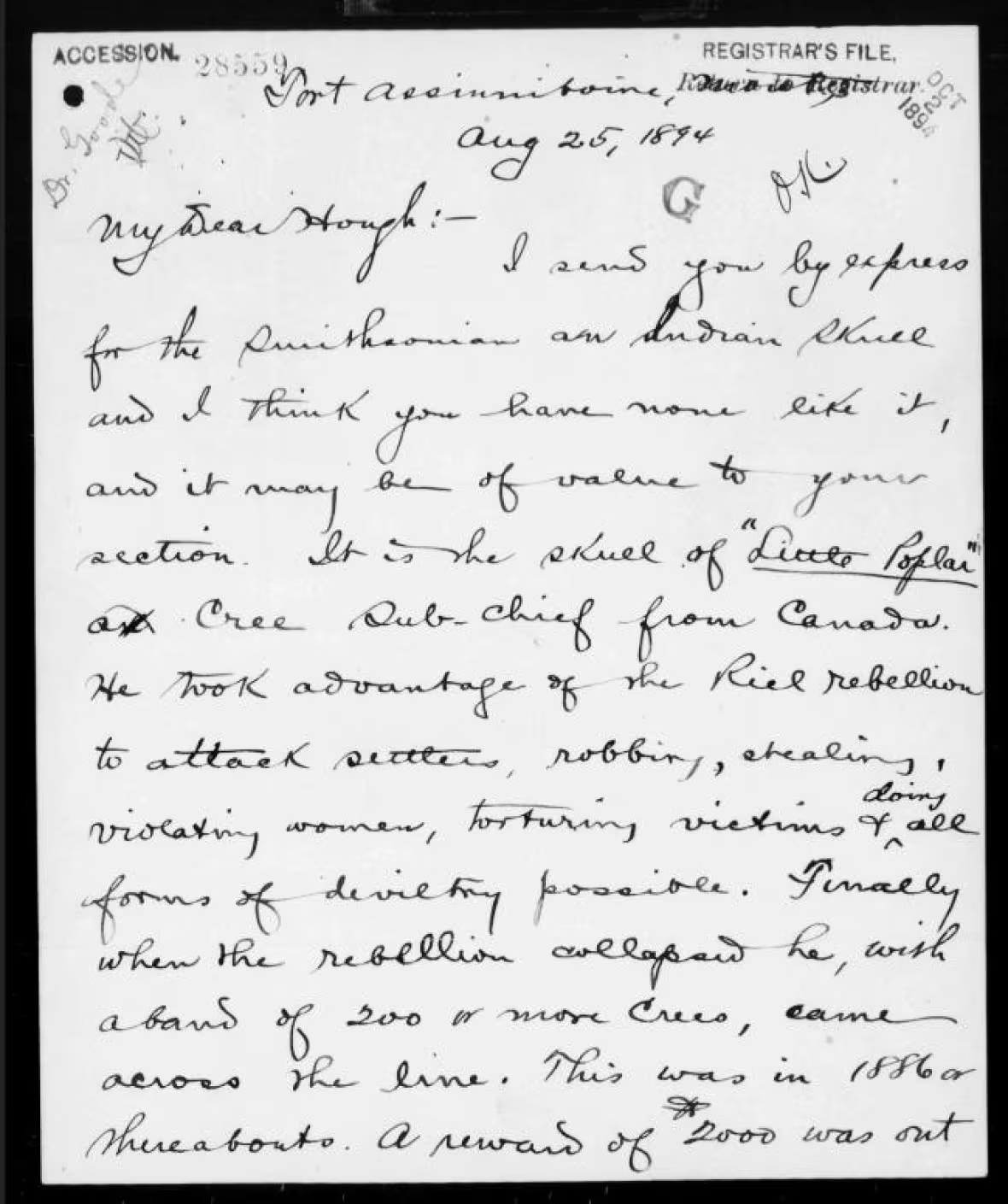
Woodruff describes how Little Poplar died and how he came across the remains:
“In Aug. 1886 he was murdered right here in this post by a half-breed, who, it is thought, received the [$2,000] reward or part of it. He was buried nearby and a soldier watched the grave for several years and when the flesh was all off he took the skull out and kept it as a relic. I have been on the track of the skull for two years but did not succeed in getting it until yesterday.”
Woodruff goes on to describe the ransacking of my great-great-grandfather’s grave. “Today I went up to the grave with the man who had secured the skull,” he writes. “Together we collected the bones remaining and a few odds + ends — the soles of his moccasins, a few modern beads, a modern cartridge belt and a pistol.”
None of these items are known to be at the Smithsonian.
These are the awful facts of what became of Little Poplar’s remains. His grave was desecrated, something that today would be a crime in all 50 American states (and under the Criminal Code of Canada). White men reduced him to a thing, not a person. It hurts to think that he wasn’t considered human in the same way Woodruff and his associates were.
I am no longer alone as I sing and smudge, allowing the medicine smoke to fill the room. I express my gratitude and make a promise: I will come back. When it is time, I will come back and ensure that you are brought home where you belong.
When my ceremony is finished, I carefully place a sacred cloth under my relative, cover him again with the museum’s white cloth and inform the museum employee that I am done. She enters the room and wheels him away. I avoid watching them leave, not wanting to see where he is kept now.
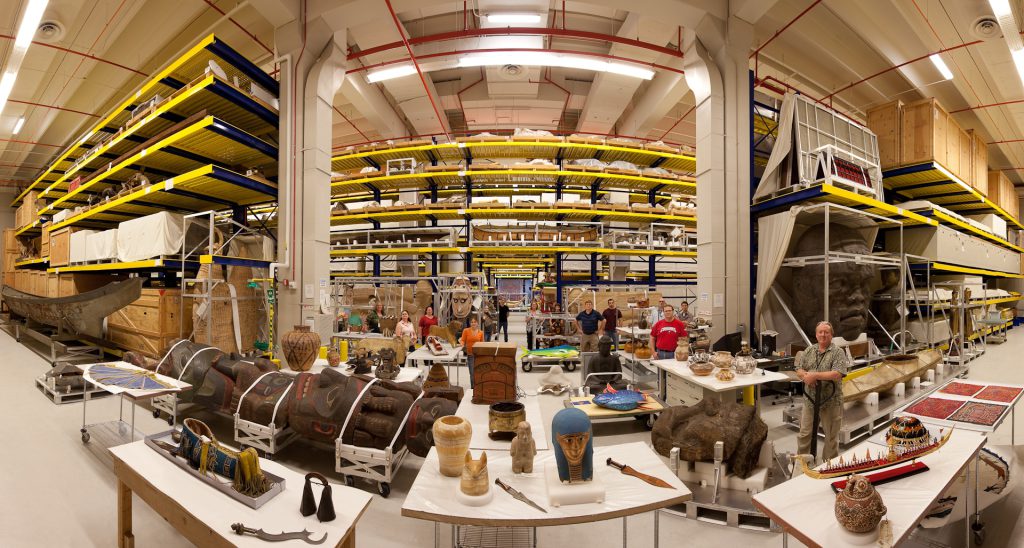
Other staff members show me around the storehouse, and I see artifacts plundered from many cultures: Choctaw, Cree, Lakota, Apache, Dine, Dene.
But I am tired and don’t stay long. Back in my hotel room in Washington, I think about Little Poplar, Woodruff and myself, born of the Plains Cree and the Ukrainian immigrants who settled in Cree territory after the land had been cleared.
Despite all that my ancestors endured, we are still here. Little Poplar’s progeny had children of their own, which is why some of my cousins now carry Little Poplar as a last name. We have been forced to assimilate to some degree, but we have also maintained our culture. Like the bison, we are growing in number and getting stronger again.
My dad says we should reach out to both of the other families of Little Poplar’s descendants. Perhaps when he is returned to Rocky Boy’s, we can all be part of a repatriation ceremony.
Author
We live in a media ecosystem that thrives on misinformation. Big Tech and AI companies are consuming the work of real human beings and Canadian news has been banned on Facebook and Instagram.
And yet, I have hope for journalism because of the work we’re doing at IndigiNews.
At IndigiNews, we embody tâpwêwin — the Cree value of integrity and responsibility in truth-telling. We are committed to our independent, Indigenous-led newsroom rooted in community, accountability, and relationality. We believe storytelling is a sacred fire that connects our pasts, presents, and futures through the storytellers in our Storytelling Lodge. IndigiNews creates space for Indigenous journalists, storytellers, Knowledge Keepers, and communities to gather, learn, and share stories that matter.
As a registered charity, we are building a fire that allows our work not just to ignite but to thrive. Rather than relying on advertising or corporate acquisition, IndigiNews is sustained by people like you who believe Indigenous stories are important for the future of our communities.
Your support is making a real difference.
Our community of supporters, our Firekeepers, make it possible to grow our newsroom, publish award-winning journalism, train emerging Indigenous journalists through initiatives like the ReFocus Photojournalism Fellowship, and publish trustworthy stories that serve our communities across the country. Every story we publish helps fill in gaps left by mainstream media and ensures Indigenous perspectives are represented with care, accuracy and respect.
But there is still more work to do.
As the media landscape becomes more and more uncertain, community support is as necessary and essential as it’s ever been. Every new Firekeeper helps protect the independence of our newsroom and strengthens journalism that is accountable to our many and varied communities over corporations.
That’s why we’re inviting you to become a Firekeeper.
Firekeepers tend to and protect the sacred fire. Your monthly contributions directly support IndigiNews’s Storytelling Lodge, helps sustain our independent, Indigenous-led newsroom, and ensures future generations of Indigenous storytellers have the resources they need to do the work.
As a registered Canadian charity, all eligible donations receive a charitable tax receipt.
If you believe Indigenous stories matter, if you value independent journalism, and if you want to help build a strong future for Indigenous media, we invite you to join our circle of Firekeepers today.
Together, we can keep the fire burning.
— Eden Fineday, Publisher, IndigiNews
Support us nowLatest Stories
-
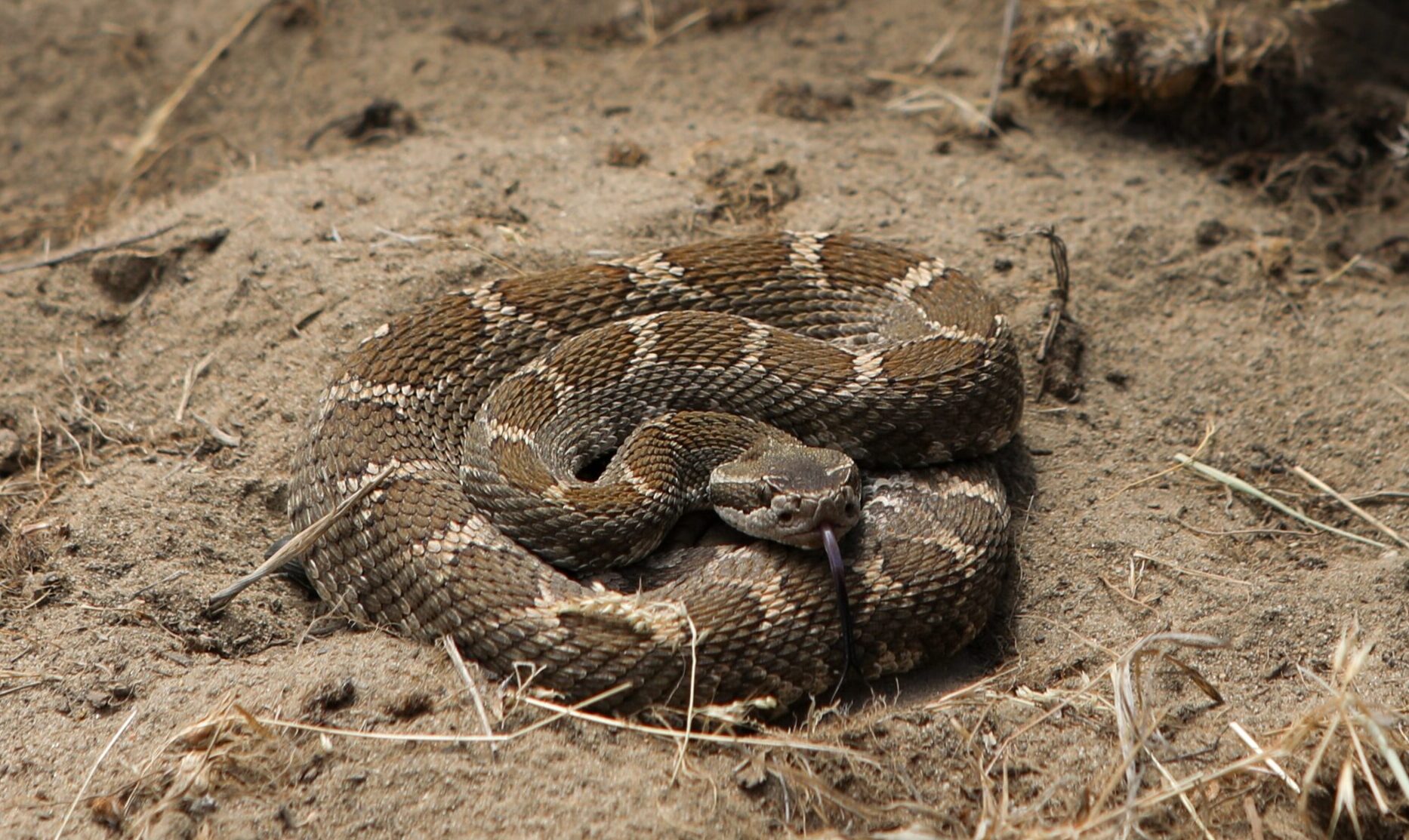
In the Okanagan desert, snakes offer lessons on protecting a fragile ecosystem
For two decades, researchers at the Nk’Mip Desert Cultural Centre have tracked snakes across syilx homelands — while helping people appreciate the often-feared creatures
-
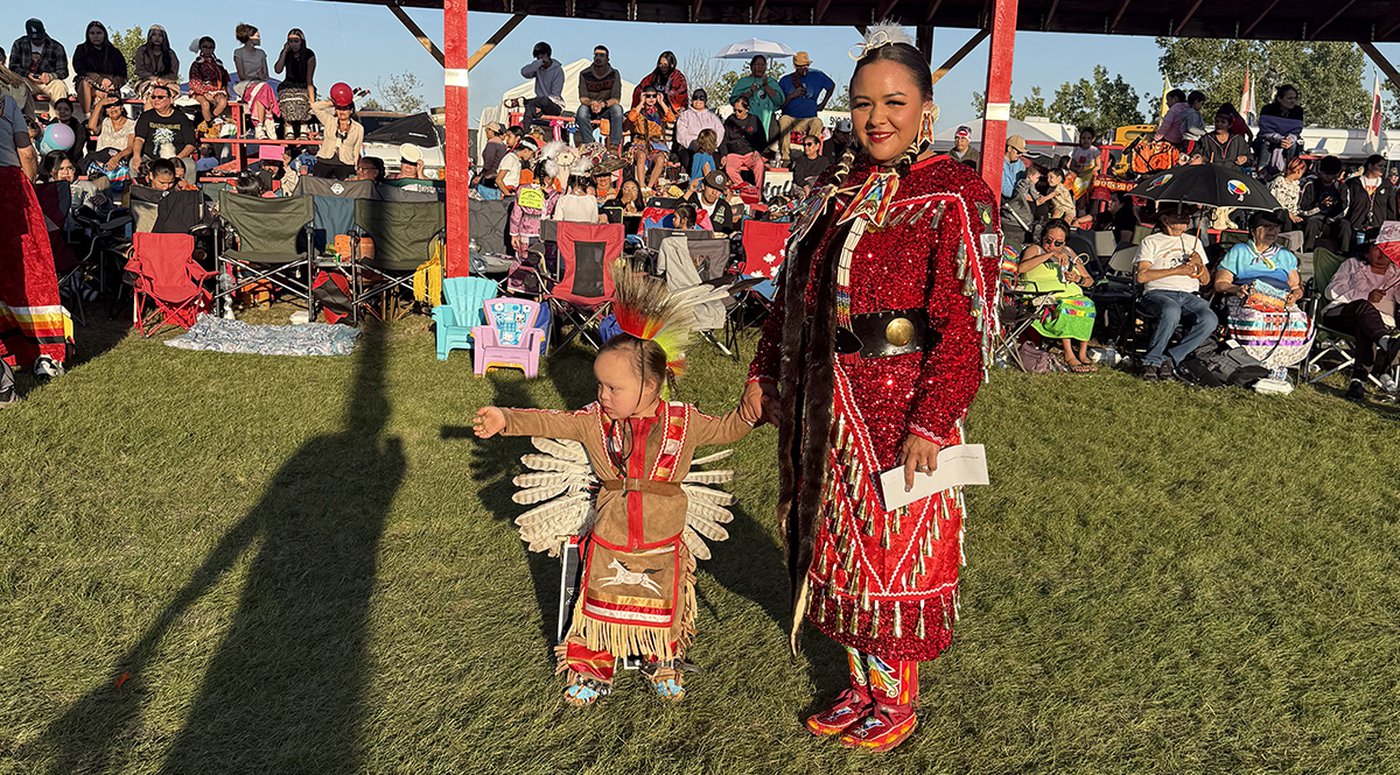
Beloved on the powwow circuit, young boy’s connection to the drum inspires
Now four, Waseskwan Redcrow was dancing ‘before he could even fully walk’ — his family says participating in powwows has brought them joy and belonging