‘These names were stolen:’ B.C. MLA pushes for including Indigenous names on government ID, birth registrations
Indigenous Names Statutes Amendment Act is headed to a second reading before becoming legislated

Content Warning: This story mentions Canada’s residential “school” system. Please prioritize your wellness and spirit, and read this with care. Indigenous Names
Indigenous people in what is colonially known as British Columbia have long deserved, and desired, to use their Indigenous names, including special characters and syllabics, on government-issued identification. Now, the topic is up for discussion.
This comes after Columbia River Revelstoke Liberal MLA, Doug Clovechok, brought forward a new private members bill, titled the Indigenous Names Statutes Amendment Act, which would allow for the use of Indigenous names (with special characters and syllabics, to match traditional pronunciation) on all sources of government-issued ID, including birth registrations.
Currently, this isn’t possible whenever the characters to spell traditional names fall outside of the Latin alphabet. Clovechok said it’s as simple as allocating funding to support the creation of new software which would make this possible.
In 2021, the federal government announced reclaiming Indigenous names on citizenship and refugee documents. However, they still need to be printed in the Roman alphabet (also known as the Latin alphabet) and only some accents are permitted—meaning still not a complete recognition of special characters, numbers, and accents used in written Indigenous languages.
In Northwest Territories, groups are pushing for bureaucratic systems to recognize the proper spelling of names, with the proper characters, and for the ability to display these names on birth certificates and passports.
It’s also back on the table in Manitoba, where much discussion has taken place over allowing Indigenous names on provincial identification. There, it was reported that the Ministry for Labour, Consumer Protection and Government Service seems open to it but the government has openly said they’re working on getting it right through extensive consultation, before implementation.
The idea for this bill was originally brought forward to Clovechok by a Golden High School student in a letter. The message, Clovechok said, demanded he address the loss of Indigenous culture at the hands of residential “schools”. In his presentation to parliament on May 19, Clovechok thanked her for her vision and gave her the credit.
“[The letter] not only touched me, but second of all, it just made nothing but sense. This needs to be corrected,” Clovechok told IndigiNews.
“The importance of making it real, is that these names were stolen from these children, and stolen from their children, and their grandchildren,” said Clovechok.
Leading up to this, Clovechok said, the high school student was inspired to write to him after taking a course in her high school which taught students about the atrocities Indigenous people of so-called “Canada” experienced in Canada’s residential “schools”. Within this state and church system, their names were wiped, in an act of genocide.
The letter she penned to Clovechok referenced the Truth and Reconciliation Commission 94 Calls to Action. In her letter, she stated “I’m writing my MLA, and I expect you to do something.”
“This [letter] totally resonated with me and for me — and it happened, and I’m just so proud of it,” Clovechok said.
The path to legislation
The province has already suggested in its provincial Declaration on Rights of Indigenous People (Declaration Act) that was released in April, that they intend for the Ministry of Citizens’ Services to “adopt an inclusive digital font that allows for Indigenous languages to be included in communication, signage, services and official records.”
Although the Ministry of Citizens’ Services doesn’t say when the option for special characters and syllabics will be available they do say the work is underway.
“We’re committed to addressing this issue, and this work is already underway. This includes working to enable diacritical markers to issue identification with traditional Indigenous names,” the Ministry of Citizens’ Services told Indiginews.
“Connectivity between systems, and government programs that rely on those systems, means that changes need to be co-ordinated to ensure people’s names can be consistently recognized and integrated with associated data to provide services. This work must be done in a thoughtful way across government, and with cross-jurisdictional agencies. Without co-ordinated changes there could be significant impact to services for people in B.C.”
The B.C. Declaration Act was passed into law in November 2019, and the newly released action plan is intended to be implemented over the next five years to align its provincial legislation with the declaration.
When Clovechok brought it forward to the B.C. Liberal caucus, Clovechok said he received nothing but encouragement.
This new member bill, presented this month during the Third Session of the 42nd Parliament by Clovechok, specifically proposes that the registrar general not refuse birth registrations, adoption registrations, or change of name applications, “on the basis that the name sought to be registered is written in an Indigenous language and contains characters other than Latin alphabetic letter, certain symbols and accents, and numbers.”
The first reading of the bill was passed unanimously by the MLAs present, and it is set to be brought back at the next sitting for a second reading.
However, this isn’t a guarantee that it will be passed.
If the bill doesn’t pass a second reading, Clovechok said he plans on reintroducing it again at a later time.
Author
We live in a media ecosystem that thrives on misinformation. Big Tech and AI companies are consuming the work of real human beings and Canadian news has been banned on Facebook and Instagram.
And yet, I have hope for journalism because of the work we’re doing at IndigiNews.
At IndigiNews, we embody tâpwêwin — the Cree value of integrity and responsibility in truth-telling. We are committed to our independent, Indigenous-led newsroom rooted in community, accountability, and relationality. We believe storytelling is a sacred fire that connects our pasts, presents, and futures through the storytellers in our Storytelling Lodge. IndigiNews creates space for Indigenous journalists, storytellers, Knowledge Keepers, and communities to gather, learn, and share stories that matter.
As a registered charity, we are building a fire that allows our work not just to ignite but to thrive. Rather than relying on advertising or corporate acquisition, IndigiNews is sustained by people like you who believe Indigenous stories are important for the future of our communities.
Your support is making a real difference.
Our community of supporters, our Firekeepers, make it possible to grow our newsroom, publish award-winning journalism, train emerging Indigenous journalists through initiatives like the ReFocus Photojournalism Fellowship, and publish trustworthy stories that serve our communities across the country. Every story we publish helps fill in gaps left by mainstream media and ensures Indigenous perspectives are represented with care, accuracy and respect.
But there is still more work to do.
As the media landscape becomes more and more uncertain, community support is as necessary and essential as it’s ever been. Every new Firekeeper helps protect the independence of our newsroom and strengthens journalism that is accountable to our many and varied communities over corporations.
That’s why we’re inviting you to become a Firekeeper.
Firekeepers tend to and protect the sacred fire. Your monthly contributions directly support IndigiNews’s Storytelling Lodge, helps sustain our independent, Indigenous-led newsroom, and ensures future generations of Indigenous storytellers have the resources they need to do the work.
As a registered Canadian charity, all eligible donations receive a charitable tax receipt.
If you believe Indigenous stories matter, if you value independent journalism, and if you want to help build a strong future for Indigenous media, we invite you to join our circle of Firekeepers today.
Together, we can keep the fire burning.
— Eden Fineday, Publisher, IndigiNews
Support us nowLatest Stories
-
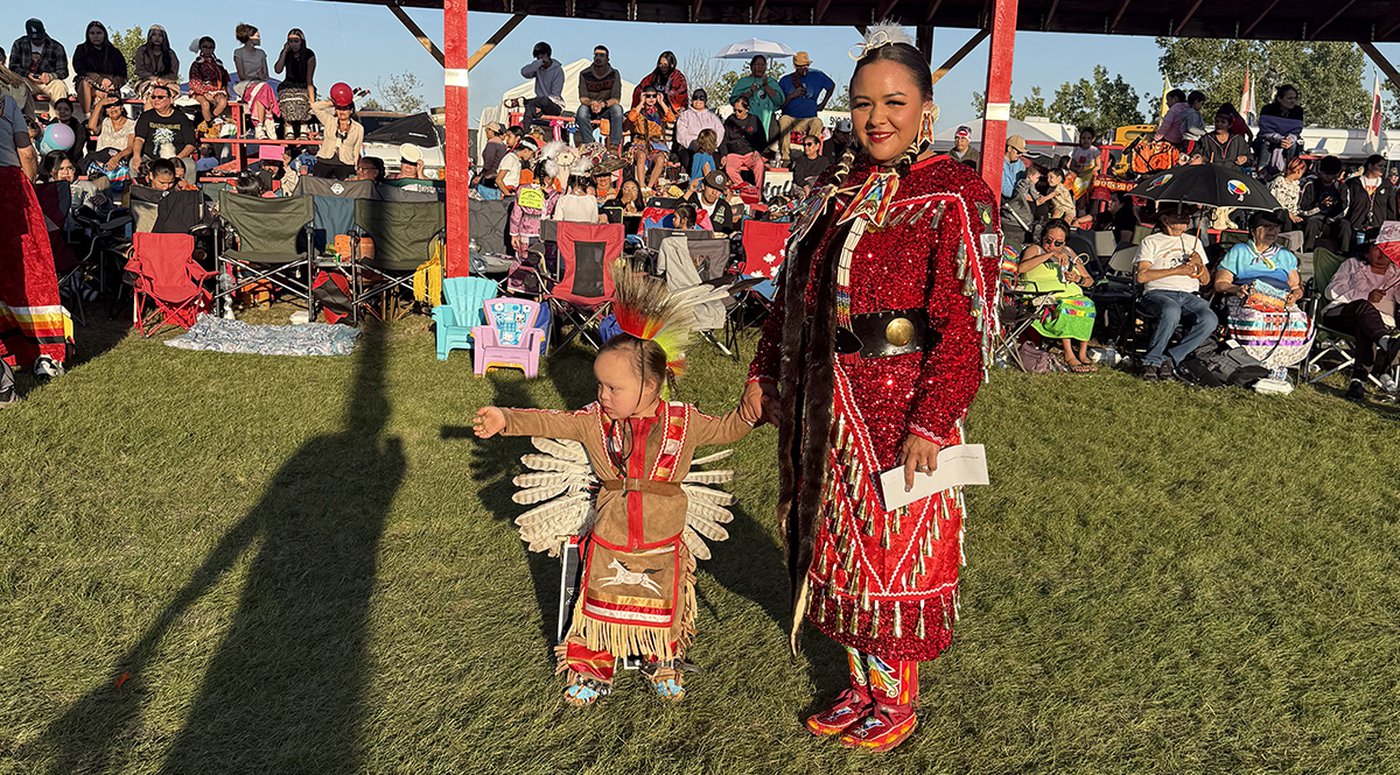
Beloved on the powwow circuit, young boy’s connection to the drum inspires
Now four, Waseskwan Redcrow was dancing ‘before he could even fully walk’ — his family says participating in powwows has brought them joy and belonging
-
Indigenous leaders give the UN a roadmap for protecting their peoples
Amidst prayers and vows of solidarity, UN Expert Mechanism on the Rights of Indigenous Peoples ends annual meetings with demands for ‘action we’re not seeing globally’