Healing trauma through culture
How Lyla Harman of Cowichan Tribes weaves languages, songs, arts and the land into her counselling practice.

Counsellor Lyla Harman — or Peye’tunaat — says “culture is prevention” when it comes to healing from trauma.
She’s a registered clinical social worker based in Cowichan Tribes traditional territory who specializes in supporting individuals, couples, and families healing from trauma. She says she often integrates Indigenous languages, songs, knitting, basket weaving, carving and painting in her counselling practice.
They are “still processing and talking about what we were learning … but doing it with our hands, moving the material … through us.”
Harman says she wanted to become a counsellor so she could “walk with other people on their healing journey” as they heal from trauma. “Their healing journey is just as important as it was for me to heal from the impacts of trauma and sexual abuse growing up.”
A member of Cowichan Tribes, Harman says she’s served her community as a counsellor for the past 12 years “doing one-on-one counselling, working with groups, working with women healing from the impacts of trauma and colonization and the impacts of residential school.”
She has a masters in social work from the University of British Columbia, and three years ago she launched Cedar Wellness with an aim to create a “sacred space of healing to honour inner wisdom, growth and new possibilities.”
She’s working to address trauma through a family systems therapy model that implements Indigenous perspectives — and she’s educating others to do the same.
Healing through language, stories, art and land
When Harman works within her Cowichan Tribes community, she says she’ll often start a session by inviting people to introduce themselves by their traditional names “because that’s who we are and where we come from.”
She also calls out the ongoing impacts of colonialism.
“We come from hard-working people … who are connected to the land, our rivers, our culture, our traditions, and a very communal way of living in longhouses. I go way back there because we’re decolonizing — we’re taking apart the stereotypes of ‘the lazy Indian.’”
In her counselling practice, she tries to get “out in nature as much as possible,” inviting people to walk with her on the land, harvest cedar or can salmon, depending on the season.
“It’s kind of respecting the time of the year,” she says. “I have a therapeutic dog, so we take the dog for a walk … it could be going for a drive and being down by the ocean.”
She works with kids and adults, and she says her practice is based on the Satir model, established by therapist Virginia Satir.
“I was in my undergrad, and I was really trying to find a counselling approach that fit myself as an Indigenous woman and wanting to work within First Nations communities,” says Harman.
She says the Satir model stood out to her because it’s holistic, trauma-informed and makes space for spirituality.
“It is a systemic approach, which looks at least three generational impacts of the family … how our parents were raised, how we were raised, how our grandparents were raised,” Harman says. “And how does that impact us? And how can we have awareness around it to create change for the future?”
Respecting diversity in Indigenous communities
Harman says she offers workshops on trauma-informed practices to Indigenous communities across Indigenous territories, colonially known as Vancouver Island. Recently she was invited by the Virginia Satir Global Network — a network dedicated to educating and advancing the use of the Satir model in counselling practices — to speak about her work.
Counsellors should be aware of the impacts of colonization, respect the diversity within Indigenous communities and avoid taking a pan-Indigenous approach, she says.
“Anyone working within the First Nations communities in a healing context [should] educate themselves,” she says. “I don’t think it’s the client’s responsibility to be educating [them].”
She tailors her training to a community’s specific needs. For example, some communities she’s worked with want “to know more about healing from childhood sexual abuse.” Others are looking for training focused on grief and loss.
When working with individuals, she’s also mindful that “everyone’s at different places and stages.
“I ask the question: ‘What does culture mean to you?’ … And I just have a conversation around what is that for them. It’s not going to be a universal approach. I’m not going to do the same thing for each person.”
Harman says she plans to deepen her understanding of trauma-informed practice and decolonizing methods as she pursues a PhD in interdisciplinary studies over the next few years.
Author
We live in a media ecosystem that thrives on misinformation. Big Tech and AI companies are consuming the work of real human beings and Canadian news has been banned on Facebook and Instagram.
And yet, I have hope for journalism because of the work we’re doing at IndigiNews.
At IndigiNews, we embody tâpwêwin — the Cree value of integrity and responsibility in truth-telling. We are committed to our independent, Indigenous-led newsroom rooted in community, accountability, and relationality. We believe storytelling is a sacred fire that connects our pasts, presents, and futures through the storytellers in our Storytelling Lodge. IndigiNews creates space for Indigenous journalists, storytellers, Knowledge Keepers, and communities to gather, learn, and share stories that matter.
As a registered charity, we are building a fire that allows our work not just to ignite but to thrive. Rather than relying on advertising or corporate acquisition, IndigiNews is sustained by people like you who believe Indigenous stories are important for the future of our communities.
Your support is making a real difference.
Our community of supporters, our Firekeepers, make it possible to grow our newsroom, publish award-winning journalism, train emerging Indigenous journalists through initiatives like the ReFocus Photojournalism Fellowship, and publish trustworthy stories that serve our communities across the country. Every story we publish helps fill in gaps left by mainstream media and ensures Indigenous perspectives are represented with care, accuracy and respect.
But there is still more work to do.
As the media landscape becomes more and more uncertain, community support is as necessary and essential as it’s ever been. Every new Firekeeper helps protect the independence of our newsroom and strengthens journalism that is accountable to our many and varied communities over corporations.
That’s why we’re inviting you to become a Firekeeper.
Firekeepers tend to and protect the sacred fire. Your monthly contributions directly support IndigiNews’s Storytelling Lodge, helps sustain our independent, Indigenous-led newsroom, and ensures future generations of Indigenous storytellers have the resources they need to do the work.
As a registered Canadian charity, all eligible donations receive a charitable tax receipt.
If you believe Indigenous stories matter, if you value independent journalism, and if you want to help build a strong future for Indigenous media, we invite you to join our circle of Firekeepers today.
Together, we can keep the fire burning.
— Eden Fineday, Publisher, IndigiNews
Support us nowLatest Stories
-
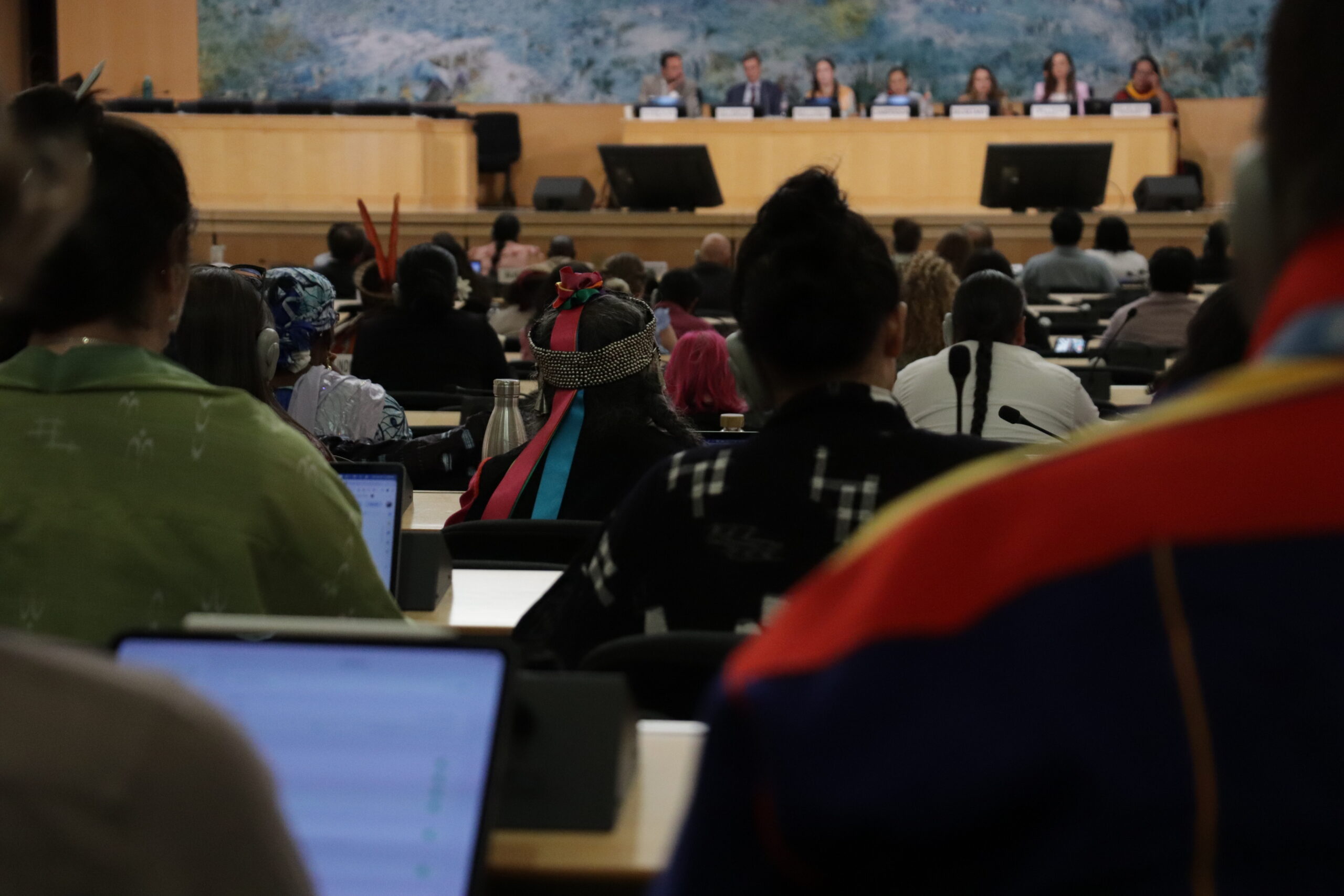
Indigenous leaders give the UN a roadmap for protecting their peoples
Amidst prayers and vows of solidarity, UN Expert Mechanism on the Rights of Indigenous Peoples ends annual meetings with demands for ‘action we’re not seeing globally’
-
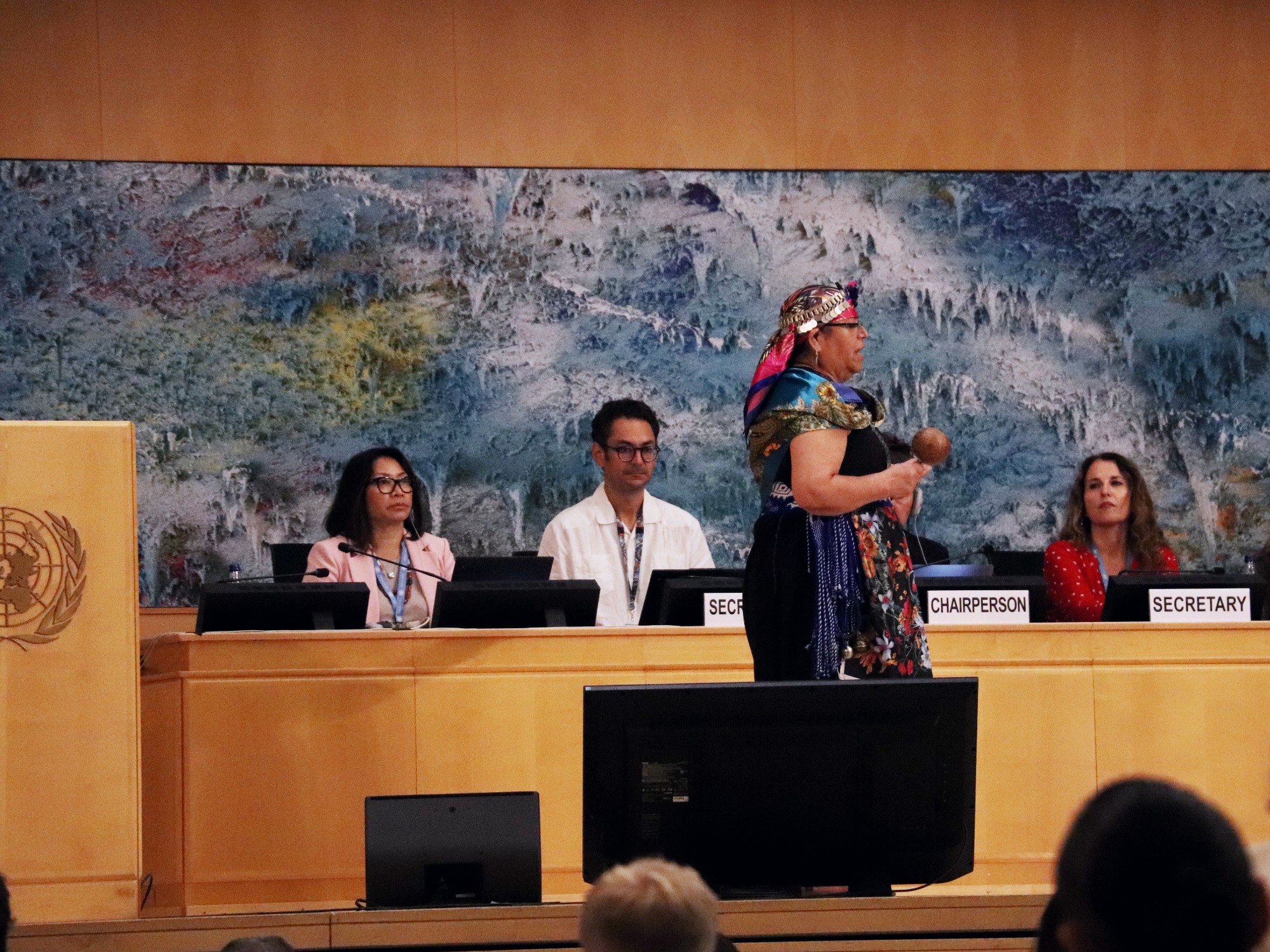
Indigenous people demand more say at the UN, as new crises hit their homelands
Indigenous nations live ‘on the frontlines’ of climate, conflict and new tech. But their voices remain sidelined in the global halls of power.