Cowichan Tribes actor puts legendary story of Chief Tzouhalem on the big screen
‘It’s our time to tell what we’ve been wanting to tell. We have stories and they’re endless,’ says Harold Joe.
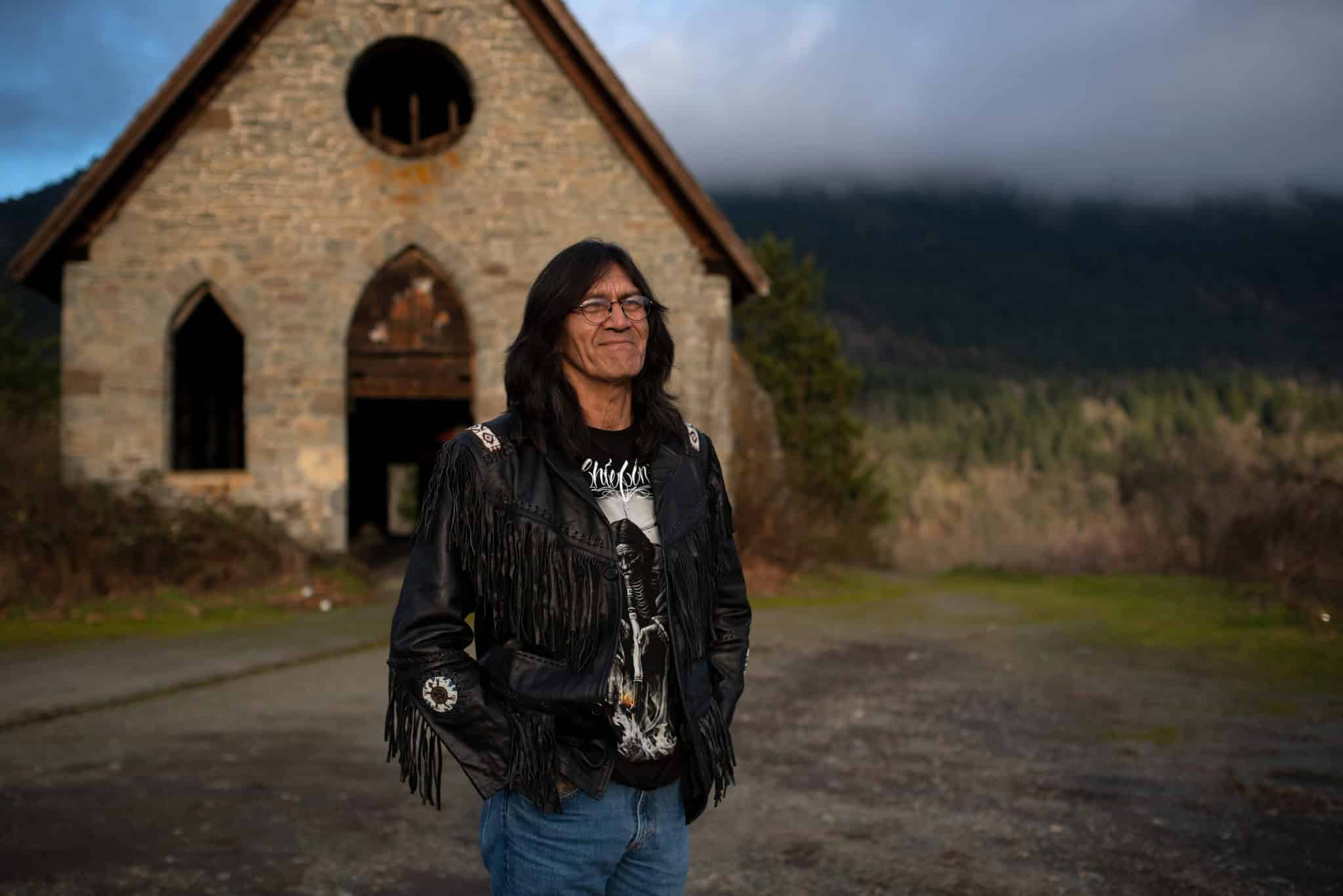
Harold Joe (Xulputstun), a Cowichan Tribes actor, grew up comparing himself to the legendary Chief Tzouhalem. The story of the former Cowichan Tribes Chief was always close to him. Harold’s grandmother often told him stories about Tzouhalem’s tall nature and independence — traits Harold found within himself, too.
Decades later, Harold has put this story on the big screen.
An upcoming film — combining reenactments and interviews with Cowichan Tribes Elders and historians — tells the riveting story of Chief Tzouhalem, who lived amongst and led the Quw’utsun People during the mid-1800s. The film is called “Tzouhalem” and was recently screened for the first time in front of audiences on the Skwxwú7mesh (Squamish) and Lilwat7úl (Lil’wat) territories in Whistler and on Vancouver Island. Tickets for upcoming screenings, March 11 through 19 in lək̓ʷəŋən territory (Victoria), Quw’utsun territory (Duncan) and xʷməθkʷəy̓əm, Sḵwx̱wú7mesh, and Sel̓íl̓witulh territories, (Vancouver) are available but selling fast.
Tzouhalem’s story is both history and legend, says Leslie Bland, the film’s director.
Harold is the star of the film formed Orca Cove Media alongside Leslie. It’s a local production team that focuses on producing films, television and digital media projects that have “distinctive and authentic First Nations content.”
Through films like “Tzouhalem,” both Harold and Leslie say they hope to empower Indigenous people to share their stories with domestic and international audiences.
A legendary chief
The story the film tells is multifaceted, touching on Tzouhalem’s achievements, battles and downfalls, Leslie says. The film also highlights the importance and complexity of First Nations self governance.
Tzouhalem was deformed at birth with a hunched back, says Leslie. Through strength of character and pure willpower, taught to him by his grandmother, he became known as one of the most powerful First Nations Elders in the Pacific Northwest.
In an article for The Discourse, local writer Jared Qwustenuxun Williams tells the story of Chief Tzouhalem and also touches on the Chief’s birth. He uses a Hul’q’umi’num’ version of Tzouhalem’s name, Ts’uwxilum.
“It is said that when Ts’uwxilum was born there was a great storm and that thunder and lightning filled the sky. Ts’uwxilum’s father was appalled when he looked upon his disfigured son, for Ts’uwxilum’s head was too large and he had a hunched back. And if it weren’t for the pleas of his mother, Ts’uwxilum would have been ‘cast into the clam shell piles,’” Qwustenuxun writes.
Related story: Who was Chief Tzouhalem?

The film also highlights Tzouhalem’s leadership, Leslie says. It tells of how Tzouhalem brought many Coast Salish nations together, leading them to victory in the Battle of Maple Bay.
“It’s the biggest battle in recorded history in this part of the world, [and] he was the planner and victor of that battle,” Leslie says.
Related story: What happened at the great battle at Maple Bay?
Tzouhalem’s story takes place during the time of colonization, Leslie notes, but the film focuses on his relationship with surrounding First Nations and Indigenous law.
“You come for the war chief, you leave with an appreciation for First Nations self government.”
A local cast
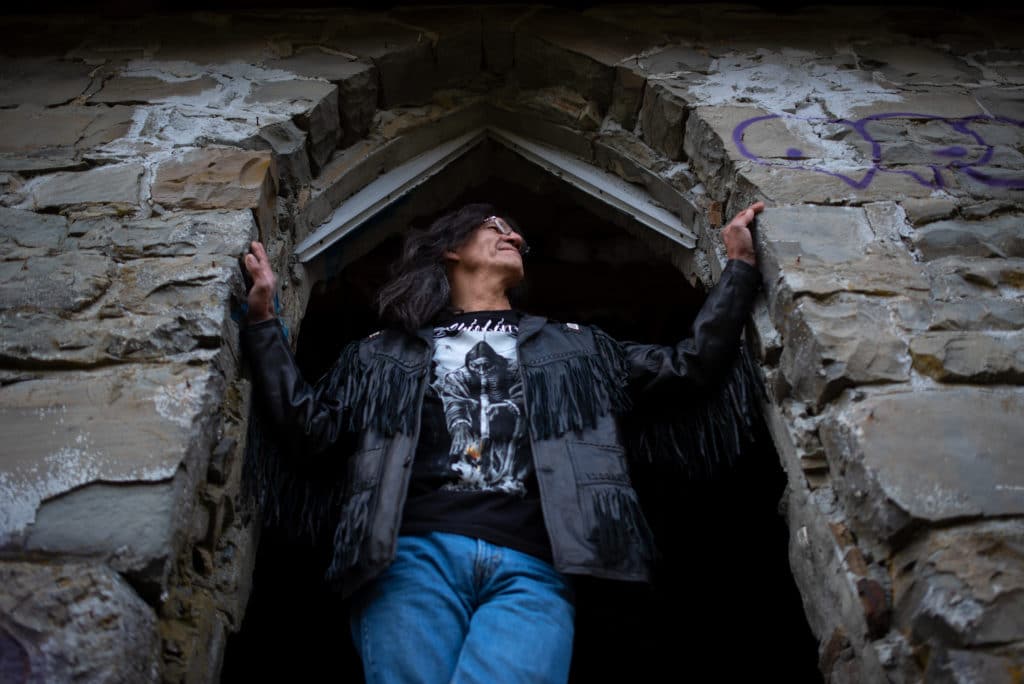
Something unique to this historical film is that it has been re-enacted largely by Quw’utsun people.
“It’s actually a community re-enacting its own story, which makes it, I think, really unique,” Leslie says.
For Harold, having a local cast tell the story of its own community’s past was extremely important. Only this way, he says, can the story be told correctly.
Traditionally, First Nations stories have been passed down orally. Starting the process of translating conversations to film was a challenge, Leslie says. Together with talented professionals, such as director of photography and editor Gavin Andrews, and the team at Empress Avenue Media, Leslie says they were able to achieve this.
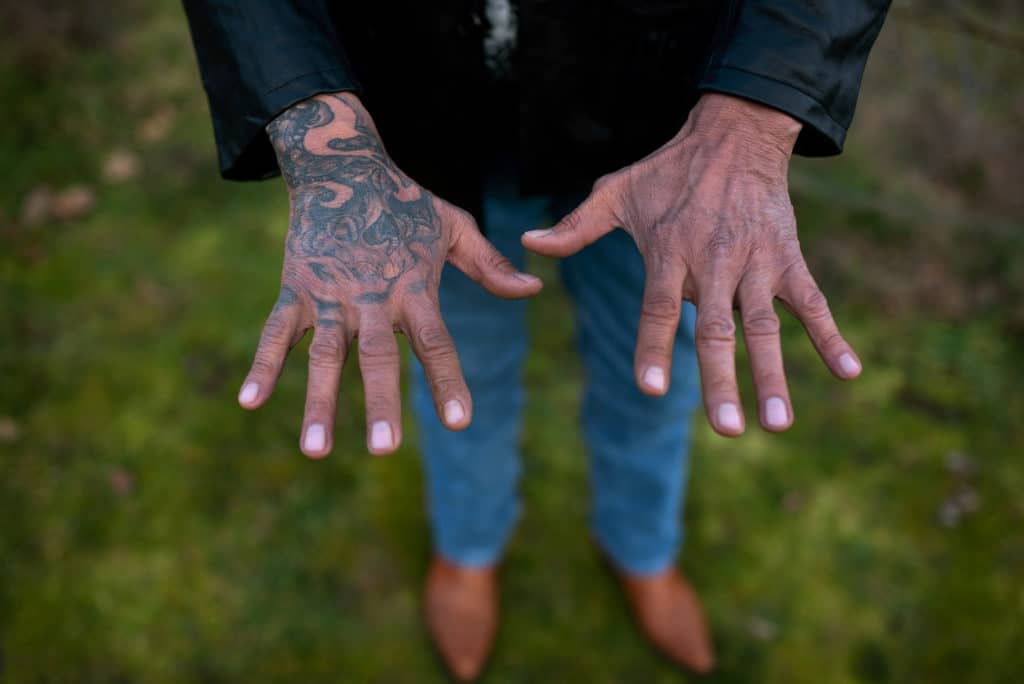
Harold says he has always been drawn to the story of Tzouhalem because there are parallels between the Chief’s life and his own. One of these parallels is that both were raised by and learned from their grandmother.
“It’s our time to tell what we’ve been wanting to tell,” Harold says. “We have stories and they’re endless stories that — no offense to non-First Nations [people] — [don’t] have the snuw’uy’ulh, the teachings, behind it.”
Leslie believes the fact that most people will have only heard a small part of Tzouhalem’s story is indicative of whose stories get air time and whose are ignored.
Film was a long time coming
A successful film about First Nations people and stories must have the perspective of Elders, Chief and council and the community as a centrepoint, Harold says. The knowledge of historians and anthropologists should be included, too. This was achieved in “Tzouhalem” he says.
He explains that when working on a film, documentary or story related to his community, a blessing and endorsement of support is needed from Cowichan Tribes. Seeking out that support is something he and Leslie did “right away.”
“To have an endorsement from Cowichan Tribes was really huge for us,” Harold says. “Because everybody in the community knows who Tzouhalem was, and who he is — his legacy and what he’s done, how he was as a leader for our people,” Harold explains.
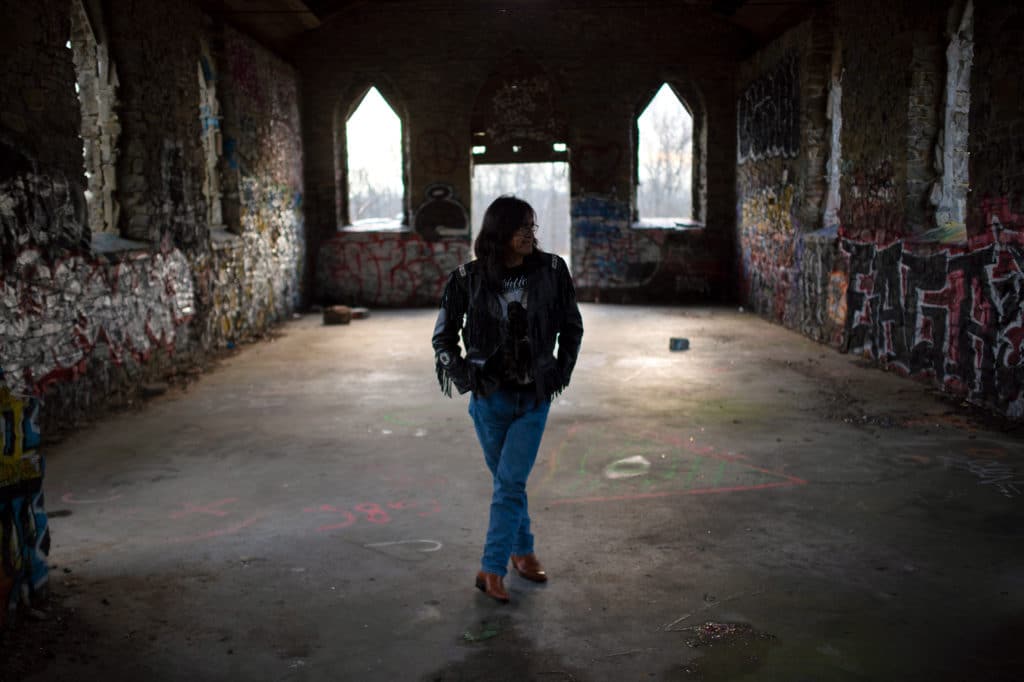
This film has also been a long time coming, Harold says. It almost came to fruition more than 15 years ago. Joe was working with a different director at the time and could not obtain a blessing from Cowichan Tribes.
“As a local First Nations guy, I’m nervous as well. I’ve screened films before but this one is different,” Harold says. “Everyone knows this one. Everyone knows the story. They’re excited. Personally, I’m a bit nervous because it’s going to be screened in my backyard.”
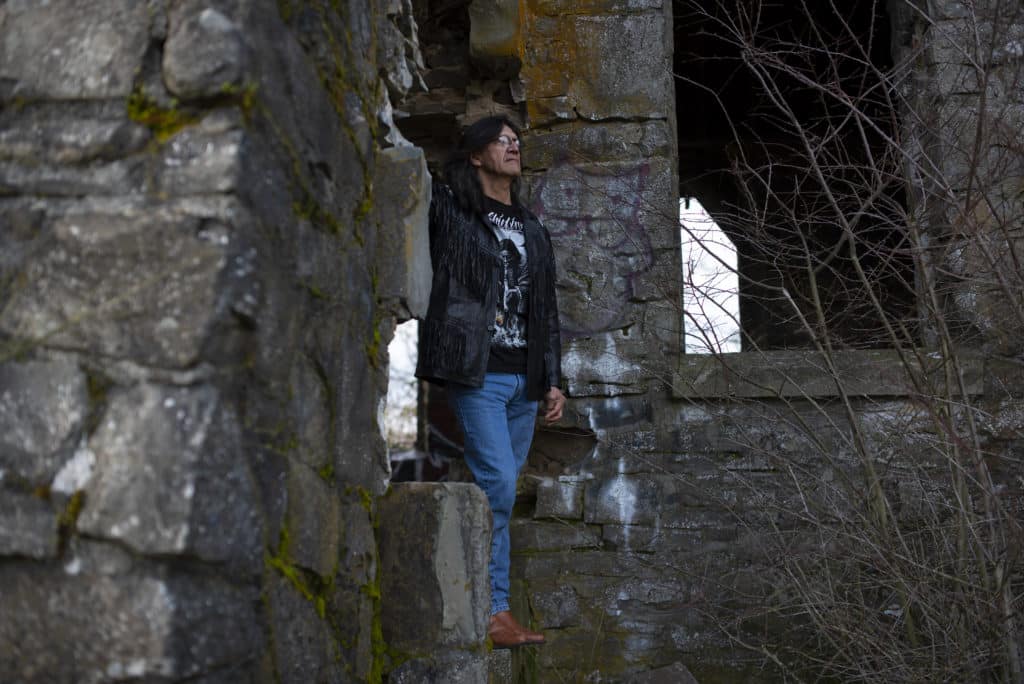
Harold hopes this film serves as an opportunity to educate people and leave something behind for the next generation.
“When I grew up in school there was nothing like this,” Harold says. “For me to tell this story […] it’s something that the education system can have and look at and share and teach. There’s so many subliminal messages in ‘Tzouhalem.’”
This article was first published at our sister outlet, The Discourse. limtlemt (thank you) to the team at the Discourse for joining IndigiNews in actively working to decolonize media.
Author
We live in a media ecosystem that thrives on misinformation. Big Tech and AI companies are consuming the work of real human beings and Canadian news has been banned on Facebook and Instagram.
And yet, I have hope for journalism because of the work we’re doing at IndigiNews.
At IndigiNews, we embody tâpwêwin — the Cree value of integrity and responsibility in truth-telling. We are committed to our independent, Indigenous-led newsroom rooted in community, accountability, and relationality. We believe storytelling is a sacred fire that connects our pasts, presents, and futures through the storytellers in our Storytelling Lodge. IndigiNews creates space for Indigenous journalists, storytellers, Knowledge Keepers, and communities to gather, learn, and share stories that matter.
As a registered charity, we are building a fire that allows our work not just to ignite but to thrive. Rather than relying on advertising or corporate acquisition, IndigiNews is sustained by people like you who believe Indigenous stories are important for the future of our communities.
Your support is making a real difference.
Our community of supporters, our Firekeepers, make it possible to grow our newsroom, publish award-winning journalism, train emerging Indigenous journalists through initiatives like the ReFocus Photojournalism Fellowship, and publish trustworthy stories that serve our communities across the country. Every story we publish helps fill in gaps left by mainstream media and ensures Indigenous perspectives are represented with care, accuracy and respect.
But there is still more work to do.
As the media landscape becomes more and more uncertain, community support is as necessary and essential as it’s ever been. Every new Firekeeper helps protect the independence of our newsroom and strengthens journalism that is accountable to our many and varied communities over corporations.
That’s why we’re inviting you to become a Firekeeper.
Firekeepers tend to and protect the sacred fire. Your monthly contributions directly support IndigiNews’s Storytelling Lodge, helps sustain our independent, Indigenous-led newsroom, and ensures future generations of Indigenous storytellers have the resources they need to do the work.
As a registered Canadian charity, all eligible donations receive a charitable tax receipt.
If you believe Indigenous stories matter, if you value independent journalism, and if you want to help build a strong future for Indigenous media, we invite you to join our circle of Firekeepers today.
Together, we can keep the fire burning.
— Eden Fineday, Publisher, IndigiNews
Support us nowLatest Stories
-
Beloved on the powwow circuit, young boy’s connection to the drum inspires
Now four, Waseskwan Redcrow was dancing ‘before he could even fully walk’ — his family says participating in powwows has brought them joy and belonging
-
Indigenous leaders give the UN a roadmap for protecting their peoples
Amidst prayers and vows of solidarity, UN Expert Mechanism on the Rights of Indigenous Peoples ends annual meetings with demands for ‘action we’re not seeing globally’