Adapting early childhood care to support Indigenous kids amid COVID-19
How Aboriginal Head Start is continuing to provide culturally relevant childcare.

Lily Patzer speaks with enthusiasm as she talks about Aboriginal Head Start [AHS] — a program that she’s been involved with for twenty-five years.
Patzer, who is of mixed Oji-Cree and European background, is the provincial program manager for AHS, which provides early childhood programs for Indigenous kids.
“This is my passion, promoting high quality programming for children, for families, including culture and language as the heart of everything we do,” she says.
Since COVID-19 began impacting people’s lives in March, the AHS team has had to quickly adapt.
“When COVID hit, everything shut down,” says Patzer.
On Vancouver Island, there are two AHS preschools and three childcare centres. In B.C., there are twelve AHS preschools and this year there is an ambitious plan to finalize a project to increase to a matching twelve child care centers.
When all of these programs needed to close, Patzer worried about the impact of the sudden closure on Head Start families.
“How are we going to support our children, our families? This is their safe space. This is a place where they get love and connection and good food to eat and that social support,” she says.
So they quickly worked to figure it out, starting with phone calls to parents, asking what their specific needs were.
“[We asked] what do you need in terms of food and nutrition to keep you healthy? What do you need in terms of sanitizing items?” she says.
With everyone at home, the team decided to share recipes and make activity bundles. Centres sent home food baskets, even crock pots with ingredients so children and parents could share meal-making, Patzer says.

Reopening
Now, many of AHS’s programs have reopened or are in the process of reopening.
“The first challenging part [of opening] was getting over people’s fears of COVID. We had staff that were very, very afraid and rightfully so,” says Patzer. “And a lot of us who live in households with compromised immune systems, extended family, elders, and you know all those other health things that happen within our community.”
The bulk of her work the first couple of months of the pandemic was to help alleviate the fear. Patzer says she did this by informing and “supporting staff and centres. Creating those policies and procedures and health protocols so that we can begin to transition back to center based programs.”
In every AHS community, health authority policies were tailored to the centre and program, and then managers and staff decided how they are going to open up.
An example was the soft start to childcare, for children of essential service workers at first. That gave staff a chance to become comfortable and feel safe with the new procedures with much smaller numbers. Parents remained outside when they signed their children in.
The centre’s environments had to be adjusted, so that children could still play but with the safety of six feet foot distance, though they know that that won’t always happen so they looked to other safety measures too.
“Taking away any items in the program that might be problematic in keeping clean such as stuffed animals. Offering children with their own creative practices, their own sensory bins, their own secure storage space,” says Patzer.
Parents who have chosen not to return to the child care centres, are still receiving home based programming.
Culturally relevant programming
Patzer describes AHS as a lifelong, inter-generational family wellness program. This involves family and Elder involvement, and focuses on culture and language, health and nutrition.
“We feed the children really encouraging traditional meals so that children have that association, having the opportunity to go berry picking, to fully engage with their Elders and their grandparents,” she says. “Head Start is the village, the traditional village within an urban setting…we try to provide that safe village for families, for our children.”
It’s not just the culture of that particular nation that we’re on, but of many,” Patzer says.
Within the COVID-19 context AHS programs have adapted. Patzer shares a story about an Elder named Maria, who visited one of the centres, Awasisak Achakos Head Start, in Kelowna and stayed outside the fence.
Elders have also connected with children on Zoom, drumming, counting in their languages, and reading stories.

Elders have also connected with children on Zoom, drumming, counting in their languages, and reading stories.
“We have an elder who took our parents on a socially-distanced walk through the forest and she taught us about the medicines that are in the forest,” Patzer says.
Educators also used Zoom to perform puppet shows, reading children’s favorite books, and taking care to honor children when it was their birthday.
“Within the first week, parents knew that we had their back,” she says. It’s inspiring to Patzer, “how awesome our staff has been in responding to our families’ needs, knowing that the families would be isolated.”
So, after twenty five years and navigating a global pandemic, what keeps her going?
“I love the kids and I love their parents.” she says. ‘I know the only way that you can build relationships and make life better- for all of us is through those personal connections. I don’t say I’m a teacher. I’m a relationship builder.”
“Sometimes we can get down,” notes Patzer, “But we’re all in this together and we’re going to support each other and try to keep us all safe.”
Author
We live in a media ecosystem that thrives on misinformation. Big Tech and AI companies are consuming the work of real human beings and Canadian news has been banned on Facebook and Instagram.

And yet, I have hope for journalism because of the work we’re doing at IndigiNews.
At IndigiNews, we embody tâpwêwin — the Cree value of integrity and responsibility in truth-telling. We are committed to our independent, Indigenous-led newsroom rooted in community, accountability, and relationality. We believe storytelling is a sacred fire that connects our pasts, presents, and futures through the storytellers in our Storytelling Lodge. IndigiNews creates space for Indigenous journalists, storytellers, Knowledge Keepers, and communities to gather, learn, and share stories that matter.
As a registered charity, we are building a fire that allows our work not just to ignite but to thrive. Rather than relying on advertising or corporate acquisition, IndigiNews is sustained by people like you who believe Indigenous stories are important for the future of our communities.
Your support is making a real difference.
Our community of supporters, our Firekeepers, make it possible to grow our newsroom, publish award-winning journalism, train emerging Indigenous journalists through initiatives like the ReFocus Photojournalism Fellowship, and publish trustworthy stories that serve our communities across the country. Every story we publish helps fill in gaps left by mainstream media and ensures Indigenous perspectives are represented with care, accuracy and respect.
But there is still more work to do.
As the media landscape becomes more and more uncertain, community support is as necessary and essential as it’s ever been. Every new Firekeeper helps protect the independence of our newsroom and strengthens journalism that is accountable to our many and varied communities over corporations.
That’s why we’re inviting you to become a Firekeeper.
Firekeepers tend to and protect the sacred fire. Your monthly contributions directly support IndigiNews’s Storytelling Lodge, helps sustain our independent, Indigenous-led newsroom, and ensures future generations of Indigenous storytellers have the resources they need to do the work.
As a registered Canadian charity, all eligible donations receive a charitable tax receipt.
If you believe Indigenous stories matter, if you value independent journalism, and if you want to help build a strong future for Indigenous media, we invite you to join our circle of Firekeepers today.
Together, we can keep the fire burning.
— Eden Fineday, Publisher, IndigiNews
Support us nowLatest Stories
-
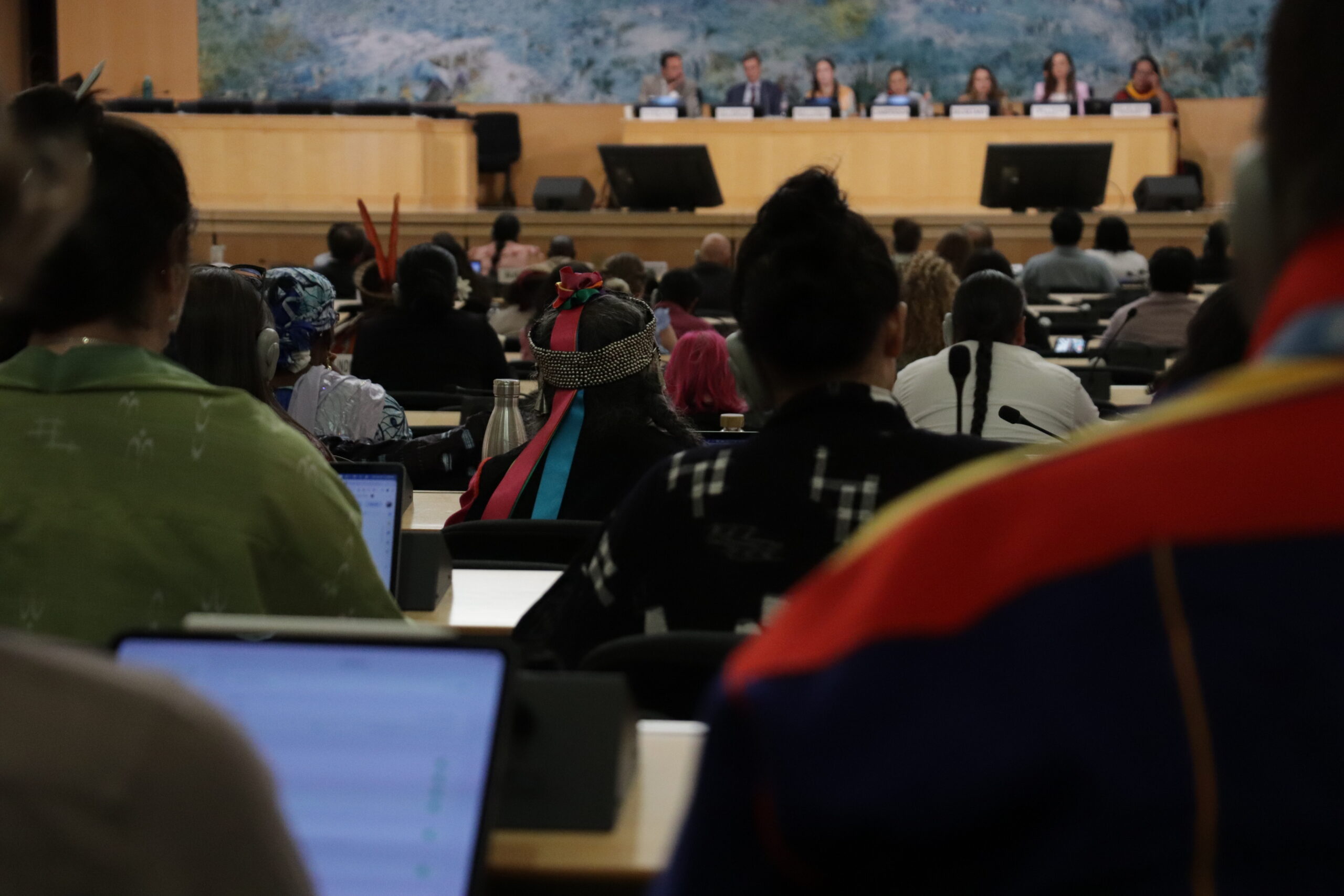
Indigenous leaders give the UN a roadmap for protecting their peoples
Amidst prayers and vows of solidarity, UN Expert Mechanism on the Rights of Indigenous Peoples ends annual meetings with demands for ‘action we’re not seeing globally’
-
Indigenous people demand more say at the UN, as new crises hit their homelands
Indigenous nations live ‘on the frontlines’ of climate, conflict and new tech. But their voices remain sidelined in the global halls of power.