‘An abomination’: Journalism, human rights groups call for police to drop charges against Indigenous reporter
Organizations stand by Brandi Morin, who was arrested on Jan. 10 after EPS says she ‘refused to comply’ with requests to move


Journalism advocacy and human rights groups are calling for the Edmonton Police Service (EPS) to immediately drop charges against a Cree and Iroquois reporter who was arrested while covering an encampment raid earlier this month.
The organizations, along with journalist Brandi Morin and her editor at Ricochet Media, spoke out against obstruction charges that were laid following her arrest on January 10 at a largely-Indigenous camp for the unhoused in amiskwacîwâskahikan (Edmonton).
The Zoom press conference on Monday included a range of speakers from the Canadian Association of Journalists (CAJ), the Committee to Protect Journalists, the Indigenous Journalists Association (IJA), Reporters without Borders, Amnesty International, Journalists for Human Rights, and the Coalition for Women in Journalism. PEN Canada also released a statement in support of Morin, but were unable to attend the conference.
CAJ president Brent Jolly called Morin’s arrest “an abomination” — saying the charges against her are “absurd” and a slight to press freedom.
“Based on all evidence, Brandi was targeted and singled out for doing her job as a journalist. Today, she appears with us, charged with obstruction — a criminal offence that carries a maximum sentence of two years in prison,” he said.
“Brandi’s arrest makes an absolute mockery of the rights to freedom of the press and the ability to report on the activities of taxpayer-funded law enforcement agencies. That’s why my colleagues and I are here today to call for the charges against Brandi to be dropped immediately.”
Journalism ‘must be protected’
IndigiNews has worked with Morin on a freelance basis and regularly collaborates with Ricochet, however, Morin was not on assignment for IndigiNews at the time of her arrest.
Morin was interviewing Roy Cardinal, a resident at the encampment, when EPS arrived to tear it down. Morin said she had been “singled out” by Sgt. Amber Maze among other media and members of the public filming the raid.
She said that Maze pushed and “manhandled her,” while another officer had put her in handcuffs. She noted the “handcuffs had been put on wrong, leaving her wrists in pain.”
Morin, who is from the Michel Band, noted she had been at the encampment a day earlier and saw officers scouting the site, which the city had called “high risk.”

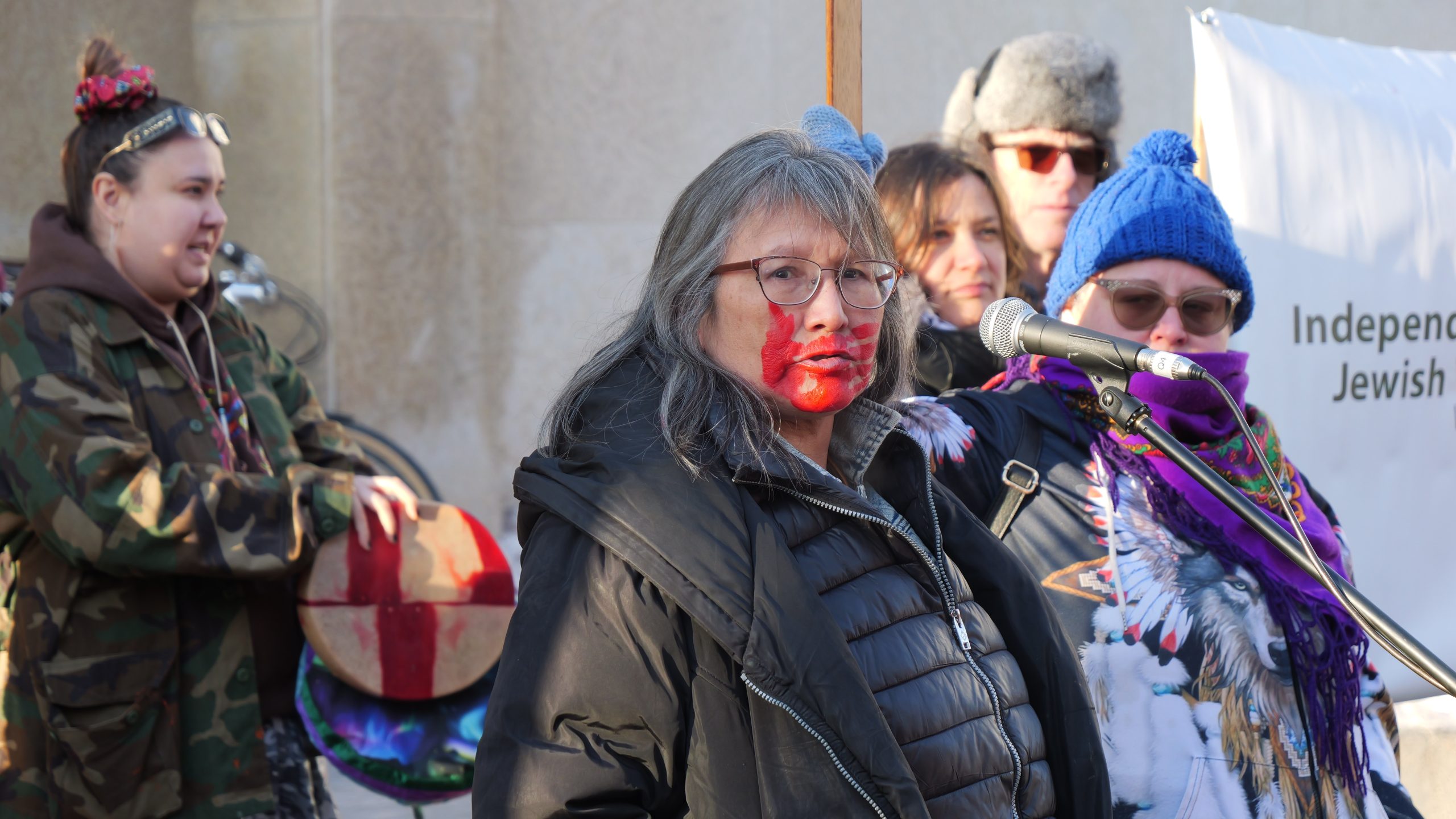
“The public should fear that arresting journalists has become the new norm,” Morin said during the conference. “Holding powers to account is the core of journalism.”
Morin said as she was being arrested she could see other media filming her, and said she got calls later from family, because they “saw her being arrested on TV.” Since the arrest she said she’s had many sleepless nights and experienced humiliation and feared for her personal and professional life.
Morin’s editor at Ricochet, Ethan Cox, was the moderator for the conference. He said Morin did not obstruct Sgt. Maze and believes Morin was targeted either because she is a high-profile journalist or because she is Indigenous.
Angel Ellis of IJA said the organization is calling on all levels of policing enforcement to prevent the arrests of journalists.
“Journalism is an aspect of democracy and it must be protected.”
‘She refused to comply’
EPS said in an email statement to IndigiNews that Morin was arrested on 95 Street and Rowland Road during a “police cleanup of the encampment.”
“As police were attempting to direct occupants of the encampment to leave the site, Morin moved towards a physical struggle occurring during the arrest of a male. She was asked repeatedly to go to the area where all other journalists were stationed for their safety,” reads the statement.
“She refused to comply, and was told she would be arrested for obstruction if she didn’t remove herself from the active worksite. Morin was subsequently arrested and charged with obstructing a peace officer.”
The EPS said it has made “extensive efforts to ensure journalists have access to encampment closures,” and that “journalists are allowed to capture footage while standing a safe distance from the worksite.”
Morin said during the press conference that she had been filming from about 10 feet away, and the police had used yellow tape to create a “media exclusion zone” that was about 50 feet away; she noted it was “too far away to zoom in and see police action.”
Edmonton police said this zone is created to “protect journalists from the unpredictable hazards of an encampment cleanup, such as explosions, fire, biohazards and weapons concerns, and to protect the privacy of encampment residents.”
Morin is set to appear Tuesday at EPS headquarters to have fingerprints taken, and her first court appearance is scheduled for this Thursday.
Author
We live in a media ecosystem that thrives on misinformation. Big Tech and AI companies are consuming the work of real human beings and Canadian news has been banned on Facebook and Instagram.
And yet, I have hope for journalism because of the work we’re doing at IndigiNews.
At IndigiNews, we embody tâpwêwin — the Cree value of integrity and responsibility in truth-telling. We are committed to our independent, Indigenous-led newsroom rooted in community, accountability, and relationality. We believe storytelling is a sacred fire that connects our pasts, presents, and futures through the storytellers in our Storytelling Lodge. IndigiNews creates space for Indigenous journalists, storytellers, Knowledge Keepers, and communities to gather, learn, and share stories that matter.
As a registered charity, we are building a fire that allows our work not just to ignite but to thrive. Rather than relying on advertising or corporate acquisition, IndigiNews is sustained by people like you who believe Indigenous stories are important for the future of our communities.
Your support is making a real difference.
Our community of supporters, our Firekeepers, make it possible to grow our newsroom, publish award-winning journalism, train emerging Indigenous journalists through initiatives like the ReFocus Photojournalism Fellowship, and publish trustworthy stories that serve our communities across the country. Every story we publish helps fill in gaps left by mainstream media and ensures Indigenous perspectives are represented with care, accuracy and respect.
But there is still more work to do.
As the media landscape becomes more and more uncertain, community support is as necessary and essential as it’s ever been. Every new Firekeeper helps protect the independence of our newsroom and strengthens journalism that is accountable to our many and varied communities over corporations.
That’s why we’re inviting you to become a Firekeeper.
Firekeepers tend to and protect the sacred fire. Your monthly contributions directly support IndigiNews’s Storytelling Lodge, helps sustain our independent, Indigenous-led newsroom, and ensures future generations of Indigenous storytellers have the resources they need to do the work.
As a registered Canadian charity, all eligible donations receive a charitable tax receipt.
If you believe Indigenous stories matter, if you value independent journalism, and if you want to help build a strong future for Indigenous media, we invite you to join our circle of Firekeepers today.
Together, we can keep the fire burning.
— Eden Fineday, Publisher, IndigiNews
Support us nowLatest Stories
-
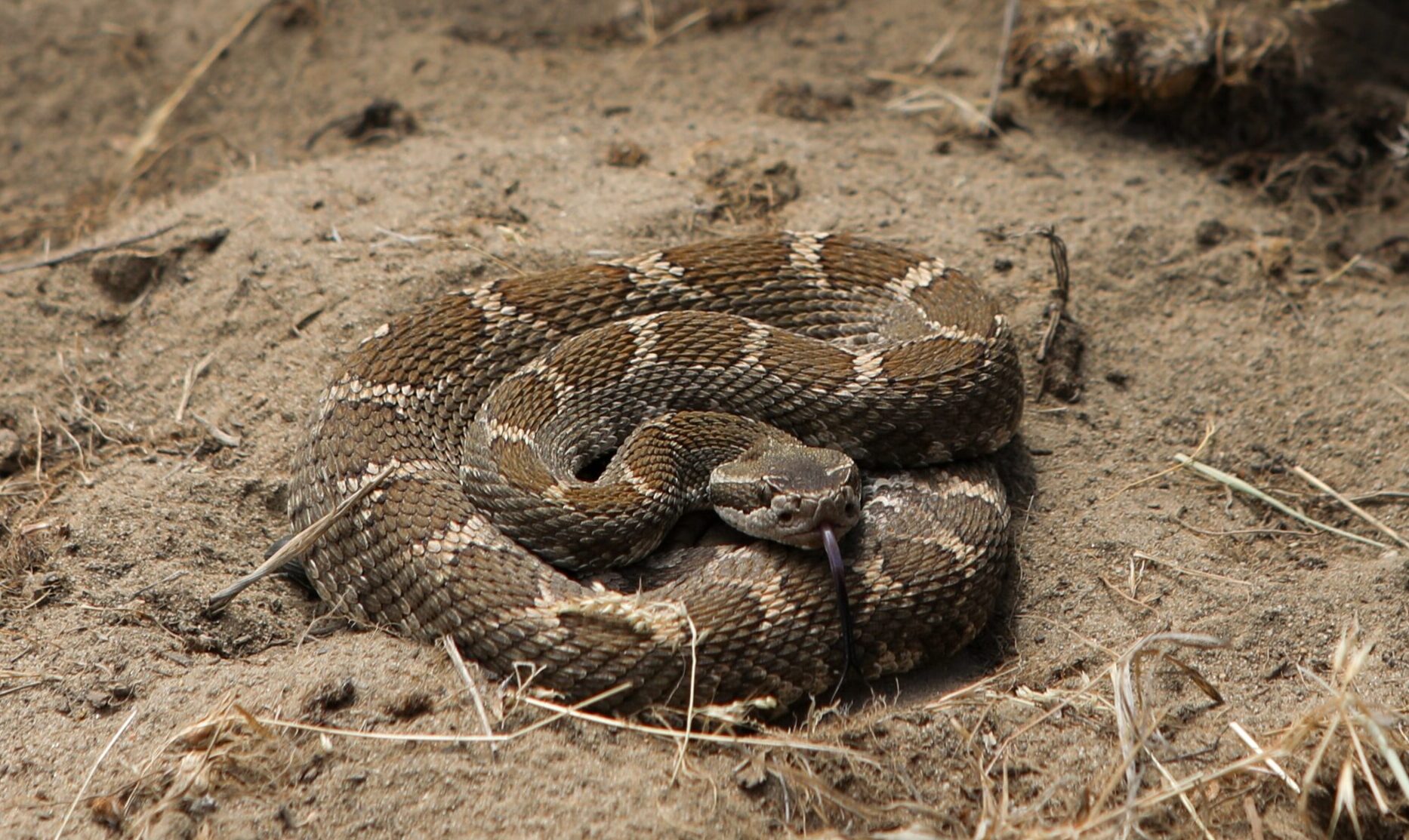
In the Okanagan desert, snakes offer lessons on protecting a fragile ecosystem
For two decades, researchers at the Nk’Mip Desert Cultural Centre have tracked snakes across syilx homelands — while helping people appreciate the often-feared creatures
-
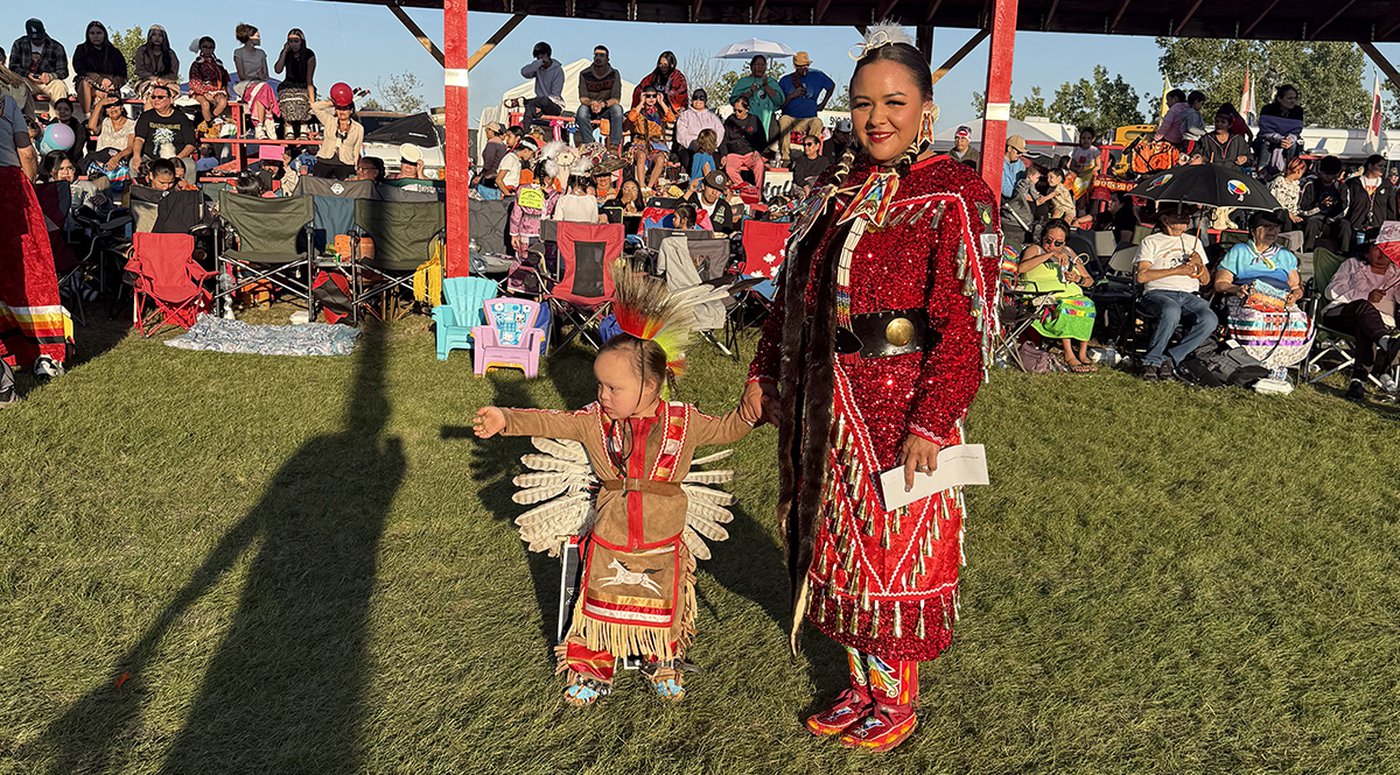
Beloved on the powwow circuit, young boy’s connection to the drum inspires
Now four, Waseskwan Redcrow was dancing ‘before he could even fully walk’ — his family says participating in powwows has brought them joy and belonging