B.C.’s Human Rights Commissioner launches inquiry into ‘hate in all its forms’
Prompted by rise of hate-related incidents during the pandemic, this will be the commissioner’s first public inquiry.

B.C.’s Office of the Human Rights Commissioner will examine the rise of hate during the pandemic as the topic of its first public inquiry, says Commissioner Kasari Govender.
“Our intent is to examine hate in all its forms,” Govender said at an online press conference this morning.
“Not only racism and racial hate, but hate directed at a wide range of people and groups in our society who are protected under B.C.’s Human Rights Code and under international human rights law. For example, hate that is perpetuated against a person or a group on the basis of their religion, their gender identity, their Indigeneity, their sexual orientation or whether they live in poverty or without a home.”
Govender started her five-year term as B.C.’s first independent Human Rights Commissioner in September 2019.
The Office of the Human Rights Commissioner has a mandate to “address the root causes of inequality, discrimination and injustice in B.C. by shifting laws, policies, practices and cultures … through education, research, advocacy, inquiry and monitoring.”
For its first inquiry, the office is focusing on hate “because of a significant increase in hate-related incidents, including online incidents, in B.C. since the start of the pandemic in early 2020,” says Govender.
“Many of us are uncomfortable acknowledging hate because we want to think of our country as a peaceful, respectful place, but the truth is that hate is here and from all accounts, it is growing.”
She refers specifically to the rise of hate crimes against Asian and Indigenous Peoples.
“Since the onset of the pandemic, there have been more than 1,500 incidents of anti-Asian racism reported to elimin8hate.org and covidracism.ca, and B.C. continues to report the most incidents per capita in North America,” she says.
“In 2020, police-reported hate crimes in Canada targeting Indigenous Peoples increased 152 per cent compared to 2019.”
As wildfires rage throughout the province and the world struggles to contain the pandemic and navigate humanitarian crises, Govender says tackling hate should be a top priority.
“Hate often stems from a fear of losing power, a fear that is aggravated during times of great uncertainty.
“While COVID-19 has inflamed the problems of hate and white supremacy in B.C., it did not create them … It is precisely when our societies, homes and families are most under threat that human rights are most precarious and require the most support.”
Gathering testimonies
Through this inquiry, the commissioner will look into the “kinds of hate individuals and communities in B.C. experienced during the pandemic,” and the impacts of those incidents.
Govender says she wants to know how we can “address, eliminate or prevent hate incidents during times of crisis and beyond.” She’s asking: “How effectively have public and private institutions responded to hate during the pandemic, and how effective is our public policy and law in addressing hate?”
She says the inquiry will begin gathering public testimonies — through surveys, written submissions, emails, phone calls and roundtables — later this fall, after the federal election.
Govender has a background in practicing and teaching law and she previously served as executive director for West Coast LEAF, a non-profit organization that uses law as a tool to challenge gender-based discrimination.

She says how the commission conducts the inquiry is just as important as any potential outcomes. Her team has already consulted with 23 different community groups, she says, and they will continue seeking guidance from community partners throughout their process.
“We recognize that the topic of hate, while critical to examine, is an extremely challenging subject, especially for people who have experienced hate themselves.
“In order to mitigate risk to the physical and emotional safety of those providing their stories, we will not be conducting public hearings … We are putting safeguards in place to protect participants and their testimony and to shield them as much as possible from harm,” she says.
“We will also provide referrals to crisis resources and mental health supports.”
What kind of changes could come from this?
After gathering testimonies, the commissioner will make change recommendations, which could be aimed at private or public institutions.
For example, “if people want to bring testimony about their experiences within the workplace, we may be making recommendations to employers about how to address hate in that context or to service providers,” she says.
“We could [also] be making recommendations on law and policy reform to governments.”
While the commissioner doesn’t “have power under the legislation to make recommendations that are legally binding,” she can require parties to report back, she says.
“I do think there is significant potential impact in requiring parties who I make recommendations to to report back, and of course, I can make that public and add to potential pressure they may feel to actually implement the recommendations.”
‘A step forward’ — as long as it builds on existing recommendations
Henry Yu is an associate professor of history at the University of British Columbia with a deep record of anti-racist research and work.
In June he helped organize a national forum on anti-Asian racism at UBC, and he published a piece calling out anti-Asian racism in Canada as the “white elephant in the room.”
Last year, he contributed to a report about collecting race-based data (and other disaggregated demographic data) by the Office of the Human Rights Commissioner, which was published in September 2020.
The report spelled out the need for race-based data and made recommendations around how to collect, store and share it in a good way.
Yu says he sees this new public inquiry as “a step forward” only if it doesn’t slow the implementation of existing recommendations around race-based data collection.
“I hope that those recommendations that were made on that are not delayed by this.”
Too often the burden falls on those impacted by systemic racism to prove it exists, he says.
For example, he says the reason we know about “these huge spikes” in anti-Asian hate crimes is because of grassroots initiatives like Project 1907 — a project led by Asian women — which collaborated with Elimin8Hate to create a space where members of the Asian diaspora in Canada can report incidents of racism, hate and violence.
“Why is it that the community that’s being attacked has to do their own data collection and prove that this is happening to them?” he asks.
“Can we not just have to spend half our effort convincing you that there’s racism, and that this happens? And can we not have to deal with your surprise or shock?
“That’s where the data is crucial.”
Author
We live in a media ecosystem that thrives on misinformation. Big Tech and AI companies are consuming the work of real human beings and Canadian news has been banned on Facebook and Instagram.

And yet, I have hope for journalism because of the work we’re doing at IndigiNews.
At IndigiNews, we embody tâpwêwin — the Cree value of integrity and responsibility in truth-telling. We are committed to our independent, Indigenous-led newsroom rooted in community, accountability, and relationality. We believe storytelling is a sacred fire that connects our pasts, presents, and futures through the storytellers in our Storytelling Lodge. IndigiNews creates space for Indigenous journalists, storytellers, Knowledge Keepers, and communities to gather, learn, and share stories that matter.
As a registered charity, we are building a fire that allows our work not just to ignite but to thrive. Rather than relying on advertising or corporate acquisition, IndigiNews is sustained by people like you who believe Indigenous stories are important for the future of our communities.
Your support is making a real difference.
Our community of supporters, our Firekeepers, make it possible to grow our newsroom, publish award-winning journalism, train emerging Indigenous journalists through initiatives like the ReFocus Photojournalism Fellowship, and publish trustworthy stories that serve our communities across the country. Every story we publish helps fill in gaps left by mainstream media and ensures Indigenous perspectives are represented with care, accuracy and respect.
But there is still more work to do.
As the media landscape becomes more and more uncertain, community support is as necessary and essential as it’s ever been. Every new Firekeeper helps protect the independence of our newsroom and strengthens journalism that is accountable to our many and varied communities over corporations.
That’s why we’re inviting you to become a Firekeeper.
Firekeepers tend to and protect the sacred fire. Your monthly contributions directly support IndigiNews’s Storytelling Lodge, helps sustain our independent, Indigenous-led newsroom, and ensures future generations of Indigenous storytellers have the resources they need to do the work.
As a registered Canadian charity, all eligible donations receive a charitable tax receipt.
If you believe Indigenous stories matter, if you value independent journalism, and if you want to help build a strong future for Indigenous media, we invite you to join our circle of Firekeepers today.
Together, we can keep the fire burning.
— Eden Fineday, Publisher, IndigiNews
Support us nowLatest Stories
-
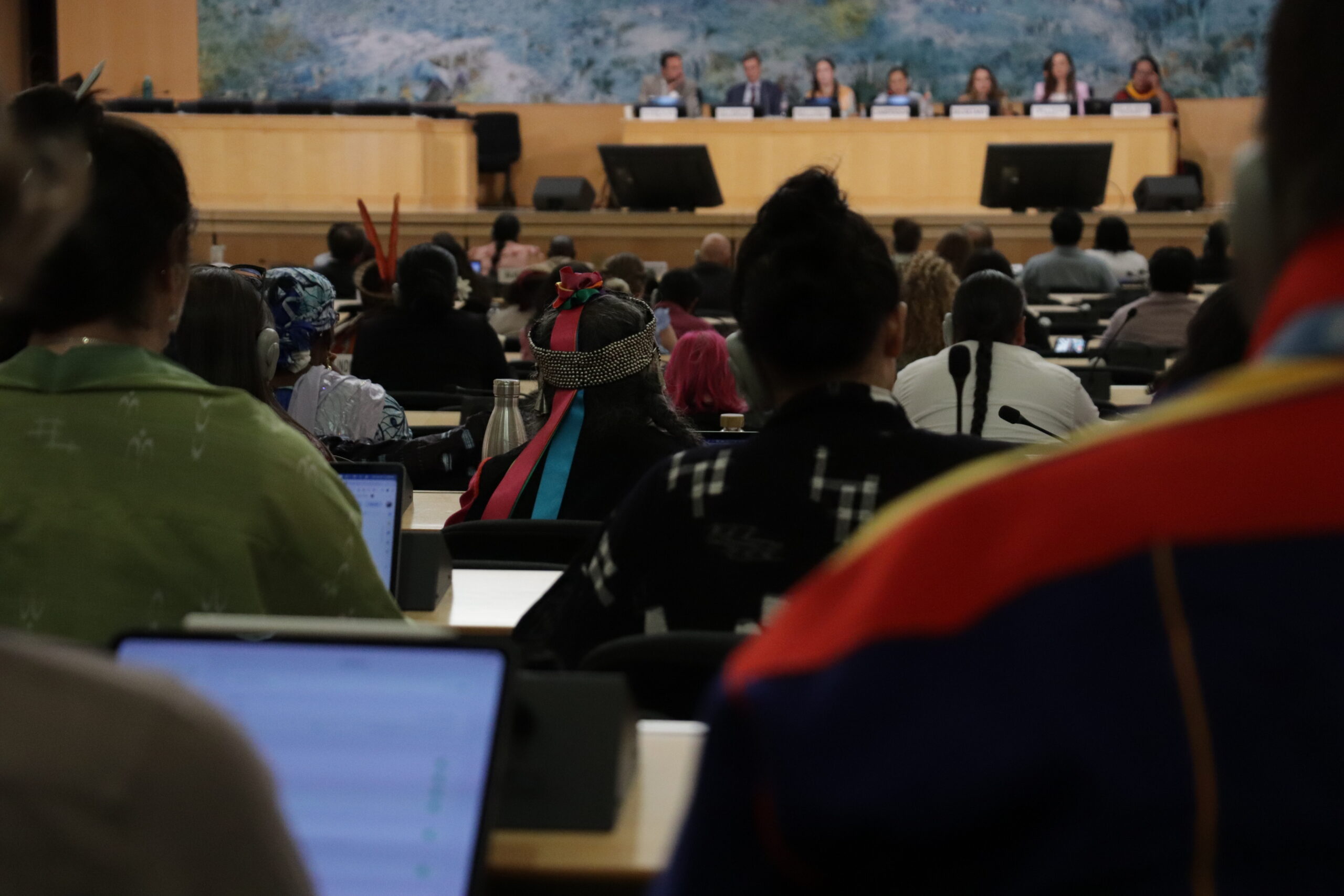
Indigenous leaders give the UN a roadmap for protecting their peoples
Amidst prayers and vows of solidarity, UN Expert Mechanism on the Rights of Indigenous Peoples ends annual meetings with demands for ‘action we’re not seeing globally’
-
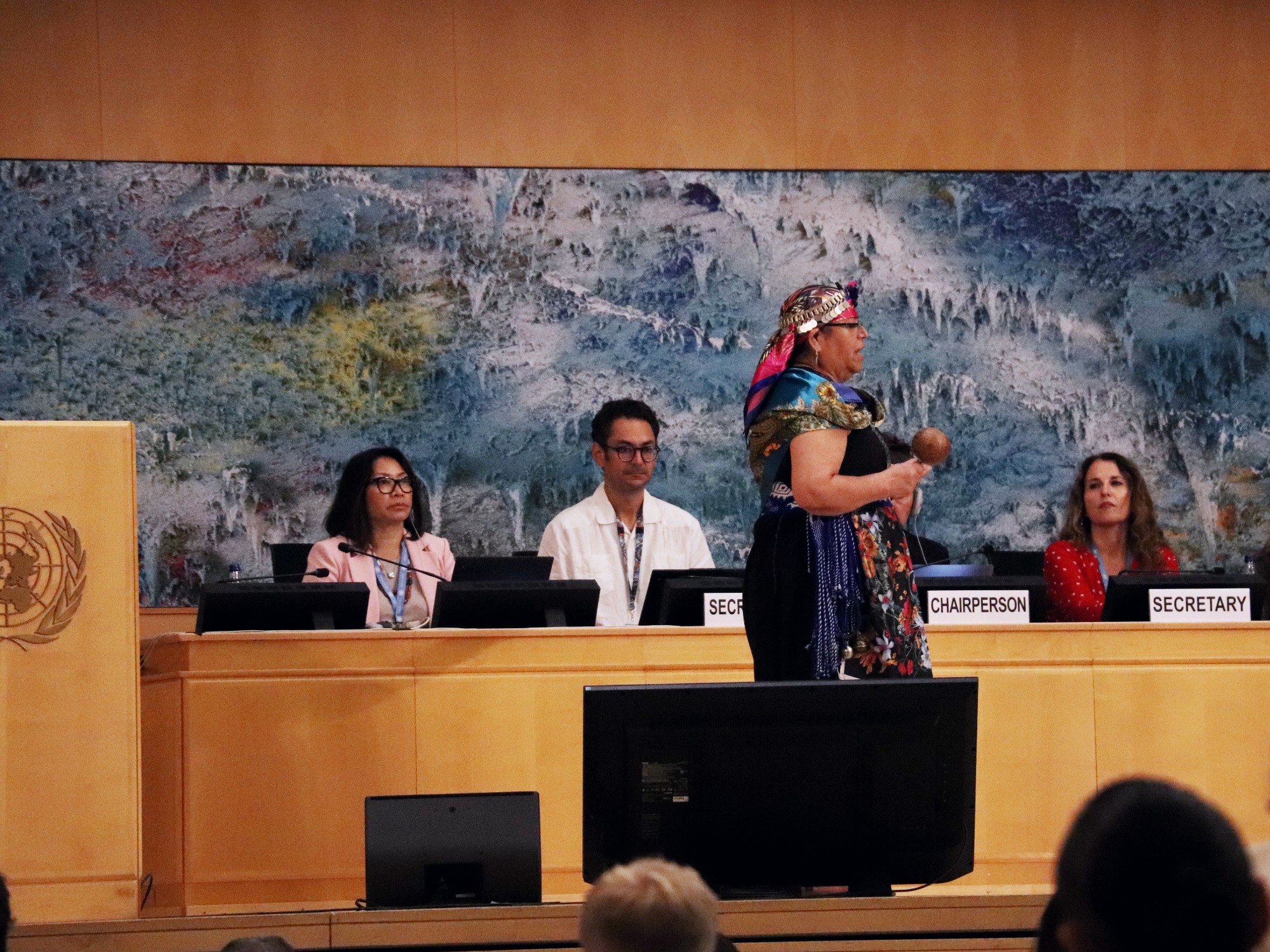
Indigenous people demand more say at the UN, as new crises hit their homelands
Indigenous nations live ‘on the frontlines’ of climate, conflict and new tech. But their voices remain sidelined in the global halls of power.