Children support ONA’s sockeye fry release, as 10,000 tiny salmon are set free
Schools in the region were each given 100 sc’win (sockeye salmon) eggs to raise before releasing them at akɬ xʷuminaʔ (Shingle Creek)


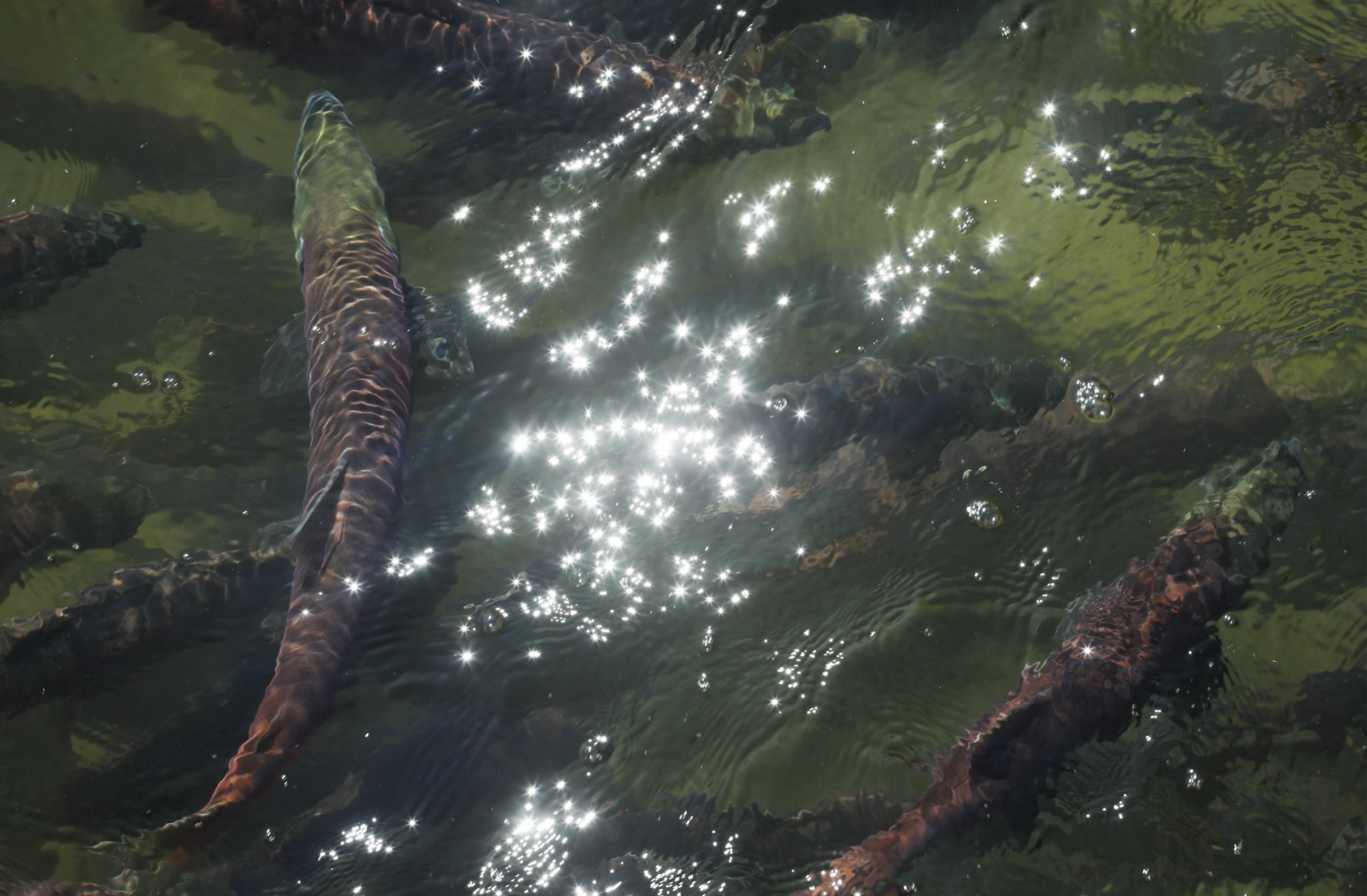
Roughly 10,000 sc’win (sockeye salmon) fry were set free into akɬ xʷuminaʔ (Shingle Creek) last week as part of an ongoing effort to restore the fish’s population throughout the Okanagan Valley’s waterways.
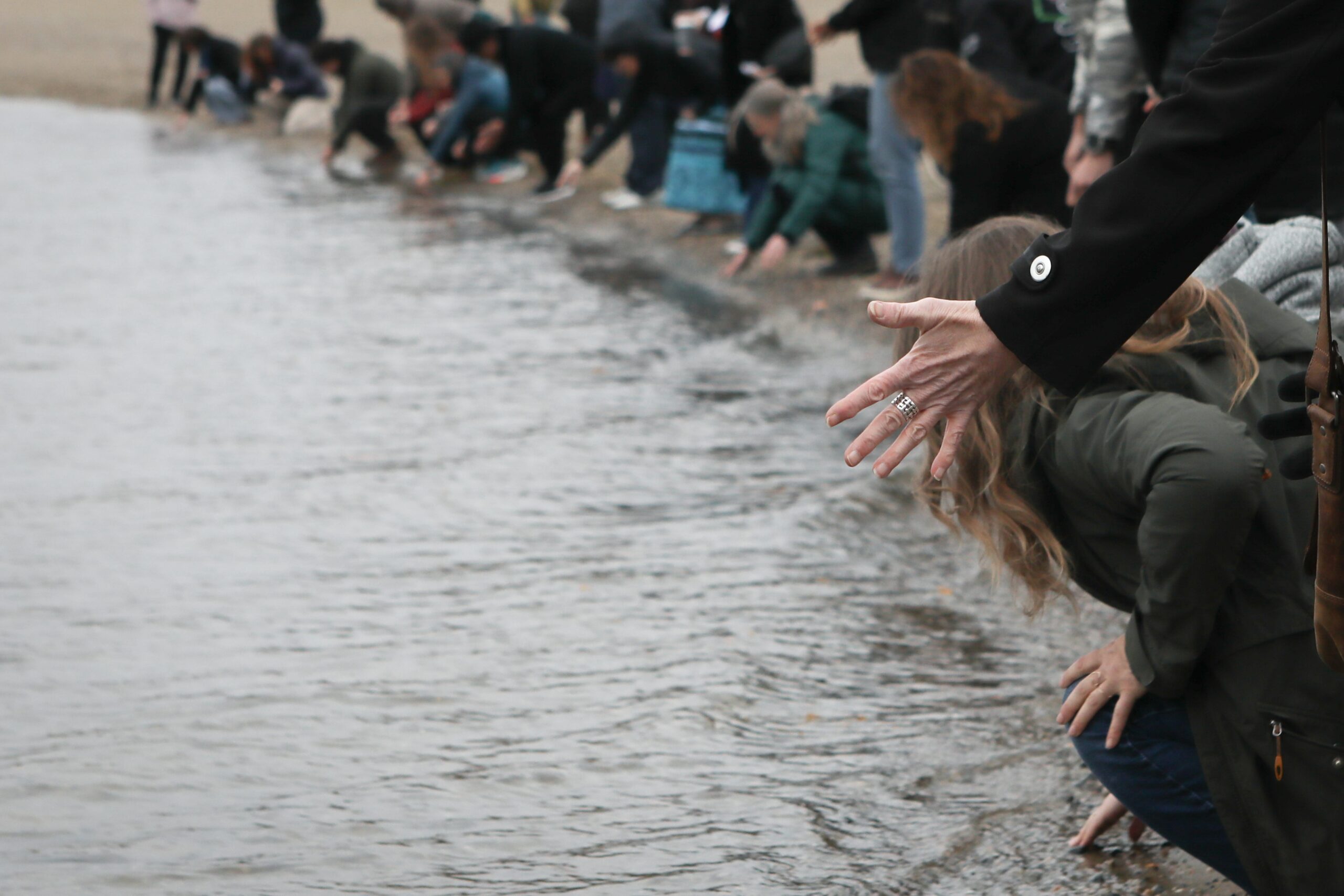
Hundreds of schoolchildren joined syilx community members to ceremonially release the sc’win on Thursday through the Okanagan Nation Alliance’s (ONA) Fish in Schools (FinS) program — which aims to educate about fish and particularly sockeye salmon.
While ONA has already conducted a few ceremonial fry releases at various tributaries this past year, the event in sn’pink’tn (Penticton) was the first fry release of the year for the regional schools participating in FinS, which is celebrating its 19th year in 2023.
Schools in the FinS program are each given 100 sockeye eggs by ONA’s kł cp̓əlk̓ stim̓ Hatchery in the fall season. The eggs are then raised by classrooms through the winter and spring seasons before they are released into the river system through ceremony each May along with other fry from the hatchery.
Following the ceremony’s opening, children watched with pride as the tiny sockeye — still only about the size of anchovies — left their cups and slid down slides that fed straight into the creek connecting to the waters where many of them will grow into full-sized salmon.
More people gathered as the remainder of the sockeye fry were shot out of a large hose, sending hundreds more into the cold stream as drummers overlooked and sang in the background.
With ntytyix (salmon) being one of the syilx Nation’s Four Food Chiefs, the goal of the FinS program is to not only educate regional Youth on the life cycle of salmon, but to have them learn about the fish’s cultural and ecological significance so that they can become better caretakers for salmon and their habitat as they grow older.

“Salmon has always been a food staple for our people for thousands and thousands of years,” said Chief Greg Gabriel of Penticton Indian Band before the ceremony began.
“I applaud the work of ONA fisheries, our band members in each community, that are involved in this important work to keep our salmon surviving, and part of the learning for our children and future generations.”
In addition to the children and Youth in attendance, community members were invited to take a cup full of sockeye fry and say a prayer for them before releasing them into the water.

Herb Alex of kł cp̓əlk̓ stim̓ Hatchery and a member of Osoyoos Indian Band said that there’s special focus given to the Youth in these revitalization efforts because the Youth are the future.
“They’re going to be the caretakers long after we’re gone. We have to let them know that there’s fish in the system and to educate them. If they decide to support the fish, then they’re prepared to do that,” said Alex.

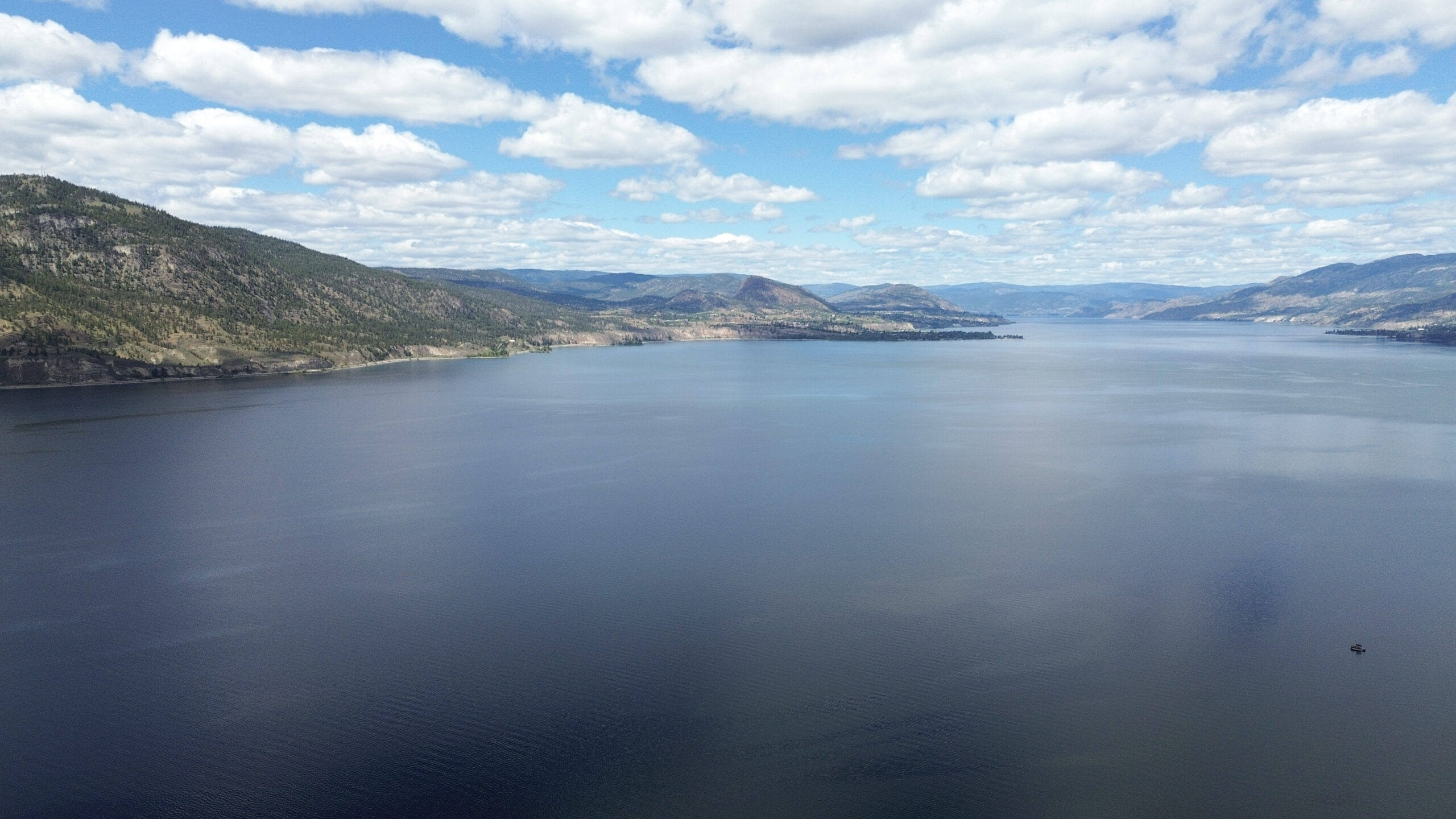
The released sockeye fry will spend a year at Skaha Lake to smolt before heading to the Pacific Ocean next year around this time and will return to local waterways in roughly four years, according to ONA fisheries biologist Kari Alex.
In the last 100 years, Kari noted that there have been three main barriers — McIntyre Dam, Skaha Dam and Okanagan Lake Dam — that have impacted the sc’win’s ability to access and navigate their waterways.
“Okanagan sockeye make up 90 per cent now of the total returns for the Columbia Basin,” Kari explained. “There used to be 25 stocks, now there’s only two: Okanagan and Wenatchee … They’ve all been extirpated, and they were on a very steady decline.”
Since 2008, overall average returns of sc’win have been around 200,000, she noted. Just last year, however, ONA celebrated the largest return of more than 477,000 sc’win.
“The nation has really taken a strong leadership role in not just the hatchery — in river restoration, water management for fish and passage, getting them back into their traditional territories,” said Kari.

The environmental hatchery still has around two million sockeye fry to release this year, according to Herb. In total, there will be nine ceremonial releases happening in May alone throughout syilx homelands. Dates and locations can be found here.
“I hope everybody understands that the fish are here. We need to protect the system in order for them to thrive,” said Herb.
“It’s not just for the salmon and it’s not just for the food — it’s for the whole ecosystem.”
Author
We live in a media ecosystem that thrives on misinformation. Big Tech and AI companies are consuming the work of real human beings and Canadian news has been banned on Facebook and Instagram.
And yet, I have hope for journalism because of the work we’re doing at IndigiNews.
At IndigiNews, we embody tâpwêwin — the Cree value of integrity and responsibility in truth-telling. We are committed to our independent, Indigenous-led newsroom rooted in community, accountability, and relationality. We believe storytelling is a sacred fire that connects our pasts, presents, and futures through the storytellers in our Storytelling Lodge. IndigiNews creates space for Indigenous journalists, storytellers, Knowledge Keepers, and communities to gather, learn, and share stories that matter.
As a registered charity, we are building a fire that allows our work not just to ignite but to thrive. Rather than relying on advertising or corporate acquisition, IndigiNews is sustained by people like you who believe Indigenous stories are important for the future of our communities.
Your support is making a real difference.
Our community of supporters, our Firekeepers, make it possible to grow our newsroom, publish award-winning journalism, train emerging Indigenous journalists through initiatives like the ReFocus Photojournalism Fellowship, and publish trustworthy stories that serve our communities across the country. Every story we publish helps fill in gaps left by mainstream media and ensures Indigenous perspectives are represented with care, accuracy and respect.
But there is still more work to do.
As the media landscape becomes more and more uncertain, community support is as necessary and essential as it’s ever been. Every new Firekeeper helps protect the independence of our newsroom and strengthens journalism that is accountable to our many and varied communities over corporations.
That’s why we’re inviting you to become a Firekeeper.
Firekeepers tend to and protect the sacred fire. Your monthly contributions directly support IndigiNews’s Storytelling Lodge, helps sustain our independent, Indigenous-led newsroom, and ensures future generations of Indigenous storytellers have the resources they need to do the work.
As a registered Canadian charity, all eligible donations receive a charitable tax receipt.
If you believe Indigenous stories matter, if you value independent journalism, and if you want to help build a strong future for Indigenous media, we invite you to join our circle of Firekeepers today.
Together, we can keep the fire burning.
— Eden Fineday, Publisher, IndigiNews
Support us nowLatest Stories
-
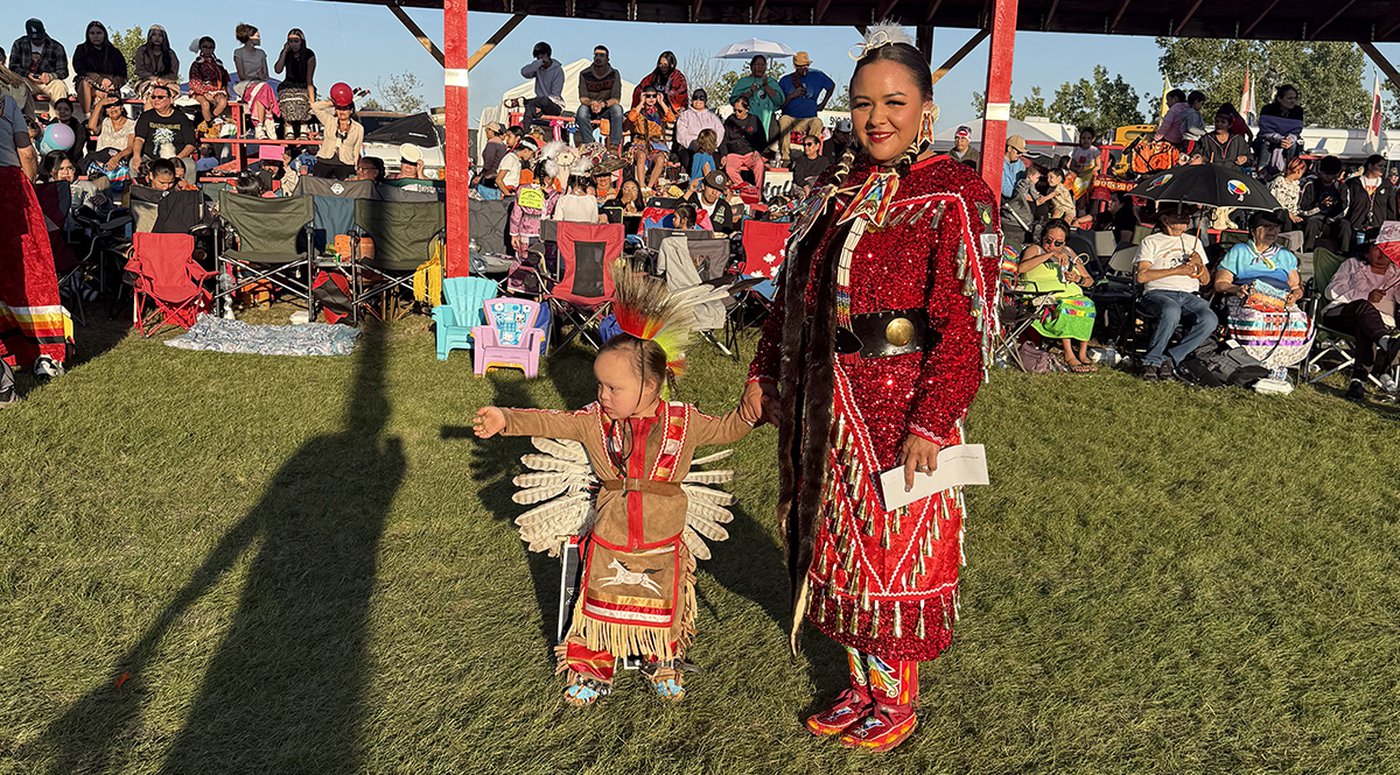
Beloved on the powwow circuit, young boy’s connection to the drum inspires
Now four, Waseskwan Redcrow was dancing ‘before he could even fully walk’ — his family says participating in powwows has brought them joy and belonging
-
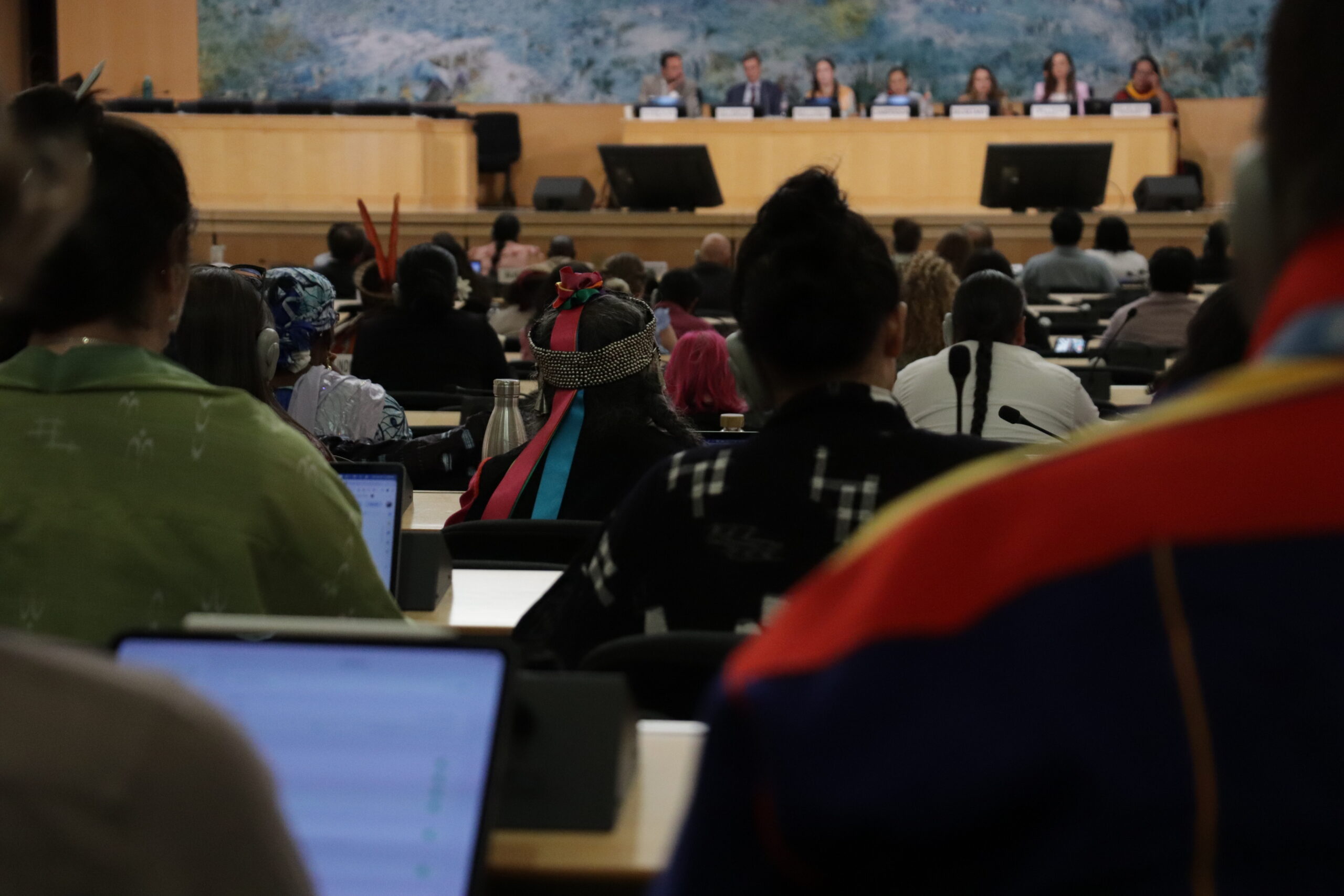
Indigenous leaders give the UN a roadmap for protecting their peoples
Amidst prayers and vows of solidarity, UN Expert Mechanism on the Rights of Indigenous Peoples ends annual meetings with demands for ‘action we’re not seeing globally’