City fences off CRAB Park encampment, moves ahead with week-long ‘clean up’
Many connected to the largely-Indigenous site worry people won’t be allowed back, while officials maintain it’s ‘not a decampment’

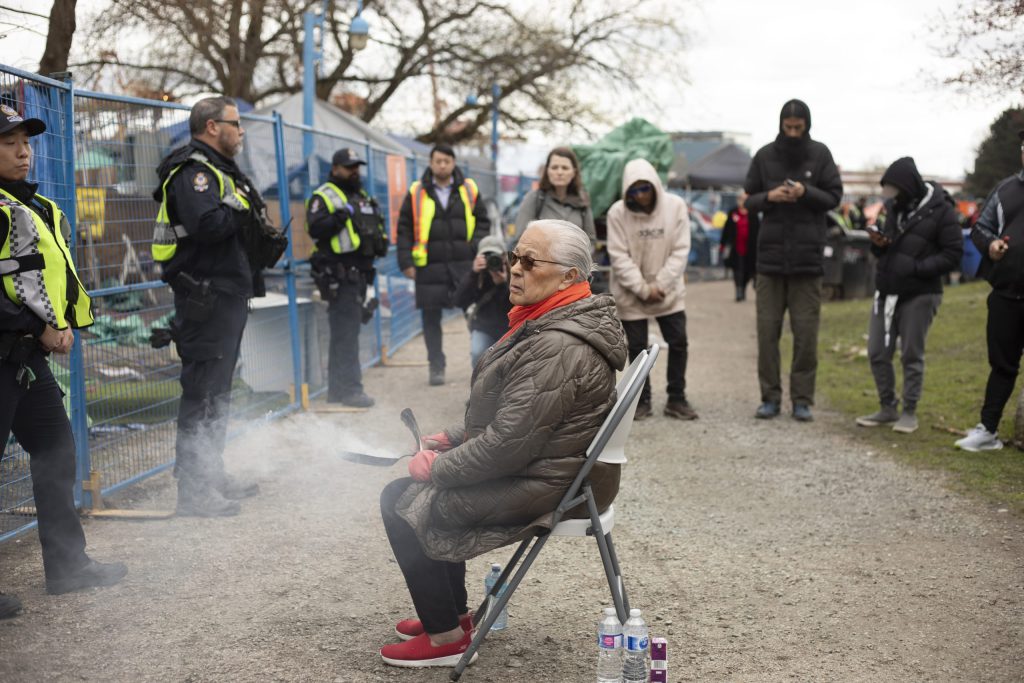
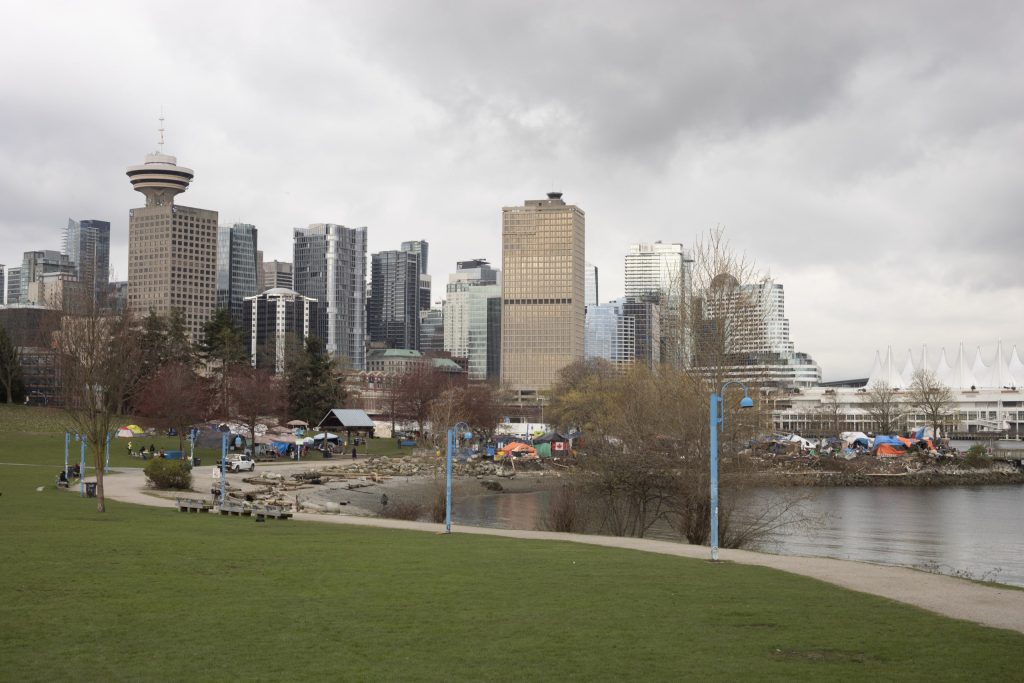
On Monday morning, Vancouver Park Board employees erected a blue fence around a homeless encampment in CRAB Park — separating residents from their shelters and belongings.
As park rangers and police began preparing the site to be cleared, residents of the camp on xʷməθkʷəy̓əm, Sḵwx̱wú7mesh and səlilwətaɬ territories watched from outside the newly constructed barrier.
“Why can’t this man go in to get his belongings for his job interview?” one camp resident asked park employees, who gave no response.
The man missed his job interview after not being allowed to access his tent.
The eviction is being called a temporary “clean up” by the City of Vancouver, which says workers are moving in for one week of work to remove “non-compliant and unsafe” structures before allowing residents to return with temporary tent shelters in early April.
The encampment has been at CRAB Park since May 2021 and shelters at least 30 full-time residents, many of whom are Indigenous. Residents were asked to leave the tent city by end of day Sunday, but by Monday lunchtime, six residents were still located inside the encampment.
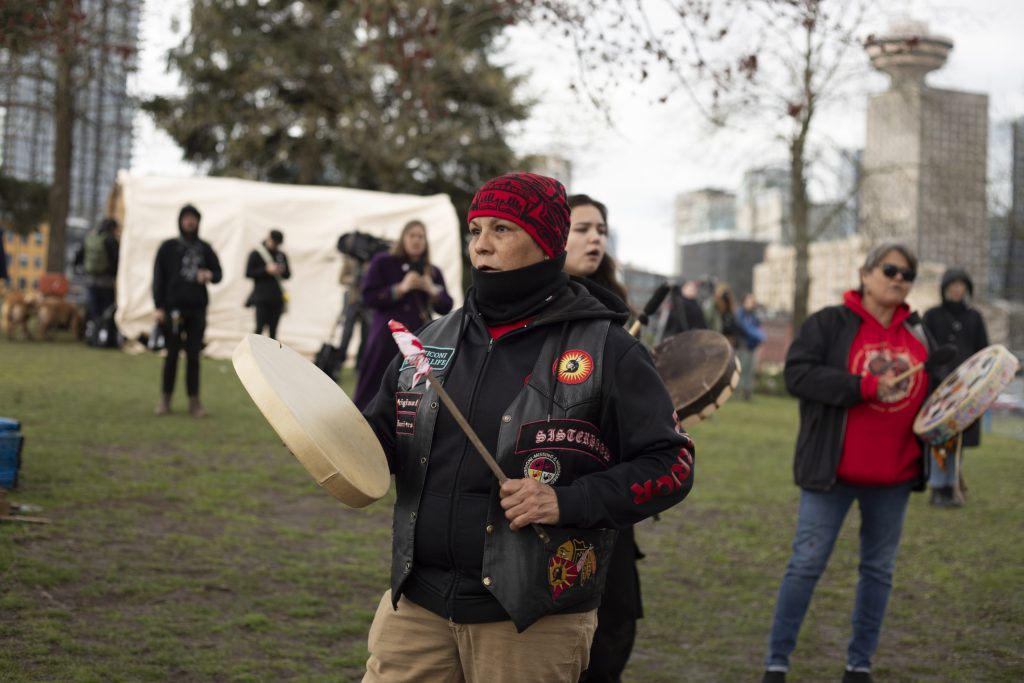
An Elder from Sḵwx̱wú7mesh Nation sat patiently waiting to offer medicine to a resident who, according to Muskikiway (Lynn Johnson), was sick and still in her tent. The Vancouver Police Department and Park Board refused to allow the Elder into the encampment to see her.
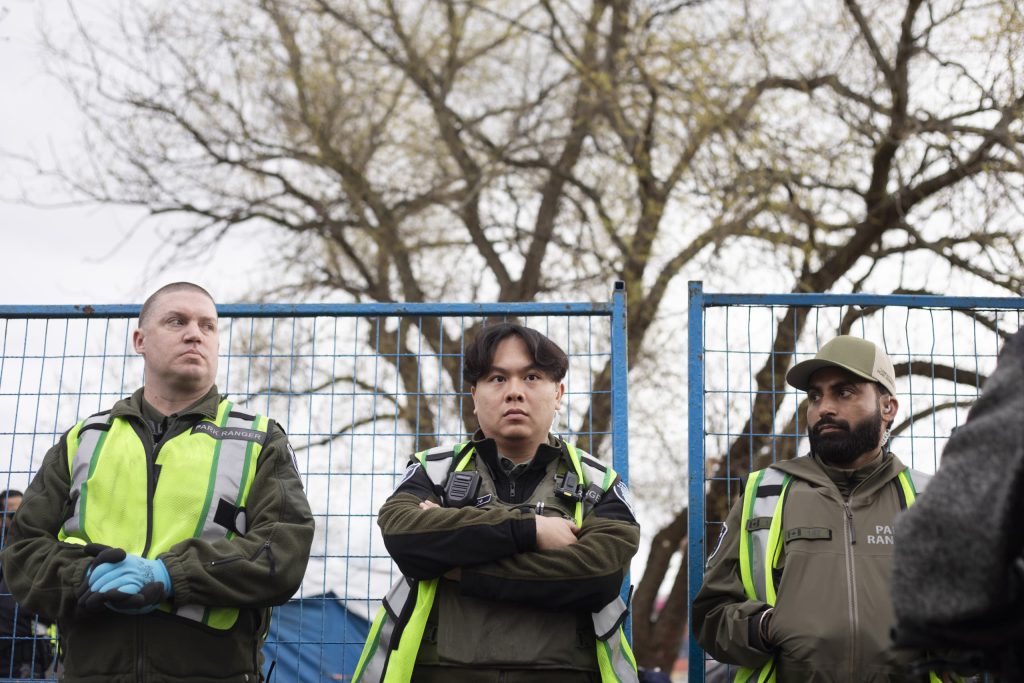
“People working in public service should be enabling us to give medicine to our people, not obstructing us with weapons,” said Robert Baker, another Sḵwx̱wú7mesh member. “I don’t know why you’re slowing us down and stopping us from performing ceremonies for our loved ones.”
Despite what the Park Board has said about temporary shelters, residents are skeptical they will be allowed to return to the tent city.
“We know very well the park rangers aren’t going to allow them back in there,” said Muskikiway, who is Anishinaabe and has been protecting “Vancouver’s” tent cities on behalf of the host nations for six years.
Stop the Sweeps is in agreement. The group, which opposes the displacement of unhoused people from public spaces in “Vancouver” obtained emails through a freedom of information request between ABC Councillors, ABC Park Board commissioners, and the Gastown Residents’ Association (GRA) that show the Park Board commissioner and members “assured” the GRA they would “clear” CRAB Park, despite existing legal protections.
According to the email, dated January 18, CRAB Park residents and advocates have attempted to build tiny homes in the park, which was blocked by park rangers, who noted the issue “is clearly escalating.”
In a March 12 written statement, the First Nations Leadership Council condemned the Vancouver Park Board.
“This move by the Vancouver Park Board is none other than a forced eviction and is a blatant disregard of human rights exposing a distinct lack of empathy and compassion for the dehoused.”
“Without readily available housing alternatives, confiscating the structures that have been put together by park residents is totally unacceptable,” the written statement continues.
Many of the structures and belongings are donations from the community. According to longtime advocate Fiona York, once all residents are removed, the tent city will likely be “torn apart and bulldozed.”
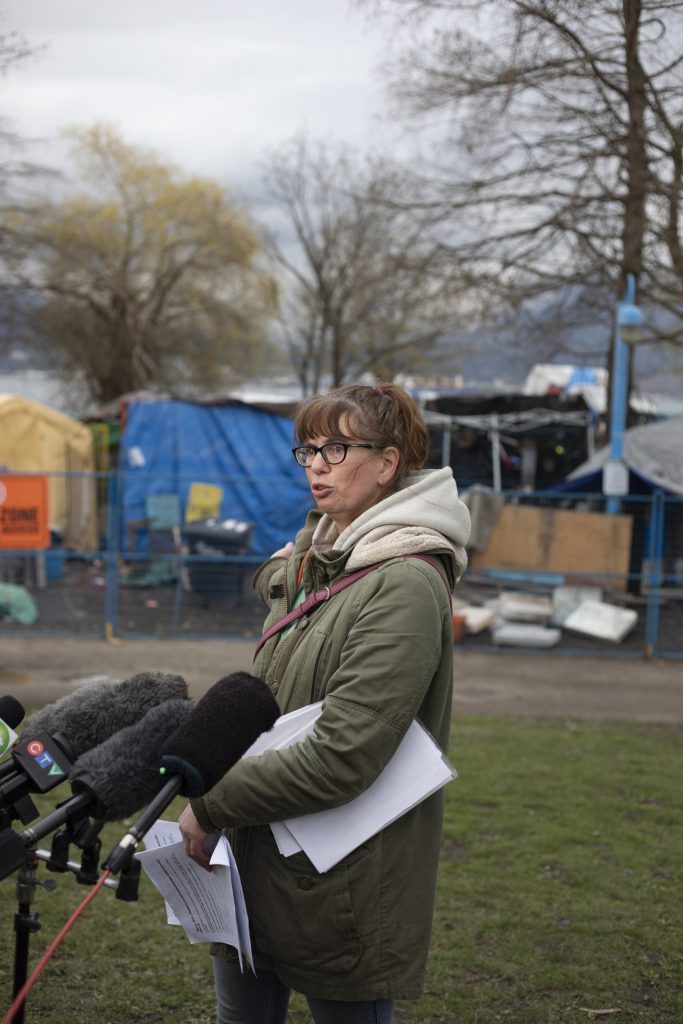
The City of Vancouver says there’s a “significant amount of debris and garbage” at the site as well as “non-compliant materials, propane tanks, rats, needles and feces.” But York said there is no problem beyond what you’d expect in a city.
“There was a small amount of dog feces, just as you’d expect in any downtown park,” she said.
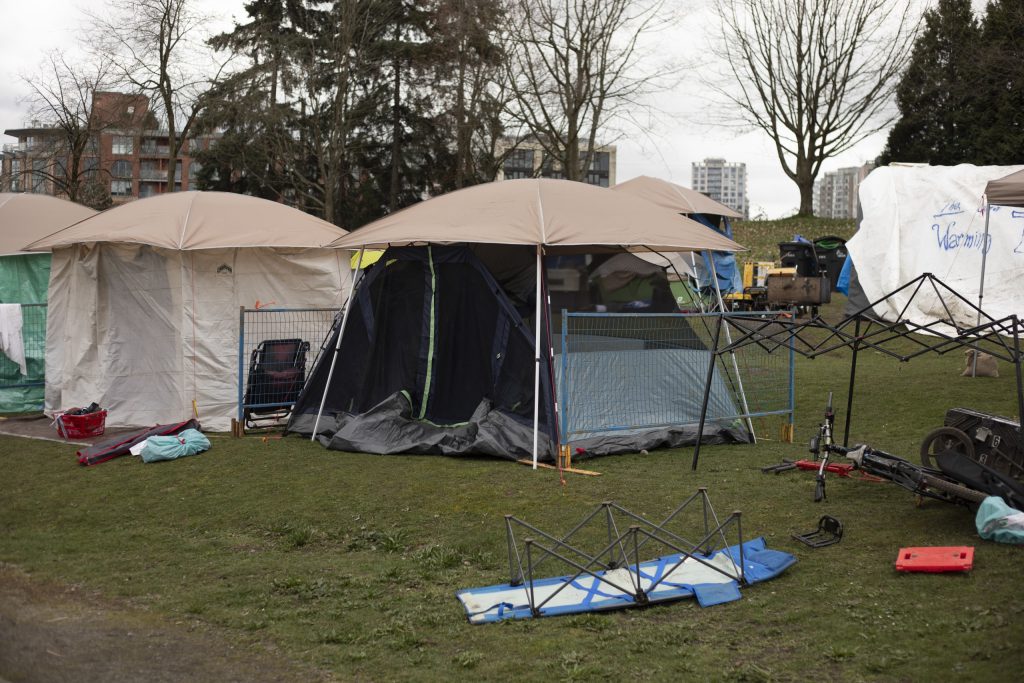
The Park Board and the city are asking residents to relocate to smaller tents provided by the Park Board, adjacent to their encampment. At the time of reporting, less than a dozen Park Board tents were erected, some of which were surrounded by fencing, or “pens” as they were being described.
“We begged them not to do the pens.” said Muskikiway, who says the structures are meant to encourage residents to “stay within their limits.”
“You can’t pen people. You can’t cage them,” she said. “But that’s their solution.”
Hugh Braker from the First Nations Summit Political Executive said forced evictions of encampments such as the one in CRAB Park perpetuate harm for many Indigenous people.
“We need to focus on increasing the availability of safe, accessible, and supportive housing for all instead of these militarized and draconian approaches to homelessness,” he said.
“Forced evictions of encampments further perpetuate the trauma and harm that many of our relatives endured in the residential school system and in the child welfare system.”
The City of Vancouver said in a statement that the cleanup process comes after four weeks of consultations, discussions and support to move people into a temporary sheltering area.
“This is not a decampment,” the statement said.
“The safety of those sheltering in the park, our staff, and the public remain our priority, and we are committed to working with the community to address issues that impact the health and safety of those sheltering in the park.”
Residents said not enough consultation was had and that the “clean-up” notice came as a shock.
IndigiNews requested comment from the Park Board, but did not receive a response before the time of publishing. And of the dozens of Park Board staff at CRAB Park at the time of reporting, none were able to speak to media.
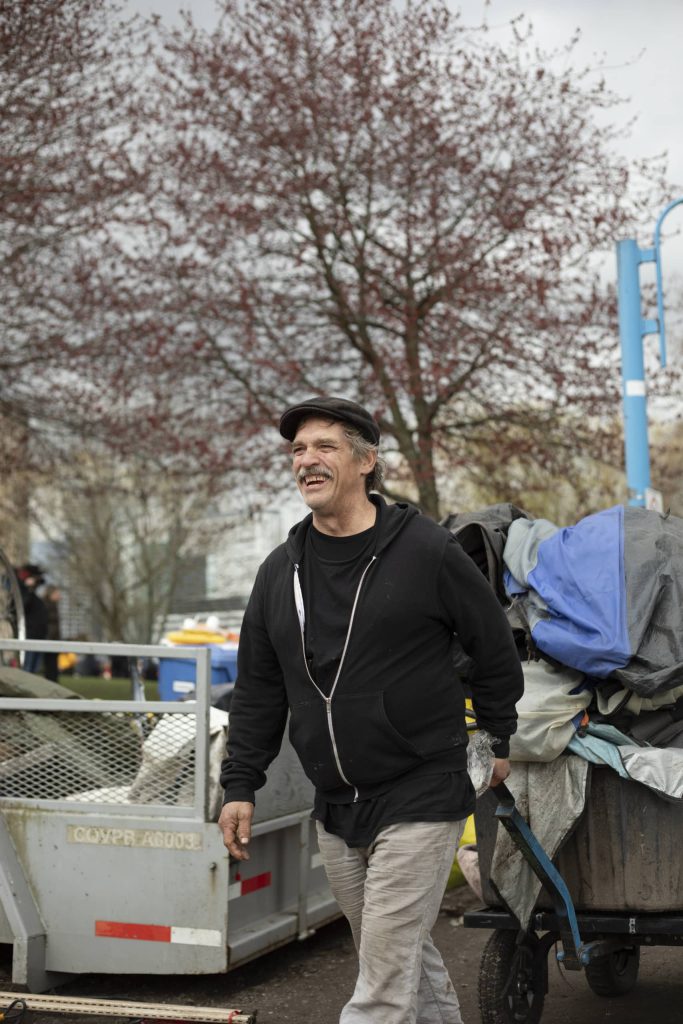
Editor’s note: This is a corrected story. A previous version incorrectly identified Lynn Thompson as Lynn Johnson in a photo caption. We apologize for the error.
Author
We live in a media ecosystem that thrives on misinformation. Big Tech and AI companies are consuming the work of real human beings and Canadian news has been banned on Facebook and Instagram.
And yet, I have hope for journalism because of the work we’re doing at IndigiNews.
At IndigiNews, we embody tâpwêwin — the Cree value of integrity and responsibility in truth-telling. We are committed to our independent, Indigenous-led newsroom rooted in community, accountability, and relationality. We believe storytelling is a sacred fire that connects our pasts, presents, and futures through the storytellers in our Storytelling Lodge. IndigiNews creates space for Indigenous journalists, storytellers, Knowledge Keepers, and communities to gather, learn, and share stories that matter.
As a registered charity, we are building a fire that allows our work not just to ignite but to thrive. Rather than relying on advertising or corporate acquisition, IndigiNews is sustained by people like you who believe Indigenous stories are important for the future of our communities.
Your support is making a real difference.
Our community of supporters, our Firekeepers, make it possible to grow our newsroom, publish award-winning journalism, train emerging Indigenous journalists through initiatives like the ReFocus Photojournalism Fellowship, and publish trustworthy stories that serve our communities across the country. Every story we publish helps fill in gaps left by mainstream media and ensures Indigenous perspectives are represented with care, accuracy and respect.
But there is still more work to do.
As the media landscape becomes more and more uncertain, community support is as necessary and essential as it’s ever been. Every new Firekeeper helps protect the independence of our newsroom and strengthens journalism that is accountable to our many and varied communities over corporations.
That’s why we’re inviting you to become a Firekeeper.
Firekeepers tend to and protect the sacred fire. Your monthly contributions directly support IndigiNews’s Storytelling Lodge, helps sustain our independent, Indigenous-led newsroom, and ensures future generations of Indigenous storytellers have the resources they need to do the work.
As a registered Canadian charity, all eligible donations receive a charitable tax receipt.
If you believe Indigenous stories matter, if you value independent journalism, and if you want to help build a strong future for Indigenous media, we invite you to join our circle of Firekeepers today.
Together, we can keep the fire burning.
— Eden Fineday, Publisher, IndigiNews
Support us nowLatest Stories
-
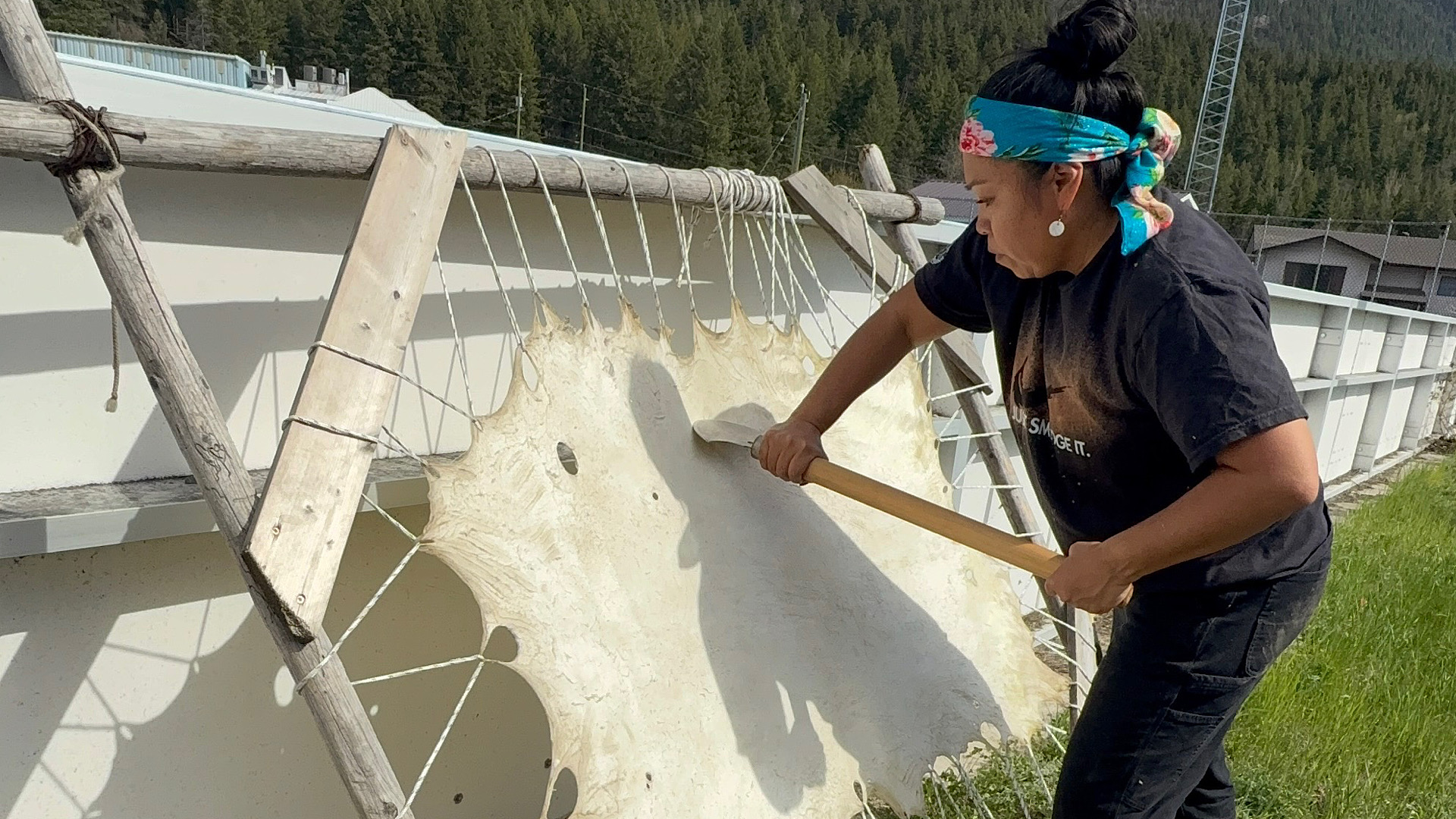
In Simpcw First Nation, Secwe̓pemc women are revitalizing hide tanning
Working with animal pelts is a lengthy, labour-intensive process — but teachers in the ‘B.C.’ community are ensuring the tradition is passed on
-

Tr’ondëk Hwëch’in celebrates as Gavin McKenna picked first in NHL draft
The 18-year-old left winger from the ‘Yukon’ joined the Toronto Maple Leafs roster, saying he wants to inspire other young Indigenous players