‘Clearly this is genocide’ : Exclusive Q&A with NDP Party Leader Jagmeet Singh
‘The only way we can truly honour those little children, those lives that were lost, is to fight for justice today,’ says Jagmeet Singh in an exclusive interview with IndigiNews following the recent findings at the Kamloops Indian Residential ‘School’

This article contains content about residential “school” that may be triggering. IndigiNews is committed to trauma-informed ethical reporting, which involves taking time and care, self-location, transparency and creating safety plans for those who come forward with stories to share.
New Democratic Party Leader Jagmeet Singh says the Canadian government can do more after the chilling discovery of children’s remains at a residential “school” were found at a site in Kamloops, B.C.
On Thursday morning, reporter Kelsie Kilawna spoke with Singh about what he is pushing for in parliament after news of the 215 remains was announced by Tk’emlúps te Secwe̓pemc leadership last week.
The church-run institution known as Kamloops Indian Residential School (KIRS) was active from 1890 to 1978, according to the University of British Columbia’s Indian Residential School History and Dialogue Centre.
Singh, who recently gave an emotional speech to survivors, told IndigiNews that there is no need to waste any more time when it comes to bringing truth to justice for Indigenous Peoples.
The following conversation has been edited for length and clarity.
Kilawna: You gave an emotional response to survivors and impacted families during your press conference on Monday, and in our language, we say ‘stim a spʔus,’ it means ‘what is on your heart.’ So we ask for your heart’s truth. So can you tell me a bit where your heart is with all of this?
Singh: My heart is heavy and I was thinking back to the press conference. Each question that came in, kind of got me thinking, what does this mean for Indigenous Peoples? What does this mean to the families? And the final question was: ‘What would you say to families that lost their children?’ And I couldn’t think of the words to say, because I can’t imagine the pain, the trauma, the suffering. What that actually means to have children taken from your arms, from their homes, from their language, from their identity. And knowing that there’s a system that is designed to kill Indigenous Peoples, not just to kill the Indian in the child, as has been quoted by the architect of the residential schools.
‘But clearly this is genocide.’
Burials — where you’ve got 215 kids buried — this is something you would hear in a country that’s going through a genocide, or a country that’s going through a war. And this is an international war crime that’s happened, a human rights violation that’s happened. It’s really a chilling and brazen example of how bad things are.
The only real response to the horror of this discovery is to fight for some justice, the meaningful concrete steps. And that’s what I’m hoping can come out of this.
So my heart is heavy, but my heart has some hope in it that this could be a moment where we actually push for some real changes.
Kilawna: There have been a number of different recent calls to action, including searching the grounds of all former schools, churches paying for the labour and returning all church-owned land, an apology from the Pope, and museums to return artifacts home. Who needs to be held accountable in your mind and what steps need to be taken immediately and in the future?
Singh: We absolutely need to support any Indigenous community that wants to seek closure, wants to investigate any other burial sites, schools, churches, like you said, we should support. And it has to be an active participation, not just funding alone, but also active participation so that the federal government can support and partner with and help Indigenous communities that ask for that help.
It has to be Indigenous-led. It has to be something requested by the Indigenous community. And then once it’s requested, the federal government has to play a supportive role, not just ‘here’s the money, go do it.’
We have a motion that we are debating today, actually.
And what we’re calling for are some concrete steps. So right now the federal government, Justin Trudeau, is actually fighting Indigenous kids in court. Despite the Canadian Human Rights Tribunal putting forward a number of rulings saying that Canada definitely didn’t fund kids [in the foster care system] equally and that they deserve some justice and compensation. Canada is appealing that decision, so that is wrong. And so Justin Trudeau should immediately stop fighting these kids in court.
Secondly, right now, as we speak, the federal government is also fighting some survivors of residential schools in court, St. Anne’s survivors in particular, they should stop that legal case. Instead of fighting survivors, work with them for justice and some meaningful reconciliation. Not pursuing a legal battle in court, but working with the community and helping to support with meaningful reconciliation and justice.
‘We’ve called for immediately implementing at an accelerated pace all of the 94 TRC calls to action. The Liberal government has been in power for six years, and they’ve only completed a fraction of those calls to action. So that’s just wrong. And there’s no excuse for that.’
In our motion, we’ve also asked for funding to support survivors, whether it’s communities or families or individuals. They need all the supports necessary, including spiritual, culturally appropriate, trauma-informed.
And then the last thing we put in this motion is that we also want a 10-day progress report. Within 10 days of this motion passing, we want to hear a progress report. So it can’t just be the Liberal government says, ‘oh yeah, yeah, sure,’ and then does nothing.
Kilawna: Is there a message you’d like to share with survivors and impacted families?
Singh: I don’t have the words to convey how horrible what has happened and continues to happen to Indigenous People is. But I want you to know that I’m going to fight with everything I have for justice, for fairness right now, for today, because I know those injustices continue. And the only way we can truly honour those little children, those lives that were lost, is to fight for justice today. And that’s what I’m going to fight for.
Kilawna: For non-Indigenous people who are looking to build relationships and solidarity with Indigenous people, what can you share from your own experience? What advice would you share with those looking to be allies?
Singh: Allies have to really take a lot of leadership from Indigenous communities. It can’t be solutions that are dictated from people that mean well but aren’t really getting their guidance from Indigenous communities. And I think allies need to consider that it’s about empowering so that Indigenous communities are sovereign as a partnership, as opposed to a paternalistic notion like ‘we’re gonna help you out because we know best.’ That is a very dangerous and actually unhelpful path.
The path has to be [from the viewpoint that] a community is powerful and resilient and survived, but has gone through so much trauma and to make things right, they need their rights recognized, they need justice, they need fairness and need support.
A National Indian Residential School Crisis Line has been set up to provide support for former students and those affected. Access emotional and crisis referral services by calling the 24-hour national crisis line: 1-866 925-4419.
Within B.C., the KUU-US Crisis Line Society aims to provide a “non-judgmental approach to listening and problem-solving.” The crisis line is open 24 hours a day, seven days a week. Call 1-800-588-8717 or go to kuu-uscrisisline.com. KUU-US means “people” in Nuu-chah-nulth.
Author
We live in a media ecosystem that thrives on misinformation. Big Tech and AI companies are consuming the work of real human beings and Canadian news has been banned on Facebook and Instagram.
And yet, I have hope for journalism because of the work we’re doing at IndigiNews.
At IndigiNews, we embody tâpwêwin — the Cree value of integrity and responsibility in truth-telling. We are committed to our independent, Indigenous-led newsroom rooted in community, accountability, and relationality. We believe storytelling is a sacred fire that connects our pasts, presents, and futures through the storytellers in our Storytelling Lodge. IndigiNews creates space for Indigenous journalists, storytellers, Knowledge Keepers, and communities to gather, learn, and share stories that matter.
As a registered charity, we are building a fire that allows our work not just to ignite but to thrive. Rather than relying on advertising or corporate acquisition, IndigiNews is sustained by people like you who believe Indigenous stories are important for the future of our communities.
Your support is making a real difference.
Our community of supporters, our Firekeepers, make it possible to grow our newsroom, publish award-winning journalism, train emerging Indigenous journalists through initiatives like the ReFocus Photojournalism Fellowship, and publish trustworthy stories that serve our communities across the country. Every story we publish helps fill in gaps left by mainstream media and ensures Indigenous perspectives are represented with care, accuracy and respect.
But there is still more work to do.
As the media landscape becomes more and more uncertain, community support is as necessary and essential as it’s ever been. Every new Firekeeper helps protect the independence of our newsroom and strengthens journalism that is accountable to our many and varied communities over corporations.
That’s why we’re inviting you to become a Firekeeper.
Firekeepers tend to and protect the sacred fire. Your monthly contributions directly support IndigiNews’s Storytelling Lodge, helps sustain our independent, Indigenous-led newsroom, and ensures future generations of Indigenous storytellers have the resources they need to do the work.
As a registered Canadian charity, all eligible donations receive a charitable tax receipt.
If you believe Indigenous stories matter, if you value independent journalism, and if you want to help build a strong future for Indigenous media, we invite you to join our circle of Firekeepers today.
Together, we can keep the fire burning.
— Eden Fineday, Publisher, IndigiNews
Support us nowLatest Stories
-
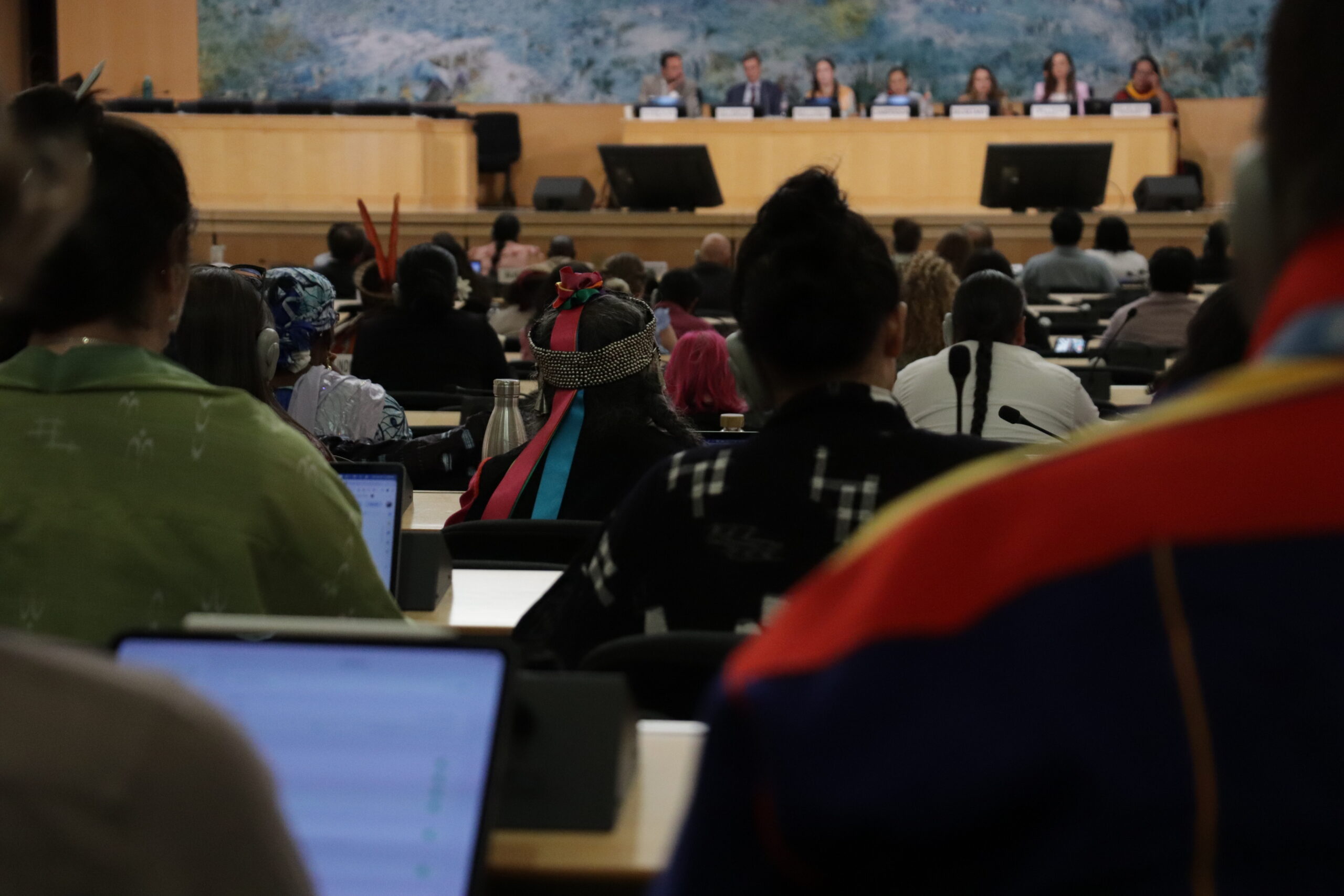
Indigenous leaders give the UN a roadmap for protecting their peoples
Amidst prayers and vows of solidarity, UN Expert Mechanism on the Rights of Indigenous Peoples ends annual meetings with demands for ‘action we’re not seeing globally’
-
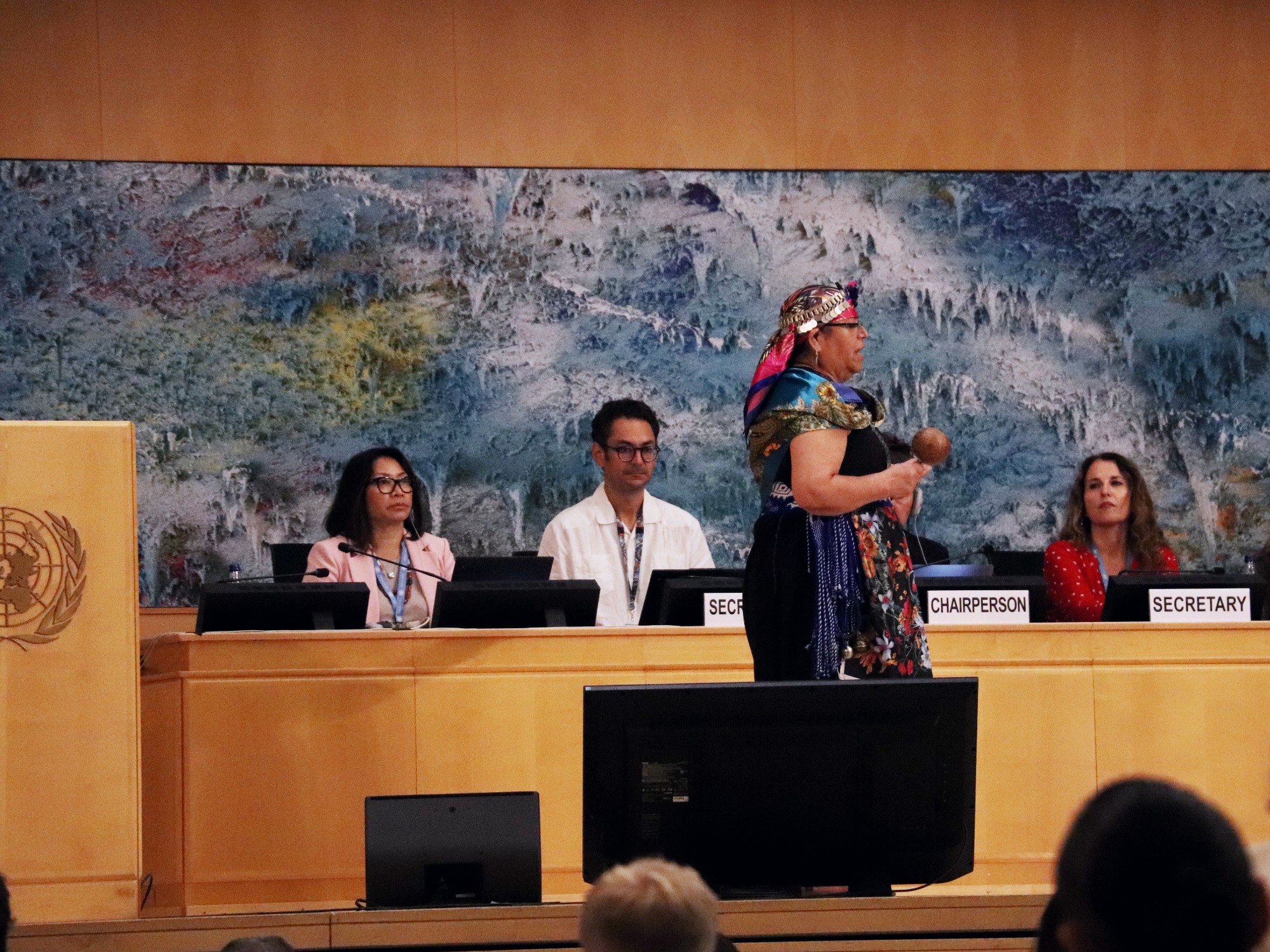
Indigenous people demand more say at the UN, as new crises hit their homelands
Indigenous nations live ‘on the frontlines’ of climate, conflict and new tech. But their voices remain sidelined in the global halls of power.