Lockdowns separating families, and interrupting Indigenous ways of being
How are coastal families dealing with the ongoing pandemic? | Part Six

COVID-19 has impacted everyone — Elders, parents, youth, and children — in different ways. For some families who divide their time between communities, closures and lockdowns have made connecting difficult. However many have inspiring resilience. The Atleo family is one of them.
On a rainy day in January, Charly Atleo, 15, is playing Monopoly with her grandfather and brothers — they’re keeping themselves entertained while stuck at home.
Their community, Snuneymuxw First Nation, is under a shelter in place order, which means the entire reserve is staying in their homes. They are leaving for essential services only.
But at least the family is all together now, says Charly Atleo.
Before the pandemic hit last year, her family lived between two communities, for work and family connections — Klahoose First Nation on Cortes Island, and Snuneymuxw First Nation in Nanaimo.
When the pandemic hit in March, the family was instantly impacted when Klahoose went into lockdown, says mother Adriene Atleo.
“When COVID first hit, the kids went two months without seeing their dad,” she says.
“We weren’t allowed to interact with anyone outside the community.”
Her husband works in Nanaimo, and while it was still possible for the family to connect, it was complicated, she explains.
“If we did, we had to find a place to quarantine, before we could go back to our place,” she says.
It’s difficult to find rentals on Cortes Island at the best of times, she says, making quarantining hard to do in a rental, after coming back from being with their dad.
Adriene Atleo worked for Klahoose First Nation. She was the support worker and cook for the Elders of their community during the day, and a culture coordinator at night. She had moved with their three children who are eight, 15 and 17, to do this essential work.
With relations from both First Nations, the family found ways to be in community. Adriene Atleo says this type of family living is an “Indigenous way of being.”
She was raised in a family with strong traditional values. Her decision to return home to cook for Elders strongly follows these footsteps, she explains.
Separating families
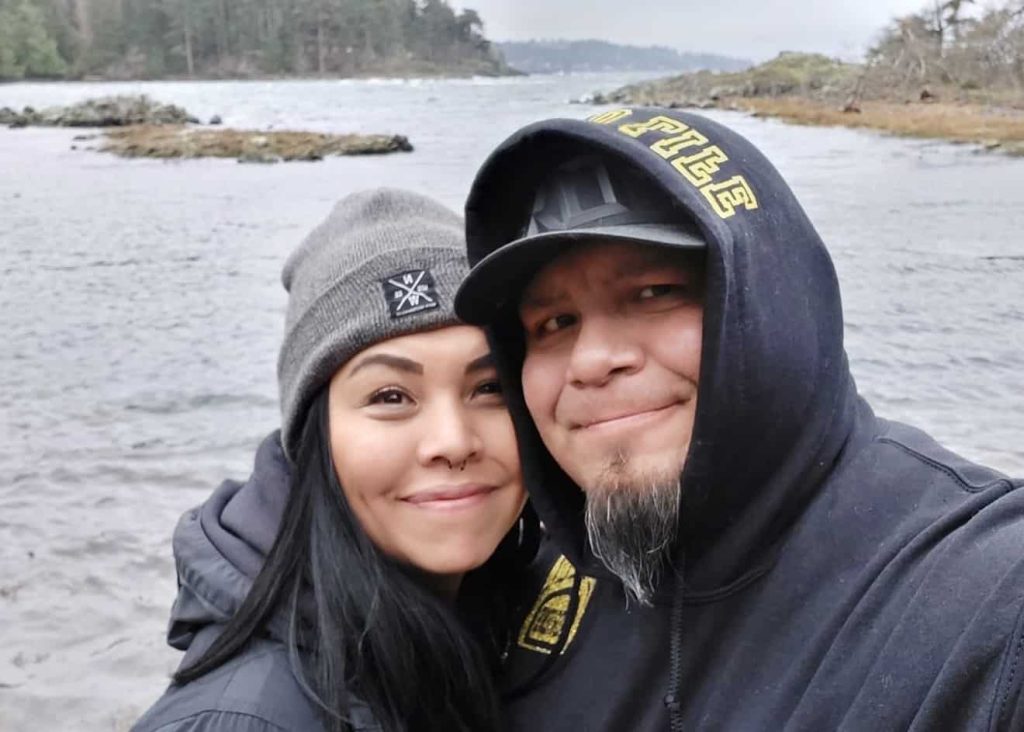
As the pandemic unfolded last year, Adriene Atleo found herself away from her husband Neil Atleo. Although she was close to family, she was separated from her husband while watching three children respond to the pandemic in different ways.
It was hard for the adults trying to make it work, and equally hard for children and youth to cope, she says.
First Nations Health Authority (FNHA) shares resources to help families through these unprecedented difficulties, including a series of youth-led wellness videos for staying positive.
Being separated from their father was creating depression and sleep issues for her children, Adriene Atleo says.
“Dom (eight) was getting depressed and Charly and Ethan (15 and 17) had a hard time sleeping…it was very hard.”
The family were reunited when they moved back to Nanaimo. The children returned to school in the fall, and then stopped when the numbers of cases began to climb. They have been homeschooling, and had hoped to return to school in January.
But as cases increased in the community, Snuneymuxw responded with a shelter in place order.
“COVID has been so tough on our kiddos,” says Adriene Atleo. “It gets intense around the house.”
Innovation, adaptation and resilience
The family returning to Snuneymuxw meant joining husband and living in a family cluster of six. Their household expresses another Indigenous way of being; where “family” is not limited to a unit of only parents and children, Adriene Atleo says.
“My grandpa lives with us,” Charly Atleo explains. The family is spread between two houses on the same property.
“My older brother lives in Grandpa’s house with him. My parents, little brother and I live separately, but on the same property.”
Staying positive means trying to stay creative. Charly Atleo draws, paints and studies.
“When COVID started, I spent a good seven hours learning how to knit on my own, so now I bought yarn and stuff so I’m going to try and make a blanket,” she says.
“Music has always been helpful for me,” she adds. “To cheer me up a lot and help through this.”
She recalls a special moment during the holidays, when her parents gave her the gift of music, pandemic-style.
“We bought her a ticket to a live streaming concert for one of Charly Atleo’s absolute favourite singers,” Adriene Atleo says.
She was blaring it, walls vibrating, throwing herself into the experience, “singing so loud, we could hear the excitement in her voice,” she says.
“That was a moment I won’t ever forget. Who says you can’t enjoy a concert during COVID?”
Social lives are on pause, work lives have changed, but the pandemic has sparked innovation, adaptation and resilience for the family.
Although Adriene Atleo’s work at Klahoose was impacted, she and her husband continue to run a small clothing business from home.
“That’s a plus, having a business at home during a pandemic,” she says, adding she is able to be at home for the children, and keep herself employed.
“A lot of people are supporting local businesses, so we’re doing really well.”
The family plays games and tries out DIY projects together, making the best of the situation.
Charly Atleo learned how to put away elk for the winter, carefully watching and helping her grandfather.
Numbers of positive cases in the area are increasing, but the newly available Moderna vaccine gives a sense of relief in sight.
The vaccine has arrived at Snuneymuxw First Nation and Charly Atleo is hoping it will improve things for everyone.
“My papa doesn’t have the strongest immune system anymore but he got the vaccine,” she says. “I just hope everyone stays safe and keeps following the guidelines.”
Author
We live in a media ecosystem that thrives on misinformation. Big Tech and AI companies are consuming the work of real human beings and Canadian news has been banned on Facebook and Instagram.
And yet, I have hope for journalism because of the work we’re doing at IndigiNews.
At IndigiNews, we embody tâpwêwin — the Cree value of integrity and responsibility in truth-telling. We are committed to our independent, Indigenous-led newsroom rooted in community, accountability, and relationality. We believe storytelling is a sacred fire that connects our pasts, presents, and futures through the storytellers in our Storytelling Lodge. IndigiNews creates space for Indigenous journalists, storytellers, Knowledge Keepers, and communities to gather, learn, and share stories that matter.
As a registered charity, we are building a fire that allows our work not just to ignite but to thrive. Rather than relying on advertising or corporate acquisition, IndigiNews is sustained by people like you who believe Indigenous stories are important for the future of our communities.
Your support is making a real difference.
Our community of supporters, our Firekeepers, make it possible to grow our newsroom, publish award-winning journalism, train emerging Indigenous journalists through initiatives like the ReFocus Photojournalism Fellowship, and publish trustworthy stories that serve our communities across the country. Every story we publish helps fill in gaps left by mainstream media and ensures Indigenous perspectives are represented with care, accuracy and respect.
But there is still more work to do.
As the media landscape becomes more and more uncertain, community support is as necessary and essential as it’s ever been. Every new Firekeeper helps protect the independence of our newsroom and strengthens journalism that is accountable to our many and varied communities over corporations.
That’s why we’re inviting you to become a Firekeeper.
Firekeepers tend to and protect the sacred fire. Your monthly contributions directly support IndigiNews’s Storytelling Lodge, helps sustain our independent, Indigenous-led newsroom, and ensures future generations of Indigenous storytellers have the resources they need to do the work.
As a registered Canadian charity, all eligible donations receive a charitable tax receipt.
If you believe Indigenous stories matter, if you value independent journalism, and if you want to help build a strong future for Indigenous media, we invite you to join our circle of Firekeepers today.
Together, we can keep the fire burning.
— Eden Fineday, Publisher, IndigiNews
Support us nowLatest Stories
-
Beloved on the powwow circuit, young boy’s connection to the drum inspires
Now four, Waseskwan Redcrow was dancing ‘before he could even fully walk’ — his family says participating in powwows has brought them joy and belonging
-
Indigenous leaders give the UN a roadmap for protecting their peoples
Amidst prayers and vows of solidarity, UN Expert Mechanism on the Rights of Indigenous Peoples ends annual meetings with demands for ‘action we’re not seeing globally’