Elders make a difference for Indigenous inmates, but connections to culture behind bars ‘limited’
Former inmate Gillis English says the Elder-led Pathways program helped him heal during his sentence, but it took more than a decade to find that support
Gillis English’s eventful life is the subject of a podcast called Plain English: Crime to Life. In various episodes, he tells stories about his experiences, including what it was like being behind bars.
“Basically I just started sharing from when I was a kid up,” he says during a phone interview from his home in Campbell River, B.C.
“For me the bigger part of it is if I can try and share a good message, which is what I want to do now.”
English, also known as Little Goat, is Anishinaabe from Northern Ontario, and has spent much of his life being caught in a “revolving door” of foster care homes, young offenders centres and prisons. During that time, he says he had few opportunities to connect to his culture.
“When I think of all the foster homes and young offender centres, there was nothing really there to help [to connect] with being Indigenous,” he says.
“The system is set up to send us back through. It’s like a revolving door.”

It wasn’t until he met Anishinaabe Elder Lloyd Haarala through Correctional Services Canada’s (CSC) Pathways program at the end of a 15-year prison sentence — about a decade ago — that things began to turn around for him.
“He’s got a way of putting his arm around you, and asking, ‘How are you doing, my boy?’ and it can just make you feel so safe,” English says.
“It makes you want to cry right there on the spot. He’s got a real human touch.”
He recalls a teaching he received from Elders during his healing journey that still resonates with him.
“We’re born with our whole lives ahead of us and we don’t know how to live at all,” he says.
“[With time] we start to learn how to live our lives. As we near the end of our lives … that’s when we’re going to know the most.”
Correctional investigator reviewing Indigenous programs
In English’s case, it took more than a decade to find the right support.
Correctional Investigator of Canada Ivan Zinger says his office has been asking for improvements on behalf of Indigenous inmates for at least that long.
“My office has made countless recommendations in the last fifteen years dealing with Indigenous corrections and there’s been very little traction on those recommendations,” Zinger told IndigiNews.
“There are some best practices that yield better success in terms of correctional outcome.”
This year, Zinger’s office is launching a series of in-depth investigations looking at Indigenous programming in Canada’s prisons — specifically around access to culture and community support.
Zinger says his office will soon conduct a review of the Pathways program specifically, with the results set to be released later this year.
Pathways is an Elder-driven healing initiative based on the teachings of the Medicine Wheel.
It’s only available in some correctional facilities to varying degrees, and is only available for inmates who have “already made a serious commitment to pursue their healing journey,” according to CSC.
Access to cultural support is key to support human dignity, individual’s spiritual beliefs and practices, and more consistent rehabilitation.
In his latest annual report, Zinger’s investigations revealed that Indigenous inmates at maximum security institutions in Agassiz, B.C., and Edmonton had limited access to cultural programs.
“As a general rule, it is critical that programs and services are culturally informed and delivered by Indigenous staff,” the report says.
“However, this investigation revealed that Indigenous inmates, though keen to practice their traditions and spirituality, had limited access to these and were rarely able to access their Elders.”
Zinger’s recommendations around how to improve things for the vastly overrepresented Indigenous inmate population have been extensive.
He says he has asked CSC for more money to be allocated for Indigenous-managed cultural initiatives — such as healing lodges through programs like Pathways — but nothing has been provided.
Zinger says Indigenous people are more likely to be at a higher security level where there are fewer programs available, which makes accessibility difficult. They’re also more likely to be put into solitary confinement, be subject to use of force, and to have their parole suspended or revoked, among other things, Zinger says.
Another problem with the current programs available is that they don’t reflect the diversity of Indigenous cultures and spiritual beliefs, Zinger says.
English echoes this concern — having signed up for many of the programs available, but disappointed at how short, non-specific and surface-level they were.
“It’s pretty much, just throw a blanket over us and this will cover everybody,” English says.
Zinger says his office has been asking CSC to create a position for a deputy commissioner of Indigenous affairs for more than a decade — someone who could represent Indigenous inmates at an executive level — however this also has not been done.
According to CSC, there is already a senior deputy commissioner who is responsible for Indigenous Initiatives, internal investigations, oversight of complaints and grievances and a variety of other pieces across sectors. There’s also a National Indigenous Advisory Committee and a National Elders working group.
Many of Zinger’s recommendations have been echoed by the Truth and Reconciliation Commission and the National Inquiry into Missing and Murdered Indigenous Women and Girls.
“(CSC) has done little to implement those now widely-accepted recommendations,” Zinger says.
“Correctional outcomes are just terrible, overall terrible and continue to remain terrible,” he says. “The over-representation of Indigenous Peoples in the federal penitentiary has gotten worse year after year.”
More than 30 percent of Canadian inmates are Indigenous, with those numbers on a trajectory to keep growing.
CSC’s director of Indigenous initiatives Marty Maltby says there has been ongoing consultation with Indigenous Peoples on the Pathways program.
Maltby says CSC has been working to make the program more viable and sustainable, however the program is run via partnership with Indigenous organizations which means it requires a joint effort.
“As always we welcome [Zinger’s] recommendations, we always have room for improvement,” Maltby says.
Elders’ teachings provide a pathway forward
As someone who was within the system for many years, English sees many opportunities for things to improve for Indigenous inmates.
If he didn’t discover Pathways, he says, and connect with an Elder, things would have been different for him.
“If Pathways wasn’t there for us, we would go out the same way we went in, or worse.”
English says, like many other Indigenous people, he was transferred in and out of foster care during childhood. He was first put into the system after his father committed suicide when he was six years old.
At the age of twelve, he says he was incarcerated for the first time — and from there he spent his entire teenage life in young offenders facilities.
His adopted father, from the Strong Bear Clan, helped to raise him, but when English began getting into trouble, he could no longer care for him, he explains.
While he was in a young offenders facility, he did a bit of schooling, but recalls not being given much support.
“They keep us there and basically just tried to keep us out of trouble,” English says.
Without anyone helping him to focus on his future, English kept on the same destructive path — he says he was given a 15 year prison term in the 1990s after taking part in a violent home robbery in Alberta.
The start of his lengthy sentence began in Edmonton at a maximum security prison, and he was eventually transferred to a facility in Drumheller, Alta, he says. During that time, he completed an advanced high school diploma, and “read a lot.”
After more transfers, he eventually ended up in Songhees Territory, where he lived in a halfway house from 2007 to 2008. He was sent to William Head Prison to finish his sentence.
In 2011, English says he reoffended and was given a two year sentence. He asked the judge to send him to a penitatary, instead of a provincial jail, so that he could have access to Pathways and the Anishinaabe Elder he worked with previously.
The judge granted his request and he was sent to Mission Institution.
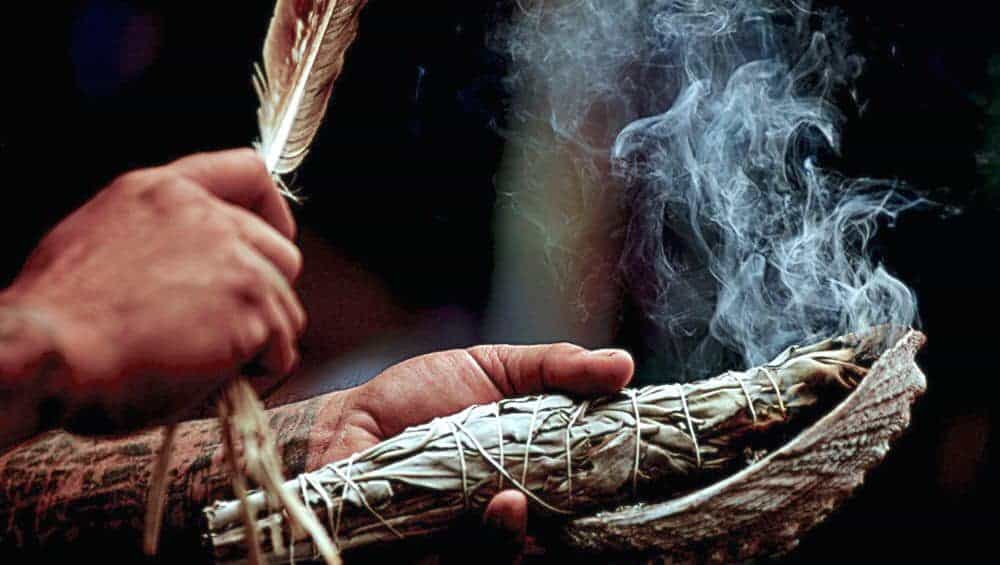
While taking part in Pathways, English says he became a firekeeper and a drum keeper. He helped the Elders to set up their lodge, put tobacco down, and learn how to place medicines out.
“They are very good at planting seeds in us,” English says.
“They may not take hold right away but they do eventually and they are the kind of things I think about and pray about and even dream about sometimes.”

In that space, English says he and his peers were able to deal with their personal issues as they came up, what he calls “shared healing.”
“We don’t try to hold each other down. We try to pull each other up. There’s a real sense of brotherhood and love between us,” he says.
“I never got to experience that anywhere other than when I was living on the reserve. I miss it so much, I sometimes think I want to go back and sit with everybody again. Sit by the fire and share in a good way.”
The Pathways program works because of the Elders, English says. He describes them as a light in an otherwise dark situation.
“The Elders make the program,” he says. “They are what holds us together.”
English sees a need for the Pathways program to expand, to become more inclusive and allow people to enter at any point in their healing journey. He says CSC gets involved too heavily in the process of who gets to stay in Pathways or not, and he believes that should be left entirely up to the Elders.
“I mean we’re going there, some of us, in a really bad way so we’re going to be who we are until we start to heal,” he says. “[For CSC] to push us back out and not allow us to access that help is not right.”
English is also now a grandfather, and thinks about how much he missed while he was in the system.
“I want to be the best grandfather I can be,” he says. “I want to help break that cycle.”
Author
We live in a media ecosystem that thrives on misinformation. Big Tech and AI companies are consuming the work of real human beings and Canadian news has been banned on Facebook and Instagram.
And yet, I have hope for journalism because of the work we’re doing at IndigiNews.
At IndigiNews, we embody tâpwêwin — the Cree value of integrity and responsibility in truth-telling. We are committed to our independent, Indigenous-led newsroom rooted in community, accountability, and relationality. We believe storytelling is a sacred fire that connects our pasts, presents, and futures through the storytellers in our Storytelling Lodge. IndigiNews creates space for Indigenous journalists, storytellers, Knowledge Keepers, and communities to gather, learn, and share stories that matter.
As a registered charity, we are building a fire that allows our work not just to ignite but to thrive. Rather than relying on advertising or corporate acquisition, IndigiNews is sustained by people like you who believe Indigenous stories are important for the future of our communities.
Your support is making a real difference.
Our community of supporters, our Firekeepers, make it possible to grow our newsroom, publish award-winning journalism, train emerging Indigenous journalists through initiatives like the ReFocus Photojournalism Fellowship, and publish trustworthy stories that serve our communities across the country. Every story we publish helps fill in gaps left by mainstream media and ensures Indigenous perspectives are represented with care, accuracy and respect.
But there is still more work to do.
As the media landscape becomes more and more uncertain, community support is as necessary and essential as it’s ever been. Every new Firekeeper helps protect the independence of our newsroom and strengthens journalism that is accountable to our many and varied communities over corporations.
That’s why we’re inviting you to become a Firekeeper.
Firekeepers tend to and protect the sacred fire. Your monthly contributions directly support IndigiNews’s Storytelling Lodge, helps sustain our independent, Indigenous-led newsroom, and ensures future generations of Indigenous storytellers have the resources they need to do the work.
As a registered Canadian charity, all eligible donations receive a charitable tax receipt.
If you believe Indigenous stories matter, if you value independent journalism, and if you want to help build a strong future for Indigenous media, we invite you to join our circle of Firekeepers today.
Together, we can keep the fire burning.
— Eden Fineday, Publisher, IndigiNews
Support us nowLatest Stories
-
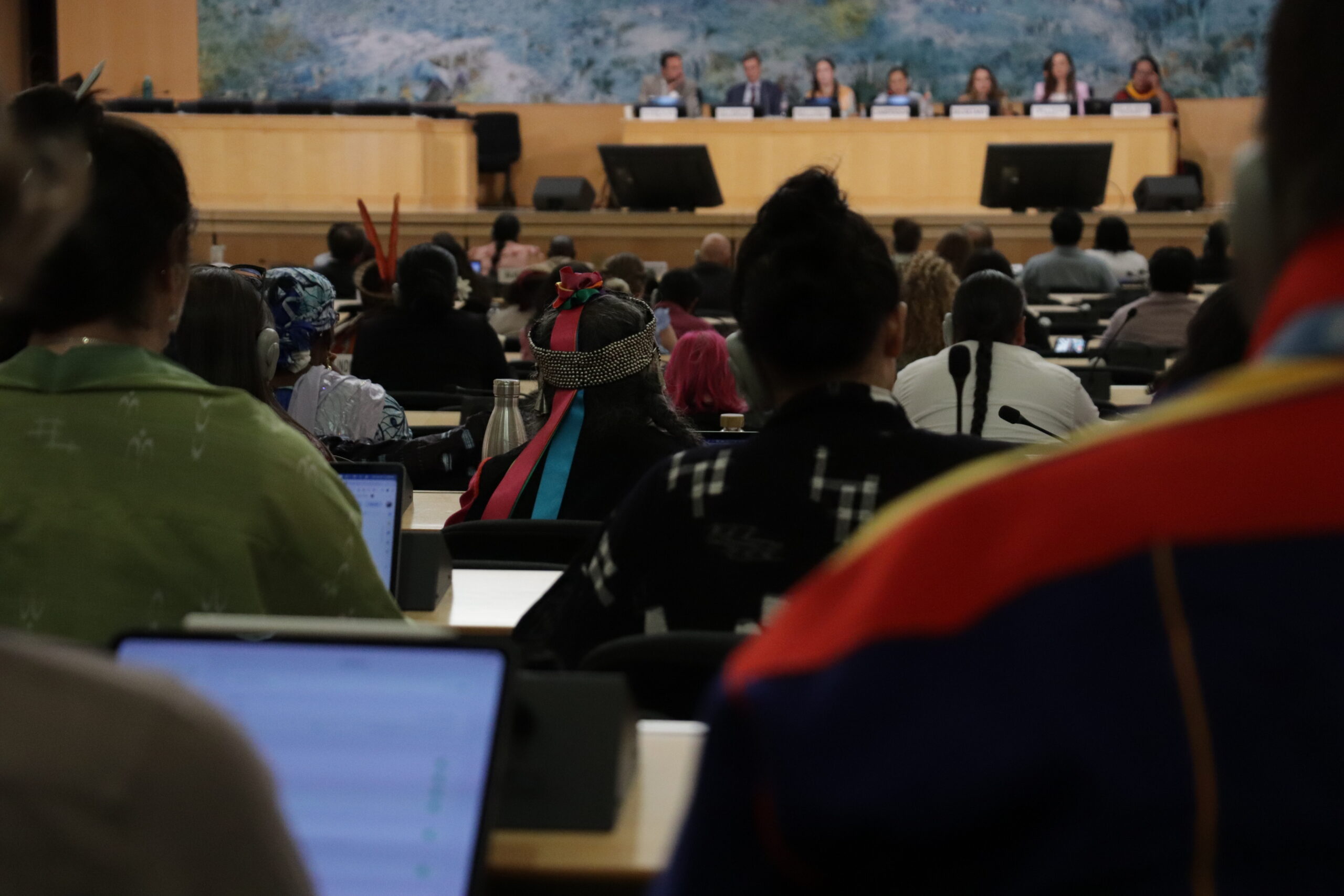
Indigenous leaders give the UN a roadmap for protecting their peoples
Amidst prayers and vows of solidarity, UN Expert Mechanism on the Rights of Indigenous Peoples ends annual meetings with demands for ‘action we’re not seeing globally’
-
Indigenous people demand more say at the UN, as new crises hit their homelands
Indigenous nations live ‘on the frontlines’ of climate, conflict and new tech. But their voices remain sidelined in the global halls of power.