Erasure of Indigenous languages ‘a scar’ on Canada, says maskēkow-ininiw language warrior
“We all have a responsibility towards the return and continuation of Indigenous languages in this country,” says Dr. Onowa McIvor

Revitalizing Indigenous languages in Canada is everyone’s responsibility says a nēhinawēwin language learner and language warrior who has a mission to stop the erasure of such.
Onowa McIvor is maskēkow-ininiw (Swampy Cree) and Scottish-Canadian from Kinosao Sipi (Norway House Cree Nation), and has for many years, worked in the field of Indigenous language revitalization at the University of Victoria (UVic). She completed her PhD in Languages and Literacy Education.
Based out of SENĆOŦEN and lək̓ʷəŋən speaking territories, Onowa is part of a group of language activists, practitioners and scholars, who are working to restore First Nation’s languages across Canada.
She leads the national NEȾOLṈEW̱ (One Mind, One People) Research Partnership, which has brought together nine communities in cross-country consultation. This national partnership is Indigenous-led, and Indigenous governed.
Onowa spoke with IndigiNews on May 11, just a day ahead of her public lecture on the need for this work and the beauty of Indigenous language, on May 12, for the Big Thinking lecture series, hosted virtually by the Federation for Humanities and Social Sciences.
She is conscious of the fact that this project only exists as a result of colonialism.
“Our field only exists because of the history of this country, of the intentional, historic, violent erasure of Indigenous languages,” she said during the conference.
Benefiting everyone
The project is in its sixth of seven years, nearing completion. Currently, partner communities around the country are wrapping up their research, and pulling together to learn from each other and share. Onowa says it’s a very exciting time.
“The hope is that what we learn from this project will positively affect the whole field of language revitalization. And that many, many communities will benefit from the increase in the learning and the efforts of this collection of people,” Onowa told IndigiNews.
“In the case of this kind of research, we are intending to benefit, specifically other Indigenous communities who are actively pursuing or aspiring to revive or continue their languages.”
Using an approach that engages with and studies how adults learners both learn, and contribute, the project group has been working to document how they can harness the potential that adults have, to contribute to the revival of Indigenous language.
By the end of the project, Onowa hopes to have created a resource which will help others learn about, and more easily contribute to the revival of Indigenous languages.
It takes a community
Onowa believes it takes a community to restore a language. By that, she means that any language revitalization, reclamation, activities, exercises, or endeavors are necessarily holistic. This journey towards restoring a language starts, she explained, in the womb, and carries on after people are gone.
“It’s automatically intergenerational and inter-connected to other things that are happening in the community,” she said.
Onowa has found over the years that non-Indigenous people react in a few different ways when approached with the idea of Indigenous language revitalization. They’re often either uninformed and think it’s not their issue to deal with, or they’re interested but don’t know what to do.
She said neither of those help them as Indigenous people.
“If you are Canadian, then Indigenous languages are your heritage too. And their continuation should matter to you also,” said Onowa, quoting Dr. Wanosts’a7 Lorna Williams, an emerita professor with UVic who has also worked on the restoration of Indigenous languages.
“The demise and disappearance of Indigenous languages is a scar on the face of Canada, and everybody should be concerned and feel embarrassed about the violent erasure. It was an intentional violent erasure,” Onowa said.
The role of non-Indigenous people in language restoration
When asked about the role of non-Indigenous people in restoring Indigenous language in Canada, Onowa pointed to something she recalled the Dalai Lama expressed about civic responsibilities — that there are civic responsibilities with having citizenship.
Hearing him say this, changed Onowa, and made her question how many Canadians really think about the responsibilities they have. And this question, Onowa says, shouldn’t always be put on Indigenous people to answer for non-Indigenous people. She said people need to educate themselves about their responsibilities, and how they relate to the future of this country.
For example, she posed the question: Would you be able to answer if someone greeted you in the traditional language of the territory where you live?
“We all have a responsibility towards the return and continuation of Indigenous languages in this country, everybody, but not just Indigenous people,” she said.
Onowa has created a guide, with tips (and video) for individuals to get involved.
Author
We live in a media ecosystem that thrives on misinformation. Big Tech and AI companies are consuming the work of real human beings and Canadian news has been banned on Facebook and Instagram.
And yet, I have hope for journalism because of the work we’re doing at IndigiNews.
At IndigiNews, we embody tâpwêwin — the Cree value of integrity and responsibility in truth-telling. We are committed to our independent, Indigenous-led newsroom rooted in community, accountability, and relationality. We believe storytelling is a sacred fire that connects our pasts, presents, and futures through the storytellers in our Storytelling Lodge. IndigiNews creates space for Indigenous journalists, storytellers, Knowledge Keepers, and communities to gather, learn, and share stories that matter.
As a registered charity, we are building a fire that allows our work not just to ignite but to thrive. Rather than relying on advertising or corporate acquisition, IndigiNews is sustained by people like you who believe Indigenous stories are important for the future of our communities.
Your support is making a real difference.
Our community of supporters, our Firekeepers, make it possible to grow our newsroom, publish award-winning journalism, train emerging Indigenous journalists through initiatives like the ReFocus Photojournalism Fellowship, and publish trustworthy stories that serve our communities across the country. Every story we publish helps fill in gaps left by mainstream media and ensures Indigenous perspectives are represented with care, accuracy and respect.
But there is still more work to do.
As the media landscape becomes more and more uncertain, community support is as necessary and essential as it’s ever been. Every new Firekeeper helps protect the independence of our newsroom and strengthens journalism that is accountable to our many and varied communities over corporations.
That’s why we’re inviting you to become a Firekeeper.
Firekeepers tend to and protect the sacred fire. Your monthly contributions directly support IndigiNews’s Storytelling Lodge, helps sustain our independent, Indigenous-led newsroom, and ensures future generations of Indigenous storytellers have the resources they need to do the work.
As a registered Canadian charity, all eligible donations receive a charitable tax receipt.
If you believe Indigenous stories matter, if you value independent journalism, and if you want to help build a strong future for Indigenous media, we invite you to join our circle of Firekeepers today.
Together, we can keep the fire burning.
— Eden Fineday, Publisher, IndigiNews
Support us nowLatest Stories
-
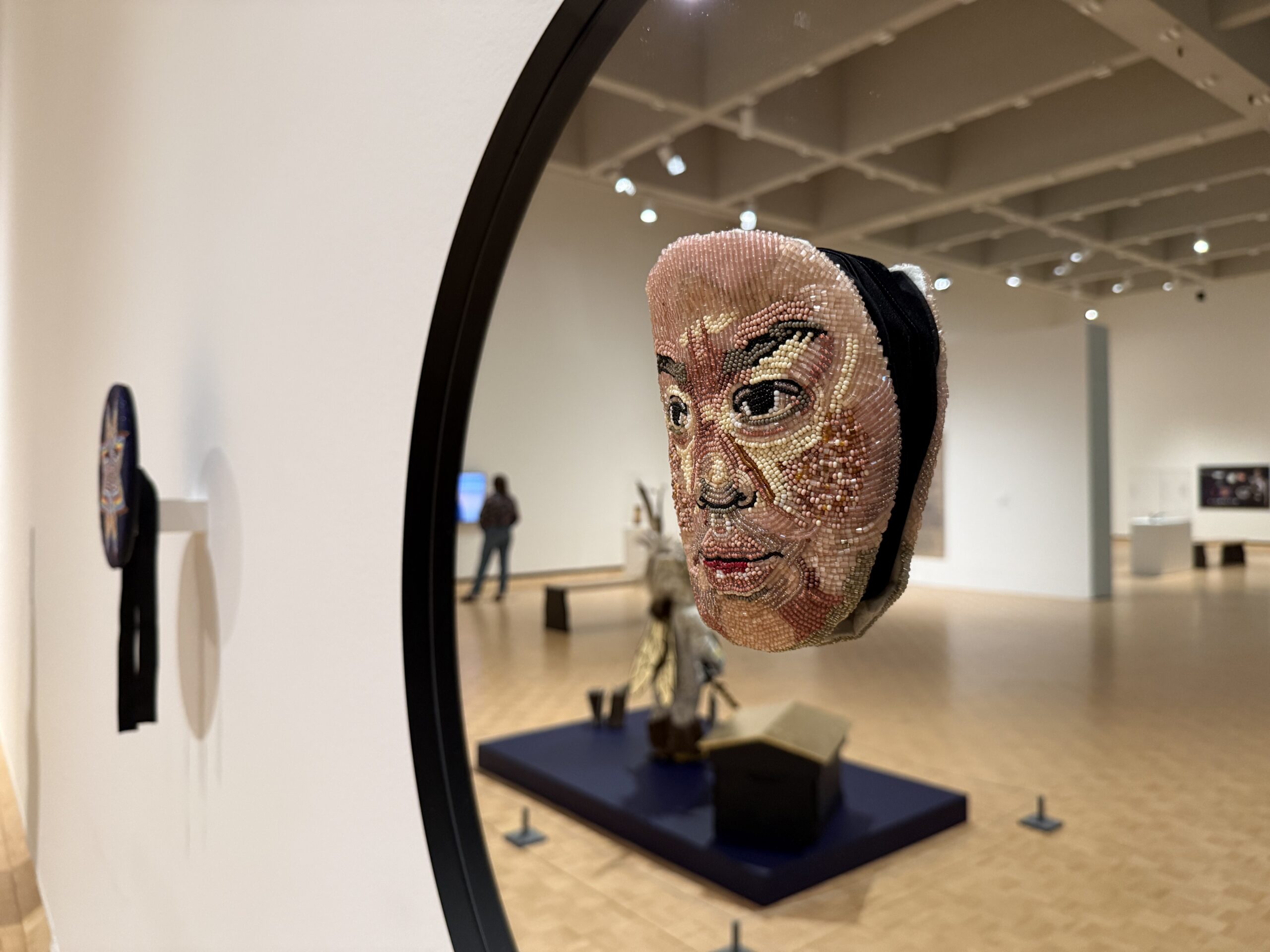
‘Love Medicine’ exhibition celebrates Two Spirit and Indigiqueer artists
Curated by Métis art historian Michelle McGeough, 22 Indigenous 2SLGBTQIA+ artists explore the idea of love as healing, belonging — and resistance — in a Oskana kâ-asastêki (Regina) gallery
-

‘Rhythm crafted for the human voice’: Poet kit-xgwélemc kennedy wins an Indigenous Voices Award
Member of St’uxwtéws Secwépemc Nation recognized in unpublished poetry category — following in his wordsmith mom’s footsteps