Drones will deliver medical supplies to remote First Nations during COVID-19 pandemic
The Remote Communities Drone Transport Initiative received seven hundred and fifty thousand dollars to deliver much-needed medical supplies to a remote community for a pilot project that will run over the next year.

The University of British Columbia (UBC) Faculty of Medicine received a $750,000 dollar grant to deliver health care supplies to the remote First Nations communities using drones.
The Remote Communities Drone Transport Initiative received money from the 2020 TD Ready Challenge to deliver personal protective equipment and medications, as well as COVID-19 testing and diagnostics during the ongoing pandemic.
“It’s an opportunity whereby we can explore the use of drone technology to support remote Indigenous communities in a new way,” says Dr. John Pawlovich, one of the project’s leaders.
“Drone technology has been around for a while now, but hasn’t been thoroughly explored, in terms of potential to augment healthcare initiatives for indigenous communities.”
When 82 First Nations in B.C went into lock-down last April, many cut off access to their communities to prevent the spread of COVID-19, but they also cut off their own supply lines, according to a press release from UBC.
Isolated communities have been faced with access and supply issues, relating to testing, pharmacy and medical supplies. How do communities under lockdown secure supplies without increasing the risk of transmission into the community?
The answer in this case: drones.
Pawlovich says the drones will deliver a variety of supplies to communities in need.
“Easy examples include PPE, equipment to help protect healthcare providers, testing supplies for COVID, and even we could look at different medical supplies and pharmaceuticals,” he says.
Stellat’en First Nation, more than 100 kilometres west of Prince George is one of the nations that will receive support from this project. Chief Robert Michell says he’s excited about the opportunity.
“There’s a multitude of different types of drones and there’s a variance of what they can carry,” says Michell. “I would imagine, some of the drone technology that we’re going to see here is going to be kind of a mixture of, of some heavy carriers and some of the lighter.”
The partnership with Stellat’en First Nation and UBC started a year ago, Michell explains, with former chief Archie Patrick. But drones would provide more services outside of just medical supplies, Michell says.
“We live by a lake, we live by a river system that in the spring runs very fast,” Michell explains. “A year ago, we lost a community neighbour in the river. Some of it’s not accessible by boat. Drone technology would have helped us get eyes on the river right away to see where this person may have gone in and help locate him.”
The project also offers job training for the community, he says.
“We actually need a drone ticket to fly some of the drones, I would imagine that would come to our community and we would provide the opportunity to train some of our community members to be drone pilots, and if they did receive a ticket and that would in turn, get them into the workforce.”
As the project gets started, an unmanned drone will carry supplies between Fraser Lake (population of about 1,000 people) and the Stellat’en First Nation (population on reserve of about 250 people) twice daily, dive days a week over the next year.
According to a press release sent on Jan. 26, the project aims to develop processes that can be replicated in other remote communities across Canada.
“Leading to more equitable access to health services in areas with few doctors, nurses and labs.”
Michell says being the first to pilot a project is a welcome change.
“First Nations communities, especially isolated ones are further up North, they’re always behind the wave in new technology. So this is kind of exciting to this type of technology, which is fairly new to all communities across Canada, that we’re going to have an opportunity to be one of the first in the door to do some of the exciting stuff, with drone technology,” he says.
“This is an exciting change, to be one of the first communities to do this.”
Odette Auger is a health reporter for IndigiNews, you can follow her work here.
Author
We live in a media ecosystem that thrives on misinformation. Big Tech and AI companies are consuming the work of real human beings and Canadian news has been banned on Facebook and Instagram.
And yet, I have hope for journalism because of the work we’re doing at IndigiNews.
At IndigiNews, we embody tâpwêwin — the Cree value of integrity and responsibility in truth-telling. We are committed to our independent, Indigenous-led newsroom rooted in community, accountability, and relationality. We believe storytelling is a sacred fire that connects our pasts, presents, and futures through the storytellers in our Storytelling Lodge. IndigiNews creates space for Indigenous journalists, storytellers, Knowledge Keepers, and communities to gather, learn, and share stories that matter.
As a registered charity, we are building a fire that allows our work not just to ignite but to thrive. Rather than relying on advertising or corporate acquisition, IndigiNews is sustained by people like you who believe Indigenous stories are important for the future of our communities.
Your support is making a real difference.
Our community of supporters, our Firekeepers, make it possible to grow our newsroom, publish award-winning journalism, train emerging Indigenous journalists through initiatives like the ReFocus Photojournalism Fellowship, and publish trustworthy stories that serve our communities across the country. Every story we publish helps fill in gaps left by mainstream media and ensures Indigenous perspectives are represented with care, accuracy and respect.
But there is still more work to do.
As the media landscape becomes more and more uncertain, community support is as necessary and essential as it’s ever been. Every new Firekeeper helps protect the independence of our newsroom and strengthens journalism that is accountable to our many and varied communities over corporations.
That’s why we’re inviting you to become a Firekeeper.
Firekeepers tend to and protect the sacred fire. Your monthly contributions directly support IndigiNews’s Storytelling Lodge, helps sustain our independent, Indigenous-led newsroom, and ensures future generations of Indigenous storytellers have the resources they need to do the work.
As a registered Canadian charity, all eligible donations receive a charitable tax receipt.
If you believe Indigenous stories matter, if you value independent journalism, and if you want to help build a strong future for Indigenous media, we invite you to join our circle of Firekeepers today.
Together, we can keep the fire burning.
— Eden Fineday, Publisher, IndigiNews
Support us nowLatest Stories
-
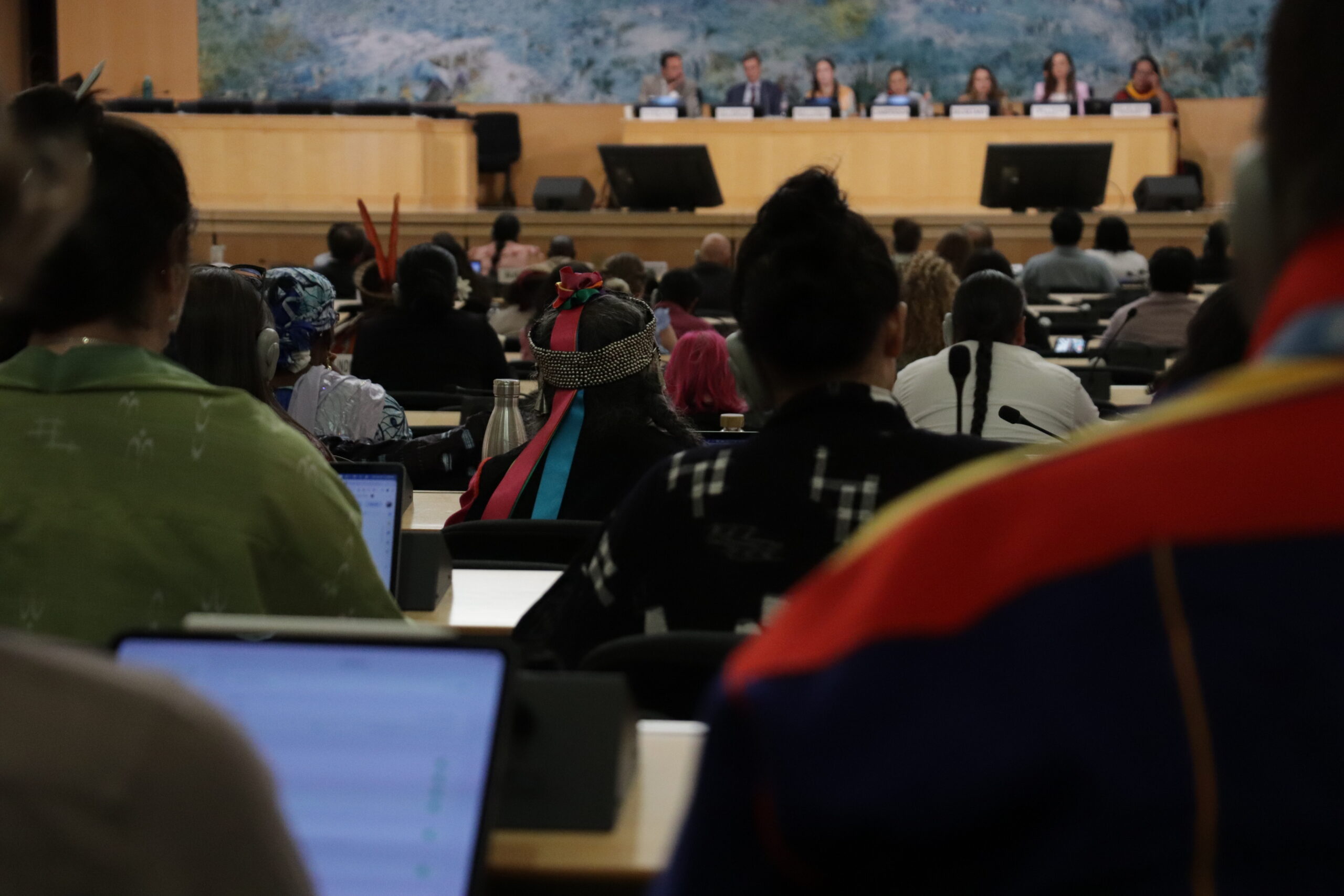
Indigenous leaders give the UN a roadmap for protecting their peoples
Amidst prayers and vows of solidarity, UN Expert Mechanism on the Rights of Indigenous Peoples ends annual meetings with demands for ‘action we’re not seeing globally’
-
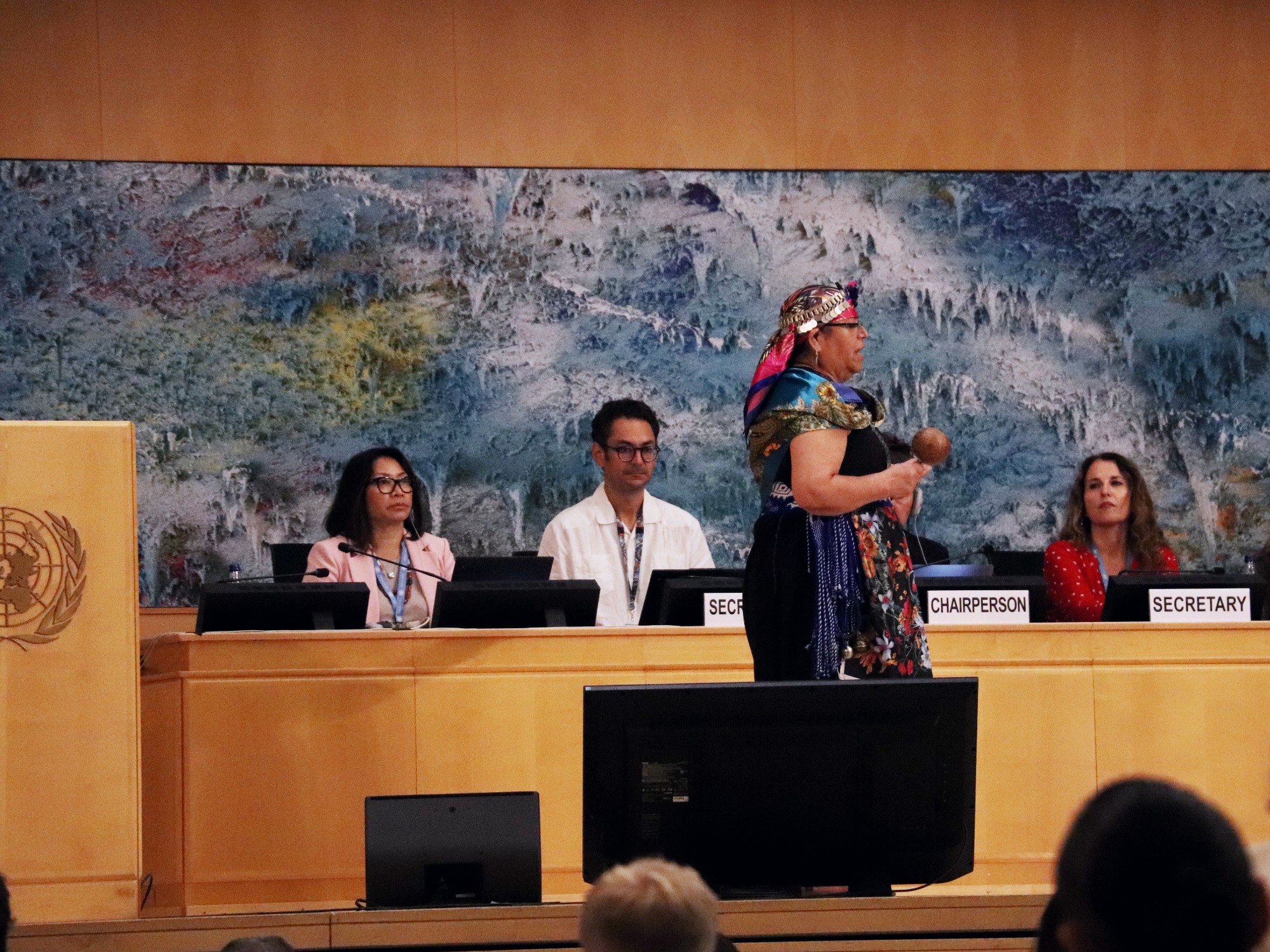
Indigenous people demand more say at the UN, as new crises hit their homelands
Indigenous nations live ‘on the frontlines’ of climate, conflict and new tech. But their voices remain sidelined in the global halls of power.