Virtual mental health service improves access to critical support
At the intersection of COVID-19 and the overdose crisis, the First Nation Health Authority finds new ways to offer substance use and psychiatric supports.
COVID-19 has people at home, with less frequent opportunities for connection. The isolation increases when it is compounded with the stigma of substance use or mental health issues.
“In many cases, underlying chronic, severe trauma is related to substance use and during these dual public health emergencies it becomes even more important to increase mental health and wellness supports for BC First Nations people,” explains Dr. Nel Wieman, First Nations Health Authority’s (FNHA) acting deputy chief medical officer.
In B.C., 261 people have died of COVID-19. As of Sept. 30, 2020, 1202 people have died from overdose in the province this year.
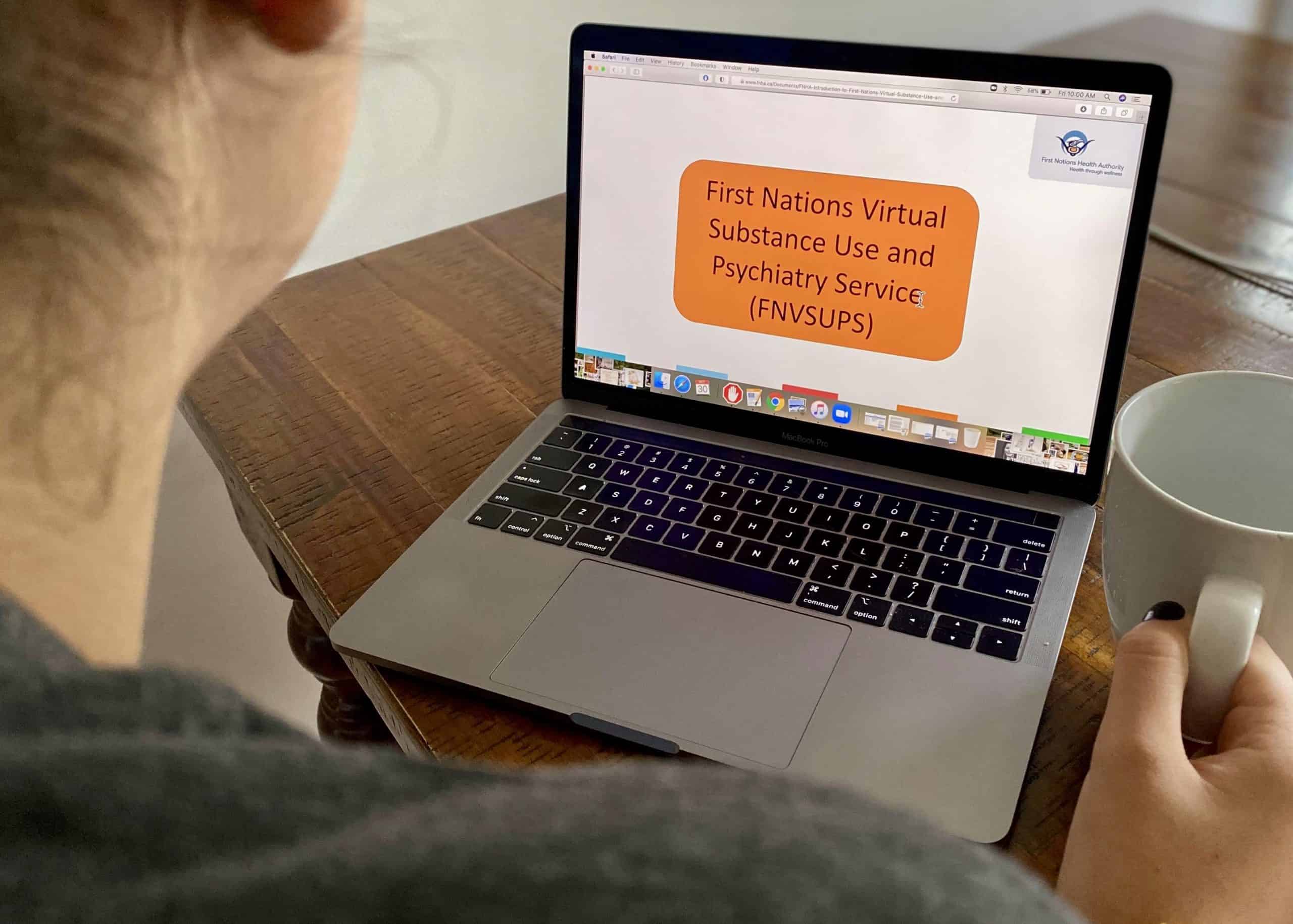
In response to this combined crisis, the FNHA accelerated their plans to launch a virtual substance use and psychiatry service.
“We accelerated the roll out of this service as the worsening of the overdose crisis during the pandemic and increased access to a safer supply highlighted the need for virtual care delivery,” explains FNHA.

Increased demand
Since the service launched in August, FNHA says it’s been in high demand.
“The only surprise was the high number of referrals, which shows how badly this service is needed,” FNHA shared in an email to IndigiNews. “The uptake was quite high, the programs have been very well received and utilization only continues to grow as we move forward.”
Indigenous people living in B.C., and their family members can be referred to this service, including those who do not have status. Patients connect with the team of psychiatrists and addictions specialists via zoom or phone and are ensured culturally safe encounters.
“The most apparent challenge was finding a way to make access to these much needed services as low-barrier as possible,” says FNHA. In seeking help for mental health or addictions issues, a significant barrier is stigma.
When people do seek treatment, in the traditional health care system waitlists to specialists can be long, and referrals are required by a primary care provider. It is possible to wait months, or even years for patients to have their first appointment with a specialist.
A significant change to the referral process, was to ensure people are able to access services readily from within their circle of care. Now referrals to the online service can be made by primary care providers as well as teachers, mental health clinicians, health directors, nurses, drug and alcohol counsellors.
They also grappled with technological barriers.
“Access to the internet and computers can present challenges,” says FNHA. “However the substance use pathway, much like doctor of the day, was set up to allow for the option of phone based appointments where technology exists.
Moving forward FNHA says they will continue to provide this online service in conjunction with their other programs.
Author
We live in a media ecosystem that thrives on misinformation. Big Tech and AI companies are consuming the work of real human beings and Canadian news has been banned on Facebook and Instagram.

And yet, I have hope for journalism because of the work we’re doing at IndigiNews.
At IndigiNews, we embody tâpwêwin — the Cree value of integrity and responsibility in truth-telling. We are committed to our independent, Indigenous-led newsroom rooted in community, accountability, and relationality. We believe storytelling is a sacred fire that connects our pasts, presents, and futures through the storytellers in our Storytelling Lodge. IndigiNews creates space for Indigenous journalists, storytellers, Knowledge Keepers, and communities to gather, learn, and share stories that matter.
As a registered charity, we are building a fire that allows our work not just to ignite but to thrive. Rather than relying on advertising or corporate acquisition, IndigiNews is sustained by people like you who believe Indigenous stories are important for the future of our communities.
Your support is making a real difference.
Our community of supporters, our Firekeepers, make it possible to grow our newsroom, publish award-winning journalism, train emerging Indigenous journalists through initiatives like the ReFocus Photojournalism Fellowship, and publish trustworthy stories that serve our communities across the country. Every story we publish helps fill in gaps left by mainstream media and ensures Indigenous perspectives are represented with care, accuracy and respect.
But there is still more work to do.
As the media landscape becomes more and more uncertain, community support is as necessary and essential as it’s ever been. Every new Firekeeper helps protect the independence of our newsroom and strengthens journalism that is accountable to our many and varied communities over corporations.
That’s why we’re inviting you to become a Firekeeper.
Firekeepers tend to and protect the sacred fire. Your monthly contributions directly support IndigiNews’s Storytelling Lodge, helps sustain our independent, Indigenous-led newsroom, and ensures future generations of Indigenous storytellers have the resources they need to do the work.
As a registered Canadian charity, all eligible donations receive a charitable tax receipt.
If you believe Indigenous stories matter, if you value independent journalism, and if you want to help build a strong future for Indigenous media, we invite you to join our circle of Firekeepers today.
Together, we can keep the fire burning.
— Eden Fineday, Publisher, IndigiNews
Support us nowLatest Stories
-
Indigenous leaders give the UN a roadmap for protecting their peoples
Amidst prayers and vows of solidarity, UN Expert Mechanism on the Rights of Indigenous Peoples ends annual meetings with demands for ‘action we’re not seeing globally’
-
Indigenous people demand more say at the UN, as new crises hit their homelands
Indigenous nations live ‘on the frontlines’ of climate, conflict and new tech. But their voices remain sidelined in the global halls of power.