Indigenous cannabis industry coming together to create ‘Red Market’ on sovereign lands
‘We are starting to flourish here and it’s our time … to step up and start providing for our own,’ says Snaw-naw-as dispensary owner.

Thomas Tyler Bob is working with other Indigenous dispensary owners across different territories to establish a “Red Market” — an economically-viable industry by and for Indigenous Peoples.
“This is modern-day First Nations business, understanding the complexities in laws and opportunities within nations,” he tells IndigiNews in an interview on April 15.
Bob is Snaw-naw-as, a member of Nanoose First Nation. His traditional name is Hulp’put stun, which he says means “to bring it home to the family.” He’s also the owner of Mary Jane’s Pure Cure (MJPC).
Bob says he launched MJPC “just over two years ago” as a consulting company because he wanted to help people understand how cannabis can be used. He says he was inspired to start the company after his dad used hemp-based cannabidiol (CBD) products as part of his cancer treatment.
With permission, Bob says he hit the road, and began attending pow wows to educate people about cannabis. For the most part, he says he was “welcomed with open arms,” and when people shared concerns, he was able to ease them by sharing his intentions.
“We explained that we were just trying to teach people what it is and how to use it in a safe manner,” he says. “Elders started opening up and seeing that we were trying to come in a culturally safe manner, and that we were there to teach and not sell.”
Bob has since expanded his company to do “local delivery, mail-outs, web work, in-store shopping [and] curbside pick-up.”

Now he says he’s working with other Indigenous industry leaders — like Cory Brewer from Timxw Wellness in Syilx territory, as well as First Nations leaders and Elders across various territories.
“The whole big thing is creating a regulated Red Market where you have stores that are running on sovereign lands in their own nations so they can create laws and regulations, bylaws, and understandings of how to legally trade this product through various different routes and networks,” says Bob.
With a goal of helping other nations, his team created Mary’s Maps, “a digital app for Indigenous businesses — sovereign dispensaries operating on sovereign territories.”
“It doesn’t include the provincial locations, just the Indigenous stores,” he explains. “Right now we have 200 registered businesses and we’re climbing, and Google Maps is behind us for advertisement.”
“This is just the start of it,” he says. “Once nations start to understand that we can do this together as a collective group.”
“The sovereignty is the most beautiful part,” he says. “I think with land restrictions we struggle to become economically viable being subject to reserve lands … We don’t need to be subject to listening to governments enforce their laws in our territories where we have our own land codes or have our sovereign rights.
“We are starting to flourish here and it’s our time … to step up and start providing for our own and stop sticking our hands out. It’s time to work, put our people through school, learn to grow and supply with other nations through trade.”
Bob’s hope for the future is that this will become an industry led by Indigenous Peoples as sovereigns of the land, as protected by various founding documents such as the Royal Proclamation of 1763.
“Over the long term each nation will have an opportunity to own their own share and be open to trade with other nations. We need to keep it as our own so we can teach that to the young ones,” he says.
Author
We live in a media ecosystem that thrives on misinformation. Big Tech and AI companies are consuming the work of real human beings and Canadian news has been banned on Facebook and Instagram.
And yet, I have hope for journalism because of the work we’re doing at IndigiNews.
At IndigiNews, we embody tâpwêwin — the Cree value of integrity and responsibility in truth-telling. We are committed to our independent, Indigenous-led newsroom rooted in community, accountability, and relationality. We believe storytelling is a sacred fire that connects our pasts, presents, and futures through the storytellers in our Storytelling Lodge. IndigiNews creates space for Indigenous journalists, storytellers, Knowledge Keepers, and communities to gather, learn, and share stories that matter.
As a registered charity, we are building a fire that allows our work not just to ignite but to thrive. Rather than relying on advertising or corporate acquisition, IndigiNews is sustained by people like you who believe Indigenous stories are important for the future of our communities.
Your support is making a real difference.
Our community of supporters, our Firekeepers, make it possible to grow our newsroom, publish award-winning journalism, train emerging Indigenous journalists through initiatives like the ReFocus Photojournalism Fellowship, and publish trustworthy stories that serve our communities across the country. Every story we publish helps fill in gaps left by mainstream media and ensures Indigenous perspectives are represented with care, accuracy and respect.
But there is still more work to do.
As the media landscape becomes more and more uncertain, community support is as necessary and essential as it’s ever been. Every new Firekeeper helps protect the independence of our newsroom and strengthens journalism that is accountable to our many and varied communities over corporations.
That’s why we’re inviting you to become a Firekeeper.
Firekeepers tend to and protect the sacred fire. Your monthly contributions directly support IndigiNews’s Storytelling Lodge, helps sustain our independent, Indigenous-led newsroom, and ensures future generations of Indigenous storytellers have the resources they need to do the work.
As a registered Canadian charity, all eligible donations receive a charitable tax receipt.
If you believe Indigenous stories matter, if you value independent journalism, and if you want to help build a strong future for Indigenous media, we invite you to join our circle of Firekeepers today.
Together, we can keep the fire burning.
— Eden Fineday, Publisher, IndigiNews
Support us nowLatest Stories
-
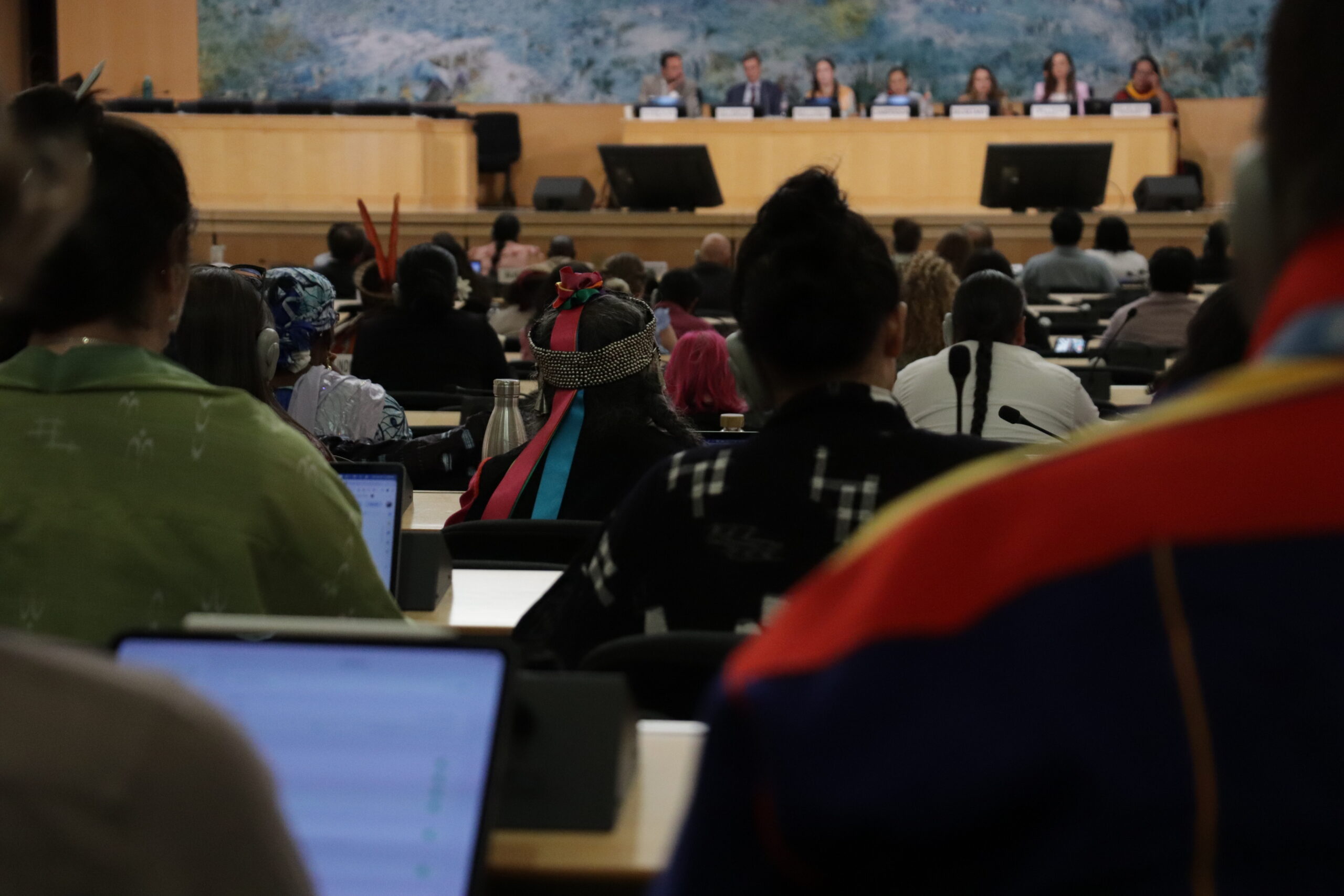
Indigenous leaders give the UN a roadmap for protecting their peoples
Amidst prayers and vows of solidarity, UN Expert Mechanism on the Rights of Indigenous Peoples ends annual meetings with demands for ‘action we’re not seeing globally’
-
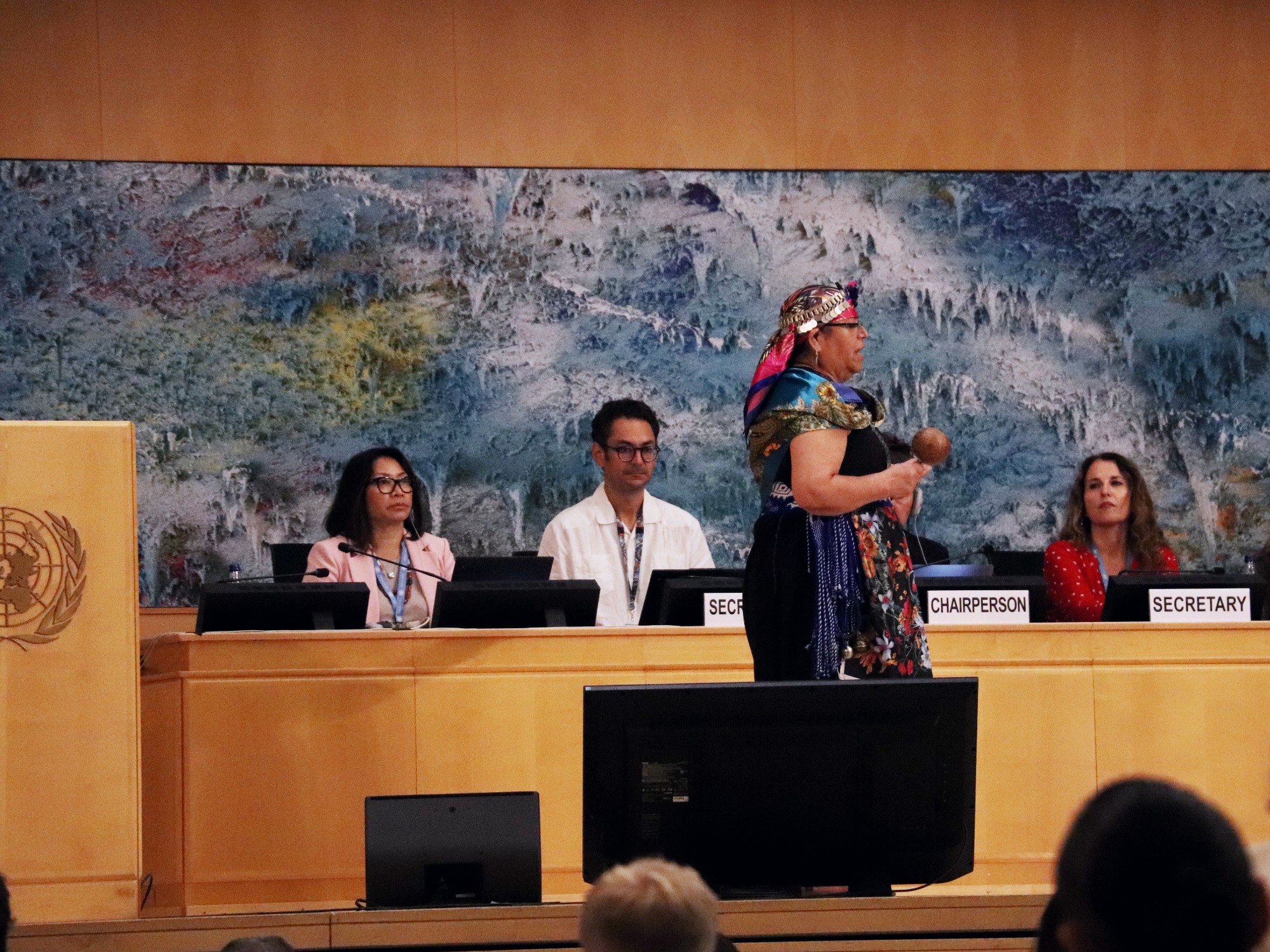
Indigenous people demand more say at the UN, as new crises hit their homelands
Indigenous nations live ‘on the frontlines’ of climate, conflict and new tech. But their voices remain sidelined in the global halls of power.