Indigenous cannabis dispensary grows in popularity after raids
Tupa’s Joint, in Vernon B.C., has experienced a surge in curious customers and for more than just its products
There has been no slowing down since Tupa’s Joint, an Indigenous cannabis dispensary in downtown Vernon, was raided for a second time on June 25, 2020 by the Province of B.C.’s cannabis enforcement agency Community Safety Unit (CSU).
In fact, since fully restocking, the shop has seen an increase in customers interested in everything from the history behind the shop and its people, to the medicinal value of its products, according to Jessica Jones, a Secwépemc Nation member and shop employee.
Tupa’s Joint is owned by Okanagan Nation member Cory Brewer. The name Tupa in the Nsyilxcen language is one way to say “great grandparent,” Brewer says.
“The reason we chose the name ‘Tupa’s Joint’ is because we believe in the power of our Tupas, their healing ways and the strength that makes them who they are,” he explains.
“This strength includes the medicinal herbs and healing energy in all forms. When one goes to Tupa’s Joint, they are truly home and, in this environment, wonderful things happen.”

But Tupa’s Joint has been serving the community with more than cannabis products. Jones says curious locals continue to pour in asking questions and taking interest in cannabis and non-cannabis products. Meanwhile, she says, non-Indigenous folks have also been coming in to learn more about the Syilx Peoples.
“We realize that ‘Tupa’s Joint’ sounds a little like we lean more towards the stigma that has been attached to cannabis, but this is not our intention. We believe in the healing benefits of our products,” says Brewer.
How the community is showing up and showing support
“After that first raid, it was a hopeless feeling,” says Jones.
Since then, she says that folks from the non-Indigenous community started to show up from all over the Southern Interior.

“We have people travelling from Penticton, from Salmon Arm coming here just to support us. Even the people from town are telling us they are happy with what we are doing and they will support us,” she says.
On average, Jones says the shop has been seeing two to three people drop by each week just to learn.
“We had a younger guy come in who is so interested in what we’re doing, he even wants to sit down with an Elder and learn more about our culture,” Jones says. “[He said,] ‘How will we ever break this [cycle of racism] if people don’t want to come out and learn about the original people of this land?’”

Alternative stock handled with care
The radiation of cannabis is allowed, though not required by Health Canada. In order to meet safety regulations, however, and ensure products are free of contaminants, some licensed producers irradiate their cannabis.
Those who provide their products to Tupa’s Joint, however, prefer to care for their products through all-natural means and nutrients, according to Erica Clark, Tupa’s Joint’s administrative assistant.
Like any pharmaceutical or over-the-counter medication, consumers are advised to request transparency and inquire as to whether the product they are purchasing has been irradiated in order to make their own choice.
When asked if Tupa’s Joint’s cannabis is radiation-free, Brewer replied, “Yes, 100 percent.”
The attention to detail doesn’t stop there, says Jones.
“We give it that extra bit of love,” she explains, as her and her partner and co-worker Joe prepare the pre-rolled joints.
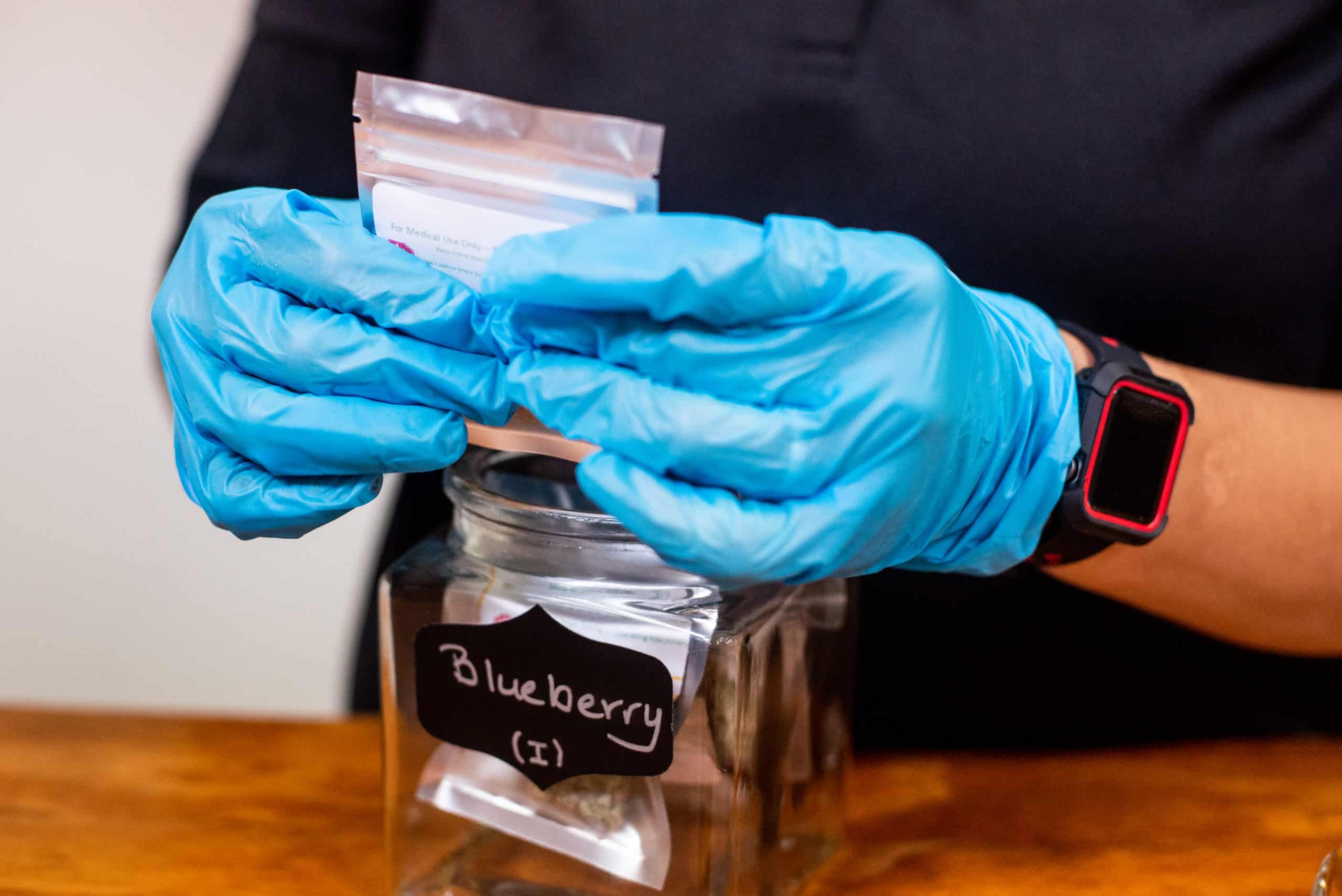
“We actually take the time to grind it up and take out all the stems and everything before we even throw it into the joint.”

“When we roll, we use water, paintbrush to seal, and always wear gloves…we measure and weigh for each joint. We also are labelling our products with dates so we know how long they have been sitting up there for,” says Jones.
In addition to these hygienic practices, Tupa’s Joint has also stopped using “smell tests”, through which consumers can smell the flower directly in order to gauge the quality of the plant. The dispensary now only sells pre-weighed and sealed flower products, and has a bag placed inside a jar for customers to smell the products from a distance if they choose.
Additionally, they posted health awareness posters and frosted the shop windows as per the 2018 provincial requirements. However, frosted windows are no longer a requirement in the province as of June in order to provide greater employee safety.
Moving forward and thinking bigger
Despite customer fears, raids have not slowed Tupa’s Joint down.
“After that first raid, it was a hopeless feeling, but then people started coming in even from the non-native community, coming here and saying they love what we’re doing, that they will support us and keep supporting us,” says Jones.
In fact, Brewer confirms that business is on the rise, and says it’s thanks to the shop’s broad selection in products, and the great care and passion in Tupa’s team.
Brewer says they are also looking to expand with an in-house culture and wellness centre, which will provide locals in the community with access to Nsyilxcen language lessons, cultural wellness programs and cannabis cooking classes.
In the meantime, Brewer and his employees say they will continue to stand behind Tupa’s Joint and the movement it’s creating in order to achieve respect for Indigenous sovereignty.
“We’ll just keep doing what we’re doing,” says Jones. “I have full confidence that this will work in our favour.”
Author
We live in a media ecosystem that thrives on misinformation. Big Tech and AI companies are consuming the work of real human beings and Canadian news has been banned on Facebook and Instagram.

And yet, I have hope for journalism because of the work we’re doing at IndigiNews.
At IndigiNews, we embody tâpwêwin — the Cree value of integrity and responsibility in truth-telling. We are committed to our independent, Indigenous-led newsroom rooted in community, accountability, and relationality. We believe storytelling is a sacred fire that connects our pasts, presents, and futures through the storytellers in our Storytelling Lodge. IndigiNews creates space for Indigenous journalists, storytellers, Knowledge Keepers, and communities to gather, learn, and share stories that matter.
As a registered charity, we are building a fire that allows our work not just to ignite but to thrive. Rather than relying on advertising or corporate acquisition, IndigiNews is sustained by people like you who believe Indigenous stories are important for the future of our communities.
Your support is making a real difference.
Our community of supporters, our Firekeepers, make it possible to grow our newsroom, publish award-winning journalism, train emerging Indigenous journalists through initiatives like the ReFocus Photojournalism Fellowship, and publish trustworthy stories that serve our communities across the country. Every story we publish helps fill in gaps left by mainstream media and ensures Indigenous perspectives are represented with care, accuracy and respect.
But there is still more work to do.
As the media landscape becomes more and more uncertain, community support is as necessary and essential as it’s ever been. Every new Firekeeper helps protect the independence of our newsroom and strengthens journalism that is accountable to our many and varied communities over corporations.
That’s why we’re inviting you to become a Firekeeper.
Firekeepers tend to and protect the sacred fire. Your monthly contributions directly support IndigiNews’s Storytelling Lodge, helps sustain our independent, Indigenous-led newsroom, and ensures future generations of Indigenous storytellers have the resources they need to do the work.
As a registered Canadian charity, all eligible donations receive a charitable tax receipt.
If you believe Indigenous stories matter, if you value independent journalism, and if you want to help build a strong future for Indigenous media, we invite you to join our circle of Firekeepers today.
Together, we can keep the fire burning.
— Eden Fineday, Publisher, IndigiNews
Support us nowLatest Stories
-
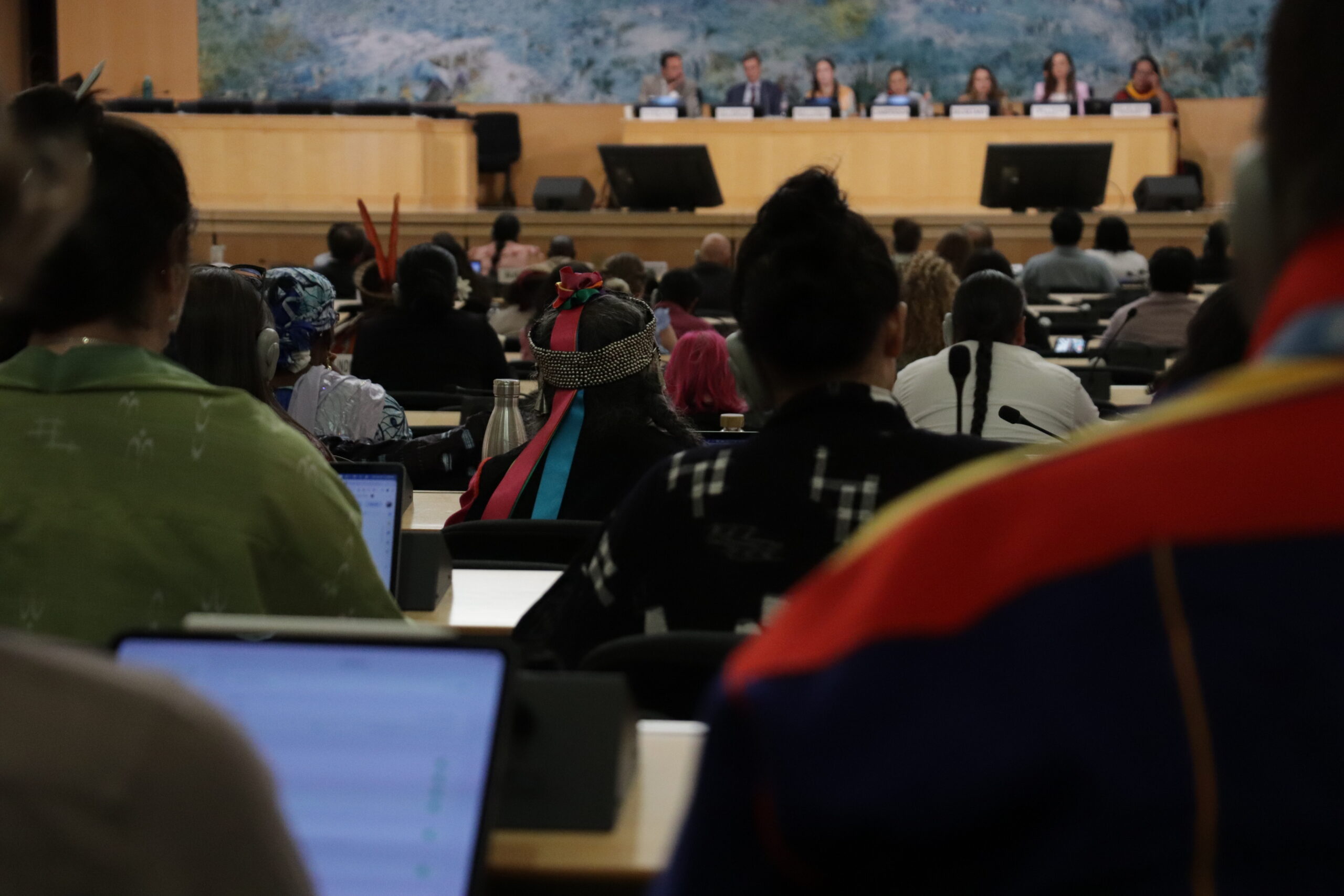
Indigenous leaders give the UN a roadmap for protecting their peoples
Amidst prayers and vows of solidarity, UN Expert Mechanism on the Rights of Indigenous Peoples ends annual meetings with demands for ‘action we’re not seeing globally’
-
Indigenous people demand more say at the UN, as new crises hit their homelands
Indigenous nations live ‘on the frontlines’ of climate, conflict and new tech. But their voices remain sidelined in the global halls of power.