The Importance of the PAC in making decisions for Indigenous children
Why Indigenous Parent Advisory Committees are vital within school districts

A unique Indigenous-specific Parent Advisory Committee (PAC) is making a difference at a Victoria-area school.
At the French-language École Victor-Brodeur in Esquimalt, a group of five families work alongside the existing PAC to address the specific needs of their children and other Indigenous students.
PACs are volunteer groups of parents that exist at every public school. They advise school officials on various matters and make school decisions, such as those around lunch and after school programs, or student events.
Ruth Young, a parent on the Indigenous PAC at École Victor-Brodeur, says having Indigenous voices at the table is crucial — but at many schools, that representation is lacking.
The result is that non-Indigenous parents often end up making decisions that feel like checking a box as Young explains “I don’t want to see dream catchers all over the school and people thinking that [because] they have dream catchers they have ticked the box, I think it helps prevent those kinds of patting yourself on the back approaches.”
“Leadership can have very good intentions, but good intentions don’t always result in the best initiatives for Indigenous students or changing the experience of Indigenous students,” says Young.
“Having the involvement of Indigenous parents in the advisory, particularly to direct how to use the funds that they get for Indigenous students, is really important.”
Young, who is northern Quebec James Bay Cree on her mother’s side, is also the director of Indigenous initiatives at University of Victoria’s Faculty of Law and involved in student recruitment there.
She was a high school teacher before moving to Victoria, now in graduate studies looking at the dual roles of Indigenous leadership in post-secondary institutions.
Young says at her daughter Ella’s school, the Indigenous PAC provides direction, guidance and advice on how best to utilize the funds that come in for the Indigenous students.

Young says oftentimes funds are put into lighter, less serious activities that don’t teach awareness and understanding of the historical and contemporary realities for Indigenous Peoples.
Young explains that there is a set amount of money that comes into the school for engagement and relationship-building, based on the number of Indigenous students. It’s the Indigenous PAC’s job to find ways to use those funds in a strength-based capacity.
She says the PAC has been working to allocate funds toward “meaningful school wide initiatives,” around subjects such as the history and ongoing impact of residential schools.
“[École Victor-Brodeur] is really starting to engage in a lot more meaningful ways and I think it’s because of the involvement of the Indigenous parents in those divisions,” she says.
There’s more authentic engagement she says, and the school environment has begun to shift with the types of materials that the library receives, and the types of professional development the teachers have access to — all thanks to the involvement of the Indigenous PAC.
Young herself has gone into the school to speak to students about the impact of residential schools and the importance of participating in Orange Shirt Day to help students understand its significance.
Before the COVID-19 pandemic necessitated new restrictions across the province, the Indigenous PAC was meeting at least four times a year. Young understands that not every district has an Indigenous-specific PAC and it’s something she says she doesn’t take for granted.
She says she sees the difference between a general PAC and an Indigenous PAC, and where the school can bring their questions to the Indigenous PAC to help make important decisions.
Young still attends regular PAC meetings, as well as Indigenous PAC meetings, but it’s the Indigenous PAC she sees as having the most long-lasting impact on the school and students by providing culturally-relevant support to Indigenous students and families.
“When it is for the Indigenous PAC I almost feel like Ella’s not there with me, but I feel like it’s time with my daughter, because everything has to do with her and her learning, her experience,” she says.
Author
We live in a media ecosystem that thrives on misinformation. Big Tech and AI companies are consuming the work of real human beings and Canadian news has been banned on Facebook and Instagram.

And yet, I have hope for journalism because of the work we’re doing at IndigiNews.
At IndigiNews, we embody tâpwêwin — the Cree value of integrity and responsibility in truth-telling. We are committed to our independent, Indigenous-led newsroom rooted in community, accountability, and relationality. We believe storytelling is a sacred fire that connects our pasts, presents, and futures through the storytellers in our Storytelling Lodge. IndigiNews creates space for Indigenous journalists, storytellers, Knowledge Keepers, and communities to gather, learn, and share stories that matter.
As a registered charity, we are building a fire that allows our work not just to ignite but to thrive. Rather than relying on advertising or corporate acquisition, IndigiNews is sustained by people like you who believe Indigenous stories are important for the future of our communities.
Your support is making a real difference.
Our community of supporters, our Firekeepers, make it possible to grow our newsroom, publish award-winning journalism, train emerging Indigenous journalists through initiatives like the ReFocus Photojournalism Fellowship, and publish trustworthy stories that serve our communities across the country. Every story we publish helps fill in gaps left by mainstream media and ensures Indigenous perspectives are represented with care, accuracy and respect.
But there is still more work to do.
As the media landscape becomes more and more uncertain, community support is as necessary and essential as it’s ever been. Every new Firekeeper helps protect the independence of our newsroom and strengthens journalism that is accountable to our many and varied communities over corporations.
That’s why we’re inviting you to become a Firekeeper.
Firekeepers tend to and protect the sacred fire. Your monthly contributions directly support IndigiNews’s Storytelling Lodge, helps sustain our independent, Indigenous-led newsroom, and ensures future generations of Indigenous storytellers have the resources they need to do the work.
As a registered Canadian charity, all eligible donations receive a charitable tax receipt.
If you believe Indigenous stories matter, if you value independent journalism, and if you want to help build a strong future for Indigenous media, we invite you to join our circle of Firekeepers today.
Together, we can keep the fire burning.
— Eden Fineday, Publisher, IndigiNews
Support us nowLatest Stories
-
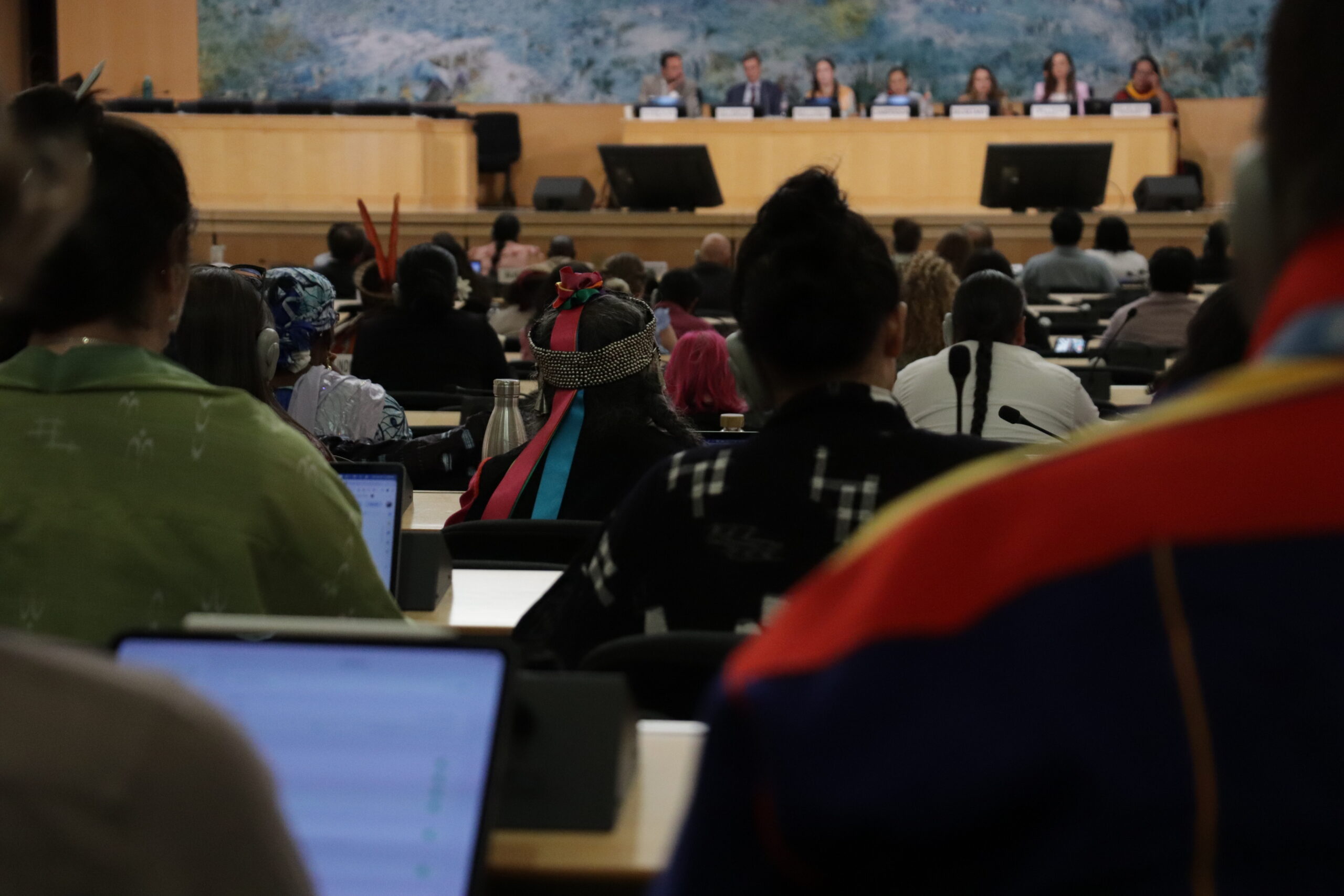
Indigenous leaders give the UN a roadmap for protecting their peoples
Amidst prayers and vows of solidarity, UN Expert Mechanism on the Rights of Indigenous Peoples ends annual meetings with demands for ‘action we’re not seeing globally’
-
Indigenous people demand more say at the UN, as new crises hit their homelands
Indigenous nations live ‘on the frontlines’ of climate, conflict and new tech. But their voices remain sidelined in the global halls of power.