‘Misused traditions to do harm’: Judge bans disgraced healer from practice for one year after assault of syilx woman
Complainant says healing from 2022 assault has meant ‘becoming a new version of myself that is stronger, sharper, unbroken in spirit’

Content warning: This story details the impacts of an assault against an Indigenous woman. Please look after your spirit and read with care.
An Indigenous man who had been acting as a spiritual healer has been temporarily banned from his practice, after he was convicted of assaulting a syilx woman during a session in 2022.
A B.C. Supreme Court judge issued a two-year probation order on Friday that prohibits Donald Ashley from offering healing sessions for one year.
During the second year of the order, the Williams Lake First Nation member may only conduct sessions under supervision and with adult clients who sign a waiver. He is also barred from having any contact with the complainant.
In her victim impact statement, the complainant — whose identity is protected by a publication ban — said Ashley “stole from me a sense of peace I have worked years to build” when he assaulted her.
“It was not only an attack on my body — it was an attack on my mind, my dignity, my safety, my future and the very trust I placed in others,” she told the court.
“In that moment, he severed the bonds between my body and my spirit.”
Broken trust
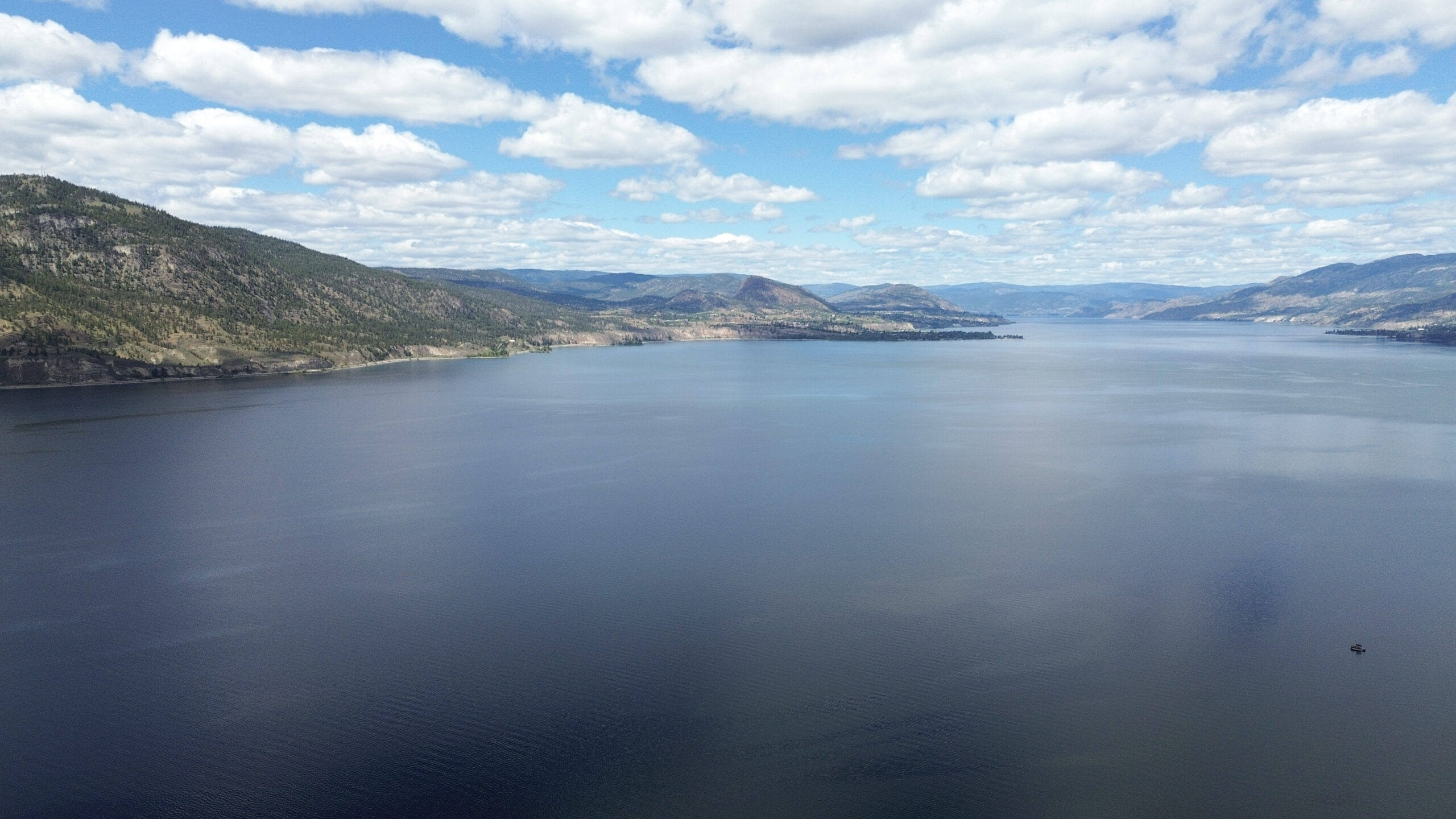
The court heard during Ashley’s sentencing hearing that he “went beyond the bounds of appropriate spiritual healing” when he touched multiple body parts of the woman’s body without her consent during the session in syilx territories three years ago.
Ashley was found guilty of one count of civil assault last year for his actions during that session.
When he issued his decision on Aug. 29, Justice Michael Brundrett told Ashley his behaviour during the healing session was “reckless and inappropriate.”
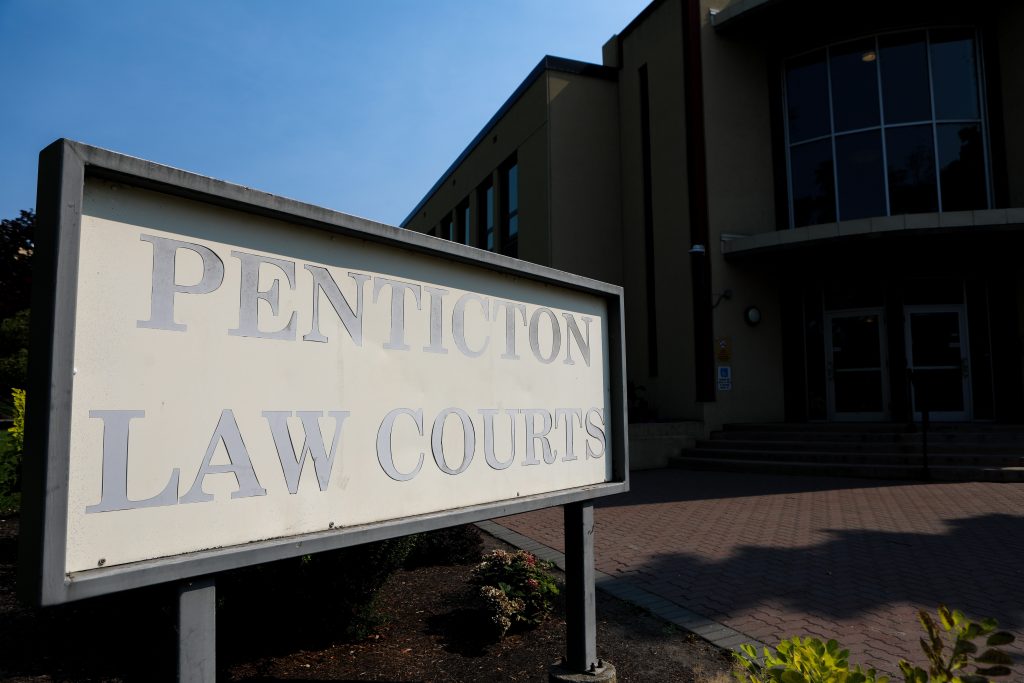
“It’s disappointing that you, who have helped so many and have overcome so much difficulty in your life, caused harm to a member of the Indigenous community as a result of your error in judgement,” Brundrett told Ashley as he read his decision at the Penticton Law Courts in snpink’tn (Penticton).
“The complainant, and the local syilx community, trusted you, and you broke that trust. You have to do better, sir.”
In March, the chiefs of the syilx Okanagan Nation issued a statement announcing that they had passed a tribal council resolution that banned Ashley “from entering, residing in or participating in events on any part of syilx Okanagan Nation lands.”
‘The harm … has also revealed my strength’
Brundrett said the complainant had known Ashley for eight to 10 years, and had at least four previous healing sessions with him prior to the assault.
The court heard that the 51-year-old father of six was once regarded as a “gifted healer” by many Indigenous communities, conducting “thousands” of healing sessions over more than a decade.
“She trusted him,” Brundrett said, noting that in the woman’s previous sessions, Ashley had used his regular methods involving the use of smudging, rattles and eagle feathers to brush her off.
But in their final session, the judge said, “the touching was more intrusive than the spiritual healing … she had experienced with him before.”
During the trial, Ashley testified he would touch various areas of clients’ bodies during healing sessions, “but always with permission,” Brundrett said, summarizing his testimony.
His techniques included using a flat hand, “which he prayed that energy gets transferred in or out of a specific area.” He would also use his finger points “to release negative energy.”
Court heard Ashley touched the woman in multiple areas during the three-hour session — including her neck, back, thighs, hips and legs. At one point during the session with the complainant, the court heard, he held up her leg and massaged the upper inner part of it.
“He did not ask for permission to touch these areas, and this touching was more than what she anticipated,” said Brundrett.
Brundrett rejected Ashley’s claim he’d asked permission to touch her body in some areas before the assault, and accepted the complainant’s testimony that Ashley did not seek permission to touch her body in this manner.
“She knew Mr. Ashley to be a spiritual healer — not a massage therapist or chiropractor,” said Brundrett.
“She was left feeling frozen, scared and not being able to move.”
In her victim impact statement, the complainant — a mother of three and a grandmother — spoke of the lasting trauma and emotional toll of the event for her and her loved ones.
The assault, she said, “disrupted my ability to feel safe in my own body [and] altered the way I experience the world.”
She said she’d never get back her “old normal” self.
“That woman is gone,” she said. “Healing is about becoming a new version of myself that is stronger, sharper, unbroken in spirit — even when my body, my mind and heart carry the scars.
“The harm I now carry has changed me in ways I never asked for, but has also revealed my strength.”
‘Injury to one is injury to all’
Her husband, daughter and sister also shared victim impact statements with the court, all three detailing the hurt the assault caused to their family and the syilx community.
“I’ve struggled with the feeling of helplessness, anger and sadness, knowing what my wife has endured,” her husband said.
“It has been painful to see someone I love so deeply go through trauma.”
Her daughter said the assault has left her feeling scared of men, diminishing her trust in spiritual healers as well. She said she lives with the fear of worrying that such an assault could happen to her and her loved ones again.
“I feel hurt, disgusted and so sad for what happened,” the complainant’s daughter said, “sad this is a common trend in our community.”
The complainant’s sister said Ashley’s actions harmed the entire syilx Nation.
“In syilx culture, our interconnectedness means injury to one is injury to all,” said the sister.
“Don’s actions disturbed the harmony of our community, leaving us with ongoing sadness and loss.”
She added that Ashley exploited the invitation to the syilx community, and that he violated both his position of trust and spiritual responsibility.
“He broke with our cultural protocols and misused traditions to do harm — betraying what should have been a sacred relationship,” said her sister.
Protecting Indigenous women from harm
In reading a community impact statement submitted on behalf of the syilx Okanagan Nation, Penticton Indian Band (PIB) Chief Greg Gabriel also said that Ashley exploited the community’s trust and caused harm to the entire nation.
“Our people, especially our women, deserve protection from such harm,” Gabriel read.
“The ongoing violence and trauma our women endure are not the price of progress, but an apparent failure of a justice system still grappling with colonial legacies and systemic racism.”
Brundrett invited Ashley to address the court before he was sentenced, but he declined.
“I assess that Mr. Ashley’s denial of his assault and behaviour will make his rehabilitation more challenging,” Brundrett said.
Ashley’s lawyer, Mark Nohra, said his client’s charges and conviction has caused “tremendous loss” to his reputation, family and ability to find work as a heavy machine operator and spiritual healer.
First Nations across the province “have not worked with him anymore,” Nohra told the court. “He has not worked since prior to the conviction, at the conviction and going forward.”
‘Transformation must centre Indigenous voices’
Initially, Ashley was charged with six counts of sexual assault stemming from allegations that he inappropriately touched six Indigenous clients during healing sessions over a four-day period in October 2022 in syilx homelands.
However, a jury verdict in 2024 found him guilty of only one count of civil assault, and he was acquitted on all charges of sexual assault.
“This criminal justice system failed our women once again,” Gabriel said in a public statement made earlier this year, a few months after the verdict. “They made this sexual predator out to be a victim throughout this trial.”
While reading the nation’s community impact statement, Gabriel said Ashley’s banishment from syilx territories “contrasts sharply with the shortcomings of the colonial legal system to prevent further harm to Indigenous women and communities,” and reflects “our Indigenous sovereignty and paramount concern for community safety.”
Gabriel’s community impact statement said this case “highlights the urgent and essential need for fundamental overhaul of justice systems.”
“Such transformation must centre Indigenous voices, laws and healing traditions, making justice trauma-informed, culturally grounded and community led,” he said.
“End the generational revictimization of Indigenous women, girls and LGBTQ2S.”
Author
We live in a media ecosystem that thrives on misinformation. Big Tech and AI companies are consuming the work of real human beings and Canadian news has been banned on Facebook and Instagram.
And yet, I have hope for journalism because of the work we’re doing at IndigiNews.
At IndigiNews, we embody tâpwêwin — the Cree value of integrity and responsibility in truth-telling. We are committed to our independent, Indigenous-led newsroom rooted in community, accountability, and relationality. We believe storytelling is a sacred fire that connects our pasts, presents, and futures through the storytellers in our Storytelling Lodge. IndigiNews creates space for Indigenous journalists, storytellers, Knowledge Keepers, and communities to gather, learn, and share stories that matter.
As a registered charity, we are building a fire that allows our work not just to ignite but to thrive. Rather than relying on advertising or corporate acquisition, IndigiNews is sustained by people like you who believe Indigenous stories are important for the future of our communities.
Your support is making a real difference.
Our community of supporters, our Firekeepers, make it possible to grow our newsroom, publish award-winning journalism, train emerging Indigenous journalists through initiatives like the ReFocus Photojournalism Fellowship, and publish trustworthy stories that serve our communities across the country. Every story we publish helps fill in gaps left by mainstream media and ensures Indigenous perspectives are represented with care, accuracy and respect.
But there is still more work to do.
As the media landscape becomes more and more uncertain, community support is as necessary and essential as it’s ever been. Every new Firekeeper helps protect the independence of our newsroom and strengthens journalism that is accountable to our many and varied communities over corporations.
That’s why we’re inviting you to become a Firekeeper.
Firekeepers tend to and protect the sacred fire. Your monthly contributions directly support IndigiNews’s Storytelling Lodge, helps sustain our independent, Indigenous-led newsroom, and ensures future generations of Indigenous storytellers have the resources they need to do the work.
As a registered Canadian charity, all eligible donations receive a charitable tax receipt.
If you believe Indigenous stories matter, if you value independent journalism, and if you want to help build a strong future for Indigenous media, we invite you to join our circle of Firekeepers today.
Together, we can keep the fire burning.
— Eden Fineday, Publisher, IndigiNews
Support us nowLatest Stories
-
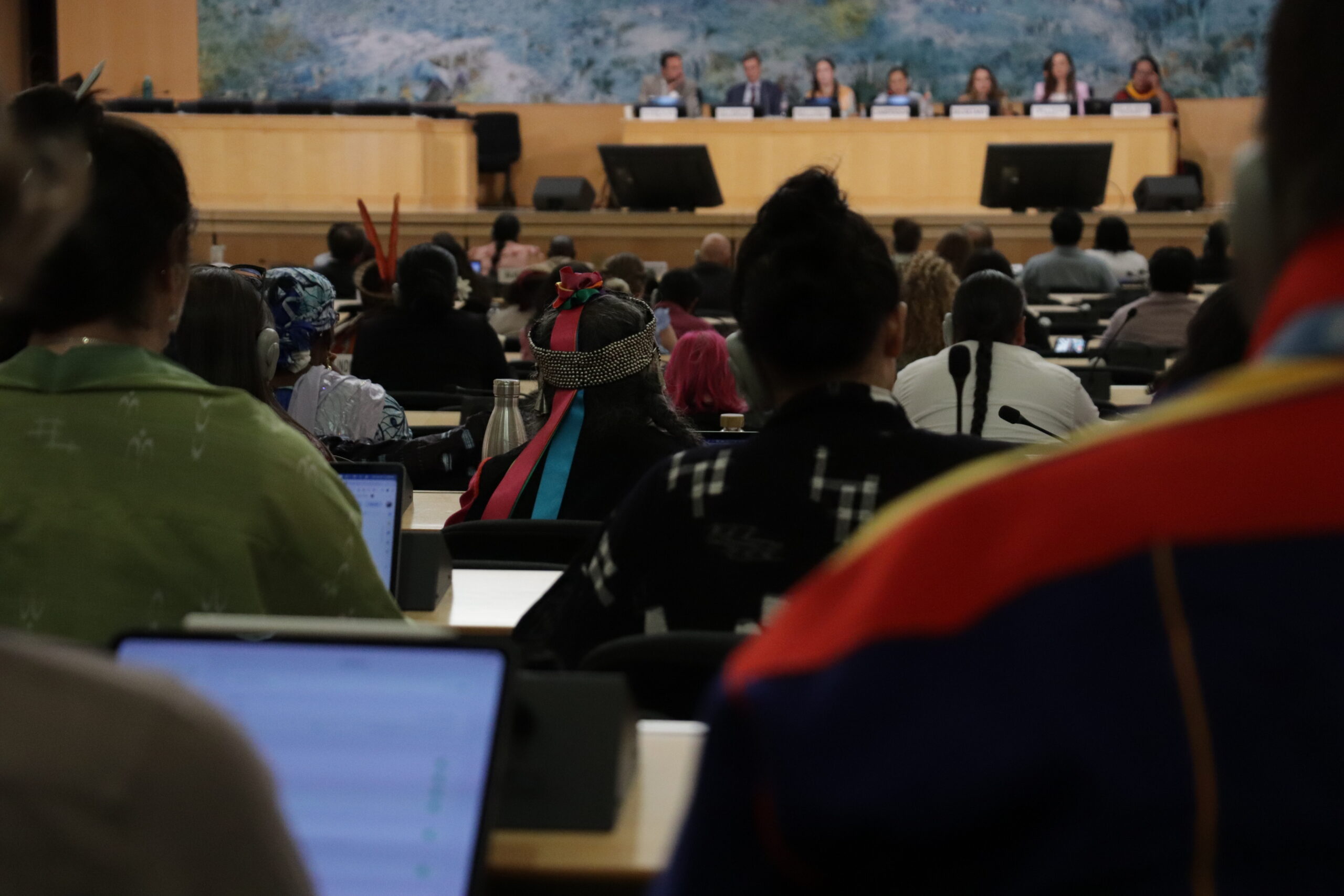
Indigenous leaders give the UN a roadmap for protecting their peoples
Amidst prayers and vows of solidarity, UN Expert Mechanism on the Rights of Indigenous Peoples ends annual meetings with demands for ‘action we’re not seeing globally’
-
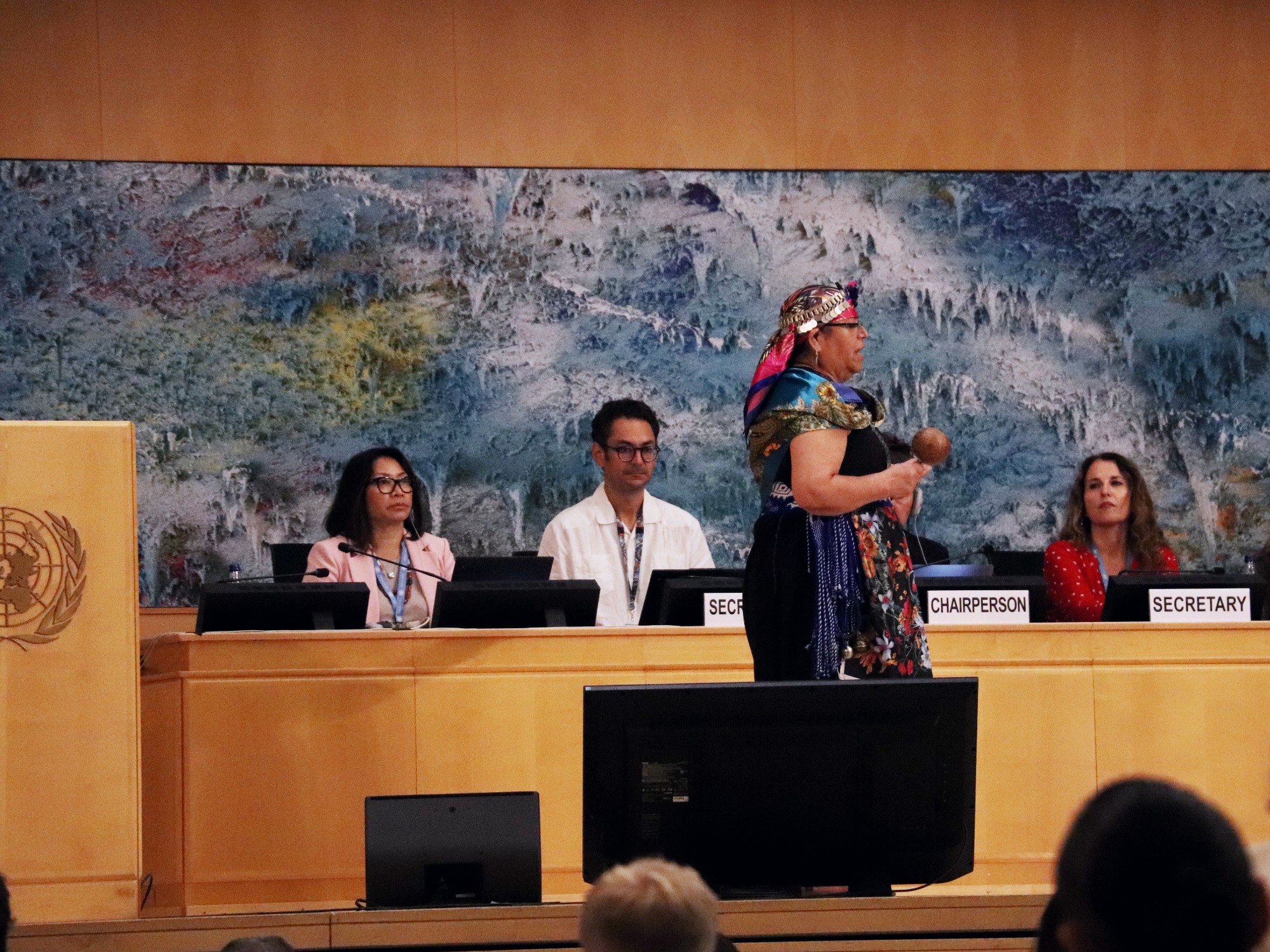
Indigenous people demand more say at the UN, as new crises hit their homelands
Indigenous nations live ‘on the frontlines’ of climate, conflict and new tech. But their voices remain sidelined in the global halls of power.