Two K’omoks mothers contemplate how to celebrate their babies’ tenth moon Hiługwila ceremony during COVID-19
How are coastal families dealing with the ongoing pandemic? | Part Two
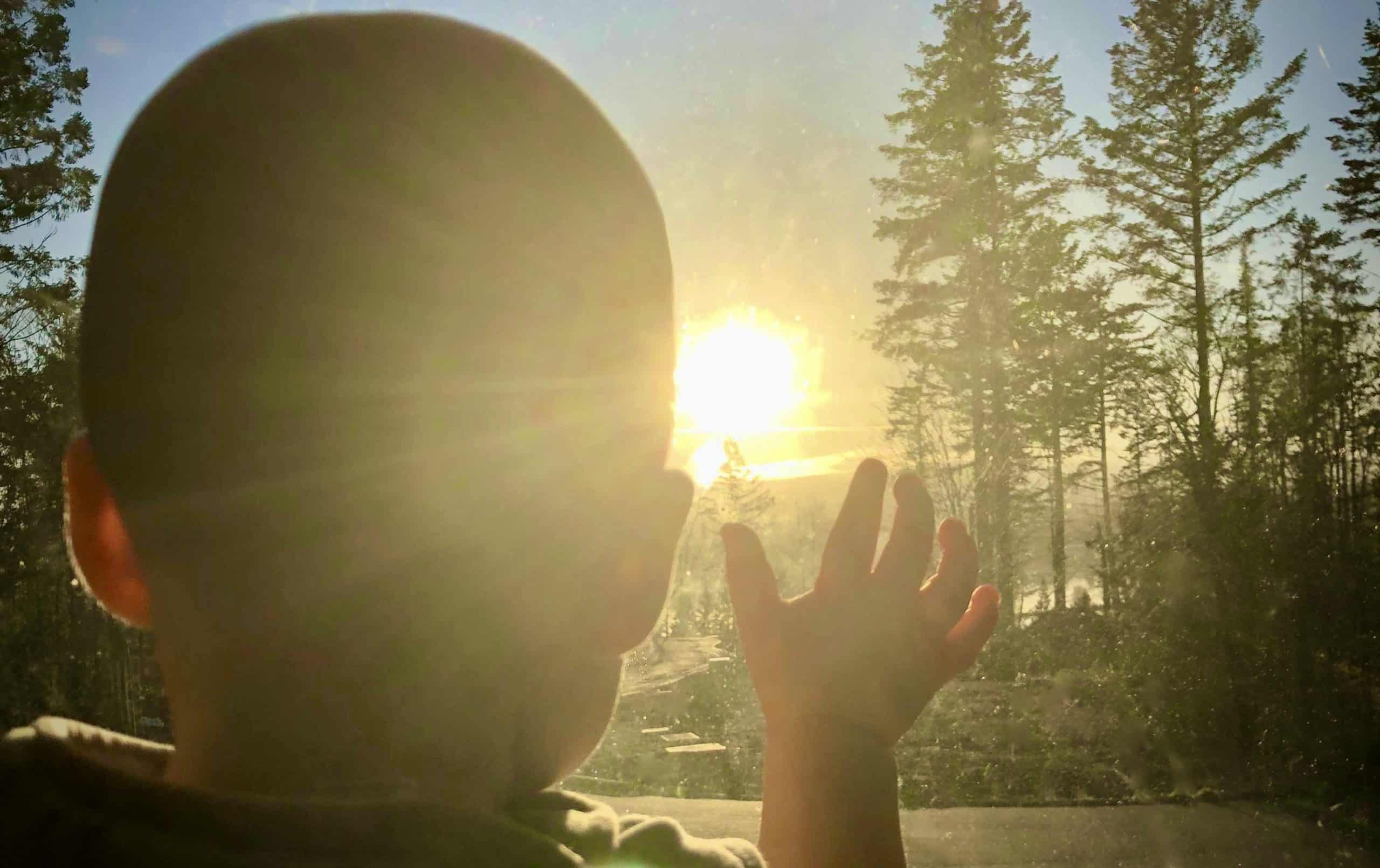
In Kwakwa̱ka̱’wakw culture, babies have a ‘Hiługwila,’ a special rite of passage ceremony when they’re ten moons old. With COVID-19 restrictions, mothers Keisha Everson and Violet Williams face the new challenge of staying in line with their culture, while keeping their communities safe.
“Our teachings say that babies are still close to the spirit world, and ten moons is when they have decided to stay,” explains La̱lx̱sa̱n Dala’ogwa (Keisha Everson), who’s from the K’omoks First Nation. She’s also from the Gigal’ga̱m Walas Kwaguł of Tsax̱is.
Before COVID-19, hundreds of guests would be welcomed to Kumugwe, the gukwdzi (big house) on the traditional territory of the K’omoks First Nation. The big house is a traditional gathering place for feasting, rites of passage, celebrations of life, marriages, transfer of chieftainship, naming, adoption and more.
“We would feed everyone, give gifts, and sing and dance together,” Everson says.
During a Hiługwila ceremony, guardians who would oversee her child’s cultural upbringing would be named, he would receive his first bak̕wa̱mx̱tłe (Indigenous name), as well as a blessing and his first haircut.
But Orion’s Hiługwila will be different than his family would have imagined. At first they thought they could still manage to invite 50 guests, Everson says, but with newer restrictions, she says they’ve scaled down even more.
“It breaks my heart to keep making a celebration of my son smaller and smaller,” says Everson. “We’ve postponed it a week to follow the latest orders in hopes that we can even have 20 people present.”
The ceremony is usually conducted by a spiritual person, Everson explains, but the person they had intended lives in Port Hardy and would have had to travel into the valley.
“To keep our relatives safe, we’re limiting [ourselves] to locals and those in our bubble,” she says.
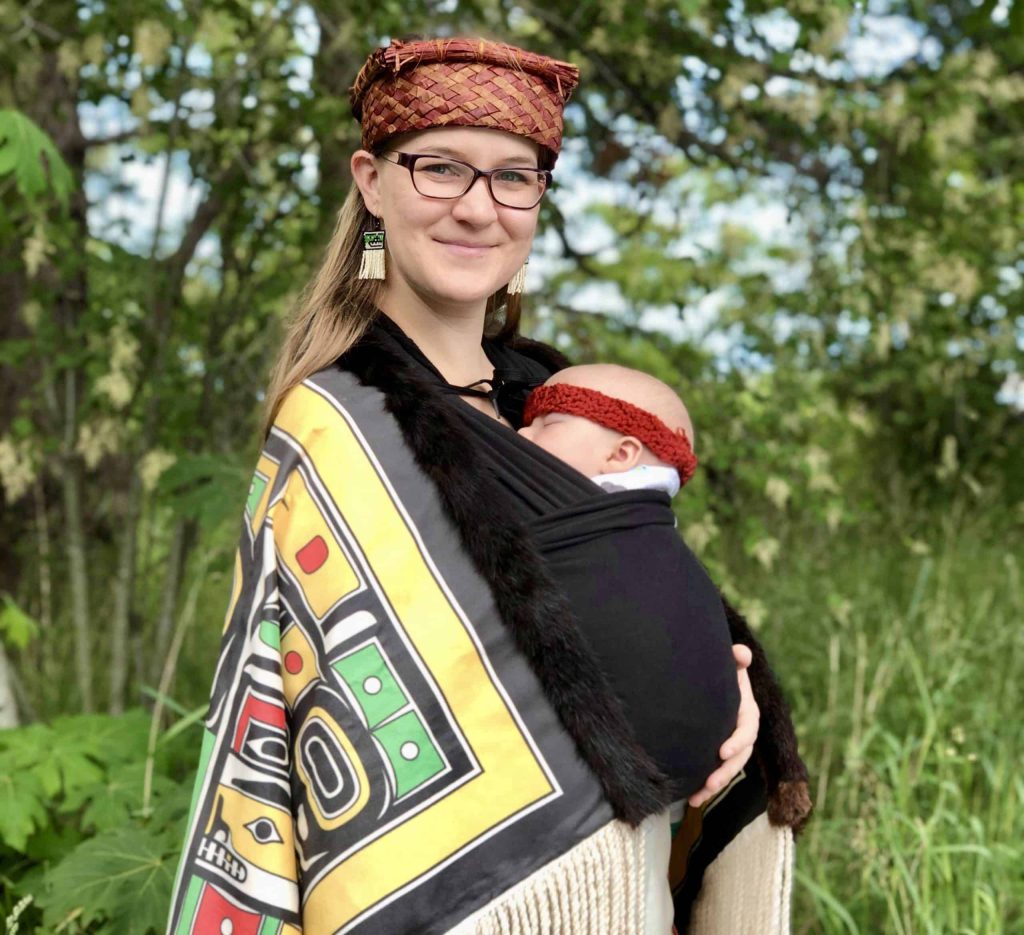
But they will still follow protocol as much as they’re able, and she’s reassured that her son will be wrapped up in his button blanket.
“For the Hiługwila, Orion will wear a tiny child’s button blanket that was made by my great-grandma’s great-grandmother. Today it is only used for Hiługwila.”
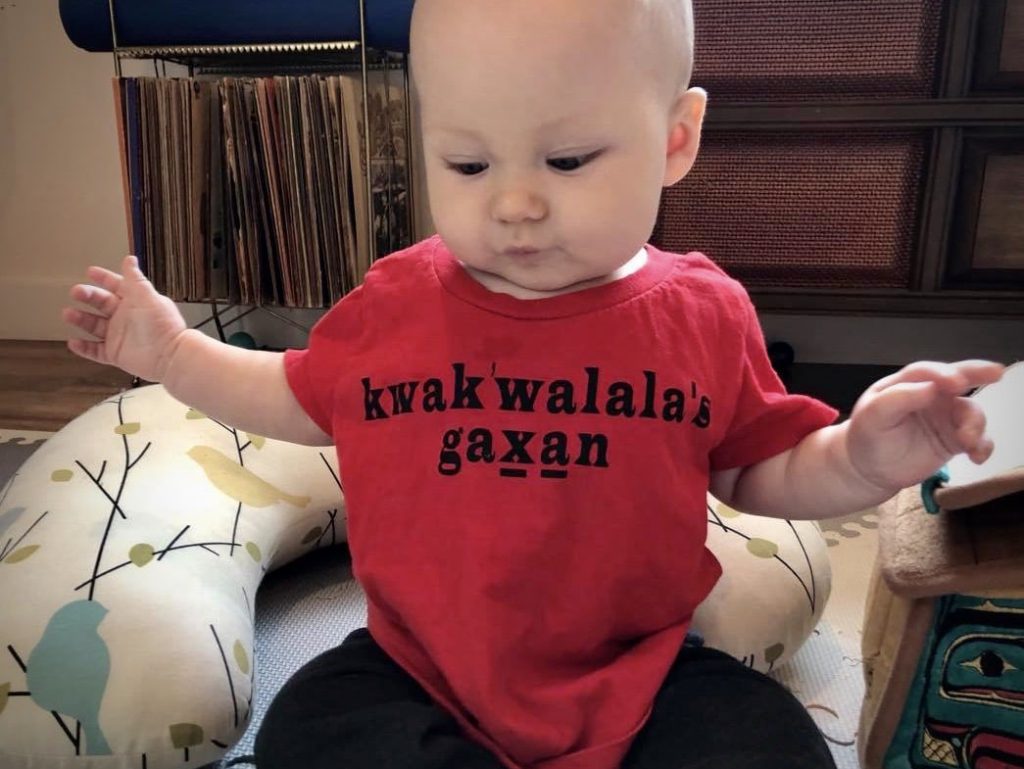
Orion’s father had parental leave until October, which gave the family bonding time together. Even though it has been difficult, Everson said her family has become closer.
“The bright spot is the strengthening relationship between our family,” says Everson, “So we’ve had time to grow as a little family.”
‘Our gukwdzi will shake’
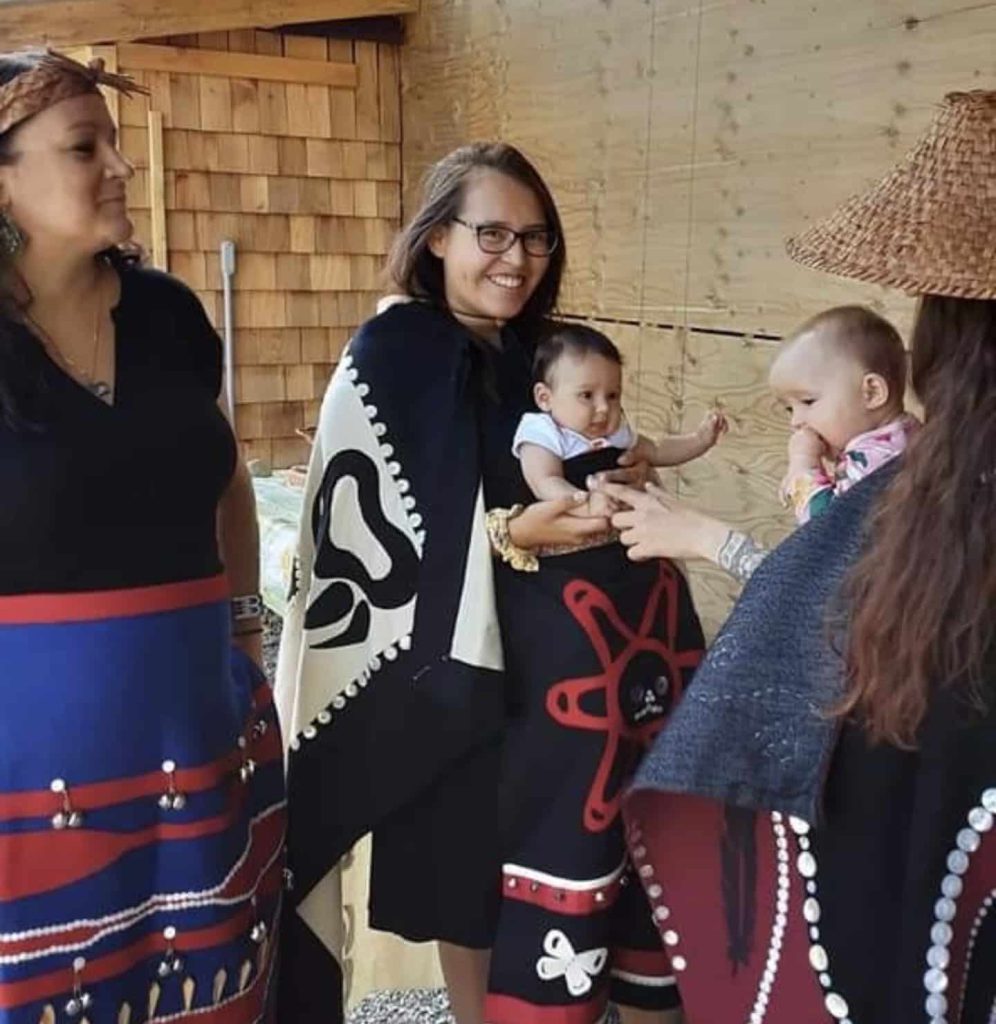
Hot̓si (Violet Williams), is from K’omoks First Nation on her father’s side and Musgamagw Dzawada’enuxw First Nation, and Tłowtsis First Nation through her mother.
Williams is a new mother to her seven month-old daughter, Elsie.
In her early pregnancy, Williams says she was surrounded by family and friends. In her last trimester, complications set in, and then the pandemic changed everything.
“When it came to her birth in May, I was only allowed to have one person in the delivery room, which was really devastating to me,” says Williams. “I wanted my sisters there, my great aunt and uncle there, because they raised me.”
With a large culturally-rooted family, Williams knows how a baby would normally have been introduced, and cared for by her and her boyfriend’s large and tight-knit families. Instead, her experience of being a mother has been quite solitary, and clouded with anxiety.
“Now it’s like, ‘Oh, can I trust you? Have you been anywhere for two weeks? Do you have any symptoms?,’” says Williams. “I don’t get as much time to myself, as a mother, which has been a little bit hard on my mental health.”
The pandemic has broken many of Williams’ expectations, but she has also found quiet time to grow, exercise and strengthen her family, she says. The new parents started working from home in March and were able to stay home until June.
“Being able to watch my partner and I overcome the challenges that we face together and growing together, instead of falling apart throughout the lockdown,” says Williams. “It was nice to grow together that way.”
Williams hopes baby Elsie will still be able to celebrate her tenth moon, even if the ceremony will be different than they would have imagined.
“I was going to do it through my mom’s side, but it is done through the paternal side,” she explains. For Williams, this means learning about the Hiługwila from sister nations, in the ways of the K’omoks.
“I do worry I won’t be able to have a proper ceremony for her,” says Williams, but she quickly thinks of the strength of her ancestors and finds hope.
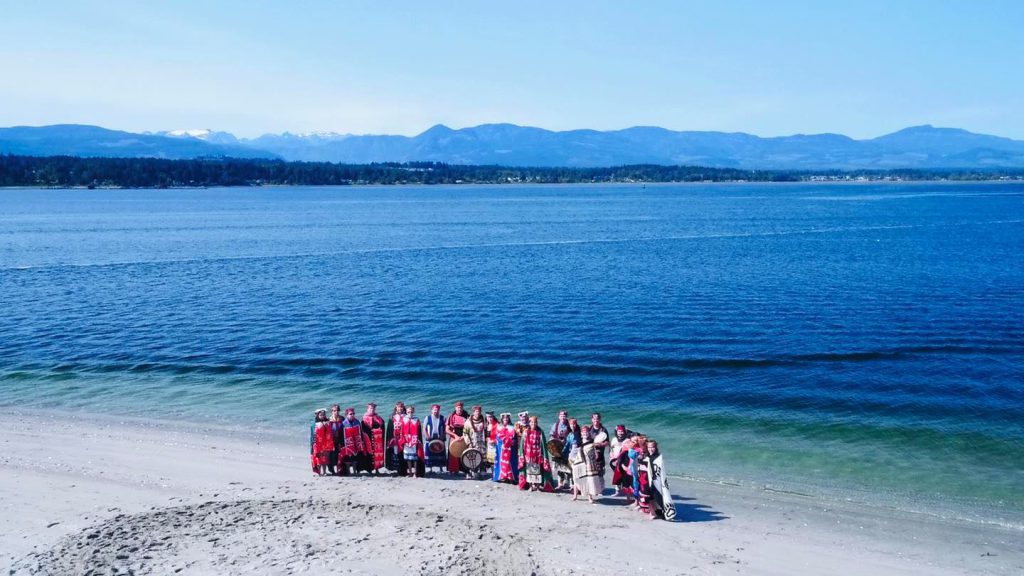
Not long ago, their relatives were prevented from celebrating babies’ Hiługwila for other reasons, as potlatching was banned on the west coast until 1953. Still, their people found ways to protect and preserve their cultures, laws and ways of life, and so she will do, Everson says.
“I have been reminded that our people are resilient,” says Everson. “We have continued to practice our culture through the Potlatch Ban, Indian Act, residential schools, and colonization. A pandemic is just another aspect of that.”
Everson says she feels confident that she can do her part to keep her community safe, because soon enough, they will be back in the big house, greeting each other “with open arms.”
“Our gukwdzi will shake with the sound of drums and singing. And we’ll rejoice.”
Editor’s Note, Dec. 5, 2020: A previous version of the story used word bakwam, this has been replaced with bak̕wa̱mx̱tłe’ for accuracy.
Author
We live in a media ecosystem that thrives on misinformation. Big Tech and AI companies are consuming the work of real human beings and Canadian news has been banned on Facebook and Instagram.
And yet, I have hope for journalism because of the work we’re doing at IndigiNews.
At IndigiNews, we embody tâpwêwin — the Cree value of integrity and responsibility in truth-telling. We are committed to our independent, Indigenous-led newsroom rooted in community, accountability, and relationality. We believe storytelling is a sacred fire that connects our pasts, presents, and futures through the storytellers in our Storytelling Lodge. IndigiNews creates space for Indigenous journalists, storytellers, Knowledge Keepers, and communities to gather, learn, and share stories that matter.
As a registered charity, we are building a fire that allows our work not just to ignite but to thrive. Rather than relying on advertising or corporate acquisition, IndigiNews is sustained by people like you who believe Indigenous stories are important for the future of our communities.
Your support is making a real difference.
Our community of supporters, our Firekeepers, make it possible to grow our newsroom, publish award-winning journalism, train emerging Indigenous journalists through initiatives like the ReFocus Photojournalism Fellowship, and publish trustworthy stories that serve our communities across the country. Every story we publish helps fill in gaps left by mainstream media and ensures Indigenous perspectives are represented with care, accuracy and respect.
But there is still more work to do.
As the media landscape becomes more and more uncertain, community support is as necessary and essential as it’s ever been. Every new Firekeeper helps protect the independence of our newsroom and strengthens journalism that is accountable to our many and varied communities over corporations.
That’s why we’re inviting you to become a Firekeeper.
Firekeepers tend to and protect the sacred fire. Your monthly contributions directly support IndigiNews’s Storytelling Lodge, helps sustain our independent, Indigenous-led newsroom, and ensures future generations of Indigenous storytellers have the resources they need to do the work.
As a registered Canadian charity, all eligible donations receive a charitable tax receipt.
If you believe Indigenous stories matter, if you value independent journalism, and if you want to help build a strong future for Indigenous media, we invite you to join our circle of Firekeepers today.
Together, we can keep the fire burning.
— Eden Fineday, Publisher, IndigiNews
Support us nowLatest Stories
-
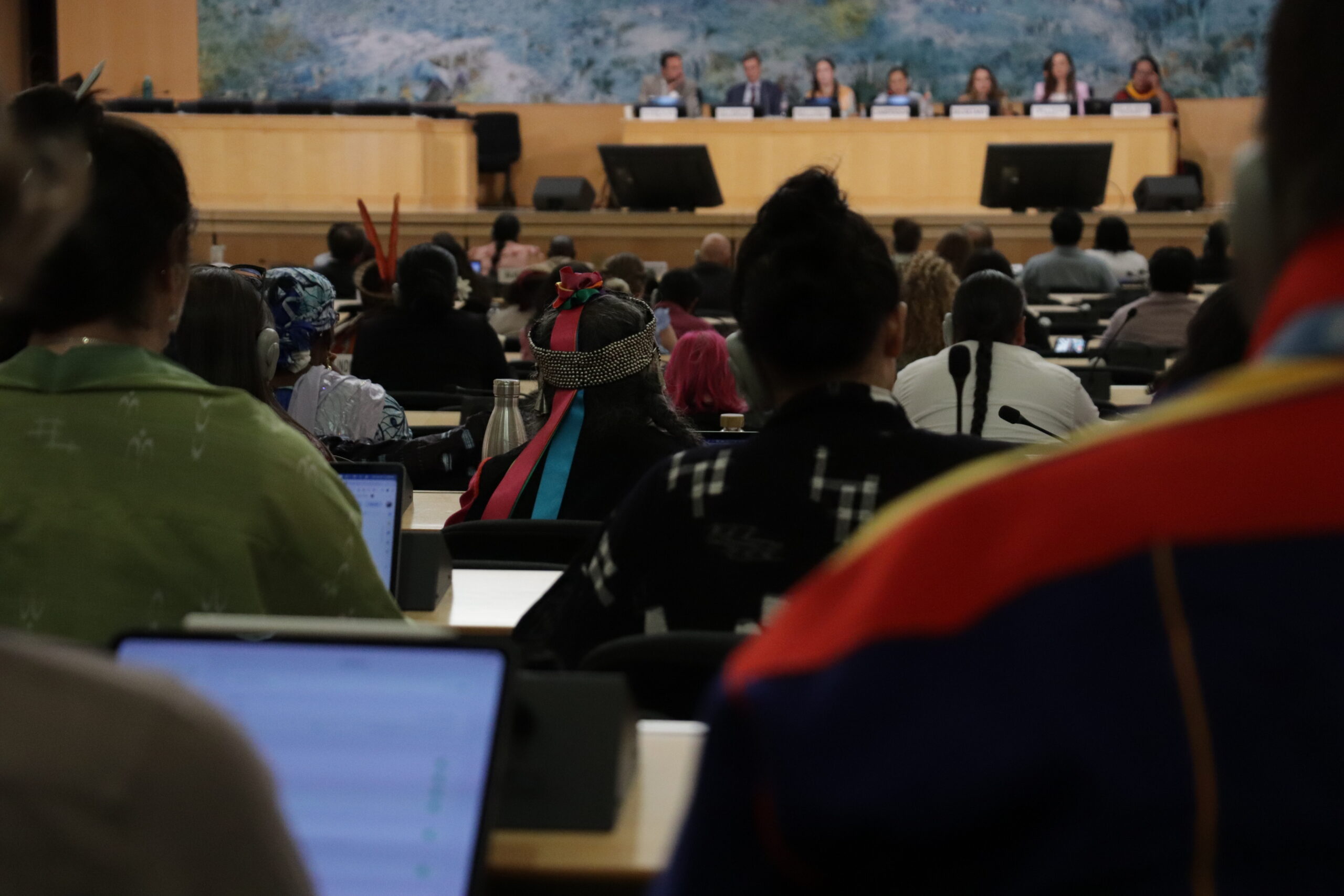
Indigenous leaders give the UN a roadmap for protecting their peoples
Amidst prayers and vows of solidarity, UN Expert Mechanism on the Rights of Indigenous Peoples ends annual meetings with demands for ‘action we’re not seeing globally’
-
Indigenous people demand more say at the UN, as new crises hit their homelands
Indigenous nations live ‘on the frontlines’ of climate, conflict and new tech. But their voices remain sidelined in the global halls of power.