Leading up to Orange Shirt Day, survivors on syilx homelands share their truths
KFS hosted an educational event on Thursday to honour those who went through residential ‘schools’ and teach wider community


Content warning: The content in this story is about the residential ‘school’ system. Please read with care.
Ahead of the National Day for Truth and Reconciliation (Orange Shirt Day), survivors came forward to share personal stories during an event on syilx homelands — telling difficult truths in order to educate the community about residential “schools.”
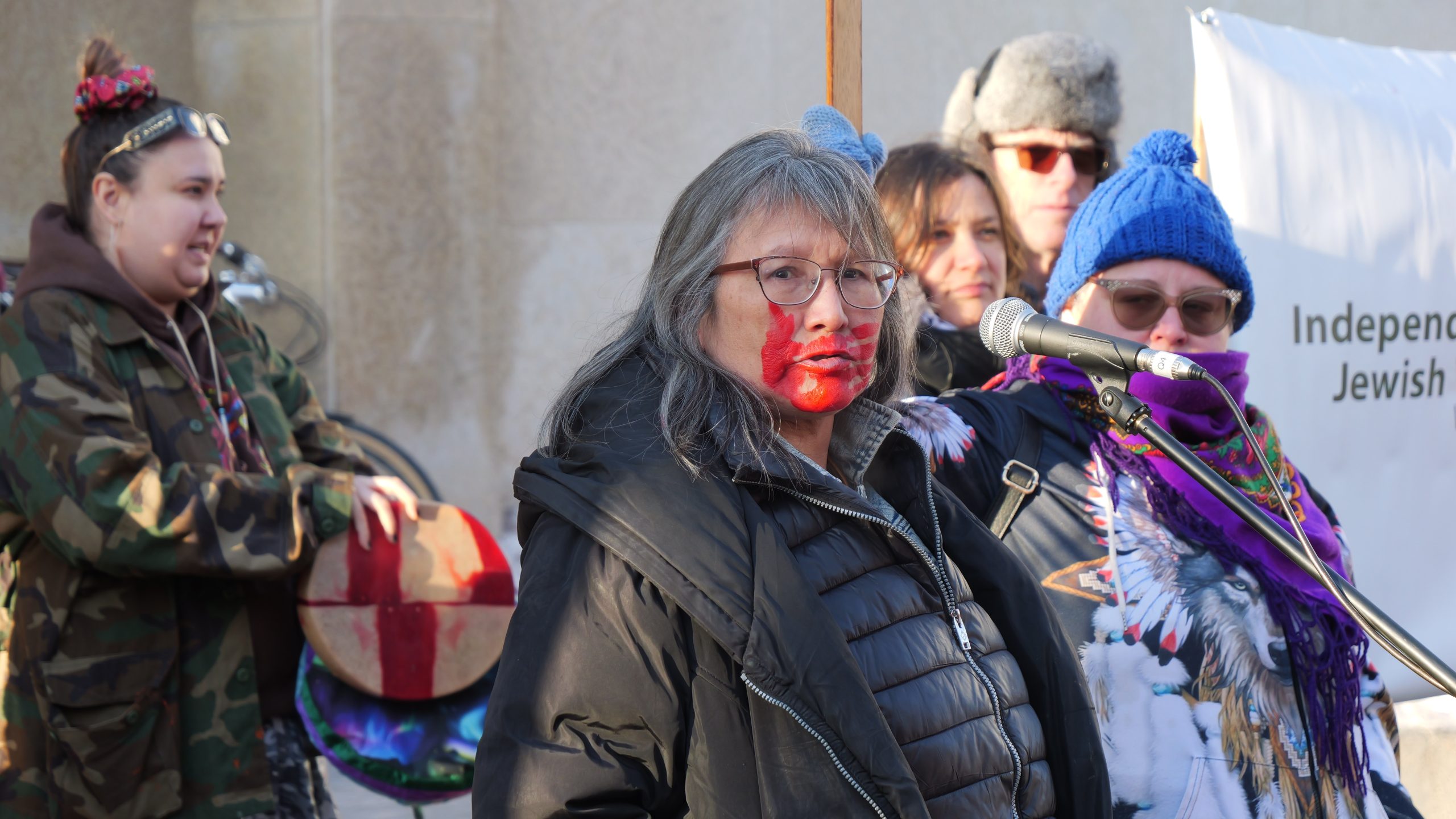
The Ki Low Na Friendship Society (KFS) hosted the educational gathering on Thursday, during which about a dozen survivors took to an open mic to talk about their experiences as children within the institutions and how what they went through continues to affect them.
People experiencing intergenerational trauma also talked about how the “schools” have impacted their families and everyday lives. K̓ninm̓tm̓ taʔ n̓q̓ʷic̓tn̓s Wilfred “Grouse” Barnes of Westbank First Nation began the event with an opening prayer.
Following the opening prayer, people were invited to speak at the open mic. While some non-Indigenous people in attendance offered their sympathy and sorrow, survivors began telling their stories, one by one.
An audience of about 80 people sat in chairs and listened as many of the survivors shared stories of the abuse they experienced and the lasting impacts that the “schools” left on their families and personal lives. Some spoke about how they have coped, their healing journeys and their resilience. KFS staff with red ribbons were on hand to provide any emotional support for those who shared.
The event was about honouring survivors and their families — and Edna Terbasket, the executive director of KFS, said the centre also wanted to educate non-Indigenous people. She said people need to know the truth about the impacts of the residential “school” system and colonialism generally.
However, Terbasket noted that there weren’t many non-Indigenous people present. She said that she wishes to see more people in administration positions in attendance, such as school trustees and those from organizations such as the Ministry of Children and Family Development, Interior Health and the RCMP.
“If you don’t know the truth, how can you reconcile with us? They have to take some responsibility too to learn the truth,” she said.
“Hearing it fresh from the heart, fresh from the survivor – it’s different than when you read a book … If you hear somebody tell their story, it’s like, wow. It’s powerful.”

By having survivors talk about their experiences, Terbasket said that it creates a safe space for others to open up as well.
“It’s healing for other folks there that maybe are a little reluctant or too shy to get up and share their story,” she said.
Soup and bannock was served throughout the event, and orange shirts designed by KFS’s in-house artists were sold. The women’s hand drumming group at KFS also played a number of songs throughout the afternoon.
Educational booths were on display from community organizations including Kelowna Museums, the Rotary Club of Kelowna Sunrise and Okanagan Regional Library. Books written by Indigenous authors that educated on topics like racism, colonialism and Indigenous teachings were showcased.

A handful of dignitaries were in attendance, such as “Kelowna” Mayor Colin Basran, who recognized that there’s a long way to go when it comes to acknowledging the harms of the residential “school” system.
“A big part of it starts with education. My wish for everybody, in particular tomorrow, but everyday, is to first recognize the children who never came home,” said Basran.
“And for those who did come home, the intergenerational trauma that is still going on to this day. To understand what generational trauma is, the consequences and the situations it’s still raising in our community today.”

Terbasket’s hope is that next year, KFS can host the same event on — rather than in advance of — the National Day for Truth and Reconciliation and at a bigger venue in order to reach more people. She said a lot of people are still in denial and could benefit from learning the truth.
“A part of them is still in that mind where ‘Oh that didn’t happen, or ‘It couldn’t have been that bad.’ But it is that bad,” she said.
“That denial, it puts them in a place where they have to take some accountability. They have to be responsible. It did happen, and our people are the walking wounded.”
Author
We live in a media ecosystem that thrives on misinformation. Big Tech and AI companies are consuming the work of real human beings and Canadian news has been banned on Facebook and Instagram.
And yet, I have hope for journalism because of the work we’re doing at IndigiNews.
At IndigiNews, we embody tâpwêwin — the Cree value of integrity and responsibility in truth-telling. We are committed to our independent, Indigenous-led newsroom rooted in community, accountability, and relationality. We believe storytelling is a sacred fire that connects our pasts, presents, and futures through the storytellers in our Storytelling Lodge. IndigiNews creates space for Indigenous journalists, storytellers, Knowledge Keepers, and communities to gather, learn, and share stories that matter.
As a registered charity, we are building a fire that allows our work not just to ignite but to thrive. Rather than relying on advertising or corporate acquisition, IndigiNews is sustained by people like you who believe Indigenous stories are important for the future of our communities.
Your support is making a real difference.
Our community of supporters, our Firekeepers, make it possible to grow our newsroom, publish award-winning journalism, train emerging Indigenous journalists through initiatives like the ReFocus Photojournalism Fellowship, and publish trustworthy stories that serve our communities across the country. Every story we publish helps fill in gaps left by mainstream media and ensures Indigenous perspectives are represented with care, accuracy and respect.
But there is still more work to do.
As the media landscape becomes more and more uncertain, community support is as necessary and essential as it’s ever been. Every new Firekeeper helps protect the independence of our newsroom and strengthens journalism that is accountable to our many and varied communities over corporations.
That’s why we’re inviting you to become a Firekeeper.
Firekeepers tend to and protect the sacred fire. Your monthly contributions directly support IndigiNews’s Storytelling Lodge, helps sustain our independent, Indigenous-led newsroom, and ensures future generations of Indigenous storytellers have the resources they need to do the work.
As a registered Canadian charity, all eligible donations receive a charitable tax receipt.
If you believe Indigenous stories matter, if you value independent journalism, and if you want to help build a strong future for Indigenous media, we invite you to join our circle of Firekeepers today.
Together, we can keep the fire burning.
— Eden Fineday, Publisher, IndigiNews
Support us nowLatest Stories
-
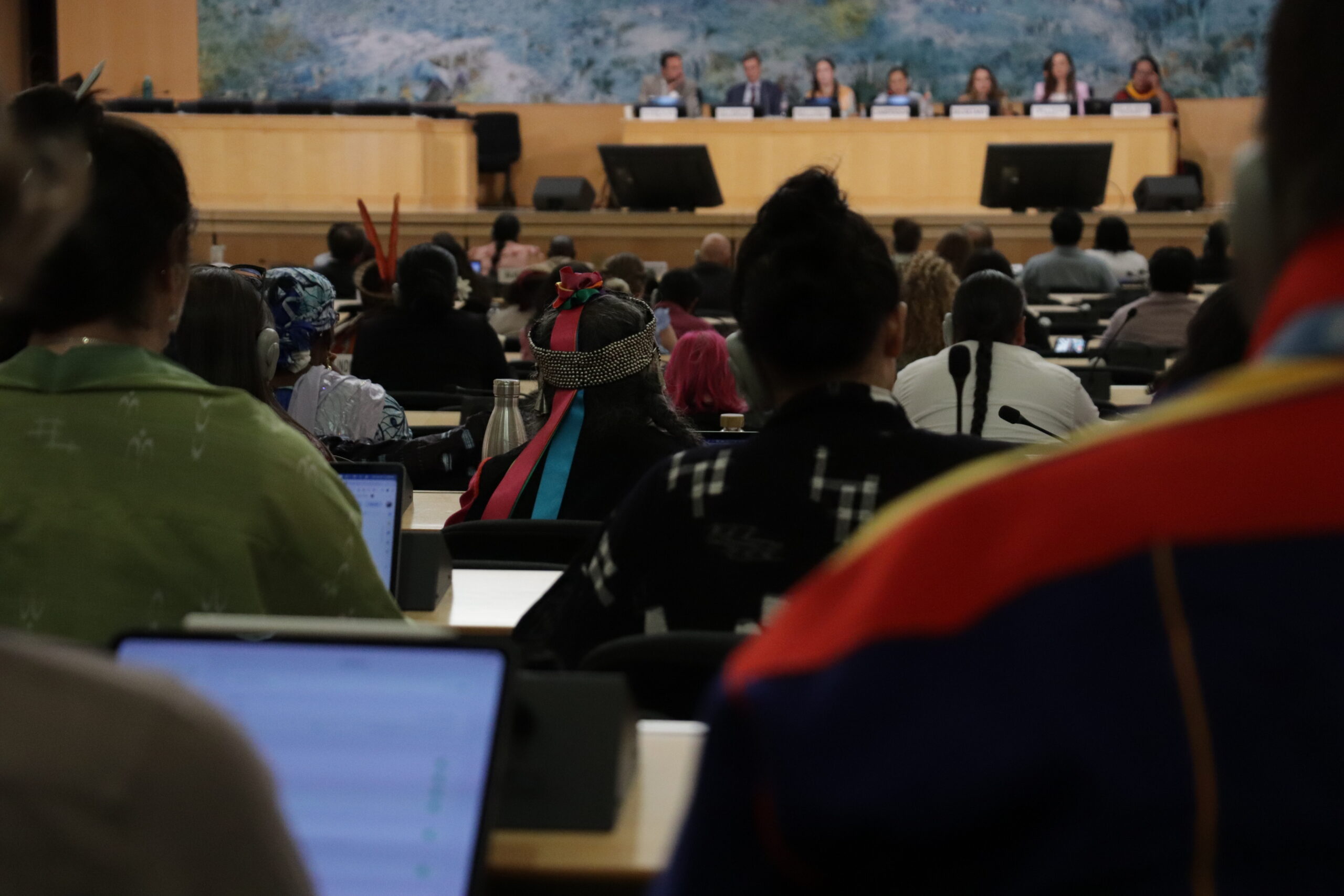
Indigenous leaders give the UN a roadmap for protecting their peoples
Amidst prayers and vows of solidarity, UN Expert Mechanism on the Rights of Indigenous Peoples ends annual meetings with demands for ‘action we’re not seeing globally’
-
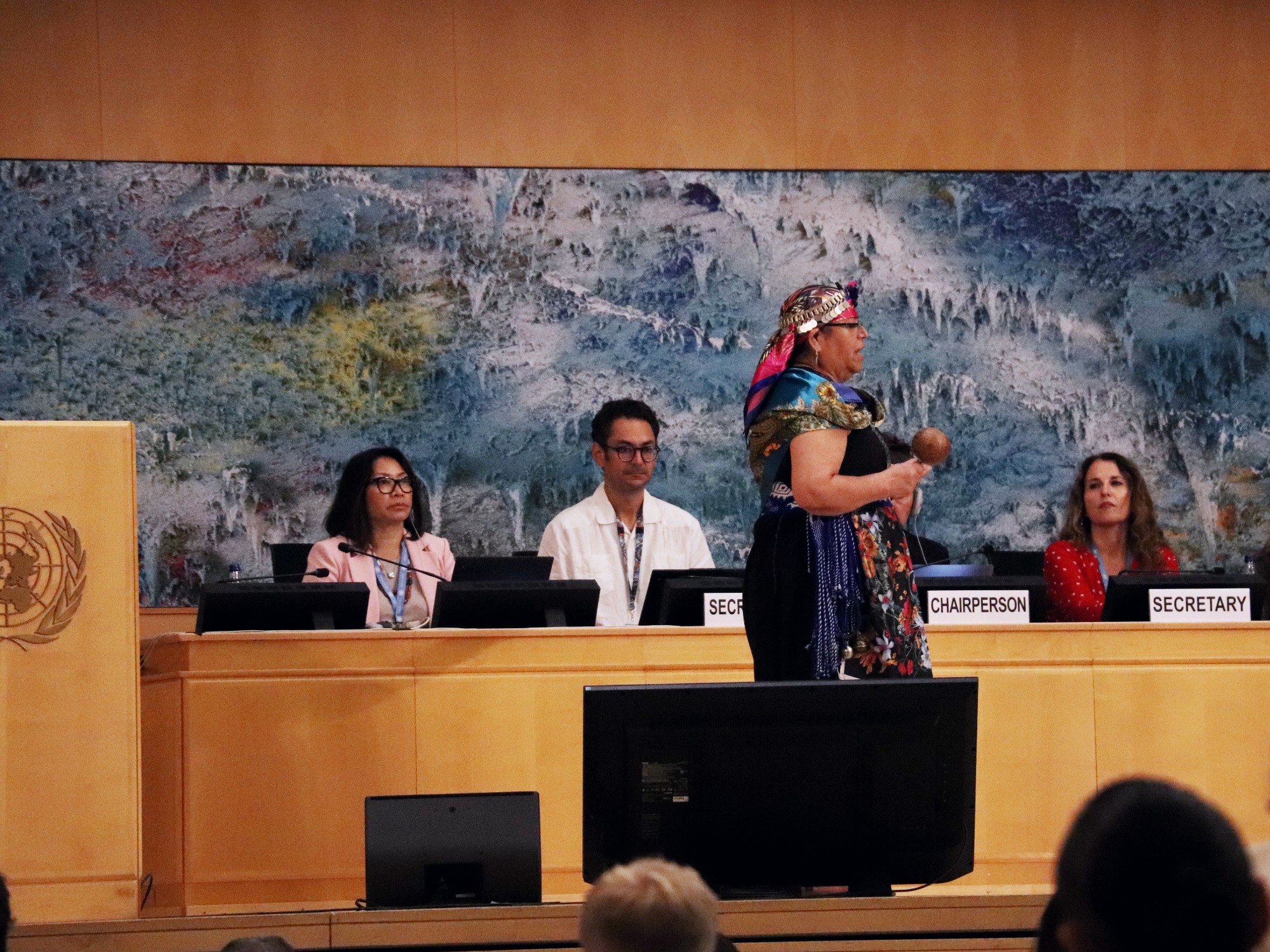
Indigenous people demand more say at the UN, as new crises hit their homelands
Indigenous nations live ‘on the frontlines’ of climate, conflict and new tech. But their voices remain sidelined in the global halls of power.