LSIB uplifts stamiyaʔ community members with colourful Pride carnival
‘We’re accepting those people we’ve always had in our communities, and we’re returning to where our ancestors were’
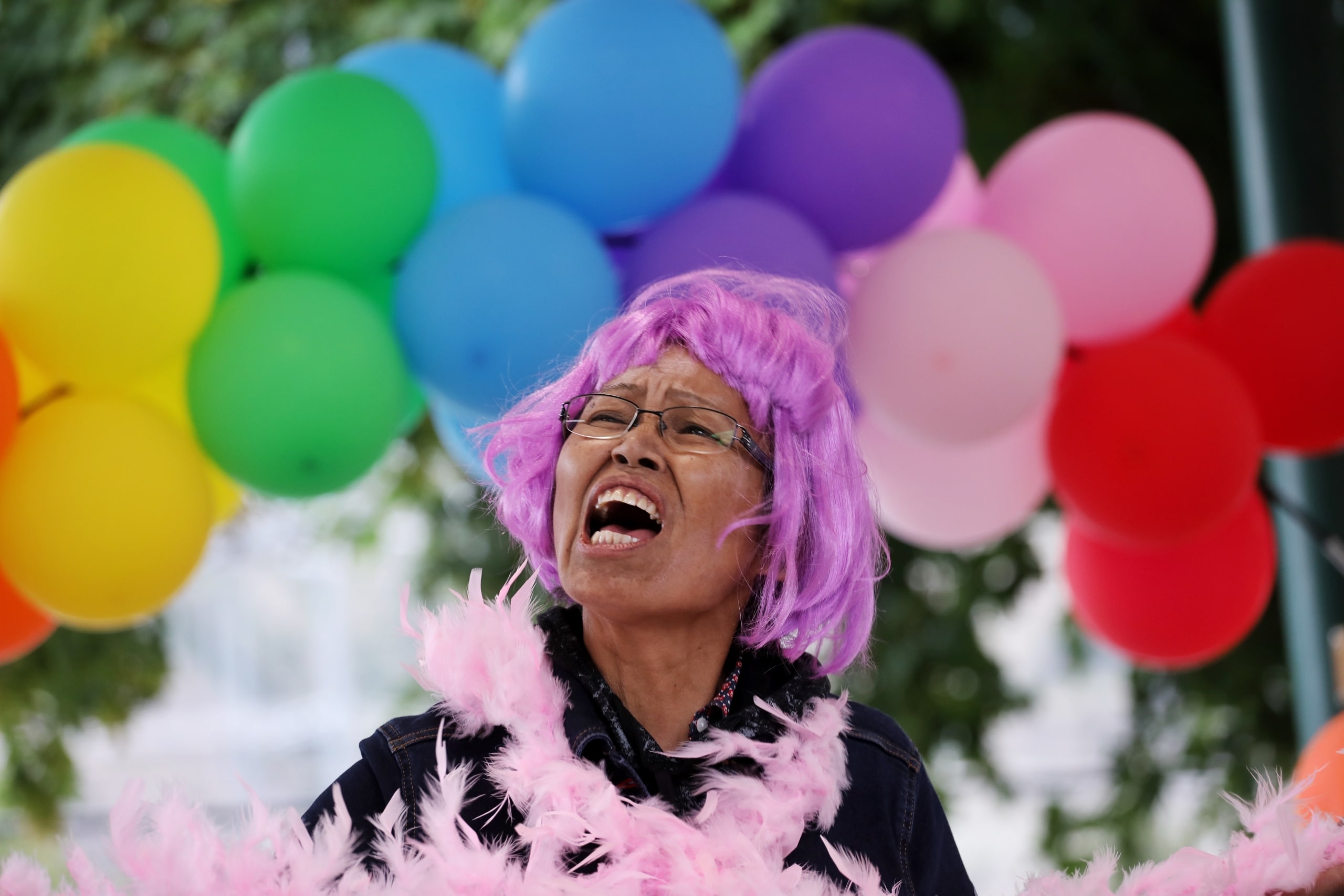
For its third annual Pride carnival, the Lower Similkameen Indian Band (LSIB) embraced their sməlqmíx ways of acceptance of love in all of its forms — celebrating and uplifting their stamiyaʔ (Two-Spirit) relatives.
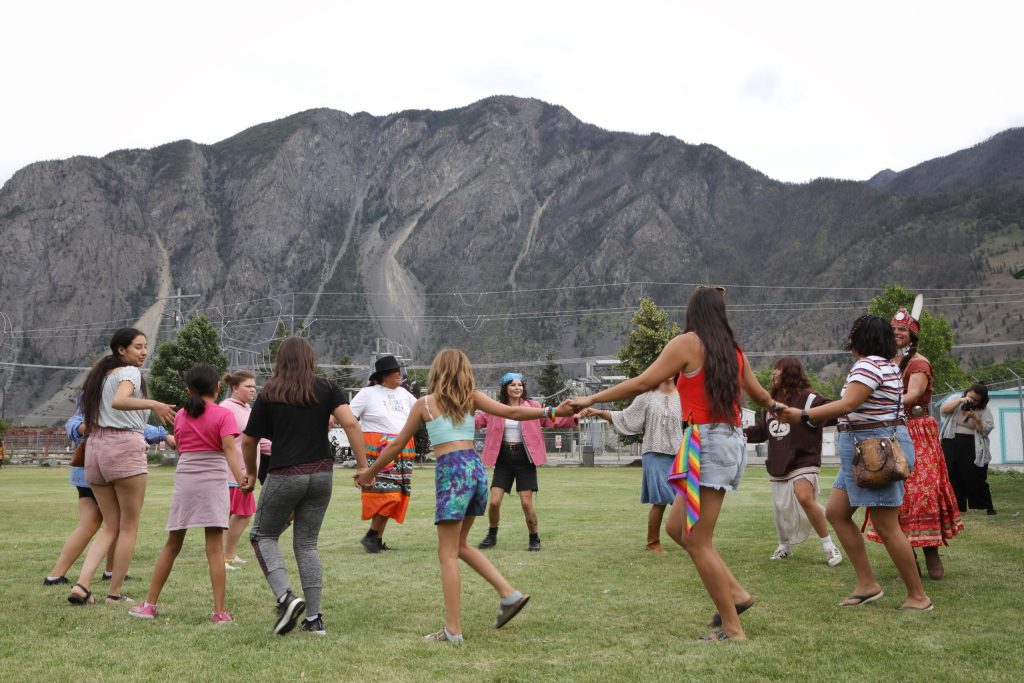
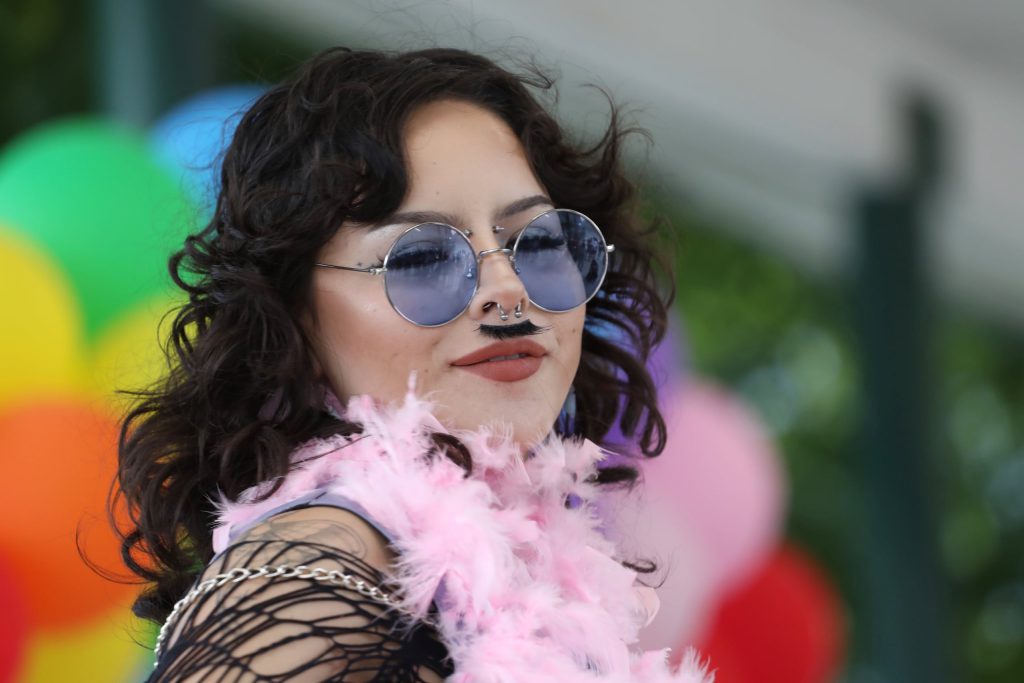
Hosted in niʔxʷinaʔ (Keremeos) in syilx homelands, community members of all ages and backgrounds gathered at Memorial Park for the event in mid-June. The carnival featured drag and runway performances, vendors, local artisans, games and round-dancing to songs provided by the Highwater Drummers group.
Iniigamaki (Buffalo Stone Woman) Kirsten Lindley organized the carnival alongside Jade Montgomery-Waardenburg and Madeline Terbasket. She said the event felt especially impactful being held in such a small town.
“We’re here. We’re letting them know that we’re not ashamed and that we’re proud of all of our relatives who have come out,” Lindley said.
“We’re letting them know that there are safe people out there for them, and I’m excited to see the community that’s already there or maybe it’s strengthened by this event.”
The doe who grew horns
Before the event began, Terbasket shared how stamiyaʔ, the nsyilxcən word for Two-Spirit, means “the doe who grew horns.”
“When I found that word, it just completely opened my mind and my heart to who I am and who I’m supposed to be,” they said.
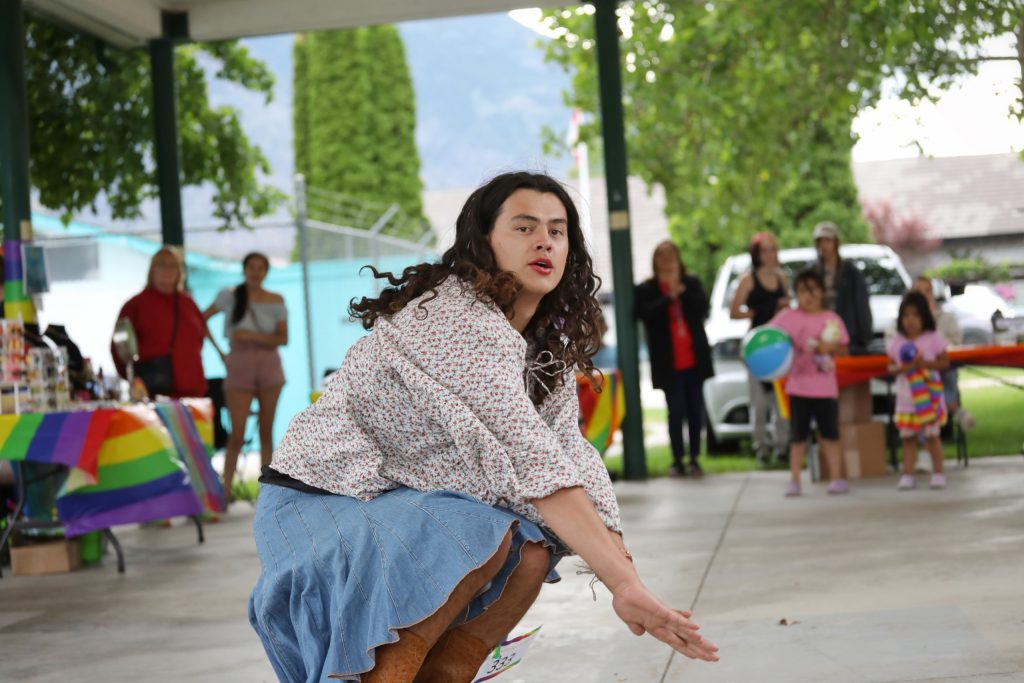
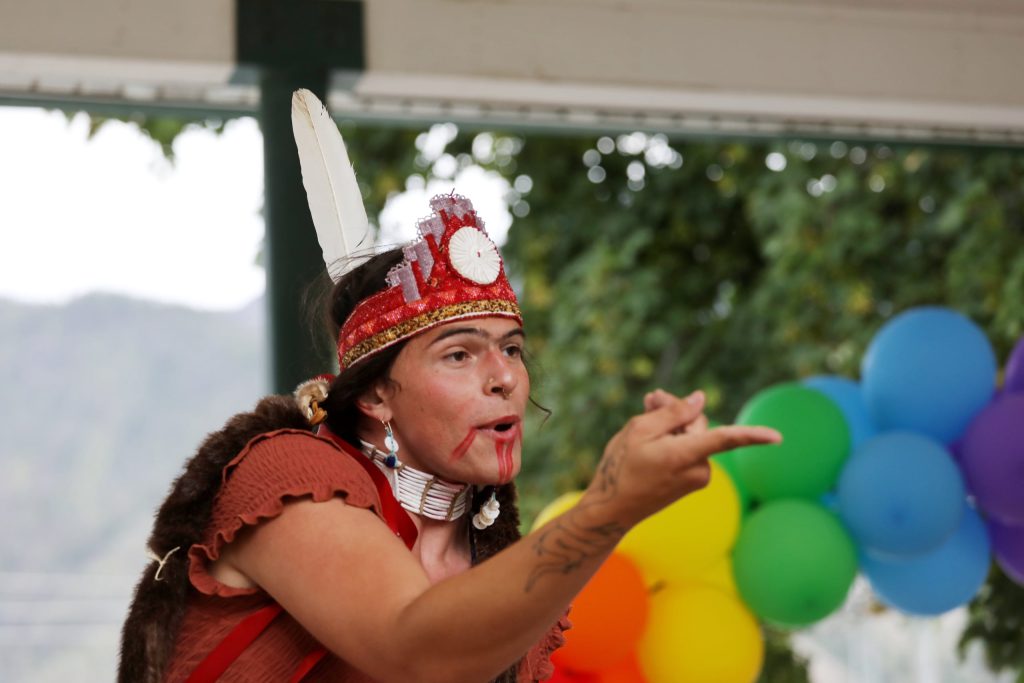
The carnival’s main event was the Next Rez Drag Superstar, which consisted of five community members who stepped into the spotlight and let their drag personas shine.
Songs were drawn randomly from a hat before the contestants each lip-synched and performed before a panel of judges. Though there was technically only one winner, each contestant was acknowledged with a prize.
For Lindley and Montgomery-Waardenburg’s auntie, Joan Saddleman, it was her first time performing drag.
“Not on the outside, but on the inside, we’re all the same,” said Saddleman. “We’re all so beautiful, no matter what.”
Aiyana Reid, who is Cowlitz, Klickitat and Taitnapam, came out on top as the Next Rez Drag Superstar, after competing for the top spot against their partner, Letkwu Yusn Moore Stanger, who is Okanogan, San Poil and Wenatchi, Moses-Columbia from Colville Tribes.
Both Reid and Stanger were visiting from Spokane, after helping to organize Washington State’s first Two-Spirit powwow. They attended LSIB’s Pride event to show solidarity for their Two-Spirit kin in the area.
“It’s been over 200 years since we celebrated Indigiqueer people, since the time of first contact. White people came in and told us Two-Spirit people were not normal, not natural,” said Stanger, who noted that a doe with antlers is a natural occurrence.
“That happens in nature. So it was really special to give that meaning out, and show people that (stamiyaʔ) is natural, that it’s been celebrated for thousands and thousands of years.”
‘We should feel safe and at home’
Reid praised the carnival, noting that Pride events and representation in small towns can be life-saving for so many people.
“I feel like that’s what makes it valuable in these small towns, is that people shouldn’t have to go so far away to see themselves, because we exist here,” they said.
“Especially Two-Spirit people — we’ve all been all up in this since the beginning of time. We should feel safe and at home, instead of needing to go somewhere else to feel at home or with our family.”
The pair were asked by a young person in attendance how to stay joyful as a trans couple, with Reid telling the person that it’s important to find others that remind you of what Indigiqueer joy and healing is.
“I feel like that’s us laughing, smiling, dancing,” they said. “I feel like having the consistency of watching queer joy on a regular basis — that’s what allows me to keep going as a trans person.”
‘We’re returning to where our ancestors were’
Lindley, who helped launch LSIB Pride with Montgomery-Waardenburg three years ago, said that celebrating and supporting stamiyaʔ was one of the reasons why the celebrations began in the first place.
“When I was growing up, no one came out,” she said.
“It’s so exciting to see that being reclaimed, just after how many years of it being hushed and being kept a secret, mostly for safety.”
Helping to create spaces and change in the community, she continued, is what gets her the most excited for the future of Pride.
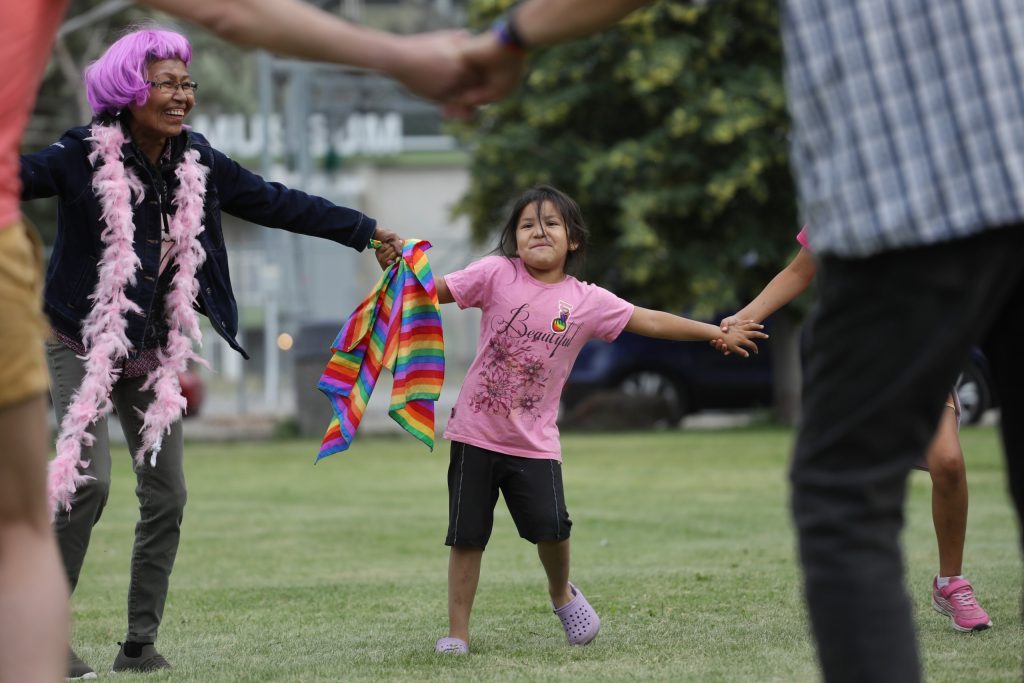
“It’s just exciting that we’re making changes and we’re accepting those people we’ve always had in our communities, and we’re returning to where our ancestors were,” she said.
“That’s what’s really powerful to me.”
Author
We live in a media ecosystem that thrives on misinformation. Big Tech and AI companies are consuming the work of real human beings and Canadian news has been banned on Facebook and Instagram.
And yet, I have hope for journalism because of the work we’re doing at IndigiNews.
At IndigiNews, we embody tâpwêwin — the Cree value of integrity and responsibility in truth-telling. We are committed to our independent, Indigenous-led newsroom rooted in community, accountability, and relationality. We believe storytelling is a sacred fire that connects our pasts, presents, and futures through the storytellers in our Storytelling Lodge. IndigiNews creates space for Indigenous journalists, storytellers, Knowledge Keepers, and communities to gather, learn, and share stories that matter.
As a registered charity, we are building a fire that allows our work not just to ignite but to thrive. Rather than relying on advertising or corporate acquisition, IndigiNews is sustained by people like you who believe Indigenous stories are important for the future of our communities.
Your support is making a real difference.
Our community of supporters, our Firekeepers, make it possible to grow our newsroom, publish award-winning journalism, train emerging Indigenous journalists through initiatives like the ReFocus Photojournalism Fellowship, and publish trustworthy stories that serve our communities across the country. Every story we publish helps fill in gaps left by mainstream media and ensures Indigenous perspectives are represented with care, accuracy and respect.
But there is still more work to do.
As the media landscape becomes more and more uncertain, community support is as necessary and essential as it’s ever been. Every new Firekeeper helps protect the independence of our newsroom and strengthens journalism that is accountable to our many and varied communities over corporations.
That’s why we’re inviting you to become a Firekeeper.
Firekeepers tend to and protect the sacred fire. Your monthly contributions directly support IndigiNews’s Storytelling Lodge, helps sustain our independent, Indigenous-led newsroom, and ensures future generations of Indigenous storytellers have the resources they need to do the work.
As a registered Canadian charity, all eligible donations receive a charitable tax receipt.
If you believe Indigenous stories matter, if you value independent journalism, and if you want to help build a strong future for Indigenous media, we invite you to join our circle of Firekeepers today.
Together, we can keep the fire burning.
— Eden Fineday, Publisher, IndigiNews
Support us nowLatest Stories
-
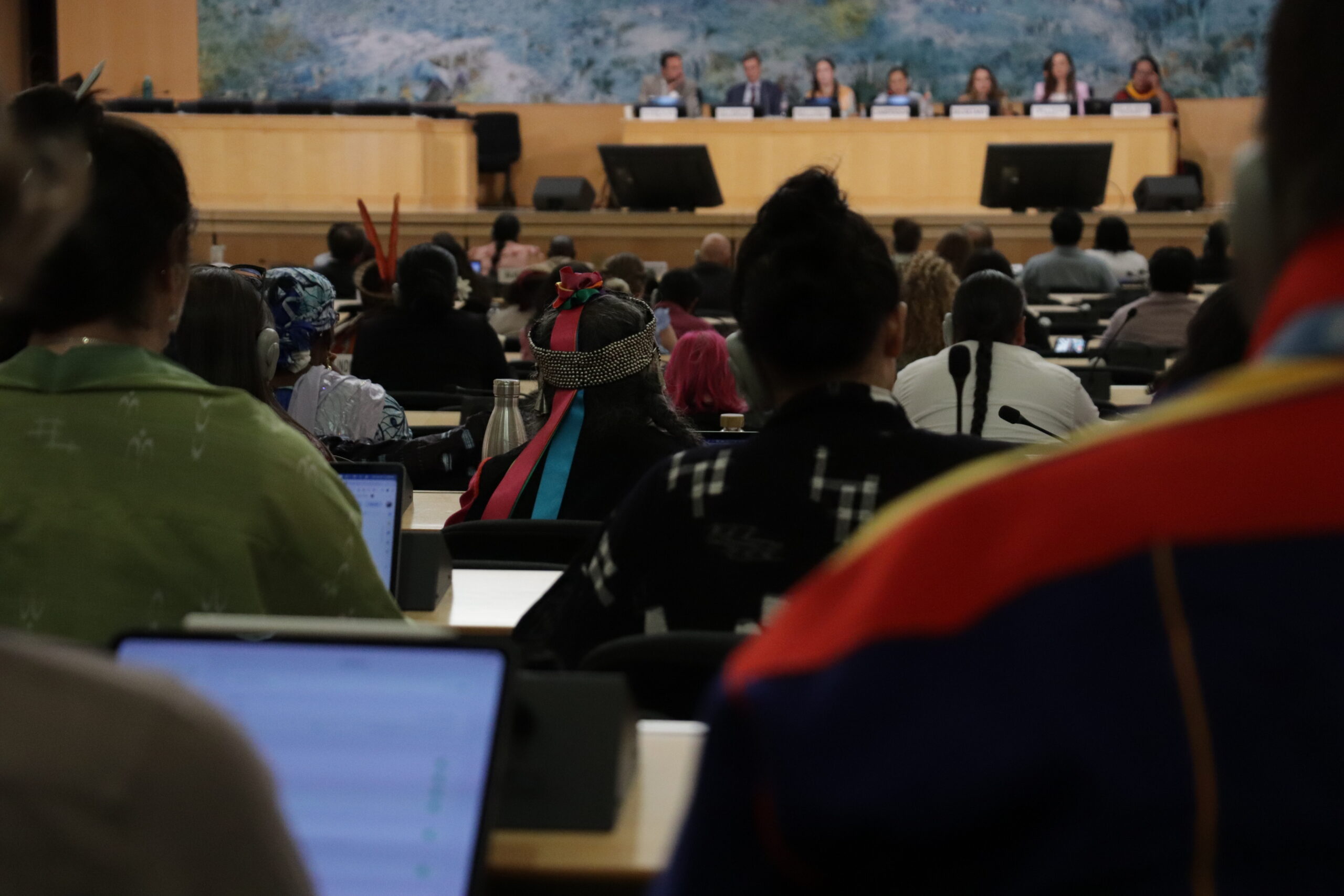
Indigenous leaders give the UN a roadmap for protecting their peoples
Amidst prayers and vows of solidarity, UN Expert Mechanism on the Rights of Indigenous Peoples ends annual meetings with demands for ‘action we’re not seeing globally’
-
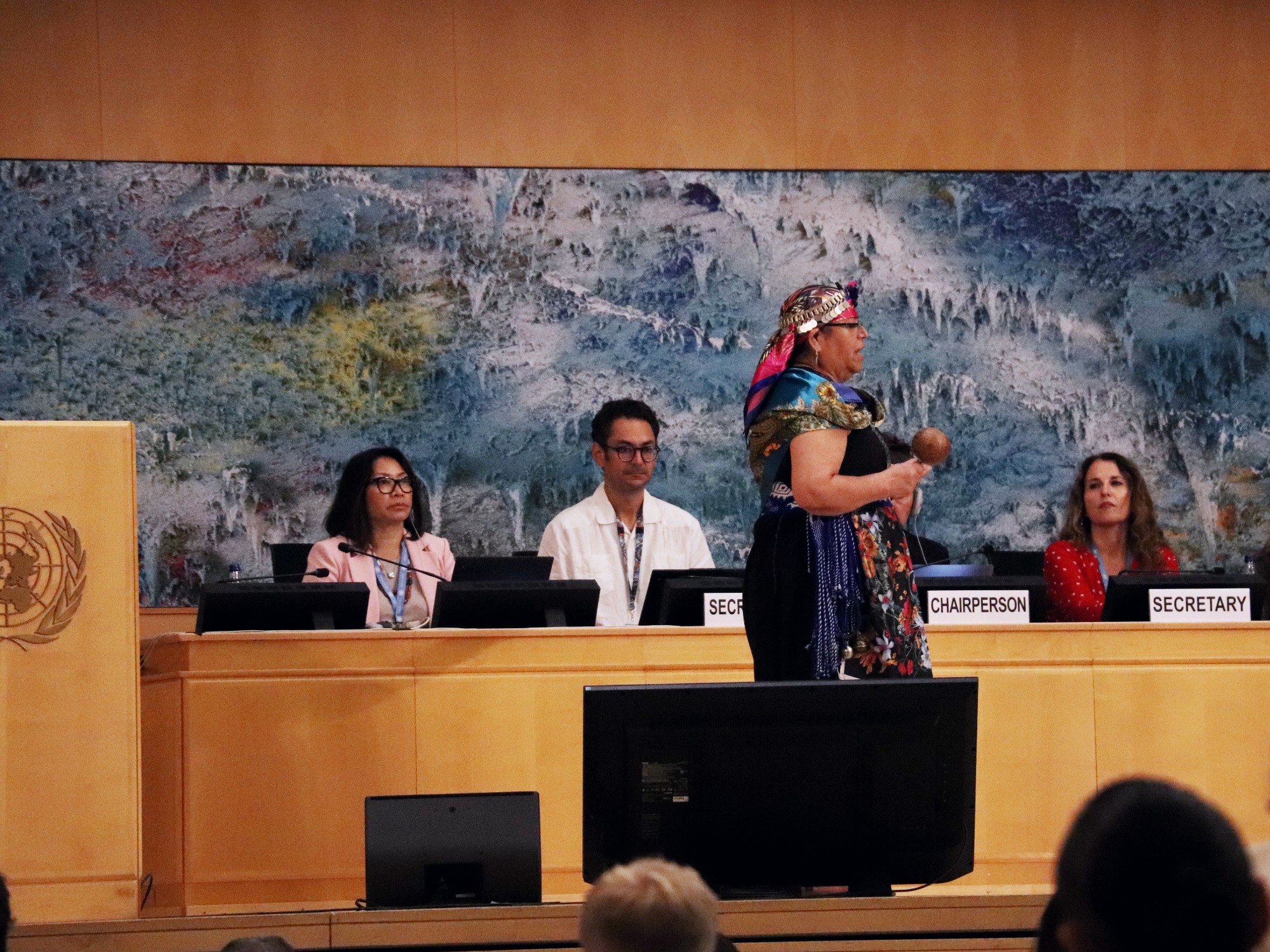
Indigenous people demand more say at the UN, as new crises hit their homelands
Indigenous nations live ‘on the frontlines’ of climate, conflict and new tech. But their voices remain sidelined in the global halls of power.