Maternity and Babies Advice Line makes reproductive support more accessible for remote communities
24/7 virtual care Maternity and Babies Advice Line, a collaboration of First Nations Health Authority and Rural Community Coordination B.C.
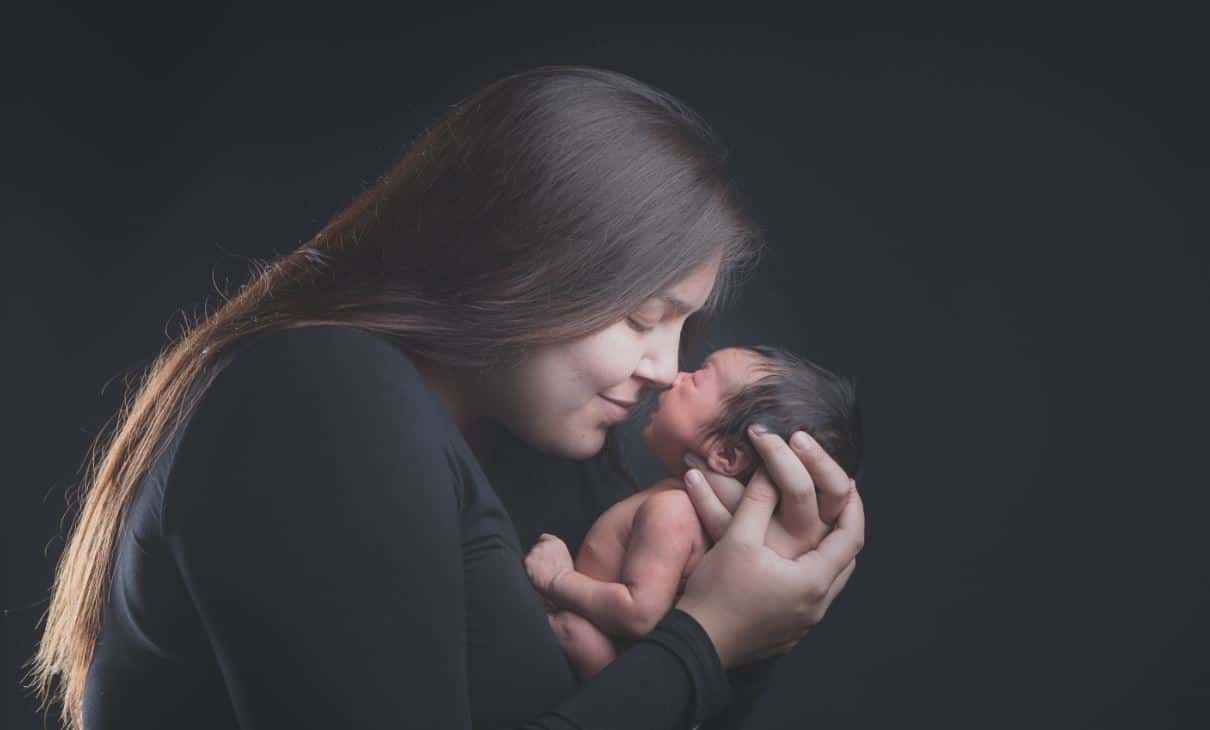
What happens when you’ve just returned to your remote community with your newborn? Or if something comes up during your pregnancy and it’s the middle of the night? Where do you go for support?
To help answer some of those very questions, First Nations Health Authority (FNHA) launched a ‘Maternity and Babies Advice Line’ for Indigenous families in B.C., available 24-7.
“With babies and moms, things can happen anytime,” says Dr. Unjali Malhotra, medical director for women’s health at FNHA.
FNHA worked with Rural Community Coordination to provide a service to help pregnant and new parents, guardians, and caregivers of newborns. Both family members and health care providers can receive support via the advice line.
Doctors will provide advice on urgent and non-urgent maternal and child health topics, Malhotra says, which can include pregnancy, birth, newborn, and postpartum care. The doctors can also arrange referrals to obstetricians or pediatricians, if needed.
“I come from a rural community,” says Malhotra, who grew up in Cree/Dene territory, in Northern Saskatchewan. “It’s really near and dear to my heart that rural remote communities have equitable access to care, and that’s often not the case, particularly with COVID-19.”
Approximately 30 per cent of Indigenous people in B.C. live in rural areas, according to 2016 census highlights, and while Zoom may be popular during this pandemic, 75 per cent of Indigenous communities in B.C. do not have the basic standards of the internet, according to First Nations Technology Council.
“It can be very scary for moms and families and communities to have pregnancy concerns or newborn concerns, and potentially no services available to them,” Malhotra adds.
The goal was an advice line that offered exceptional service, which includes making it accessible and culturally-safe, she says.
“We spoke to as many providers that we knew that offer culturally-safe care, and that were also experts in primary care and obstetrics. We have family doctors who are also obstetricians, and midwives answering the phones,” she explains.
The advice line is set up as a triad delivery service, which means people access it with their care provider. The primary care provider sets up an appointment with the advice-line doctor, and attends the appointment with the patient.
“The provider in the community can be your midwife, your doula, your family, doctor, or a traditional healer, whoever is important to you and leading within your community,” says Malhotra. “We would, of course take any call, because the number is publicly available through phone or zoom, but we prefer to have a provider with that patient.”
Culturally-safe care
What if someone doesn’t have the internet, or a device?
“We also have a phone number,” says Malhotra. “So if someone doesn’t have wifi or connectivity, they can certainly phone in.”
And what if someone doesn’t have minutes on their phone?
“That’s our next step,” says Malhotra. She explains the idea was planted in May, funding came quickly, and the team were able to get the advice line up and running by August, but there’s room for growth.
“Our next steps, I don’t know in what order yet, would be text and patient direct contact,” she adds.
The majority of the providers that participants would connect with work in rural and remote communities, says Malhotra.
“Many we have are in First Nations communities and we deliberately invited the providers one by one that we knew are currently offering culturally safe care within their communities,” she explains. “We spoke to as many providers that we knew that offer culturally-safe care, that were also experts in primary care and obstetrics.”
Most providers have more than 10 years experience within their communities, and are beloved in their communities, she explains, which is an important aspect of meaningful support.
Our series on reproductive health access is made possible in part with funding from First Nations Health Authority (FNHA) and Thunderbird Partnership Foundation. Their support does not imply endorsement of or influence over the content produced.
Author
We live in a media ecosystem that thrives on misinformation. Big Tech and AI companies are consuming the work of real human beings and Canadian news has been banned on Facebook and Instagram.
And yet, I have hope for journalism because of the work we’re doing at IndigiNews.
At IndigiNews, we embody tâpwêwin — the Cree value of integrity and responsibility in truth-telling. We are committed to our independent, Indigenous-led newsroom rooted in community, accountability, and relationality. We believe storytelling is a sacred fire that connects our pasts, presents, and futures through the storytellers in our Storytelling Lodge. IndigiNews creates space for Indigenous journalists, storytellers, Knowledge Keepers, and communities to gather, learn, and share stories that matter.
As a registered charity, we are building a fire that allows our work not just to ignite but to thrive. Rather than relying on advertising or corporate acquisition, IndigiNews is sustained by people like you who believe Indigenous stories are important for the future of our communities.
Your support is making a real difference.
Our community of supporters, our Firekeepers, make it possible to grow our newsroom, publish award-winning journalism, train emerging Indigenous journalists through initiatives like the ReFocus Photojournalism Fellowship, and publish trustworthy stories that serve our communities across the country. Every story we publish helps fill in gaps left by mainstream media and ensures Indigenous perspectives are represented with care, accuracy and respect.
But there is still more work to do.
As the media landscape becomes more and more uncertain, community support is as necessary and essential as it’s ever been. Every new Firekeeper helps protect the independence of our newsroom and strengthens journalism that is accountable to our many and varied communities over corporations.
That’s why we’re inviting you to become a Firekeeper.
Firekeepers tend to and protect the sacred fire. Your monthly contributions directly support IndigiNews’s Storytelling Lodge, helps sustain our independent, Indigenous-led newsroom, and ensures future generations of Indigenous storytellers have the resources they need to do the work.
As a registered Canadian charity, all eligible donations receive a charitable tax receipt.
If you believe Indigenous stories matter, if you value independent journalism, and if you want to help build a strong future for Indigenous media, we invite you to join our circle of Firekeepers today.
Together, we can keep the fire burning.
— Eden Fineday, Publisher, IndigiNews
Support us nowLatest Stories
-
Indigenous leaders give the UN a roadmap for protecting their peoples
Amidst prayers and vows of solidarity, UN Expert Mechanism on the Rights of Indigenous Peoples ends annual meetings with demands for ‘action we’re not seeing globally’
-
Indigenous people demand more say at the UN, as new crises hit their homelands
Indigenous nations live ‘on the frontlines’ of climate, conflict and new tech. But their voices remain sidelined in the global halls of power.