Maternity clinic in Campbell River breaking barriers to birth support
Amid COVID-19, Maternal health clinic celebrates five year anniversary of relocating to improve access.
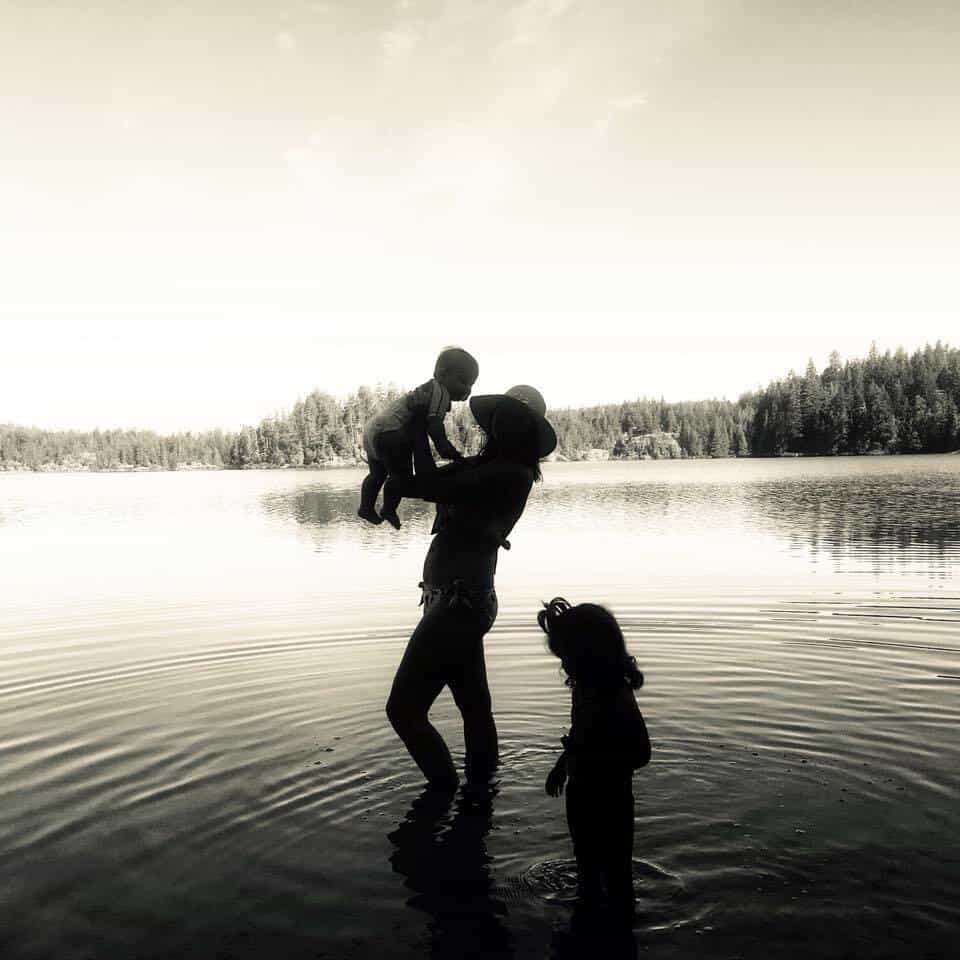
As the Campbell River Maternity Clinic celebrates the fifth year since making a critical decision to relocate, one of the clinic’s physicians reflects on their continued efforts breaking barriers for families seeking birth support.
Five years ago Dr. Jennifer Kask went to her first day of work at the newly relocated Campbell River Maternity Clinic. The clinic serves expecting families across northern Vancouver Island — from Kyuquot to Port Hardy to Sointula to Courtney — including small islands and remote mainland communities.
This large region covers 21, 157 square kilometers, and is home to 11, 506 people, with over 31 per cent who identify as Kwakwaka’wakw.
The maternity clinic was previously located in the Willow Point neighbourhood in Campbell River, but relocation was a necessary way to address transportation barriers for expecting parents.
“[The old location] made it more challenging, especially if we identified something and said, ‘you need to go to the lab right now,’ and now that was another trip,” Dr. Kask says. “It became really inconvenient.”
Dr. Kask and her colleagues recognized transportation was a serious barrier, and one of many.
Breaking barriers to birth support
Dr. Kask wants to make it clear that she cannot speak on behalf of the experiences of the Indigenous families she works with and the barriers they face, she says. What she can speak to, are the ways the clinic has tried to make support more accessible.
“Sometimes you just don’t have your ride show up on time,” Dr. Kask, commenting on the challenges of relying on taxis, boats and buses. “Those can be barriers. But sometimes, it’s just not feeling welcome where you are.”

In addition to transportation, financial barriers can be an issue, Dr. Kask says. To help make things easier, the clinic offers free pregnancy testing, which otherwise only accessible in a drugstore, “are not cheap,” she says.
Building rapport and comfort with clients is also an important part of accessible care. Dr. Kask says some people will come to the clinic for an unrelated matter, and then ask for a pregnancy test after they feel the doctor is actually listening to them.
Research points to a direct correlation between the quality of prenatal care and better health outcomes for Indigenous Peoples. A study published in the Canadian Medical Association Journal in 2016 found that First Nations mothers in B.C. were less likely to have early ultrasounds and less likely to have the suggested minimum of four prenatal visits.
This imbalance in trust and health access is part of what has inspired the maternity clinic to keep breaking barriers to birth support.

Relocating the clinic was a huge decision, Dr. Kask says, but an important one.
“On November 5th of 2015, we did our very first visit,” recalls Dr. Kask. “We had people who were local, who had walked and said, ‘Oh, it’s way easier to walk here from Campbellton [downtown neighbourhood] than it is to walk to Willow Point.’”
This felt like confirmation of the need for centralized services, says Dr. Kask.
Pregnant people living in Campbell River had sometimes been walking up to 10 kilometers for their appointments, while other north islanders drove up to three and a half hours to access reproductive care.

Ashley Harry, from Klahoose First Nation, appreciated the convenience of the clinic’s relocation when she was pregnant with her daughter.
“[It was] located next to the dietician, which I used because I had gestational diabetes,” she says. “[For] blood work, the lab is there and labor and delivery just couple floors up on an elevator from the maternity clinic.”
Dr. Kask remembers clients who had driven down from the North Island on what she called “a terrible day for driving.”
“Some of them were in a minivan with their kids,” she remembers. “I thought — this is crazy. Why is everybody driving here all this way to see me? What else could we be doing?”
In 2014, Dr. Kask began driving up to Port Hardy once a month to visit people in their own community. Island Health estimates that these trips saved roughly 298,240 km of travel for families.
Adapting to COVID-19
COVID-19 has made the fifth anniversary of the relocated clinic a memorable one, says Dr Kask.
The clinic now combines phone call check-ins and in-person appointments, which means expecting parents may be receiving even more pre and post birth care, Dr Kask says. The World Health Organization recommends five post-birth visits, but the clinic conducts many more.
“In B.C. we’re usually doing 10 or more. And then this modified schedule of virtual and in real life… we absolutely have people who’ve had 15 or 16, because of the additional telephone calls in between,” she says.
The new pandemic-inspired surge of phone call appointments was a plus, not a minus for Tanisha Heins, of Klahoose First Nation.
“We did many over the phone calls which was convenient for me as I have two other kids and live on Cortes Island,” Heins says
The clinic and hospital are constantly assessing protocol for birth care based on the current pandemic, Dr. Kask explains. The hospital’s current policy is that birthing patients are allowed one person in the room.
This can mean that someone must choose between a partner, a mother, or even their doula (birth worker).
“They can stay the whole time. And then one other person who attends for the labor, and the birth, and then for four hours after the birth,” Dr Kask explains. “So that might be an auntie, or grandma, or a doula.”
Heins brought her partner to participate in the birth.
“I felt that everyone at the clinic was so nice and they made me feel very comfortable,” Heins says. Dr. Kask was her family physician, and she delivered a beautiful baby girl, Atlee.

Large celebrations of the birth, with extended family and friends can still happen, but virtually.
“I was part of a really great birth, in the wee hours of the morning where I could hear all the encouragement coming remotely through a live stream that grandma had organized to a remote community,” Dr. Kask says. “Oh my goodness, when I heard grandpa — that chuckle, just so proud that this baby had arrived.”
As the team continues breaking barriers to birth support during a global pandemic, they say they are doing the best with what they have.
“I think everybody’s had to do the best they can, “ says Dr. Kask, “ Start with what you’ve got, do what you can, and I think people are still having excellent birth stories.”
Our series on reproductive health access is made possible in part with funding from First Nations Health Authority (FNHA) and Thunderbird Partnership Foundation. Their support does not imply endorsement of or influence over the content produced.
Author
We live in a media ecosystem that thrives on misinformation. Big Tech and AI companies are consuming the work of real human beings and Canadian news has been banned on Facebook and Instagram.
And yet, I have hope for journalism because of the work we’re doing at IndigiNews.
At IndigiNews, we embody tâpwêwin — the Cree value of integrity and responsibility in truth-telling. We are committed to our independent, Indigenous-led newsroom rooted in community, accountability, and relationality. We believe storytelling is a sacred fire that connects our pasts, presents, and futures through the storytellers in our Storytelling Lodge. IndigiNews creates space for Indigenous journalists, storytellers, Knowledge Keepers, and communities to gather, learn, and share stories that matter.
As a registered charity, we are building a fire that allows our work not just to ignite but to thrive. Rather than relying on advertising or corporate acquisition, IndigiNews is sustained by people like you who believe Indigenous stories are important for the future of our communities.
Your support is making a real difference.
Our community of supporters, our Firekeepers, make it possible to grow our newsroom, publish award-winning journalism, train emerging Indigenous journalists through initiatives like the ReFocus Photojournalism Fellowship, and publish trustworthy stories that serve our communities across the country. Every story we publish helps fill in gaps left by mainstream media and ensures Indigenous perspectives are represented with care, accuracy and respect.
But there is still more work to do.
As the media landscape becomes more and more uncertain, community support is as necessary and essential as it’s ever been. Every new Firekeeper helps protect the independence of our newsroom and strengthens journalism that is accountable to our many and varied communities over corporations.
That’s why we’re inviting you to become a Firekeeper.
Firekeepers tend to and protect the sacred fire. Your monthly contributions directly support IndigiNews’s Storytelling Lodge, helps sustain our independent, Indigenous-led newsroom, and ensures future generations of Indigenous storytellers have the resources they need to do the work.
As a registered Canadian charity, all eligible donations receive a charitable tax receipt.
If you believe Indigenous stories matter, if you value independent journalism, and if you want to help build a strong future for Indigenous media, we invite you to join our circle of Firekeepers today.
Together, we can keep the fire burning.
— Eden Fineday, Publisher, IndigiNews
Support us nowLatest Stories
-
Indigenous leaders give the UN a roadmap for protecting their peoples
Amidst prayers and vows of solidarity, UN Expert Mechanism on the Rights of Indigenous Peoples ends annual meetings with demands for ‘action we’re not seeing globally’
-
Indigenous people demand more say at the UN, as new crises hit their homelands
Indigenous nations live ‘on the frontlines’ of climate, conflict and new tech. But their voices remain sidelined in the global halls of power.